Category Archives: Education

Stand in Solidarity with FTII Students on 3rd July in Delhi : An Appeal by FTII Alumni

Guest Post by FTII Alumni

(Image : ftii hashtag on twitter)

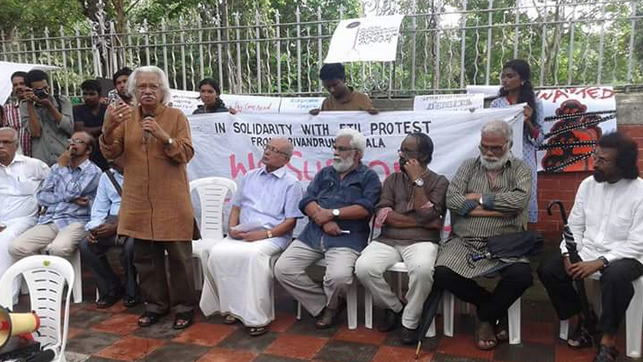
The students of Film & Television Institute of India (FTII) have been receiving tremendous support from across the country for their strike against the appointment of Mr. Gajendra Chauhan and others in the Governing council of FTII.

As a result of sustained public pressure , I&B ministry has opened up a channel of communication to discuss the issue and a meeting has been fixed with a delegation of students and alumni of FTII on 3rd July, 2015 at the Information and Broadcasting Ministry office, Shashtri Bhavan at 3 pm.

The students efforts at reaching out to more and more has been met with blocking of their various social media platforms.The mainstream media is sending out contradictory messages. This has left the
students vulnerable.

The struggle by FTII students becomes important for all of us since this is not an isolated attack on education and cultural institutions. When looked through the lens of the recent appointments at institutions like ICHR, NFDC, IIT Delhi, CFSI and CBFC or the de-recognition of Ambedkar Periyar Study Circle among others, the resistance of students at FTII becomes even more pertinent and important.

We, as alumni of FTII, urge you to come and stand in solidarity with FTII students as they talk with the ministry. We will assemble at 2pm outside Shastri Bhawan, I&B Ministry (next to Central Secretariat Metro Station). Continue reading Stand in Solidarity with FTII Students on 3rd July in Delhi : An Appeal by FTII Alumni

Do as iSay, not as iDo – Silicon Valley’s two faces on learning: Andrew Keen

ANDREW KEEN writes in The Sunday Times (June 15, 2015) on E-learning, which Indian universities are promoting as the latest and best. It turns out that Silicon Valley IT bigwigs, all frantically developing the perfect software that can finally eliminate human teachers, (a goal being promoted enthusiastically by the Indian system through Massive Online Open Courses MOOC), are themselves sending their children to ‘Waldorf Schools’, in which computers, tablets and smartphones are banned (yes, indeed, BANNED), because, says the Media and Technology Philosophy Statement of Waldorf School:

Waldorf educators believe it is far more important for students to interact with one another and their teachers, and work with real materials than to interface with electronic media or technology.

Oh my. Are they taking us back to the Dark Ages, as Indian teachers want us to?

Or (Heavy Irony Warning) – do children need ‘traditional’ education with human teachers and human interaction, so that they can develop the creative skills necessary to develop the software that can eliminate humans? 

And of course, it will inevitably be e-education for the masses, and increasingly expensive “traditional education” for the elites. As Keen puts it:

It is yet another irony that, over in California, the Waldorf School of the Peninsula says it provides a “Renaissance education in Silicon Valley”. While an online humanities-lite education is good enough for the masses, the children of successful venture capitalists and digital entrepreneurs are being educated in an unambiguously low-tech environment dominated by the physical relationship between teacher and student and a body of core knowledge that stretches back for hundreds of years.

Keen quotes William Deresiewicz:

Moocs, Deresiewicz argues, are “about reinforcing existing hierarchies and monetising institutional prestige. The kids at Harvard get to interact with their professors. The kids at San Jose State get to watch the kids at Harvard interact with their professors.”

Full article by Andrew Keen starts here:

Online learning is yet to take off in Britain as it has in America, where the market research firm Global Industry Analysts estimates that revenue for the online learning sector will reach more than $100bn (Pounds 64bn) this year.

But if on-line education really is the future, why are so many IT moguls choosing traditional schooling for their own children?

Among the rich and powerful families of Silicon Valley, the new-new thing is to give their children a “Waldorf” education that outlaws computers, tablets and smartphones. Continue reading Do as iSay, not as iDo – Silicon Valley’s two faces on learning: Andrew Keen

‘Merit’ Kills: An Open Letter to the National Commission for Scheduled Castes from Kerala

[This was sent to me by a group of concerned people. They prefer to stay nameless only because our educational institutions, especially technical institutions, which were never really liberal at any point, are now turning notoriously illiberal. The letter points to grave injustice which needs to be investigated and ended. The death of the young female Dalit student is a repeat almost of a similar suicide in Kerala by another female dalit student of Engineering a few years ago, who met her end strangled by ‘merit’, greed, and callous indifference. Here, the greed of the private sector in technical education cannot be blamed.]

Continue reading ‘Merit’ Kills: An Open Letter to the National Commission for Scheduled Castes from Kerala

An Open Letter to Mr Gajendra Chauhan by FTII Student

Guest Post by FTII student

As protests against the appointment of Mr Gajendra Chauhan as new chairman of the Institute gather steam, with students on an indefinite strike since 12th June and a joint protest being organised in Delhi on Tuesday at 11 am in front of I&B ministry in solidarity with the strike, here is an open letter written to the newly appointed Chairman by a FTII student.

Facts are also coming to the fore that not only Mr Chauhan but four of the eight members nominated under ‘Persons of Eminence’ category to the society also have saffron connections, further demonstrating how the Sangh Parivar is keen to change the very ethos and nature of these institutions and establish its regressive agenda.

Dear Mr Chauhan,

I am choosing to address you personally after listening to you respond on several TV news debates about the recent opposition against your appointment as Chairman at FTII. I am a student of FTII and part of the protest. Continue reading An Open Letter to Mr Gajendra Chauhan by FTII Student

Bread and Circuses? No sir, circuses alone will do.

Edited and updated version of the post.

I had the great fortune to be invited as an audience member to a live interaction with Union HRD Minister Smriti Irani last evening, televised live on Aaj Tak. I say “great fortune” because despite the fact that I walked out of this “interaction” in speechless disgust around an hour into the programme, I probably learned more about the state of politics and media in this country in one evening than I could have from years of academic study. And the irrelevance of academics was exactly what was on display last evening, never mind that the topic of the interaction was the state of higher education in the country.

I reached the venue – the auditorium of Khalsa College, Delhi University – at about 5.15 pm for a 5.30 pm programme. The mood was surprisingly charged, even electric for what I imagined would be a sober discussion on somewhat boring topics like syllabus formation, university infrastructure, promotions and pensions, the points system, and most importantly, the changes proposed under the Choice Based Credit System (CBCS). The auditorium was already packed – not so much with teachers and students – but with a large number of ABVP activists, BJP volunteers, and committed party supporters from within and outside the University. Nothing wrong with having a politically committed section dominating the audience of course. But if the resultant mix is innocently termed “the public” – the term the anchor used was “janta” – then that constitutes the first point of deception. I took a seat in the second row as instructed, surrounded by triumphant, pumped-up BJP supporters shaking hands with each other, suddenly feeling small and irrelevant, having come prepared with questions on Delhi University. At one point, turning to speak to the person next to me, I encountered a gentleman who introduced himself only as a “social worker” and asked me to elaborate on the problems with the university. As I began to list them however, he cut me short with a wave of a hand to say the government will prevail over all of them, and turned back to gaze admiringly at the life-sized posters of Modi all around us. I realised the person knew absolutely nothing about the University or teaching as a profession, and couldn’t care less.

Two anchors from Aaj Tak – Anjana Om Kashyap and Ashok Singhal – were on stage, interacting intermittently with the audience. At one point, Kashyap turned to the audience and said she was aware that there were many eminent professors in the first two rows who had been invited by Aaj Tak, but that she would begin the interaction with the Minister first with general questions on politics, and then move on to the topic of the evening – higher education. Nobody seemed happy with this, but having little choice, we vaguely nodded our assent. In walked Irani, striding up confidently on to the stage. Without so much as acknowledging the audience or making eye contact, she began to banter with the anchors, saying she only had half an hour and had not agreed to two hours, etc. While this time bargaining was going on, the crowd began to settle down somewhat, and the cameras began to roll. As planned and announced, Kashyap began with politics, asking Irani about her Twitter war with Rahul Gandhi and with her frequent visits to Amethi. As far as I or anybody who cares deeply about what is happening to Delhi University and other universities in the country was concerned, THAT WAS THE END OF THE EVENING.

Continue reading Bread and Circuses? No sir, circuses alone will do.

Position Paper on Higher Education: Academics for Creative Reform

“The manner in which the state is intervening in higher education is causing concern and even alarm in the academic community. Both the unlamented UPA—II regime and the current NDA government have been remarkably similar in their authoritarian impatience to introduce wholesale changes without adequate or careful preparation. This position paper is the collective product of roughly six months of discussion among teachers of several central universities in Delhi. It is an attempt to participate in the process of critical self evaluation of the university system as it is today. It is also our considered response to the many policy statements and directives issued by the MHRD and the UGC recently”

Please click on the link below for the complete position paper on proposed reforms in higher education, prepared by Delhi-based Academics for Creative Reform and released at a press conference today:

PositionPaper12May2015

बाल श्रम कानून में बदलाव का औचित्य :किशोर

Guest Post by Kishore

Photo courtesy : newznew.com

संसदीय कैबिनेट ने १३ मई को बाल श्रम प्रतिबंधन एवं नियमन कानून (CLPRA act) में संशोधन को मंजूरी दे दी. मुख्य सकारात्मक बदलावों में १४ वर्ष की आयु तक किसी भी व्यवसाय अथवा प्रक्रिया में बाल श्रम पर पूर्ण प्रतिबन्ध का प्रावधान किया गया है जो स्वागत योग्य है. साथ ही ज्यादा कठोर सजा एवं जुर्माने का प्रावधान भी किया गया है जो कि सकारात्मक है. हालाँकि अभी भी यह बाल अधिकार समझौते की कसौटी पर खरा नहीं उतरता क्योंकि इसमें १४ से १८ साल के बच्चों को गैर खतरनाक उद्योगों में काम करने की अनुमति दी है पर फिर भी चौदह वर्ष तक पूर्ण प्रतिबन्ध एक प्रगतिशील कदम है.

चौदह वर्ष तक पूर्ण प्रतिबन्ध के बावजूद पारिवारिक व्यवसायों में बच्चों के काम करने को छूट दी गयी है .बच्चे पारिवारिक व्यवसायों में काम कर सकते हैं बशर्ते यह काम बच्चे स्कूल जाने के बाद करते हों. सरकार इस छूट का मुख्य कारण यह बता रही है कि इससे बच्चों को अपने पारंपरिक काम सीखने का मौके मिलेगा.

आइये इस बात की समीक्षा की जाये कि यह कारण कहाँ तक तार्किक है. सरकार पारंपरिक कौशल को लेकर कितनी चिंतित है यह तो पिछले बीस साल में हथकरघा और अन्य पारम्परिक पेशों के लिए बनाई गई नीतियों से स्पष्ट है. कोई उनसे पूछे की पिछले बीस सालो में घरेलू उत्पाद में पारंपरिक व्यवसायों का योगदान किस दर से बड़ा है? अगर सरकार को पारंपरिक कौशल के लुप्त होने का इतना ही डर है तो क्यों नहीं इसे स्कूली पाठ्यक्रम में शामिल करती ? अगर इसे पाठ्यक्रम में शामिल किया जाये तो बच्चे पढाई के साथ साथ व्यावसायिक कौशल भी सीखेंगे जो उनके जीवन में काम आयेगा. साथ ही पढाई के साथ काम सीखने से पढ़े लिखे लोगों में श्रम को नीची नज़र से देखने के नज़रिए पर भी लगाम लगेगी और शिक्षा और शारीरिक श्रम के बीच का फासला घटेगा. Continue reading बाल श्रम कानून में बदलाव का औचित्य :किशोर

Rattling the bag – Language Knowledge and the transformation of the university in South Africa and India: Dilip Menon

[Note: Recent events in South Africa – from raging student movements across university campuses to xenophobic violence in the streets of Durban – seem to echo so many struggles both inside and outside the university “here.” This is the second post from South Africa that seeks to listen and travel across. The first, by Richard Pithouse, is here.]

Guest post by DILIP MENON 

Susa lo-mtunzi gawena. Hayikona shukumisa lo saka
Move your shadow. Don’t rattle the bag

JD Bold, Fanagalo Phrase Book, Grammar and Dictionary, the Lingua Franca of Southern Africa, 10th Edition, 1977

In the bad old days in South Africa, whites spoke English or Afrikaans, the languages of command. When they did engage with those that did not speak English, there was Fanagalo, a pidgin based on Zulu peppered with English and some Afrikaans. Fanagalo was developed in the mines and allowed directives, if not conversation. The struggle against apartheid produced its freedoms, its heroes and heroines and new dreams of equality. As Richard Pithouse in his article shows, twenty years down the line the sheen has worn. Unemployment, xenophobia, violence, crime and a seemingly entrenched inequality dog our dreams. We live with the constant premonition of becoming an ordinary country, a nation like any other. Continue reading Rattling the bag – Language Knowledge and the transformation of the university in South Africa and India: Dilip Menon

South Africa in the Twilight of Liberalism: Richard Pithouse

[Note: Recent events in South Africa – from raging student movements across university campuses to xenophobic violence in the streets of Durban – seem to echo so many struggles both inside and outside the university “here.” This is the first of hopefully several posts from South Africa, that seek to listen and travel across.]

Guest Post by RICHARD PITHOUSE

South Africa was supposed to be different. We attained our freedom, such as these things are, after everyone else but Palestine. It was late in the day but the afternoon sun was glorious and the best people, people who had passed through the long passage of struggle, told us that we would be able to avoid the mistakes made everywhere else.

There was a mass movement that, whatever its limits, had won tremendous popular support and carried some noble ideals through its travails. Its leaders cast long shadows. Our Constitution, we were always told, was as good as they get. Liberalism, apparently vindicated by history, had its evident limits but there was, it was said, lots of room for deft manoeuvre within those constraints. We were assured that there was room for everyone at what Aimé Césaire had called the ‘rendezvous of victory’.

For a long time the presence of all kinds of features of the past in the present was widely understood as something that would be resolved in time. Land would be redistributed, schools would flourish, houses would be built, there would be jobs – the kind of jobs that reward hard work – and universities would emerge, bright and bold, from their cocoons spun by settler culture. Time, it was generally believed, was on the side of justice and the eventual redemption of the suffering, striving and struggles of the past.

Continue reading South Africa in the Twilight of Liberalism: Richard Pithouse

Fairy Tales and Feminist Theory in the Face of Fear: Indus Chadha

This is a guest post by INDUS CHADHA

For about a year now, I have been teaching 33 wide-eyed and wise middle schoolers. As we have read fiction, studied history, exchanged stories, and tried to understand the world together, I have found my students to be wonderfully curious and innately compassionate. As the school year drew to a close, I wondered how to conclude our time together. Because our parting at the end of a fulfilling year together was bittersweet, I was looking for something both lighthearted and meaningful. I settled on an old favorite of my own, The Paper Bag Princess, an unconventional fairy tale that turns the ‘prince saves princess from the dragon’ stereotype upside down. As always, I was amazed by my students’ heartfelt and fresh responses to the story. Continue reading Fairy Tales and Feminist Theory in the Face of Fear: Indus Chadha

हिन्दुत्व की प्रयोगशाला बनता दिल्ली विश्वविद्यालय: जीत सिंह सनवाल

Guest post by JEET SINGH SANWAL

केन्द्र में भाजपा के नेतृत्व में सरकार बनने के बाद से राष्ट्रीय स्वयं सेवक संघ का राजकीय शिक्षा नीतियों से लेकर शिक्षण संस्थाओं के क्रियाकलापों में बढ़ता हस्तक्षेप किसी से छुपा नहीं है। शिक्षा नीति में बदलाव लाने व इस बाबत मानव संसाधन विकास मंत्रालय को सुझाव व विश लिस्ट सौंपने में संघ ने काफी तत्परता दिखाई है। कई मीडिया रिपोर्टों के अनुसार संघ ने प्रत्यक्ष व अप्रत्यक्ष रूप से उनके लिए काम करने वाले तमाम लोगों की लिस्ट सरकार को भेजकर शैक्षिक व सांस्कृतिक संगठनों में उनकी नियुक्ति की मांग की। आशा के अनुरूप पिछले दस माह के भाजपा सरकार के कार्यकाल में विभिन्न संगठनों मेें कई सरकारी नियुक्तियां की गयी और संघ विचाराकों को अपेक्षा से अधिक सम्मान देकर ताजपोशी की गयी। नागपुर के एक प्रतिष्ठित संस्थान में डायरेक्टर पद पर नियुक्ति पाने के लिए तो एक व्यक्ति ने अपने संघ से जुड़े होने के प्रमाण प्रस्तुत करते हुए संबंधित मंत्री को नियुक्ति हेतु आवेदन किया। आशा के अनुरूप मंत्रालय ने भी उन्हीं की नियुक्ति की।

शैक्षिक व सांस्कृतिक संगठनों में इस प्रकार के हस्तक्षेप के पीछे संघ की बुनियादी रणनीति है। प्रख्यात मानवाधिकार कार्यकर्ता राम पुनियानी के अनुसार संघ पहले से ही प्रगतिशील शैक्षिक व सांस्कृतिक विमर्श को बदलकर अपना राजनैतिक आधार मजबूत करने में विश्वास रखता है। दिल्ली विश्वविद्यालय के प्रो0 अपूर्वानन्द के अनुसार संघ की यह रणनीति शिक्षा के अज्ञानीकरण की ओर जाता है। भा.ज.पा. को पूर्ण बहुमत मिलने व संघ के प्रचारक का प्रधानमंत्री बन जाना, उनकी इस रणनीति को आगे बढ़ाने के लिए मुफ़ीद है। विभिन्न शैक्षणिक व सांस्कृतिक संगठनों में पिछले कुछ महीनों से हो रहे इन बदलावों में दिल्ली विश्वविद्यालय का उदाहरण काफी अलग है। संघ दिल्ली विश्वविद्यालय में शोध, शिक्षण के साथ-साथ छात्रों के मोबिलाईजेशन के जरिये, अपने विवादास्पद एजेंडे को धार देने का प्रयास कर रहा है। संघ की विचारधारा व उनके कार्यक्रम पहले से ही विवादों में रहे हैं। उनके उग्र हिन्दुत्व व अल्पसंख्यकों से वैमनस्य किसी से छुपा नहीं है। ऐसे में दिल्ली विश्वविद्यालय में संघ की बढ़ती औपचारिक व अनौपचारिक सक्रियता, विश्वविद्यालय व बौद्विक जगत के लिए चिंता का विषय है।  Continue reading हिन्दुत्व की प्रयोगशाला बनता दिल्ली विश्वविद्यालय: जीत सिंह सनवाल

Ban-man on the prowl again: Malvika Sharad

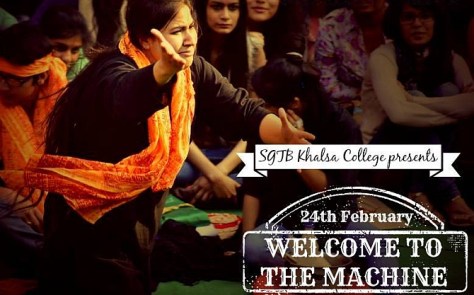
Guest Post by MALVIKA SHARAD on the recent call by Delhi University Students’ Union for a ban on the street play by Khalsa College theatre group, Ankur.

24lead6

Image courtesy rediff.com

One evening in 2013, a group of ‘street play seniors’ as we call them, visited us in the front lawns of my college, Lady Shri Ram College for Women. They were from various colleges across DU who had been actively involved in street theatre, and had been invited to give the newly formed street play team of that year, an introduction to the art form. Among those seniors was a dynamic young chap from Khalsa College, who reiterated several times that street theatre fills you with such immense courage that you end up doing things you never thought you would, for that courage comes from the sheer truth and brutal honesty that street theatre is based upon. He said that freedom of expression is taken to a whole new level when you perform amidst crowds, and state the truth looking directly into their eyes. A fire is born within you that cannot be extinguished, it burns brighter with every performance of the play. You become fearless in voicing your opinions and thoughts, so fearless that you don’t even realize how far you have pushed your own limits and emerged triumphant.

After a whole year dedicated to doing street plays in Delhi, I have learnt how right he was, that young student not much older than us. I find I have come out of my shell, shedding my inhibitions at a pace and scale I had never imagined. Torn chappals don’t bother me anymore, my sun-burned skin makes me look beautiful, I don’t flinch with embarrassment while sitting, sometimes lying, on the floor of the metro station out of sheer weariness, though co passengers stare at me with judgemental eyes, I can’t bring myself to stop romanticizing the mud and the dirt that hug me every time I wear my soiled street play kurta… But above all, I can articulate my thoughts properly now, I am not scared of speaking in public unlike the times when I was a meek docile person, cocooned in the comforts of home and parental pampering. I owe this change in my attitude and personality to street theatre, which taught me what it is to live confidently and fearlessly.

Continue reading Ban-man on the prowl again: Malvika Sharad

An Open Letter to Kerala Khap Managers and Madam Principal, CET, in Particular, and to Malayalees in General

Dear Madam(s) and Sirs

Greetings from a long-suffering woman, a shocked and appalled parent, a worried social scientist, an angered citizen, a furious teacher, a firm believer in the Indian Constitution determined to defend it, a irredeemable feminist — I greet you in all these capacities.

Respected Madam(s) and Sirs, my grievances are all about you, in fact, about the incalculable damage you are collectively doing to  young people in Kerala, to the future of democracy here. They are about your utter disregard for the spirit and the letter of the Indian Constitution and your and powerful hatred of young people in general and young women in particular, clearly manifest in your despicable efforts to deny them their rights as Indian citizens. My grievances are also about your utter lack of humane concern for the students under your care, your rank cruelty and disregard of their humanity and dignity.

Continue reading An Open Letter to Kerala Khap Managers and Madam Principal, CET, in Particular, and to Malayalees in General

Confronting Gandhi’s Ghost

” I imagine you believe that he was for the most part adored; in fact he was hated and he is still hated today. Hatred is still alive in India and he died of it. Those who were for mostly from those what is called the scheduled castes, those who belonged to the gutters with whom he had sided. Yet he did not ask anything of anyone; he simply went his own way….But the simple fact that he lived according to his own law—which was ascetic and demanding of himself was something people could not tolerate.”  French writer Helene Cixous turns to Gandhi to compare his life with the ways of writing that “may hurt, may dissatisfy and give the feeling that something is taken away.”

Continue reading Confronting Gandhi’s Ghost

Storm in a Kahwa Cup: Organizers of the Kashmiri Food Counter at the International Food Festival, JNU 2015

Guest Post by Organizers of the Kashmiri Food Counter at the International Food Festival, JNU 2015

Universities are supposed to be the centers of free inquiry, speech and expression. However, in the recent months universities and other democratic spaces have been under attack from right wing fascist elements across India. University authorities under the influence of right wing forces have increased surveillance on sections of students and have started to monitor and control campuses. As a premier institute of learning Jawaharlal Nehru University (JNU) has always has preserved its democratic culture and has resisted such attacks tooth and nail. However, in recent days even JNU is experiencing pressures from the right wing fascist forces.

Every year, JNU organizes an International Food Festival (IFF) where students from diverse cultures and nations displaying their flags come together to offer global cuisines. This year on 20thJanuary, a group of students from Kashmir booked a counter at the IFF. After completing necessary formalities and depositing security amount the festival organizers allotted space for Kashmir food counter along with the Tibet food counter. However, International students association (ISA), body that organizes the festival started receiving threats from the ABVP goons. The president and other members of the organization were harassed and intimidated. The organizers received open warnings from ABVP threatening them with disrupting the festival in case Kashmiris were allowed to open their food counter. International students who organize the festival were threatened with legal action and deportation. Just two days before the festival the booking for Kashmiri food counter was cancelled by the organization. Continue reading Storm in a Kahwa Cup: Organizers of the Kashmiri Food Counter at the International Food Festival, JNU 2015

Resist the Shrinking of Democratic Spaces on Campus: Concerned Students of Tata Institute of Social Sciences, Mumbai

Guest post by Concerned Students of Tata Institute of Social Sciences, Mumbai

Universities are thought to be just, equal and free spaces. However the history of access to universities for certain sections of the society is not very old. Discrimination has been institutionalized and structurally carried out on the basis of caste, race, gender, religion and sexual identity even in the space of the university. However, over time there has been an increase in assertion from the marginalized groups in university spaces that has caused some disquiet among administrators. This is evident from various incidents that are taking place on a day to day basis in university spaces.

Kashmir and North East are two regions which have been frequently used by the Indian state to claim its sovereignty through grave violation of basic rights of people residing in these areas. Contrary to our beliefs, campuses and universities also reflect the larger politics of our society.

We, a group of students invited Dr Dibyesh Anand for a lecture titled “Deliberating Kashmir: Beyond AFSPA and Chutzpah” at the Tata Institute of Social Sciences, Mumbai on 3rd January 2015. Dr Dibyesh Anand is the Head of Department of Politics and International Relations at the University of Westminster, London. He is an acclaimed scholar on violence and States in South Asia and has also written and published extensively on his area of expertise. He has also been a visiting professor to the University of California Berkeley, the Australian National University, the Centre for Bhutan Studies, the Jawaharlal Nehru University and the Central University of Hyderabad. Following the procedure we had booked the room four days prior to the programme and invited students and faculty in TISS and outside to attend the talk. Continue reading Resist the Shrinking of Democratic Spaces on Campus: Concerned Students of Tata Institute of Social Sciences, Mumbai

Real Estate of Religion:Satya Sagar

Guest Post by SATYA SAGAR


Several years ago a friend of mine filed a petition in the Indian Supreme Court against – believe it or not- the tenth incarnation of the Hindu God Vishnu! Or at least, against a fellow who claimed to be ‘Kalki Bhagwan’ and has in the past two decades drummed up a significant following in the southern part of India.

Blasphemous as the claim of this fake avatar was the court battle itself was not really about the finer details of Hindu mythology or theological doctrine.Based on several years of painstaking investigation and research it was my friend’s claim that ‘Kalki Bhagwan’, had taken money from the public for ‘rural development activities’ and fraudulently diverted it to his personal bank accounts as well as that of his close relatives.

From being an ordinary clerk working for the Life Insurance Corporation in Chennai thirty years ago today the ‘Tenth Incarnation of Vishnu’ is allegedly worth many million dollars and owns vast properties in many parts of South India. It is a trajectory that is tragically very common everywhere, with spurious spirituality – ironically also a form of ‘insurance’-being the fastest way to material wealth and power since ancient times. Continue reading Real Estate of Religion:Satya Sagar

Is Standing with Young People Yet Another Fad? Reflections on the Young and Kiss Protests in Kerala

My arguments supporting young people in some recent debates, notably, the ones around the International Film Festival of Kerala and the ongoing Kiss protests, have apparently irritated a number of people, especially friends who belong to my own generation. From more than one source (hardly ever directly, though) I hear that they grumble that I am biased towards the young. That, apparently, is the latest fad. And Devika, it appears to them, has a tendency to support fads. Continue reading Is Standing with Young People Yet Another Fad? Reflections on the Young and Kiss Protests in Kerala

അഴിക്കാനും ആടാനും തുനിഞ്ഞിറങ്ങിയവർ തന്നെ നാം : തെരുവിൽചുംബനസമരക്കാർക്ക് ഒരു സന്ദേശം

സുഹൃത്തുക്കളെ,


കിസ് ഒഫ് ലൌ സമരങ്ങളുടെ രാഷ്ട്രീയത്തെക്കുറിച്ച് പലതരം ആശങ്കകൾ കേട്ടുതുടങ്ങിയിരിക്കുന്നു.

അത് ആഗോളീകരണ അഴിഞ്ഞാട്ടമാണെന്നും,

അതല്ല, മദ്ധ്യവർഗ്ഗ സന്തതികളുടെ എടുത്തുചാട്ടമാണെന്നും,

അതുമല്ല, അതിനു രാഷ്ട്രീയമേ ഇല്ലെന്നു വരെയും, കേരളത്തിലെ ബദൽരാഷ്ട്രീയങ്ങളിലെ പ്രമുഖവ്യക്തിത്വങ്ങൾ അടക്കമുള്ള പലരും മുറുമുറുക്കുന്നു.

Continue reading അഴിക്കാനും ആടാനും തുനിഞ്ഞിറങ്ങിയവർ തന്നെ നാം : തെരുവിൽചുംബനസമരക്കാർക്ക് ഒരു സന്ദേശം

‘Law of the land’ on Kissing in Public: Sanjay Palshikar

SANJAY PALSHIKAR, Professor, Political Science department, University of Hyderabad, clarifies the ‘law of the land’ on kissing in public, to the Committee set up by the Vice-Chancellor to ‘look into the matter of the incident of November 2, 2014.’

Respected Members,

At the centre of the incidents of November 2, 2014, is the alleged act by some students to display demonstratively mutual affection in the form of kissing. Without going into the factual correctness of the charge, let me share with you what I have learnt from legal scholars and activists. I do so in the hope that this will help the Committee “ascertain” “the position of the law of the land” regarding kissing in public.

  1. Indian judiciary at the higher levels has not universally treated kissing in public as illegal. In appropriate context, spelt out variously by the relevant judgments, it has been seen as an expression of love, expression of love and compassion, and its artistic representation as defensible. Absent in all theses cases is the tendency to presume that every kiss is an act of sexual expression and that indulging in this act in public is always obscene. (A & B vs State Thr. N.C.T. of Delhi 2009; Friday vs K.J. Sebastian 2001).
  1. The Supreme Court has observed that the Indian Penal Code “does not define the word obscene and this delicate task has to be performed by courts….” If the Apex Court considers it a delicate task, how much more challenging it would be for university teachers and police officers to say if an act is obscene! (Udeshi vs State of Maharashtra 1965).

Continue reading ‘Law of the land’ on Kissing in Public: Sanjay Palshikar

Statement by Forum for Democratic Rights in EFLU on the present state of affairs

We, concerned citizens and members of women’s organizations, civil rights, students and minority rights forums, have come together to form the “Forum for Democratic Rights in EFL University” to  demand an immediate and thorough enquiry into the incident of gang rape and the suppression of democratic rights in EFL University. We wish to bring the following matter to your notice.

A recent horrific incident of the gang rape of a girl student took place in the EFLU men’s (Basheer) hostel on the night of 31st October 2014. The victim contacted the University authorities and was directed to the police who then arrested two accused on 2nd November 2014.  While this case of sexual assault on the university campus has deeply shocked the campus community, students, faculty and staff, even more shocking and worrying has been the attitude adopted by the university administration in its aftermath. Instead of seeking to undertake measures to make the campus free of violence and assault and promoting gender-sensitivity, the administration has resorted to several measures that are nothing short of severe repression of all democratic rights of the campus community as a whole.

Immediately after the incident, there were some reports with speculations about the victim’s presence in the men’s hostel. Aided by selective leaks by the University and the police, these reports amounted to character assassination and victim blaming, and divulged crucial information regarding the complainant’s identity. This pernicious reasoning amounts to nothing but a justification of the crime. From the well-known case of Rameeza Bee to the recent Nirbhaya Act, it has been repeatedly asserted that the act of sexual assault or gang rape cannot be justified citing the previous history of the victim.  We strongly condemn the propaganda to malign the victim and underplay the gravity of the rape. The complainant must be provided with adequate and competent legal counsel, her psychological and emotional well-being must be taken care of, and her safety must be ensured.   Continue reading Statement by Forum for Democratic Rights in EFLU on the present state of affairs