Category Archives: Education

“No research please, we are college teachers” – On the HRD Ministry’s latest bright idea.

A version of this piece appeared yesterday in The Wire

“I would like to thank Huddersfield University for enabling me to have a sabbatical semester to work on this revised edition and for providing such a supportive environment. Thanks to many of the students on my Women, Power and Society module for their hard work and enthusiasm.”

That is the dedication in a book by British scholar and teacher Valerie Bryson – a text I often use for teaching at a college in Delhi University. Evidently, Bryson found her teaching and research lives complementing each other beautifully, as have thousands of university and college teachers who have had the luck to have what she calls a “supportive” professional and academic environment. What are the elements of this support? A sabbatical semester or year every once in a while, ready research facilities within the college premises or nearby, and an opportunity to formulate teaching courses that ally with your research focus. With these elements in place, both teaching and research benefit dramatically.

Until recently, college teachers in this country had the first two conditions. They were given in their entire careers – say from the age of 26 or 27 when one normally began teaching at a college to the age of 65 – three years of paid study leave to pursue or finish their PhDs (with the usual conditions and caveats including a strict bond that they signed with college promising to return the three years’ pay if the PhD remained incomplete, or if they resigned upon return to the institution) and a further two years of (until recently, paid and now invariably unpaid or “extraordinary”) leave to take a break from teaching and pursue a postdoctoral or visiting fellowship at a research institute.
Continue reading “No research please, we are college teachers” – On the HRD Ministry’s latest bright idea. →

विश्वविद्यालय, अंध राष्ट्रवाद और देशभक्ति : वैभव सिंह

Guest post by VAIBHAV SINGH

भारत खुद को भले किसी महान प्राचीन ज्ञान-परंपरा का वारिस समझता हो पर उसके विश्वविद्यालयों की दशा चंद चमकदार अपवादों के बावजूद खस्ताहाल है। उच्चशिक्षा की हालत किसी मरणासन्न नदी जैसी है जिसपर पुल तो बहुत बड़ा बन गया है पर पानी सूखता जा रहा है। भारत अपने साथ ही यह झूठ बोल रहा है कि वह ज्ञान या ज्ञानियों का आदर करता है, जबकि सचाई इसके विपरीत है। आधुनिक युग में भारत ने जितना ज्ञान की अवहेलना और अनादर किया है, उतना शायद ही किसी देश ने किया होगा। हर तिमाही-छमाही आने वाली रिपोर्ट्स हमें शर्मिंदा करती हैं कि संसार के सर्वोच्च 100 विश्वविद्यालयों में भारत के किसी विश्वविद्यालय को नहीं रखा जा सका। पूरा शिक्षा-जगत डिग्रियों की खरीदफरोख्त में लगे विचित्र किस्म के अराजक और अपराधिक सौदेबाजियों से भरे बाजार में बदलता जा रहा है। यहां अपराधी, दलाल और कलंकित नेता अपने काले धन व डिजिटल मनी की समन्वित ताकत लेकर उतर पड़े हैं और हर तरह की कीमत की एवज में कागजी शिक्षा बेचने लगे हैं। इस बाजार में ‘नालेज’ और ‘डिग्री’ का संबंध छिन्नभिन्न हो चुका है। कमाल की बात यह है कि यह स्थिति हमें चिंतित नहीं करती।

दूसरी ओर, उच्चशिक्षा अभी भी समाज की नब्बे फीसदी आबादी के लिए सपने सरीखी है। उच्चशिक्षा में जीईआर यानी दाखिले के अनुपात की गणना 18-23 आयुवर्ग के छात्रों को ध्यान में रखकर की जाती है और अभी भी भारत में केवल दस फीसदी लोग उच्चशिक्षा के संस्थानों के दरवाजे तक पहुंच पाते हैं। इसमें भी दलित व गरीब मुस्लिमों की हालत बेहद खराब है। दलितों में दो फीसदी से भी कम लोग उच्चशिक्षा प्राप्त कर पाते हैं तो मुस्लिमों में यह आंकड़ा केवल 2.1 फीसदी का है। भारत की ग्रामीण आबादी में केवल दो फीसदी लोग ही उच्च माध्यमिक शिक्षा के पार जा पाते हैं। ये आंकड़े भारत में उच्चशिक्षा की आम लोगों तक पहुंच की भयावह तस्वीर को प्रस्तुत करते हैं और दिखाते हैं कि हम जिन संस्थानों, बड़े कालेजों-विश्वविद्यालयों आदि को भारत के विकास के प्रमाण के रूप में पेश करने की इच्छा रखते हैं, वे देश की नब्बे फीसदी आबादी से बहुत दूर रहे हैं। Continue reading विश्वविद्यालय, अंध राष्ट्रवाद और देशभक्ति : वैभव सिंह →

JNUTA Statement on JNU VC’s ‘Tank’ Talk

Following the bizarre idea, earlier mooted by retired army officials, now taken up by the Vice Chancellor of JNU, to install a tank on university campus, ostensibly to instill nationalism in the university community, the JNUTA has issued the following statement:

The JNUTA is amused by the JNU VC’s earnest desire that a tank be rolled onto JNU campus. It is surprising that Prof. Jagadesh Kumar can only be inspired to patriotism upon beholding instruments of war. This seems to be only a personal affliction, since the rest of the JNU community does not need these visual aids to feel love and concern for this land, its environment and all its peoples, whether in the armed services or elsewhere.

The JNUTA also hopes that the JNU VC will understand that developing what he believes is the correct affective attachment towards the Indian Army is not part of his job description. JNU cannot be made into a theatre of war. His statutory role is one of “maintaining and promoting the efficiency and good order of the University” and of upholding the JNU Act and Statutes. The full statement can be read here.

The Death of a Historian – A Tribute to Biswamoy Pati: Saurabh Mishra

Guest post by SAURABH MISHRA

Historian Biswamoy Pati

These days, when lynch mobs, cow-killings, and aggressive patriotism dominate the headlines, what does the passing away of a mere historian mean? Not much, it seems. Yet, for those who knew Dr Biswamoy Pati, or had the good fortune of being taught by him, this has caused nothing short of a major storm in their lives.

I got to know Dr Pati in the summer of 1996, when he was a young and energetic lecturer in Delhi. I waited eagerly for his lectures (as did everyone else), which were really my first introduction into new ways of thinking about the world.

Continue reading The Death of a Historian – A Tribute to Biswamoy Pati: Saurabh Mishra →

The method in madness and the case of Adarsha Vidyalayas in Assam : Delhi Action Committee for Assam

Statement by Delhi Action Committee for Assam 

Displaying Amar Asom 20-6-2017.jpg

(Protest in Guwahati against unconstitutional and discriminatory policy of the Assam govt. in teacher recruitment, organised by KMSS on 19 June 2017 (Photo courtesy: Amar Asom)

In an unconstitutional and discriminatory move, the Education Department of the Assam government has recently come up with a notification that bars candidates who have studied in the vernacular medium from appearing for the Special Teachers Eligibility Test (TET) for Graduate Teachers in the Adarsha Vidyalayas in Assam. The advertisement No. RMSA/Special TET/842/2017/2 dated 7 June 2017, issued by the Secondary Education Department of the state government states: “The candidates must be passed out from English Medium Schools as Adarsha Vidyalayas are CBSE affiliated English Medium School (sic).” To further clarify the matter, the Education Minister of the state, Himanta Biswa Sharma, said in a press conference that those who studied in Assamese or vernacular medium schools do not have the essential ability to teach in English medium schools. Mr. Sharma not only ridiculed and questioned the qualifications of those who studied in the vernacular medium but also invalidated the entire vernacular medium education system of the state. Continue reading The method in madness and the case of Adarsha Vidyalayas in Assam : Delhi Action Committee for Assam →

Mathematics, Decolonization and Censorship: C. K. Raju

Guest post by C.K.RAJU
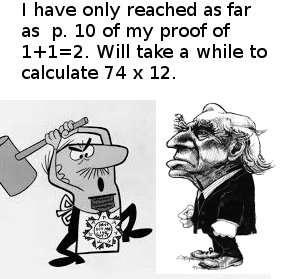
Did you find math difficult in school? Does your child? If so, what is the solution: change the teacher or change the child? Blaming the teacher or the child for math difficulties is a common but unsound explanation. Thus, problems with teachers or students should equally affect all subjects, not only math.The right solution is to change math. That seems impossible. People naively believe that math is universal. In fact, the math taught today, from middle school onward, is called formal math; it began only in the 20th c. with David Hilbert and Bertrand Russell. It differs from the normal math which people earlier did for thousands of years, across the world, and still do in kindergarten.Formal math adds enormously to the difficulty of math but nothing to its practical value. The practical value of math comes from efficient techniques of calculation, used in normal math, not prolix formal proofs. For example, the proof of 1+1=2 took Whitehead and Russell 368 pages of dense symbolism in their Principia. That proof is a liability in a grocer’s shop. In contrast, normal math is easy. One apple and one apple make two apples as most people learn in kindergarten. So should we switch back to normal math at all levels?

Russell

Continue reading Mathematics, Decolonization and Censorship: C. K. Raju →

Elephants in the Room – Who Gets the Autonomy in Autonomous Colleges? : Sanjay Kumar

Guest Post by Sanjay Kumar

In February this year, University of Delhi officials invited chairpersons of the six best known colleges to apply for  autonomy. So far, only the governing body of St Stephen’s College has reacted, authorising its principal to take up the application process. Teachers and staff associations of the university, DUTA (Delhi University Teachers’ Association) and DUCKU (Delhi University Karamchari Union), are against the move. Besides affecting the working conditions of faculty and staff, college autonomy has bearing on the academic content of undergraduate learning. It is surprising that many of the academic red flags are not even noticed in the policy. These obvious blind spots indicate that real motivations are not academic, but lie elsewhere.

The XII plan document of the UGC sets the target to make 10 percent of eligible colleges autonomous by the end of the plan period. It boldly declares, ‘(t)he only safe and better way to improve the quality of undergraduate education is to the link(sic) most of the colleges from the affiliating structure’. The claim is surprising, because world over university education is considered a good undergraduate education. A university with active research, accomplished faculty and diversity of subjects to offer is the best place for a young person to get initiated into the adventure and challenges of higher education. How taking students away from the ambit of a university becomes the way to better education requires a bit of an explanation. Continue reading Elephants in the Room – Who Gets the Autonomy in Autonomous Colleges? : Sanjay Kumar →

बिहार क्या सिर्फ बिहार में है ?

बिहार फिर से खबर में है. इंटरमीडिएट परीक्षाओं के परिणाम आए हैं.पैंसठ प्रतिशत छात्र फेल हो गए हैं.बिहार में विरोध प्रदर्शन चल रहे हैं.कॉपियों की दुबारा जाँच कराने की माँग की जा रही है. जन संचार माध्यमों के जरिए वैसे छात्रों की व्यथा और क्रोध का पता चल रहा है जिन्होंने आई आई टी जैसी कठिन प्रवेश परीक्षाओं में सफलता प्राप्त की है लेकिन जो बारहवीं की बोर्ड परीक्षा में फेल हो गए हैं.इसे पर्याप्त माना जा रहा है यह कहने के लिए कि परीक्षा परिणामों में घपला ज़रूर है वरना इतने प्रतिभाशाली युवा, जो आई आई टी की परीक्षा की बाधा दौड़ पार कर गए हैं,बोर्ड के इम्तहान में फेल कैसे हो जाएँगे! Continue reading बिहार क्या सिर्फ बिहार में है ? →

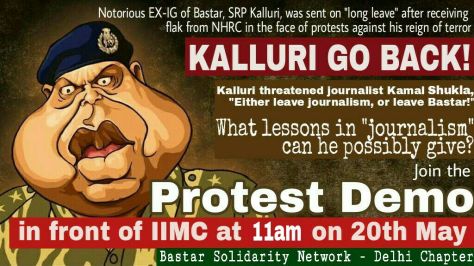
A Day Against Kalluri at IIMC, Delhi: Bastar Solidarity Network Delhi Chapter

Guest Post by Bastar Solidarity Network Delhi Chapter

The democratic forces, organizations and the thinking minds of IIMC took part in a spirited protest today against the invitation extended to notorious ex-IG Kalluri by the IIMC administration to take part in a seminar. To start with, since last two days, there were several attempts on the part of the organizers to confuse/conceal Kalluri’s invitation. Immediately after the declaration of the protest, Kalluri’s name was dropped from the poster. There were also threats of counter-mobilisation by the BJP goons. But undeterred, as we reached the gates of IIMC at 11am, the site echoed with slogans of “Killer Kalluri Go Back”!

Continue reading A Day Against Kalluri at IIMC, Delhi: Bastar Solidarity Network Delhi Chapter →

और इस बार नंबर आईआईएमसी का था : Rohin Kumar

Guest Post by ROHIN KUMAR

संस्थान के गेट पर सरस्वती की प्रतिमा थी ही. नारद पहले पत्रकार बताए जाते रहे हैं. अब बचा था हवन वो भी होने ही वाला है. आईआईएमसी मीडिया स्कैन नामक संस्था के साथ मिलकर ‘वर्तमान परिदृश्य में राष्ट्रीय पत्रकारिता’ पर सेमिनार आयोजित करने जा रहा है. इसकी शुरुआत हवन से होनी है. उसमें पांचजन्य के संपादक और बस्तर का खूंखार आईजी कल्लूरी आमंत्रित है. चौंकाने वाली बात है कि कल्लूरी जिसने सबसे ज्यादा आदिवासियों, पत्रकारों, सामाजिक कार्यकर्ताओं को तंग किया, उनपर फर्जी केस डाले वो ‘वंचित समाज के सवाल’ पर बोलने आ रहा है.

हमें इसकी सूचना दो दिन पहले मिली. सोशल मीडिया पर इसके पोस्टर रिलीज़ किये गए थे.

सबसे पहले हम छात्रों ने इसका सोशल मीडिया पर विरोध दर्ज किया. इसमें कई पूर्व छात्रों का हमें समर्थन भी प्राप्त हुआ. संस्थान में पढ़़ाने वाले शिक्षकों को फ़ोन किया, उनसे जानना चाहा कि आखिर उनकी इसपर कोई राय है?

जानकर हैरानी हुई कि उन्होंने छात्रों से बिलकुल डरे सहमे अंदाज़ में बात किया. इस बाबत जानकारी से इनकार कर दिया. फिर डिप्लोमेटिक जवाब देने शुरू किये- “चुंकि हमें कोई आधिकारिक सूचना इस कार्यक्रम के बारे में नहीं मिली है इसलिए मैं इसे फेक न्यूज़ मान रहा हूं.” इतना कहकर मीडिया एथिक्स पढ़ाने वाले टीचर ने कन्नी काट लिया.

Continue reading और इस बार नंबर आईआईएमसी का था : Rohin Kumar →

फर्ज़ी प्रमाण पत्र के सहारे दलित और आदिवासियों के अधिकार पर डाका

सांसद समेत अन्य लोग फर्ज़ी कागज़ातों के ज़रिये दलित और आदिवासियों के अधिकार छीन रहे हैं.

Indian tribal people sit at a relief camp in Dharbaguda, in the central state of Chhattisgarh, March 8, 2006. Violence in Chhattisgarh, one of India's poorest states, has mounted since the state government set up and started funding an anti-Maoist movement. Picture taken March 8, 2006. REUTERS/Kamal Kishore

(फोटो: कमल किशोर/रॉयटर्स)

मध्य प्रदेश के बैतूल से अनुसूचित जनजाति के लिए आरक्षित सीट से दूसरी बार चुनी गईं सांसद ज्योति धुर्वे की सदस्यता फिलवक़्त ख़तरे में पड़ती नज़र आ रही है.

पिछले दिनों मध्य प्रदेश सरकार की उच्चस्तरीय जांच कमेटी ने सघन जांच के बाद उनके द्वारा प्रस्तुत किए जाति प्रमाण पत्र को खारिज़ कर दिया.

ख़बरों के मुताबिक अपने जाति प्रमाण पत्र की कथित संदिग्धता के चलते धुर्वे तभी से विवादों में रही हैं जब 2009 में वह पहली दफ़ा वहां से सांसद चुनी गई थीं. यह आरोप लगाया गया था कि वह गैर आदिवासी समुदाय से संबद्ध हैं और उन्होंने फर्ज़ी जाति प्रमाण पत्र जमा किया है.

इस मसले को लेकर मध्य प्रदेश उच्च न्यायालय के सामने एक केस दायर किया गया है और अदालत के आदेश पर ही उपरोक्त जांच पूरी की गई है.

गौरतलब था कि जांच के दौरान पाया गया कि उनका जाति प्रमाण पत्र वर्ष 1984 में रायपुर से जारी हुआ था, मगर जब कमेटी ने इस बारे में कुछ और प्रमाणों की मांग की तो सांसद महोदया उन्हें कमेटी के सामने प्रस्तुत नहीं कर सकी.

कमेटी ने यह फैसला एकमत से लिया है और इसके बाद सांसद महोदया के ख़िलाफ़ कार्रवाई की मांग उठी है. विपक्ष का कहना है कि यह मसला 2009 से सुर्ख़ियों में रहने के बावजूद राजनीतिक दबाव के चलते इस पर फैसला नहीं लिया गया था.

बहरहाल, ज्योति धुर्वे के बहाने फिर एक बार फर्ज़ी जाति प्रमाण पत्रों का मसला चर्चा में आया है.

(Read the complete text here : http://thewirehindi.com/8059/how-our-leaders-and-other-people-snatching-the-rights-of-dalit-and-adivasi-by-fake-certificates/)

AUD Faculty Association Condemns Police Brutality in Panjab University

Ambedkar University Delhi Faculty Association condemns the police brutality on students of Panjab University earlier this month. Students were protesting against fee hikes which have been made primarily because one of the oldest universities in the country is under a financial crisis for the last one year. This has happened due to the distinctive status of the university, which is neither a Central university nor a full state university. The UGC since last year has stopped its grants to the University and as a result not being able to generate salaries for employees, the University hiked student fees in response. Lathi charge and tear gas shells were unleashed on the protesting students, students were arrested under various sections of the Indian Penal Code, including sedition charges. Although released, students are still under surveillance and victimized.

Continue reading AUD Faculty Association Condemns Police Brutality in Panjab University →

JNU Teachers on allegations of motive behind car vandalism

STATEMENT FROM JNU TEACHERS

We, members of the JNU faculty, are deeply shocked at the kinds of allegations and speculations being made because a faculty member’s car was vandalised a couple of nights ago. Obviously the incident in which the windshield of the car was found shattered in the morning,  is worrisome, and cause for concern – yet this is not an isolated incident on an otherwise safe campus. In past months other faculty members living on campus have had similar experiences, where random acts of vandalism have occurred, in different parts of the university. However, no one, until now, has made either baseless allegations or blamed students’ groups, or levelled charges against any particular political ideology.

This is the first time that such quick, and hasty conclusions have been drawn. Instead of investigating a matter of vandalism, this is being recast as some kind of political conspiracy and vendetta. This does not reflect the spirit of JNU – which has always been collegial despite its many differences. It is only since early 2016 that we are seeing this sense of reflective engagement fraying – which ought to be a cause of concern for us all.

We would also wish to state that the untimely loss of every life is, and should be, one of great sorrow. And it is particularly so in the cases of ordinary jawans, most of whom come from impoverished families and have few opportunities, especially to study, and to make a better life for themselves. Who knows – had their families had the wherewithal for educating their children – they too could have been university professors. The baseless allegations against JNU being levelled at the moment, purportedly in support of the killing of jawans in Sukma, neither respects their lives and immense challenges, nor does it show any concern for the university and its community.

At a time when the JNU community is facing grave challenges, and its excellent academic environment is at risk, it is the duty of the faculty to maintain calm. Instead, such baseless allegations are adding to a situation of anxiety and distress, especially for students who are in the midst of examinations, other than facing an uncertain future.  An attack on JNU at this moment not merely adds to existing conditions of worry, but is, in the last instance, an attack on public universities and the values they stand for. As B.R. Ambedkar famously said, “Education is something which ought to be brought within the reach of everyone… the policy therefore ought to be to make higher education as cheap to the lower classes as it can possibly be made.” JNU is one of those universities in India that has enabled students from socially and economically deprived backgrounds to achieve their dreams. No retroactive condolences will absolve us of the responsibility of killing those dreams and futures.   Continue reading JNU Teachers on allegations of motive behind car vandalism →

Erdogan Gets A Degree from Jamia Millia Islamia and Everyone Else’s Father is in Prison in Istanbul

Everyone else’s father is in prison in Istanbul,
they want to hang everyone else’s son
in the middle of the road, in broad daylight
People there are willing to risk the gallows
so that everyone else’s son won’t be hanged
so that everyone else’s father won’t die
and bring home a loaf of bread and a kite.
People, good people,
Call out from the four corners of the world,
say stop it,
Don’t let the executioner tighten the rope
[ Nazim Hikmet, 1954 ]

Its best to stay as far aways as possible when two mafia dons meet to talk business. Especially when their deep state security detail has a disturbing tendency to shoot first and ask questions after. Today, Delhi’s roads are emptier than usual, even on a Sunday. And I am reading Nazim Hikmet, because a thug is coming to town.

Continue reading Erdogan Gets A Degree from Jamia Millia Islamia and Everyone Else’s Father is in Prison in Istanbul →

It could have been me: Rajamathangi S

Guest Post by RAJAMATHANGI S

I am one of the fortunate PhD scholars lucky enough to study in JNU. I am a Dalit woman.  My mother is my family’s main breadwinner and my father struggles as a daily wager. I have two siblings who are younger than me. My mother is a low paid private school teacher today because of the education, which her single mother provided to her. My maternal grandmother who became a widow at a young age, didn’t sit inside the house after her husband passed away, she works as a sanitation worker even today, a profession that is considered a taboo by her community people. It is the hard work of these two women that has helped me reach this position.

Because of my family situation my school education was scattered all over Tamil Nadu and Pondicherry. I never studied in one school for more than two years. So one can understand how many types of schools and people I have experienced with. I started my schooling in a convent in Pondicherry. Then I went to three matriculation schools before I completed my 6th standard; after that because of my family’s economic condition I was put in Government and aided schools from class 7 till the completion of class 12. Irrespective of changing schools every alternate year I was good at my studies, I was always encouraged and motivated by my friends and by my teachers. I was always fortunate when it came to teachers: teachers stood by me in all my obstacles throughout my education wherever I went and JNU has been no exception to this.

Continue reading It could have been me: Rajamathangi S →

Statement of Solidarity with student protests in Panjab University, Chandigarh: Coordination of Student Forums of the five IITs

Statement by Coordination of Science and Technology Institutes’ Student Associations (COSTISA)

Image Courtesy Hindustan Times

On April 11 2017, Punjab University turned into a war zone. Tear gas, water cannons, lathis, belts and police boots were unleashed on unsuspecting students, along with the choicest of casteist and misogynist abuses. Hundreds of students were mercilessly attacked by Chandigarh police (Police even entered ladies’ hostels) for having the temerity to challenge the jaw dropping fee increase announced by the University (100-1100 percent, across various streams). The protests against fee hike were called by Panjab University Students’ Joint Action Committee, which includes student organizations such as Students for Society (SFS), NSUI, PUSU, SOI, AISA, PSU (Lalkaar). The peacefully protesting students demanded the roll back of fee hike by convening a meeting of the senate at the earliest. Their demand to meet the vice chancellor was met with the ferocious brutality of Chandigarh police.

Continue reading Statement of Solidarity with student protests in Panjab University, Chandigarh: Coordination of Student Forums of the five IITs →

Talk Bhima or Bhim, Walk Manu

bhima bhoi के लिए चित्र परिणाम

( Photo Courtesy : http://www.bhubaneswarbuzz.com)

Bhima Bhoi, saint, poet and social reformer, who lived in later part of the 19 th century and who wielded his pen against the prevailing social injustice, religious bigotry and caste discrimination, would not have imagined in his wildest dreams that in the second decade of the 21 st century there would arrive such new claimants to his legacy who stood against everything for which he stood for. A populariser of Mahima movement or Mahima Dharma which ‘draws elements from Islam, Buddhism, Jainism, Vaishnavism and Tantra Yoga,’ the movement Bhima  led was a ‘deeply felt protest against caste system and feudal practices of western and central Orissa.’ and goal of his mission was “Jagata Uddhara” ( liberation of entire world). ((http://roundtableindia.co.in/lit-blogs/?tag=bhima-bhoi))  Continue reading Talk Bhima or Bhim, Walk Manu →

For A New Rendezvous With Dr Ambedkar – Focus on Last Decade of his Life

Image result for education of dr babasaheb ambedkar

..Everybody would agree that it is a challenging task to encapsulate a great wo/man’s vision in a few words- who as a public figure has impacted not only her/his generation but future generations, initiated or channelised debates in the society, led struggles, mobilised people, wrote thousands of pages and left a legacy for all of us to carry forward. …

To save time one can focus more on the last decade of his life – the most tumultuous period in his as well as the newly independent nation’s life – to know the important concerns which bothered his mind and how he envisioned the future trajectory of the movement he led and how he tried to chart a roadmap for the nascent nation with due support/cooperation and at times resistance from leading stalwarts of his time… Continue reading For A New Rendezvous With Dr Ambedkar – Focus on Last Decade of his Life →

Reclaiming Punjab University-Student Protests Erupt in Chandigarh: Prerna Trehan

Guest Post by Prerna Trehan

While walking through the lawns between the Library and the Chemistry Department , one is confronted with the sudden and  scary sight of policemen brandishing canes.

One of the policemen says, threateningly : “Go inside, before we start shooting bombs” (of tear gas). Behind him two policemen leap at a bewildered group of boys raining lathis and choicest of abuses.

This scene could be right out of the woeful alleys of Palestine, Syria or even Kashmir. However, the events that it describes  took place yesterday in Panjab University, nestled in India’s first planned city, Nehru’s vision of modernity-Chandigarh.

Continue reading Reclaiming Punjab University-Student Protests Erupt in Chandigarh: Prerna Trehan →

Protesting fee hike is sedition? Student protests in Panjab University: Navprit Kaur

Guest post by NAVPRIT KAUR\

Chandigarh  is an expensive city to live in. It is more so for Buta Singh, a student belonging to a poor family in Punjab and pursuing a BA degree course in the evening studies department of the university. To meet his expenses, Buta at times stands on one of the many labour chowks as he searches  for  work as daily wager to survive in the city. He works as a newspaper vendor also. On April 11th 2017 Buta Singh was so brutally beaten by the police that he could not walk. He was arrested by the police on many charges including sedition. His crime is that he was one of the hundreds of students  protesting against the massive fee hike (600-1100 percent) by the university. On April 11, thousands of students of Panjab University and its affiliated colleges were boycotting the classes on a bandh call given by Panjab University Students’ Joint Action Committee against fee hike. The PUSJAC consists of all the major student organizations except ABVP, such as Students for Society (SFS), NSUI, PUSU, SOI, AISA, PSU (Lalkaar). The protest against recent fee hike has been going on in the university and its affiliated colleges for last many days. Minor scuffles had been  happening between the protesting students and police over last some days.

However, Tuesday 11th April was unprecedented in the history of Panjab University for the kind of violence that was unleashed on the students inside the campus by the police. Police was right inside the campus chasing students everywhere with lathis and tear shells – inside departments, hostels (including women’s hostels), parking lots, the Student Centre, in front of the university library. Continue reading Protesting fee hike is sedition? Student protests in Panjab University: Navprit Kaur →

New UGC Regulations not recommended by Expert Committee? JNUTA nails more lies

JNUTA Press Release

UGC/MHRD’s Duplicity Exposed! Was the Nigavekar Committee really behind the 2016 Regulations?

The following response was given to a question asked by Mr. Hussain Dalwai in the Rajya Sabha.


As can be seen from this MHRD Circular, the terms of reference of this Committee never included the formulation of any minimum or maximum regulations for the award of M.Phil. and PhD degrees! Rather, it was tasked with “Evaluation of PhD NET qualifications for entry of teachers and to accordingly suggest a policy for selections.”  Continue reading New UGC Regulations not recommended by Expert Committee? JNUTA nails more lies →