Category Archives: Everyday Life

When the State Celebrates the People’s Independence but the People Don’t: Twelve Questions for the Press Trust of India

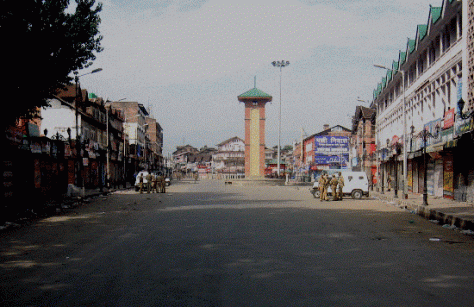
Srinagar's Lal Chowk on 15 August 2011. Photo credit: Zahoor Zargar / KashmirDispatch.com

To:

The Editor,
The Press Trust of India,
New Delhi.

Dear Editor:

This is regarding your news report, “I-Day Celebrated Peacefully in Kashmir Valley“.

While the news report tells us how the celebrations were held by the chief minister in Srinagar and the deputy chief minister in Jammu, and what arrangements were made for the celebrations to take place, there’s one line in that report that tells us:

Meanwhile, normal life was was affected in Kashmir Valley due to a shutdown called by both factions of Hurriyat Conference and tight security restrictions for the Independence Day.

I have a few questions for you.

Continue reading When the State Celebrates the People’s Independence but the People Don’t: Twelve Questions for the Press Trust of India

जोश मलीहाबादी की एक नज़्म – आज के नाम

जोश मलीहाबादी की नज़्म ‘रिश्वत’ के कुछ टुकड़े, इस स्वाधीनता दिवस के नाम.

[Apologies for some missing nuqtas, despite my best efforts.]

लोग हमसे रोज कहते हैं ये आदत छोडिये
ये तिजारत है खिलाफे-आदमियत छोडिये
इससे बदतर लत नहीं है कोई, ये लत छोडिये
रोज अखबारों में छपता है की रिश्वत छोडिये

भूल कर भी जो कोई लेता है रिश्वत, चोर है
आज कौमी पागलों में रात-दिन ये शोर है. Continue reading जोश मलीहाबादी की एक नज़्म – आज के नाम

Letter from Ladakh

13th August 2011

Dear Chintan,

Some days ago, I was at Pangong Tso. Pangong is a lake, a large saltwater lake. I heard some days ago that the lake is not very deep. The waters were blue, green and clear at different spots, reminding me of my first visit to Robben Islands in Cape Town in 1999 where I was awed at the different colours that the sea assumed in the course of its course. There is no fish in Pangong lake, as I was also told some days later. We only saw a mother duck swimming with her babies and a few insect-like fish. Also, there is no boating permitted on the lake. This is because Pangong Tso is a border area where India border with China and for security reasons, no activity is permitted on the lake.  Continue reading Letter from Ladakh

India and Pakistan: A Matter of Taste

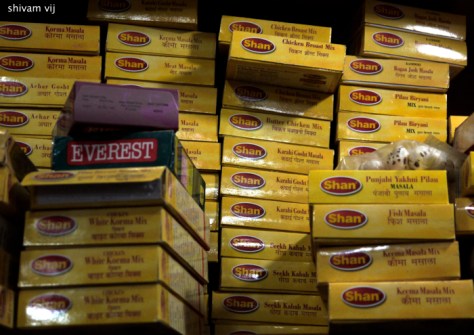
Imported from Karachi, Shan masalas are a hit in Delhi. They make sure anyone can make good Biryani or Korma. Photo taken at a grocery store in south Delhi by Shivam Vij
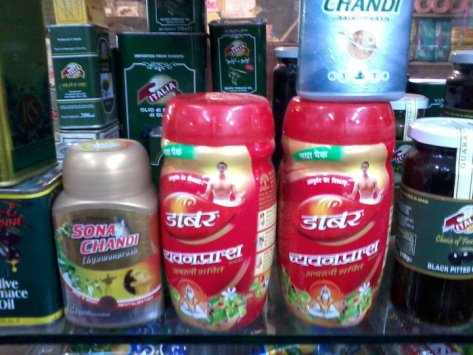
Dabur Chawanprash at a grocery store in Lahore. The Devnagiri script on the pack would be a rarity in Pakistan! Photo credit: Shiraz Hassan

Few Hearts to Live for

This slideshow requires JavaScript.

Photographs by Amruta Mehta

Just when Shantuben held her meditative poise at a Vipassana camp at Igatpuri on the morning of January 26, 2001, her dream turned to rubble back home in Bhuj. When she reached home, her labour of love of the last 5 years was gone, razed to the ground. It all had to start afresh. Continue reading Few Hearts to Live for

Two Years On: No War but No Peace for Women still facing the Consequences of the War – CMTPC

Statement by COALITION OF MUSLIMS AND TAMILS FOR PEACE AND COEXISTENCE

The coalition of Muslims and Tamils is a Sri Lanka based organization-comprising Muslim and Tamil identified persons who as a general principle are committed to pluralism and social justice in all its forms. Specifically, we are committed to the peaceful coexistence of Muslims and Tamils in the country, particularly in the north and east, and to a just and equitable solution to the ethnic conflict.

We can be contacted at: ctmpc_srilanka@yahoo.com

We have changed our blog site and the new address will be up soon!
Old blogsite: http://www.ctmpc.blogspot.com/

Two Years On: No War but no peace for women still facing the consequences of the war

Women in the north and the east of Sri Lanka have undergone severe hardships during the war, including the loss of loved ones, family’s support structures, livelihoods, houses and also a loss of life and dignity. While there have been numerous changes announced by the Government the situation for women on ground, however, has continued to be challenging. It is sad since the end of the brutal war women’s lives have not seen a dramatic transformation over the last two years and they have continued to face the basic challenges of safety, shelter and basic facilities. It in this light that we wish to put forward a few issues that these women have been facing within the broader context of life in the north and east for the communities living there.   We have chosen to highlight these issues because of their gravity, the State’s involvement in the same and the inability of women to seek justice in such cases owing to the lack of an effective civilian administration, security threats and the lack of a concrete remedy within the local legal system.  While we write of the issues relating to women, they raise broader concerns impacting the families and communities. The incidents and the report cover only the Northern and Eastern Province of Sri Lanka.     Continue reading Two Years On: No War but No Peace for Women still facing the Consequences of the War – CMTPC

Solidarity letter to anti-POSCO movement from Korean jail: Sung-Hee Choi

Madhumita Dutta has sent us this powerful letter in solidarity with the people of Jagatsinghpur opposing the POSCO project, written by a South Korean activist SUNG-HEE CHOI, in prison for opposing a naval base.

Dear residents in Jagatsinghpur,

I am a woman and activist living in South Korea, the country of the POSCO you oppose. I am currently being jailed in the Jeju prison, under the charge of ‘interruption of business’, because of my resistance against the enforcement of the naval base construction in the Jeju Island located in the south of South Korea. As of today, July 3, I met 46th day since my arrest and 44th day since my being restrained.

I accidently happened to see two of your struggle photos and a photo in the Korean Times, June 13, 2011 had a  caption underneath it:
‘Anti POSCO action in India: A village sprays water to relieve children lying with other villages along the entry point to prevent policemen and officials from entering their area at Jagatsinghpur district, about 140 kilometers(87 miles) east of eastern Bhubareshwary India, Saturday. The villagers have been protesting against turning their farmland into an industrial developed area for a $12 billion steal plant of South Korean conglomerate POSCO (AP-Yonhap).’

Continue reading Solidarity letter to anti-POSCO movement from Korean jail: Sung-Hee Choi

#AgainstIndianCulture

Twitter hash-tag doing the rounds, becoming a meme with thousands of tweets. Small selection for you only:

http://twitter.com/#!/namansaraiya/status/89288072197443584

Continue reading #AgainstIndianCulture

Five Long Weekends

Recently a whole lot of noise was made and reams of paper were covered in fine print to make us realize how unique this July 2011 has been. We have been told that this phenomenon of a month having 5 Fridays, 5 Saturdays and 5 Sundays is a rare occurrence. Someone said that this has happened after 823 years and then someone else came along and disputed this figure. Newspapers not normally inclined to accept their mistakes did so with alacrity, and they had good reason to do so it was someone else’s mistake that they were foregrounding.
The 24X7 purveyors of nonsense have as usual gone to town, breaking all kinds of news and inviting all manner of soothsayers, numerologists, tarot-card readers, palmists, astrologists and other purveyors of superstition to respond to the breathless inanities of the perpetually excited anchors about the cataclysmic significance of these five long weekends coalescing at the peak of the Monsoon Season. Continue reading Five Long Weekends

Gandhi vs. Gandhi

Guest post by NEERJA DASANI

Prime Minister Manmohan Singh’s ‘Dilli Darbar’ on Wednesday reaffirmed this government’s unyielding belief in the trickle-down theory. Let a select few be given the pie and eventually they’ll share it byte by byte. One of the hand-picked senior editors at this super-exclusive meeting said Mr. Singh came across as “totally relaxed, confident and jovial” even as they confronted him with ‘very embarrassing questions’.

The life-altering titbits flashed repeatedly on our TV screens. “I am not a lame duck PM” – Arre wah! “I have full support of Sonia Gandhi – What more could we possibly ask for? “This is not a puppet government” – Hear, Hear! “I can come under Lokpal” – Or the Lokpal can come under you, same difference. “Inflation will come under control by March 2012” – No rush, we’ll just quietly wait in a corner, maybe eat a meal or two less, work three jobs, drop out of school…anything for the nation.

But hidden deep within all this rhetoric was a misquote of great magnitude, one that reveals a lot about the man at the helm and the dodginess of the boat we are all currently rocking along on. Continue reading Gandhi vs. Gandhi

Cities and Infrastructure – The Road Widening Saga in Bangalore

This evening, I was sitting in a coffee shop and writing about the sociology of information, how information is mired in relationships and how trust, suspicion and social relations develop in the course of circulation and exchange of information. As I was beginning to disentangle the complex web of legitimacy and regulations surrounding information, a friend called to inform that some activists and citizens had been arrested for protesting against the tree felling and road widening at Sankey Road in the northern part of Bangalore. In the last few days, the conflict regarding road widening and tree felling at Sankey Road got strong coverage in the media because citizens began gathering around the trees and the roads to prevent authorities from felling the trees. Despite this, the authorities went about felling the trees for widening the roads. The activists and protestors were clearly becoming a nuisance for the government officials and institutions who have not been able to execute the works. Hence, today, at some point, some of our activist friends were arrested on the false charges that they had assaulted public officials in their conduct of ‘government’ duty. The charges were filed under section 343 or 353 CrPC which also implied that the arrest was non-bailable. Over the course of the evening, news went about on FaceBook and Twitter about these arrests, and people from in and around Sankey Road were called to silently protest at the Aiyyappa Temple where the trees were being felled for enabling the road widening. The arrested activists and citizens were released from jail and all the charges against them were ‘dropped’ at about 6 PM. The court also granted a stay order on the tree felling around the same time, with further hearings and orders to arrive on Monday. Continue reading Cities and Infrastructure – The Road Widening Saga in Bangalore

A Free Man

Mohammed Ashraf is short and stubby, with a narrow but muscular chest and small, broad hands balanced on strong, flexible wrists. But Ashraf does not grudge the throw of the dice that has made him a safediwallah with a mazdoor’s body. A small man’s body can do things that a slenderchamak-challo cannot even contemplate.

A small man carries the ground close to him wherever he goes, even as he hangs along the side of a building three storeys high. The memory of the ground that allows him to crawl into crevices, perch on narrow ledges and balance on wobbly parapets. A short man knows the limits of his body, the extent of his reach, the exact position of his centre of balance. Unlike the tall man, he holds no illusions regarding his abilities or his dimensions; he will never overreach, overextend or overbalance.

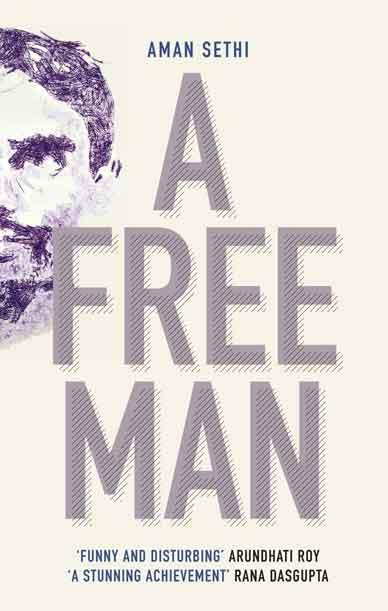
A Free Man, my first book, should be in stores this July. Read the rest of the excerpt

Mediation, Middle Grounds and Meddling – The Medley of Middlemen

[Dedicated to Sankarshan Mukhopadhyay on account of “receiving ends”]

Couple of weeks ago, I was attempting to rent out the apartment that my mother and I own in an urban sprawl in South Bangalore. Among others, a broker – referring to himself as a ‘property consultant’ – approached me with a client. I met the client and conducted some negotiations. Eventually, however, I rented the apartment to persons who had approached me before the broker and his client saw our place. I politely refused the broker’s client. The broker contacted me soon thereafter and began issuing threats for not renting the place to his client. He threatened that it would be dangerous for me to spoil my business with him. Initially, I was also nervous and upset because I was unsure if the broker had an office in the neighbourhood and whether he was powerful enough to spread false rumours about our property which could potentially devalue the property and/or spoil my relations with the new tenants who had just come in. He then came to the apartment complex where the flat is situated and created a small ruckus. Finally, failing on all counts, he threatened to lodge a false police complaint against me for allegedly taking a deposit from his client without issuing a receipt. The broker’s threats turned out to be empty and damp squib as him. He never showed up after that dramatic afternoon of back-and-forth(s). Continue reading Mediation, Middle Grounds and Meddling – The Medley of Middlemen

Seeking the Apadhasanchaarini/ The Malayalee Flâneuse

So, the moral police has struck again. The papers in Kerala have been full of news about how a young IT sector employee, Thasni Banu, was confronted by a group of goons while she was being dropped to work at night by a male friend, insulted, slapped several times, and warned that they will not allow Kerala to “become Bangalore”. She did not take it mildly and complained to the police, who rolled their eyes, hummed, and hawed, and as to be expected, went slower than usual. One of the goons who was apprehended was let off. The papers have indeed taken the issue very seriously — and so have the state government, which suspended the policeman who handled the affair shoddily. Continue reading Seeking the Apadhasanchaarini/ The Malayalee Flâneuse

Coke Studio India – the first six songs

So the unanimous verdict is that Coke Studio India (first aired on the Friday that went by) is no match for Coke Studio Pakistan [Wikipedia]. For some it’s been like an India-Pakistan match – I’ve seen Indian congratulate Pakistanis on Twitter for the ‘Coke Studio victory’ and others ask Indian musicians and singers to listen to Pakistani singers and hang themselves. For most, this was not surprising – Coke Studio Pakistan has showcased some of the best music you’ve heard in recent times and it raised the bar too high for Coke Studio India. There’s also the problem of Bollywoodisation of music in India, of dumbing down, producing music aimed at the marriage market and livening up the moods of those stuck in traffic. A celebrity culture has taken the passion out of music in India – it does not seem to come from deep within. New popular music in India leaves you with the kind of feeling that a mall does. Loud and empty.

Continue reading Coke Studio India – the first six songs

लखनऊ और फैज़: अतुल तिवारी

Guest posy by ATUL TIWARI

(प्रगतिशील लेखन के आंदोलन से जुडे हुए प्रसिद्ध पटकथा लेखक
अतुल तिवारी ने यह लेख लाहौर में आयोजित फैज़ शताबदी समारोह में प्रस्तुत किया था और फिर दिल्ली में थिंक इंडिया मैगज़ीन के फैज़ नम्बर की रिलीज के समय होने वाले कार्यक्रम में भी उन्होंने यह लेख प्रस्तुत किया । काफिला के लिए लेखक की अनुमति से प्रकाशितThe English translation is given below the Urdu original. – SH)

“हज़रात!

ये जलसा हमारी अदब की तारीख़ में एक यादगार वाक़या है।  हमारे सम्मेलनों,अंजुमनों में – अब तक, आम तौर पर – ज़ुबान और उसकी अशात अत से बहस की जाती रही है। यहाँ तक कि उर्दू और हिंदी का इब्तेदाई लिटरेचर – जो मौजूद है – उसका मंशा ख़यालात और जज़्बात पर असर डालना नहीं, बल्कि बाज़ ज़ुबान की तामीर था।…लेकिन ज़ुबान ज़रिया है मंजिल नहीं ।

…अदब की बहुत सी तारीफें की गयीं हैं।  लेकिन मेरे ख़याल से इसकी बेहतरीन तारीफ़ “तनक़ीद-ए-हयात” है – चाहे वो मकालों की शक्ल में हो। या अफसानों की। या शेर की। इससे हमारी हयात का तब्सिरा कहना चाहिए। Continue reading लखनऊ और फैज़: अतुल तिवारी

Dr Khaleel Chishty will finally be free

This note comes from KAVITA SRIVASTAVA of the People’s Union for Civil Liberties

An ailing Dr Chishty will soon be with his family

Dr. Khaleel Chishty, the 78 year old a renowned Virologist from Pakistan, will now go home very soon. A process that began on the 20th of April, 2011 will finally conclude at the Rajasthan end two months later precisely on the 20th of June, with the Governor signing the mercy petition that will let him go, once the MEA give their stamp.  Continue reading Dr Khaleel Chishty will finally be free

Of Fakes, Duplicates and Originals – the Tale of Ration Cards and the Trail of Transparency in Governance

On 2nd May 2011, the front page of the Times of India (TOI) beamed and screamed: “Don’t pay a bribe, file an RTI application – Equally Effective in Ensuring Service”. Two doctoral candidates at Yale University’s political science department had conducted field experiments in the bastis in Delhi in the year 2007 regarding poor people’s experiences in making applications for ration cards. The researchers – Leonid V Peisakhin and Paul Pinto – found that persons who paid bribes had their ration cards processed faster. However, those who filed an RTI request to know about the status of their ration card application, were “almost as successful”, the TOI report claimed. (The details of the study and the outcomes can be accessed through Peisakhin and Pinto’s paper “Is transparency an effective anti-corruption strategy? Evidence from a field experiment in India.” The paper was published in 2010 in Regulation and Governance Journal, volume 4, pp 261-280.) The researchers had also put people in two other control groups – one which neither paid a bribe nor followed-up and a second group which had filed their applications along with a letter of recommendation from the local NGO. Both these groups were not as successful as the former two groups in obtaining their ration cards. The researchers’ analyses veered towards two conclusions: first, that the RTI Act serves the poor who are usually denied/deprived of information. Secondly, reforms/laws which give more ‘voice’ to citizens and allow them to scrutinize the functioning of officials and elected representatives are more effective in ensuring transparency and gaining access to public services. Continue reading Of Fakes, Duplicates and Originals – the Tale of Ration Cards and the Trail of Transparency in Governance

Of Mosques and Minars

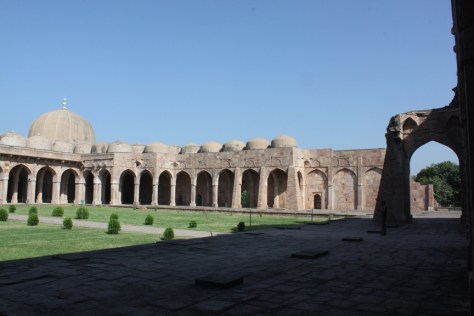
The Jama Masjid at Mandu. Photo credit: Himanshu Joshi

I can’t really say when I first heard the Aazan  (the call for prayers given by the Muezzin, five times a day) it must have been in the early 50s when I was a little child and lived in Chabi Ganj, next to the Faseel (City wall) near Kashmiri Gate.

The sound of the Azan would have drifted in from one of the nearby Mosques, there were a few not too far away. The practice of using loudspeakers was not in vogue those days and yet the muezzin’s call for prayers travelled quite some distance, primarily because the horrible ambient sounds that assail our auditory nerves were almost non-existent at the time, in place of this cacophony there used to be other ambient sounds, the rustling of leaves, the chirping of birds and others, that have, it would seem, now been lost forever.  Continue reading Of Mosques and Minars

Birds, tea, ghosts and the Indian National Congress: Sumana Roy

Guest post by SUMANA ROY

A few years ago, I took my students to the cemetery in Darjeeling. I lived in an apartment just above the Happy Valley Tea Estate, from where I saw the prettiest of sunsets, had a colleague point out the ranges of Sandakphu to me quite often, and from whose long narrow balcony I imagined shadows of, as the lingo among Bengalis in Darjeeling went, “Sahib Ghosts”. Apart from the weather, perfect and monstrous in turns, what kept Darjeeling alive to “professors from the plains”, as we were called, was the mythology of “biliti” (“foreign”) ghosts waiting for the appropriate moment to reclaim what they had created – tea-gardens, the schools and colleges, the architecture, the cookies and cakes, the “style”, a word in which we tried to condense the British legacy. We spoke about planchettes, about ghosts we wanted to invite for tea, while history professors debated with political science researchers whether that meeting would be a post-postcolonial one or an anti-postcolonial moment. Continue reading Birds, tea, ghosts and the Indian National Congress: Sumana Roy

The Mountains Are Coming Closer

(This article by me has appeared in the Sunday Guardian, Delhi, and the Friday Times, Lahore.)

The voices that reverberate in your head after a visit to Kashmir leave you numb, making you sadder the more you think about them. You know that it is going to be worse when you visit next year. The mountains that you see faintly from over the bridges on the Jhelum river in downtown Srinagar, a thousand-year-old settlement, you know they are coming closer.

An old man you see on the road wants your attention. No, not here. Let’s get inside a parked car. You wonder what secrets are to be passed on. From inside his pheran he takes out a bundle of papers. Both his sons were picked up from Kathmandu in Nepal in 2000, where they were eking out a living. Had they been militants why would they have … look, look, this paper, certificate of registration of Indian nationals in Nepal? The last he heard of his sons some years ago was that Indian intelligence had detained him in Delhi. He is coming to Delhi next month. Could you help? All he wants to know is what happened to his sons, which prison are they in, could he see them once? Read more…