Category Archives: Frontiers

New Politics of Our Times and Post-Capitalist Futures

An earlier version of this essay was published in Outlook magazine

“The young students are not interested in establishing that neoliberalism works – they’re trying to understand where markets fail and what to do about it, with an understanding that the failures are pervasive. That’s true of both micro and macroeconomics. I wouldn’t say it’s everywhere, but I’d say that it’s dominant.
“In policymaking circles I think it’s the same thing. Of course, there are people, say on the right in the United States who don’t recognise this. But even many of the people on the right would say markets don’t work very well, but their problem is governments are unable to correct it.”
Stiglitz went on to argue that one of the central tenets of the neoliberal ideology – the idea that markets function best when left alone and that an unregulated market is the best way to increase economic growth – has now been pretty much disproved. Read the full report by Will Martin here

One often hears over-zealous warriors of neoliberalism say of Leftists that they live in a time- warp; that the world has long changed and that the disappearance of state-socialism has finally proved that all their beliefs were little more than pipe-dreams. They talk as though history came to an end with the collapse of actually existing socialisms and the global ascendance of neoliberalism in the early 1990s. As though all thought came to an end; as if the distilled essence of everything that could ever be thought, or need be thought, was already encapsulated in the neoliberal dogma.

Continue reading New Politics of Our Times and Post-Capitalist Futures
Longing for the World: A Memoir of Two Days at the Kochi Biennale

[Disclaimer: I am not an art critic, artist, or travelled in the world of art. This is just a memoir]

(I)

Fort Kochi, 9 Feb. 2017

Though I had already been to the biennale in January and had a roaring time, something kept urging me to go there again. That something, I believe, is my insatiable imagination – which has always had a life of its own as long as I can remember, needs to be fed all the time, and actually drives me crazy. But maybe I should be thankful: if I survive this loveless existence that is my life, it is because my imagination has always spirited me away even from the midst of the worst emotional violence and uproar. Social theorists who use trickster figures or such characters as Daedalus who give power the slip, or manipulate it to their own ends, are probably saying the same thing.

The only ‘Moral Science’ lesson I remember from school was from the fourth standard, about the invisible guardian angel who supposedly protected us from evil. What intrigued me was the suggestion that each of us had a special angel-companion of our own who was ever-present though invisible – quite a lovely idea to a lonely child who found it hard to blend and settle into her playmates’ world. For me that was the unseen power which transformed a boring class into a musical concert by playing music inside my head; wove words and images into tales there; scared me sometimes, but equally let me exorcise the fear; and led me to all sorts of nooks and corners in the house and the yard and showed me all sorts of things, almost a world that I, but no one else, could see.

I pulled myself out of the world of research that employed, that did not satisfy, my imagination, and went again to the biennale. Two golden days! No words exist to reveal how my heart sang at the prospect. And besides, I was going to stay with dear, beloved friends, people who lived steeped in imagination – unlike me, whose current existence involved the use of the imagination (though it can never be mastered fully for sure) in a self-conscious way. My friends who run a little homestay near Fort Kochi reach out to others with extraordinary warmth mainly because, I think, their world is so incredibly diverse – populated by not just all sorts of diverse human beings, (rich, poor, high, low, of different faiths and castes, related by marriage, friendship, acquaintance, country-cousinship, common humanity, vague feelings of familiarity and so on), but also by spirits, saints, gods, all of who are felt and reached. Continue reading Longing for the World: A Memoir of Two Days at the Kochi Biennale

[Watch] Marching with the Bhim Army!


This October, a colleague and I tracked a group of young Dalits fighting caste atrocities in Uttar Pradesh. The documentary posted above is one part of an extended multimedia project. See the entire project here: https://www.thequint.com/quintlab/ambedkar-dalit-army-fights-caste-atrocities-in-uttar-pradesh/

On Barak Valley Bandh on 16th December, 2016 – Some Nascent Observations: Arunima Chakraborty

This is a Guest Post by ARUNIMA CHAKRABORTY

Let’s begin with the usual: by ruing over Indian mainstream media’s overlooking of what could have been treated as more newsworthy. Today, that is, 16th of December, 2016 witnessed a bandh in southern Assam’s Barak valley protesting against the statement by the union minister of state for railways, Rajen Gohain that ‘Bengali…should be withdrawn from Barak valley as official language’ since ‘there cannot be two official languages’.[1] And a simple, layman-like google-news search reveals that there are just three entries on the issue/event.

This piece is aimed not at joining the state Congress and the local SUCI(Socialist Unity Centre of India) cadres who are decrying comment by Gohain, the union minister and a senior BJP leader in Assam but rather at attempting a delineation of the ominous portents which it seems to have unleashed. And of course, to trace the genealogy of the statement.

First of all, a rather facile fact: Mr. Gohain’s observation that there cannot be two official languages clashes with article 345 of the Indian constitution which allows for the adoption of one or more official languages by any state of the Indian union. Article 347 also allows for respecting the desire of a significant section of a populace of a state for the usage of a language of their choice.[2] A couple of months ago, while visiting Assam, I watched, or rather listened, on an Assamese news channel, a shrill voice issuing a caveat to its viewers, “…barak upatyakat asomiya bhasha nokoya hoiche”. ‘Assamese is no longer spoken in the Barak valley’. Anybody remotely familiar with the history of the region could have retorted back with the question, when was Assamese ever spoken in the region?

Continue reading On Barak Valley Bandh on 16th December, 2016 – Some Nascent Observations: Arunima Chakraborty

On Indian Exceptionalism and Kashmir: Dia Da Costa

This is a guest post by Dia Da Costa

‘If Trump is elected, I will move to Canada,’ many Americans noted in passing, in jest, and then in all seriousness once the results were out.

If it has taken this election result to make people recognize the pervasive racism in the US, that is because of the success of US exceptionalism and its ability to deflect attention from its ongoing colonization of indigenous land, relentless imperialism, Islamophobia, and ongoing brutalities against black people in the aftermath of abolition and the civil rights movement. If it has taken this election result to make people really want to move to Canada, that too is because of the success of Canadian multicultural exceptionalism. Apparently, Canadian exceptionalism is still able to pass as not-as-racist by deflecting attention from its ongoing colonization of indigenous land, relentless participation in imperialism cloaked all too often as humanitarian development, growing Islamophobia, and its self-congratulatory representation of itself as having no history of slavery even as its anti-Black violence pervades cities and small towns alike.

For those of us who can recognize these forms of exceptionalism, I want to ask if we acknowledge Indian exceptionalism, and its specific relation to Kashmir? ‘If Trump is elected, I will move back to India’, I saw many Indians say on social media. If it has taken this US election result to make Indians really want to move back to India, that is not just because of the apparent success of US exceptionalism among Indians, who could see racism but could ultimately deal with, and even love life in the US. It is also because of Indian exceptionalism. To be sure, Indian exceptionalism is nurtured by the caste and class privilege that allows some Indians to declare that they will simply up and leave when the going gets tough (whether it is in India or in the US), or joke about the same.

But there is more to it. Indian exceptionalism is a state projected discourse turned commonsense perception of India as a complicated and diverse nation that is ultimately unified against all odds by the absolute commitment of its people to democracy. Whether we believe it at face value or we critique the many excesses of the Indian state, ultimately something draws us to this idea of India as the world’s largest democracy. Continue reading On Indian Exceptionalism and Kashmir: Dia Da Costa

Appeal to Join “JNU Chalo” on 15 Nov Marking One Month of Najeeb’s Disappearance: JNUSU

Guest Post by JNUSU (Jawaharlal Nehru University Students Union)

15036279_10209603262232786_2873516424910911795_n

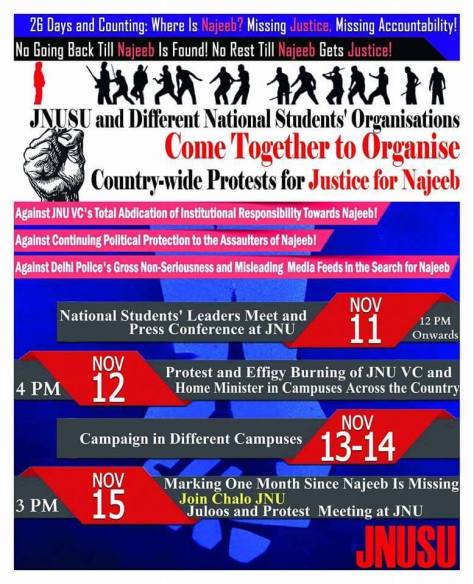
Friends, on 14th October night, Najeeb Ahmed, a student of M.Sc. Biotechnology, JNU was brutally assaulted and violently threatened by a group of ABVP students. From 15th October morning, Najeeb went missing from the campus. The disappearance of a student from a central university in the national capital after assault and intimidation of right wing lumpens is no doubt an ominous reflection of the dark times we are living in. For past four weeks, students, teachers, staff members of JNU, and citizens of Delhi have been coming out on the streets demanding institutional accountability to bring back Najeeb.

Continue reading Appeal to Join “JNU Chalo” on 15 Nov Marking One Month of Najeeb’s Disappearance: JNUSU

Resist the Draconian and Undemocratic Ban Order on the Kashmir Reader Newspaper: Junaid Nabi Bazaz

Guest Post by Junaid Nabi Bazaz. Photos by Abid Bhat and from Kashmir Reader Online

kashmir-reader-ban-759


In a move unprecedented in the last three decades in the strife torn Kashmir valley, the Jammu and Kashmir government published an order in early October that stated that Kashmir Reader (KR), a vocal newspaper with circulation of less than10000 copies, contained material and content ‘which tends to incite violence and disturb public peace and tranquility.’ This was then used as a justification for placing a ban on the publication of KR. Today, on the 25th of October, Journalists assembled in Srinagar to protest this arbitrary ban.

Continue reading Resist the Draconian and Undemocratic Ban Order on the Kashmir Reader Newspaper: Junaid Nabi Bazaz

Ambedkar and the Environmental Tradition

The 125th birth anniversary of Ambedkar was celebrated in April 2016 all around, so much so that the United Nations, for the first time, observed this day with a focus on achieving Sustainable Development Goals (SDGs). As we know, the 17 goals along with 169 targets and 304 indicators, adopted in September 2015, aspire to transform our world by balancing the three dimensions of sustainable development: economic, social and environmental. The ‘plan of action for people, planet and prosperity’ has environment at its core, along with poverty and inequality: to ‘protect planet’, create ‘healthy environment’, and ensure equality, dignity and development ‘in harmony with nature’. And Ambedkar is found in this regard to be an apt and inspiring leader.

The world can see traces of Ambedkar’s vision in the SDGs and can find his views relevant for environmental sustainability, but not the Indian environmentalists! Indian environmental movements marginalize Ambedkar. From a historical past, environmental scholars have placed Gandhi at the apex of their inspiration. Recently, Nehru and Indira Gandhi too have been constructed through an ecological lens. However, Ambedkar’s engagement with the environmental question has been relatively unexplored, even when his thoughts and interventions on nature, village, land, agriculture, water, community, industry, technology and science are some of the enduring issues of India’s environmental and political traditions. In comparison with Gandhi, credited with having an intuitive critique of modern civilization, Ambedkar has often been criticized for his modernization vision, which it is argued, drew heavily on the west for inspiration (Nagaraj 2010: 56-7)

Continue reading Ambedkar and the Environmental Tradition

Ae Shareef Insanon – Sahir Ludhianvi Talks to Those Who Are Still Sane in India and Pakistan

Ae Shareef Insanon

(Sahir Ludhianvi)

khoon apna ho ya paraya ho,
nasl-e-adam ka khoon hai aakhir;

jang mashriq mein ho ya maghrib mein,
aman-e-alam ka khoon hai aakhir.

jang to khud hi ek maslaa hai,
jang kyaa maslon ka hal degi;

aag aur khoon aaj bakhshegi,
bhookh aur ehtiyaaj kal degi.

bartaree ke saboot ki khatir,
khoon bahana hi kya zaroori hai?

ghar ki tareeqiyan mitane ko,
ghar jalana hi kya zaroori hai?

Bomb gharon par giren ke sarhad par,
Rooh-e-taameer zakhm khati hai;

Khet apne jalein ke auron ke,
Zeest faaqon mein tilmilati hai.

Tank aage badhe ke peeche hate,
Kokh dharti ki baanjh hoti hai;

Fateh ka jashn ho ke haar ka soug,
Zindagi maiyaton pe roti hai.

Isliye ae shareef insanon,
jang taltee rahe to behtar hai;

aap aur ham sabhi ke aangan mein,
shama jalti rahe to behtar hai.


اے شريف انسانو !
(ساحر لدھيانوي)

خون اپنا ہو يا پرايا ہو
نسلِ آدم کا خون ہے آخر
جنگ مشرق ميں ہو کہ مغرب ميں
امنِ عالم کا خون ہے آخر
بم گھروں پر گريں کہ سرحد پر
روح تعمير زخم کھاتی ہے
کھيت اپنے جليں کہ اوروں کے
زيست فاقوں سے تلملاتی ہے
ٹينک آگے بڑھيں، کہ پيچھے ہٹيں
کوکھ دھرتی کی بانجھ ہوتی ہے
فتح کا جشن ہو کہ ہار کا سوگ
زندگی ميتوں پر روتی ہے
جنگ تو خود ہی ايک مسئلہ ہے
جنگ کيا مسئلوں کا حل دے گی
آگ اور خون آج بخشے گی
بھوک اور احتياج کل دے گی
اس ليے اے شريف انسانو !
جنگ ٹلتی رہے تو بہتر ہے
آپ اور ہم سبھی کے آنگن ميں
شمع جلتی رہے تو بہتر ہے
برتری کے ثبوت کی خاطر
خوں بہانا ہی کيا ضروری ہے
گھر کی تاريکياں مٹانے کو
گھر جلانا ہی کيا ضروری ہے
جنگ کے اور بھی تو ميدان ہيں
صرف ميدانِ کشت و خوں ہی نہيں
حاصلِ زندگی خِرد بھی ہے
حاصلِ زندگی جنوں ہی نہيں
آؤ اس تيرہ بخت دنيا ميں
فکر کی روشنی کو عام کريں
امن کو جن سے تقويت پہنچے
ايسی جنگوں کا اہتمام کريں
جنگ، وحشت سے، بربريت سے
امن، تہذيب و ارتقاء کے ليے
جنگ، مرگ آفريں سياست سے
امن، انسان کی بقاء کے لیے
جنگ، افلاس اور غلامی سے
امن، بہتر نظام کي خاطر
جنگ بھٹکي ہوئي قيادت سے
امن، بےبس عوام کي خاطر
جنگ، سرمائے کے تسلط سے
امن، جمہور کي خوشي کے ليے
جنگ، جنگوں کے فلسفے کے خلاف
امن، پُرامن زندگي کے ليے‘


A Fast That Ended in Hunger- Thoughts on Irom Sharmila and Hunger Strikes: Anirban Bhattacharya

Guest Post by Anirban Bhattacharya

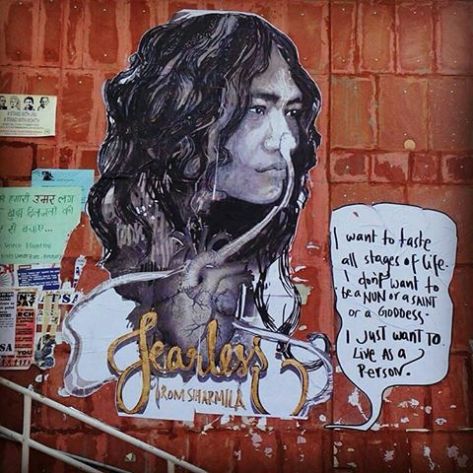
Iram Sharmila Mural at ‘Freedom Square’ JNU. Art by Shijo Suleman and the Fearless Collective. Photograph by Rebecca John. Image, courtesy, ‘The Great Walls of India’ blog on Graffiti and Wall Art

We may have differences in our political approach as to the way and means of the struggle, but what must be stated at the outset is the fact that Irom Sharmila has certainly been an icon of resistance and inspiration in the struggle against AFSPA.

Her 16 year long hunger strike has been a grim reminder of the crimes against the Manipuri people – rape, torture, fake encounters and massacres – committed by the armed forces with impunity under such draconian Acts like AFSPA. But her abrupt decision to end her fast accompanied with her willingness to contest elections in the upcoming assembly elections have met with a mixture of shock, scepticism, disappointment, puzzlement and even anger amongst her people in Manipur and even her close associates. There also seems to be a resentment against her being in a relationship and her plan to marry. Such scrutiny/dragging of her personal life are, however, quite deplorable. But overall, the disappointment with the decision of Irom to quit fasting and contest elections is so strong that, after breaking her fast in the hospital, when she tried to go to a local activist’s shelter, the locals disapproved. She had to seek temporary shelter in an ISKCON temple along with her police guards and then was shifted to a police station and finally she was forced to retreat to the same hospital that housed her for last 16 years. Now, this is telling. But what does it tell? The answer to this question would take us away from criticisms about any particular individual, but to the evaluation of the very method of struggle that she had been a part of, its scope, effectivity and limitations.

Continue reading A Fast That Ended in Hunger- Thoughts on Irom Sharmila and Hunger Strikes: Anirban Bhattacharya

Statement in Support of Khurram Parvez from Groups and Individuals in Karnataka

Over the past 70 days, there have been over 84 deaths, hundreds have lost their eyesight to pellet wounds and thousands have been injured in Kashmir. As news reports of the death of 11 year old Nasir Shafi, son of Muhammad Shafi, a resident of New Theed Harwan in Srinagar emerge, we also hear about Showkat Ahmed Misger, a person with mental disabilities from Safa Kadal who was admitted in hospital in a critical condition with pellet wounds. Though the people of Chandpora were told by the police that Nasir Shafi was mauled by a bear, pictures of his body with pellet wounds and torture marks stand in contradiction to this official version of events. The violence unleashed by the armed forces continue unabated in Kashmir inspite of extensive social media outrage and mass protests in  Indian cities like Patna, Kolkatta, Chennai, Bangalore, Delhi etc.

Continue reading Statement in Support of Khurram Parvez from Groups and Individuals in Karnataka

Free Khurram Parvez – An Open Letter to Civil Society: JKCCS

Guest Post by Jammu and Kashmir Coalition for Civil Society on behalf of the signatories of the statement in support of Khurram Parvez

14355569_670864076420404_7479719579066415935_n
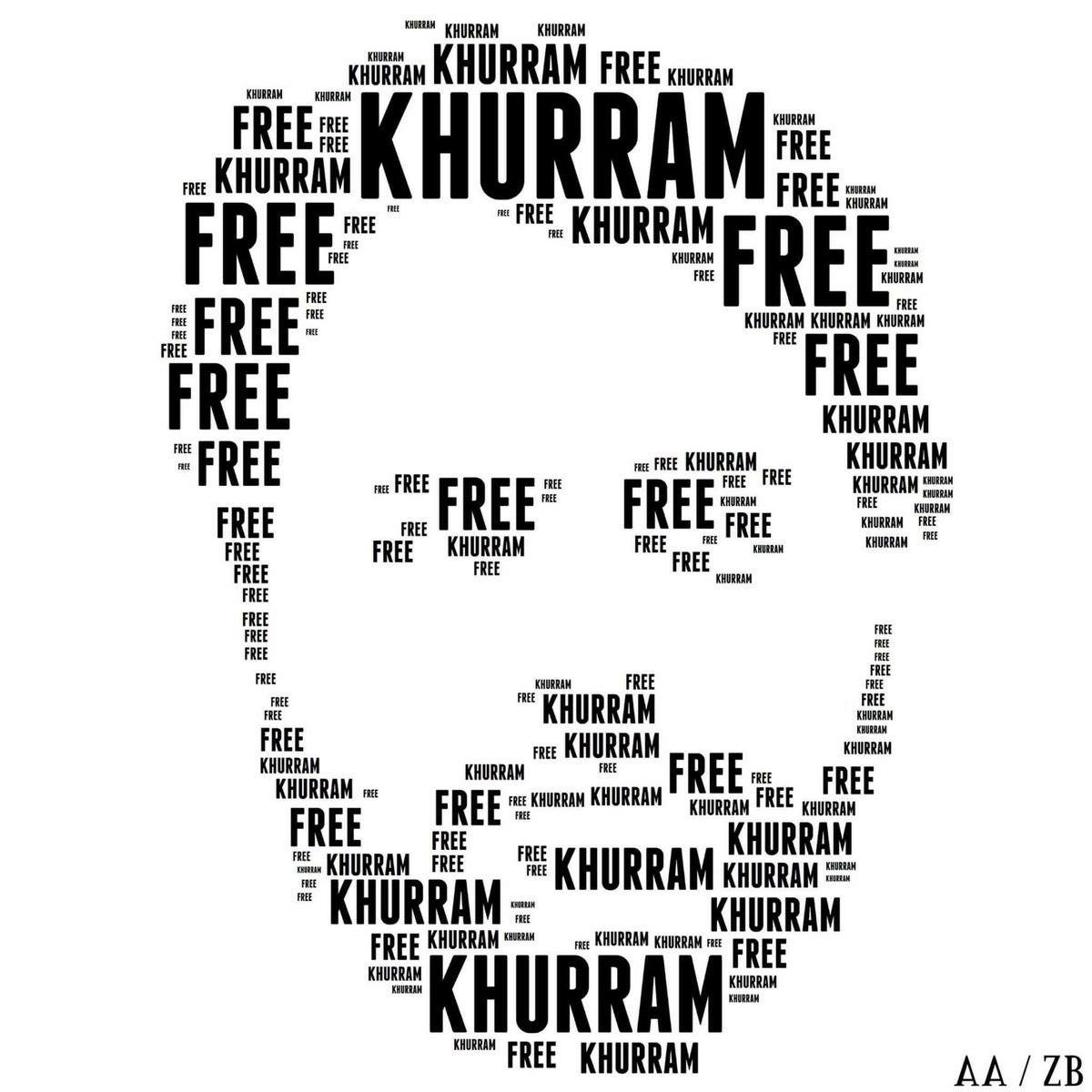
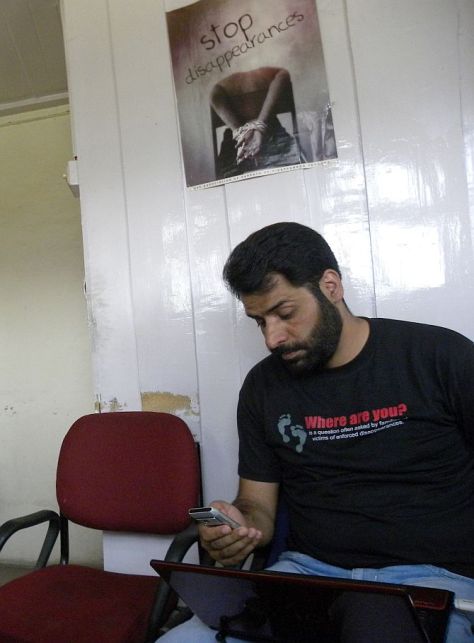
Khurram Parve, Image, courtesy JKCCS

We, the undersigned, call for the immediate release of Khurram Parvez, a distinguished and courageous human rights defender, and write in support of the enclosed statements issued by Advocate Parvez Imroz

As we write this, Khurram Parvez has been remanded to preventive custody in a sub-jail in the highly militarized Kupwara District of Kashmir. He is expected to be produced before the court on 21 September 2016.

An executive magistrate in Srinagar issued the order against Khurram Parvez, invoking Sections 107 and 151 of the Code of Criminal Procedure (CrPC) (pertaining to detention for breach of peace and design to commit a cognizable offence).

The actions against Mr. Parvez are symptomatic of the escalated repression in Kashmir by institutions of state since July 8.

We note with horror that since July 2016, over 80 persons have been killed, over 11,000 persons have been injured, over 1,000 persons have been arrested and over 100 ambulances have been attacked. For 70 days now, curfew has been imposed in various parts of Kashmir. Continue reading Free Khurram Parvez – An Open Letter to Civil Society: JKCCS

State Violence against Peaceful Assemblies in Kashmir: JKCCS

Guest Post by Jammu & Kashmir Coalition for Civil Society (JKCCS)

Over the last week – August 29 to 5 September, of uninterrupted curfew in Kashmir, the government’s unbridled use of force on peaceful public meetings/rallies, which are either funeral processions of the civilians killed by government forces or peaceful political rallies where people demand their right to self determination, across Kashmir valley has resulted in injuries to 1215+ people, many of whom are injured by pellets shot guns. The violence used by government forces against un-armed peaceful rallies deflates its claims that its forces only resort to violence when they are pelted with stones. Contrary to government claims, the use of force against the peaceful demonstrators acts as a provocation to people and youth in particular who then retaliate by stone throwing on Indian forces. The sheer number of peaceful pro-freedom rallies held in the last week alone symbolizes the nature of the current anti-India uprising which has seen lakhs of Kashmiris on streets to voice their demand for right to self-determination. Such attacks are against the internationally, and domestically, recognized fundamental rights of peoples to peaceful assembly and association, and freedom of opinion and expression, including India’s obligation under the ICCPR. Continue reading State Violence against Peaceful Assemblies in Kashmir: JKCCS

Kashmir Scholars Action Group Letter to the UN High Commission for Human Rights on the Situation in Jammu&Kashmir: KSAG

Guest Post by Kashmir Scholars Action Group

To Mr. Zeid Ra’ad Al Hussein

UN High Commissioner for Human Rights

Re: Urgent action needed to end state violence in Indian-controlled Kashmir

We are writing to you to express our concern about the situation in Indian-controlled Kashmir where the already subjected population is currently living in a state of siege due to the massive violence unleashed by the Indian forces. We appreciate your decision to create a fact-finding mission and deplore the refusal of the Indian government to allow access to UN human rights monitors (1). In the absence of such a mission, we feel it incumbent upon civil society groups to provide regular updates on the situation.

We, the Kashmir Scholars Action Group, are an interdisciplinary group of scholars of various nationalities engaged in research on the region of Kashmir. Our research on Kashmir, its history, its consequences for the region and beyond, and its possible resolution, delves into the implications for an internationally mediated political solution, and is of relevance to policy makers. Based on our long and active engagement with civil society groups in Indian-controlled Kashmir, we have undertaken to document and communicate the situation on ground since the Indian state’s violence against civilians has continued to mount from July 7th, 2016 onwards. Each of us has written about Kashmiri history, society and politics; and we are particularly concerned about the present conditions of violence. We write to you now as part of our urgent efforts to check the brutality of the state’s response to Kashmiris, scores of whom have mobilized in support of their demand for azadi (freedom). Even as we will go on to list some of the details of the humanitarian crisis, we wish to make clear that we are calling not only for the resumption of basic civil services, the rule of law, and the restoration of human rights in Kashmir, but, most importantly, for an internationally mediated political solution for this ongoing crisis. Continue reading Kashmir Scholars Action Group Letter to the UN High Commission for Human Rights on the Situation in Jammu&Kashmir: KSAG

A response to “Kashmir is Feminist Issue” by Sonam Mittal: Tupur Chatterjee

Guest Post by Tupur Chatterjee

Sonam Mittal’s recent piece in Kafila, “Kashmir is Feminist Issue” draws upon an oft-cited gendered analogy to describe the Kashmir’s relationship with India and Pakistan. Though it makes a few pertinent points about the nexus of power and patriarchy and the urgent need for Indian feminist solidarity with the Kashmiri resistance, I found the analogy deeply problematic and strongly feel that it needs further unpacking to underline its worrying implications.

Continue reading A response to “Kashmir is Feminist Issue” by Sonam Mittal: Tupur Chatterjee

Kashmir’s Freedom is India’s Freedom: Hum Kya Chahte? Azadi

I do not think ordinary Indians support the brutality of army occupation in Kashmir. Despite what the Indian state says, and despite what the Indian army and CRPF are doing, I honestly do not believe that any ordinary Indian supports the torture of young men, the blinding of people attending a funeral, the rape of women, the killings and maiming and abuse and humiliation that are now a routinized fact of daily life in the Kashmir valley. To believe that ordinary Indians enjoy watching this spectacle of violence, that ordinary Indians take pleasure in the torture of children, would be to think India is now a country comprised of sadistic psychopaths. I honestly do not think ordinary Indians are psychopaths. I do think, however, that ordinary Indians, and I count myself amongst them, have somehow managed, till now, to keep some distance between what is happening in Kashmir and the idea of India as a whole. After all, India is a large and complex country, a huge and diverse society. Everything that happens in Kashmir, the brutality of the army and the security forces, cannot signify the whole truth of India we tell ourselves. It seems somehow unfair to us ordinary Indians that what happens in Kashmir reflects on us all.

But the time has come now to squarely face some hard truths about ourselves, and the dissimulations, psychological and social, by which we continue to live in this country and call ourselves ‘Indians’. Continue reading Kashmir’s Freedom is India’s Freedom: Hum Kya Chahte? Azadi

Kashmir, Summer 2016: Angana Chatterji

Guest Post by Angana Chatterji 

In 2011, I had written an essay on Kashmir entitled: “The Militarized Zone,”which was published in an anthology on Kashmir (Verso Books).

What was apparent then is all too real now. I reproduce an edited fragment here today, in solidarity with Kashmiris who are being asphyxiated in their land and subjected to life under conditions akin to collective internment, and their allies across India who are being intimidated to conserve the silence. Speaking up on Kashmir is inevitably accompanied by fear for many even as silence is a betrayal of humanity. Continue reading Kashmir, Summer 2016: Angana Chatterji

Statement Against State Violence in Kashmir: Ashoka University Students and Alumni

Guest Post by Ashoka University Students and Alumni

Letter condemning the State Violence in Kashmir

To

The Govt of India. and the Govt. of Jammu and Kashmir.

We, the undersigned—current students, alumni of the Young India Fellowship, and faculty of Ashoka University—write to voice our deepest anguish and grave concern at the violent turn of events in Kashmir in the past few days. The violence perpetrated by the Indian State after the extra-judicial execution(1) of 22-year old Hizbul Mujahideen Commander Burhan Wani (2) is highly condemnable. The Indian Army, Kashmir Police and other task forces have reacted violently with bullets, pellets and lathis in the clashes that erupted after Burhan’s funeral. This was immediately followed by many more protests and demonstrations as part of Kashmiri resistance to the military occupation of Kashmir by the Indian State. In the violent repression of the protests which had a huge ground support (evident from the large attendance to Burhan’s funeral) , 55 civilians (3) have been killed and around 3100 people (4) were severely injured by the pellets(5), lathis and bullets, some of whom have lost their eyesight. We, unequivocally, condemn this brutal use of force by the Indian State in dealing with the protests after the killing of Burhan Wani. Continue reading Statement Against State Violence in Kashmir: Ashoka University Students and Alumni

Students Protest in JNU Over Rising Civilian Casualties in Kashmir

The number of unarmed civilians killed in instances of firing by the armed forces, police and paramilitaries enforcing the occupation of Kashmir by the Indian state in the latest wave of violence has crossed fifty. Many more have been blinded by pellet guns. Hundreds have been injured and hospitalized. Reports of protests are coming not only from the Kashmir valley, Kargil, Drass and Jammu, but also from many cities in India. From Delhi (where there has been a public protest at Jantar Mantar, a press conference at Gandhi Peace Foundation and a student protest at Jawaharlal Nehru University), from Kolkata, which saw a massive turn out in a public march, from Chennai, from Patna, and from Kochi and Tricky in Kerala.

On Friday 22nd July, I went to a night protest march and public gathering by students at Jawaharlal Nehru University, Delhi. The march was called by Shehla Rashid, Vice President, JNUSU and Rama Naga, General Secretary, JNUSU (Both AISA activists) There were perhaps two hundred students gathered peacefully. The march began around 10:00 pm, made its way around the university campus and the protest continued well past midnight. Several student organizations, AISA, BASO, Hundred Flowers, Collective, DSU and individual students participated in the march. Shehla Rashid, Vice President, JNUSU and an AISA student activist, addressed the gathering before the march began, stating clearly, that this was going to be a peaceful expression of the democratic right to protest against the atrocities being enacted by the Indian state on the people of the part of Kashmir that is under Indian occupation. She asked the students to be vigilant in case any disruptive slogans were raised by planted agent-provocateurs. The entire march, and the protest meeting was documented by the students, so as to ensure that no ‘doctored videos’ would raise their ugly digital heads in the days to come. The students raised the demand for freedom for the people of Kashmir, and for people in all parts of South Asia. The slogans connected the realties of the people of Kashmir, the North East, Bastar, Jharkhand, with the experiences of Dalits, Workers, Peasants, Women, Students and Minorities. Slogans were raised against the killings and blindings by pellet guns in Kashmir. against torture, again rape, against draconian acts like AFSPA and PSA. The march made its way through the entire campus and culminated outside Chandrabhaga Hostel, where a meeting was held on the steps. The meeting lasted over two hours, was completely peaceful,and more than two hundred students listened to the speakers with close attention.

Police officers and campus security guards were present, and recorded everything. The students also recorded everything. And the indefatigable Shamim Asghor Ali made video recordings of several speeches, and uploaded them on to youtube, which we are lucky to be able to share here. We are also grateful for the still images uploaded by V. Arun, several others also took pictures and videos, which are now being shared on Facebook. Continue reading Students Protest in JNU Over Rising Civilian Casualties in Kashmir

Police in Kashmir Raid Newspaper Bureaus, Detain Employees, Seize Copies: Prabodh Jamwal

Guest Post by Prabodh Jamwal

Two of Kashmir’s leading newspapers, Kashmir Times and Rising Kashmir said that Jammu and Kashmir police raided their office on Saturday night, seized their printed copies and arrested their employees – a clear act of choking and gagging media in crisis-hit Kashmir valley. Copies of other newspapers, including Kashmir Reader and Kashmir Observer were also seized and their circulation prevented.

Continue reading Police in Kashmir Raid Newspaper Bureaus, Detain Employees, Seize Copies: Prabodh Jamwal

Bangalore Police Revoke Permission for Protest on Kashmir: Greeshma Aruna Rai

Guest Post by Greeshma Aruna Rai, with Women against Sexual Violence and State Repression (WSS), Peoples’ Union for Civil Liberties (PUCL) & Karnataka for Kashmir Forum.
Police has revoked the permission which they had given yesterday to hold a democratic protest in solidarity with Kashmiris in Bangalore by concerned citizens and activists. This is another way in which the State shows its true colours to all Indian citizens who are against State repression and State colonialism in Kashmir.
Permission for today’s protest condemning atrocities on the people of Kashmir has been revoked by the Karnataka State Police. They have threatened us with legal action if we proceed.

As organisers we have been bombarded by the police, demanding that we withdraw this demonstration.

As we publish this message, the 11th day of curfew continues and valley remains awash with the blood of Kashmiris.
Today’s protest is postponed. We, however, refuse to be stifled by the very same state that is ravaging Kashmir. We have resolved to move against the actions of the Police. We’ll be releasing a Press Note shortly while discussing other options to challenge this.

[ Shortly after this post was uploaded, the organizers of the protest held a press conference where they released the following statement.]

Continue reading Bangalore Police Revoke Permission for Protest on Kashmir: Greeshma Aruna Rai