Category Archives: Government

Everything you wanted to know about the great Kingfisher Airlines scam but didn’t know who to ask

This slideshow requires JavaScript.

All your queries will be answered here.

Anatomy of an allegedly thwarted coup: Anwar Dayal

Prime Minister Sheikh Hasina

Guest post by ANWAR DAYAL

Bangladesh has seen more coups than Pakistan. It probably came close to one recently, by alleged Islamists in the army. I say probably because when it comes to military intervention in Bangladesh, who-what-why-when have often been unclear. For example, a few majors seized the country’s tanks and killed the founding president and his family in August 1975. Was it a few disgruntled officers with personal disputes, as was claimed by the contemporaneous foreign media? Or was it part of the complicated and brutal Cold War geopolitics, with the involvement of senior officers and politicians, as many believe? Even though the perpetrators of the massacre have been convicted, and a few hanged, Bangladeshis still debate these questions.

It’s been like that for all military interventions over the years. What may have happened in recent weeks is unlikely to be the exception. As such, one should not necessarily conclude that Saleem Samad’s officially sanctioned account in India Today is the full story.

Samad’s narrative goes something like this. Continue reading Anatomy of an allegedly thwarted coup: Anwar Dayal

What the Wall Street Journal Can’t See in India’s Forests: Aruna Chandrashekhar

 Guest post by ARUNA CHANDRASEKHAR

If we cut the entire forest down, where will we live?’- Muria adivasi, Warangal, Andhra Pradesh 

I don’t even know how to begin addressing a story as blindly biased in its premise as this one in the Wall Street Journal, which draws an obtuse line between loss of forest cover and land usage by adivasis, when it is land grab by industrialization that is endangering all we have left.

So I’m going to do this paragraph by paragraph.

India’s forest cover decreased by 367 square kilometers between 2007 and 2009, and it was primarily tribal and hilly regions that were to blame.

The tribal and hilly regions are the last vestiges of India’s forests.  How can you blame entire regions, without casting any aspersions on institutions or practices responsible? Continue reading What the Wall Street Journal Can’t See in India’s Forests: Aruna Chandrashekhar

मायावती जी के मुख्यमंत्रित्व काल का एक संक्षिप्त विवरण: राम कुमार

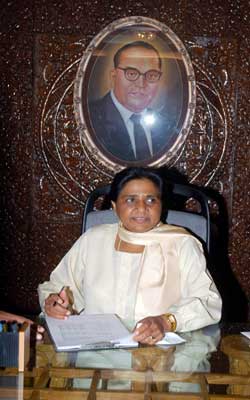
This guest post by RAM KUMAR is a review of five years of Mayawati’s administration in Uttar Pradesh. An English translation has appeared in Fountain Ink magazine, here.
मुख्यमंत्री मायावती जी को 2007 में मिला स्पष्ट जनादेश  महज मुलायम सिंह यादव के खिलाफ एन्टी-इनकमवंसी फैक्टर ही नहीं था, बलिक अराजकता और गुंडागर्दी के खिलाफ भी जनादेश  था। सरकार का खुले रूप से एन्टी-दलित चरित्र और प्रदेश  के अन्दर सरकार  के एन्टी ब्राहम्ण टोन के चलते प्रदेश  में मुलायम सिंह की सरकार के खिलाफ दलित अति पिछड़े हो गये थे। मुलायम सिंह के  कल्याण सिंह प्रेम की वजह से माइनारिटी (अल्पसंख्यक) भी  मुलायम से नाराज हो  गए। बहन जी ने सर्वजन समाज का नारा देकर   विक्षुब्द तबकों को समेटा। सभी को समेटने में रणनीति के तहत अपना नारा बदल “हाथी नहीं गणेष है ब्रम्हा, विष्णु, महेष है” का नारा लगाया। सर्वजन  फार्मूला और मुलायम के खिलाफ गुस्सा बहन जी को पूर्ण बहुमत से सत्ता में लेकर के आया।

बहन जी एक  सशक्त शासनकर्ता के रूप में जानी जाती थीं। इस बार भी बहन जी सत्ता में आयींऔर  सत्ता में आते ही तुरन्त उन्होनें  घोषणा की कि अराजकता और गुडागर्दी नहीं चलेगी, कानून का राज्य चलेगा। इसको  सिद्ध करने के लिये उन्होंने सबसे पहले जो राजनेता अपने साथ बहुत सारे शस्त्रधारियों को लेकर चलते थे,  उन पर प्रतिबंध  लगाया और एलान किया कि  कोई भी नेता सार्वजनिक स्थल पर तीन हथियार से  ज्यादा में दिखे तो उनके खिलाफ कार्यवाही की जायेगी। यही नहीं अपनी पार्टी के एम. पी. रमाकान्त यादव जो आजमगढ़ से हैं, एक गरीब मुसिलम के मकान पर जमीन कबजाने के चक्कर में जबरदस्ती बुलडोजर चलवाया इसकी खबर जब बहन जी को लगी उन्होंने रमाकान्त यादव को अपने मुख्यमंत्री आवास पर मिलने के लिये बुलाया और वहीं से उनको गिरफ्तार करवाया। यह संदेश  देने की कोशिशकी  कि सत्ताधारी दल के हों या विपक्षी पाटी के हों, कानून सबके लिये समान है। अपनी ही सरकार के खाधमंत्री और विधायक आनन्द सेन को एक महिला के अपहरण केस  में बर्खास्त कर जेल भिजवाया और अभी तक 26 प्रभावशाली नेता एवं मंत्रियों को पार्टी के बाहर का रास्ता दिखा चुकी हैं। पिछली सरकार में हुयी 17,868 पुलिस जवानों की भर्ती में हुयी धांधली के चलते भर्ती  प्रक्रिया को निरस्त किया और 25 आई .पी.एस. अधिकारियों को भी सस्पेन्ड किया।

Continue reading मायावती जी के मुख्यमंत्रित्व काल का एक संक्षिप्त विवरण: राम कुमार

An Election in Sarvajan Samaj

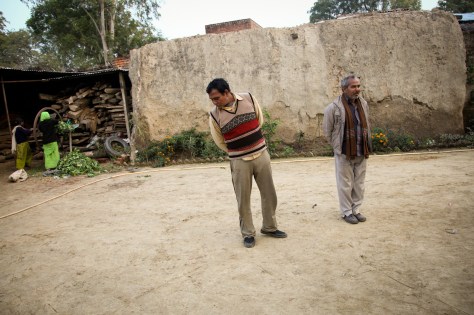
This photograph was taken by Salman Usmani in Ganguali village in Unnao near Lucknow, in early January. On the left is Prabhat Pandey and on the right, Ram Khilawan. Pandey is a Brahmin and Khilawan a Dalit. They’re the BSP’s men in this village, responsible for urging Brahmins and Dalits to vote for the BSP candidate, also a Brahmin. The photo was taken when I asked them to pose together. This is all the ‘brotherhood’ they could show before the camera.

Here’s my story on UP elections, seen through the prism of Brahmins and Dalits. Continue reading An Election in Sarvajan Samaj

A Quick Analysis of the Independence Day Speech by President Rajapaksa

“There is great chaos under heaven – the situation is excellent.” Mao Zedong quoted by Slavoj Zizek a year ago amidst the revolt against Mubarak in Egypt.

Given recent developments, I am jotting down a quick analysis of the positions, concerns and silences in President Mahinda Rajapaksa’s Independence Day speech today. The tone and substance of this speech is slightly different from the last few Independence Day speeches characterised by triumphalism and exuberance. The context of the speech is the mounting protests on the ground and increasing economic pressures.

The location of the speech in the historical city of Anuradhapura and the reference to Kebethigollawa in Anuradhapura District – the site of a horrific LTTE attack on a civilian bus in 2007 with tens of lives lost and scores injured which contributed to shifting the Sinhala public opinion fully behind the war effort – are attempts to remind the public of the horrors of war, the war victory and to mobilise Sinhala Buddhist nationalism. The solution, at the outset of the speech to all of Sri Lanka’s woes, is emphasised as the government’s “giant development works” as part of the march from “backwardness to modernity”.

Continue reading A Quick Analysis of the Independence Day Speech by President Rajapaksa

The untold stories of a political process

AP Photo by Altaf Qadri

Less than a month before the 2009 Lok Sabha elections, the wedding of a top Uttar Pradesh bureaucrat’s daughter at the Taj Hotel in Lucknow presented senior journalists invited from Delhi with an opportunity to interact with the state’s leading bureaucrats—who are, in Chief Minister Mayawati’s reign, more important than politicians. For a select few celebrity editors, there was even a rare durbar with Mayawati herself, who carefully arrived after the governor had left, presented flowers to the newly married, and proceeded to a barricaded enclosure to meet India’s opinionmakers. I don’t know what the conversation was like, but I saw the journalists’ lips move more than hers.

After the meeting was over, I asked one celebrity TV anchor what he thought the election results were going to look like. He said the Mayawati-led Bahujan Samaj Party (BSP) was very strong, and predicted she could win 50 of the 80 seats the party was contesting. The Delhi media’s awe of Mayawati was at a historic peak; they had taken her prime ministerial ambitions seriously. I told this studio journalist that the buzz in Lucknow was that the Congress could spring a surprise. “No chance,” he said. “They don’t have any organisation. Azharuddin is my friend and he called me to say he needs my help. Even a celebrity like Azharuddin is going to lose!” Read More…

How India Makes E-books Easier to Ban than Books (And How We Can Change That): Pranesh Prakash

Without getting into questions of what should and should not be unlawful speech, this guest post by PRANESH PRAKASH chooses to take a look at how Indian law promotes arbitrary removal and blocking of websites, website content, and online services, and how it makes it much easier than getting offline printed speech removed.

Banning E-Books is Trivially Easy
E-Books Are Easier To Ban Than Books, And Safer
Contrary to what Mr. Sibal’s recent hand-wringing at objectionable online material might suggest, under Indian laws currently in force it is far easier to remove material from the Web, by many degrees of magnitude, than it is to ever get them removed from a bookstore or an art gallery. To get something from a bookstore or an art gallery one needs to collect a mob, organize collective outrage and threats of violence, and finally convince either the government or a magistrate that the material is illegal, thereby allowing the police to seize the books or stop the painting from being displayed. The fact of removal of the material will be noted in various records, whether in government records, court records, police records or in newspapers of record.

By contrast, to remove something from the Web, one needs to send an e-mail complaining about it to any of the string of ‘intermediaries’ that handle the content: the site itself, the web host for the site, the telecom companies that deliver the site to your computer/mobile, the web address (domain name) provider, the service used to share the link, etc. Under the ‘Intermediary Guidelines Rules’ that have been in operation since 11th April 2011, all such companies are required to ‘disable access’ to the complained-about content within thirty-six hours of the complaint. It is really that simple.
Continue reading How India Makes E-books Easier to Ban than Books (And How We Can Change That): Pranesh Prakash

The process is the bloody punishment

Sec. 153A of the Indian Penal Code – that favored child of the religious right- provides for punishment of upto three years imprisonment for the promotion by words (spoken or written) of disharmony, feelings of enmity, hatred or ill will between religious communities. The punishment laid down in this section has to one of the most redundant penal sanctions in the law since in this case the process is the bloody punishment.

There is a similar redundancy in Sec. 295A of the IPC which provides that “Whoever, with deliberate and malicious intention of outraging the religious feelings of any class of citizens of India, by words, either spoken or written, or by signs or by visible representations or otherwise] insults or attempts to insult the religion or the religious beliefs of that class, shall be punished with imprisonment of either description for a term which may extend to three years, or with fine, or with both.

Continue reading The process is the bloody punishment

Some Questions for the Maharashtra ATS Chief: JTSA

This release comes from the JAMIA TEACHERS’ SOLIDARITY ASSOCIATION

The Maharashtra ATS claims to have cracked the 13/7 blasts case. Its chief has revealed in a press conference that Indian Mujahideen was behind the Mumbai blasts. And yet, the Ministry of Home Affairs remains far from impressed—indeed, it appears rather irritated. And the press, also unusually, has been circumspect about his revelations. The ATS Chief says that he did not want to call a press conference. But the rumours about Naquee’s IB links were threatening the credibility of the ATS. Such were his compulsions when he launched into a monologue about the ‘breakthrough’ his team—under his guidance of course—had achieved.

Despite his loud proclamations however, there are few who are willing to buy the ATS’ arguments. Here are some issues for the ATS Chief to mull over: Continue reading Some Questions for the Maharashtra ATS Chief: JTSA

Following the Protest Movement in Sri Lankan Universities

Some of the stronger protests and forceful political debates in Sri Lanka are taking place in relation to student rights, university teachers pay, allocation of government expenditure on education and inequalities relating to the Government’s private university bill. University students have been on the boil over issues from militarisation of the universities, including compulsory military training for entering university students last year, to attempts to ban student unions. University teachers carried out strike action for months last year extracting promises of higher pay and input into educational policy which were not carried forward with the Budget, leading to a token strike on January 17th. I wrote an article on the neoliberalisation of university education in the Sunday Island on Jan 15th discussing the larger project at work with the backing of the World Bank and IMF. Kumar David has written an article in the Jan 22nd issue of the Sunday Island explaining the z-scores scandal – about the Advanced Level exam results which are used for university entrance – and its relationship to the protests against the private university bill. The Young Asia Television in their episode of Connections today has documented the recent protests including some interviews with student leaders and university teachers. The uteachers blog is an excellent resource to find more articles and presentations by academics involved in the recent protests and actions. Historically, the universities have been a hot bed of protest as well as social and political change in Sri Lanka, and those in solidarity with progressive forces struggling for social justice in Sri Lanka may want to follow the protest movement gaining ground in the universities.

Open Letter to Haryana CM on Forced Land Acquisition for Gorakhpur Nuclear Power Plant, Fatehabad

Farmers of Gorakhpur village hold a protest in Fatehabad against acquisition of their agricultural land by the Haryana government for a nuclear power plant in the area, August 2010. (The Tribune on-line)


January 16, 2012

Bhupinder Singh Hooda,
Chief Minister, Haryana
Chandigarh

Dear Mr. Chief Minister,

It was with gravest concern and misgivings that we heard of Section 9 of the Land Acquisition Act, 1894, being issued in Fatehabad, Haryana, to forcibly acquire land for the proposed Gorakhpur Nuclear Power Plant Project. This action by the Harayana State Govt. is completely unacceptable on the following two counts:

Farmers of Gorakhpur and nearby villages have been sitting in continuous opposition to the proposed nuclear power plant from August 2010. They are fighting for their right to life, livelihood and to safeguarding their fertile and irrigated, three-crop land, all of which will be severely threatened if the project were passed. The fact that a community is in such a long drawn and strong opposition to this project, is of crucial concern and cannot be ignored arbitrarily or repressed in democracy. Continue reading Open Letter to Haryana CM on Forced Land Acquisition for Gorakhpur Nuclear Power Plant, Fatehabad

Satanic Versus Moronic: How Salman Rushdie Lost the UP Election

Oh, It’s silly season again. (Has it ever not been silly season? Silly me for making a silly rhetorical opening to this post). Anyway folks, aam aur khas janta, baba log and bibi log, it’s time, once monotonously again, for quarantines and piety, for bans and shoe-throwing contests, for frothing at the mouth and froth on the telly. Its Rushdie-Nasreen-Husain Time, again! Ta-Raa! And like a ‘sanjog’ made by a pretend-god in a made up marquee heaven, the stars of ‘Rushdie Time’ are crossed with the suddenly brightly shining stars of what would have otherwise been a lackluster, effigy-tarpaulined, mid-winter provincial election. Ta-Rant-Ta-Raa! Not even a Saleem Sinai or a Gibreel Farishta, let alone a jeeta-jagtaa Salman Rushdie in his weirdest magic-realist moment could have imagined himself mixed up in a plot as diabolical as this one. If this was a court case we could call it Satanic versus Moronic.  Whatever it is, there is no denying that it is a P2C2E – a ‘Process Too Complicated To Explain’. But explain we must. Process we can. Pyaar kiya to darna kya?

Continue reading Satanic Versus Moronic: How Salman Rushdie Lost the UP Election

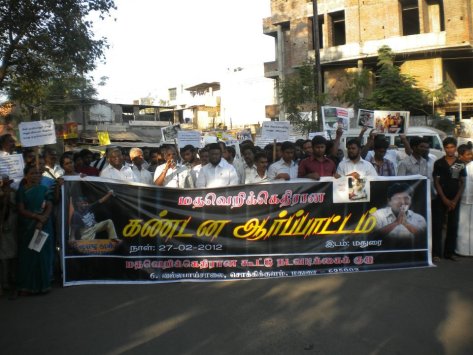
Paramakudi – Six Poems: Ravikumar

In September last year, the Tamil Nadu police killed six Dalits in a firing incident in Paramakudi town of Ramanathapuram district. This guest post by RAVIKUMAR is a set of six poems on the Paramakudi killings. The English translation by RAVISHANKER is followed by the Tamil original. For more on the incident, see articles in Kafila archives by V. Geetha and Bobby Kunhu and over at Atrocity News, a fact finding report (.pdf).

Continue reading Paramakudi – Six Poems: Ravikumar

Fear, Safety and Livelihood: The Biopolitics of Mullaperiyar: T. T. Sreekumar

Guest post by T. T. SREEKUMAR

The Mullaperiyar Dam controversy  embodies a concrete and complex example of the imperial matrix of biopolitical legacy that post-colonial societies continually encounter even after decades of political independence.  More than a century ago, the British colonial Government administering Madras Presidency, which included parts of Tamil Nadu State, directed the erstwhile princely state of Travancore (which forms the southern districts of Kerala) to sign an agreement to divert water from the Periyar river in Travancore to the relatively arid zones adjoining the Western Ghats within the presidency, and to lease out a large tract of its territory for the construction of a Dam for a time span of 999 years.  In the post-independence period, two supplemental agreements to the original Lease Deed of 1886 have been signed between the Madras government and the Government of Kerala regarding fishing rights and generation of hydroelectric power, the former in favour of Kerala and latter favouring Tamil Nadu. The supplementary agreements negotiated and enhanced the annual lease rent and the rate of pay for the electrical energy generated.

Continue reading Fear, Safety and Livelihood: The Biopolitics of Mullaperiyar: T. T. Sreekumar

Partition Revisited: 2 October 2011, Rudrapur

This is a film by RAJEEV YADAV and SHAHNAWAZ ALAM of the Uttar Pradesh unit of the PEOPLE’S UNION FOR CIVIL LIBERTIES

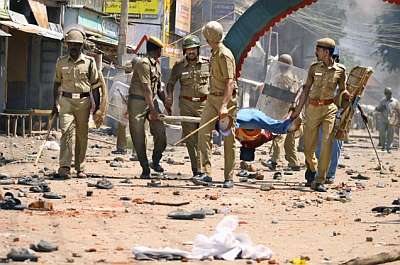
This is to introduce our documentary film ‘PARTITION REVISITED’ on the Rudrapur riot of 2nd October 2011, where four persons were killed. Policemen and mobs led by leaders of the Bhartiya Janta Party, the Congress and the Bahujan Samaj Party had ransacked shops and settlements of Muslims in their third successful attempt within two years to stoke communal violence. The riot, which took place on Gandhi Jayanti, led to a massive outmigration of the victimised community, reminding one of the days of the 1947 Partition. This film focuses on precisely this yet unnoticed phenomenon that we could trace out in this first-ever state-sponsored communal riot since the formation of the hill state of Uttarakhand, engineered by the Rashtriya Swayamsewak Sangh, which has been working for a long time in this area to arouse anti-Muslim sentiments in the Bengalis, Sikhs & Panjabi Hindus who settled in Rudrapur after the Partition to India. At a time when the state is going to polls this riot assumes an electoral importance.

Women’s groups stopped from meeting Soni Sori in Raipur

Press statement from Saheli, Delhi; Women Against Sexual Violence and State Repression (WSS), Delhi; WSS Orissa and Madhya Pradesh Mahila Manch, Bhopal.

A team of women representing various women’s groups from across the country were in Raipur on 12-13th January to meet Ms. Soni Sori, currently lodged in Raipur Central Jail. Ms Sori is a tribal school teacher who has been hounded by the Chhattisgarh Police as a Maoist conduit. She was arrested in October 2011 and was brutally assaulted sexually in police custody on the night of 8-9th October.

Even after applying for permission as per procedure and repeated requests to various concerned officials on 12th, the women were denied permission to meet her, despite already having an assurance from the Principal Secretary, Mr. Baijendra Kumar, during his visit to Delhi in October.For two whole days the team was shuttled from one authority to the other and back, with each and every official avoiding taking a decision or give in writing any denial or reasons for it. Finally, permission was denied on 13th citing `security’ concerns.

Read full statement here.

JTSA lists some more ‘genuine’ encounters in Delhi for the Home Minister

This release comes from the JAMIA TEACHERS’ SOLIDARITY ASSOCIATION

Mr. Chidambram,

You say there shall be no re-visit of the Batla House encounter. You are of course absolutely right. All those agencies who conducted the encounter have already given themselves a clean chit. What further proof could be required of the genuineness of the encounter than the fact that no less than Karnail Singh, Joint Commissioner of Police, Special Cell, Delhi, (who by the by, was also trying to derail the probe into Ishrat Jahan encounter) wrote to the Lt Governor and the NHRC vouching for the innocence of their gallant heroes. Speaking of gallant heroes, we are sure it has been brought to your notice—or maybe it hasn’t—that some of the brave hearts of the Delhi Police Special Cell have been indicted by the courts in the past couple of years for scripting and executing fake encounters. These are the very men whom you have been felicitating with gallantry awards and Presidents’ medals. But Sir, rest assured, we are not asking what sort of democracies fete and glorify killers. Our kind, of course. Continue reading JTSA lists some more ‘genuine’ encounters in Delhi for the Home Minister

Nepal – The Nostalgia for 1990

Kanak Mani Dixit’s efforts to portray 1990s as blissful, and Maoists to solely blame for all of Nepal’s ills, is revisionist history, facts be damned. Dixit’s rejoinder (‘The perils of executive presidency’, Jan 5) to my column (‘A question of form’, Jan 4) reveals fundamental differences in how we see recent Nepali history. The gist of Dixit’s rather simplistic world view is that the 1990s were wonderful and the Maoists destroyed it and are all evil. Let us examine this in more detail.

The 1990s

The 1990 constitution opened up Nepali society; it guaranteed fundamental freedoms and allowed groups to organise themselves at all levels; and economic policies pursued then led to the creation of a bigger middle class.

But there were two fundamental drawbacks of that period, which is what led to its eventual breakdown. Continue reading Nepal – The Nostalgia for 1990

Invisible Censorship – How India Censors Without Being Seen: Pranesh Prakash

Guest post by PRANESH PRAKASH

The Indian government wants to censor the Internet without being seen to be censoring the Internet. This article by Pranesh Prakash shows how the government has been able to achieve this through the Information Technology Act and the Intermediary Guidelines Rules it passed in April 2011. It now wants methods of censorship that leave even fewer traces, which is why Mr. Kapil Sibal, Union Minister for Communications and Information Technology talks of Internet ‘self-regulation’, and has brought about an amendment of the Copyright Act that requires instant removal of content.

Power of the Internet and Freedom of Expression
The Internet, as anyone who has ever experienced the wonder of going online would know, is a very different communications platform from any that has existed before. It is the one medium where anybody can directly share their thoughts with billions of other people in an instant. People who would never have any chance of being published in a newspaper now have the opportunity to have a blog and provide their thoughts to the world. This also means that thoughts that many newspapers would decide not to publish can be published online since the Web does not, and more importantly cannot, have any editors to filter content. For many dictatorships, the right of people to freely express their thoughts is something that must be heavily regulated. Unfortunately, we are now faced with the situation where some democratic countries are also trying to do so by censoring the Internet. Continue reading Invisible Censorship – How India Censors Without Being Seen: Pranesh Prakash

Bhopal, Media and a “Training Manual”: Shalini Sharma

Guest post by SHALINI SHARMA

It hardly needs any corroboration that the Bhopal Movement led by survivors of the world’s worst industrial disaster adheres to the principles of non- violence as dearly as they adhere to their demands of justice and accountability. However, on the 3rd of  December 2011, as thousands of Bhopal gas victims walked towards the city’s railway lines they had little idea that their act of civil disobedience, marking the 27th Anniversary of the disaster, would be sabotaged by the government and that they would be treated like a violent mob.

Anniversary actions are usually treated as rituals by the media. This occasion was different because even though chakka jaam (block the road) has been organised on several previous occasions, the call for blocking the trains or rail roko was an unusual decision. These survivor-led groups were asking the State government to provide the Supreme Court with the right data related to the number of deaths and actual extent of injuries due to the gas exposure.

Continue reading Bhopal, Media and a “Training Manual”: Shalini Sharma