Category Archives: Images

Kashmir’s Freedom is India’s Freedom: Hum Kya Chahte? Azadi

I do not think ordinary Indians support the brutality of army occupation in Kashmir. Despite what the Indian state says, and despite what the Indian army and CRPF are doing, I honestly do not believe that any ordinary Indian supports the torture of young men, the blinding of people attending a funeral, the rape of women, the killings and maiming and abuse and humiliation that are now a routinized fact of daily life in the Kashmir valley. To believe that ordinary Indians enjoy watching this spectacle of violence, that ordinary Indians take pleasure in the torture of children, would be to think India is now a country comprised of sadistic psychopaths. I honestly do not think ordinary Indians are psychopaths. I do think, however, that ordinary Indians, and I count myself amongst them, have somehow managed, till now, to keep some distance between what is happening in Kashmir and the idea of India as a whole. After all, India is a large and complex country, a huge and diverse society. Everything that happens in Kashmir, the brutality of the army and the security forces, cannot signify the whole truth of India we tell ourselves. It seems somehow unfair to us ordinary Indians that what happens in Kashmir reflects on us all.

But the time has come now to squarely face some hard truths about ourselves, and the dissimulations, psychological and social, by which we continue to live in this country and call ourselves ‘Indians’. Continue reading Kashmir’s Freedom is India’s Freedom: Hum Kya Chahte? Azadi

The Paths of Piety: Nandagopal R. Menon

This is a guest post by Nandagopal R. Menon

The recent disappearance of 21 Muslims (men and women) from Kerala – allegedly to join the IS – has created considerable panic in the state. Media and public discourses are rife with speculative reports about their whereabouts, their motives (or pathologies rather), the Islamic networks and scholars with whom they were associated and so on. In this note I want to think about one aspect of this discourse about the disappeared. What is striking is how a specific form of Islamic piety (Salafism) is sought to be, advertently or inadvertently, linked to the IS’ violent extremism. That is, though they are not exactly the same, practicing a certain kind of Salafism could or will lead to embracing the ideology of the IS. To be fair, there is no overt claim made on these lines, but the inordinate focus on Salafism and its practices in the context of IS-related panic creates the impression that there is some kind of organic, straightforward connection between Salafism and IS. Now whatever the precise definition of Salafism given by scholars, what concerns me here is the alleged nature of its “problematic” variant that is at the centre of the controversy in Kerala. This interpretation, sometimes termed “extreme” or “ascetic” Salafism to distinguish it from its “moderate” versions represented by some of Kerala’s major Muslim organisations, apparently stresses a “puritanical” piety that demands a literal interpretation of the Islamic tradition (primarily the Qur’an and hadith, or traditions of what the Prophet said, did or approved). For instance, since there are hadith which say that the Prophet kept goats, Muslims who strive to be pious should also take up herding goats. Similarly, this piety requires one to separate oneself from all kinds of “un-Islamic” ways of life – avoid using products brought with money involving paying or receiving interest, shunning various forms of arts like music and cinema, rejecting certain sartorial styles (trousers that fall below the ankles for men or dress that do not cover the face for women) etc. This form of “puritanical” Salafism thus marks out its practitioners as separate, distinct and even encourages one to (literally) seclude oneself from not only the rest of the society, but also from other Muslims (even family members) who do not adhere to this form of piety. Some “ascetic” Salafis are said to have travelled to Sri Lanka and Yemen, or carved out a separate space in Kerala itself, in their search for the perfect and complete Islamic way of life. Continue reading The Paths of Piety: Nandagopal R. Menon

Black and Blue: A Short Story by Saunvedan Aparanti

This is a guest post by SAUNVEDAN APARANTI

[Based on Gujarat Dalit flogging. It chronicles the fictionalised life of one of the victims.]

What comes to your mind when you think of India? If you’ve been seduced by films, books, pictures and anglophile Indians over the last century then you will no doubt paint a happy picture. You might romanticise the poor yet happy people, the colours, the cuisine, the attire, the mystics, the music, the dance, the cacophony, the heat and the sensory overload of this one country. The only colour missing in your picture will be any shade of black because black is a colour that India hides.Black is a colour that India detests whether it be the colour of your skin or the colour of the sewer that you’re lowered in. A bottomless pit is where you will find the true colour of India. Continue reading Black and Blue: A Short Story by Saunvedan Aparanti

Statement Against State Violence in Kashmir: Ashoka University Students and Alumni

Guest Post by Ashoka University Students and Alumni

Letter condemning the State Violence in Kashmir

To

The Govt of India. and the Govt. of Jammu and Kashmir.

We, the undersigned—current students, alumni of the Young India Fellowship, and faculty of Ashoka University—write to voice our deepest anguish and grave concern at the violent turn of events in Kashmir in the past few days. The violence perpetrated by the Indian State after the extra-judicial execution(1) of 22-year old Hizbul Mujahideen Commander Burhan Wani (2) is highly condemnable. The Indian Army, Kashmir Police and other task forces have reacted violently with bullets, pellets and lathis in the clashes that erupted after Burhan’s funeral. This was immediately followed by many more protests and demonstrations as part of Kashmiri resistance to the military occupation of Kashmir by the Indian State. In the violent repression of the protests which had a huge ground support (evident from the large attendance to Burhan’s funeral) , 55 civilians (3) have been killed and around 3100 people (4) were severely injured by the pellets(5), lathis and bullets, some of whom have lost their eyesight. We, unequivocally, condemn this brutal use of force by the Indian State in dealing with the protests after the killing of Burhan Wani. Continue reading Statement Against State Violence in Kashmir: Ashoka University Students and Alumni

Students Protest in JNU Over Rising Civilian Casualties in Kashmir

The number of unarmed civilians killed in instances of firing by the armed forces, police and paramilitaries enforcing the occupation of Kashmir by the Indian state in the latest wave of violence has crossed fifty. Many more have been blinded by pellet guns. Hundreds have been injured and hospitalized. Reports of protests are coming not only from the Kashmir valley, Kargil, Drass and Jammu, but also from many cities in India. From Delhi (where there has been a public protest at Jantar Mantar, a press conference at Gandhi Peace Foundation and a student protest at Jawaharlal Nehru University), from Kolkata, which saw a massive turn out in a public march, from Chennai, from Patna, and from Kochi and Tricky in Kerala.

On Friday 22nd July, I went to a night protest march and public gathering by students at Jawaharlal Nehru University, Delhi. The march was called by Shehla Rashid, Vice President, JNUSU and Rama Naga, General Secretary, JNUSU (Both AISA activists) There were perhaps two hundred students gathered peacefully. The march began around 10:00 pm, made its way around the university campus and the protest continued well past midnight. Several student organizations, AISA, BASO, Hundred Flowers, Collective, DSU and individual students participated in the march. Shehla Rashid, Vice President, JNUSU and an AISA student activist, addressed the gathering before the march began, stating clearly, that this was going to be a peaceful expression of the democratic right to protest against the atrocities being enacted by the Indian state on the people of the part of Kashmir that is under Indian occupation. She asked the students to be vigilant in case any disruptive slogans were raised by planted agent-provocateurs. The entire march, and the protest meeting was documented by the students, so as to ensure that no ‘doctored videos’ would raise their ugly digital heads in the days to come. The students raised the demand for freedom for the people of Kashmir, and for people in all parts of South Asia. The slogans connected the realties of the people of Kashmir, the North East, Bastar, Jharkhand, with the experiences of Dalits, Workers, Peasants, Women, Students and Minorities. Slogans were raised against the killings and blindings by pellet guns in Kashmir. against torture, again rape, against draconian acts like AFSPA and PSA. The march made its way through the entire campus and culminated outside Chandrabhaga Hostel, where a meeting was held on the steps. The meeting lasted over two hours, was completely peaceful,and more than two hundred students listened to the speakers with close attention.

Police officers and campus security guards were present, and recorded everything. The students also recorded everything. And the indefatigable Shamim Asghor Ali made video recordings of several speeches, and uploaded them on to youtube, which we are lucky to be able to share here. We are also grateful for the still images uploaded by V. Arun, several others also took pictures and videos, which are now being shared on Facebook. Continue reading Students Protest in JNU Over Rising Civilian Casualties in Kashmir

What Made Burhan a Hero?: Muzaffar Ali

This is a guest post by MUZAFFAR ALI

Around two lakh people participated in the funeral procession of Burhan Wani: the slain Hizb militant from Shareifabad, Tral. Without a break Kashmiris are offering prayers in absentia and paying tributes to the `martyr.` Community kitchens in his locality have been set up to feed people who come to pay tributes. Defying curfew, people are crossing hills and hamlets on foot to reach his native place. Graffities in the Lalchowk area of Srinagar hail him as a hero who lives in “our hearts.” Never before has anyone witnessed such a tremendous support or tribute base for a slain militant. Militants have died before as well, but his death has given life to something unprecedented. Banners in his honour have been installed across the valley to convey the message that he will be remembered. The valley is on boil, and people are risking lives to attack armed police officers and CRPF personals. The death toll according to reports in Rising Kashmir has reached 43 and thousands of people are injured, many of them critically. While the state and the propagandistic TRP driven media emphasize Burhan being a ‘terrorist’, Kashmiris hail him as their ‘hero’ and ‘saviour.’ The question is what turned Burhan into a hero and why are Kashmiris across age groups eulogizing him? What is inspiring people to raise a slogan like, “mubarak tas maajeh yes ye zaav: shaheed hai aav, shaheed hai aaav” (congratulations to the mother who gave birth to Burhan—the Martyr). Continue reading What Made Burhan a Hero?: Muzaffar Ali

Citizens’ Protest in Delhi Against Killings of Kashmiris by the Indian State

Several hundred people from all walks of life (Civil Rights Activists, Labour Activists,  Peace Activists, Feminists, Queer Activists, Advocates, Students, Workers, Artists, Writers, Academics, Filmmakers,Independent Left Activists, and unaffiliated individuals across generations, from Jammu & Kashmir, from Delhi, and from other parts of India) gathered this afternoon (July 13, 2016) for a silent protest march and meeting at Jantar Mantar, to protest against the last three days of brutal assault by police, paramilitaries and armed forces in the Kashmir valley that have left 35 dead, several blinded (especially due to the indiscrimnate use of pellet guns) and scores of people critically injured over the last three days.

The protestors at Jantar Mantar wore black bands, and carried signs condemning the state’s violence. The protestors carried signs with the names of each of the thirty six individuals who have been identified as having died over the last three days. Each sign identified a deceased person by name, the town or village they were from, and asserted that they “will not be forgotten“. In this way, this corner of India’s capital bore witness to each person, man, woman or child killed by the Indian state since troops began firing into protests that began to mourn the extra-judicial assassination of Burhan Wani three days ago.

This slideshow requires JavaScript.

Continue reading Citizens’ Protest in Delhi Against Killings of Kashmiris by the Indian State

The Killings in Kashmir: Kavita Krishnan

Guest Post by KAVITA KRISHNAN

An appeal to the conscience of every Indian citizen – to tune down the shrill media noise for a bit, take a step back from the easy, packaged ‘discourse’ being dished out, and ask try and ask ourselves some uncomfortable but necessary questions. 

I am being asked by various persons in the media to comment on my apparently ‘controversial’ and ‘shocking’ claim that Burhan Wani’s killing was extra-judicial’ and must be probed. Let me begin with a few remarks about this issue.

For most Kashmiris, it may not matter all that much whether or not Burhan Wani was killed in a ‘fake’ encounter or a ‘genuine’ one. What matters is that the Indian State killed him – just as it has killed and is killing so many other Kashmiri youngsters. Their grief, their rage, does not depend on the authenticity or otherwise of the encounter. They have no expectations of due process or of justice from the Indian State. It it civil liberties activists who – in what sometimes feels like an exhausting, futile exercise – demand that due process be followed, that the mandates of the Indian Constitution be respected, that the armed forces in conflict areas be held accountable.

Continue reading The Killings in Kashmir: Kavita Krishnan

Kashmir Burns, Again

A hundred and twelve lives, most of them young, some very young, were lost in Kashmir when the army, paramilitaries and police forces opened fire on several occasions from June to September in 2010. That was only six years ago. The latest reports indicate that around twenty three lives have already been lost in the last two days alone, in the aftermath of state troopers, soldiers and paramilitaries firing at funeral protests, after Burhan Wani, a twenty two year old insurgent, who had acquired the aura of a folk hero in Kashmir, was killed in an ‘encounter’, along with two of his associates, on Friday morning in a village in Kokernag.

Several more people have sustained serious injuries. The body count is likely to rise. Curfews have returned, phone and internet links are suspended, but nothing seems to keep people from spilling out onto the streets, and unlike previous instances, the communications ban seems to be unworkable. No one can pretend that Kashmir is not in crisis, again, today.

The people in power, at the state and the centre, were different in 2010. Omar Abdullah, then chief minister of Jammu and Kashmir, was offering mealy mouthed rationalizations for killing kids then, while Mehbooba Mufti, was weeping crocodile tears. It is the other way round right now. Omar is being ‘sensitive’, Mehbooba, who the roll of the dice has placed in the position of chief minister now, is ’sullenly’ presiding over a badly timed by-election victory. Prime Minister Manmohan Singh was silent then, Prime Minister Narendra Modi is playing percussion instruments in Africa now. If Nero played the harp while Rome burnt, Modi beats drums while Kashmir goes up in flames.

Continue reading Kashmir Burns, Again

Love in the Time of Public Despair: Remembering Kamala Surayya

31 May passed like any day in present-day Kerala – filled with the cacophony of mediocrities and expressions of greed, envy, and hate which have become the new normal. No wonder, then, that most people did not remember that this was the poet Kamala Das/Madhavikkutty/ Kamala Surayya’s death anniversary. I cannot help recollecting that I had predicted that this would happen: that people here would celebrate her death, display sickening sentimentality, and then quickly forget. In life and in death, Surayya never received the critical attention that she deserved as a thinker, nor did those interested in progressive left politics take her forays into politics seriously. In these times of despair, one must, however, turn to her …

Read more on:

http://www.thehindubusinessline.com/blink/know/seeking-rhyme-in-reason/article8737506.ece


Stop Trying to Portray Us as Extremists: Dalit Human Rights Movement

The police investigation about the bomb blast at the Kollam Collectorate on 15 June 2016 has now turned against us. Neither the organization nor its activists have any involvement in this incident. The accusation against us is just a ploy to use draconian laws such as the UAPA to destroy dalit-adivasi resistance.

The demeaning and enslaving social norms in Kerala have, since centuries, denied dalit people the most basic human rights such as the right to education, the right to decently clothe one’s body, the right to travel on public roads, and express one’s views. But India became a democracy that aimed for social democratisation, and Dr B R Ambedkar raised the possibility of social equality and reservations for the underprivileged groups through the Indian Constitution. Yet, sixty-five years later, the classes fundamental to this society have made no social, economic, or cultural progress and they continue to endure caste slavery and and exploitation in all areas of public life. The mainstream political parties who surfaced as the protectors of these classes have never offered them complete protection at any time. Though they have been faithful followers and workers of these parties, members of the disadvantaged groups have had little economic security; they have lacked social education; they have had to cry out for tiny parcels of land. Continue reading Stop Trying to Portray Us as Extremists: Dalit Human Rights Movement

Ashley Tellis ko Gussa Kyun Aata Hai? What makes Ashley Tellis so Angry: Pallavi Paul

Guest Post by Pallavi Paul.

[ This is a response by Pallavi Paul to a post by Ashley Tellis titled ‘Indians are racist, but Africans are not nice either’ that was published recently on the Daily O]

Let me, at the outset state that I feel almost bad taking on such a soft target . I say soft because there is nothing redeemable about Ashley Tellis’ hatred towards ‘dangerous’, ‘morally corrupt’, ‘threatening’ and most importantly ‘unfriendly’ Africans. However, because we are dealing with someone who stakes claim in political-critical thought (or so I am told), this is important to do.

While Tellis cursorily signposts the odd murder and some statements made by a few ministers, he dedicates the rest of the article to creating a portrait of these “Africans” (an all subsuming term that can accommodate an entire continent). By having been a resident of Kishangarh, a colony in Delhi where some ‘Africans’ also happen to live, he takes on the role of the expert in ‘African’ behavior. He produces eye witness accounts of the depravity of these people.

Continue reading Ashley Tellis ko Gussa Kyun Aata Hai? What makes Ashley Tellis so Angry: Pallavi Paul

Three Photographs, Six Bodies: The Politics of Lynching in Twos: Megha Anwer

This is a guest post by MEGHA ANWER


file-19-1458409803749044900
Mazlum Ansari and Imteyaz Khan, Jharkhand 2016.


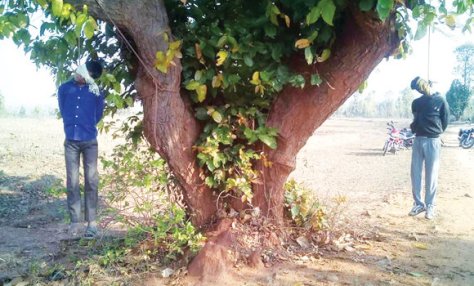
The recent spate of vigilante attacks in India has lent a new, nearly domestic familiarity to the word “lynching”. This, though, is more than just a shift in language: the nation’s visual archive itself seems be shifting, towards instatement of a new normal. Inside just a year the “lynching photograph” has moved center-stage, filling mainstream news reportage and social media newsfeeds. The imagistic vocabulary of lynching has thus taken on a touch of mundane inevitability in caste and communal violence.

It began in March 2015, with the lynching of Syed Arif Khan in Dimapur, Nagaland. A couple of months later two teenage Dalit girls were raped, strangled and left hanging from a mango tree in Katra village in Uttar Pradesh. Then, on 28 September 2015, Mohammad Akhlaq was bludgeoned to death by a mob in his home near Dadri in what went on to gain spurious notoriety as a “beef-eating incident”. The following March, continuing with the logical rhythm of a scheduled sequel, the cattle herder Mazlum Ansari and his 14-year-old nephew Imteyaz Khan were lynched and hanged from a tree in Jharkhand. Most recently (on May 22) M. T. Oliva, a Congolese citizen, was beaten to death in the national capital of Delhi. This is an incomplete list: it includes only those incidents that resulted in fatalities. In the same timeframe there have been at least a dozen other cases in which the victims somehow survived the end-stage public shaming, torment and lurid physical violence, in short the ordeal of a completed lynching.

There is no lynching without its spectators. Continue reading Three Photographs, Six Bodies: The Politics of Lynching in Twos: Megha Anwer

Statement against the Attack on the ‘Velivada’ in Hyderabad Central University: SC/ST Faculty Forum and Concerned Teachers of Hyderabad University

Guest Post by SC/ST Faculty Forum and Concerned Teachers of Hyderabad University

In the early hours 28th May 2016, at around 2 P.M., the authorities at the University of Hyderabad removed the tents erected in North Shopcom around the Velivada and the venue of protest following the death of Rohith Vemula. This happened in the darkness of night, shrouded in secrecy and utterly insensitive towards the turmoil it was bound generate within the student community. Such an act reaffirms the dictatorial stance of the present administration as well as its intolerance to dissent.

The removal of the tent is a clear act of provocation against students since it is well known that they are emotionally attached to the Velivada and consider it as a place of mourning and memorial for Rohith. Especially for the Dalit students, it remains the site of challenge against caste discrimination. Further, bringing down the posters of Dr.Babasaheb Ambedkar’s quotes that surrounded the tent is a grave insult to the Father of the Constitution of this country and an atrocity in itself. It is indeed ironic that the university administration that overtly pronounces its intent  to celebrate Dr.Ambedkar’s 125th birth anniversary for a year has no qualms about removing his posters, or barring his grandson, Prakash Ambedkar, from entering the university. Such actions unmask the true character of the administration; revealing its deeply discriminatory, apathetic and disrespectful attitude towards Dalits and their leaders.

Perhaps the University officials have long forgotten that a University is not to be ruled and subjugated through the military doctrine of “shock and awe” (who can forget George Bush’s now ill famous use of the term during the military invasion of Iraq by the US in 2003!). Instead, patience, maturity and genuine dialogue with the students alone can help us through these difficult times. Unfortunately, the authorities have acted in an extremely unbefitting manner, without the slightest concern for the feelings of their own students. Further, this act of destruction appears doubly mindless and vindictive because the presence of a tent in the Shopcom area does not harm anyone. In fact, through the scorching summer, many people take shelter under it beating the intense heat—be it the students having their food there or other workers who need to be around the Shopcom area. Therefore, we see absolutely no justification for its removal, that too in such a stealthy and unceremonious manner, taking advantage of the the anonymity of the night during vacation. Clearly the authorities are well aware how heartless and unethical such an action is and the serious opposition that it is sure to encounter if carried out during daytime.

The thoughtless desecration of the Velivada compels us to ask a few critical questions. Is it necessary to instigate confrontations in a campus that is already struggling to come to terms with the tragic death of Rohith Vemula, the brutal lathicharge and imposition of false cases against students and faculty and the continuous harassment of students that takes many different forms? Is it not the urgent responsibility of the administration be a little more receptive to the concerns and feelings of the students, keeping in mind the larger interests of the University? It is a cruel irony that while the administration proclaims to the world that it wants “normalcy” to return to the campus, its actions remain blatantly aggressive, anti-student and discriminatory.

More than four months have passed by since that fateful night when a brilliant young man with immense potential and a strong sense of social justice gave up his life, hounded by the administration on the basis of a fictitious charge and non-existent evidence.  We may recall that the cruel and unusual punishment of suspension from hostels and all common spaces was handed out to the five Dalit students during another vacation—the winter of December 2015. Is it  just serendipity? Or, perhaps vacation is time of total impunity, when all natural and moral laws are suspended and humanity is forgotten? While the Rohith and his friends were forced to spend the cold winter nights out in the open, distraught students protesting the removal of the tent spent the day under the unforgiving Hyderabad sun near the main gate of the University on 28th May until they were pushed away by  the security guards.

Prof. Appa Rao Podile resumed office with the knowledge of a hand-picked teaching and non-teaching staff (after abandoning the University in a state of despair following the death of Rohith) on 22nd March, 2016, without so much as giving prior notice to the interim VC, Prof. Periasamy, fully aware how this would affect the protesting students and friends of Rohith. Now, once again, the Velivada has been desecrated when the world was asleep. We quote what a leading jurist Amita Dhanda had said recently with respect to the events at HCU: “A VC must not only be fair but be seen to be fair.” We leave it to our readers to decide whether the VC has ever acted or appeared to act as fair!

Evidently, the loss of Rohith’s life has not meant nor taught anything to the the University of Hyderabad authorities. Those who had closed their eyes to the evidence that screamed out that  Rohith and his friends were “Not Guilty”, have moved on. They now head important committees and speak on behalf of the University to the rest of the world. As ranks are bestowed upon the University, they brim over with pride and claim credit. It is well beyond their comprehension as to why large groups of students and faculty should hang on to a make-shift Velivada—with walls made up of flex-board images of Babasaheb Ambedkar, Jotiba and Savitribai Phule and Kanshi Ram. For them, it is time to “cleanse” and “sanitize” the Shopcom of those disturbing reminders that tell us that “Something is rotten in the state of the University of Hyderabad.”

But the memory of injustice is a powerful tool. The very same structure that has been an eyesore to the administration is our history—poignant, gut-wrenching and yet imbuing our present with direction and the strength to struggle. To recall a stirring line that has emerged through the Rohith Vemula movement: “A spectre is haunting the brahminical academia—the spectre of caste.” We welcome and embrace this history. The Velivada is the place where Rohith spent his final destitute days, anxious that his years of hard work and aspiration to give a better life to his family may come to nought. This is where we come to pay our respects and to remind ourselves that there should be no more Rohiths. Around this very place, a community has gathered—of those who may not have known each other  earlier but who understood how critical it was to work towards a world where “a man is not reduced to his immediate identity”. People thronged to this place from different Universities and from all walks of life to pay homage, and in solidarity. Those who could not come still became part of this imagined community—those from Uttar Pradesh, Bihar, Kerala, the North East, in fact, from every part of this country—threaded together by empathy and experience. Rohith became an icon and a rallying cry because his life struck a chord with the large majority of Dalit  and other minoritized and underprivileged groups in India for whom education is still a humungous struggle. More important, breaking into the bastions of higher education remain acts of transgression and trespassing. Perhaps that is why the august body that passed the fatal judgement on Rohith Vemula did not even bother to maintain a facade of impartiality. Unfortunately for them, the masses of India—the Dalit and the underprivileged, those who are the “wretched of the earth” in the immortal and evocative words of Frantz Fanon, recognized this judgement for what it is, even as it came cloaked in the language of discipline and bureaucracy.

The socially marginalized, struggling parents who dream of a better life for their children instinctively know what happened—they completely and empathetically identify with Radhika Vemula who sent her son to the big University only to lose him forever. Similarly, all those students and teachers who have relentlessly and often silently faced discrimination in the hallowed portals of premier institutions of learning also know. We, the concerned faculty and students at the University of Hyderabad know. We shall not forget. We cannot forget. The administration is bent upon erasing the Velivada. Can they erase our memory? Can they erase the memory of that fateful night of January 17th? Rohith has travelled from the shadows to the stars. We ask Mr. Appa Rao Podile and his believers, “Can you destroy the stars? Because every time, on each dark night, when we look up we will see Rohith Vemula and we will remember what he lived and died for.”

Perhaps the University Administration presumes that a Velivada rightfully and customarily belongs to the margins of the village—far far away from the modern, secular/brahminical, high-ranking spaces of the University. However, through an extraordinary and imaginative act of symbolism, Rohith and his four friends have re-installed the Velivada in the midst of the University, in our hearts and in our consciousness. We need not skirt past it or bemoan the loss of the Shopcom (as the administration has been doing). For us it is a living history of sacrifice and struggle, forcing us to continually work towards a more pluralistic and egalitarian idea of the University.

There is a writing on the wall that that the administration cannot whitewash! The Velivada can no longer be cast out into the margins; it is here to stay. The University must take note and be attentive to this momentous turn of history.

SC/ST Teachers’ Forum and Concerned Teachers, University of Hyderabad


How We Destroy our Future by Proxy – On The Ruination of Ruins: Rahul Sharma

This is a guest post by RAHUL SHARMA

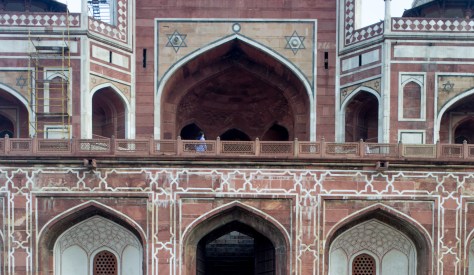
humayun-1-2

Why do we, if at all we do, really care about our material cultural heritage? Is it because it reminds us of what was, and is, good and great in humanity? Or is it the case that we look at a cultural objet and recognise that it is the Ozymandias complex materialized, that even the great and the mighty fail? Or is it that we may never attain the great heights in purity, simplicity, or other qualities we idolize and project on the remnants of the times past?

Or maybe we just want the tourism dollars and euros. Be that as it may, only someone obtuse, or with exaggerated tendency towards the behavior philistine, would say that our cultural heritage, our miniature paintings, our ruins, our tombs, forts, wall paintings, temples, mosques , books, manuscripts, and other things this essay is too short to quantify, are not worth preserving. Also note here that I said we, because we might be a bunch of separate kingdoms and separate principalities earlier, but deep down, we were one people, separated by religion and language, but united (willingly or unwillingly), by the plain and simple fact that you can’t chose your neighbor.

Continue reading How We Destroy our Future by Proxy – On The Ruination of Ruins: Rahul Sharma

Choice, Agency and the Naming of Names – The Trap of ‘Immediate Identities’ and the Vision of a Democratic Revolution: Chintu Kumari & Umar Khalid

Paired Guest Posts by CHINTU KUMARI and UMAR KHALID

[ Every struggle goes through highs and lows. The students who are part of the  movements that are spreading out of universities in India – Hyderabad Central University, Jawaharlal Nehru University and Jadavpur University have had their share of internal debates and disagreements, even as they have found moments of significant victory. and solidarity

Students at JNU who have recently concluded their hunger strike to give time to the university authorities to respond reasonably to the High Court directives on the HLEC punishments are now being criticized for having ‘abandoned the struggle’ by some sections who claim to play a role within the broader students movement, when, in fact, nothing of that sort has actually happened.

The majority of the students who were on hunger strike (including several JNUSU office bearers, and others) have said that they have given up the hunger strike against the HLEC recommendations in keeping with the court order.  In doing so, they have never said that they are suspending the agitation against the attempts by the JNU administration to weaken OBC reservation in admissions, hostel seats and deprivation points for women and oppressed sections of society.

In fact it is not as if the HLEC punishments issue has taken precedence over the other issues. It is actually the other way round. The students have decided to give priority to the struggle for ’social justice’ within the campus, while simultaneously giving time to the university authorities to respond adequately to the court directive on the HLEC punishment question.The call for a demonstration against the University Authorities by the JNUSU to continue the struggle on the social justice issues on the 16th of May is indicative of this fact.

13237814_1106943902682435_4288761213192298400_n

The attacks and insinuations against the majority of the students at JNU who were on hunger strike have also featured a deliberate attempt to create divisions within the unified ‘Red-Blue’ / ‘Jai Bhim-Lal Salaam’ dynamics of the movement on the grounds of identity. Activists, such as Umar Khalid, on the left have been singled out for being ‘Savarna-Syed’, if they happen to bear a Muslim name, and for being ‘sold out to the Savarna left’ if they are Dalit, as happened with Chintu Kumari and Rama Naga. This attack has come primarily from individuals representing organizations like BAPSA that claim to speak from a ‘Dalit’ position, and it is given traction by several other individuals eager to flaunt their disdain for the ‘left’ students on Facebook and social media.  Continue reading Choice, Agency and the Naming of Names – The Trap of ‘Immediate Identities’ and the Vision of a Democratic Revolution: Chintu Kumari & Umar Khalid

Degrees of Self-Deception: Rama Srinivasan

Guest post by RAMA SRINIVASAN

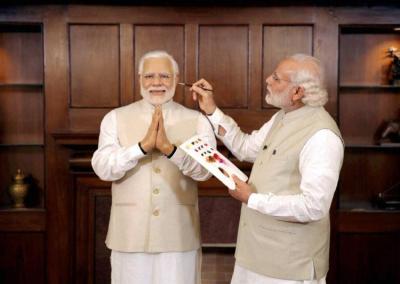
Modi and his double, image courtesy, IndiaTV news

As the crisis of fake degrees blows over I want to be the one to ask the naïve question: Why would Narendra Modi lie? I know it is a naïve question because lies are the most banal political strategy ever. There is a man in US today who repeatedly states that he will make the Mexican government pay for a beautiful, great wall on the border of US and Mexico and people believe him with a degree of sincerity that is frightening. In 2014, at least 31 percent of eligible Indian voters believed in Modi’s promises of development and some of them still do. There may be some who, at the end of the five years, actually believe that Modi has delivered on those promises. But such lies are different. My question is simply: why would he lie on an affidavit which functions as a legally-binding oath?

In his previous election affidavit filed for 2012 Gujarat elections he had left the spouse’s name column empty but following ‘strict legal advice’ he agreed to mention his wife’s name on the affidavit filed for Lok Sabha elections. Technically he had withheld information in previous affidavits which amounts to a legal offence since he had not filed his papers to ‘the best of his knowledge’ but this is not the same as actively lying as it now turns out could be the case with his educational qualifications. Legal experts will determine what is tantamount to punishable crime but if Modi did have legal counsel, who advised him to “come clean on the marriage” as this Times of India article states, why would he continue to provide inaccurate information on other aspects of life?

One speculative answer could be that he knew he was being closely watched as he made his bid for the PM’s post and that his papers would be scrutinised and compared with previous drafts. So it made sense to remain consistent with some of the information even though he had obviously been cornered on the question of his marital status. And yet, as the story of how Modi came to acknowledge the existence of his wife Jashodaben proves, if he had to reveal inconsistencies in previous records, 2014 would have been the best time to do this. No amount of exposés could have hurt the man at that time – his bhakt army, on and offline, on Twitter, were efficiently managing the show and could provide a useful media spin/misdirection to take the focus away from the affidavit that declared to the world that Jashodaben’s repeated claims regarding her marriage and abandonment were not unfounded. Even as the Gujarat Congress urged the state Election Commission, unsuccessfully, to reject his application on the grounds that he had not provided information regarding his spouse’s assets or PAN card number, Modi cruised to victory since his deliberate inconsistencies seem to matter very little to voters.

At that point Modi, indeed, seemed invincible. He was giving explosive speeches and deftly avoiding uncomfortable questions from journalists. In an interview with Rajdeep Sardesai, Modi replied to an indirect question on 2002 with this classic deflection tactic: “My best wishes are with you, Rajdeep Sardesai. You have been living off this issue for the last 10 years … I have heard that those who curse Modi get Rajya Sabha seats or Padma awards. So you have my best wishes to continue this campaign (against Modi) and reach Rajya Sabha or win Padma awards with help of your friends.” What was apparent in the interview is now widely acknowledged as the process of constructing a larger-than-life image, where the man referred to himself in third person. Continue reading Degrees of Self-Deception: Rama Srinivasan

But She was a Law Student …


In a way that is perhaps unprecedented, today, a very large number of Malayalis feel connected to each other by a veritable tsunami of pain. No wonder perhaps, because the veils of our complacency have been ripped off too thoroughly. The immediate context is the gruesome murder of a young Dalit student in central Kerala, in the tiny, rickety squatter-shack that was her home, in full daylight.

At a single stroke, the incident fully exposed the dimensions of social exclusion in contemporary Kerala. Hers was an all-woman family among families deemed ‘properly gendered’, they were lower caste people trapped and isolated among upper and middle caste families, they were the working-class poor without property in an area full of propertied domestic-oriented bourgeois and petty-bourgeois families. Oppressed in all these ways, they were invisible to the state and the political parties. They possessed no form of capital that would have allowed them upward mobility. Yet, the young woman struggled on and reached the law college.

‘But she went to college’, some ask, ‘how could she have been so helpless?’

Read the rest of the article here 


Run Jaggu Run — The JNU VC Runs Away from the Academic Council Meeting

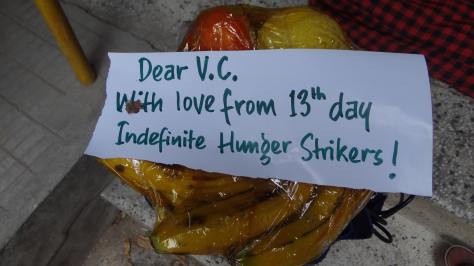
The 10th of May, the 13th Day of the Hunger Strike by JNU Students in protest against the HLEC Report was also the day scheduled for a meeting of the Academic Council of JNU. Students and faculty had resolved to stage a massive protest. Student and Faculty members of the Academic Council had also resolved to forcefully present issues related to the current crisis in the university at the AC Meeting. The events of the day are presented here through a series of videos and photographs uploaded by different people from JNU.

[ Video by Samim Asgor Ali, taken from his Youtube Channel ]

They tell the story of how students were generous with their tormentor, the VC, Jagadeesh Kumar, and how he ran away.

One day, his backers, Smriti Irani, Rajnath Singh and even Narendra Modi, and all the goons in the RSS headquarters at Mahal, Nagpur and Jhandewalan, Delhi will have to run for cover in a similar fashion when faced with the ‘gift’ of the fruits of their actions.

Photo by Samim Asgor Ali

The students gathered on hunger strike collected their meals from their hotel messes and placed them in front of the AC meeting venue as a ‘gift’ to the Vice Chancellor, JNU and the university administration. Continue reading Run Jaggu Run — The JNU VC Runs Away from the Academic Council Meeting

रोहित वेमुला हम तुम्हारे दिखाए हुए रास्ते पर चल रहे हैं: अनन्त प्रकाश नारायण

अतिथि पोस्ट : अनन्त प्रकाश नारायण

12232699_240984726266767_438392505759428328_o

भूख हड़ताल का बारहवां दिन (12th Days) चल रहा है. प्रशासन कितना दवाब में है कुछ भी कहा नही जा सकता है. हाँ, अगल बगल के हालात देख कर, बात-चीत सुन कर इतना तो जरुर समझ में आ रहा है कि कुछ तो “अन्दर” जरुर चल रहा है. अध्यापक संघ हमारे साथ खड़ा है. उन्होंने हमारे समर्थन में एक दिन का भूख हड़ताल भी किया और अब क्रमिक भूख हड़ताल पर है. हमसे हमारे शुभचिंतको द्वारा बार बार आग्रह किया जा रहा है कि हम भूख हड़ताल को छोड़े. हम जब इस भूख हड़ताल पर बैठ रहे थे तो हमारे सामने की स्थिति ने हमे चेता दिया था कि ये करो या मरो की स्थिति है. इसलिए हमने नारा/स्लोगन भी दिया कि ये भूख हड़ताल हमारी मांगो तक या फिर हमारी मौत तक. हमारी मांग बिलकुल स्पष्ट है कि हम अलोकतांत्रिक, जातिवादी उच्चस्तरीय जांच कमिटी को नहीं मानते है. इसलिए इसके आधार पर हम कुछ छात्र-छात्राओ पर जो आरोप व दंड लगाये गए है उनको ख़ारिज किया जाये और प्रशासन बदले की भावना से इन छात्र-छात्राओ पर कार्यवाही करना बंद करे और जे.एन.यू. के एडमिशन पालिसी को लेकर कुछ मांगे है. सजा क्या है? कुछ का विश्वविद्यालय से निष्कासन, कुछ का हॉस्टल-निष्कासन और कुछ लोगों पर भारी जुर्माने की राशि और कुछ लोगों के उपर यह सब कुछ. अब जब हम आन्दोलन में है तो यह साफ़ साफ़ देख पा रहे है कि यही तो हुआ था हैदराबाद के साथियों के साथ. एक एक चीज हू-ब-हू बिलकुल इसी तरह. इसी तरह से हॉस्टल से निकल कर सड़क पर रहने के लिए विवश किया गया था. इसी तरह तो कोशिश की गई थी रोहित और उसके साथियों को देश और दुनिया के सामने एंटी-नेशनल के तमगे से नवाज देने की. नतीजा क्या हुआ सबके सामने है.

इस भूख हड़ताल के दौरान लोग हमसे मिलने आ रहे है. कुछ लोगों ने जुर्माने की राशि को जुटाने का प्रस्ताव दिया, तो कुछ लोगों ने खुद ही जुर्माने की राशि देने का प्रस्ताव दिया. हम उनके प्रति अपना आभार प्रकट करते हैं. लेकिन क्या यह लड़ाई कुछ दंण्ड/जुर्माने के खिलाफ लड़ाई है? नहीं, यह लड़ाई देश बचने की लड़ाई है. बहुत ही सरल शब्दों में कहा जाये तो इस लड़ाई से यह तय होगा कि इस सत्ता/सरकार के रहते इस देश में विरोध की आवाजो/dissents के लिए कोई जगह होगी की नहीं. जे.एन.यू का प्रोग्रेसिव स्टूडेंट मूवमेंट अपने क्रांतिकारी कलेवर के साथ अपनी पहचान लिए खड़ा रहता है. यह क्रांतिकारी स्टूडेंट मूवमेंट यह तय तो करता ही है कि इस कैंपस  को इतना समावेसित/इंक्लूसिव बना कर रखा जाये कि समाज के सबसे निचले तबके के लिए भी यह विश्वविद्यालय का गेट खुला रहे लेकिन साथ ही साथ इस छात्र-आन्दोलन ने अन्दर और बाहर के मुद्दे का भी भेद मिटा दिया और देश के सामने एक वैकल्पिक राजनीति का मॉडल ले करके सामने आया.

बीते दिनों इस स्टूडेंट-मूवमेंट के साथ साथ पूरे जे.एन.यू को निशाने पर लिया गया और इसे एक संस्थान के रूप में देश-विरोधी ठहरा देने का प्रयास हुआ. आखिर देश है क्या? आखिर हम देशभक्ति माने किसे? अभी कुछ दिनों पहले हम देश की विभिन्न जगहों पर कैम्पेन में थे. उन सभाओ व परिचर्चाओ के दौरान भी देशभक्ति चर्चा का एक गर्म विषय रहा. उन सवालों को करने वाले लोग ही कई बार इन सवालो का जवाब दे देते. वो भारत का नक्शा दिखा कर के और भारत की सीमाओं को दिखाते हुए बोलते इन सीमाओं के भीतर जो कुछ भी है देश है. इसका मतलब पेड़-पौधे, रेलगाड़ी, प्लेटफार्म, पहाड़, जंगल, कारखाने, यहाँ के लोग, खनिज-संपदा, नदियाँ, तालाब, इत्यादि सब कुछ देश है. इस दौरान मुझे अपवादिक रूप से भी कोई ऐसा व्यक्ति नहीं मिला जिसने देश की इस परिभाषा से असहमति जताई. देश के लिए प्रतीक बने, संविधान बना, कानून बने और जैसे-जैसे यह देश बदलता जाता है, आगे बढ़ता जाता है, उसी के आधार पर प्रतीक से ले करके कानून तक सब चीज़ों में परिवर्तन होता जाता  है. देश के लिए प्रतीक होते हैं, प्रतीकों का कोई देश नहीं होता है. देश लगातार चलने वाली एक प्रक्रिया का हिस्सा है. देश रोज़ बनता है और हमेशा नये ढंग में हमारे सामने आता रहता है, जिसे इस देश का गरीब, किसान, मजदूर और बाकी मेहनतकश लोग बनाते है. अब लड़ाई इस बात की है कि यह देश किसका है? और इसका मालिक कौन होगा? इस देश की संपत्ति, संसाधनों पर हक किसका होगा? यही गरीब, मजदूर, किसान और मेहनतकश लोग जो रोज़ इस देश को बनाते है, जब अपने हक के लिए खडे होते है तो इस देश की सत्ता/सरकार चंद पूंजीपतियों के साथ क्यूँ खड़ी हो जाती है? और इस देश को बनाने वालों के हक में जब जे.एन.यू. जैसे संस्थान आवाज़ उठाते हैं तो उसे देशद्रोही करार देने की कोशिश क्यों होती है?

जिस समय जे.एन.यू. का मसला ही पूरे देश में चर्चा का विषय बना रहा उस समय जे.एन.यू. प्रशासन व इस देश की सत्ता ने बड़ी चालाकी से अपने मंसूबों को पूरा करने में इस समय का इस्तेमाल किया. यह सर्वविदित है कि  जे.एन.यू. अपनी एडमिशन पालिसी  के कारण ही अपना एक इनक्लूसिव/समावेशिक कैरेक्टर बना पाया है. लगभग 24 साल से चली आ रही इस पालिसी को प्रशासन ने बदल दिया और स्टूडेंट कम्युनिटी को कुछ खबर तक नहीं हुई. दूसरा, ओबीसी के मिनिमम एलिजिबिलिटी कट ऑफ, जिसको चार साल (4 years) के लम्बे संघर्ष के बाद सुप्रीम कोर्ट तक जा करके इस जे.एन.यू. प्रशासन के खिलाफ जीत कर लाया गया था और इसे सिर्फ जे.एन.यू. नही पूरे देश के संस्थानों के लिए अनिवार्य किया गया था, उसको ख़त्म कर दिया गया और किसी को कानो-कान खबर नहीं हुई. इसी तर्ज पर दूसरी तरफ सत्ता में बैठे लोगों ने इस समय का फायदा विजय माल्या को इस देश के बाहर भेजने के लिए इस्तेमाल किया. ये सत्ता/सरकार की बहुत ही पुरानी तरकीब रही है कि अगर देश की कुछ रियल समस्याएँ हैं तो उसकी तरफ से ध्यान भटकाने के लिए कुछ ऐसा करो कि इस देश के लोगों का ध्यान उधर जाए ही ना. इस सरकार के 2 साल बीत जाने के बाद इनके पास ऐसा कुछ भी नहीं है जो इस देश के लोगों के सामने गिना सके कि हमने क्या किया. ये चुनाव पर चुनाव हारते जा रहे हैं. तब इन्होने इस देश के लोगों का ध्यान उनकी विफलता से हटाने के लिए जे.एन.यू. “काण्ड” को गढ़ा. इस साजिश को साफ़ साफ़ समझा जा सकता है कि जब जे.एन.यू. का आन्दोलन चल रहा था उस समय भाजपा अध्यक्ष ने घोषणा की कि वह इस मामले को लेकर के यू.पी. के घर-घर में जाएंगे. यूपी के घर घर ही क्यूँ? क्यूंकि वहाँ चुनाव आने वाले हैं. धूमिल ने सत्ता/सरकार के इसी साजिश की ओर इशारा करते हुए हमे सावधान किया और लिखा कि

चंद चालाक लोगों ने

जिनकी नरभक्षी जीभ ने

पसीने का स्वाद चख लिया है,

बहस के लिए भूख की जगह भाषा को रख दिया है….

अगर धूमिल की इसी बात को और आगे बढाते हुए कहा जाए तो आज भूख की जगह प्रतीकों/सिम्बल्स/नारों को रखने की कोशिश चल रही है. यानि हमारे जीवन की रियल समस्याओ से ध्यान हटा देने की हर बार की तरह एक कोशिश, एक साजिश .

जे.एन.यू. में जब ये आन्दोलन चल रहा है तब इस आन्दोलन को लेकर तरह तरह की शंकाए/भय, जो कि बहुत  हद तक जायज़ भी है, ज़ाहिर किये जा रहे हैं. हमको यह कहा जा रहा है की इस प्रशासन से हमें कोई उम्मीद नहीं रखनी चाहिए. हम इस बात से पूरी तरह सहमत हैं कि हमें इस प्रशासन से कोई उम्मीद नहीं रखनी चाहिए. तब इस स्थिति में हमें क्या करना चाहिए? हमारे सामने क्या रास्ता है? हमारे ऊपर जो दंडात्मक कार्यवाहियां हुई है, उनको मान लेना चाहिये? हमारा यह साफ़ साफ़ मानना है कि ये दंडात्मक कार्यवाहियां हमारे उपर एक विचारधारात्मक कार्यवाही (ideological punishment) है. भले ही यह कार्यवाही कुछ छात्र-छात्राओं पर की गयी है लेकिन इसका निशाना पूरा जे.एन.यू. ही है. इसका कारण स्पष्ट है कि जे.एन.यू. साम्प्रदायिकता व साम्राज्यवाद विरोधी होने के कारण हमेशा से सत्ता के निशाने पर रहा है. यहाँ पर समाज के हर तबके की आवाज़ के लिए एक जगह है और इतना ही काफी है आरएसएस के लिए कि वह जे.एन.यू. विरोधी हो. जेएनयू के छात्र आन्दोलन की विशेषता है कि यह कैम्पस के मुद्दों को उठाने के साथ साथ देश दुनिया में चल रही प्रत्येक चीज़ पर सजग रहता है, और ज़रूरत पड़ने पर हस्तक्षेप भी करता है और इसी का परिणाम है कि इस सरकार के सत्ता में आने से पहले और बाद में हमेशा से जब भी इन्होने इस देश के लोगों के खिलाफ कदम उठाएं हैं तब-तब इन्हें यहाँ के छात्रों के आन्दोलन/विरोध का सामना करना पडा है.

अब इन सारी चीज़ों को ध्यान में रखकर देखें तो हमें क्या करना चाहिए? नए कुलपति/वाईस-चांसलर साहब की नियुक्ति हुई है, वो अपने संघ के एजेंडे पर बेशर्मी और पूरी इमानदारी के साथ काम कर रहे है. उनको जे.एन.यू. के कैरेक्टर को ख़त्म करना है. ऐसे समय में छात्र-आन्दोलन की ज़िम्मेदारी क्या होगी? क्या हम लोग इस देश के छात्र-आन्दोलन के प्रति जवाबदेह नहीं है जबकि आज एक ऐतिहासिक जवाबदेही हमारे कंधो पर है. जे.एन.यू. के छात्र-आन्दोलन को इस देश में एक सम्मानजनक स्थान हासिल है. कई लोग तो इसे भारतीय छात्र-आन्दोलन का लाइट हाउस तक भी कह देते हैं. यह सही बात है कि हम जब किसी आन्दोलन में होते हैं तो हम यह तय करते है  कि इस आन्दोलन से हमें कम से कम क्या निकाल कर लाना है. लेकिन इस आन्दोलन में क्या कुछ कम-ज्यादा/ मिनिमम-मैक्सिमम जैसा कुछ भी है? यह तो पूरे जे.एन.यू. को बचाने की लड़ाई है. यह देश के लोकतंत्र को बचाने की लड़ाई है. यह आन्दोलन सिर्फ आये हुए संकट को टाल देने के लिए नहीं है, बल्कि आने वाली पीढ़ियों के प्रति जवाबदेही के लिए भी है. अगर इस आन्दोलन को लेकर सोचने का नज़रिया होगा तो यह बिलकुल नहीं होगा कि इस आन्दोलन से कैसे निकला जाए, बल्कि यह होगा कि इस आन्दोलन में कैसे और धंसा जाए और इसे और कैसे धारदार बनाया जाये. अगर “उन्होंने” कुछ तय कर लिया है तो हमें भी कुछ तय करना होगा. हम किसी मुगालते या भावुकता में भूख हड़ताल में नहीं बैठे हैं बल्कि पूरी तरह से सोची समझी गयी राजनीतिक प्रतिबद्धता के साथ हम इस आन्दोलन में गए हैं. हम भी नहीं जानते है कि हमारी लड़ाई का अंजाम क्या होगा. आज हम अपनी लड़ाई को रोहित वेमुला की लड़ाई से अलग करके नहीं देखते हैं. रोहित ने हमें संदेश दिया कि अगर बर्बाद ही होना है तो लड़ते हुए बर्बाद हो. रोहित हम तुम्हारे दिखाए हुए रास्ते पर चल रहे हैं.

अनन्त प्रकाश नारायण

(लेखक जे.एन.यू. के सेंटर फॉर द स्टडी ऑफ़ लॉ एंड गवर्नेंस के शोध-छात्र हैं और जे.एन.यू. छात्र संघ के पूर्व उपाध्यक्ष हैं.)

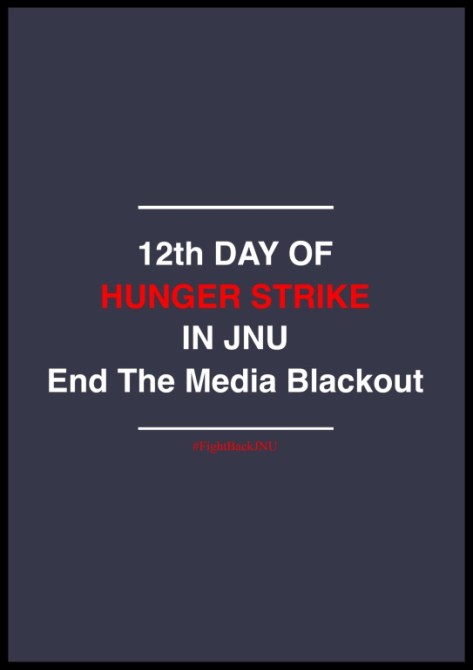
JNU Hunger Strike Day 12 : Game On – Students 1, Media, Authorities 0

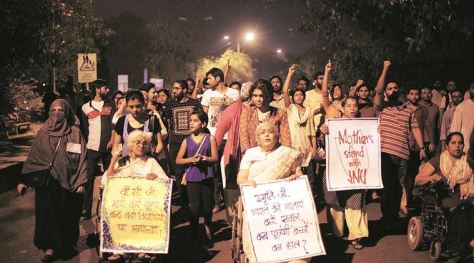
The JNU Students’ Hunger Strike Enters Day 12. Ketone counts go up, Weight goes down, Morale stays miles high. Media fatigue shows that crusading news anchors are no match to hunger striking students when it comes to stamina, and, may we say, courage. The university authorities, the JNU VC and his gang, the government, the RSS-ABVP, remain what they are – losers.

(Images taken, with thanks, from the ‘We are JNU‘ Facebook Page, and the ‘Mothers Stand with JNU‘ Facebook Page.)

This slideshow requires JavaScript.

MEANWHILE, RADIOSILENCE CONTINUES (BESIDES RAVISH KUMAR’S SHOW) ON MAINSTREAM MEDIA

13177661_10153973732855546_8091436192653453340_n

This slideshow requires JavaScript.