Category Archives: Language

On the Death of Khurshid Anwar: Kalyani Menon Sen and Kavita Krishnan

Guest Post by KALYANI MENON SEN & KAVITA KRISHNAN

(Find Hindi translation below the English statement)

We are deeply shocked and saddened by the death of Khurshid Anwar.

As activists committed to ending violence against women, we have been trying to ensure the due process of law and justice in relation to the allegations against Khurshid Anwar. Continue reading On the Death of Khurshid Anwar: Kalyani Menon Sen and Kavita Krishnan

An Incomplete Reunion – Ruining the Post-Partition Party: Archit Guha

Guest post by ARCHIT GUHA

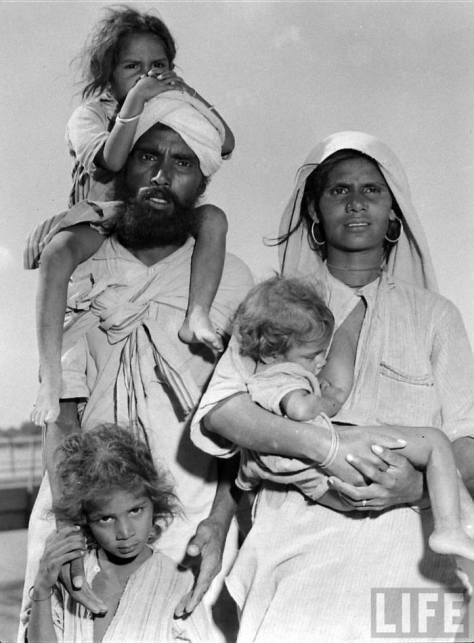
Reproduced without Permission from Life

By this point, every Indian, Pakistani, and their grandfathers has watched the Google Partition ad, tears welled up in their eyes. For the uninitiated, Google’s recent advertisement tugs at heartstrings, telling the tale of two chaddi buddies, separated by Partition, and reunited by their grandchildren nearly seventy years later. When the ad went viral via Facebook, sitting thousands of miles away in America, I bawled as I watched the granddaughter listening to her grandfather’s nostalgic retelling of the idyllic life he led in Lahore, eating jhajhariya, with his buddy Yusuf, and his granddaughter’s instant Google fixes to reunite him with Yusuf in Delhi. Continue reading An Incomplete Reunion – Ruining the Post-Partition Party: Archit Guha

Size does matter your lordships – A letter to the Supreme Court: Siddharth Narrain

SIDDHARTH NARRAIN based on his legal and extra legal expertise arrives at the conclusion that size does matter

A LETTER TO YOUR LORDSHIPS

Your Lordships have called us, LGBT Indians, a “miniscule minority”. Never mind that statistically we constitute at least four per cent of the population, which are over four million people. Your Lordships say that there are only 200 persons impacted by section 377 over the last 150 years. Never mind that there are millions of LGBT persons who have been under the shadow of this law over the last 150 years, discriminated against, blackmailed, harassed, outed to their families, driven to suicide, forcibly married, diagnosed as mentally ill, raped, assaulted, and disinherited.

Your Lordships say we are a “miniscule minority”. Since you are so fond of dictionaries, lets flip one open.

Miniscule: The adjective miniscule is etymologically related to minus, but associations with mini have produced the spelling variant miniscule. Continue reading Size does matter your lordships – A letter to the Supreme Court: Siddharth Narrain

A hunt, the aftermath, angry Indian men and a tragedy: Rahul Roy

Guest Post by RAHUL ROY

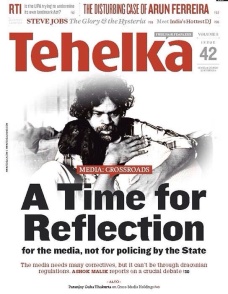
Nivedita Menon ends her commentary on the unfolding Tehelka sexual assault case in Kafila by asserting – “the time has come. It is now”. It should be, but is it? Are we witnessing the end game of an old Indian patriarchal sport called sexual assault? The sport is akin to another old game called the royal hunt that was an important part of elite political culture of South Asia. The rules of the sport were then as now heavily loaded in favour of the royal huntsman – weapons, support teams, timing, everything required for the thrill of a kill were with powerful men out to conquer. The expeditions however were not just about the kill. The sport was also a means of asserting authority over tracts of the wild and those that lived there and were by some misfortune not aware of prevailing authority structures. The royal hunt was an event to showcase to subjects the might, prowess and authority of the elite rulers. It was the stamping of power over human as well as animal kingdom. The royal huntsman could not but win. He could not but kill.
Continue reading A hunt, the aftermath, angry Indian men and a tragedy: Rahul Roy

Presenting the Perpetrator as Victim

Meet Tarun Tejpal’s spin doctors

image

Unlike Justice (Retd.) Ashok Kumar Ganguly, Tarun Tejpal’s defenders cannot cry innocence given that Tejpal has confessed to his crime, albeit disputing the degree of it. He has even confessed having told his colleague that suffering the sexual assault was the “easiest way of keeping your job”. Even his two decades old comrade Shoma Choudhury is unable to defend him beyond saying that he has his versions. Nobody buys Tejpal’s ludicrous retractions.

This put Tejpal’s friends, fellow molesters and self-defeating secularists in a bind. Many of his friends have chosen silence, which is understandable. It is only human to recuse oneself from the difficult choice between principle and friendship. Though some like Arundhati Roy and Sankarshan Thakur have admirably chosen principle over personal association. But those who wanted to come out and actually defend Tejpal were at a loss for words. How do they defend a crime whose perpetrator has confessed to it? So they came up with a few sly defences which pretend to be nuances. Some like BG Verghese are writing as though they were ghostwriting Shoma Choudhury’s defence.

So let us lacerate these defences one by one.

‘Trial by media, lynch mob’

Continue reading Presenting the Perpetrator as Victim

Tehelka, Jhatka and now Tamasha:Satya Sagar

Guest post by Satya Sagar

Eight years ago I remember listening to Tarun Tejpal in Bangalore as he held forth on how the news media could change the world for the better. It was a gathering of journalism students from Catholic institutions around the country and Tejpal was impressive in his defense of media freedoms.

He was passionate, charismatic, extremely articulate and as Chief Editor of Tehelka- with some of the best stories of Indian journalism behind them- very credible too. After his speech Tejpal left in a hurry, like a star priest dashing off to his next flaming sermon and fawning audience. Continue reading Tehelka, Jhatka and now Tamasha:Satya Sagar

The Tangled “Tonalities” of Mr. Tejpal

By now the details are well known: a young journalist describes a harrowing encounter with Tarun Tejpal, owner and editor of Tehelka, in an elevator during Tehelka’s Think fest in Goa. The description of the incident alleges gross sexual misconduct and bodily violation of an aggravated nature.  Her description does not make for easy reading: it clearly demonstrates the incredibly vulnerable position in which young women are placed when confronted with the sexual misdemeanors of powerful men in positions of managerial authority. Indeed Mr. Tejpal says as much, that to cooperate with him is the best way for her to keep her job. She writes to Ms. Shoma Chaudhury the managing editor describing the incident and asks that she be tendered an official apology, and that Tehelka’s senior management constitute an enquiry and anti-sexual harassment committee as per the Vishaka guidelines. Instead what she is offered is a pathos-laden tale of fall and redemption: directed by and starring Mr. Tejpal, producer Ms. Shoma Chaudhury. There has been near continuous discussion across the web and the news and it can get difficult to keep track of all the various versions being produced on an hourly basis by Tehelka’s bullshit factories. So at this stage it might be useful to simply collate and compare various accounts. Continue reading The Tangled “Tonalities” of Mr. Tejpal

Protect the Privacy of the Tehelka Journalist: Report Responsibly

GUEST POST BY ‘REPORT RESPONSIBLY’
To all editors, journalists, bloggers, users of social media, and the public:

Some websites and blogs are posting the Tehelka journalist’s complaint to the magazine’s management or reproducing parts of it, perhaps with intent to expose a grave act of sexual assault by a man occupying a powerful position. However, in doing so, they are violating basic ethical and legal injunctions on the way cases of sexual assault must be reported.

The journalist’s complaint to her company is a private document and not a public one. While private documents can be leaked in the ‘public interest’, this principle is applicable to the emails of Tarun Tejpal and Shoma Chaudhury sent to Tehelka staffers, not to the journalist’s emailed complaint. In cases of sexual assault, it is a well established principle that the media can name the perpetrator, but not the victim. The identity and privacy of a victim must be protected at all costs.We are distressed that many people are circulating the journalist’s emails, and other journalists, bloggers and users of social media are publishing it in parts or whole.

Continue reading Protect the Privacy of the Tehelka Journalist: Report Responsibly

अमर नश्वरता का कथावाचक: विजय दान देथा

मृत्युहीन अमरता से बड़ा अभिशाप और कुछ नहीं, विजयदान देथा की एक कहानी में एक कौवा सिकंदर को सीख देता है. फिर भी मृत्यु से दुखी न होना मनुष्यता के विरुद्ध है,यह भी हम जानते हैं. इसलिए कि प्रत्येक व्यक्ति अपनेआप ही ऐसी क्षमताओं और संभावनाओं का आगार है जो उसके अलावा और किसी के पास नहीं होतीं. हमें पता है कि उसके जाते ही वह सब कुछ चला जाता है जो उसने अर्जित किया, संग्रह किया और फिर उसके बल पर  गढ़ा. वह संग्रह और गढ़ने की वह ख़ास कला भी उसके साथ चली जाती है.दुख इससे  हमेशा के लिए वंचित हो जाने का होता है.विजयदान देथा के जाने से हुई तकलीफ और खालीपन दरअसल इस बात के अहसास से पैदा होता  है कि जो प्रयत्न उनके द्वारा संभव हुआ और जिसने प्रसन्न कला का रूप ग्रहण किया, वह कितना विराट और दुष्कर था, इसका आभास हम सबको है. Continue reading अमर नश्वरता का कथावाचक: विजय दान देथा

Rajendra Yadav:An era passes on

Rajendra Yadav,the last surviving member of the trio of the Nai Kahani,a major trend in Hindi literature, is gone. The large crowd which assembled at the Lodhi Road crematorium to bid adieu to him consisted of people from different age groups,a fair number of them being youth and women, with diverse professional and political backgrounds. It demonstrated the huge popularity he had earned for himself in the last quarter of his life as the editor of Hans, a literary monthly in Hindi. Continue reading Rajendra Yadav:An era passes on

Jazeera in Delhi: Who Can Speak Against the Sand Mafia? : Bindu Menon M

This is a guest post by BINDU MENON M

Jazeera V, who began her fight against sand mining mafia in Kerala one and a half years ago in the North Kerala coastal hamlet Neerozhukkumchal, is now on a sit-in, in front of the Kerala House near Jantar Mantar New Delhi.  She had first approached the village office, the local panchayat, police station, the district authorities and Kerala State government with the appeal to stop sand mining in the beach which grossly violated the Coastal Zone regulations. Ridiculed by the local media and intimidated and physically assaulted by the supporters of the sand mining mafia, she sat in front of Kerala State Secretariat for several weeks before moving to Delhi.  She demands that the central government should immediately take action against the gross violation of laws for protecting the coastal zones. Her struggle in front of the Kerala secretariat at Thiruvananthapuram for 68 days against the inaction of Kerala Government forced Chief Minister Oommen Chandy to invite her to his chamber for discussion. Although he assured her that he would take necessary actions against sand mining on the coast, he was reluctant to give her any written reply. She finally decided to shift her sit in from Kerala to Delhi in protest of Chief Minister’s callous attitude.

Continue reading Jazeera in Delhi: Who Can Speak Against the Sand Mafia? : Bindu Menon M

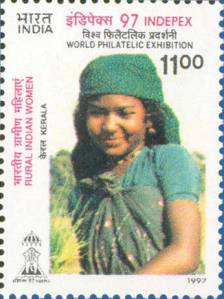
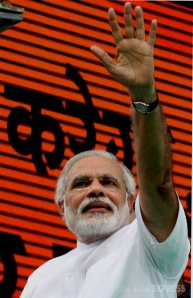
Can Narendra Modi Apologize to Four Hundred and Five Million Rural Women in India?

1744_Rural_Women_Keral 1742_Rural_Women_Gujar B_Id_424710_Narendra_Modi_

Rural Indian Women (Courtesy India Post) and An Urban Indian Man (Narendra Modi)

I watched the television broadcast of BJP’s Prime Ministerial candidate Narendra Modi’s speech at the Japanese Park in Rohini in Delhi on Sunday morning with breathless anticipation and some trepidation. With the restless anxiety that he would spin at least half a new idea, that could induce some naive fence-sitters in Delhi, my city, to sign up behind his juggernaut along with the rest of his zombie horde.

Would his spin doctors have worked hard and tirelessly overnight to give their client a new teflon coating? Would his savvy advisers have given him a sharp new statistic to play with, an incontrovertible fact, a compelling argument that would persuade my fellow citizens? Continue reading Can Narendra Modi Apologize to Four Hundred and Five Million Rural Women in India?

भगत सिंह और आज का नौजवान: अपूर्वानंद

कभी कभी हर समाज में ऐसे क्षण  आते हैं जब उसे अपने अस्तित्व के तर्क की पड़ताल करनी पड़ती है. उस समय वह अपने किन बौद्धिक संसाधनों का प्रयोग करता है और किन स्रोतों से तर्क की सामग्री जुटाता है, यह  काफी महत्वपूर्ण है.क्या एक समाज के रूप में भारत के लिए अभी ऐसा ही कोई क्षण उपस्थित हो गया है? एक ऐसा तबका है जो भारत नामक किसी एक सामाजिक इकाई के बौद्धिक औचित्य को ही नहीं मानता. उसकी बात जाने दें.भारत अभी भी अनेकानेक लोगों के लिए एक यथार्थ है जिसकी अपनी भावनात्मक और बौद्धिक वैधता है.वे उसे बार-बार समझने और अपने लिए आयत्त करने की कोशिश करते हैं.इस क्रम में वे किनकी ओर  देखते हैं? Continue reading भगत सिंह और आज का नौजवान: अपूर्वानंद

A Burden of Proof: A Response to “White Woman’s Burden” by Ameya Naik

This is a guest post by AMEYA NAIK

[On the 26th of August 2013, Newslaundry carried a piece by Rajyasree Sen titled “White Woman’s Burden“. This post is offered as a rebuttal of the views expressed in the essay.]

Dear Rajyasree,

Michaela Cross, aka RoseChasm’s CNN blog piece about her experience of India is, as you say, currently unavoidable on the internet. It does seem to be provoking a dialogue on women and safety in India – at least in social media circles. If the result is that Indian girls and women acknowledge and share their own negative experiences, perhaps thereby to make some Indian men re-examine their perceptions and behaviour, it would still be a step forward.

Unfortunately, some responses represent two steps backwards instead. Your writing (“White Woman’s Burden”, 26 Aug, 2013) is one such; it made me profoundly uncomfortable. The gist of your argument appears to be this: Michaela was not suitably prepared, and she *SHOULD* have known better. Indeed, given her account of her actions and experiences, and the trauma she has experienced therein, it is surprising (to you) how unprepared she was.

Did I just read a young, educated Indian woman entrepreneur – from the hospitality industry, no less – say that an exchange student left traumatised after experiencing molestation (and worse) because she was unprepared? I describe myself as a cynic, but surely this is a new low!

What, pray tell, would suggest she was sufficiently prepared? That she came here, had the experiences she did, and considered them “par for the course” in India? Or that she came here aware of (what you call) the skewed psycho-sexual dynamic between Indian men and women in all its rich and diverse forms, behaved in the most conservative and appropriate fashion – only dancing in “safe places”, avoiding public transport entirely, staying only with trusted hosts or in one of Goa’s five star hotels – and left having experienced only milder forms of violation, like the persistent gaze (which she would know to expect)?

This assertion of yours does have one unexpected benefit – it lets us ignore the fair skin debate. If complexion plays no role, she should still be at least as careful as any Indian woman. If complexion does play a role, she should be even more careful! As silver linings go, though, this is pewter on a thundercloud.

How, pray tell, would the students or the University prepare for their visit to the land of the skewed psycho-sexual dynamic? With little docu-dramas of all the kinds of harassment you can expect, and how to be safe at all times? Would you not seed the most pernicious mistrust in your potential visitors? In fact, why would any of them come at all? Surely the University would simply cancel the trip!

And, while you seem to suggest that this is precisely what the “easily traumatised” should do, we would be the first to protest. Already we cry ourselves hoarse over travel advisories saying India is unsafe for women. That, apparently, is an insult to our national pride. And that seems to be the source of this article: “how dare this unprepared white girl write about India this way?” Only Indian writers can suggest that India has a skewed psycho-sexual dynamic, right? (An interesting dynamic which, of course, makes some – but not all – lechers or potential rapists. And on current evidence, I shudder to ask you who these corrupted ones are, and why only they succumb to this taint.) Because Indian women are prepared for such behaviour, and they know – even when they face it abroad – that it is only an aberration.

Too many responses, too many comments, seem to be in this vein. Why this parochial-with-my-fingers-crossed-so-as-not-to-offend-gendered-perspectives reply at all? My thesis is that it is because Michaela’s account makes us ask a few uncomfortable questions. Such as, how many aberrations to make a norm? How much preparation is enough?

Answering those questions is not a White Woman’s Burden – the onus to answer to them lies on us. Discrediting the person who asked them as “easily traumatised” – and really, as someone who says she has lived through incidents enough of her own, how dare you! – is a thoroughly inadequate reply.

[Ameya Naik is currently in a graduate programme in Boston. A psychologist and lawyer by qualification, he worked in New Delhi across 2012-13.]

भाषा का सवाल और फ़िल्मी सदी का पैग़ाम

हलाँकि फ़िल्म हिन्दी में बन रही है, लेकिन (ओंकारा के) सेट पर कम-से-कम पाँच भाषाएँ इस्तेमाल हो रही हैं। निर्देशन के लिए अंग्रेज़ी, और हिन्दी चल रही है। संवाद सारे हिन्दी की एक बोली में हैं। पैसे लगानेवाले गुजराती में बातें करते हैं, सेट के कर्मचारी मराठी बोलते हैं, जबकि तमाम चुटकुले पंजाबी के हैं।

स्टीफ़ेन ऑल्टर, फ़ैन्टेसीज़ ऑफ़ अ बॉलीवुड लव थीफ़

 पिछले सौ साल के तथाकथित ‘हिंदी सिनेमा’ में इस्तेमाल होनेवाली भाषा पर सोचते हुए फ़ौरन तो यह कहना पड़ता है कि बदलाव इसकी एक सनातन-सी प्रवृत्ति है, इसलिए कोई एक भाषायी विशेषण इसके तमाम चरणों पर चस्पाँ नहीं होता है। आजकल ‘बॉलीवुड’ का इस्तेमाल आम हो चला है, गोकि इसके सर्वकालिक प्रयोग के औचित्य पर मुख़ालिफ़त की आवाज़ें विद्वानों के आलेखों और फ़िल्मकारों की उक्तियों में अक्सरहाँ पढ़ी-सुनी जा सकती हैं।[1] ग़ौर से देखा जाए तो बंबई फ़िल्म उद्योग के लिए ‘बॉलीवुड’ शब्द की लोकप्रियता और सिने-शब्दावली में ‘हिंगलिश’ की प्रचुरता एक ही दौर के उत्पाद हैं, और यह महज़ संयोग नहीं है। हालाँकि सिने-इतिहास में हमें शुरुआती दौर से ही अंग्रेज़ी के अल्फ़ाज़, मिसाल के तौर पर तीस और चालीस के दशक तक बड़ी मात्रा में प्रयुक्त दुभाषी फ़िल्मी नामों में, मिलते रहे हैं। लेकिन होता ये है कि एक दौर की लोकप्रिय या विजयी शब्दावली पूरे इतिहास पर लागू कर दी जाती है, जिससे एक महत्वपूर्ण ऐतिहासिक प्रक्रिया, और उसके भाषायी अवशेष, इतिहास के कूड़ेदान में चले जाते हैं। मसलन अब एक स्थानवाची शब्द लें: एक शहर का बंबई से मुंबई बनना एक हालिया और औपचारिक/सरकारी सच है, एक हद तक सामाजिक भी, वैसे ही जैसे कि हम जिसे ‘बंबई फ़िल्म उद्योग’ कहते आए हैं, वह भी एक ऐतिहासिक तथ्य रहा है, लेकिन हमें इस बात की भी अनदेखी नहीं करनी चाहिए कि आज़ादी से पहले, बंबई के सर्वप्रमुख केन्द्र के तौर पर स्थापित होने से पहले, पुणे, कलकत्ता, लाहौर, मद्रास और कुछ हद तक दिल्ली भी सिने-उत्पादन के केन्द्र रह चुके थे।

Continue reading भाषा का सवाल और फ़िल्मी सदी का पैग़ाम

Good Muslim, Bad Muslim – A Response to Ashish Khetan on the ‘IM’: Warisha Farasat

Guest Post by Warisha Farasat

The recent opinion piece by Ashish Khetan in the Hindu has yet again reiterated the false and malicious stereotype: that Muslims somehow have something or the other to do with terror, either when they are directly involved or when they are silent about others of the community being involved. It is disappointing that the debate is framed in the stereotypical, “good Muslim”, “bad Muslim” tenor rather than a real engagement with issues of shoddy investigation and communal bias that marks terror investigations in the country. Perhaps the greatest disservice that has been done to idea of justice has been linking an entire community to terrorism.

Continue reading Good Muslim, Bad Muslim – A Response to Ashish Khetan on the ‘IM’: Warisha Farasat

Gendered Violence and the Hall of Mirrors: Parnal Chirmuley

Guest Post by Parnal Chirmuley

A very young man, who should have been cheerfully devouring the world of ideas over samosas and tea from the canteen, tries instead to hack an equally young woman, his classmate, to death. With an axe, some say. Tries to shoot her too, but the pistol is too stubborn, they say. Then turns the blade and the poison on himself. There he sees success. Succumbs to both.

This leaves behind rivers of blood in the classroom and gashes in the minds of those who witnessed this, bravely intervened, or ran away from it. It leaves everybody entangled in a sea of Gordian knots that are just questions.

Continue reading Gendered Violence and the Hall of Mirrors: Parnal Chirmuley

The Affective Claims of Violence – Reflections on the JNU Campus Tragedy: Pratiksha Baxi

Guest Post by Pratiksha Baxi

Many competing frameworks have given expression to shock, disbelief, rage, grief, guilt and fear after the violence witnessed as the new semester kicked in, with a monumental tragedy, on the JNU campus. Everyone is stunned by the tragic turn of events that has resulted in a young woman battling for her life in a neuro–ICU in Safadarjung hospital. Confusion gripped the campus as the classroom became a scene of crime, a classmate became a bloodied body and the familiar transformed into the incomprehensible. It was devastating that the assailant, who succeeded in extinguishing his own life, aimed to unite in death the object of his obsession through a planned and highly performative act of violence in the routine setting of a classroom.

Continue reading The Affective Claims of Violence – Reflections on the JNU Campus Tragedy: Pratiksha Baxi

Unrequited love or simply ‘self love’? – Reflections in the wake of a Campus Tragedy at JNU: Shivani Nag

Guest Post by Shivani Nag

In the days following the brutal rape and murder of a young woman in December last year, I remember waking up each day and being out on the streets raising slogans on women’s freedom and liberation. For months after that, there were a series of mobilizations, vigils, parades and protests, and my strongest recollection of those events is the resounding reverberation of ‘mahilaayein maangi azaadi… khaap se bhi azaadi aur baap se bhi azaadi, shaadi karne ki azaadi aur na karne ki azaadi…’. It WAS about justice for that one woman, but it wasn’t ONLY about that… it was also about many other such women – some forgotten, some not, some dead and some still around… it was also about all women, demanding not just justice but their right to life as equal citizens. We did not come out on the streets to be told how to be safe, but to convey it loud and clear that we cannot spend our entire lives trying to be safe without actually getting to live it. We came out to demand and defend our right to choice!! Continue reading Unrequited love or simply ‘self love’? – Reflections in the wake of a Campus Tragedy at JNU: Shivani Nag

The BJP’s very own Stalin

Yashwant  Sinha is a worried man these days. He is apprehensive of his leader Narendra Modi being taken for a ride by the Congress party. He says that the Congress party is laying a trap for him, a trap of the binary of Communalism and Secularism and  fears that his upward looking Narendra Modi might fall in it. So, well  wisher that he is of Narendra Bhai, he wants to alert him: do not get  entangled in the conspiracy of the wily Congress. He appeals to Narendra Modi to stick to people’s issues and not let the political discourse  shift to the terrain of the Secularism  versus Communalism debate. Continue reading The BJP’s very own Stalin

E-book: Sibaji Bandyopadhyay Reader

In the hope that more writers will make their books available online for free, Kafila is publishing an e-book version of Sibaji Bandyopadhyay Reader: An Anthology of Essays, published last year.

The Reader is an anthology of eight essays. The anthology focuses on a myriad of themes: politics of performance; nationalist appropriation and re-constitution of non-dualist Vedanta s tenets; double-take on remembering and forgetting; elusiveness of sexual identities; differences that engender terror. The essays take as their point of departure: a number of pre-modern Indian texts; a late nineteenth-early twentieth century archive of philosophical-cum journalistic writing in English published from Kolkata; specific art-works of Vivan Sundaram, Satyajit Ray, Ritwik Ghatak; the Pandora s Box that gets opened with the release of the film Fire ; Sigmund Freud s protracted struggles to establish fear, fright and anxiety as distinct conceptual categories; the grammar of terror that may be retrieved from the Mahabharata. Continue reading E-book: Sibaji Bandyopadhyay Reader