This is a guest post by BOBBY KUNHU
Background
Continue reading Where Judges Lead Societies Astray: Bobby Kunhu
This is a guest post by BOBBY KUNHU
Background
Continue reading Where Judges Lead Societies Astray: Bobby Kunhu
Guest post. BACHCHA PRASAD SINGH who was recently released from Patiala Central Jail, interviewed by SHAILZA SHARMA
Bachcha Prasad Singh was released from Patiala Central Jail on May 31, 2016 after being kept in illegal judicial custody for an extra three days. In a time when all verification processes are possible online, he was dragged by police officials on a 32 hour road journey from Patiala to Kanpur, for verification of his identity and pending cases. When the Kanpur court and jail authorities refused to take him in custody since he had been granted bail in the FIR registered at Kanpur, the jail authorities could not do much and he was again taken back to Patiala. There were murmurs among the police officials ‘isko Punjab se nahin chhodna’ (He should not be released from Punjab). Only when a habeas corpus was filed in Hon’ble Punjab and Haryana High Court by the Senior Advocate R.S. Bains, the Patiala jail authorities were compelled to release Bachcha Prasad. Harassment at the hands of the Patiala jail authorities was his fate on the day of his release as well, his barrack, his belongings and his bags, which were already in custody of the jail authorities were stripped and searched and he was thoroughly humiliated.
Knowing that it is the modus operandi of the State to re-arrest political prisoners, immediately upon their release on false pretexts, it was the apprehension of his lawyers that the State was creating circumstances which could lead to his re-arrest. However, it is a testament to the dedication and life of the 57 year old revolutionary who after more than 6 years of imprisonment, considered this episode in his life nothing but a brief pause. Continue reading Alleged Maoist on His Release From Prison and Other Matters: Interviewed by Shailza Sharma
Guest Post by Greeshma Aruna Rai, with Women against Sexual Violence and State Repression (WSS), Peoples’ Union for Civil Liberties (PUCL) & Karnataka for Kashmir Forum.
Police has revoked the permission which they had given yesterday to hold a democratic protest in solidarity with Kashmiris in Bangalore by concerned citizens and activists. This is another way in which the State shows its true colours to all Indian citizens who are against State repression and State colonialism in Kashmir.
Permission for today’s protest condemning atrocities on the people of Kashmir has been revoked by the Karnataka State Police. They have threatened us with legal action if we proceed.
As organisers we have been bombarded by the police, demanding that we withdraw this demonstration.
As we publish this message, the 11th day of curfew continues and valley remains awash with the blood of Kashmiris.
Today’s protest is postponed. We, however, refuse to be stifled by the very same state that is ravaging Kashmir. We have resolved to move against the actions of the Police. We’ll be releasing a Press Note shortly while discussing other options to challenge this.
[ Shortly after this post was uploaded, the organizers of the protest held a press conference where they released the following statement.]
Continue reading Bangalore Police Revoke Permission for Protest on Kashmir: Greeshma Aruna Rai
This article appeared in The Hindu today
For nearly eight decades, the women’s movement has discussed and debated the desirability and feasibility of a Uniform Civil Code (UCC), and has ended up posing a simple question – what is the value of uniformity? Is it for the “integrity of the nation” that uniformity in laws is required, as some judicial pronouncements have suggested? If so, who exactly is the beneficiary? Which sections of people benefit from “integrity of the nation”, that abstract entity which is not exactly at the top of your mind as your husband throws you out on the street?
Or are uniform laws meant to ensure justice for women in marriage and inheritance?
In that case, a UCC would simply put together the best gender just practices from all Personal Laws. So yes, polygamy and arbitrary divorce would be outlawed (a feature derived from Hindu Personal Law). But conversely, as feminist legal activist Flavia Agnes has often pointed out, a UCC would require the abolition of the Hindu Undivided Family, a legal institution that gives tax benefits only to Hindus, and all citizens of India would have to be governed by the largely gender-just Indian Succession Act, 1925, currently applicable only to Christians and Parsis.
Muslim Personal Law is already modern in this sense, since it has since the 1930s, enshrined individual rights to property, unlike Hindu law, in which the family’s natural condition is assumed to be “joint”. In the decades of the 1930s and 1940s, contrary to later discourses about Muslim law being backward, it was Hindu laws that were considered “backward” and needing to be brought into the modern world of individual property rights. Continue reading Uniform Civil Code – Once again, where is gender justice?
Guest Post by KAVITA KRISHNAN
An appeal to the conscience of every Indian citizen – to tune down the shrill media noise for a bit, take a step back from the easy, packaged ‘discourse’ being dished out, and ask try and ask ourselves some uncomfortable but necessary questions.
I am being asked by various persons in the media to comment on my apparently ‘controversial’ and ‘shocking’ claim that Burhan Wani’s killing was extra-judicial’ and must be probed. Let me begin with a few remarks about this issue.
For most Kashmiris, it may not matter all that much whether or not Burhan Wani was killed in a ‘fake’ encounter or a ‘genuine’ one. What matters is that the Indian State killed him – just as it has killed and is killing so many other Kashmiri youngsters. Their grief, their rage, does not depend on the authenticity or otherwise of the encounter. They have no expectations of due process or of justice from the Indian State. It it civil liberties activists who – in what sometimes feels like an exhausting, futile exercise – demand that due process be followed, that the mandates of the Indian Constitution be respected, that the armed forces in conflict areas be held accountable.
The Kerala police has once more revealed how utterly unreconstructed it is since colonial times, in their brutal attack on transgender people in the city of Kochi. Stuck in 19th century Victorian morality on the one hand, and in the unabashed sense of power that only colonial authority can bequeath, these policemen thought it perfectly alright to use violence to correct what they perceive as a ‘moral problem’, sex work and that too, by transgendered persons. Continue reading Moral Police-Police!
The police investigation about the bomb blast at the Kollam Collectorate on 15 June 2016 has now turned against us. Neither the organization nor its activists have any involvement in this incident. The accusation against us is just a ploy to use draconian laws such as the UAPA to destroy dalit-adivasi resistance.
The demeaning and enslaving social norms in Kerala have, since centuries, denied dalit people the most basic human rights such as the right to education, the right to decently clothe one’s body, the right to travel on public roads, and express one’s views. But India became a democracy that aimed for social democratisation, and Dr B R Ambedkar raised the possibility of social equality and reservations for the underprivileged groups through the Indian Constitution. Yet, sixty-five years later, the classes fundamental to this society have made no social, economic, or cultural progress and they continue to endure caste slavery and and exploitation in all areas of public life. The mainstream political parties who surfaced as the protectors of these classes have never offered them complete protection at any time. Though they have been faithful followers and workers of these parties, members of the disadvantaged groups have had little economic security; they have lacked social education; they have had to cry out for tiny parcels of land. Continue reading Stop Trying to Portray Us as Extremists: Dalit Human Rights Movement
This is a guest post by ROHIT REVI
Tanmay Bhat, popular Stand Up Comic, recently released a video on the popular social networking platform SnapChat, imitating Sachin Tendulkar, the popular cricketer, and Lata Mangeshkar, the popular Musician. He called it ‘Sachin vs Lata Civil War’, where the two figures argue over who the better cricketer is, Tendulkar or Kohli. It was almost immediately picked by right-winged political groups, such as the BJP and the MNS, and over the course of the day, the few seconds long video became about ‘Tanmay vs Indian Culture’, ‘Comedians vs The Nation’ and so on. Mumbai Police consulted legal experts, in the meanwhile asking YouTube and Facebook to take the video down. The mainstream media, held hour long debates in relation to the video, and those who tuned in heard about ‘drawing lines’ and ‘crossing boundaries’, amidst drowning shrieks on, again, what ‘our’ culture is and what it is not. As customary, MNS Leader Ameya Kopkar, issued a quick threat to assault him, if he ever appeared in public. Sunil Pal, the comedian, called the young brand of comedians of which Tanmay is a part, a group “filled with lesbians and gays”. An effigy was burnt.
This article is not about whether the video was funny or not. It is about a certain brand of offensive humour and the need for it. Continue reading On the Need for Obscene and Offensive Humour: Rohit Revi
Guest Post by RAGHAVAN SRINIVASAN
The Election Commission proved itself to be totally unequal to the task of curbing money power in the recent state assembly elections in Tamil Nadu. State funding of the electoral process holds a lot of promise in ensuring a level playing field for all participants.
If one were to add up the cash-for-votes given to voters during the recent TN assembly elections, as reported in the press, then the cost per vote would easily be the highest among all Indian States. Money paid to cadres during election campaigns, fees paid to advertising agencies, and direct cash transfers to voters – all provide a temporary euphoria in the economy. Everyone is happy since apparently there is no one who is left out. But the money for these huge expenditures have to come from somewhere and that is invariably, the people’s pockets.
The massive monitoring force deployed by the Election Commission of India (ECI) consisting of a battalion of general observers, police observers, expenditure observers, assistant expenditure observers, video surveillance teams, and others seized more than Rs. 105 crores of cash. Though a considerable sum, this was just the tip of the iceberg. Surely the observers would have recorded considerable evidence on other surreptitious methods of transferring cash-for-votes. In response to petitions against this blatant violation of electoral rules, the Commission first postponed elections in Aravakurichi and Thanjavur constituencies and issued notices to two political parties on freebies in their election manifestos. The ECI did not exercise the plenary powers conferred to it under the Constitution to countermand/cancel these elections at that point.
However, in a first in India’s electoral history, the Election Commission decided on May 28 to rescind the notification and conduct polls afresh “in due course of time” to these two Tamil Nadu Assembly seats following evidence of use of money to influence voters. The Election Commission said it took the decision after considering reports of observers, special teams of central observers, report of the special team of observers of Aravakurichi and Thanjavur constituencies and representations of contesting candidates.
This is unfortunately, only the tip of the iceberg.
Continue reading The right time to decide on state funding of polls: Raghavan Srinivasan
[The following is a statement in support of scholar-activist Prof Kancha Ilaiah, who is under attack from a number of Hindutva organizations and against whom the Hyderabad police recently registered a case for ‘hurting religious sentiments’. The tendency to resort to police cases, in order to stifle any criticism of Hindutva and the regime has assumed menacing proportions, against which we stand firmly with Kancha Ilaiah. Those who wish to add their names to the statement and express solidarity may do so by adding them as comments.]
We, the undersigned, strongly condemn the continued harassment, attacks on and intimidation of Prof Kancha Ilaiah at the hands of various Brahmin / brahminical organizations, police and the state administration of Telengana for his political writings and views. We also hold responsible for this intimidatory environment, the Telugu media that reportedly published distorted and misleading reports of Prof Ilaiah’s speech.
While speaking at the Centre of Indian Trade Unions, a wing of the Communist Party of India (Marxist) on May 14, 2016, at Vijayawada (Amaravathi), Prof. Ilaiah had said: “The Brahmins as a community have not contributed anything to the production process of the Indian nation. Even now their role in the basic human survival based productive activity is not there. On the contrary, they constructed a spiritual theory that repeatedly tells people that production is pollution.” Continue reading Statement of Solidarity with Kancha Ilaiah
[We at Kafila condemn the repeated attacks on scholar activist Professor Kancha Ilaiah by the Hindu Right and the recent case registered against him by the Hyderabad police. According to a Times of India report, Ilaiah had on May 14 delivered a lecture in Vijayawada in a programme entitled `Nationalism and Divergent Views’ organised by CITU where he reportedly criticised Hindu gods and scriptures, according to the police. Following this an advocate filed a private petition in the court of the XI Metropolitan Magistrate court, Ranga Reddy , requesting to register an FIR under relevant sections of IPC. The court directed cops to register a case under sections 295 A (deliberate and malicious acts, intended to outrage religious feelings of any class by insulting its religion or religious beliefs),153 A (promoting enmity between different groups on grounds of religion) and 298 (uttering, words, etc. with deliberate intent to wound the religious feelings of any person) of IPC.”
Earlier, last year the VHP had initiated a campaign against him which was followed by the filing of a case against him by the Hyderabad police. That was in relation to an article Kancha Ilaiah had written, asking ‘Is God a Democrat?’ The story by Ajaz Ashraf from Scroll.in linked below refers to last year’s case but due to an inadvertent mix-up, was initially extracted by us as the one in the eye of the current controversy. The error is seriously regretted and we thank one of our readers for pointing this out. The Times of India report linked to above gives refers to the speech that is currently in the eye of the storm.
Professor Ilaiah has now himself described the current attacks on him in this piece in Scroll.in, where he signs his article as Kancha Ilaiah Shepherd, recalling his caste name (translated into English, in order to mark his distance from the brahmans).
The attacks on Professor Ilaiah are totally unacceptable. We have all read and long admired his writings. Many of us have hugely benefited and learnt a lot from them. The time has come for us to collectively put our heads together and fight this menace of Hindutva, which after hurting every living being’s dignity and sentiments, has now begun claim to be the perpetual and universal victim. Dalits today cannot speak of the indignities and oppression that they have suffered at the hands of the Hindus – even that has become a matter of ‘hurt sentiments’. The response has to be worked out politically and intellectually so that the law is not repeatedly turned into a surrogate of Hindutva politics.]
The Hyderabad police have registered a case against renowned social scientist Kancha Ilaiah, after Vishwa Hindu Parishad activists complained that an opinion piece he wrote in the Telugu newspaper Andhra Jyothi had hurt their religious sentiments.
They filed their complaint at Hyderabad’s Sultan Bazar Station was filed on May 9, the day Ilaiah’s article titled Devudu Prajasamya Vada Kada? (Is God a democrat?) was published.
VHP activists Pagudakula Balaswamy, Thirupathi Naik and two others accused Ilaiah of comparing Hinduism with Islam and Christianity, insulting Hindu Gods by comparing them to mortals, mocking their worship, and for attempting to trigger clashes between upper and lower classes (by which they presumably meant castes).
On the basis of their complaint, Inspector P. Shiva Shankar Rao wrote a letter to the Senior Assistant Public Prosecutor, who advised the police to register a case under Section 153 (A) and Section 295 (A), which empower the authorities to act against people who commit deliberate and malicious acts aiming at outraging religious sentiment and spreading enmity between groups.
Case under investigation
The public prosecutor’s legal opinion led to a case being filed on May 15 against Ilaiah, the management of the Andhra Jyothi newspaper, its editor and publisher. The case is currently under investigation, at the completion of which a decision will be taken to whether to chargesheet them.
A police officer at the station told Scroll that Ilaiah is in the habit of articulating provocative views in his articles, which can and do hurt the sentiments of people. “Why does he have to make comments against practices which are dear to people?” the officer said, declining to give his name.
Guest post by KAMAL NAYAN CHOUBEY
On the 6th of May, 2016 the Supreme Court rejected Odisha government’s petition for conducting Gram Sabha meetings for a second time in villages near Niyamgiri hills for the extraction of bauxite. Earlier, in August 2013, following Supreme Court directions, the Dongria Kondh tribals of Niyamgiri clearly decided in 12 Gram Sabha meetings that they would not give any permission for mining in their place of worship. The Odisha government filed an interlocutory application in February 2016 and argued that situation had changed in that area because mining was now proposed to be done by Odisha Mining Corporation (OMC) instead of a joint venture project between OMC and Vedanta. The Odisha government filed the petition to help the Anil Agrawal-owned Sterlite (formerly Vedanta Alumina) company, which wants to extract bauxite from Niyamgiri hill in Kalahandi for its Lanjigarh refinery. The Supreme Court, however, rejected the arguments of Odisha government and accepted the validity of August 2013 Gram Sabha meetings. Now, the Odisha government can claim that it wants to ensure the development of all groups of the state and create more alternatives for marginalized groups like Dongria-Kondhs. The question, however, is whether the Odisha government can claim, on moral grounds, that it has not been working as an agent of corporate capital? What can a marginalized group do when it finds that a democratically elected government is relentlessly working against its interest and violating constitutional provisions? Indeed the Niyamgiri experience has raised many questions not just about the violence caused by dominant ‘development’ model against marginalized adivasi groups, but also about the crisis of constitutionalism and the role of democratically elected government in using/misusing state apparatus for the benefit of capitalists.
Continue reading Niyamgiri – An Unending Struggle for Livelihoods and Habitat: Kamal Nayan Choubey
Guest Post by Sanjay Kumar
Death evokes strongest of human emotions. However, exploring and finding reasons behind a death is also part of our humanity. Legal codes in all countries demand criminal investigations of deaths due to the so called ‘unnatural’ causes. Medical sciences have advanced largely due to explorations of the other, ‘natural’ causes of death. Deaths due to completely avoidable reasons fall in a category of their own. How a society deals with such deaths is a good indicator of how it treats its living.
One hundred and eight people died in an explosion during a fire cracker festival in a temple in Kollam, Kerala on 10th April. According to reports, the district administration had not given permission for the event, citing hazards of firing crackers close to a densely populated area, and the fact that the fire cracking festivities were actually in the form of a competition. Yet, pressure from the powerful temple trust meant that the programme was held amid full police presence. The accident happened in one of the better governed states of India, which also boasts of a vigilant citizenry. Continue reading Public Burdens of Religion and the Lightness of Atheism : Sanjay Kumar
Guest post by SHASHANK KELA
The aim of this essay is to make connections between things that are usually studied separately – environmental history, political economy, conservation practice and adivasi politics – and I apologize in advance for the demands it makes upon the reader’s attention. The belief that this potential convergence could do with wider discussion is my sole justification for putting it up here.
Environmental history in India is not a very old discipline – the first mongraphs began appearing in the 1980s, and more and more books and papers have been added to the historiography since 2000. Let us examine certain themes as outlined in a cross-section of recent scholarship.
One key debate centers upon whether the colonial period can be regarded as an ecological watershed. An influential book by Ramchandra Guha and Madhav Gadgil argued that, before the advent of colonialism, there existed a harmonizing tendency between human beings and the environment, a balance between resource use and preservation mediated largely through the caste system: colonialism shattered this equilibrium and the values associated with it.[1] This idealizing view, eliding different time periods and state structures, was bound to come under attack and much subsequent scholarship has been devoted to unpicking its conclusions.
Sumit Guha shows how at least one natural resource, namely wild grass for fodder, had become scarce in the Deccan by the Maratha period thanks to the demands of armies, nobles and zamindars, who engrossed it by enclosing tracts of common land. This fierce arbitrariness fostered a system of free grazing and discouraged sustainable management through collective protection of the commons.[2] Meanwhile the argument that sacred groves are strands of untouched forest – repositories of biodiversity – is refuted by Claude Garcia and J-P Pascal in their study of Kodagu.[3] Far from being untouched, groves there are heavily used and managed, and show clear signs of degradation associated with use. Continue reading Staking the Terrain – Political Economy, Environmental History and Nature Conservation: Shashank Kela
This is a guest post by Rina Ramdev and Debaditya Bhattacharya
Students of JNU have been on an indefinite hunger-strike for over 15 days now, and the administration’s only official response so far had been the Vice Chancellor’s May 4 statement invoking the vocabulary of the ‘lawful’ and the ‘constitutional’ — in ambivalences closer to threat than appeal. The subsequent May 10 Academic Council meeting has been historic, both for its 53 members’ overwhelming denunciation of the HLEC report, as also for the indelible image of a fleeing VC now forever etched in campus folklore. Further, the Delhi High Court’s stay on the fine imposed upon one of the students lends hope for similar stays with the remaining beleaguered students’ cases. The VC has consequently been referring to the enquiry mandate as being sub-judice, only to grant it an interim legitimacy that may symbolically defeat the stridency of student resistance. Letters have been sent out to the parents of striking students, in an attempt to re-route intimidation and pressure through other non-official means of paternalism. Given the conditions of duress being thus created, until the HLEC’s report is revoked in entirety, there is every reason to believe that the administration’s vindictive punitive designs will leech into the future of university freedoms and campus democracy irreversibly.
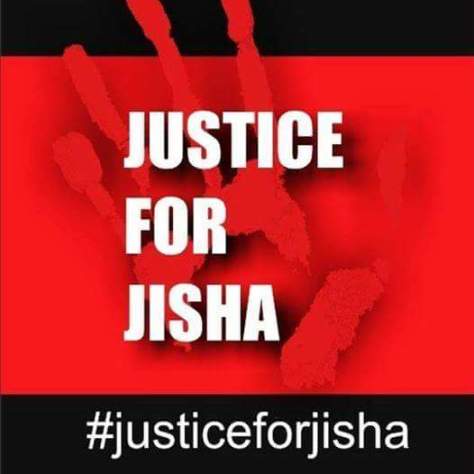
In a way that is perhaps unprecedented, today, a very large number of Malayalis feel connected to each other by a veritable tsunami of pain. No wonder perhaps, because the veils of our complacency have been ripped off too thoroughly. The immediate context is the gruesome murder of a young Dalit student in central Kerala, in the tiny, rickety squatter-shack that was her home, in full daylight.
At a single stroke, the incident fully exposed the dimensions of social exclusion in contemporary Kerala. Hers was an all-woman family among families deemed ‘properly gendered’, they were lower caste people trapped and isolated among upper and middle caste families, they were the working-class poor without property in an area full of propertied domestic-oriented bourgeois and petty-bourgeois families. Oppressed in all these ways, they were invisible to the state and the political parties. They possessed no form of capital that would have allowed them upward mobility. Yet, the young woman struggled on and reached the law college.
‘But she went to college’, some ask, ‘how could she have been so helpless?’
Read the rest of the article here
अतिथि पोस्ट : चिंटू

जिशा, मेरी दोस्त मेरी यार, क्या कहूँ यार तुम्हारे साथ जो दंविये बर्बरता हुई उसके लिए मुझे शब्द नहीं मिल रहे हैं कुछ कहने को. ये देश ये समाज हर रोज़ ऐसे झटके देता रहता है और इतना देता है, इतना देता है, की हमारे लिए वीभत्स से वीभत्स घटना क्रूरतम से क्रूरतम घटना साधरण बन गई है और इन घटनाओं को पचाने की क्षमता में भी हम माहीर हो गए है. देखो न दोस्त, असाधारण कहाँ कुछ रह गया है. बचपन से आज तक तो यही सब देख- देख कर पले बढे हैं हम सब की, जो कुछ हो अपना हक़ मत मांगना, पढने लिखने की बात मत करना , बाप या भाई लात घूंसे मार- मार कर तुम्हे अधमरा कर दे लेकिन एक शब्द भी उनके खिलाफ बोलने की गुस्ताखी मत करना, गाँव के उच्च जाति वर्ग के सामंती तुम्हे अगर छेड़े तुम्हारा बलात्कार करे तो उसका बहिष्कार मत करना कियोंकि ये तो उनका जन्म सिद्ध अधिकार है.
तुम्हारे लिए जो लक्ष्मण रेखा खिंची गई है उससे बाहर जाने की कोशिश की तो तुम्हारी शामत आना पक्की है. और शादी? ये तो दूसरी जात में तो दूर की बात अपनी जाति में भी करने का अधिकार या आजादी की बात मत करना ये तय करना घर के बड़े पुरुषों के कंधे पर छोड़ो. सती सावित्री बनो, एक सद्गुणी बेटी, बहु और पत्नी बनो इसी में तुम्हारी भलाई है.
Continue reading जिशा, मेरी दोस्त, दलितों की जान इतनी सस्ती क्यों है? चिंटू
Guest Post by Shehla Rashid
(Pictures by Biju Ibrahim)
Dear Jisha, I never knew you, nor did you know me.
You were probably a “usual” student, pursuing your studies, dreaming of a better future for yourself and your country. You were probably someone like Rohith Vemula, who dreamed of stars and skies. I learnt that you were a Law student, but I regret to tell you that the Law of this country fails us miserably.
It is because a Bhanwari Devi does not get justice that Bhagana happens. It’s because no one in Bhagana gets justice that a Delta Meghwal happens. It is because a Delta Meghwal does not get justice that a Jisha happens. And most painfully, I can predict that you may not get justice either.
This is because the Law that you studied is not the law that actually runs this country- this country runs according to a parallel law which is called Manusmriti. It is routinely quoted by judges in their judgments, but perhaps you wouldn’t have studied that in Law school. It is the law of Manusmriti that prescribes limits for women and limits for Dalits.
Guest Post by SHWETA GOSWAMI
The NDA government seems to have started pushing forward the regressive proposal of the previous UPA government to set up a sex offenders’ registry in the country, on the lines of those maintained in some western countries including the U.S. and the U.K.
According to the proposal the details of sex offenders even below 18 years of age would be included in the database, which will be put up on the website of National Crime Records Bureau (NCRB).The government plans to publicize their photographs, addresses, PAN card details, Aadhaar card number, fingerprints and DNA samples through this registry.
The information on offenders to be collected for the Registry include those related to their jobs, professional licenses, information of schools, colleges, institutions with which they have been associated, vehicle information, date of birth and criminal history.
The details would be put up only after they have been convicted and completed their sentence in jail. The details will not be included if the cases are under trial and are in appeal in a higher court.
Failed logic of deterrence
Considered to be a handy tool for the law enforcement agencies, the offenders’ registry is being envisaged as a deterrence by the ministers in the government since it will instill fear in the minds of repeat sexual offenders and the public would benefit from it. My concern is, whom does the government want to deter? Individual offenders or men in general? (I say men, because I understand sexual violence as male violence and women offenders as an anomaly). If it is the individual offender, only a couple of offenders would make it to the list given the low conviction rate and the snail-paced judicial processes. Given the inconsistency between the rate of crime committed and the rate of conviction, I doubt if the registry would be of any help for the public to stay vigilant against sex offenders. Continue reading What is wrong with setting up a Sex Offenders’ Registry? Shweta Goswami
Spring has given way to the beginning of a turbulent summer. April, is a cruel month. Temperatures have risen, and so has the level of rage in university campuses. The JNU University Authorities (and their masters – in the Ministry of Human Resources Development, the Prime Minister’s Office and the RSS Citadels in Mahal, Nagpur and Jhandewalan, Delhi) thought that they could break the resolve of the students by enacting a series of harsh measures against them just before exams begin and the university term ends in summer vacations.

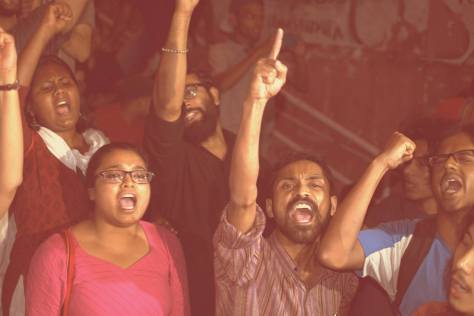
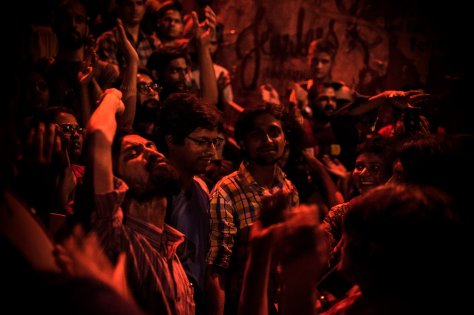
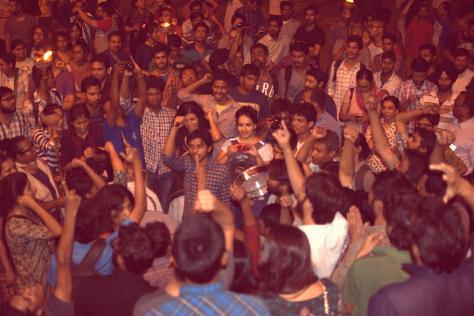
This is a time, they must have thought, when students will be busy with preparations, and the rising heat will discourage the kind of mass mobilizations that the campus has seen since February. Students in JNU resolved a few hours ago to prove them wrong, and decided to fight back . A massive gathering stood its ground at the Administrative Block, aptly re-christened, ‘Freedom Square’.

They have decided that a batch of students will sit on indefinite hunger strike – a ‘fast unto death’ – until the JNU authorities roll back the draconian measures listed in the HLEC Report.
There’s no looking back now. Whatever happens from now on wards, will be seen as a consequence of the cruel, evil mindset of the current regime, which truly treats the lives of the young as dispensable ballast. Its time to prove them wrong. This is a call that goes out to all students and teachers, and sensible individuals, not just in JNU, not just in Universities and Colleges all across India and all the territories administered by the Indian republic, but to everyone reading this post anywhere in the world, to stand by the courageous students of JNU. It is our responsibility to see that the JNU Authorities see reason and back down. If anything untoward happens to any student, the university authorities, and the regime backing them, will be clearly culpable.
Here is Umar Khalid, speaking just before commencing his Hunger Strike
Here is Chintu, former Gen. Sec. JNUSU, speaking at the Mashaal Juloos, (Torchlight Procession) just before beginning the Hunger Strike.
Listen to Kanhaiya Kumar, President of the JNUSU – restating the reasons for the continuation of the movement.
Thanks to the ‘We are JNU Media Group’ and the AISA Youtube Channel, for the videos.
So, the High Level Enquiry Committee at JNU, set up under the watch of Jagadish Kumar, the recently appointed Vice Chancellor, has just delivered a low blow. A summary of its decisions (taken from the Facebook Wall of JNUSU Vice President, Shehla Rashid) meted out as the consequences of the events of February 9 and after is as follows :
Umar Khalid, rusticated for one semester + 20K fine.
Anirban, rusticated till 15 July & from 25 July, out of bounds for 5 years.
Another Kashmiri student rusticated for two semesters.
Ashutosh, former JNUSU President, removed from hostel for one year + fine.
Chintu, former JNUSU Gen Sec: 20K fine
Rama, current JNUSU Gen Sec: 20K fine
Anant, former JNUSU Vice-President: 20K fine
Aishwarya, current GSCASH representative: 20K fine.
Gargi, current JNUSU councillor: 20 K fine
Shveta Raj, current SL & CS Convener: 20 K fine
Kanhaiyya, current JNUSU President: 10K fine
Other organisers fined from 10K to 20K
Two ex students declared out of bounds from campus.
This is an administration, which, in obedience to its backers in the Ministry of Human Resource Development and the Government of India, that knows only one way of dealing with the students in its charge – and that is a replica of the vindictive path that eventually drove Rohith Vemula to his institutionally mandated death in Hyderabad University.
This is an administration that invited police to intervene in what was essentially a dispute between groups of students, at the instigation of right wing thugs. Continue reading JNU High Level Committee Delivers a Low Blow – Students Unjustly Rusticated, Fined, Declared ‘Out of Bounds’