Category Archives: Mirror Worlds

Sunni Muslims Must Reject ISIS ‘Caliphate’: Irfan Al-Alawi

Even as Israeli bombings and ground attacks on Gaza continue, there are no less disturbing reports of ISIS attacks on Christians, the last of whom are reportedly fleeing Mosul. One of the oldest churches has been attacked and reduced to ashes. The rise of ISIS is not only a danger signal for non Muslim or even non Sunni minorities, it represents one of the most serious threats in recent times to the entire heritage of Islam and the diversity within it as well. We reproduce below a piece by Irfan Al-Alwai argues that Sunni Muslims must reject the ISIS’ new ‘Caliphate’. Irfan Al-Alawi is the executive director of the Islamic Heritage Research Foundation and international director of Centre for Islamic Pluralism in the United States. Here are some extracts from the article:

On July 5, the pan-Arab television channel Al-Arabiya, Saudi-owned but based in Dubai, reproduced images of vandalism by the “Islamic State,” using bulldozers against Sunni and Sufi shrines, and dynamite to blow up Shia meeting houses, or husseiniyat, in the Iraqi province of Nineveh, which the marauders seized in June. The pictures were released by the “Islamic State.” Four Sufi shrines and six Shia husseiniyat had been leveled.

Shia mosque being dynamited by ISIS

In addition, Chaldean Christian and Syrian Orthodox cathedrals in Mosul, the capital of Nineveh province, were found emptied by the fanatics, who removed their crosses then hung black “Islamic State” flags on them.

The “Islamic State,” through its supposed caliph, declared, “rush O Muslims to your state. Yes, it is your state. Rush, because Syria is not for the Syrians, and Iraq is not for the Iraqis. The earth is Allah’s… Muslims everywhere, whoever is capable of performing hijrah [emigration] to the Islamic State, then let him do so, because hijrah to the land of Islam is obligatory… We make a special call to the scholars, fuqahā’ [experts in Islamic jurisprudence], and callers [to religion], especially the judges, as well as people with military, administrative, and service expertise, and medical doctors and engineers of all different specializations and fields… their emigration is wājib ‘aynī [an individual obligation], so that they can answer the dire need of the Muslims for them.”
This demand reveals the cynical nature of the “Islamic State” and its bid for jurisdiction over all Sunnis. Although it has seized parts of Syria and Iraq, it cannot defeat the bloodthirsty regime of Bashar Al-Assad in Damascus, and it certainly cannot protect Muslims in Burma. Regardless of its bluster, it cannot “conquer Rome,” as it threatens. Therefore, the “caliph” pleads for a supposed religious duty by Sunnis throughout the world to travel to the “Islamic State” and reinforce it. Read the full article here.
Life in a ‘Sterilized’ Zone, Hebron, Palestine: Ravinder Kaur

Guest Post and Photograps by RAVINDER KAUR

Map of Hebron, Courtesy ‘Breaking the Silence

On 12th June, 2014, the kidnapping of three Israeli teenagers near Hebron resulted a massive military search operation in the area. Since 30th June when their dead bodies were found north of Hebron, a Palestinian teenager has been abducted and killed in a revenge attack in East Jerusalem, and concerted air strikes have been launched on Gaza by the Israeli forces as punishment to Hamas who Israel holds responsible for the abduction and murder of the teenagers. In ten days of Israeli air strikes more than 216 have been killed in Gaza, and rocket firing by Hamas has claimed one life in Israel. A ground invasion began yesterday evening. Even as talks of a possible ceasefire, and resuming normal life, take shape, one might consider what ‘normality’ constitutes in a place like Hebron that has been at the center of the current conflict. It is in the normal, the routine that the spectacular violence takes shape.

Continue reading Life in a ‘Sterilized’ Zone, Hebron, Palestine: Ravinder Kaur

How Goldman Sachs Got it Wrong on Football, The World Cup and Economics: Tushar Dhara

Guest Post by TUSHAR DHARA

In May this year the investment banking powerhouse Goldman Sachs released a report that predicted Brazil would win the FIFA world cup. The prediction relied on statistical modelling and used tools like “Regression Analysis”, “Poisson Distribution”, “Stochastic model” and “Monte Carlo Simulation”. In other words, the methodology is incomprehensible to anyone except those with an advanced degree in Statistics or Econometrics. In hindsight, the prediction looks silly, given the 7-1 score line in the semi-final match between Germany and Brazil. However, the report is a perfect example of the failures of modern economics, particularly the financial voodoo economics pushed by the likes of Goldman Sachs.

When “The World Cup and Economics 2014” was released on May 27 it gained a lot of press publicity globally. The report predicted that Spain would reach the semi-final stage and lose to Argentina, which would lose to Brazil in the final. Goldman’s research division analyzed reams of data, including about 14,000 matches since 1960, national teams’ Elo rankings, average goals scored per team, home country and home continent advantage. To be sure, the report states that the predictions are just “probabilities” of teams advancing. Still the report states, “The most striking aspect of our model is how heavily it favours Brazil to win the World Cup”, and, “the extent of the Brazilian advantage in our model is nevertheless striking.” Continue reading How Goldman Sachs Got it Wrong on Football, The World Cup and Economics: Tushar Dhara

The Memory of Fifty Seven Seconds: After Watching an Israeli Missile Strike in the Gaza Strip on Al-Jazeera

A short fragment of video, fifty seven seconds long, taken from behind a window in a building in the Gaza Strip which was aired last night on Al Jazeera television brought home (once again) the sheer horror of the Israeli Defence Forces’ (IDF) brutal, ongoing offensive against the people of Palestine with devastating clarity.

Continue reading The Memory of Fifty Seven Seconds: After Watching an Israeli Missile Strike in the Gaza Strip on Al-Jazeera

Media Freedoms, Coercive regimes and Blasphemy-mania: M. Amer Morgahi

Guest post by M. AMER MORGAHI

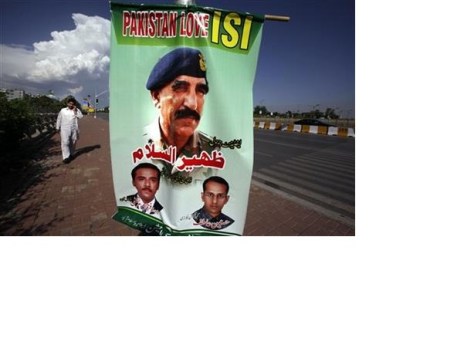
[What the corporate interests have done to the Indian media the military is doing in Pakistan. In the continuing face-off, the Pakistan Electronic Media Regulatory Authority (PEMRA) has suspended Geo TV’s license for fifteen days and imposed a fine of $ 104, 000 on it. See report here]

Media revolutions in different developing countries are seen as an important factor in democratic process, in acquiring information and in enhancing consciousness. However, the media can be manipulated, coerced and used to develop certain consensuses that favors the ruling groups, as the example of recent happenings in Pakistan shows.

Photo: Anjum Naveed
Photo: Anjum Naveed

Continue reading Media Freedoms, Coercive regimes and Blasphemy-mania: M. Amer Morgahi

A Stolen Verdict: Nirmalangshu Mukherji

Guest Post by NIRMALANGSHU MUKHERJI

The Bharatiya Janata Party secured about 19% votes in the general elections of 2009 to win 116 seats in the Parliament. With this most impressive conversion ratio, they had more or less exhausted their possibilities in their ‘safe’ states like Gujarat, Madhya Pradesh, Chhattisgarh, Jharkhand, Karnataka, and the like. They were still 157 seats away from a simple majority in the Loksabha. Even assuming the impressive conversion ratio, they needed at least 26% more of the vote share, that is 45% in all, to form a government.

When the elections for 2014 were announced, it was hard to see where the BJP would get these additional votes from. Moreover, unlike the NDA of 1999-2004, they had rather modest support from other parties with most of the big parties like AIADMK, TMC, JDU, BJD, and the like staying away. Hence, even if we factor in some rise in number of seats in ‘safe’ states, plus handsome gains in Rajasthan, Maharashtra etc., their ability to reach anywhere near the 272+ mark looked rather dim.

Continue reading A Stolen Verdict: Nirmalangshu Mukherji

Universal Adult Francise? A Reality Check: Reena Gupta

Guest Post by REENA GUPTA

When polling began on the morning of April 10, our team coordinating the Aam Aadmi Party campaign in Bawal was expecting to respond to complaints of money and alcohol distribution. During the jan sabhas throughout the area, Yogendra Yadav, the AAP candidate for the constituency, had made it amply clear that, “na toh hum shraab bechenge, nah hum bikne denge.” We had spent days training booth volunteers who would be available to assist voters with information and monitor elections throughout the 200 odd villages in Bawal. Our mobile teams would document any violations of the electoral code and lodge complaints with the requisite authorities. Having campaigned in the Delhi elections for AAP, I knew firsthand that the secrecy of the ballot gave people the chance to rise above external pressures and inducements. After the hard yards of campaigning, voting day seemed set to be relaxing and I occupied myself with preparations for lunch for the numerous volunteers who were streaming in and out of our office.

Bawal is less than 100 kms from Delhi and is one of 9 legislative constituencies that comprise the Gurgaon Parliamentary constituency. In fact, Bawal falls within the National Capital Region and has been proclaimed as soon joining the constellation of Delhi’s satellite towns. There are already hi-tech factories strewn along the Delhi-Ajmer Highway and then there’s the buzz about the upcoming Delhi-Mumbai Industrial Corridor. Of course, the symptoms of lop-sided development are visible right behind the façade of big industrial complexes. With one quick turn off the highway, the roads fall apart and you are welcomed to villages with virtually non-existent education and public health infrastructure. However, I realized the extent of the distance between Bawal and Delhi only after our phones started ringing on the morning of 10th April and we set out to see for ourselves the manner in which citizens are allowed to exercise their electoral rights, in the world’s largest democracy.

Continue reading Universal Adult Francise? A Reality Check: Reena Gupta

Elections, Propaganda and Education

The Aam Aadmi Party was reluctant to include the issue of the rights of the LGBT people in its Delhi manifesto due to strategic reasons. Explaining the absence, the party officials said that conservative voters might turn away from the party if they find it supporting the LGBT cause. The LGBTs also seem to ‘understand’ the constraints of the poor party. The election meetings could have served as a wonderful platform had the party decided to talk to the people about this issue, telling them why it is important for us to ensure liberty to individuals to decide about their bodies. It would have been an educational exercise. Given the fact that people are ready to listen to this new party and its ideas, this reluctance on its part to take up this role says a lot not only about it, but also about the health of our polity.

The AAP candidate challenging Rahul Gandhi is harping on the bad condition of the roads of Amethi and lack of electricity there. One wonders whether Rahul Gandhi, in his response, would have the courage of a now-forgotten former Congressman. Abdul Ghafoor, once Chief Minister of Bihar, was campaigning in Siwan in a Parliamentary election. At a meeting, voters started complaining about the bad condition of roads and sanitation. He told them bluntly that he was there to seek their approval for his candidature for the membership of the Parliament and they should not waste their votes on him if they expected him to fix these problems. The problems they cited were something a municipal councilor was supposed to look after. It is a different story that he lost the election. Continue reading Elections, Propaganda and Education

मर्दवादी और असमान सामाजिक व्यवस्था में स्त्री प्रतिरोध – ‘हाईवे’: धर्मराज कुमार

Guest Post by धर्मराज कुमार

वर्त्तमान परिदृश्य में हमारे इर्द-गिर्द जितने भी विमर्श मंडराते नजर आ रहे हैं उन सबके के आक्रामक शुरुआत को सोलह दिसंबर की बलात्कार की घटना से जोड़े बगैर नहीं देखा जा सकता है। इसमें कोई शक नहीं कि उस रात को दहला देने वाली घटना तक को कई खांचों में रखकर देखा जाता है। उदाहरणस्वरूप, आलोचना के तौर पर यह भी कहा गया कि निर्भया अभिजात वर्ग से आती थी इसलिए उसके बलात्कार ने पूरे देश की राजनीति को झकझोर कर रख दिया। जबकि उसी दरम्यान दिल्ली के करीब हरियाणा में कई दलित और सामाजिक रूप से प्रताड़ित लड़कियों और महिलाओं का निर्ममता से बलात्कार किया गया और मारकर फ़ेंक दिया गया और जिसका आज तक कोई अता-पता तक नहीं है। इससे भी इंकार नहीं किया जा सकता कि दिसंबर की घटना के पहले भी अनगिनत बलात्कार की घटनाएं हररोज हो रही थी और उसके बाद भी हो रही है। मगर कभी भी किसी विरोध ने इतना विकराल रूप धारण नहीं किया जिससे देश की राजनीति को हिलानी तो दूर उससे आजतक न्याय प्रक्रिया में गति तक आ सके। इसके कई कारण हैं।
मेरा उद्देश्य उस तरफ ध्यान खींचना कतई नहीं है। मेरा उद्देश्य है मुख्यधारा में इन मुद्दों से जुड़ती सवालों को उठाये जाने की तरफ ध्यान ले जाना। मैं बात कर रहा हूँ मुख्यधारा में चल रही फिल्मों और उससे जुड़े सवालों के ऊपर। फ़िल्म समीक्षा की दुनिया में ऐसा कम ही देखने को मिलता है जब कोई फ़िल्म अपनी रिलीज के बाद एक चर्चा का विषय हो या विवाद का हिस्सा हो। बल्कि तमाम विचारधारा से जुड़े लोग जब किसी फ़िल्म के ऊपर अपनी प्रतिक्रिया जताने लगे इसका मतलब है कि ऐसी फिल्में लोगों को संवाद करने के लिए विवश कर रही हैं। Continue reading मर्दवादी और असमान सामाजिक व्यवस्था में स्त्री प्रतिरोध – ‘हाईवे’: धर्मराज कुमार

फेकू की भजन मंडली उर्फ़ खिसियानी बिल्ली खम्बा नोचे

फेकूराम की भजन मंडली का ‘नमो नमो’ मन्त्र तो एक लम्बे अरसे से चल ही आ रहा था, मगर भक्तों में होड़ लगी तो कुछ को लगा की अब शिवजी की जगह इन्हीं को बैठा दिया जाए – सो ‘हर हर महादेव’  भी हड़प लिया गया. भला हो शिव भक्तों का कि उन्होंने यह दांव चलने नहीं दिया. और फिर खुद शंकराचार्य ने इस पर एतराज़ कर दिया. खैर, यह तो रहा परिवार के भीतर का झगडा. सुलट जायेगा.

मगर इसी बीच एक मोर्चा बनारस में खुल गया. फेकूराम के बैंड बजे तो दिल्ली तक में हमारी नींद उड़ाये हुए थे ही मगर अचानक एक अदना सा आम आदमी जा कर उसे ललकार आया. भक्तों ने अंडे फेंके, स्याही फेंकी – हर जतन कर के देख लिया. मगर आख़िरकार उसने पोल खोल ही दी. कहने लगे कभी इन्होने कांग्रेसियों को या कांग्रेसियों ने इन्हें काले झंडे दिखाए? अंडे फेंके? तो ये बौखलाहट किस लिए है जी? आप दोनों की नूरा कुश्ती चलती रहती और सब आपस में बाँट कर लूट लेते – जैसे करते आये हैं – तो कोई परेशानी नहीं होती. आप की बौखलाहट से हे तो कई राज़ एक साथ खुलने लगे हैं.

तभी एक भक्तिन को लगा की उनकी भारत माता के साथ ‘गैंगरेप’ हो रहा है. देखिये नीचे इन भक्तन की ट्वीट. जैसे उन्हें मजबूर किया जा रहा है की वे अपनी माँ का सामूहिक बलात्कार देखें. अब तक तो अम्बानी, मनमोहन, चिदम्बरम, सिबल और फेकूराम की फ़ौज भारत माँ की आरती उतार रही थी – कहाँ से चले आये ये बलात्कारी! आरती उतर रहे थे वो विहिपई और बजरंगी सेनानी जो प्रेमी युगलों को सरे बाज़ार बेआबरू कर रहे थे. पबों से निकाल निकाल कल निर्वस्त्र कर रहे थे. आरती उतार रहा था राज ठाकरे. किसी ने इन भक्तिन के उद्गार उस वक़्त देखे?

 
Photo: The shamelessness of Madhu Kishwar... Her employer CSDS as well as her political mentor Mr Narendra Modi must clear their stand on this...
भारत माता की 1984 में आरती उतारी गयी, 1992 में बाबरी मस्जिद का ध्वंस करके आरती उतारी गयी और फिर 2002 में गुजरात में उतारी गयी.

Continue reading फेकू की भजन मंडली उर्फ़ खिसियानी बिल्ली खम्बा नोचे

Open Letter to AAP and the Public on Continuing Racism in Khirkee Village: Aastha Chauhan, Malini Kochupillai & Friends

Guest Post by AASTHA CHAUHAN, MALINI KOCHUPILLAI, and several AFRICAN RESIDENTS OF DELHI

Dear Mr. Arvind Kejriwal, Mr.Yogendra Yadav and Aatishi Marlena,

Being witness to the events occuring in Khirkee this past month, we, a group of artists, architects, activists and local residents have felt  the need to frame an open letter addressed to your party, the AAP & the public. The media-frenzy associated with these events has been accompanied by the usual kind of misinformation and hyperbole. However, in the ensuing noise, the real stories of the underlying racism that afflicts our society and the negative repercussions of the raid on the African residents of the neighborhood, have been lost.  We hope this letter will clarify some facts and put across a few of our concerns.

Our intention is not to encourage confrontation, it is to propose solutions. Delhi is a tough place for all immigrants alike, how will we make this a more inclusive compassionate city? These are the larger questions. These were the issues we were hoping to tackle. Continue reading Open Letter to AAP and the Public on Continuing Racism in Khirkee Village: Aastha Chauhan, Malini Kochupillai & Friends

Somnath Bharti and the Terrible, Everyday Racism of a South Delhi Mohalla: Aastha Chauhan

This article by AASTHA CHAUHAN was originally published on the Yahoo! News India web site. It is being republished  here so that it reaches a different audience because there is an urgent necessity to widen the discussion on racism in India. 

In the decade that I’ve been working in Khirki Extension in south Delhi, I’ve known it as a neighborhood in a constant state of flux.

When I first began working at KHOJ, an international artists’ association located in Khirki Extension in 2004, the neighborhood was home to architects’ studios, a theatre studio and various offices, followed by a wave of musicians and artists. It was a locality comprised mainly of houses, some built by well-known architects such as Ramu Katakam and Ashok B Lall. Even Jaya Jaitly had a house there. Soon enough, these large plots were sold to builders, who put in apartments that could accommodate more people. But given the terrible infrastructure in the area, with its poor roads and drainage and its tendency to get flooded, many of its earlier residents moved out. Continue reading Somnath Bharti and the Terrible, Everyday Racism of a South Delhi Mohalla: Aastha Chauhan

The Aam Aadmi Party and Animal Farm

The plot of George Orwell’s ‘Animal Farm’ can be summarized in a single sentence – “This novel demonstrates the consequences of the addition of four important words -‘but’,  ‘some’, ‘more’, and ‘others’ to the phrase – <all animals are equal>”.

In other words, it describes the transition from the axiomatic statement <all animals are equal> to the qualified formula <all animals are equal, but some animals are more equal than others>.

Aam Aadmi Party founder and Delhi’s new chief minister Arvind Kejriwal’s ruling out the possibility of referendums in Kashmir about the presence of the armed forces in Jammu & Kashmir (in response to his party colleague Prashant Bhushan’s endorsement of the idea of such a referendum during a recent television appearance) could signify a shift within the Aam Aadmi Party’s evolving political doctrine that parallels the transition that the pigs in Animal Farm made while turning their revolution into a counter-revolution. Continue reading The Aam Aadmi Party and Animal Farm

Azadi in the Lexicon of the Aam Admi: Gowhar Fazili

Guest Post by GOWHAR FAZILI

During the swearing in speech at Ram Leela Maidan, the word Azadi found its place of pride on Arvind Kejriwal’s symbolic cap. ‘ Mujhe Chahiye Poori Azadi’ it said.   The word Azadi has travelled from the freedom struggle in Kashmir, to the movement against gendered violence in Delhi and is now entering the lexicon of Aam Aadmi.  The Aam Aadmi’s historic ascension to power through a referendum resonates well with the long standing demand in Kashmir seeking to let the people decide their political future directly.

Continue reading Azadi in the Lexicon of the Aam Admi: Gowhar Fazili

Section 377 and the Love with Odd Edges: Pallavi Paul

A Guest Post by PALLAVI PAUL

It is like watching an 80’s slasher film on an old VHS. The gruesomeness of mangled bodies, extra slimy trails of thick blood, intestines plastered against the screen. Parts of the image are eaten up by the glitch-ghosts that hang above them.  The erased bits , however, intensify the onset of the apocalypse instead of putting it away. It is impossible to tell whether something is happening, happened or will happen. Time is put through a particle accelerator, and what follows is a journey through a dilapidated scene of crime, with pure tone for background score.

Continue reading Section 377 and the Love with Odd Edges: Pallavi Paul

The Anti-Rape Movement -The Political Vision of ‘Naari Mukti/Sabki Mukti’: Kavita Krishnan

Guest Post by KAVITA KRISHNAN

Anti Rape Protest at CM Shiela Dixit's House, Photo by Vijay Kumar
Anti Rape Protest at CM Shiela Dixit’s House, Photo by Vijay Kumar

A year ago, a massive movement erupted on the streets of Delhi and the country – against the brutal gangrape of a young woman on a bus, leading to her death. Looking back at that movement a year later, it is clear that the questions, concerns and above all the tensions and debates embedded in that movement are with us still – and are quite crucial to the political discourse around us.

Continue reading The Anti-Rape Movement -The Political Vision of ‘Naari Mukti/Sabki Mukti’: Kavita Krishnan

A hunt, the aftermath, angry Indian men and a tragedy: Rahul Roy

Guest Post by RAHUL ROY

Nivedita Menon ends her commentary on the unfolding Tehelka sexual assault case in Kafila by asserting – “the time has come. It is now”. It should be, but is it? Are we witnessing the end game of an old Indian patriarchal sport called sexual assault? The sport is akin to another old game called the royal hunt that was an important part of elite political culture of South Asia. The rules of the sport were then as now heavily loaded in favour of the royal huntsman – weapons, support teams, timing, everything required for the thrill of a kill were with powerful men out to conquer. The expeditions however were not just about the kill. The sport was also a means of asserting authority over tracts of the wild and those that lived there and were by some misfortune not aware of prevailing authority structures. The royal hunt was an event to showcase to subjects the might, prowess and authority of the elite rulers. It was the stamping of power over human as well as animal kingdom. The royal huntsman could not but win. He could not but kill.
Continue reading A hunt, the aftermath, angry Indian men and a tragedy: Rahul Roy

पड़ोसी और अजनबी

पड़ोसी कब पड़ोसी न रह कर अजनबी बन जाता है ? या वह हमेशा ही एक अजनबी रहता है जिस पर मौक़ा मिलते ही हमला करने में ज़रा हिचक नहीं होती ? हम अपना पड़ोस चुनते कैसे हैं? क्या पड़ोस मात्र एक भौगोलिक अवधारणा है? क्या जो भौगोलिक दृष्टि से हमारे करीब है, वही हमारा पड़ोसी होगा? पड़ोस चुनना क्या हमारे बस में नहीं? क्या पड़ोस कुछकुछ धर्म या भारतीय जाति की तरह है जिसके साथ जीवन भर जीने को हम बाध्य हैं? क्या पड़ोस का अर्थ हमेशा आत्मीयता ही है? क्या पड़ोस का मतलब एक दूसरे का ख़याल रखना,आड़े वक्त एक दूसरे के काम आना ही है? या यह रिश्ता अक्सर उदासीनता का होता है , जिसमें हमें दरअसल अपने पड़ोसी में दिलचस्पी नहीं होती? क्या इस उदासीनता के हिंसा में बदल जाने के लिए कोई भी कारण काफी हो सकता है? यह प्रश्न जितना शहर के सन्दर्भ में प्रासंगिक है उतना ही भारतीय गाँव के सन्दर्भ में भी पूछे जाने योग्य है. एक बार फिर, मुज़फ्फरनगर के गाँव में हुई हिंसा के बाद, पड़ोस के मायने पर बात करना ज़रूरी हो उठा है. Continue reading पड़ोसी और अजनबी

Laxmanpur Bathe, Then and Now: Monobina Gupta

Guest post by MONOBINA GUPTA

I remember a chill running down my spine that early afternoon in 1998. I was standing at Laxmanpur Bathe – the site of a cold-blooded massacre a year ago. Then a reporter with The Telegraph, I was touring Bihar, reporting on the 1998 general elections, less than two years after the United Front government came to power. Bihar was then firmly under the thumb of the redoubtable Lalu Prasad. Tensions between the Maoist Coordination Committee (MCC) and the Ranvir Sena, a private army of upper caste landlords, were running high. Every reporter visiting the area had been advised by the district magistrates concerned not to travel after sundown. Newspapers in Delhi were full of stories about Bihar’s lawlessness, extortions and abductions even in broad daylight.

I had read details of that deadly night in the newspapers; and then of the sudden trips made by VIP cavalcades to the village in the aftermath of the bloodbath. The massacre had pitched the forgotten hamlet of Dalits into the glaring spotlight. Crowds of politicians and media descended on the spot, even as the grief stricken survivors were struggling with the shock of the attack and the terrible loss of their loved ones. Continue reading Laxmanpur Bathe, Then and Now: Monobina Gupta

Nobody Killed the 58 People Who Died in Laxmanpur Bathe on 1 December 1997: Dipankar Bhattacharya

Guest Post by Dipankar Bhattacharya

Predictably enough, the Patna High Court has acquitted all the 26 persons convicted by the trial court in the Laxmanpur-Bathe massacre case. This is the fourth successive instance of wholesale acquittal of convicts by the Patna High Court in cases of massacre of the oppressed rural poor in Bihar. Once again eye witness accounts have been dismissed as being not fully credible and convicts granted acquittal on ‘benefit of doubt’. The judges could not however disprove the fact that 58 people had been killed and post-mortems done, and hence they asked the trial court to calculate the compensation payable to the nearest kin of the victims as per relevant provisions the Motor Vehicles Act on the basis of the minimum wage prevalent in the area at the time of the massacre. They of course did not forget to add that any ex gratia paid after the massacre should be deducted from the amount of compensation!

Continue reading Nobody Killed the 58 People Who Died in Laxmanpur Bathe on 1 December 1997: Dipankar Bhattacharya

A tale of two passports, the year 1979, and walking to India: Fawzia Naqvi

Guest Post by Fawzia Naqvi

For the first time Pakistan’s elected President has completed his full five-year term and has willingly stepped down to transfer power to another elected President, a herculean achievement for a country with chronic dictatoritus.  The people of Pakistan must be congratulated for ensuring that democracy becomes an enduring grace and not just a good idea in some unforeseeable future.  So while there is earsplitting cacophony of debate and disagreement on virtually all issues, there is near unanimous political consensus that the army should remain in the barracks and that there should be peace with India. The time is now. And Pakistanis have accomplished this in an era when Pakistan is suffering its worst hellish nightmare of daily bombings and killings by terrorists, and a loss of over 40,000 of its own citizens in the last decade or so.  Pakistan teeters on the precipice of a very dark abyss, and has been inching ever closer to this dangerous edge for the last 34 years if not more. The first disturbing sign which I can remember was when the state institutionalized bigotry by officially declaring the Ahmadi community non-Muslim in 1974, opening up a hornets nest of discrimination, violence and unequal citizenship.  A tragic disaster, and fatal capitulation to right wing elements, by Prime Minister Zulfikar Ali Bhutto. No one is really safe in today’s Pakistan but clearly those less safe, those hunted and killed are the Shias, the Christians, the Ahmadis and the Hindus. Those doing the killings have given insidiousness to the meaning of “the land of the pure.”

Continue reading A tale of two passports, the year 1979, and walking to India: Fawzia Naqvi