Category Archives: Movements

The Importance of Being Makarand Paranjape: Anirban Bhattacharya

Guest Post by ANIRBAN BHATTACHARYA

A few days back, drawing from Oscar Wilde’s classic, Makarand Paranjape wrote a piece titled The importance of being Narendra Modi. He urged his readers to ensure a second term for Modi saying “If Narendra Modi gets a second term, he will certainly change India in a lasting and significant way.” That he is going to change India, and is doing so already is not that far from truth, but the question is which way is this change taking us. Given the track record of Modi Ji(o) so far, the change is surely going to be for the worse. But this piece is not on Modi Ji(o). This one is on the Makarand Paranjapes of the world. Yes, they are not one. They are in fact a particular breed not new in history, and they have a particular role. Specifically, we would evaluate this role of theirs in the light of a recent piece of his on the gherao of the JNU VC.

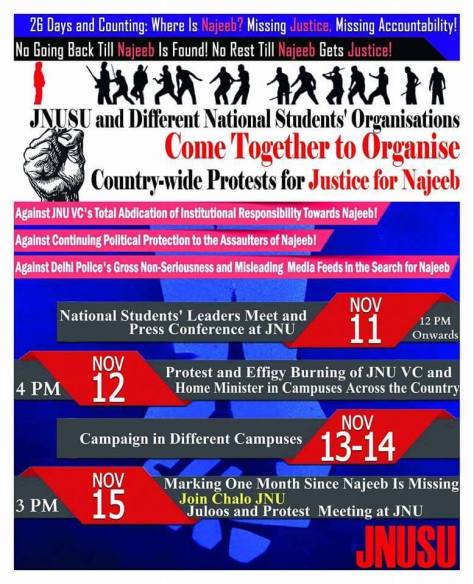
Some would say that the piece was on the issue of Najeeb. But no, it wasn’t. Najeeb, a new student pursuing M.Sc in Bio-Tech living in Mahi-Mandavi hostel was publicly assaulted by identified ABVP goons in front of students as well as wardens on the night of 14th October. He was showered with dire consequences of which too there are multiple witnesses including again the hostel wardens. A vicious communal slur-campaign was set in motion by the sanghis writing “Muslims are terrorists” within the hostel premises. Amidst all of this and in the given context Najeeb “disappeared” on 15th October from his hostel. He had called his mother last, who, as it appears, had reached Anand Vihar and was on her way to meet her son in distress. But, by the time she was here, Najeeb went “missing” mysteriously and is yet to be found. After five days of entreating an unresponsive university administration to be proactive in creating conditions for Najee’s safe return, JNU students undertook an all night vigil on the 19th of October.

Continue reading The Importance of Being Makarand Paranjape: Anirban Bhattacharya

2 Weeks No #JusticeForNajeeb – A Few Thoughts on Yesterday’s March and the Way Forward: Shehla Rashid

Guest Post by Shehla Rashid.

Video and Photo Inputs from Naushad MK, Samim Asgor Ali and Amit Kumar

[ This post was written shortly after JNU students gathered in front of Vasant Vihar Police Station to articulate their concern and anger at the lax attitude taken so far by the Delhi Police and other concerned authorities in relation to the disappearance of Najeeb Ahmed almost two weeks ago. In this text, (originally uploaded as a note on Facebook and then sent to us to be posted at Kafila) Shehla Rashid, thinks aloud about what has happened so far and looks ahead at the possible way forward for the students of JNU and their supporters to focus on making sure that Najeeb Ahmed, wherever he is, returns safe and sound to the JNU campus. We hope that it will be widely read, and discussed to evolve strategies for the evolving future of the campaign to give justice to Najeeb. Kafila]

Shehla Rashid and Others Being Confronted by Delhi Police at the Vasant Vihar Chakka Jam on Oc. 26, 2016


First of all, I’d like to express my gratitude to all the students who joined the Chakka Jam at Vasant Vihar police station, where the ACP refused to even accept the paper with our demands and, instead, ordered a lathi-charge on us. Students marched as one and stayed together till the end, despite all differences, for one goal- justice for Najeeb, and his safe return to campus life. I salute this spirit of JNU students. Having said that, I must say that we need to do more. Students need to come out in even greater numbers, as the attack on us is of immense magnitude.

Continue reading 2 Weeks No #JusticeForNajeeb – A Few Thoughts on Yesterday’s March and the Way Forward: Shehla Rashid

Requiem for the Undead: On Kerala’s Sixtieth Birthday

[The title is a tribute to Johnny Miranda’s exquisite Malayalam novel, Requiem for the Living (Jeevichirikkunnavarkku Vendiyulla Opees in Malayalam)

As Kerala’s sixtieth birthday – a year which was inevitably one of celebration for many Malayalis as the culmination of life, until the increasing life expectancy here rendered it redundant – approaches, evaluations on the health and well-being of the region (and not just the people, or individual Malayalis) are being offered. They do not bode well. There is a sense in which we feel that the magic that has somehow protected the region, placed a shining cloak around its shoulders once, has departed. This magic is none other than that which is captured by the term ‘Kerala Model’ – which, in our popular imagination, always exceeded being just social science shorthand for the complex array of historical factors that led to high social indicators in a society characterized by low economic growth once associated with us. The idea of the Kerala Model somehow represented the fairy godmother who had transformed Kerala from being the Cinderella in India, to a shining princess fit to be raised to the heights of the UN’s international development-circles in the 1970s. Continue reading Requiem for the Undead: On Kerala’s Sixtieth Birthday

The Twitter Gherao of Mamidala90 on the 10th Day of Najeeb Ahmed’s Disappearance from JNU: Shehla Rashid

Guest Post by Shehla Rashid

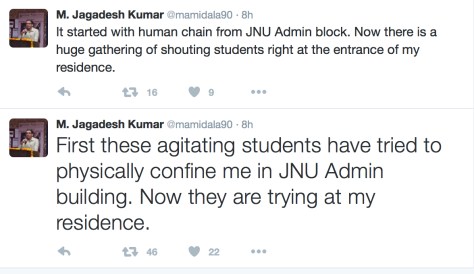
[ Between the 9th and 1oth day of the disappearance of Najeeb Ahmed from the JNU campus, the JNU Vice Chancellor, Mamidala Jagadesh Kumar decided to salvage his reputation on twitter, even as he squandered it on the grounds of the campus of the university he presides over. And so he let forth a volley of tweets, while sitting inside his office and his residence, even as he refused to meet or listen to the JNU students who have grown increasingly concerned and anxious at the university administrations callous laxity about the fate of Najeeb Ahmed, the missing students.

While students marched down the campus, forming a human chain that culminated at the gates of the VC’s residence near the university’s east gate, Mamidala90 (the handle with which the VC distinguishes himself in twitsville) began getting extremely active. While the students were peacefully assembled at the gates of the VC’s residence, very much not in ‘gherao’ or ‘blockade’ mode, Mamidala90 whined about being ‘blockaded’.

A Sample of Mamidala90's tweets while students gathered peacefully outside his residence. Is this what it felt like to hear Nero fiddle while Rome burnt?
A Sample of Mamidala90’s tweets while students gathered peacefully outside his residence. Is this what it felt like to hear Nero fiddle while Rome burnt?

Continue reading The Twitter Gherao of Mamidala90 on the 10th Day of Najeeb Ahmed’s Disappearance from JNU: Shehla Rashid

Bring Back Najeeb Ahmed to JNU: A Call to Resist Terror in Universities

14615765_679911288839993_8711625822412574391_o-1

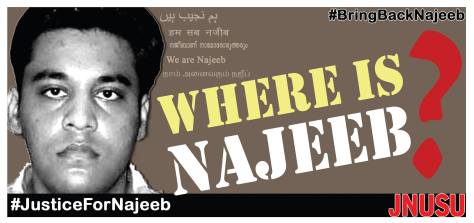
It is now more than a week since Najeeb Ahmed, an MSc (first year) student of Biotechnology at Jawaharlal Nehru University, Delhi has been reported missing, after an altercation with members of the RSS affiliated ABVP student organization, which reportedly left him injured and severely traumatized.

Continue reading Bring Back Najeeb Ahmed to JNU: A Call to Resist Terror in Universities

Ezhuka Tamil – A Conversation about Democracy :Dharsha Jegatheeswaran and Gajen Mahendra

This is a guest post by DHARSHA JEGATHEESWARAN AND GAJEN MAHENDRA


On Saturday September 24, 2016, Ezhuka Tamil, organized by the Tamil People’s Council, became the largest rally to happen since the end of the war in the North-East of Sri Lanka. Over 10,000 people took to the streets to demand an end to ongoing human rights violations, particularly militarization and Sinhala-Buddhisization of the North-East,reiterate their demand for genuine accountability and justice and voice their expectations regarding the ongoing political processes. The political elite in Colombo and their supporters elsewhere have however chosen to read Ezhuka Tamil as an expression of ‘Tamil extremism’. This response requires us to critically interrogate the nature of democratic spaces in post-war Sri Lanka available to the numerically smaller communities and more largely what our understanding of democracy is. This is very necessary if we believe in the need for public participation in the constitutional and transitional justice process currently underway. Continue reading Ezhuka Tamil – A Conversation about Democracy :Dharsha Jegatheeswaran and Gajen Mahendra

A Fast That Ended in Hunger- Thoughts on Irom Sharmila and Hunger Strikes: Anirban Bhattacharya

Guest Post by Anirban Bhattacharya

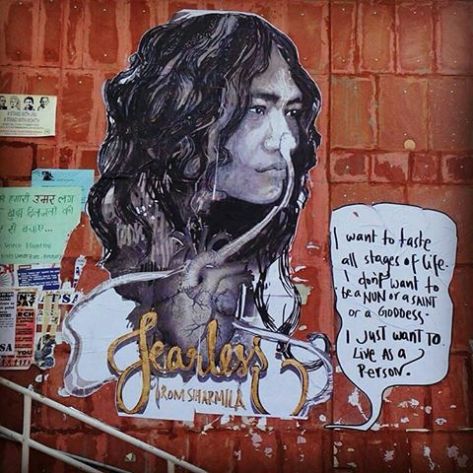
Iram Sharmila Mural at ‘Freedom Square’ JNU. Art by Shijo Suleman and the Fearless Collective. Photograph by Rebecca John. Image, courtesy, ‘The Great Walls of India’ blog on Graffiti and Wall Art

We may have differences in our political approach as to the way and means of the struggle, but what must be stated at the outset is the fact that Irom Sharmila has certainly been an icon of resistance and inspiration in the struggle against AFSPA.

Her 16 year long hunger strike has been a grim reminder of the crimes against the Manipuri people – rape, torture, fake encounters and massacres – committed by the armed forces with impunity under such draconian Acts like AFSPA. But her abrupt decision to end her fast accompanied with her willingness to contest elections in the upcoming assembly elections have met with a mixture of shock, scepticism, disappointment, puzzlement and even anger amongst her people in Manipur and even her close associates. There also seems to be a resentment against her being in a relationship and her plan to marry. Such scrutiny/dragging of her personal life are, however, quite deplorable. But overall, the disappointment with the decision of Irom to quit fasting and contest elections is so strong that, after breaking her fast in the hospital, when she tried to go to a local activist’s shelter, the locals disapproved. She had to seek temporary shelter in an ISKCON temple along with her police guards and then was shifted to a police station and finally she was forced to retreat to the same hospital that housed her for last 16 years. Now, this is telling. But what does it tell? The answer to this question would take us away from criticisms about any particular individual, but to the evaluation of the very method of struggle that she had been a part of, its scope, effectivity and limitations.

Continue reading A Fast That Ended in Hunger- Thoughts on Irom Sharmila and Hunger Strikes: Anirban Bhattacharya

Statement against the Kaziranga Police Killings : Delhi Action Committee Against Kaziranga Police Killings

Guest Post by Delhi Action Committee Against Kaziranga Police Killings


Protest Demonstration

 Against  Kaziranga Police Killings

2pm, 23rd September, Assam Bhawan, Sardar Patel Marg,


After the BJP came to power in Assam in May 2016, the state government has unleashed a reign of terror to execute its fascistic agendas. Within 2 months into power, the government opened fire and killed a 25 year old man Mintu Deuri, during a protest organized in Raha against the transfer of the site for a proposed AIIMS in the state on 15th July 2016. Now on 19 September 2016, just 34 days after the Raha incident, the police has again opened fire and killed two people – Anjuma Khatun and Fakhruddin, at a demonstration led by the Krishak Mukti Sangram Samiti (KMSS) and All Assam Minority Students’ Union (AAMSU) at Banderdubi revenue village near the Kaziranga National Park. The protestors were demanding resettlement and adequate compensation against an eviction drive carried out by the mandate of the Gauhati High Court order dated 9 October 2015 which was supposed to happen two days later, i.e. on 21 September 2016 but had been preponed to avoid protests. The villagers, belonging mainly to the Muslim community of erstwhile East Bengal origin, have been residing in the village for more than half a century.

Continue reading Statement against the Kaziranga Police Killings : Delhi Action Committee Against Kaziranga Police Killings

Statement in Support of Khurram Parvez from Groups and Individuals in Karnataka

Over the past 70 days, there have been over 84 deaths, hundreds have lost their eyesight to pellet wounds and thousands have been injured in Kashmir. As news reports of the death of 11 year old Nasir Shafi, son of Muhammad Shafi, a resident of New Theed Harwan in Srinagar emerge, we also hear about Showkat Ahmed Misger, a person with mental disabilities from Safa Kadal who was admitted in hospital in a critical condition with pellet wounds. Though the people of Chandpora were told by the police that Nasir Shafi was mauled by a bear, pictures of his body with pellet wounds and torture marks stand in contradiction to this official version of events. The violence unleashed by the armed forces continue unabated in Kashmir inspite of extensive social media outrage and mass protests in  Indian cities like Patna, Kolkatta, Chennai, Bangalore, Delhi etc.

Continue reading Statement in Support of Khurram Parvez from Groups and Individuals in Karnataka

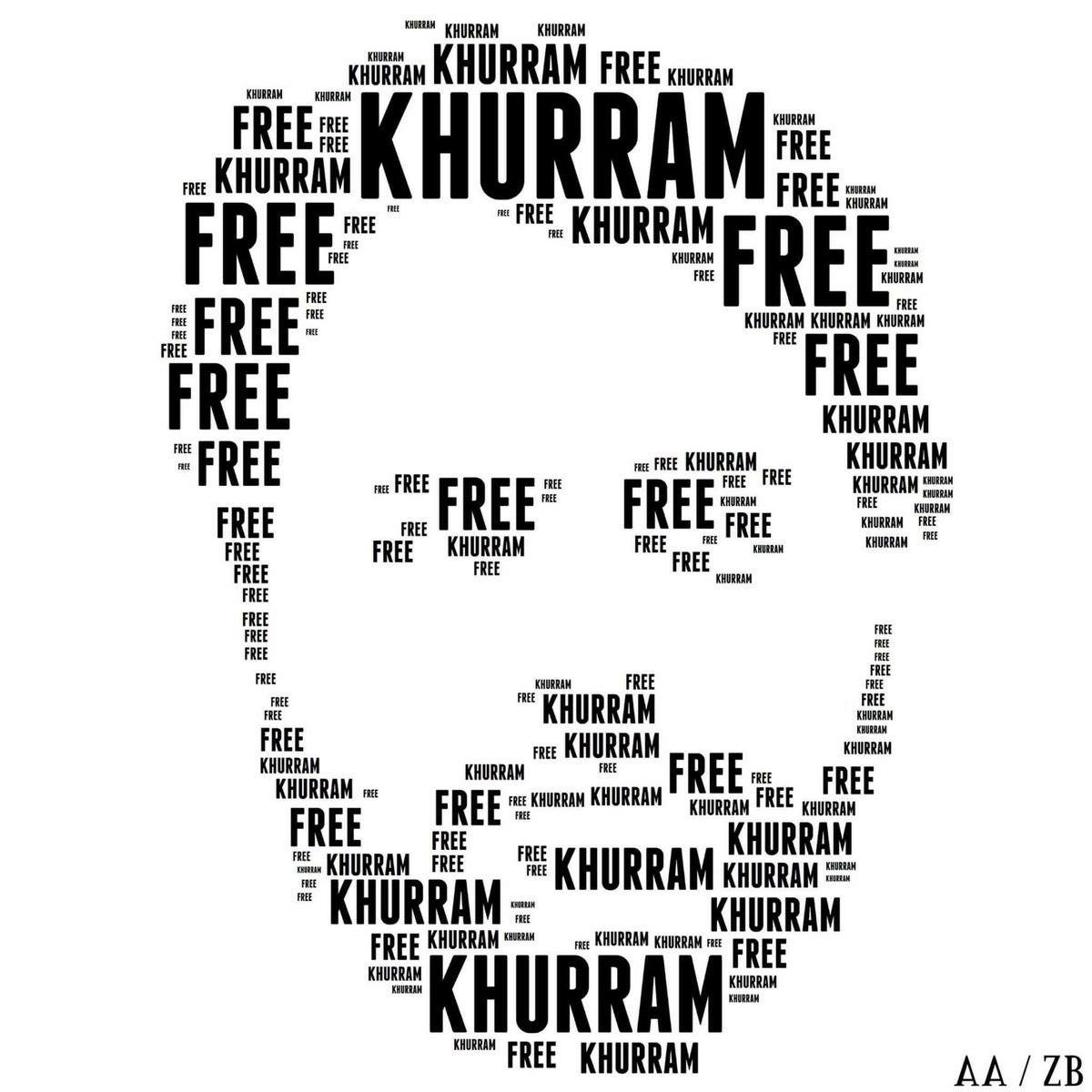
Free Khurram Parvez – An Open Letter to Civil Society: JKCCS

Guest Post by Jammu and Kashmir Coalition for Civil Society on behalf of the signatories of the statement in support of Khurram Parvez

14355569_670864076420404_7479719579066415935_n
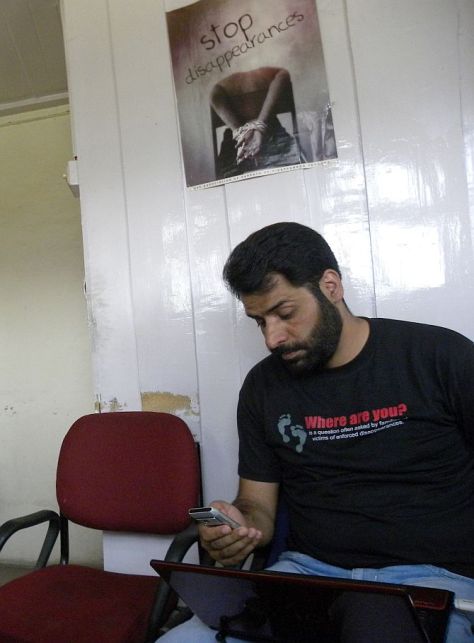
Khurram Parve, Image, courtesy JKCCS

We, the undersigned, call for the immediate release of Khurram Parvez, a distinguished and courageous human rights defender, and write in support of the enclosed statements issued by Advocate Parvez Imroz

As we write this, Khurram Parvez has been remanded to preventive custody in a sub-jail in the highly militarized Kupwara District of Kashmir. He is expected to be produced before the court on 21 September 2016.

An executive magistrate in Srinagar issued the order against Khurram Parvez, invoking Sections 107 and 151 of the Code of Criminal Procedure (CrPC) (pertaining to detention for breach of peace and design to commit a cognizable offence).

The actions against Mr. Parvez are symptomatic of the escalated repression in Kashmir by institutions of state since July 8.

We note with horror that since July 2016, over 80 persons have been killed, over 11,000 persons have been injured, over 1,000 persons have been arrested and over 100 ambulances have been attacked. For 70 days now, curfew has been imposed in various parts of Kashmir. Continue reading Free Khurram Parvez – An Open Letter to Civil Society: JKCCS

State Violence against Peaceful Assemblies in Kashmir: JKCCS

Guest Post by Jammu & Kashmir Coalition for Civil Society (JKCCS)

Over the last week – August 29 to 5 September, of uninterrupted curfew in Kashmir, the government’s unbridled use of force on peaceful public meetings/rallies, which are either funeral processions of the civilians killed by government forces or peaceful political rallies where people demand their right to self determination, across Kashmir valley has resulted in injuries to 1215+ people, many of whom are injured by pellets shot guns. The violence used by government forces against un-armed peaceful rallies deflates its claims that its forces only resort to violence when they are pelted with stones. Contrary to government claims, the use of force against the peaceful demonstrators acts as a provocation to people and youth in particular who then retaliate by stone throwing on Indian forces. The sheer number of peaceful pro-freedom rallies held in the last week alone symbolizes the nature of the current anti-India uprising which has seen lakhs of Kashmiris on streets to voice their demand for right to self-determination. Such attacks are against the internationally, and domestically, recognized fundamental rights of peoples to peaceful assembly and association, and freedom of opinion and expression, including India’s obligation under the ICCPR. Continue reading State Violence against Peaceful Assemblies in Kashmir: JKCCS

Kashmir Scholars Action Group Letter to the UN High Commission for Human Rights on the Situation in Jammu&Kashmir: KSAG

Guest Post by Kashmir Scholars Action Group

To Mr. Zeid Ra’ad Al Hussein

UN High Commissioner for Human Rights

Re: Urgent action needed to end state violence in Indian-controlled Kashmir

We are writing to you to express our concern about the situation in Indian-controlled Kashmir where the already subjected population is currently living in a state of siege due to the massive violence unleashed by the Indian forces. We appreciate your decision to create a fact-finding mission and deplore the refusal of the Indian government to allow access to UN human rights monitors (1). In the absence of such a mission, we feel it incumbent upon civil society groups to provide regular updates on the situation.

We, the Kashmir Scholars Action Group, are an interdisciplinary group of scholars of various nationalities engaged in research on the region of Kashmir. Our research on Kashmir, its history, its consequences for the region and beyond, and its possible resolution, delves into the implications for an internationally mediated political solution, and is of relevance to policy makers. Based on our long and active engagement with civil society groups in Indian-controlled Kashmir, we have undertaken to document and communicate the situation on ground since the Indian state’s violence against civilians has continued to mount from July 7th, 2016 onwards. Each of us has written about Kashmiri history, society and politics; and we are particularly concerned about the present conditions of violence. We write to you now as part of our urgent efforts to check the brutality of the state’s response to Kashmiris, scores of whom have mobilized in support of their demand for azadi (freedom). Even as we will go on to list some of the details of the humanitarian crisis, we wish to make clear that we are calling not only for the resumption of basic civil services, the rule of law, and the restoration of human rights in Kashmir, but, most importantly, for an internationally mediated political solution for this ongoing crisis. Continue reading Kashmir Scholars Action Group Letter to the UN High Commission for Human Rights on the Situation in Jammu&Kashmir: KSAG

Dalit Uprising and After …

Why Hindutva Would Not Be The Same Again ?

Image result for una struggle

(Photo Courtesy : newsclick.in)

When I was born I was not a child
I was a dream, a dream of revolt
that my mother, oppressed for thousands of years ,
dreamt.
Still it is untouched in my eyes
Covered with wrinkles of thousand years, her face
her eyes, two lakes overflowing with tears
have watered my body…..

– Sahil Parmar*

Well known Gujarati poet Sahil Parmar’s poem ‘When I Was Born’ perhaps reverberates these days in Gujarat when we are witnessing a Dalit Upsurge- a first of its kind at least in that regions history. It will be a talk of folklore for times to come how flogging of dalits in a village in Saurashtra by Hindutva fanatics suddenly erupted into a mass movement of dalits which could catch imagination of the people cutting across different sections of society. An attempt is being made here to understand the dynamics of the movement and its likely impact on the future trajectory of Hindutva.

Continue reading Dalit Uprising and After …

Adventures in Creepland: An Open Letter to the District Collector, Calicut, Kerala

This letter is jointly written by the signatories.


Dear Mr Prasanth Nair

We, the undersigned participants of the 7th Queer Pride March held on 12 August 2016 in Calicut, would like to bring to your attention the unforgivably irresponsible attitude of the Kozhikode police towards the rights of young people who identify themselves as queer, and their allies. In what should have been a completely joyous event, their attitude cast a dark shadow, for sure. Continue reading Adventures in Creepland: An Open Letter to the District Collector, Calicut, Kerala

What exactly happened in Jamia Millia Islamia on 13th August? Jamia Millia Islamia Students

Guest Post by Jamia Millia Islamia Students

What exactly happened in Jamia Millia Islamia on 13th August?

The sequence of events:

Just two days before Independence Day, all the hostel residents were informed personally by the administrative authorities to be careful as there may be some raid by IB or CBI or Delhi Police. Students were instructed not to keep any non-resident student in the hostel.

While it is okay to instruct students not to keep any non-resident student in the hostel, what is problematic is the atmosphere of fear that was created among students. Many of the students were told to be careful regarding ‘KASHMIRI STUDENTS’ in particular.

The hostel authorities repeatedly instructed the students not to come out of their rooms and to be careful.

On the 13th of August, at around 3 p.m., two police constables in uniform and around 15-20 officials in plain clothes were seen sitting just outside the hostel gate. Two constables came inside the gate and started having conversation with the guards while around 10 officials were sitting in their cars inside the hostel campus.
Continue reading What exactly happened in Jamia Millia Islamia on 13th August? Jamia Millia Islamia Students

एक विद्रोहिणी का अकेलापन

इरोम हम जैसा होना चाहती है ?
Image result for irom sharmila
(Photo Courtesy : Times of India)
कुछ कुछ तस्वीरें ताउम्र आप के मनमस्तिष्क पर अंकित हो जाती हैं।
चंद रोज पहले टीवी के पर्दे पर नज़र आयी और बाद में प्रिन्ट मीडिया में भी छायी उस तस्वीर के बारे में यह बात दावे के साथ कही जा सकती है। इस फोटोग्राफ में इरोम शर्मिला – जो आज़ाद भारत के सबसे खतरनाक दमनकारी कानून सशस्त्र बल विशेष अधिकार अधिनियम (Armed Forces Special Powers Act) के खिलाफ संघर्ष की एक प्रतीक बनी रही हैं – अपना सोलह साल से चल रहा अनशन तोड़ती दिख रही हैं। उन्हें एक चम्मच में शहद आफर किया जाता है और वह बेहद भावुक हो जाती हैं, महज एक बंूद लेकर उसे लौटा देती हैं।
ईमानदारी की बात है कि इस तस्वीर को कई कोणों से पढ़ा जा सकता है – एक कोण हो सकता है कि एक किस्म का हताशाबोध कि दुनिया के पैमाने पर ऐतिहासिक कही जा रही इतनी लम्बी भूख हड़ताल के बावजूद इस खतरनाक कानून को टस से मस नहीं किया जा सका, एक अन्य कोण हो सकता है इस एहसास का कि यह सरकार इस कदर संवेदनाशून्य हो चुकी है कि उससे लड़ने के लिए एक नयी किस्म की रणनीति की जरूरत है – बेकार में जान देने के बजाय, अपनी उर्जा को नए सिरेसे एक नए किस्म के संघर्ष मंे लगाने का – तीसरा कोण यह भी हो सकता है कि  महामानव या महामानवी घोषित किए गए किसी व्यक्ति का उस आरोपित प्रतिमा से तौबा करते हुए यह बताने का कि वह भी एक साधारण मानवी है, जिसके अन्दर बाकी लोगों जैसा जीवन जीने की हसरत है।

Continue reading एक विद्रोहिणी का अकेलापन

Not Pakistan, but Modi has pushed Kashmir on the Brink : Ashok Swain

This is a guest post by ASHOK SWAIN

Since the death of a young and charismatic separatist named Burhan Wani, Kashmir has erupted into violence and chaos. Weeks of violent protests in the Valley have resulted in the deaths of at least 50 people and over 5,000 injuries. Kashmir is not new to violent protests and civilian deaths, but this time the intensity of the protest and the passion of the protesters is unprecedented. Continue reading Not Pakistan, but Modi has pushed Kashmir on the Brink : Ashok Swain

Democratic centralism – ‘freedom of thought (sic.) and unity in action’? Rajinder Chaudhary

This is a guest post by RAJINDER CHAUDHARY; you can view his previous post on democratic centralism, on Kafila here.

The title of this note uses a quotation from ‘On Democratic Centralism’ by Com Prakash Karat carried in The Marxist, XXVI, 1, January-March 2010. This piece by the then General Secretary of the CPI(M) and the constitution of CPI(M) available on its official site (as updated in October 2015) throws interesting insights into operationalisation of the principle of democratic centralism, which recently once again came into public view in the Jagmati Sangwan episode. (All quotations henceforth are from either of these two documents.)

            Prima facie ‘unity in action’ appears quite desirable but is it really so in all situations? Does it require to ‘bind the entire collective into implementing that decision’ in all situations as Karat argues, or ‘the individual shall subordinate himself to the will of the collective’ as article XIII 1(b) of party constitution requires? Do all actions-decisions that a communist party undertakes in a parliamentary democracy like ours are of the war like situation requiring marshalling of all resources without exception? Obviously, all organisational decisions cannot be equally crucial to require binding the whole organization to it. Why can’t there be freedom of action where some members or units decide to focus on health issues and others on educational issues, and some may refrain from either? Why can’t some members/units try particular tactics of organization, follow a calendar of their own and others a different one? If it sounds that one is stretching the centralism aspect a bit too far, it may be noted that Karat points out that the ‘democracy is practiced, before the conference when the political line is being formulated. Centralism comes in when the line is being implemented’, ‘when the party is formulating its policies, at the time of conferences etc., there will be democracy in action, free discussions within the party forums. Once a call for action is given, the aspect of centralism will predominate’. As if defining the political line once in three years, clinches everything and thereafter, on no other issues independent and dencentralised decisions can be taken. In fact article XXXIII of the party constitution, makes it explicit that democratic centralism means “the centralised leadership based on inner-Party democracy under the guidance of the centralised leadership”. There is a whole article on “Inner-Party Discussions” (article XXI) which states thatState Committee can initiate inner-Party discussion on an important question of Party policy concerning that particular State… with the approval of the Central Committee” (emphasis added). So, even discussion at state level on state issues can only be initiated with the approval of the Central Committee (and off course format has to be approved too). This amply clarifies the meaning of ‘freedom of thought (sic.) and unity in action’ and where emphasis lies in ‘democratic centralism’. No wonder many times one has come across situation where Party members are just curious to know what the party line on particular issue was and not the detailed arguments and would not speak on a current issue until unless party line was clear.

Continue reading Democratic centralism – ‘freedom of thought (sic.) and unity in action’? Rajinder Chaudhary

A response to “Kashmir is Feminist Issue” by Sonam Mittal: Tupur Chatterjee

Guest Post by Tupur Chatterjee

Sonam Mittal’s recent piece in Kafila, “Kashmir is Feminist Issue” draws upon an oft-cited gendered analogy to describe the Kashmir’s relationship with India and Pakistan. Though it makes a few pertinent points about the nexus of power and patriarchy and the urgent need for Indian feminist solidarity with the Kashmiri resistance, I found the analogy deeply problematic and strongly feel that it needs further unpacking to underline its worrying implications.

Continue reading A response to “Kashmir is Feminist Issue” by Sonam Mittal: Tupur Chatterjee

The Gaze of the Developmental State and the Narmada Action Plans: Ashwin V.S

Guest Post by ASHWIN V.S

Malud-Jal-satyagrah

Jal Satyagraha in Narmada valley 2013

The years following the Second World War were characterized by a renewed focus on the ‘Modernization’ of nation-states. While the constant feature of the post-war years was the high-stakes rivalry and arms race between the USA and the USSR; both tread a common ground as regards high-modernization and ‘development’. ‘Development’ fuelled growth was considered a panacea to all ills and soon became dominant across the post-colonial world. WW Rostow’s The Stages of Economic Growth was a significant work which argued for five stages of growth in which “traditional societies” could transform themselves into the “age of high mass-consumption”. It was no wonder therefore as to which nation-states were characterized as ‘traditional’ under this rubric and pushed towards ‘development’.

A standard feature of ‘development’ in India has been the showcasing of large scale industrial and apparently ‘public purpose’ projects; an instance of this is seen in the construction of large dams. As much as ‘modernization’ or ‘development’ can be witnessed through the industrial or ‘public’ projects themselves; the ambition of the ‘developmental state’ and its vision can certainly be understood through the one-constant feature of the bureaucratic machinery – paperwork.

Therefore, for the purposes of this essay, I attempt to evaluate the ambition of the post-colonial ‘developmental state’ in India by analyzing the language of a few planning documents. In this case, I consider the Narmada Valley Development Authority’s (NVDAs) Action Plans prepared in the years 1991, 1993, 1995 and 2000 for the Resettlement and Rehabilitation (R&R) of Sardar Sarovar Project ‘oustees’ in Madhya Pradesh. These Documents are revealing in aspects of the modern state’s enterprise and it’s most significant undertaking, planning.

The State’s gaze and legibility:

James Scott’s magnificent work Seeing Like a State characterizes a crucial difference between the pre-modern state and the modern state: while the former “was in many crucial respects, partially blind” and “knew precious little about its subjects”, the modern state is consumed by a desire to know. Armed with statistics and other tools of ‘accuracy’, the modern state stakes its claim to the accurate depiction of the social world, which it then tries to alter in accordance to its designs of ‘development’. Continue reading The Gaze of the Developmental State and the Narmada Action Plans: Ashwin V.S

Kashmir, Summer 2016: Angana Chatterji

Guest Post by Angana Chatterji 

In 2011, I had written an essay on Kashmir entitled: “The Militarized Zone,”which was published in an anthology on Kashmir (Verso Books).

What was apparent then is all too real now. I reproduce an edited fragment here today, in solidarity with Kashmiris who are being asphyxiated in their land and subjected to life under conditions akin to collective internment, and their allies across India who are being intimidated to conserve the silence. Speaking up on Kashmir is inevitably accompanied by fear for many even as silence is a betrayal of humanity. Continue reading Kashmir, Summer 2016: Angana Chatterji