Category Archives: Movements

The Fiction of Fact Finding: Harassment of Delhi University Teachers Union President


PLEASE JOIN PROTEST AGAINST SHAMEFUL HARASSMENT OF DR. NANDITA NARAIN – MONDAY THE 19TH OF OCTOBER, VICEREGAL LODGE, DELHI UNIVERSITY 10.30 AM- 1.30 PM.


01Fir08-09.qxp
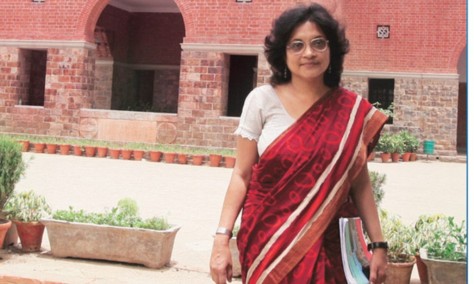
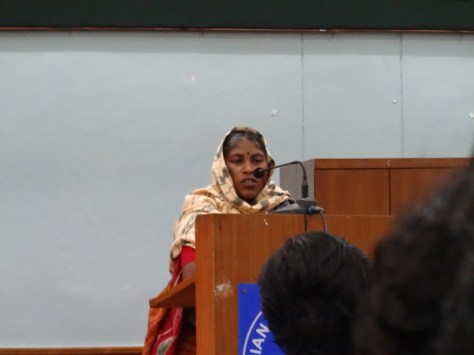
Dr. Nandita Narain, President of the Delhi University Teachers Association.

With apologies to Manoj Mitta’s excellent book on 2002 by the same name, it appears that yet another fact-finding commission has made a mockery of the process of law, not to mention truth and justice. Dr. Nandita Narain – yes that blood-curdling, fearsome figure in the picture above – has been accused of disrupting the work of 3 colleges in Delhi University and asked to appear before a fact finding committee appointed by the University, 10 days before the term of the current Vice Chancellor Professor Dinesh Singh ends. For those not acquainted with Dr. Narain, she is the popular President of the Delhi University Teachers Association, beloved Mathematics professor in St. Stephens’ College and a brilliant scholar in her own right. Having contested and won the recent Delhi University Teachers Association elections against the V.C’s relentless pressure tactics and a blitzkrieg of campaigning and publicity by other parties including the government-friendly National Democratic Teachers’ Front, Dr. Narain has evidently had nothing but her enormous personal integrity going for her.

Continue reading The Fiction of Fact Finding: Harassment of Delhi University Teachers Union President

House of Cards


Courtesy Indian Express
Courtesy: Indian Express.

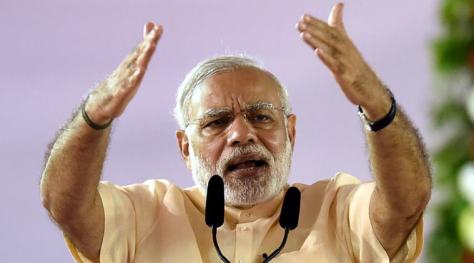
Anybody with a passing interest in consistency or coherence might be forgiven for being stumped at the political spectacle unfolding right now. Yesterday, Prime Minister Narendra Modi assured us that his government was committed to reservations. The statement was made at a ceremony to inaugurate the Ambedkar memorial at the Indu Mills compound in Mumbai. The fact that ordinary Dalits, in the habit of thronging any joyous celebration on Ambedkar in big numbers, were kept out of the ceremony, is possibly irrelevant. After all, officialese is officialese, and no political party – certainly not the BJP – has a monopoly on stiff-necked commemorations of people’s leaders that want nothing to do with the people. It is Modi’s commitment to reservations and the Indian constitution that is of interest. In some ways a statement of this nature made at the inauguration of an Ambedkar memorial, makes perfect sense. Apart from the occasion and locale, also not coincidental was the timing of Modi’s statement – one that he himself alluded to, when he referred to the bitterly fought Bihar elections now underway, “With a BJP government in power and polls getting under way, a malicious propaganda is being spread that the government is against reservation…”. The fact that the anti-BJP mahagathbandhan (grand alliance) in Bihar has made reservations one of their chief planks, with Lalu Prasad Yadav declaring in his inimitable style that he will kill himself if reservations are removed, is relevant.

Zooming back from the Ambedkar memorial event, the PM was clearly also responding to the threat to his Sabka Saath Sabka Vikas model begun a couple of months ago by the irrepressible Hardik Patel. Patel – erstwhile BJP supporter, self-styled Patidar-Patel revolutionary and a wild child in imminent danger of being silenced (or coopted) by the BJP – was temporarily subdued by the Gujarat administration following the wave of violence over his first call for reservation, but resurfaced a couple of days ago to be the nightmare Modi hadn’t dreamed yet – saying his aim was to expose the “Gujarat model of development”. This is for the current party nothing short of the youngest born of a rambling illustrious family running into the street from the family mansion saying our house is made of mud! our house is made of mud!

Continue reading House of Cards

Workers right to unionize being trampled upon in yet another factory in Manesar: Report

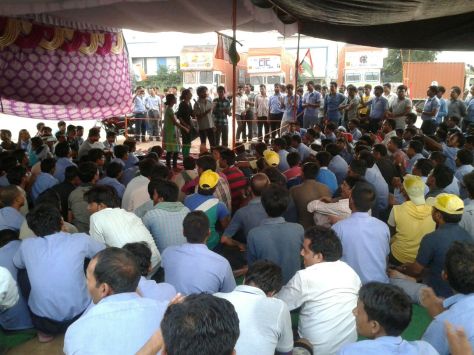
Report on the protest by automobile workers in Manesar by BIGUL MAZDOOR DASTA AND AUTOMOBILE INDUSTRY CONTRACT WORKERS UNION


IMG-20150921-WA0005

On the morning of 18 September 2015 when the workers employed in the Bridgestone company reached their factory gates they were met with Police officers and hired bouncers at the gate. When the workers tried to enter the factory premises they were resisted by the uniformed and the non-uniformed goons of the Factory Management. The Police beat up the workers and prevented them from entering the premises of the factory in spite of having a court order for tool down and without any prior notice the workers were sacked by the company. More than 400 workers employed in Bridgestone Factory in Manesar have been unlawfully sacked by the Company authorities after the workers demanded to get their Union registered. The workers are currently protesting outside the factory and have gathered there to raise their voice against the injustice and oppression that they are facing at the hands of the factory management.

Continue reading Workers right to unionize being trampled upon in yet another factory in Manesar: Report

The Patel agitation and the ‘paradox’ of demanding OBC status: Rita Kothari

Guest Post by RITA KOTHARI

Not long ago, a Gujarati film, Kevi Rite Jaish (“How will I go?”  dir. Abhishek Jain, 2012) provided to its viewers a rare fare. It was, unlike Gujarati films of the past, based on the life of urban Ahmedabad  and told the story of a young man whose dilemma was similar to that of scores of aspiring youth in Gujarat. Harish Patel, the protagonist, is obsessed with the idea of migrating to the United States and becoming, like many members of his community of Patels, a ‘motel-king.’ Harish Patel’s room is decorated with Statue of Liberty and Obama – deities that he needs to propitiate. However, his inability to answer satisfactorily the questions  asked by the visa officer at the US embassy leads to his failing to get a visa. The film builds up in comical vein the “trauma” of this event,  which prevented Harish Patel from  fulfilling his dreams in the promised land.  Several abortive attempts, including one involving fake sponsorship papers, bring to the viewer the satirical picture of a community that in the film at least, cannot see beyond motels and United States. The title poses  a real and rhetorical question for Harish Patel, who finally realizes that there are opportunities in his motherland  and this self-realization, certainly not a profound one, is suggested by signifiers of home-made food made by his mother.  A thoroughly ordinary film that this was, its success lay in striking a chord among young viewers who may also have been the chief patrons of such an economic venture.

To my knowledge, there was no counterview to the film contesting the stereotype of the Patel community, for this is indeed the dominant image of an urban Patel in popular imagination—affluent, enterprising and obsessed with the United States. Continue reading The Patel agitation and the ‘paradox’ of demanding OBC status: Rita Kothari

A Contested line – Implementation of Inner Line Permit in Manipur: Deepak Naorem

This is a guest post by DEEPAK NAOREM

Violence and the accompanying disruption of everyday life in Manipur is not a recent phenomenon. This year too, the state was plunged into a spiral of violence following demands for the implementation of Inner Permit Line, a law originating in the colonial period. This demand is based on real or imagined fears that Manipur, like Sikkim and Tripura, would be overwhelmed by the ‘outsiders’ and that the ‘indigenous people’ of Manipur would become a minority in their homeland. Such demands are neither new nor surprising in this part of the world, where a nearly-unfathomable ethnic, demographic and political jigsaw puzzle was created by British colonialism; one that was deepened by even more myopic and inconsistent policy in the post-colonial years. However, this year, following the death of a young student by police firing during a student protest in Imphal, the movement demanding the Inner Line Permit (ILP) gained considerable momentum in Manipur. Subsequently, the legislature was forced to introduce three bills in the Manipur State Legislative Assembly on 28th August, 2015, ensuring the implementation of Inner Line Permit in the state. This in turn triggered another wave of violence with the ‘tribals’ and tribal organizations opposing the three bills, eventually bringing life to a standstill in the state.

Continue reading A Contested line – Implementation of Inner Line Permit in Manipur: Deepak Naorem

Muzaffarnagar Baaqi Hai – Critical Readings Online and Offline: Akash Bhattacharya and Arif Hayat Nairang

These are guest posts by Akash Bhattacharya and Arif Hayat Nairang

The film Muzaffarnagar Baaqi Hai has been in the news recently, and not always for the right reasons, having attracted disruptive and abusive protest at some screenings. Following a day of counter-protest in which the film was screened all over the country, a friend teaching in a Delhi University college suggested screening it in her college, only to be told by the student representative that it would “cause trouble” (“bawwal mach jayega ma’am!!”). She asked what that meant and if he had seen the film, and he simply said, “nahin, bhaiyya logon ne kaha hai ki woh film bahut buri hai” (No, but our elder brothers have said it’s a bad film). 

In an atmosphere where political self-censoring comes as easily to the current generation of students as scouring the net for “blocked content” we present below two readings of the reception of the film, the first ruminating on whether the film addresses the complexities of communal mobilisation adequately; and the second inquiring in the context of social media and particularly Facebook, what constitutes the ‘liking’ of an image or idea. The idea of posting these comments is as much to give space to these arguments as it is to make a larger point that the ‘sickular left’ voices that are presumably behind the film love discussion, critique and disagreement. That to my mind is the way forward, not pre-empting the always-already hurt sentiments of the bhaiyya log whosoever they may be.

Continue reading Muzaffarnagar Baaqi Hai – Critical Readings Online and Offline: Akash Bhattacharya and Arif Hayat Nairang

Hindutva: A Political Theory of Nationhood?: Aman Verma

Guest post by Aman Verma

It is disheartening to see amongst supporters of Hindutva these days a silent acquiescence and at times even active support for extra-constitutional techniques being adopted by organizations like the RSS and its offshoots towards attaining the goal of Ram Rajya. An assessment is necessary of what would ultimately entail on the social, political and economic fronts if such a policy that envisages a supposedly ‘Hindu’ cultural and linguistic hegemony over cultures and languages represented by minority communities becomes reality. However, being a student of law what disturbs me more is the absence of any socio-political entity or civil society movement rooted in values of democracy that can effectively counter the impact of Hindutva organizations on the Indian social fabric. While the BJP has its RSS, every other political party claiming to be the upholder of secularism lacks its equivalent, or at the very least an effective social protégé.

Further, my personal interactions with supporters of BJP reveals that there is some deep sense of hurt and helplessness, part valid for the sake of argument, but for the most part carefully manufactured by Hindutva propaganda, which manifests itself in questions a friend recently put to me, “What are the other ways in which the Hindus can also claim their rights and send out a message that they have been too tolerant for too long?” and another which sounded like “How else to keep our dignity and identity alive in our land?”. These questions, based upon presumptions like those of “Hindu tolerance” of acts perpetrated by other communities supposedly only against Hindus and, protection of a completely vague concept of “Hindu identity” are clearly an outcome of a campaign strategy that relies upon upping the antics on the romantic-nationalist front.

Continue reading Hindutva: A Political Theory of Nationhood?: Aman Verma

Comrade Chintamani: Faridabad Mazdoor Samachar

This is a guest post from Faridabad Mazdoor Samachar (FMS), a monthly workers’ newspaper published from Majdoor Library

This appeared in Hindi in August 2015, New Series 326 and has been translated into English  by Pratik Ali and Sheena Jain.

In the early hours of 31st July, Comrade Chintamani passed away.

Saathi Chintamani was born in the village Mustafabad Saraiyya of Kadipur tehsil, Sultanpur district in eastern Uttar Pradesh. He studied till class 12th. Rejected tempting offers for converting to another religion, he joined as an impounding official in the Department of Agriculture, Uttar Pradesh government. While he was on duty once, realizing dues, he thrashed some people for insulting him over his caste. To avoid upper-caste backlash, he left his permanent job and moved to some relatives at Faridabad. After working for a month or two each at Bata, Goodyear, Dabur, Escorts, etc., he became a permanent worker in Gedore Tools. Together with the job, he was active in politics of caste of the Ambedkarite current. Long conversations with Com. Vijay Shankar of neighboring Babripur village strengthened his grip upon the new reality of having become, and of being, a wage-worker.

In 1977 wage-worker stirrings intensified greatly in Faridabad, and Saathi Chintamani was very active in them. He lent special support to the militant workers of Usha Spinning and Weaving Mill and the Bharatiya Electric Steel Factories. He was among those who left eighty unions to form Majdoor Sangharsh Samiti (Workers’ Struggle Committee). In 1979, many workers were killed in police firing in Faridabad. After internal emergency was lifted in 1977, Com. Vijay Shankar was dismissed from his job for his role in the Delhi Faridabad Textile (DFT) strikes. Wage-workers from Bata, Gedore, Poritts & Spencer, Electricity Board, Handa Steel, East India Cotton Mills, Orient Steel, Leatherite, etc. got together with Com. Vijay Shankar at Azad Nagar jhuggi (shanties) and Mujesar for collective study of Karl Marx’s book, ‘Capital’. Saathi Chintamani was among them.

Continue reading Comrade Chintamani: Faridabad Mazdoor Samachar

Cheralam to Keralam to Ketta-idam – A Report on ‘Development’ from Trivandrum, Kerala: Sriranjini R

This is a guest post by Sriranjini R.

Cheralam Sriranjani

ISIS in Syria, Al Qaeda in Afghanistan, Taliban in Pakistan, Boko Haram in Nigeria, ecological problems, climate change … the list of the world’s ‘security’ problems seems endless. India has its own share of course – the India-Pakistan conflict, India-China problems, Maoism and so on. In Kerala, police have been desperate to find ‘security threats’ of their own. They first tried hunting down a ‘druglord’ whose picture was found on T-shirts of young people suspected of drug use. His name is Bob Marley. Please give the man up if you find him anywhere. Then they tried looking for Maoists. Every state has some, how come we have so few, was their complaint. After going after thin, dark-skinned, bearded fellows, Kiss of Love activists, and sundry others, hoping that one of these will be a Maoist, finally they caught one. And he didn’t look like any threat to most Malayalis.

Continue reading Cheralam to Keralam to Ketta-idam – A Report on ‘Development’ from Trivandrum, Kerala: Sriranjini R

Saving ‘Development’ From Dangerous Women Activists: Kamal Nayan Choubey

Guest Post by  KAMAL NAYAN CHOUBEY

The inclination of the Indian State to suppress any movement related to the just demands of marginalized sections has increased immensely in recent times. There is no question of dialogue. Coercive methods are generally employed to contain these movements. This is what has happened with the movement of tribal people are struggling against the Kanhar Dam in the Sonbhadra district of Uttar Pradesh. In this movement, women activists play a crucial role, and in order to contain it, the UP Police arrested two key women activists Roma and Sukalo, and six other women activists from the Robertsganj office of All India Union for Forest Working People (AIUFWP) on 30th June 2015.

DSC00028

Roma is the General Secretary of the AIUFWP.

The UP police has registered cases of inciting rioting against the women activists and it has also reopened old cases against them, particularly against Roma. Apart from them, another tribal woman activist Rajkumari was arrested on 21st April.

DSC00115

Sukalo

Continue reading Saving ‘Development’ From Dangerous Women Activists: Kamal Nayan Choubey

Public Secrets Now Proven – Ranveer Sena Terrorists Caught on Camera by Cobrapost: Kavita Krishnan

Guest Post by Kavita Krishnan

The ‘Operation Black Rain’ film released by the web portal Cobrapost, based on secretly filmed boasts of the Ranveer Sena terrorists with detailed accounts of massacres of Dalit and oppressed caste labourers in the 1990s, has only confirmed public secrets that everyone in Bihar already knew.

Continue reading Public Secrets Now Proven – Ranveer Sena Terrorists Caught on Camera by Cobrapost: Kavita Krishnan

Rapping Some Sense into Unilever for Mercury Pollution

Sent to Kafila by Nityanand Jayaraman
Hitting where it hurts Unilever most, a new music video that is turning many eyes uses rap to expose Unilever’s crimes in the South Indian hill town of Kodaikanal. Sofia Ashraf, a Chennai-born rapper, wrote the lyrics and sang the song which was set to video by Chennai-based filmmaker Rathindran R. Prasad. 
Set to Nicki Minaj’s racy song “Anaconda,” this song asks Unilever to clean up the toxic contamination in Kodaikanal and compensate mercury-affected workers. Unilever operated a mercury thermometer factory in Kodaikanal for 18 years, and was shut down in 2001 after it was caught having dumped broken thermometer waste in a scrapyard in a crowded part of the town. Now, 15 years later, Unilever has neither cleaned up the contamination nor compensated workers.

The video is being used to promote a petition targeting the Anglodutch MNC’s CEO Mr. Paul Polman. Unilever spends more than $8 billion marketing itself as an ethical, transparent, caring and environmentally responsible company. However, for more than a decade, it has failed to walk its talk in Kodaikanal. Its CEO talks exhorts other corporate leaders to be responsible and compassionate, and is a great proponent of a concept called “Inclusive Capitalism.” Kodaikanal is proof of how Unilever is no different from Union Carbide.

Greece says OXI! Some resources

g4

Chomsky in March 2015 on Europe’s “savage response” to Greek push-backs on austerity (Democracy Now!)

“Democracy Cannot Be Blackmailed”: Greek Voters Overwhelmingly Reject Creditors’ Austerity Demand (Amy Goodman in Democracy Now!)

What was good for Germany in 1953 is good for Greece in 2015 (Larry Elliott in The Guardian)

The Greeks Have Spoken: What Happens Next? (Kavaljit Singh in Madhyam)

Three Rarely –If Ever– Mentioned Facts In The Greek Tragedy (Saskia Sassen in Analyze Greece!)


Cities, Smart or Self Reliant? Rajendra Ravi

Guest post by RAJENDRA RAVI

The incumbent government has reportedly resolved to build a hundred smart cities in near future. And the concept seems to have taken our world by storm offering little space, if any, for a dissenting voice. Of course, a few tremors of resistance have emerged from areas where the lands are being acquired or have been marked for acquisition. For, resistance is something that is perennial: it never fails to strike back when the forces of eviction and deprivation come together to uproot people from their habitats. Human history stands witness to the fact that it is the mass protest and organized resistance that have compelled the development machinery to re-evaluate its orientation. Arguably, the tendency has actually reinforced and deepened the institution of democracy.

However, let us not overlook the fact that every community or a social group on this globe has taken the course of migration in its quest for development either as a conscious decision or compulsion. As a consequence, the phenomenon has substantially influenced the nature and configuration of habitats, leading the small hamlets to become large villages and bigger villages morphing into towns. Eventually, these very towns end up being cities. This has been quite a predictable trajectory of human development. Historically speaking, the process has involved efforts both at the level of government and the society at large. But, at the same time, we cannot ignore the fact that the government has a far more crucial role to play in it – a role, which is always informed by the ideological outlook of various political parties and governments. This role is also conditioned by the fact whether or not the parties and governments in question seek to build an egalitarian and democratic society. Continue reading Cities, Smart or Self Reliant? Rajendra Ravi

Position Paper on Higher Education: Academics for Creative Reform

“The manner in which the state is intervening in higher education is causing concern and even alarm in the academic community. Both the unlamented UPA—II regime and the current NDA government have been remarkably similar in their authoritarian impatience to introduce wholesale changes without adequate or careful preparation. This position paper is the collective product of roughly six months of discussion among teachers of several central universities in Delhi. It is an attempt to participate in the process of critical self evaluation of the university system as it is today. It is also our considered response to the many policy statements and directives issued by the MHRD and the UGC recently”

Please click on the link below for the complete position paper on proposed reforms in higher education, prepared by Delhi-based Academics for Creative Reform and released at a press conference today:

PositionPaper12May2015

Seminar on Balochistan Missing Persons at Karachi University despite administration refusing permission

mama3

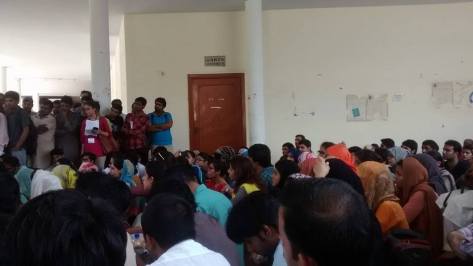
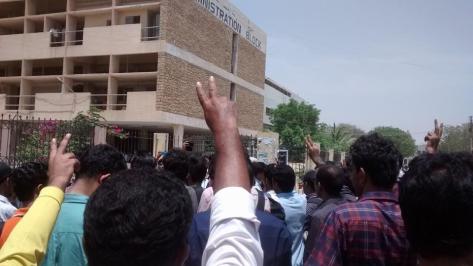
Sabin Mahmud was killed after organizing an event on Balochistan in T2F in Karachi, and more recently, Syed Wahidur Rehman, a Karachi professor was also shot dead. But far from being silenced, the resistance of democratic forces in Pakistan is growing. Today, Karachi University faculty organized a seminar on Balochistan missing persons to massive response, despite the administration refusing permission and locking the doors of the venue. The event was held in the Arts lobby, from where it seems to have spilt outside too.

11214139_10152694077270870_338189832357349941_n

A determined audience sits on the floor outside the locked room where it was to have taken place.

11019548_10152694076845870_5299594296544608541_n

Audience outside KU Administration Block

Read the report in The Tribune

Images sent by Nida Kirmani, Asst Prof at LUMS, Lahore, Pakistan, via Shipra Nigam

The Priya Vedi Suicide: Diwas Raja Kc and Alston D’Silva

This is a guest post by Diwas Raja Kc and Alston D’Silva

Image Courtesy: www.pardaphash.com
Image Courtesy: http://www.pardaphash.com

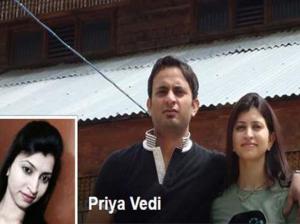
On the 18th of April this year, Dr. Priya Vedi of AIIMS tragically ended her life and left a Facebook note incriminating her husband—fellow doctor at AIIMS Dr. Kamal Vedi—for “torturing” her mentally, clearly implying that his homosexuality was the reason for her suicide. Her distress is apparent in the note as she recounts the lack of intimacy in her marriage and her discovery of the husband’s sexual activities as a gay man before and during the marriage. At the end she includes a plea to all gay men to not “marry to a girl to save yourself,” to not play with the emotions of a girl and her family. It should not be surprising that some condolent commentators have placed the blame specifically on Kamal Vedi’s alleged sexual orientation, even calling for legal action. Even within the LGBT community, the tendency has been to first put culpability on the man’s opportunistic participation in the institution of marriage. There is a sense that this incident ought to serve as a teaching moment for gay men, who are argued to require an ethical code, who need to fixate on the deliverance of their conscience, and whose rights—as Sandip Roy pointed out—”mean nothing without responsibility.” But despite Priya Vedi’s strongly felt sentiments, must we proceed as if the case of her fatal end is a logical and natural consequence of gay men’s irresponsible intrusions into the sanctum of marriage? After all, such intrusions are routine, and the ensuing heartbreaks are sometimes even known to be productive of powerful empathy between straight women and gay men.

Continue reading The Priya Vedi Suicide: Diwas Raja Kc and Alston D’Silva

Whatever happened to 15-M Movement? Atharva Pandit

Guest post by ATHARVA PANDIT

[Against the background of Spain’s recent criminalizing of public protests and the first ever hologram demonstration (see Kafila post by Geeta Seshu) against it, this article revisits the major eruption in 2011, that eventually laid the ground for the emergence of a new political force in Spanish politics]

15M, image courtesy El Tecolote

Spain, seems to be a country that is still shaping itself. Somewhat like a nation that wants to come to terms with its past, unlike many other countries that have gone through a traumatic history and have finally emerged through the political passions – admittedly misdirected – of their distant past. Spain seems like it is yet to come to terms with a civil war that forged its legacy in millions of Spanish minds and the future generations of the country. The fascist forces that staged a coup, and consequently, went on to purge about 150,000 of its citizens in summary executions, far surpassed some of the worst dictatorships that the world has witnessed, including that of Pinochet’s in Chile and of Videla’s in Argentina.

Continue reading Whatever happened to 15-M Movement? Atharva Pandit

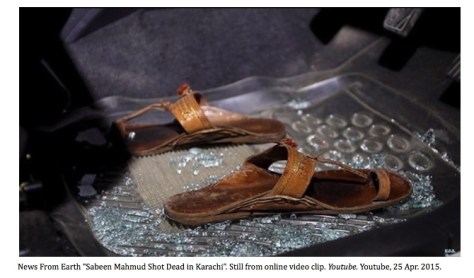
Enabling Dissent, Defying Silence – In Memory of Sabeen Mahmud: Yaminay Chaudhri and Mariam Sabri

Sabeen Mahmud's Slippers

Guest Post by Yaminay Chaudhri and Mariam Sabri

[ This is a post from two friends in Pakistan responding to the tragic assasination of Sabeen Mahmud, activist and director of ‘The Second Floor’ (T2F) – a space that hosted many wonderful conversations and brave events. Sabeen was killed as she was going home after an event dedicated to a public discussion of disappearances and human rights violation in Balochistan.]

A normally quiet and desolate gali is packed with camera crews and hundreds of attendees for the funeral of Sabeen Mahmud. While there is a steady trickle of mourners entering and exiting the premises of the vibrant community space Sabeen created, the crowd waiting in the gali outside seems to be arrested by a mixture of disbelief, anger and grief.

Similar emotions paralyze us as we write about Sabeen in the past tense. It is difficult to believe she is gone, infuriating to think about the way she went, and, perhaps, the hardest to accept the beginning of her absence.

While watching her interview with PBS NewsHour last month, one is struck by how her cavalier attitude to fear and security, reverberates eerily in the wake of her murder.

“I grew up playing cricket on the streets” she said, “I just feel when the time comes, the time will come”.

Continue reading Enabling Dissent, Defying Silence – In Memory of Sabeen Mahmud: Yaminay Chaudhri and Mariam Sabri

Gajendra’s Tragic Death, Media Spins and the Indignation Industry

Gajendra, BJP and the Propaganda Machine

The tragic death of a farmer from Rajasthan occurs at a rally organized by the Aam Aadmi Party on 22 April 2015. The farmer, Gajendra Singh, hangs himself from a tree in full public view of the demonstrators, the media, the police. The electronic media had till then been barely covering the event, generally holding forth instead, in studio ‘debates’ among the opponents of AAP. Once this happened, the media spin doctors swung into action, and as Rajdeep Sardesai tweeted later, they seemed to work on an already decided script. Sardesai’s tweet said that there were clear instructions from the BJP to the media to focus only on the hung/ dying (or dead) man, and forget the rally. It seems, on a closer look, that the the second part of the instructions had perhaps already been given in advance – not to cover the rally and if at all, to attack it in sponsored studio debates. And of course, the BJP, which is the architect of the new Land Acquisition Ordinance, is an interested party in this game.

It is not entirely irrelevant to the overall politics of the media-BJP spin doctoring  of ‘reports’ that the AAP government in Delhi was perhaps the first in the country to announce what is without doubt the highest compensation to farmers suffering crop losses – Rs 50, 000/- per hectare for all farmers who have suffered damage. Nor is it entirely irrelevant that the Delhi government had lent full support to the anti-land acquisition struggles and Kejriwal had himself joined in the rally held by Anna Hazare and had now taken up the land issue in all seriousness.

Thus it happens that between the BJP and the big media propaganda machine, which has on at least two previous occasions completely blacked out AAP, the stage was set. Also at work in the media-AAP relationship over a longer term now, is the role of Mukesh Ambani’s media empire, given that on a range of issues AAP has directly challenged the latter. As an aside, let me add that a very senior journalist told a friend at the height of the Delhi election campaign, that in CNN-IBN/ IBN7, clear instructions had been issued to the staff not to give more than 20 seconds exposure to Arvind Kejriwal under any circumstances. If AAP swept the Delhi elections despite that, it must say something about the limits of the media game, at least as far as the majority of the population is concerned.

Gajendra singh being rescued, image courtesy Oneindia.com
Gajendra Singh being brought down. Image courtesy Oneindia.com

This time round, there was another constituency that was waiting to move into action – the Delhi elite, especially the radical elite whose hatred of Kejriwal is simply visceral, but which had been just about tempered by the presence in his team of People Like Themselves, darlings of the media. The latter had, to use an old Maoist expression, ‘wormed its way into the party’ and was intent on fighting an ‘ethical battle for inner party democracy’ against the ‘fascist Kejriwal’, a battle in which they were fully backed by the Ambani dominated media.

Continue reading Gajendra’s Tragic Death, Media Spins and the Indignation Industry

Letter of Solidarity with Greenpeace India: A Statement

The move by the central government to freeze Greenpeace India’s bank accounts and block sources of funds, is a blatant violation of the constitutional rights to freedom of expression and association. It also seems to be an attempt to warn civil society that dissent regarding development policies and priorities will not be tolerated, even when these are proving to be ecologically unsustainable and socially unjust. These are dangerous signs for the future of democracy in India.

Specific allegations of legal violation contained in the Ministry of Home Affairs’ notice are aspects Greenpeace India needs to respond to. However, the notice also charges the organization with adversely affecting “public interest” and the “economic interest of the State”. These charges give the impression that Greenpeace India is indulging in anti-national activities, using foreign funds. However, dissenting from the government’s development policies, helping communities who are going to be displaced by these policies to mobilise themselves, and generating public opinion for the protection of the environment can by no stretch of imagination be considered anti-national, or against public interest. Quite the contrary, any reasonable policy of sustainable development (which the government claims to adhere to) will itself put into question quite a few of the mining, power, and other projects currently being promoted. ”

Civil society organisations in India have a long and credible history of standing up for social justice, ecological sustainability, and the rights of the poor. When certain government policies threaten these causes, civil society has a justified ground to resist, and help affected communities fight for their rights. This is in fact part of the fundamental duties enjoined upon citizens by the Constitution of India.

Continue reading Letter of Solidarity with Greenpeace India: A Statement