Category Archives: Movements

Statement by Educators, Intellectuals, Artists and Writers on Police Action in JNU

We, the undersigned, (educators, professors, intellectuals, writers and artists), are shocked by the appalling conduct of Delhi Police at Jawaharlal Nehru University in New Delhi yesterday. We also condemn the irresponsible sloganeering by some people at the fringes of a gathering on the JNU campus to mark the third anniversary of the execution of Afzal Guru. We believe that such calls to ‘war, until the destruction of India’ erode the gravity of any serious discussion on any political question, be it capital punishment, human rights or even the question of self-determination. Such conduct is shameful, regardless of who does it, and deserving of the sharpest criticism.

That said, the only way to counter such incidents, when they occur, is through a deepening of dialogue, not through police action. The police has no business to enter places of learning and harass students (including students who were clearly trying to defuse the situation and to take a stand against the irresponsible elements who gave the objectionable slogans) when there had been no breach of peace.

We condemn the arrest of Kanhaiyya Kumar, president of the Jawaharlal Nehru University Students Union on trumped up charges of sedition and demand that he be released immediately. Kanhaiyya’s public statements, which are widely available, clearly show that sedition is the last thing that you can charge him with. The University Authorities must take steps to ensure that the witch hunt that is ensuing against other students must also cease immediately. We demand that there be no more arrests of students. We are saddened by the new JNU Vice Chancellor’s readiness to submit to the diktats of the police, and we condemn the totally outrageous statements by the Union Home Minister Rajnath Singh, and the Minister for Human Resources Development Smriti Irani which virtually declare war on universities as spaces for dissent and debate.

We demand an unconditional withdrawal of police personnel from campuses, and reiterate our support and solidarity with the students, faculty and staff of JNU, and with students everywhere in India who are pursuing a courageous resistance against the ongoing assault on higher education unleashed by the BJP government.

Aditya Nigam, Professor, Centre for the Study of Developing Societies, Delhi

Ashis Nandy, Distinguished Fellow, Centre for the Study of Developing Societies, Delhi

Bharti Kher, Artist, Delhi

Debjani Sengupta, Associate Professor, Department of English, Indraprastha College, Delhi University

Gauri Gill, Artist, Delhi

Gayatri Sinha, Curator, Delhi

Geeta Kapur, Curator, Delhi

Iram Ghufran, Filmmaker, Delhi

Jeet Thayil, Poet, Delhi

K. Satchidanandan, Poet, Delhi

Karen Gabriel, Department of English, St. Stephen’s College, Delhi University

Lawrence Liang, Alternative Law Forum, Bangaluru

Moinak Biswas, Professor, Department of Film Studies, Jadavpur University, Kolkata

Nancy Adajania, Curator, Mumbai

Nandini Datta, Associate Professor, Miranda House, Delhi University

Neha Choksi, Artist, Mumbai

Nivedita Menon, Professor, Centre for Comparative Politics & Political Theory, School of International Studies, Jawaharlal Nehru University, Delhi

P.K.Vijayan, Department of English, St. Stephen’s College, Delhi University

Pallavi Paul, Artist/Filmmaker, Delhi

Parnal Chirmuley, Associate Professor, Centre of German Studies, School of Language, Literature and Culture Studies, Jawaharlal Nehru University, Delhi

Pratiksha Baxi, Associate Professor, Centre for the Study of Law and Governance, Jawaharlal Nehru University, Delhi

Rajarshi Dasgupta, Assistant Professor, Centre for Political Studies, Jawaharlal Nehru University, Delhi

Rajeev Bhargava, Professor, Centre for the Study of Developing Societies, Delhi

Ravi Sundaram, Professor, Centre for the Study of Developing Societies, Delhi

Ravi Vasudevan, Professor, Centre for the Study of Developing Societies, Delhi

Romila Thapar, Historian, Emeritus Professor, Jawharalal Nehru University

S. Kalidas, Critic, Delhi / Goa

Sahej Rehal, Artist, Mumbai

Sabina Kidwai, Associate Professor, AJ Kidwai Mass Communication Research Centre, Jamia Millia Islamia, Delhi

Sabeena Gadihoke, Associate Professor, AJ Kidwai Mass Communication Research Centre, Jamia Millia Islamia, Delhi

Sanjay Kak, Filmmaker, Delhi

Sarnath Banerjee, Artist, Delhi / Berlin

Saumyajit Bhattacharya, Associate Professor, Department of Economics, Kirori Mal College, University of Delhi

Sibaji Bandyopadhyay, Fellow, Centre for the Studies of Social Sciences, Kolkata

Shohini Ghosh, Professor, AJ Kidwai Mass Communication Research Centre, Jamia Millia Islamia, Delhi

Shuddhabrata Sengupta, Artist, Raqs Media Collective, Delhi

Subodh Gupta, Artist, Delhi

Sumit Sarkar, Historian, Formerly Professor, Department of History, Delhi University

Tanika Sarkar, Historian, Formerly Professor, Centre for Historical Studies, Jawaharlal Nehru University, Delhi

Vivan Sundaram, Artist, Delhi


PLEASE SIGN AND SHARE WIDELY BY VISITING THIS PETITION PAGE ON CHANGE.ORG

Restore Normalcy in JNU, Release All Detained Students, Delhi Police Quit JNU

12716438_10153221773131150_2421721007167708352_o
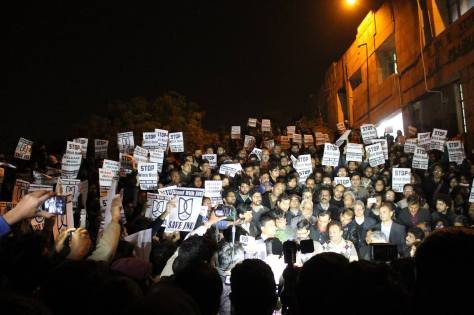
Students, Professors and Staff of JNU Stand Together in Protest on February 12, 2016 against the Police Action on Campus and the Assault on JNU by ABVP-BJP

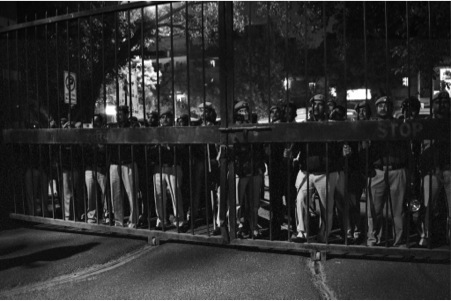
In an unprecedented and draconian move, Delhi Police personnel entered the precincts of Jawaharlal Nehru University in Delhi yesterday afternoon, and began a search operation based on malicious complaints against ‘unnamed persons’ filed by a Delhi BJP leader in response to an event titled – ‘Country Without a Post Office’ – organized by some students to commemorate and protest against the execution of Afzal Guru on February 9th.

Continue reading Restore Normalcy in JNU, Release All Detained Students, Delhi Police Quit JNU

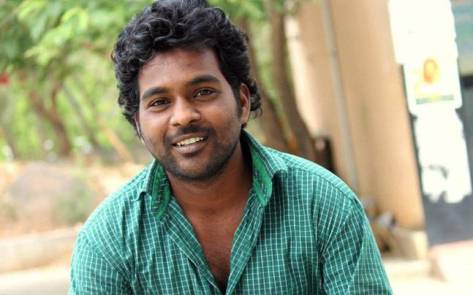
Operation Ekalavya : Jhandewala, New Delhi, Rohith Vemula’s Birthday, 30th January 2016

Dear young friends who went to Jhandewala on Rohith Vemula’s birthday,

a1078-rohit-facebook-and-storysize_647_011816123527

And all those who were there in spirit, in Delhi, Hyderabad and elsewhere. I am writing to you because I think you might have all taken things much further than anyone can quite imagine or understand at present.

I am writing to you, for today and for tomorrow, so that every time in the future that young people gather to celebrate their friend Rohith’s birthday, we might all begin to have a different kind of conversation. So that the boundaries between mourning and celebration, between anger and joy may always remain blurred enough for us to know what to do next, each time.

Since you had a close encounter with the police and their colleagues in the RSS on Rohith’s birthday, I want to spend a little time thinking about them with you. Bear with me. I sincerely hope we will not have to bear with them for much longer.

Continue reading Operation Ekalavya : Jhandewala, New Delhi, Rohith Vemula’s Birthday, 30th January 2016

Reclaiming academia: understanding the student movement of our time: Tony Kurian and Suraj Gogoi

This is a guest post by TONY KURIAN and SURAJ GOGOI

Students from different parts of the country started protesting since a Dalit student from one of the premier universities of the country (University of Hyderabad) committed suicide on account of caste discrimination by the administration. This new wave of protests can be traced back to Occupy UGC which erupted when University Grants Commission (UGC) decided to stop the monthly research stipend known as non-net fellowship of Rs 5000 and 8000 for MPhil and PHD respectively. The ministry concerned has since constituted a panel to review the decision on account of student’s protests. On the other hand, we are seeing India becoming part of World Trade Organization (WTO) agreement on higher education. These instances should not be regarded as isolated moments but should be viewed as an integral part of a story unfolding. It is in this context that one should locate the student movement of our time. The movement itself is receiving much media attention, and, it was mostly couched as a student’s movement against the government. For sure, the immediate demands of the students is to ensure justice to Rohith Vemula. The present wave of student movement is aimed at reclaiming academia both from an exclusivist culture which permeates much of our academic institutions, and increasing influence of free market logic in our higher education.

 Why are we seeing a new wave of student protests?

To understand why a movement like that we are witnessing now is extremely important for a vibrant and democratic academic space, we should explore some of the unwritten rules of academia itself and our academic institutions. Research is a long-term investment for the person who undertakes it. Every day he or she spends as a full time researcher is a day forgone from the job market. For a research scholar to earn a permanent job, it can take anywhere between five to ten years after the master’s programme.

Continue reading Reclaiming academia: understanding the student movement of our time: Tony Kurian and Suraj Gogoi

“Nobody killed Rohith Vemula”: Kishalaya Mukhopadhyay

This is a guest post by KISHALAYA MUKHOPADHYAY

“Nobody killed Rohith Vemula”. Perhaps someday there will be a film like this. Perhaps someday people will start talking about the exploitation of dalits, the need for annihilation of caste, the systematic discrimination in all spheres of society including the government, corporate, bureaucratic and educational sectors. Perhaps caste as an analytical category will become as politically charged as gender has become post-Nirbhaya. Today there is a discourse around marital rape, victim blaming, domestic violence and other aspects of patriarchy that has transcended even if slightly only the small coterie of feminist scholars within whom this discourse used to be limited to. Continue reading “Nobody killed Rohith Vemula”: Kishalaya Mukhopadhyay

The Need for Black-South Asian Solidarity: Lavanya Nott

This is a guest post by LAVANYA NOTT

In February 2013, George Zimmerman, a 28-year old neighbourhood watch coordinator in Sanford, Florida, stalked and fatally shot 17-year old unarmed Trayvon Martin, an African-American high school student. In July of that year, Zimmerman was acquitted of his crime.

On August 9, 2014, unarmed Black teenager Michael Brown was shot several times by police officer Darren Wilson in Ferguson, Missouri after Brown stole several packs of cigarillos from a neighbourhood store. In late November of that same year, a grand jury did not indict Wilson of his crime.

The Black Lives Matter movement began after Zimmerman’s acquital, and the Ferguson non-indictment saw the movement surge forward, with thousands of citizens taking to the streets all over the United States in protest. In the months that followed, the movement gained rapid momentum, spurred on by yet another non-indictment—that of a White police officer in Staten Island who put 43-year-old Eric Garner in a fatal chokehold in broad daylight, without provocation. His death was ruled by a medical examiner as a homicide, but his killer Daniel Pantaleo escaped indictment.

In mid-September 2015, Mohammad Akhlaq’s house in Dadri was broken into, his family attacked, and his life taken by a rampaging mob of RSS workers who were responding to a rumor that Akhlaq killed a cow and subsequently consumed its meat on Eid.

Less than a month later, a gang of upper-caste Rajputs set fire to the house of a sleeping Dalit family, killing two-year-old Vaibhav and his nine-month-old sister Divya. This attack, in BJP-ruled Faridabad, was set against the backdrop of a long-standing caste-related dispute between the Dalit and Rajput communities in the city.

Continue reading The Need for Black-South Asian Solidarity: Lavanya Nott

മണ്ണാങ്കട്ടയും വേണ്ട, കരിയിലയും വേണ്ട: ഷഫീക്കിന് ഒരു തുറന്ന കത്ത്

പ്രിയ ഷഫീക്ക്


ഈയാഴ്ചത്തെ മാതൃഭൂമി ആഴ്ചപ്പതിപ്പു കണ്ടപ്പോൾ നിങ്ങൾക്ക് ഇങ്ങനെ ഒരു കത്ത് എഴുതണമെന്നു തോന്നി. സത്യത്തിൽ ഈ ലക്കം ആദ്യം മറിച്ചുനോക്കിയപ്പോൾ പത്രമിടുന്നയാൾക്ക് തെറ്റുപറ്റി ദേശാഭിമാനി വാരിക കൊണ്ടിട്ടോ എന്നു സംശയിച്ചു പോയി. എന്നാൽ സാവധാനം വായിച്ചപ്പോൾ ഒരു കാര്യം പിടികിട്ടി – ഈ ലക്കത്തിലെ താരം മറ്റാരുമല്ല, താങ്കൾ തന്നെ. പച്ചയ്ക്കങ്ങു പറഞ്ഞില്ലെങ്കിലും ഇന്ന് മാനവ-അമാനവസംഗമവക്താക്കൾ ഒരുപോലെ ഭയപ്പെടുന്ന വ്യക്തി ഷഫീക്കാണ്.

അത് നല്ലതോ എന്നെനിക്ക് തിട്ടമില്ല, പക്ഷേ എന്തായാലും ചീത്തയല്ല. അവിടെയും ചില പ്രധാനപ്പെട്ട വ്യത്യാസങ്ങളുണ്ട്. മാനവസംഗമപ്രവർത്തകർ നിങ്ങളുയർത്തിയ പ്രതിഷേധത്തെ മറച്ചുകളയുകയോ അമാനവരുടെ വശത്തേയ്ക്ക് പരോക്ഷമായി തള്ളുകയോ ചെയ്തപ്പോൾ അമാനവസംഗമപ്രമുഖൻ താങ്കളെ തിരിച്ചറിവു കുറഞ്ഞ ഒരു പാവമാക്കി. അഭിനന്ദനങ്ങൾ. നാം ജീവിക്കുന്ന ഈ കാലങ്ങളിൽ സർവ്വസമ്മതരാകുന്നതല്ല രാഷ്ട്രീയസർഗ്ഗാത്മകതയുടെ ലക്ഷണം. വിഷമപ്രശ്നങ്ങൾ ഉന്നയിക്കാനുള്ള കഴിവാണ് അതിനാവശ്യം. അതുള്ളതുകൊണ്ടാണ് നിങ്ങളെ പലവിധത്തിൽ പുറന്തള്ളാൻ മാനവരും അമാനവരും ഇത്ര തിടുക്കപ്പെടുന്നത്.

എ എം ഷിനാസും എൻ പി ജോൺസണും കെ കെ ബാബുരാജും തമ്മിലുള്ള വ്യത്യാസങ്ങളെ അവഗണിക്കുന്നില്ല. ഷിനാസ് ക്രിസ്റ്റഫർ ഹിച്ചൻസിൻറെ നാടൻ പതിപ്പായാണ് ആഴ്ചപ്പതിപ്പിൽ അവതരിച്ചിരിക്കുന്നതെങ്കിൽ (ഐജാസ് അഹമ്മദ് പറഞ്ഞതുകൊണ്ടു മാത്രം ഇസ്ലാമോഫാസിസം എന്ന പദത്തിൻറെ അർത്ഥസൂചനകൾ നിരുപദ്രവകരമാകുന്നില്ല) ജോൺസൺ ഇരുപത്തിയൊന്നാം നൂറ്റാണ്ടിൻറെ സാഹചര്യങ്ങളിൽ സ്ത്രീവിമോചനദൌത്യമേറ്റെടുത്ത കേരളീയനായ പുരുഷ സാമൂഹ്യപരിഷ്ക്കർത്താവാണ്. ബാബുരാജാകട്ടെ, ഇവരുടെ ബദ്ധവൈരിയായാണ് പ്രത്യക്ഷപ്പെടുന്നത്. നിങ്ങൾ പക്ഷേ മൂന്നുപേർക്കും ഒരുപോലെ ശല്യക്കാരനാണ്.
ഈ മൂന്നു ബുദ്ധിജീവികളും ഇരുപതാം നൂറ്റാണ്ടിലെ മലയാളപുരുഷബുദ്ധിജീവിയുടെ പല സ്വഭാവങ്ങളും പ്രദർശിപ്പിക്കുന്നുവെന്നും വ്യക്തം. ഫാസിസത്തെ ഇരപിടിയൻ-ശിങ്കിടി മുതലാളിത്തത്തോടും ന്യൂനപക്ഷ മതസ്വത്വങ്ങളോടും കീഴ്ജാതിസ്വത്വങ്ങളോടും അവർക്കിഷ്ടമില്ലാത്ത മിക്കതിനോടും, കാര്യമായ സാധൂകരണമൊന്നും കൂടാതെ ബന്ധിപ്പിക്കുന്നൂ മാനവപക്ഷക്കാർ. ഈ പ്രതിഭാസങ്ങളെക്കുറിച്ച് ഇന്ന് നിലവിലുള്ള അതിബൃഹത്തായ പഠനസാഹിത്യത്തെ ആഴത്തിൽ സ്പർശിക്കാൻ മെനെക്കെടാതെ, മറുപക്ഷത്തെ ലളിതവത്കൃത കോമാളിഛായകളാക്കി താഴ്ത്തുന്നതിൽ ലേശവും മടി കാട്ടാതെ, തങ്ങളുടെ ബോദ്ധ്യങ്ങൾ വായനക്കാരുടെ മുന്നിൽ വീശിയെറിയുന്നൂ അവർ. ചുംബനസമരത്തിലെ അസൌകര്യകരമായ വിശദാംശങ്ങളെയും ശബ്ദങ്ങളെയും പച്ചയ്ക്കു തന്നെ ഒഴിവാക്കി തനിക്കുതകുന്ന വിധത്തിൽ ആ സമരത്തിൻറെ ചിത്രം ചമയ്ക്കാൻ മറ്റൊരാൾക്ക് തെല്ലും മടിയില്ല. തങ്ങളുടെ ആന്തരിക’പരിശുദ്ധി’യെ ചോദ്യം ചെയ്യാനിടയുള്ള ഒന്നിനെയും വെച്ചുപൊറുപ്പിക്കില്ലെന്ന ശാഠ്യവും ഇരുകൂട്ടരിലും ഒരുപോലെ ശക്തം തന്നെ. വളരെ തയ്യാറെടുപ്പുകളൊന്നും കൂടാതെ തങ്ങളുടെ ബൌദ്ധിക ‘ഭീരങ്കികൾ’ നിറയൊഴിച്ച് സർവ്വരേയും വിറപ്പിക്കാൻ ഇവർക്ക് കഴിയുന്നതിനു പിന്നിൽ ആ മലയാളി (ആൺ) റാഡിക്കൽ ജീനിയസ് അവബോധം തന്നയല്ലേ എന്നു സംശയിച്ചു പോകുന്നു. അത്തരം തയ്യാറെടുപ്പു നടത്തിയിരുന്നെങ്കിൽ ഫാസിസത്തെയും മതത്തെയും സ്വാതന്ത്ര്യത്തെയും അങ്ങനെ പലതിനെയും പറ്റി ഇവർ നടത്തുന്ന ലളിതപ്രസ്താവങ്ങൾ ഇവരുടെ ഉള്ളിൽത്തന്നെ ജന്മമെടുക്കില്ലായിരുന്നു. ഉദാരവാദചിന്തയുടെ ഉച്ചകോടിയിൽ പിറന്ന പിതൃമേധാവിത്വപരമായ ആശയമാണ് ‘പ്രതിഭാശാലി’ എന്നത്. ഗവേഷണപരമായ തയ്യാറെടുപ്പുകൾ കൂടാതെ (അല്ലെങ്കിൽ തങ്ങൾക്ക് സൌകര്യപ്രദമായ പഠനസാഹിത്യത്തെ മാത്രം ആശ്രയിച്ച്, മറ്റുള്ളവയെ ന്യായമായ രീതിയിൽ അഭിസംബോധന ചെയ്യാൻ കൂട്ടാക്കാതെ) ‘ഉൾ-കാഴ്ചകൾ’ തട്ടിവിടുന്ന മലയാളിപുരുഷപൊതുബുദ്ധിജീവികൾ അവലംബിക്കുന്നത് ആ പഴയ ജീനിയസ് മാതൃകയെത്തന്നെ. ലിബറലിസത്തെയും വ്യക്തിവാദത്തെയും വാതോരാതെ അപലപിക്കുന്ന ബാബുരാജു പോലും ജീനിയസ്നാട്യം ബലമായിപിടിച്ചിരിക്കുന്നതുകൊണ്ടാണ് ദലിത് ഫെമിനിസ്റ്റുകളുടെ ഇടപെടലുകളെ പരിഗണിക്കാൻ അദ്ദേഹത്തിനു കഴിയാത്തത്. രേഖാ രാജിൻറെ പേരു പോലും ഓർക്കാൻ അദ്ദേഹത്തിനു കഴിയാതെപോകുന്നതും അതുകൊണ്ടുതന്നെ.

ഹിന്ദുത്വഫാസിസത്തിൻറെ സദാചാരവും നവ ഇസ്ലാമികസദാചാരവും എല്ലാം ഒന്നുതന്നെയെന്ന് മാനവപക്ഷത്തിന് തീർച്ചയാണ്. എന്നാൽ അമാനവപക്ഷത്തു നിലയുറപ്പിച്ച ബാബുരാജ് പോലും പരോക്ഷമായി ഈ നിലപാടല്ലേ സ്വീകരിക്കുന്നതെന്ന് ഞാൻ സംശയിക്കുന്നു. ചുംബനസമരം പൊതുവേ ‘സദാചാര’ത്തിനെതിരെയായിരുന്നെന്ന് അദ്ദേഹം ശഠിക്കുന്നത് വസ്തുതാപരമായിപ്പോലും ശരിയല്ല. ലൈംഗികധാർമ്മികത അനാവശ്യമാണെന്നല്ല, മറിച്ച് ബ്രാഹ്മണഹിന്ദുത്വസദാചാരസമ്മർദ്ദത്തെ ചെറുക്കണമെന്നും കൂടുതൽ ജനാധിപത്യപരമായ രീതിയിൽ ലൈംഗികധാർമ്മികതയെ പുന:സൃഷ്ടിക്കണമെന്നുമാണ് ചുംബനസമരങ്ങൾ ആവശ്യപ്പെട്ടത്. ഏതെങ്കിലും സദാചാരം അനീതിപൂർവിവമാണെന്നു പറഞ്ഞാൽ യാതൊരുവിധ ധാർമ്മികതയും ആവശ്യമില്ല എന്ന് അർത്ഥമാകുന്നില്ല. സദാചാരത്തെ തിരുത്തിയെഴുതാൻ ചരിത്രത്തിൽ നടന്ന സമരങ്ങളെ മുഴുവൻ സദാചാരവിരുദ്ധസമരങ്ങളായി ചിത്രീകരിച്ച് വ്യവസ്ഥാപിതസദാചാരഭീതികളെ ഇളക്കിവിടുക എന്നത് പണ്ടുപണ്ടേ ഉള്ള കാരണവതന്ത്രങ്ങളിലൊന്നാണ് – അതാണ് ബാബുരാജ് പ്രയോഗിച്ചത്.എങ്കിലും സദാചാരമെന്ന് താനെന്താണ് ഉദ്ദേശിക്കുന്നതെന്ന് വ്യക്തമാക്കാൻ അദ്ദേഹം മെനക്കെടുന്നില്ല. നമുക്കറിയാം, ആ സമരം വിമർശിച്ചതു മുഴുവൻ കേരളത്തിലിന്ന് അധീശത്വം കൈയാളുന്ന ബ്രാഹ്മണസദാചാരമൂല്യവ്യവസ്ഥയെ ആണ്. എൻറെ പരിമിതമായ വായനയിൽ ഇസ്ലാമികസദാചാരത്തെ, അല്ലെങ്കിൽ ഇസ്ലാമികസദാചാരത്തിൻറെ സാദ്ധ്യതകളെ, ബ്രാഹ്മണസദാചാരമൂല്യങ്ങളിലേക്കു ചുരുക്കാൻ കഴിയില്ലെന്നാണ് കാണുന്നത്. ഉദാഹരണത്തിന് ഇസ്ലാം ലൈംഗികാനന്ദത്തെ വെറുക്കുന്നില്ല. കുടുംബകാര്യങ്ങളിൽ സ്നേഹത്തിനു കല്പിക്കുന്ന അതേ പ്രാധാന്യം നീതിയ്ക്കും കല്പിക്കുന്നു. വിവാഹത്തെ അനാവശ്യമായി പവിത്രീകരിക്കുന്നില്ല. പുരുഷാധികാരപരമായ വായനകൾക്കാണ്, അവിടെ മുൻതൂക്കമെന്ന് സമ്മതിക്കാം, പക്ഷേ ബ്രാഹ്മണസദാചാരവും എക്കാലത്തും ആവിധം തന്നെയായിരുന്നു. ബ്രാഹ്മണസദാചാരത്തിനില്ലാത്ത സാദ്ധ്യതകൾ ഇസ്ലാമികലൈംഗികധാർമ്മികതയ്ക്കുണ്ടായേക്കാം എന്നതുകൊണ്ടുതന്നെ അതിനെ ബ്രാഹ്മണസദാചാരത്തിലേക്ക് ചുരുക്കുന്നത് തീരെ ആശാസ്യമല്ല.

ഒന്നുകിൽ ബാബുരാജിന് അതു കാണാൻ താത്പര്യമില്ല; അല്ലെങ്കിൽ ഇന്ന് കേരളത്തിലെ നവ ഇസ്ലാംപക്ഷങ്ങൾ ഉന്നയിക്കുന്ന ലൈംഗികധാർമ്മികതയും ഹിന്ദുത്വ-ബ്രാഹ്മണലൈംഗികധാർമ്മികതയും മൂർത്തരൂപത്തിൽ ഒന്നുതന്നെ എന്നദ്ദേഹം സൂചിപ്പിക്കുന്നു! ഇസ്ലാംലൈംഗികാനന്ദത്തെ വെറുക്കാത്തതുകൊണ്ട് ചുംബനസമരക്കാരുന്നയിച്ച പുതിയ ലൈംഗികധാർമ്മികതയോട് അതിനാണ് (അതിൻറെ പുരുഷാധികാരവ്യാഖ്യാനങ്ങളെ കണക്കിലെടുത്താൽ പോലും) കൂടുതൽ അടുപ്പം.അത്തരം സംവാദങ്ങൾ ഉണ്ടാകാതെ ബ്രാഹ്മണസദാചാരത്തെ സംരക്ഷിച്ചുനിർത്തി എന്നതാണ് ചുംബനസമരവിരുദ്ധപ്രചരണത്തിലൂടെ ബാബുരാജ് നടത്തിയ ചരിത്രസംഭാവന. എന്തായാലും ഇക്കാര്യത്തിൽ ഈ മൂന്നു ബുദ്ധിജീവികളും പ്രത്യക്ഷമോ പരോക്ഷമോ ആയ നിലകളിൽ ഒറ്റക്കെട്ടാണ്.

ആധുനികസ്വാതന്ത്ര്യങ്ങളെ പറ്റി, വിശേഷിച്ചും ലിംഗതുല്യത, ലൈംഗികതെരെഞ്ഞെടുപ്പുകൾ എന്നിവയെപ്പറ്റി, സംശയാലുക്കളായ മതവിഭാഗങ്ങളെ  ആക്രമിച്ചാൽ മതി, അതു ഫാസിസ്റ്റ് വിരുദ്ധപ്പോരാട്ടമായിക്കൊള്ളുമെന്നു ധരിക്കുന്നവരും, യാഥാസ്ഥിതികസദാചാരത്തെ ആക്രമിച്ചാൽ അത് ഫാസിസത്തിനു വഴിയൊരുക്കും എന്ന് ആണയിടുന്നവരും തമ്മിലുള്ള ഈ കടിപിടിയെപ്പറ്റി എന്തു പറയാനാണ്?

മണ്ണാങ്കട്ട ഒലിച്ചു പോകും, കരിയില പൊടിഞ്ഞു പോകും. ഒടുവിൽ അവ ഒന്നുതന്നെയായിത്തീരും.

നിങ്ങൾ രണ്ടിനെയും ഭയക്കേണ്ട കാര്യമില്ല. സധൈര്യം മുന്നോട്ടു പോവുക. അഭിവാദ്യങ്ങൾ!

ജെ ദേവിക


Of Flags and Fetishes – The Paris Attacks and A Misplaced Politics of Solidarity: Debaditya Bhattacharya

This is a guest post by DEBADITYA BHATTACHARYA

Megan Garber’s article ‘#PrayForParis: When Empathy Becomes a Meme’, published in The Atlantic (November 16, 2015) has claimed that Paris hashtags and French flag filters on Facebook make for an “act of mass compassion” – a “compassion that has been converted, via the Internet’s alchemy, into political messaging”.

flag filter2

I have absolutely no problems with flag filters on Facebook. Or for that matter, profile-picture revolutions that happen all too often. I’m not, in the least bit indignant about such a competitive exhibitionism of feeling – indexed through a currency of memes and emoticons. In an age of such mass-production of violence (‘terroristic’ or ‘humanitarian’), it is no surprise that the event of mourning must become a symptom of the incompatibility between ‘act’ and ‘response’.

A funereal Facebook must therefore bleed profile pictures, because that seems the only charter of our most intimate emotions. We naturally do not care if Facebook is using the Paris tragedy as a marketing platform, as long as it helps us reclaim a deeply ‘personal’ angst in the face of more-than-a-hundred ‘spectacular’ deaths.

Continue reading Of Flags and Fetishes – The Paris Attacks and A Misplaced Politics of Solidarity: Debaditya Bhattacharya

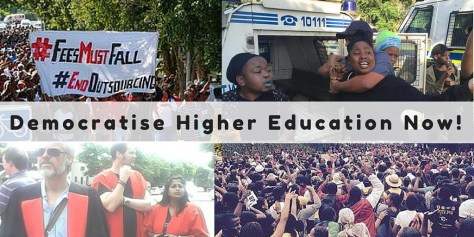
We agree passionately: one world, one struggle, education is not for sale!

Dangerous Vandals, Goths and Visigoths: Students Demanding the Impossible at #OccupyUGC

The Occupy UGC movement looks irrelevant or ridiculous to the middle and upper classes in India because it can be made to appear so by the media. Not surprisingly, television channels and leading dailies either ignored the protests altogether, or worse, focused on the apparently far more *critical* issue of the “vandalism” and “disfigurement” of the ITO metro station by the protesting students. Times of India said they were “brazening it out” after their acts of vandalism, and on social media including Kafila, these student vandals have been additionally belittled by some as misguided pawns in the hands of an apparent conglomerate of ambitious lefty professors from JNU! Basically, anything but a legitimate set of demands, some of which this poster from the movement tries to explain…

Dekh Bhai UGC
Translation: Look here UGC, if you don’t give us the scholarship, I will face marriage pressure, but you will have to face the pressure of the entire student population!!

(Incidentally, it was this image that was painted on the walls of the ITO metro station. Personally I found it cheerful).

Anyway, as Camalita Naicker reminded us in her excellent article on South Africa here on Kafila, student protests against rising student fees and shrinking scholarships and fellowships are no flash in the pan but a burgeoning worldwide phenomenon cutting across political affiliations. This is because you don’t need to be a leftist to understand that in contemporary conditions, pursuing a higher education is both the only guarantee to economic security, and the one thing that may be denied to you if you are from the wrong side of the tracks. 

We post below statements from #OccupyUGC and #Occupy SOAS in support of each other. These have been sent to us by Akash Bhattacharya, research scholar in history at JNU.

Continue reading We agree passionately: one world, one struggle, education is not for sale!

Statement of outrage against police crackdown on students at #Occupy UGC: Faculty Feminist Collective, JNU

The Faculty Feminist Collective of JNU stands in solidarity with the students protesting the revocation/review of the UGC non-NET fellowship. We are outraged at the brutal police action against students gathered in a protest demonstration since yesterday, without a single convincing response from the UGC or the MHRD that could allay the anxieties of thousands of students across India that the non-NET fellowship will not be discontinued. Prevarication on this basic demand by press releases announcing the setting up of a review committee has only indicated a malafide intent.

We are deeply dismayed to hear of the reports of significant injuries to unarmed protestors and the detention of a number of students by the police until late last night.

The MHRD Minister and the UGC Chairperson should understand that the situation can only be defused by their unequivocal assurance to the academic community that there shall be no rollback or any other amendment of the eligibility of students for the UGC Non-NET Fellowship scheme for the universities that are already in receipt of these fellowships in this or future academic years.

Furthermore, it should take positive and visible steps to meet students’ demands for an enhancement of fellowship remuneration and undertake to extend this fellowship scheme to state universities as well.

Education is a right, not a privilege, and as members of the academic community, we will resist all moves to subvert this basic understanding.

We fully endorse the JNUSU’s call for a strike, and in protest at state action and in solidarity with students, we will not be taking classes today.

The students have returned to UGC. Let us assemble there to show that we stand with them.

The Move to Professionalise Research: Aswathy Senan

This is a guest post by ASWATHY SENAN

Researchers all over the country are protesting the move by the UGC to scrap the non-NET fellowship and students have gathered in hundreds to resume their agitation at the UGC office through OccupyUGC. it appears that one should be clear about what the student reaction means: it is much more than as a demand for monetary benefits. The student mobilization happened after the committee that met at the UGC office in Delhi to discuss and increase the non-NET fellowship, decided to scrap it. Following the protests that lasted through the nights from 21 October, the Minister of Human Resources Development tweeted that the fellowship shall be continued leaving out one crucial detail: its availability to new students. This decision to end all financial support of researchers doing their MPhil and PhD until they qualify NET or JRF is a huge threat for the research community in India as this is a clear move to professionalise research and make it a mere add on to teaching career. Continue reading The Move to Professionalise Research: Aswathy Senan

Statement From Teachers And Researchers In Support Of ‘Occupy UGC’ in Delhi

Statement in support of students protesting against the UGC’s proposal to scrap the Non-NET fellowship for research scholars, and in condemnation of the police crackdown on agitating students in Delhi on October 23, 2015

This is to express our complete solidarity with, and extend our full support to, students from universities across Delhi as well as other locations in the country who are protesting against the UGC’s decision to scrap Non-NET Fellowships for MPhil and PhD research scholars, and demanding an increase in the fellowship amounts. In particular, we condemn strongly the violent police action upon the peacefully protesting students on October 23, 2015, after the students had spent close to 48 hours in a sit-in at the UGC office in New Delhi protesting the failure of  the UGC authorities to extend a hearing to their grievances. We are shocked by the rapid escalation in aggression demonstrated by the UGC authorities against the students. At 6 am on Friday, 23rd October, about a hundred protesting students were forcefully evicted from the UGC premises and taken across the city to be detained for one whole day in the police station at C block, Rajiv Nagar, Bhalaswa Dairy.

As pressure from students and the public mounted, the police were obliged to let the students go at the end of the day. Meanwhile at the UGC a police lathi-charge grievously injured students who had gathered again to protest there, and from reports at least two students needed to be hospitalized. Continue reading Statement From Teachers And Researchers In Support Of ‘Occupy UGC’ in Delhi

Statement from South African academics supporting Student Struggle in South Africa

Statement posted on Amandla.mobi

Transformation_is_rising_(1)

Statement to Vice-Chancellors, Minister of Higher Education & Training, Blade Nzimande, and the Minister of Finance, Nhlanhla Nene.

We the undersigned, as academics in South African institutions of higher education, and allies in South Africa and overseas, stand with students in their fight for the democratisation of our universities. The current student protests that have erupted across the country are historic. They demonstrate a younger generation willing to take up the struggle against inequality, and to insist on the principle of education for all. Our students are leading the national debate on education, and we insist that they deserve our respect and attention.

We have witnessed students act with extraordinary discipline, tactical skill and moral purpose. This commitment and self-control has gone unseen by many university managers, government leaders and the media who have misrepresented students as uninformed, irresponsible or irrational. Protesting students have faced and overcome potentially divisive tensions within their ranks, and have shown maturity in their intellectual arguments and political interventions. Above all, they have required us to confront a grievous national problem: the persistent exclusion of those who are black and poor from higher education, and from the opportunities that higher education makes possible. Continue reading Statement from South African academics supporting Student Struggle in South Africa

South African student protests and re-emergence of people’s power: Camalita Naicker

Guest Post by CAMALITA NAICKER

Students at University of the Western Cape Photo cred - Musaed Abrahams

Students at University of the Western Cape (Photo cred – Musaed Abrahams)

The #nationalshutdown of all major universities in South Africa continues, even after a historic victory yesterday, when, after several days of mass mobilisation by students and workers President Jacob Zuma was forced to concede a zero-percent fee increase in university tuition fees next year. Yet, it was bittersweet for the more than twelve thousand people who marched to the Union Buildings in Pretoria who were, once again, tear-gassed and shot at with rubber bullets and stun grenades. The police turned violent when students began demanding, after waiting for several hours, that the President address them. Instead, Zuma chose to speak to the media in a press briefing and leave the students to the police. In Cape Town, students marched to the airport to show their solidarity with those in Pretoria; there too police fired rubber bullets, tear gas, and stun-grenades even as students fled into the neighbouring residential areas. For many, the victory it is only a partial one, a short-term solution deferring the problem to another day. It does not resolve the issue of unaffordable education nor does it address other important issues that the national action has been tied to like the outsourcing of labour on university campuses or the general discontents of the lack of transformation at higher education institutions in the country. Continue reading South African student protests and re-emergence of people’s power: Camalita Naicker

The Fiction of Fact Finding: Harassment of Delhi University Teachers Union President


PLEASE JOIN PROTEST AGAINST SHAMEFUL HARASSMENT OF DR. NANDITA NARAIN – MONDAY THE 19TH OF OCTOBER, VICEREGAL LODGE, DELHI UNIVERSITY 10.30 AM- 1.30 PM.


01Fir08-09.qxp
Dr. Nandita Narain, President of the Delhi University Teachers Association.

With apologies to Manoj Mitta’s excellent book on 2002 by the same name, it appears that yet another fact-finding commission has made a mockery of the process of law, not to mention truth and justice. Dr. Nandita Narain – yes that blood-curdling, fearsome figure in the picture above – has been accused of disrupting the work of 3 colleges in Delhi University and asked to appear before a fact finding committee appointed by the University, 10 days before the term of the current Vice Chancellor Professor Dinesh Singh ends. For those not acquainted with Dr. Narain, she is the popular President of the Delhi University Teachers Association, beloved Mathematics professor in St. Stephens’ College and a brilliant scholar in her own right. Having contested and won the recent Delhi University Teachers Association elections against the V.C’s relentless pressure tactics and a blitzkrieg of campaigning and publicity by other parties including the government-friendly National Democratic Teachers’ Front, Dr. Narain has evidently had nothing but her enormous personal integrity going for her.

Continue reading The Fiction of Fact Finding: Harassment of Delhi University Teachers Union President

House of Cards


Courtesy Indian Express
Courtesy: Indian Express.

Anybody with a passing interest in consistency or coherence might be forgiven for being stumped at the political spectacle unfolding right now. Yesterday, Prime Minister Narendra Modi assured us that his government was committed to reservations. The statement was made at a ceremony to inaugurate the Ambedkar memorial at the Indu Mills compound in Mumbai. The fact that ordinary Dalits, in the habit of thronging any joyous celebration on Ambedkar in big numbers, were kept out of the ceremony, is possibly irrelevant. After all, officialese is officialese, and no political party – certainly not the BJP – has a monopoly on stiff-necked commemorations of people’s leaders that want nothing to do with the people. It is Modi’s commitment to reservations and the Indian constitution that is of interest. In some ways a statement of this nature made at the inauguration of an Ambedkar memorial, makes perfect sense. Apart from the occasion and locale, also not coincidental was the timing of Modi’s statement – one that he himself alluded to, when he referred to the bitterly fought Bihar elections now underway, “With a BJP government in power and polls getting under way, a malicious propaganda is being spread that the government is against reservation…”. The fact that the anti-BJP mahagathbandhan (grand alliance) in Bihar has made reservations one of their chief planks, with Lalu Prasad Yadav declaring in his inimitable style that he will kill himself if reservations are removed, is relevant.

Zooming back from the Ambedkar memorial event, the PM was clearly also responding to the threat to his Sabka Saath Sabka Vikas model begun a couple of months ago by the irrepressible Hardik Patel. Patel – erstwhile BJP supporter, self-styled Patidar-Patel revolutionary and a wild child in imminent danger of being silenced (or coopted) by the BJP – was temporarily subdued by the Gujarat administration following the wave of violence over his first call for reservation, but resurfaced a couple of days ago to be the nightmare Modi hadn’t dreamed yet – saying his aim was to expose the “Gujarat model of development”. This is for the current party nothing short of the youngest born of a rambling illustrious family running into the street from the family mansion saying our house is made of mud! our house is made of mud!

Continue reading House of Cards

Workers right to unionize being trampled upon in yet another factory in Manesar: Report

Report on the protest by automobile workers in Manesar by BIGUL MAZDOOR DASTA AND AUTOMOBILE INDUSTRY CONTRACT WORKERS UNION


IMG-20150921-WA0005

On the morning of 18 September 2015 when the workers employed in the Bridgestone company reached their factory gates they were met with Police officers and hired bouncers at the gate. When the workers tried to enter the factory premises they were resisted by the uniformed and the non-uniformed goons of the Factory Management. The Police beat up the workers and prevented them from entering the premises of the factory in spite of having a court order for tool down and without any prior notice the workers were sacked by the company. More than 400 workers employed in Bridgestone Factory in Manesar have been unlawfully sacked by the Company authorities after the workers demanded to get their Union registered. The workers are currently protesting outside the factory and have gathered there to raise their voice against the injustice and oppression that they are facing at the hands of the factory management.

Continue reading Workers right to unionize being trampled upon in yet another factory in Manesar: Report

The Patel agitation and the ‘paradox’ of demanding OBC status: Rita Kothari

Guest Post by RITA KOTHARI

Not long ago, a Gujarati film, Kevi Rite Jaish (“How will I go?”  dir. Abhishek Jain, 2012) provided to its viewers a rare fare. It was, unlike Gujarati films of the past, based on the life of urban Ahmedabad  and told the story of a young man whose dilemma was similar to that of scores of aspiring youth in Gujarat. Harish Patel, the protagonist, is obsessed with the idea of migrating to the United States and becoming, like many members of his community of Patels, a ‘motel-king.’ Harish Patel’s room is decorated with Statue of Liberty and Obama – deities that he needs to propitiate. However, his inability to answer satisfactorily the questions  asked by the visa officer at the US embassy leads to his failing to get a visa. The film builds up in comical vein the “trauma” of this event,  which prevented Harish Patel from  fulfilling his dreams in the promised land.  Several abortive attempts, including one involving fake sponsorship papers, bring to the viewer the satirical picture of a community that in the film at least, cannot see beyond motels and United States. The title poses  a real and rhetorical question for Harish Patel, who finally realizes that there are opportunities in his motherland  and this self-realization, certainly not a profound one, is suggested by signifiers of home-made food made by his mother.  A thoroughly ordinary film that this was, its success lay in striking a chord among young viewers who may also have been the chief patrons of such an economic venture.

To my knowledge, there was no counterview to the film contesting the stereotype of the Patel community, for this is indeed the dominant image of an urban Patel in popular imagination—affluent, enterprising and obsessed with the United States. Continue reading The Patel agitation and the ‘paradox’ of demanding OBC status: Rita Kothari

A Contested line – Implementation of Inner Line Permit in Manipur: Deepak Naorem

This is a guest post by DEEPAK NAOREM

Violence and the accompanying disruption of everyday life in Manipur is not a recent phenomenon. This year too, the state was plunged into a spiral of violence following demands for the implementation of Inner Permit Line, a law originating in the colonial period. This demand is based on real or imagined fears that Manipur, like Sikkim and Tripura, would be overwhelmed by the ‘outsiders’ and that the ‘indigenous people’ of Manipur would become a minority in their homeland. Such demands are neither new nor surprising in this part of the world, where a nearly-unfathomable ethnic, demographic and political jigsaw puzzle was created by British colonialism; one that was deepened by even more myopic and inconsistent policy in the post-colonial years. However, this year, following the death of a young student by police firing during a student protest in Imphal, the movement demanding the Inner Line Permit (ILP) gained considerable momentum in Manipur. Subsequently, the legislature was forced to introduce three bills in the Manipur State Legislative Assembly on 28th August, 2015, ensuring the implementation of Inner Line Permit in the state. This in turn triggered another wave of violence with the ‘tribals’ and tribal organizations opposing the three bills, eventually bringing life to a standstill in the state.

Continue reading A Contested line – Implementation of Inner Line Permit in Manipur: Deepak Naorem

Muzaffarnagar Baaqi Hai – Critical Readings Online and Offline: Akash Bhattacharya and Arif Hayat Nairang

These are guest posts by Akash Bhattacharya and Arif Hayat Nairang

The film Muzaffarnagar Baaqi Hai has been in the news recently, and not always for the right reasons, having attracted disruptive and abusive protest at some screenings. Following a day of counter-protest in which the film was screened all over the country, a friend teaching in a Delhi University college suggested screening it in her college, only to be told by the student representative that it would “cause trouble” (“bawwal mach jayega ma’am!!”). She asked what that meant and if he had seen the film, and he simply said, “nahin, bhaiyya logon ne kaha hai ki woh film bahut buri hai” (No, but our elder brothers have said it’s a bad film). 

In an atmosphere where political self-censoring comes as easily to the current generation of students as scouring the net for “blocked content” we present below two readings of the reception of the film, the first ruminating on whether the film addresses the complexities of communal mobilisation adequately; and the second inquiring in the context of social media and particularly Facebook, what constitutes the ‘liking’ of an image or idea. The idea of posting these comments is as much to give space to these arguments as it is to make a larger point that the ‘sickular left’ voices that are presumably behind the film love discussion, critique and disagreement. That to my mind is the way forward, not pre-empting the always-already hurt sentiments of the bhaiyya log whosoever they may be.

Continue reading Muzaffarnagar Baaqi Hai – Critical Readings Online and Offline: Akash Bhattacharya and Arif Hayat Nairang

Hindutva: A Political Theory of Nationhood?: Aman Verma

Guest post by Aman Verma

It is disheartening to see amongst supporters of Hindutva these days a silent acquiescence and at times even active support for extra-constitutional techniques being adopted by organizations like the RSS and its offshoots towards attaining the goal of Ram Rajya. An assessment is necessary of what would ultimately entail on the social, political and economic fronts if such a policy that envisages a supposedly ‘Hindu’ cultural and linguistic hegemony over cultures and languages represented by minority communities becomes reality. However, being a student of law what disturbs me more is the absence of any socio-political entity or civil society movement rooted in values of democracy that can effectively counter the impact of Hindutva organizations on the Indian social fabric. While the BJP has its RSS, every other political party claiming to be the upholder of secularism lacks its equivalent, or at the very least an effective social protégé.

Further, my personal interactions with supporters of BJP reveals that there is some deep sense of hurt and helplessness, part valid for the sake of argument, but for the most part carefully manufactured by Hindutva propaganda, which manifests itself in questions a friend recently put to me, “What are the other ways in which the Hindus can also claim their rights and send out a message that they have been too tolerant for too long?” and another which sounded like “How else to keep our dignity and identity alive in our land?”. These questions, based upon presumptions like those of “Hindu tolerance” of acts perpetrated by other communities supposedly only against Hindus and, protection of a completely vague concept of “Hindu identity” are clearly an outcome of a campaign strategy that relies upon upping the antics on the romantic-nationalist front.

Continue reading Hindutva: A Political Theory of Nationhood?: Aman Verma