Category Archives: Politics

You can’t show light to those who have chosen darkness: The Case of Imam Bukhari

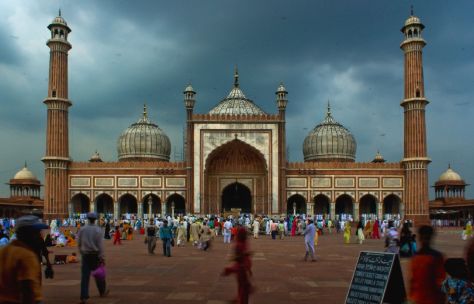
The Delhi Jama Masjid. Photo via Wikipedia.

The Imam of the Delhi Jama Masjid has issued a statement that calls upon the Muslim voters of Uttar Pradesh to vote for the Samajwadi Party of Mulayam Singh Yadav. A whole lot of poll experts are going to rejig their forecasts to factor in this new and hitherto unexpected development.

We would be told that this call is going to alter the political equations in UP in a very profound manner. We will be told that the Muslim electorate is going to shift to the SP and that this shift will create serious problems for the Bahujan Samaj Party in its bid for a comeback and for the Congress that is making serious efforts to emerge as Number Two.

The assumption behind these two assertions is that Muslims who voted for these parties in the last election are going to desert them now because of the statement issued by the Imam of Jama Masjid of Delhi.

Before the psephologists get down to business with their abacuses, their TINA factor analysis, their complex equations dealing with social demographics, voter fatigue,  identity markers and what have you, it might be useful for them to contemplate three questions: Continue reading You can’t show light to those who have chosen darkness: The Case of Imam Bukhari

How We Celebrate Freedom

The Hindu reports that a university in Pune has cancelled a planned screening of Sanjay Kak’s 2007 documentary film, Jashn-e-Azadi: How We Celebrate Freedom.
Speaking to The Hindu over telephone, Symbiosis College of Arts and Commerce principal Hrishikesh Soman stated that the ABVP had approached him on Friday, and that the college agreed to cancel the film screening “considering their [ABVP’s] emotions and feelings.” “I told them that the seminar is entirely academic, apolitical and non-religious. But the film has met with criticism from all corners. So we have decided to avoid unnecessary controversies and cancel the screening,” Mr. Soman said. “If people have a very strong reason to protest the film, then we should be tolerant enough,” he stated. [Link]

Shameful as this censorship is, it is a compliment to Sanjay Kak’s fabulous documentary film that the goons of the Akhil Bhartiya Vidyarthi Parishad don’t want people in Pune to see it. The truth about Kashmir must not be told. This is also an example of why the BJP props up its ‘minority morcha’ to oppose Salman Rushdie visiting Jaipur: they want the Congress and the ‘secularists’ and the Muslims to be seen as censor-happy so that they can get away with their own censorship.

Freedom of speech and expression in India, RIP.

Or, not.

Just as Satanic Verses freely circulates on the internet, you can also watch Jashn-e-Azadi online, for free.

Film synopsis:

Continue reading How We Celebrate Freedom

SAHMAT invites Salman Rushdie to Delhi

This release comes from SAHMAT, the Safdar Hashmi Memorial Trust, Delhi

We have watched with dismay the unnecessary controversy which erupted over the presence of Salman Rushdie at the Jaipur Literary Festival. We strongly disapprove of the threats – real or perceived – issued against the participation of Rushdie. The state has once again succumbed to retrogressive forces using works of creative expression for their own narrow, partisan and divisive political agendas. SAHMAT has stood by Rushdie in the past, when we defied an unofficial ban on The Moor’s Last Sigh by readings on the street in Delhi in 1995. Rushdie has been a frequent visitor to India in the last few years with no problems being raised. Indeed, he visited us at SAHMAT and was serenaded by chance by some of the greatest singers of the Rajasthani Manganiyar tradition.

SAHMAT is issuing an open invitation to Salman Rushdie to come to Delhi to deliver a lecture or participate in a discussion on literature at any time of his choosing. We will host him under any circumstances along with an exhibition of the works of the late MF Husain, driven into forced exile by the similar retreat by the state in it’s cowardly unwillingness to stand up against communal politics.

SAHMAT
New Delhi

The Gandhi Chawl Incident: Meena Menon

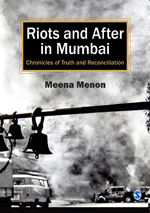
This guest post by MEENA MENON is an extract from her recently published book, Riots and after in Mumbai- Chronicles of Truth and Reconciliation

It was all in the eyes. Beneath the finely drawn brows, they were haunted and distant. For Naina Bane, the night of 8 January 1993 will remain a night of absolute terror. Her escape was miraculous as was her recovery. It took me several months and wrong leads before I met her finally at a family reunion in the suburbs. Dressed in a long mustard coloured ‘maxi’, her hair was drawn back tightly. I found it hard to recognize the same girl who was almost burnt alive on that fateful night in Gandhi chawl. Now 40, there is a faraway look about her and her eyes widen when I ask to speak to her. She got married in 1996 and lives outside Mumbai. Her 6-year-old son keeps her busy. Her husband worked for a mill which closed down, a typical story in Mumbai. He was a badli (temporary worker) and he lost his job. He now works as a watchman. Continue reading The Gandhi Chawl Incident: Meena Menon

Jaipur Literature Festival – Requiescat in Pacem

Did you know that the law had four corners? I didn’t, but whosoever writes press releases for the Jaipur Literature Festival does. Did you know that the ‘ideas can be exchanged and literature loved‘, ‘strictly‘ within these four corners? I didn’t, but whosoever writes press releases for the Jaipur Literature Festival does.

PRESS RELEASE SENT OUT BY THE JAIPUR LITERATURE FESTIVAL, January 20th, 2012

This press release is being issued on behalf of the organizers of the Jaipur Literature Festival. It has come to their attention that certain delegates acted in a manner during their sessions today which were without the prior knowledge or consent of the organizers. Any views expressed or actions taken by these delegates are in no manner endorsed by the Jaipur Literature Festival. Any comments made by the delegates reflect their personal, individual views and are not endorsed by the Festival or attributable to its organizers or anyone acting on their behalf. The Festival organizers are fully committed to ensuring compliance of all prevailing laws and will continue to offer their fullest cooperation to prevent any legal violation of any kind. Any action by any delegate or anyone else involved with the Festival that in any manner falls foul of the law will not be tolerated and all necessary, consequential action will be taken. Our endeavor has always been to provide a platform to foster an exchange of ideas and the love of literature, strictly within the four corners of the law. We remain committed to this objective. [via FirstPost]

Continue reading Jaipur Literature Festival – Requiescat in Pacem

‘सलमान रूश्दी के कार्यक्रम रद्द होने पर निराशा’; PUCL regrets cancellation of Salman Rushdie’s visit to Jaipur

Given below is the text of a press statement issued today by the PEOPLE’S UNION FOR CIVIL LIBERTIES, Rajasthan. The Hindi original is followed by an English translation.

प्रेस विज्ञप्ति
सलमान रूश्दी के कार्यक्रम रद्द होने पर निराशा
दिनांक: 20.01.2012

सलमान रूष्दी के जयपुर आने के कार्यक्रम के सम्बन्ध में जब कंछ मुस्लिम संगठनों ने हिंसक विरोध की चेतावनी दी थी तभी पी.यू.सी.एल. ने तुरन्त उसके विरोध में अपना वक्तव्य दिया था और कुछ प्रभावषाली मुस्लिम संगठनो तथा उस समाज के प्रबुद्ध नागरिकों से सम्पर्क कर उनसे विस्तृत चर्चायें की थीं। उन्होने भी हमारे दृष्टिकोण को समझा था और किसी प्रकार के हिंसक विरोध के सम्बन्ध में अपनी असहमति भी प्रकट की थी। परन्तु वह सलमान रूष्दी का जयपुर आगमन पर अपने विरोध के स्वरो को मुखरित करने के अधिकार को सुरक्षित रखना चाहते थे। इसमें कोई आपत्ति भी नहीं हो सकती थी परन्तु ऐसे विरोध की सीमायें कहॉं तक हांेगी इस पर चर्चा जारी थी। इसी बीच सरकार की ओर से यह वक्तव्य दिया गया कि सलमान रूष्दी के आने से कानून और व्यवस्था की स्थिति बिगड़ सकती है। इसलिए उनके आने पर पाबंदी लगाने पर विचार किया जा रहा है। पी.यू.सी.एल. ने सरकार के इस रवैये का जमकर विरोध किया था और इस पर एक प्रदर्षन भी आयोजित किया था। मुस्लिम संगठनों से इसके बाद विस्तृत चर्चा हुई और उन्होने भी यह स्वीकार किया कि कानून और व्यवस्था की स्थिति नहीं बिगड़ने देगें। लेकिन लगता है कि सरकारों को यह प्रयास रूचिकर नहीं लगे और आज सलमान रूष्दी ने ई-मेल सन्देष भेेजकर अपना कार्यक्रम रद्द करते हुए यह कहा है कि उन्हें राज्य सरकार से सन्देष प्राप्त हुआ है कि कुछ उग्रवादी तत्व किसी अन्य प्रदेष से आकर उनकी जान लेने की कोषिष कर सकते हैं। हंालाकि उन्होने स्वयं इस प्रकार की खबर को सन्देहात्मक बताया है परन्तु अपना कार्यक्रम रद्द करने का यही कारण बताया है। Continue reading ‘सलमान रूश्दी के कार्यक्रम रद्द होने पर निराशा’; PUCL regrets cancellation of Salman Rushdie’s visit to Jaipur

Le Grande Triptych Humanism: Brinda Bose and Prasanta Chakravarty

Guest post by BRINDA BOSE and PRASANTA CHAKRAVARTY

Haruki Murakami’s much-hyped IQ84 that released worldwide in translation a couple of months ago is (Our) Big Fat Japanese Novel, three volumes in one. Closer home, Amitav Ghosh is in the process of completing the definitive South Asian Maritime Novel in trilogy. Young, prize-winning, promising writers from around the world – New Zealand, Malaysia, Bangladesh – are pledged to regale us with long large narratives that will tell us everything we ever wanted to know about their cultures, societies, lives – in trilogies and quartets. Intriguing? Indeed. Coincidental? Perhaps not.

Even as new literary canons are continually in consolidation, interrogation and re-formation, Franco Moretti – acclaimed, revered, preeminent theorist of the Novel and World Literature (which enjoy an odd synecdochic relationship) – has systematically constructed a blueprint for ways to appreciate the worth of such a grand, if loose, canon as World Literature by a particular reading technique he calls ‘distance-reading’.

Continue reading Le Grande Triptych Humanism: Brinda Bose and Prasanta Chakravarty

Engaging Lankans in Black Politics on MLK Day

In approaching Martin Luther King Jr., Day, I inevitably think about the politics of figures and the generation of King and Malcolm X. That generation and the Black politics they engendered had a lasting impact on the US and the World more broadly. Coming with decolonisation in Africa and elsewhere, King, Malcolm X, the radical youth they inspired and their contemporaries such as Frantz Fanon and C.L.R. James transformed our conceptions of race and class, advancing anti-imperialist and anti-colonial visions to engage formidable questions of Black politics in the West. In a piece written with Jinee Lokaneeta as part of the monthly column ‘Beyond Boundaries’ of the South Asia Solidarity Initiative (SASI), in the South Asian Magazine for Action and Reflection (SAMAR), we began with Manning Marable and C.L.R. James, and the importance of a turn towards critical solidarity engaging questions of race and class.

Here, I want to think about the contributions of South Asian intellectuals, or more specifically Lankan intellectuals in the context of Black and Third World politics. In fact, there are two major Lankan intellectuals belonging to that generation of King and Malcolm X, who are increasingly not known to the younger generations of Lankans. A. Sivanandan, the editor of Race and Class and Director of the Institute of Race Relations  in London and the late Archie W. Singham, long-time intellectual and professor based in New York are two such figures who have made a major mark in Black politics. Indeed, they can give us a sense of the possibilities of political struggle and the historical and philosophical potential of Black politics. It is my contention that engaging the politics of Sivanandan and Singham is all the more important at the current moment, as South Asians in the Diaspora are increasingly becoming agents of Western power despite the shifting terrain of politics in the West with the global economic crisis. Continue reading Engaging Lankans in Black Politics on MLK Day

Partition Revisited: 2 October 2011, Rudrapur

This is a film by RAJEEV YADAV and SHAHNAWAZ ALAM of the Uttar Pradesh unit of the PEOPLE’S UNION FOR CIVIL LIBERTIES

This is to introduce our documentary film ‘PARTITION REVISITED’ on the Rudrapur riot of 2nd October 2011, where four persons were killed. Policemen and mobs led by leaders of the Bhartiya Janta Party, the Congress and the Bahujan Samaj Party had ransacked shops and settlements of Muslims in their third successful attempt within two years to stoke communal violence. The riot, which took place on Gandhi Jayanti, led to a massive outmigration of the victimised community, reminding one of the days of the 1947 Partition. This film focuses on precisely this yet unnoticed phenomenon that we could trace out in this first-ever state-sponsored communal riot since the formation of the hill state of Uttarakhand, engineered by the Rashtriya Swayamsewak Sangh, which has been working for a long time in this area to arouse anti-Muslim sentiments in the Bengalis, Sikhs & Panjabi Hindus who settled in Rudrapur after the Partition to India. At a time when the state is going to polls this riot assumes an electoral importance.

Women’s groups stopped from meeting Soni Sori in Raipur

Press statement from Saheli, Delhi; Women Against Sexual Violence and State Repression (WSS), Delhi; WSS Orissa and Madhya Pradesh Mahila Manch, Bhopal.

A team of women representing various women’s groups from across the country were in Raipur on 12-13th January to meet Ms. Soni Sori, currently lodged in Raipur Central Jail. Ms Sori is a tribal school teacher who has been hounded by the Chhattisgarh Police as a Maoist conduit. She was arrested in October 2011 and was brutally assaulted sexually in police custody on the night of 8-9th October.

Even after applying for permission as per procedure and repeated requests to various concerned officials on 12th, the women were denied permission to meet her, despite already having an assurance from the Principal Secretary, Mr. Baijendra Kumar, during his visit to Delhi in October.For two whole days the team was shuttled from one authority to the other and back, with each and every official avoiding taking a decision or give in writing any denial or reasons for it. Finally, permission was denied on 13th citing `security’ concerns.

Read full statement here.

Demanding a ban on visit of Salman Rushdie to India is outrageous: PUCL

This release comes from the PEOPLE”S UNION FOR CIVIL LIBERTIES

The People’s Union for Civil Liberties (PUCL) views it with deep concern that some organizations have demanded ban on entry of Salman Rushdie in the country. The present call is illogical, preposterous and untenable as the writer has visited the country for several times after the Satanic Verses book controversy. Continue reading Demanding a ban on visit of Salman Rushdie to India is outrageous: PUCL

Nepal – The Nostalgia for 1990

Kanak Mani Dixit’s efforts to portray 1990s as blissful, and Maoists to solely blame for all of Nepal’s ills, is revisionist history, facts be damned. Dixit’s rejoinder (‘The perils of executive presidency’, Jan 5) to my column (‘A question of form’, Jan 4) reveals fundamental differences in how we see recent Nepali history. The gist of Dixit’s rather simplistic world view is that the 1990s were wonderful and the Maoists destroyed it and are all evil. Let us examine this in more detail.

The 1990s

The 1990 constitution opened up Nepali society; it guaranteed fundamental freedoms and allowed groups to organise themselves at all levels; and economic policies pursued then led to the creation of a bigger middle class.

But there were two fundamental drawbacks of that period, which is what led to its eventual breakdown. Continue reading Nepal – The Nostalgia for 1990

An Appeal to the Tamil Community and its Civil and Political Representatives

An Appeal Signed by Tamils on the Eviction of Northern Muslims 21 Years Ago

Since the end of the war in May 2009, it has become important for all ethnic communities of Sri Lanka to re-examine and reevaluate their past. It is through this process of self-reflection that some of the major issues that confront state and civil society today can be meaningfully reconceived and reconfigured for the future.

While the war has drawn to a decisive close, the ethnic conflict is far from over and demands solutions short- and long-term. The quest for a viable political solution from a majoritarian state is a primary concern for the Tamil community today. Continued insecurity in the face of militarisation is an urgent matter. Armed militancy and a political culture of violence have further eroded into the democratic fabric of society. Resettlement and rehabilitation remain unresolved problems. Distribution of land, access to state and social networks, language parity, devolution of power, inter-ethnic reconciliation and the continued presence of gender, class and caste stratifications are a part of the political landscape today.

It is in this regard we raise the question of the eviction of the Northern Muslims 21 years ago. In October 1990, the LTTE evicted roughly 80,000 Muslims from the north in the wake of increasing hostilities and armed conflict in the north and east. The LTTE, which was militarily dominant in the north at that time and controlled large swathes of territory, ordered an entire community to leave the province in two days. In the Jaffna peninsula they were given just two hours’ notice. Subsequent to the eviction, several attempts were made by institutional mechanisms to facilitate the return of the communities to their original lands. During the Ceasefire Agreement (CFA), there were renewed attempts, particularly through the Secretariat for Immediate Humanitarian and Rehabilitation Needs (SIHRN), to negotiate the return of the Muslims with the Sri Lankan state and the LTTE.

In the current political landscape, the eviction of Muslims from the north and their return and resettlement pose a distinct political challenge to civil and political societies of the Tamil community. Continue reading An Appeal to the Tamil Community and its Civil and Political Representatives

On ‘gay conditionality’, imperial power and queer liberation: Rahul Rao

Guest post by RAHUL RAO

It’s not clear what (or whether) David Cameron was thinking when he suggested recently that British aid should be linked to respect for LGBT rights in recipient countries. Almost immediately, the statement evoked homophobic responses from political and religious leaders in Tanzania, Uganda, Ghana and elsewhere. Perhaps more importantly, African social justice activists (including many of the leading LGBTI activists on the continent) advanced a comprehensive critique of ‘gay conditionality’ in a letter criticising Cameron’s statement, signed by 53 organisations and 86 individuals. Warning that the refusal of aid on LGBT rights grounds could provoke a backlash against queers who would be scapegoated for reduced aid flows, the critics have pointed out the insidious ways in which such initiatives could drive a wedge between queers and a broader civil society in recipient countries, besides reinforcing perceptions of the westernness of homosexuality as well as the imperial dynamics already prevailing between donor and recipient countries.

Continue reading On ‘gay conditionality’, imperial power and queer liberation: Rahul Rao

Three Formidable Barriers to the Advance of Democracy: Ravi Sinha

This guest post by RAVI SINHA is the text of the key note address to the Pakistan-India People’s Forum for Peace and Democracy in Allahabad on 30 December 2011

I must begin by expressing my gratitude to the organizers of this Convention and to this Forum for the opportunity and the honor you have given me by letting me address this impressive assembly. Also, I must congratulate you for choosing a theme that articulates, perhaps, the central challenge confronting all peoples and all nations of the world and more so for the peoples and the nations on the subcontinent. We are all witness to and victims of the times characterized by monstrous brutalities of war and deep scars of deprivations, inequities and oppressions. We live under a world order wherein those who brought, for example, untold tragedy and destruction to Iraq will never be brought to justice because they are the global hegemons. They will not be questioned about the hundreds of thousands of dead and maimed Iraqi men, women and children; they will not be questioned about the thousands of dead and decapitated American soldiers; they will not be questioned about the trillions of dollars spent on the war and further trillions destroyed by the war; and they will not be questioned about the kind of Iraq they are leaving behind.

Continue reading Three Formidable Barriers to the Advance of Democracy: Ravi Sinha

A Tribute to Narahari Kaviraj (1917-2011): Sankar Ray

Guest post by SANKAR RAY

Narahari Kaviraj, eminent Marxist historian and an ideoligue of CPI, breathed his last in the wee hours of Wednesday, the 28th of December 2011. He was born on 17 February 1917 and was the last disciple of Bhupendranath Dutta,the youngest brother of Swami Vivekananda, whom Lenin had once requested, in reply to an article (draft), to devote himself to studying and writing on agrarian issues in India. As a scholar, Narahari Kaviraj was also a favourite of Puran Chand Joshi, general secretary of CPI (1935–47). The anecdote goes that when PCJ first heard that Kaviraj’s son, Sudipta ( now a scholar of international repute as a political theorist and department chair of the Middle Eastern, South Asian, and African Studies department at Columbia University) , joined JNU, he asked, ” Is he more brilliant than his father Narahari ?”

Continue reading A Tribute to Narahari Kaviraj (1917-2011): Sankar Ray

A Caste(d) Drive – Paramakudi to Pasumpon: Bobby Kunhu

Guest post by BOBBY KUNHU


Between the occasion of the memorial anniversary of Immanuel Sekharan that falls on 11th September and that of Muthuramalinga Thevar on 30th October are 30 odd road kilometers, 49 days, incalculable castiesm and this year (2011) 7 more Dalit lives. Almost the entire Big Media portrayed the 11th September, 2011 murders at Paramakudi as retaliatory State violence to an unruly and violent mob – to the convenient delight to the defenders of the State administration. Dissenting voices mostly Dalit – located the violence squarely where it belongs – in caste. In his note “Paramakudi Violence: Against Dalits, Against Politics”, inthe November 5th, 2011 issue of the Economic and Political Weekly, Muthukaruppan Parthasarathi clearly outlines the historical and current context in which the this year’s spate of violence that claimed 7 lives happened!

Continue reading A Caste(d) Drive – Paramakudi to Pasumpon: Bobby Kunhu

The Year of the Coup D’état: Fawzia Naqvi

Guest post by FAWZIA NAQVI

Imran Khan was not the first one to be obsessed with both cricket and politics. Saira and I beat him to it 20 years ago. We spent 50% of our time swooning over him and the other 50% worshipping Mr. Bhutto. 20 years later I believe it was I who got over Imran Khan and Saira who got over Mr. Bhutto. Although I must confess, it was Imran who adorned every inch of wall and closet space in my dressing room, the “shrine” as my brother labelled it. And it was Imran’s picture which popped out of the inside cover of my high school notebook. During moments of boredom and droning lectures I would stare at his picture for an hour straight and muse and sigh over the fact that one could see his house from the balcony of our school and perhaps today might be the day when he would come to pick up his sister from our school. The God, the Adonis, Imran was it for both of us.

I don’t know how Saira became an Imran groupie. I do recall well how I did. I was taken to my first ever live cricket match in 1976. My brother’s best friend pointed toward the field from high up in the spectator stands to what looked to me like white dots, and told me with much seriousness in his voice, “there over there is the most handsome man you’ll ever see…” and then he made his most remarkable claim, “he’s so handsome you’ll forget about Izzy!” Continue reading The Year of the Coup D’état: Fawzia Naqvi

New friends of ISKCON? On the Gita controversy

The Parliament which has remained rather dysfunctional for different reasons all the year witnessed a strange bonhomie few days back. It was difficult to believe that they are the same representatives of people who could not see eye to eye on various issues of concern and were always keen to score their point over their political adversaries. Led by the likes of Laloo Prasad Yadav – interspersed with slogans of ‘Jai Krishna’ –  the government’s alleged silence on the developments in a faraway court in Russia was called into question.

Interestingly, BJP the party which happens to be the chief opposition party, found itself playing second fiddle to the troika of Laloo, Mulayam and Sharad Yadav on this matter. The issue related to proceedings in a court in Tomsk which supposedly had found portions of ‘Gita’ objectionable and ‘extremist’ and was contemplating to ban it.

Continue reading New friends of ISKCON? On the Gita controversy

Pakistan ki Tareef: Haseeb Asif

This guest post by HASEEB ASIF is in Urdu, in Roman script

Allama Iqbal (1877-1938)

Islami Jamhooriya Pakistan ki tareekh Hindustan se bohut purani hai. Balkay Islam se bhi purani hai. Jab aathveen sadi mein Muhammad Bin Qasim Islam phelane bar-e-sagheer tashreef laye tau ye jaan ker sharminda huwe ke yahan tau pehle hi Islami riyasat maujood hai.

Yahan kufr ka janam tau huwa Jalaaludin Akbar ke daur mein, jo Islam ku jhutla ker apna mazhab banane ko chal diya; shayid Allah-ho-Akbar ke lughwi maani le gya tha.

Baharhal, in kafiron ne butparasti aur mehkashi jaisay gheir munaasib kaam shuro kerdiye aur apne aap ko Hindu bulaane lage. Sharaab ki aamad se Pakistan ke Musalmanon ki woh taaqat na rahi jo tareekh ke tasalsul se honi chahiye thi. Iski vaja ye nahin thi ke Muslaman sharaab peene lag paray the, balkay ye kay unki saari quwat-e-nafs sharab ko naa peene mein waqf hojati thi, hukmarani ke liye bachta hi kya tha.

Is ke bawajood Musalmanon ne mazeed do sau saal Pakistan per raaj kiya, phir kuch dinon ke liye angrezon ki hakoomat agayi (hamari tafteesh ke mutabiq yehi koi chalees hazaar din honge).

San 1900 tak Pakistan ke Musalmanon ki haalat nasaaz hochuki thi. Is dauran aik ahem shakhsiat hamari khidmat mein hazir huwi, jis ka naam Allama Iqbal tha. Continue reading Pakistan ki Tareef: Haseeb Asif

The Absurd Tyranny of iSibal: Vrinda Gopinath

Guest post by VRINDA GOPINATH

by Hemant Morparia

Well, Information and Technology Minister Kapil Sibal’s prickly suggestion to pre-screen content on social networks like Google, Facebook and Twitter, has invited such derision from the internet world that it has given him a tag to his name – Idiot Sibal. For iSibal, it’s not his status on Facebook that should bother him, but the ruinous unmasking of the minister in status-anxiety New Delhi. Sibal, after all, prides himself in belonging to the elite movers and shakers of the Capital – educated, connected, and gold card holder of the Stephen’s Old Boys Network. For the status seekers, this is a world of privilege and entitlement, cosmopolitanism and tolerance.

Now you would wonder what came over the blue-stockinged Technology Minister to make such an ill-thought out statement. Sibal’s liberal snobbery is not always what it seems to be, for there is a lurking autocratic and despotic streak, even archaic at times, that has surfaced time and again. And it is this aspect that has largely been ignored in the bedlam over his latest decree to social network companies.

Continue reading The Absurd Tyranny of iSibal: Vrinda Gopinath