
Category Archives: Right watch

Naz and Notional Equality: Aman


 A guest post by Aman finds fault with the Supreme Court’s reasoning on equality

In Suresh Kumar Koushal and another v. Naz Foundation and others (Naz), the Supreme Court notes that, ‘It is relevant to mention here that the Section 377 IPC does not criminalize a particular people or identity or orientation. It merely identifies certain acts which if committed would constitute an offence. Such a prohibition regulates sexual conduct regardless of gender identity and orientation.’ By concentrating on the acts and not people, it is perhaps tries to convince us (and perhaps itself) that this is not a debate about homosexuality. However, the short-sightedness of the Supreme Court in discounting how these ‘acts’ are so fundamentally connected to a group’s orientation/identity is clear; it does exactly what it says it’s not doing (i.e. criminalize a particular people or identity or orientation).

The text of section 377 is facially neutral and applies to all people but it is not very difficult to see that the provision impacts homosexuals. As mentioned earlier, the so called ‘unnatural acts’ are the only ways homosexuals can have sex. This obviously implies that it is the homosexuals who have to continue bearing the stigma of being a criminal. The symbolic effect of branding homosexuals as criminals was evinced by the Delhi High Court when it said that provisions like these add to the reasons for homosexuality being treated as bent, queer, repugnant, deviant and perverse, leading to further marginalisation of the homosexuals. What could have been an attempt by the Indian judiciary to bring down one of the obstructions for integration, has become an enforcement of a dominant notion of ‘natural’ sex which will naturally lead to concealment of true identity of many people who are anyway struggling in the society to prove that they are normal.
Continue reading Naz and Notional Equality: Aman

Statue of Unity – How the Varna Media is Loving It !

..The man who belonged to the whole country has now been abducted by Narendra Modi, a pracharak of RSS, the communal organization who the Sardar fought against throughout his life. ..The only purpose of the construction of the Sardar Patel statue which was declared by Narendra Modi after he was anointed as the BJP’s Prime Ministerial Candidate is to collect votes for the 2014 elections in the name of this leader of India’s freedom struggle. It is therefore a downright irony that the RSS pracharak is trying to build the facade of unity by erecting the statue of one of the staunchest opponents of RSS. (Facade of Unity – RSS Abducts Sardar Patel, Pratik Sinha October 31, 2013 |

I

History bears witness the fact that the attitude to appear ‘big’ or ‘tall’ so that even posterity remembers you is very evident in every megalomaniac. It is a different matter that due to a poor sense of history, such megalomaniacs cannot even comprehend that thanks to the way they subdued a population, or cleanse it of ‘others’, actually overwhelms the giant monuments they build or the memorials they erect to commemorate their bloody victories. The Halakus, the Chengiz Khans, the Menanders or the Mussolinis of the world are remembered today not as noble representatives of humanity but as its other. Continue reading Statue of Unity – How the Varna Media is Loving It !

Size does matter your lordships – A letter to the Supreme Court: Siddharth Narrain

SIDDHARTH NARRAIN based on his legal and extra legal expertise arrives at the conclusion that size does matter

A LETTER TO YOUR LORDSHIPS

Your Lordships have called us, LGBT Indians, a “miniscule minority”. Never mind that statistically we constitute at least four per cent of the population, which are over four million people. Your Lordships say that there are only 200 persons impacted by section 377 over the last 150 years. Never mind that there are millions of LGBT persons who have been under the shadow of this law over the last 150 years, discriminated against, blackmailed, harassed, outed to their families, driven to suicide, forcibly married, diagnosed as mentally ill, raped, assaulted, and disinherited.

Your Lordships say we are a “miniscule minority”. Since you are so fond of dictionaries, lets flip one open.

Miniscule: The adjective miniscule is etymologically related to minus, but associations with mini have produced the spelling variant miniscule. Continue reading Size does matter your lordships – A letter to the Supreme Court: Siddharth Narrain

Section 377 and India Shining: Pronoy Rai

Guest Post by PRONOY RAI

It is 2004 all over again. India is shining. Such a difference a decade can make. BJP is on the verge of returning to power, Modi could be India’s next Prime Minister, and the many failures of the UPA could give a new lease of life to Hindutva, if it was dead at all. As India shines, the state (its judicial arm, in this case) has abandoned the queers, questioning their claim to the status of “minority”, rendering them vulnerable to brutality at the hands of the hetero-normative society and other arms of the state (police, for instance), in equal measures. Other minority groups, strangely, or perhaps not so strangely, fought against the claim to citizenship of a (sexual) minority group, decisively defeating them at the altar of justice. 

Some of us queers, who stuck to every single word that was written in 2004 that went on to show how agrarian distress, farmer suicides, and saffronization of education didn’t quite add up to a shining India, were left puzzled by the reaction of the BJP to the Supreme Court verdict upholding section 377 in its original, pristine self. You’d think that the shrewd right-wing would take on the first opportunity to invoke a very obvious ancient Indian “culture of homosexuality” to make a progressive argument in favor of decriminalization. You’d assume that in a ravaging hunger to return to power, they would try to bring on board every single group that they can, maybe only later to abandon them, but at least carry them along through elections. Alas, no. For the BJP, India is still shining, and this shining confidence is perhaps sufficient to help them march into 7 Race Course Road, next year.  Continue reading Section 377 and India Shining: Pronoy Rai

Contempt of Citizens: Mayur Suresh

MAYUR SURESH   finds the Supreme Court guilty of contempt (of citizens)

Contempt: – The word ‘contempt’ comes from the Latin word “contemptus” and much like its modern counterpart, is the feeling that a person or a thing is worthless or deserving scorn.

Contempt is a feeling that is often felt by Lesbian, gay, bisexual and transgender people in India. It’s been meted out to LGBT people equally by the British who aimed to civilise us, and those today who seek to ‘preserve our culture’. An 1838 report on the Draft Penal Code called homosexual acts a “revolting subject” and said that the “frequency” of homosexuality in India “remained a stain on this land.” In 1934, the High Court of Sindh called a man who had consensual sex with another man “a despicable specimen of humanity”. Not to be left behind, those appellants who approached the Supreme Court reserved the choicest of contemptuous words for LGBT people in India: “disgusting”, “filthy”, “delinquents”.

Continue reading Contempt of Citizens: Mayur Suresh

Crimes of Unreason: Danish Sheikh

A post on the cowardly judgment of the Supreme Court by DANISH SHEIKH. I term it a cowardly decision because if it had said that we are homophobic then it would at least have been admirable for its honesty if not for its belief. It instead chooses to mask its homophobia with crimes of unreason

Now you’re legal – Now you’re not!

With the ease of a particularly sadistic magic trick, a 98 page document has sent millions of LGBT individuals time-warping back into pre-2009 criminality. If there were any constitutional justifications for this act, they are not to be found lurking in the pages of this shockingly poorly reasoned decision. The Supreme Court has taken a chainsaw to one of the most beloved court decisions of our time, and surgically extracted everything that made it such an important verdict. Besides, of course, that little side business of equal-moral-citizenship granting. A broader walkthrough the shoddiness of the judgment can be found  here, (http://kafila.org/2013/12/12/we-dissent-siddharth-narrain/) I’m presently looking at some of the more egregious of its violations. Continue reading Crimes of Unreason: Danish Sheikh

We Dissent: Siddharth Narrain

A preliminary walk through the unreason of the Supreme Court in the 377 judgment by SIDDHARTH NARRAIN

We hope to see many more pieces which exposes the judgment for what it is- an example of judicial non application of mind. I have also written a short piece looking at the judgment in the context of the Mandela moment

The Supreme Court’s decision in Suresh Kumar Kaushal & Another v. Naz Foundation & Others is an unprecedented ruling, deciding to turn the clock back to pre-July 2009, when LGBT persons were criminalized by section 377 of the Indian Penal Code. On close reading, the judgment is based on a narrow and blindfolded interpretation of the law, ignoring the momentous changes in society and notions of morality that India is witnessing. Further, the judgment, in many parts, relies on shaky precedent, does not explain the logic of its conclusions, and is surprisingly dismissive of substantial evidence that was placed before it. Continue reading We Dissent: Siddharth Narrain

We Are All Queer – Assemble at Jantar Mantar against Reactionary Judgement

Shocking! Shameful!!  Disgusting!!!

The Supreme Court has struck down the  Delhi High Court decision decriminalizing gay sex in what might go down as the most retrograde judgement in India’s history. While the details of the Court’s reasoning are still not available, we can perhaps easily imagine what they might be. This is time of civil disobedience. Time for protest.

Assemble at Jantar Mantar at 4.30 pm, today 11 December to announce to the world that ‘We Are All Queer’. To announce that this is not a struggle of just the ‘gay-lesbian community’ but a struggle for our most fundamental rights and cherished values.

The State Manufactures Terrorism: KP Sasi

An Interview with activist-film-maker, K.P. SASI by Md. EisaBadre Alam Khan and Abhay Kumar.

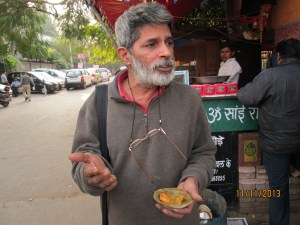
KP Sasi
KP Sasi

K.P. Sasi is a well-known social activist and filmmaker.  In his several decades of activism, he has been associated with a number of social movements ranging from anti-globalisation and anti-nuclear movement to anti-death penalty struggles and the movements led by environmentalists and marginalised social groups such as Dalits, Adivasis, and Muslims etc. He has expressed his activism through making more than two dozen documentaries and a few feature films. But his two music videos —America, America and Gaon Chhodab Nahin, watched by lakhs of people, continue to motivate social and political activists standing against injustice and inequality. The lean and thin Sasi, who spots thick grey beard, is again in controversies for his latest spell of activism. Early in this year he screened a 94-minute long documentary Fabricated based on the life of Muslim leader from Kerala Abdul Nasar Madani, accused in Coimbatore and Bangalore serial bomb blasts. Fabricated has been the fruit of Sasi’s two years of hard work during which he did an extensive research, met a number of people and travelled thousands of miles and received threats as well. Why did he take so much pain and risk his life? Fabricated, in Sasi’s words, is an attempt to bring a ray of hope to thousands of innocent people, mostly Muslims, Dalits, Adivasis, oppressed nationalities, workers and others languishing in jails for years and decades under draconian laws such as Unlawful Activities Prevention Act (UAPA). Fabricated is mostly woven around the story of Madani, making a strong case that the Muslim leader of Kerala is innocent and has been jailed for years simply because has been framed. He has a charisma, a great skill of oratory and above all a vision of the uplift of the marginalised sections. In the early week of November, Sasi was in Delhi where Fabricated was screened at many places. After watching the documentary at Jawaharlal Nehru University, Md. Eisa, Badre Alam Khan and Abhay Kumar had a detailed interview with K.P. Sasi during which he went on a great length about a host of issues from state terror, human rights, Hindu right, caste, and class to the Muslim politics. The excerpts of the interview are as follows: Continue reading The State Manufactures Terrorism: KP Sasi

Delhi Magistrate orders FIR against woman for anti-Modi posts: Kavita Krishnan

Guest post by KAVITA KRISHNAN

The footsteps of fascism can be heard – this time in the hallowed hallways of the national capital’s courts. A woman who filed an FIR against a man physically threatening her for her anti-Modi Facebook posts, found to her dismay that the Metropolitan Magistrate in the Tis Hazari courts let off the man accused of threatening her safety, while ordering an FIR against her instead! The media’s coverage of this outrageous incident has been, till now, biased and factually misleading.

Sheeba Aslam Fehmi, a journalist and a Ph.D. Fellow in JNU, received several threats by emails from one Pankaj Kumar Dwivedi, which warned her of ‘consequences’ and even demanded she meet the man so that he could ‘cleanse’ her of her ‘filth.’ Continue reading Delhi Magistrate orders FIR against woman for anti-Modi posts: Kavita Krishnan

PUCL Statement on Tehelka Sexual Assault Case

[We are publishing below the full text of the statement issued by the People’s Union for Civil Liberties, on the Tehelka case, which raises some important issues that have not received public attention yet.]
 
Press Statement on the Tehelka Sexual Assault Case
 Dated: 2 December 2013
The PUCL
  • Expresses Solidarity with the struggle of the Tehelka Journalist who raised her voice against Rape and Intimidation by the Ex-Editor Tarun Tejpal.
  • Demands fair investigation and early charge sheet into the matter, from the Goa Police.
  • Considers Six Day of Custodial interrogation of Tarun Tejpal granted by the Goa Judicial Magistrate Court unnecessary and invidious.
  • Appeals that police custody and the case not become a tool in the hands of BJP administered Goa police to settle scores with Tejpal.
The People’s Union for Civil Liberties from the very beginning has supported the complaint of the woman journalist of Tehelka magazine who accused the editor of Tehelka, Tarun Tejpal, of rape and sexual assault. PUCL salutes her courage for breaking the silence on rape and sexual intimidation carried out by her senior colleague and editor. We have also admired the consistent and principled manner in which the young girl stated her case, initially via internal emails within Tehelka, and later on to the media, neither allowing vituperation or anger at the blatant violation of her body to sensationalise her case or to prevaricate about the fact of the offence having been committed. Through her dignified stand she stands as a model to all women who suffer similar sexual violence, that the dignity of a woman’s body cannot be a plaything for anybody howsoever influential and powerful they be. By the same token, we also denounce the vilification campaign carried out by Tarun Tejpal and his lawyers against the complainant by seeking to impute that the entire crime was actually a `consensual’ act or at trying to trivialise the crime by calling it “light hearted banter”.

Continue reading PUCL Statement on Tehelka Sexual Assault Case

Feminists condemn the BJP lynch mob attack on Shoma Chaudhary

This is the text of the statement released yesterday condemning the  attack on Shoma Chaudhary by a BJP mob led by Vijay Jolly.

We condemn the BJP lynch mob that attacked Tehelka managing Editor Shoma Chaudhuri’s house, physically jostling her at the entrance. Unsurprisingly, the BJP and right-wing forces in general have pounced upon the Tehelka sexual assault case to sweep attention away from the sexual crimes of their own Asaram Bapus and their Sahabs.

While Shoma Chaudhuri failed in her responsibility as an employer when approached by an employee complaining of sexual harassment within the organization, she is neither an accomplice nor an accessory to the crime of sexual assault of which the Tehelka Editor Tarun Tejpal is accused.

We also condemn the online harassment meted out to other women employees in Tehelka by the right wing brigade in the internet. Such harassment is only further evidence of the double standards of the right-wing forces who see this attack on the woman journalist as a political opportunity.

Sexual harassment and violence against women respects no political boundaries, and we are appalled that a party responsible for large scale violence against women should present itself as the saviour of women’s rights, and that, through a physical attack on a woman journalist. We recognize the distasteful political pre-election opportunism at work in these self-righteous stands by an ethically bankrupt party, and demand that Shoma Chaudhuri’s safety be assured by the state.

Nivedita Menon
Rohini Hensman
Ayesha Kidwai
Devaki Jain
Abha Bhaiya
Radhika Desai
Janaki Nair
Urvashi Butalia
Arundhati Dhuru Continue reading Feminists condemn the BJP lynch mob attack on Shoma Chaudhary

श्रीलंका और हम

श्रीलंका अभी खबरों में है. लेकिन ज़्यादातर हिंदी अखबारों को पढ़ने से आपको अंदाज़ नहीं मिलेगा कि सुदूर दक्षिण में स्थित इस नन्हें-से मुल्क में क्या कुछ हो रहा है जिससे हमारा भी रिश्ता है.वहाँ अभी‘कॉमनवेल्थ’ देशों का सम्मलेन हो रहा है और हमारे प्रधानमंत्री उसमें शामिल नहीं हो पा रहे हैं.श्रीलंका ने कहा है कि वह उनकी मजबूरी समझता है. तमिल राजनेताओं के हंगामे की वजह से प्रधानमंत्री ने अपनी जगह विदेश मंत्री को इस सम्मलेन में भारत का प्रतिनिधित्व करने को कहा है. इस सम्मलेन में श्रीलंका को अगले दो साल के लिए ‘कॉमनवेल्थ’ का नेतृत्व करने को कहा जाएगा. इस पर भारत को ऐतराज नहीं है और अब तक किसी और मुल्क ने भी अपनी आपत्ति दर्ज नहीं कराई है. Continue reading श्रीलंका और हम

Manmohan to go to CHOGM in disguise! Satya Sagar

 Guest post by Satya Sagar

We have in our possession a letter from Indian Prime Minister Manmohan Singh to Sri Lankan President Mahinda Rajapakse explaining why he is not going to attend the upcoming Commonwealth Heads of Government Meeting (CHOGM).

Dear President Mahindar Singh Rajapakse,

I hope you don’t mind me calling you Mahindar in an endearing manner like a good Punjabi instead of calling you Mahinda! I know you are pissed off with me for not coming to your CHOGM coronation bash next week. But yaar, what to do, these Dravidian fellows got together and spiked my trip.

I mean all the Dravidians, from my own Congress Party too and not just that poet with dark glasses or that Iron Lady in Steel Saree. Even my IMF colleague Chidambaram, a fellow who really admires the way you guys killed so many civilians to get so few terrorists, turned against my visit. Continue reading Manmohan to go to CHOGM in disguise! Satya Sagar

Manmohan Singh says ‘No’ to CHOGM 2013, with a whimper: Anonymous

An Anonymous Guest Post

So, Prime Minister Manmohan Singh will not be attending CHOGM 2013 in Colombo after all. Many sections of Indian political and civil society, in Tamil Nadu in particular, will no doubt welcome this. But in reality, far from packing a punch this decision comes more as a whimper. If media reports are to be believed the PM’s letter to Rajapakse “does not talk about the reasons for Dr. Singh skipping the meet”. Muddled and last minute as it has been, far from demonstrating intent the decision actually betrays a singular lack of it, leaving India with little by way of leverage while doing its credibility no good. The PM’s absence will not be comfortable for Rajapakse but in the manner it has come it will in fact cost him little or at least much less than it would have if Delhi had made this decision count politically. But then the United Progressive Alliance is too busy dealing with its own rising electoral insecurities to care for India’s strategic interests let alone the human rights of Tamils in Sri Lanka. Continue reading Manmohan Singh says ‘No’ to CHOGM 2013, with a whimper: Anonymous

सामूहिक अपराध और जवाबदेही

मुज्ज़फरनगर की सांप्रदायिक हिंसा की जिम्मेदारी तय करने का मसला पेचीदा होता जा रहा है.क़त्ल हुए हैं,बलात्कार की रिपोर्ट है, घर लूटे और बर्बाद किए गए हैं.हजारों मुसलमान अपने घरों और गावों से बेदखल कर दिए गए हैं.यह सब कुछ अपने आप तो नहीं हुआ होगा.किसी भी अपराध के मामले में इंसाफ की प्रक्रिया की शुरुआत अभियुक्तों की पहचान और उनकी नामजदगी से होती है.मुज्ज़फरनगर के हिंदू ग्रामीणों को इस पर ऐतराज है.उनका दावा है कि शिकायतें, जो मुस्लिम उत्पीड़ितों ने दर्ज कराई हैं और जिनके आधार पर अभियुक्तों को चिह्नित किया गया है,गलत हैं.वे और उनके लोग निर्दोष हैं और इसलिए पुलिस को धर पकड़ की अपनी कार्रवाई से बाज आना चाहिए.

अभियुक्तों को गिरफ्तार करने गई पुलिस पर हमले किए जा रहे हैं और पकड़े गए लोगों को छुड़ा लिया जा रहा है.हथियारों के साथ औरतें सड़क पर हैं,कहते हुए कि वे अपने बच्चों और मर्दों के साथ नाइंसाफी नहीं होने देंगी.किसी तुलना के लिए नहीं,लेकिन ऐसे सामूहिक प्रतिरोध के बारे में राय कायम करने एक लिए क्या हम किसी दहशतगर्द हमले में शक की बिना पर किसी मुस्लिम बस्ती में की जा गिरफ्तारी के इसी तरह के सामूहिक विरोध की कल्पना कर सकते हैं?उस समय हम उसे उस समूह की  अविचारित सामूहिक प्रतिक्रिया ही मानेंगे. Continue reading सामूहिक अपराध और जवाबदेही

1984 and the Spectre of Narendra Modi: Ravinder Kaur

Guest Post by Ravinder Kaur 

As India begins the countdown to the 2014 general elections, a new discourse has started taking shape around its minority populations. It is called the ‘what about 1984’ argument. The supporters of Narendra Modi in a bid to deflect attention from his role in 2002 pogrom usually throw 1984 at his critics. The critics have lately begun responding by placing 1984 pogrom in  a less grave category in comparison to 2002. The difference we are told is the political ideology – Congress is inherently secular and 1984 an aberration whereas BJP is communal and 2002 symptomatic. This unfortunate comparison means that the ‘what about 1984’ argument has unintentionally turned 1984 pogrom into an exclusive Congress problem even when it sets out to call out Modi’s anti-minority stance. The role of Hindutava ideology has been airbrushed out of the history that led to 1984 pogrom as a consequence.

Continue reading 1984 and the Spectre of Narendra Modi: Ravinder Kaur

From dynasty to plain nasty: Satya Sagar

  Guest post by SATYA SAGAR

The shocking spectacle of Siddharth Varadarajan, the Editor of The Hindu, being forced out of his post by a cabal of its owners is a brutal reminder to journalists all over the country that however fine a professional you may be you will always remain at the mercy of media proprietors.

Just around two years ago when N. Ram, the then Editor of The Hindu, passed on the mantle to Varadarajan, a highly respected and independent journalist, he had touted the move as a radical shift away from being a family run outfit to one headed by professionals.

Ram’s motives were neither clear nor very noble, engaged as he was in a bitter struggle with his siblings over control of the newspaper. Still, for the newspaper to move away from its long tradition of tight family control was a welcome, positive departure in a land where dynasties run everything from politics and religion to cricket and cinema.

Unfortunately, this flowering of corporate democracy was not to last too long. Ultimately the family managed to strike back with a vengeance, ganging up in a Board of Director’s meeting to demote Siddharth from the post of Editor to ‘Contributing Editor and Senior Columnist’ prompting his immediate resignation. Continue reading From dynasty to plain nasty: Satya Sagar

Laxmanpur Bathe, Then and Now: Monobina Gupta

Guest post by MONOBINA GUPTA

I remember a chill running down my spine that early afternoon in 1998. I was standing at Laxmanpur Bathe – the site of a cold-blooded massacre a year ago. Then a reporter with The Telegraph, I was touring Bihar, reporting on the 1998 general elections, less than two years after the United Front government came to power. Bihar was then firmly under the thumb of the redoubtable Lalu Prasad. Tensions between the Maoist Coordination Committee (MCC) and the Ranvir Sena, a private army of upper caste landlords, were running high. Every reporter visiting the area had been advised by the district magistrates concerned not to travel after sundown. Newspapers in Delhi were full of stories about Bihar’s lawlessness, extortions and abductions even in broad daylight.

I had read details of that deadly night in the newspapers; and then of the sudden trips made by VIP cavalcades to the village in the aftermath of the bloodbath. The massacre had pitched the forgotten hamlet of Dalits into the glaring spotlight. Crowds of politicians and media descended on the spot, even as the grief stricken survivors were struggling with the shock of the attack and the terrible loss of their loved ones. Continue reading Laxmanpur Bathe, Then and Now: Monobina Gupta

Voting with their feet – Religious conversion as a democratic right

Voting with one’s feet:  to express one’s dissatisfaction with something by leaving, especially by walking away.

2007052806851201_590863g

More than 1 lakh Dalits and tribal Hindus converted to Buddhism in May 2007 to commemorate the 50th anniversary of B.R. Ambedkar’s conversion, in what is considered the largest mass conversion in the country

What business is it of any government if I want to convert from one religion to another? Why should I seek permission from, or inform the government that I intend to follow a different god or gods from the one/s I was taught to worship from birth? There is absolutely no justifiable basis for the various anti-conversion laws in India, every one of which should be struck down as anti-constitutional.

Recently, Godie Osuri commented on the paradox of anti-conversion legislations being named ‘Freedom of Religion’ Acts when in fact they entail religious unfreedom.  And so they do. The Gujarat government has ordered a probe into the mass conversions of Dalits to Buddhism at Dungarpur village in Junagadh district last Sunday (October 12, 2013). Why? Because under the state’s Freedom of Religion Act of 2003, it is mandatory for the organizers to have taken prior permission. Turns out that the organizers did in fact inform the authorities, who provided facilities such as an ambulance, microphone and so on. It is clear that this ‘probe’ is a belated and panic stricken response from the Gujarat government upon realizing how great the Dalit response was to the event.

Continue reading Voting with their feet – Religious conversion as a democratic right

Securing Justice for Rape Survivors from Kashmir and Northeast is An International Human Rights Crisis: Ayesha Pervez

Guest Post by AYESHA PERVEZ

The events preceding the recent death sentence awarded to the rapists of December 16th  Delhi gang rape case from 2012 have certainly broadened  the canvas of discourse on sexualized violence in India. Not only was the institutional sexism that pervades India’s criminal justice system been challenged, but also patriarchal values and norms that sanction and reinforce gender biases were openly questioned.  It was remarkable to watch the unprecedented outpouring from the Indian citizenry from all across  which resulted in the decision of the government to constitute a committee which had the mandate for recommending amendments to the Criminal Law. Recommendations by the Justice Verma Committee in early 2013, undoubtedly paved a way for much needed reform of laws and criminal justice practices relating to crimes of sexual violence. However, this was not true for all the survivors of sexual violence, particularly from the “disturbed” peripheral states of India. For the victims and survivors of sexualized violence from the conflict zones of India – Jammu and Kashmir and Northeast, the discourse ended uneventfully with a reserved/muted  submission of the Committee’s report to the government. Continue reading Securing Justice for Rape Survivors from Kashmir and Northeast is An International Human Rights Crisis: Ayesha Pervez