
पड़ोसी कब पड़ोसी न रह कर अजनबी बन जाता है ? या वह हमेशा ही एक अजनबी रहता है जिस पर मौक़ा मिलते ही हमला करने में ज़रा हिचक नहीं होती ? हम अपना पड़ोस चुनते कैसे हैं? क्या पड़ोस मात्र एक भौगोलिक अवधारणा है? क्या जो भौगोलिक दृष्टि से हमारे करीब है, वही हमारा पड़ोसी होगा? पड़ोस चुनना क्या हमारे बस में नहीं? क्या पड़ोस कुछ–कुछ धर्म या भारतीय जाति की तरह है जिसके साथ जीवन भर जीने को हम बाध्य हैं? क्या पड़ोस का अर्थ हमेशा आत्मीयता ही है? क्या पड़ोस का मतलब एक दूसरे का ख़याल रखना,आड़े वक्त एक दूसरे के काम आना ही है? या यह रिश्ता अक्सर उदासीनता का होता है , जिसमें हमें दरअसल अपने पड़ोसी में दिलचस्पी नहीं होती? क्या इस उदासीनता के हिंसा में बदल जाने के लिए कोई भी कारण काफी हो सकता है? यह प्रश्न जितना शहर के सन्दर्भ में प्रासंगिक है उतना ही भारतीय गाँव के सन्दर्भ में भी पूछे जाने योग्य है. एक बार फिर, मुज़फ्फरनगर के गाँव में हुई हिंसा के बाद, पड़ोस के मायने पर बात करना ज़रूरी हो उठा है. Continue reading पड़ोसी और अजनबी
Category Archives: Violence/Conflict
Nobody Killed the 58 People Who Died in Laxmanpur Bathe on 1 December 1997: Dipankar Bhattacharya
Guest Post by Dipankar Bhattacharya
Predictably enough, the Patna High Court has acquitted all the 26 persons convicted by the trial court in the Laxmanpur-Bathe massacre case. This is the fourth successive instance of wholesale acquittal of convicts by the Patna High Court in cases of massacre of the oppressed rural poor in Bihar. Once again eye witness accounts have been dismissed as being not fully credible and convicts granted acquittal on ‘benefit of doubt’. The judges could not however disprove the fact that 58 people had been killed and post-mortems done, and hence they asked the trial court to calculate the compensation payable to the nearest kin of the victims as per relevant provisions the Motor Vehicles Act on the basis of the minimum wage prevalent in the area at the time of the massacre. They of course did not forget to add that any ex gratia paid after the massacre should be deducted from the amount of compensation!
A tale of two passports, the year 1979, and walking to India: Fawzia Naqvi
Guest Post by Fawzia Naqvi
For the first time Pakistan’s elected President has completed his full five-year term and has willingly stepped down to transfer power to another elected President, a herculean achievement for a country with chronic dictatoritus. The people of Pakistan must be congratulated for ensuring that democracy becomes an enduring grace and not just a good idea in some unforeseeable future. So while there is earsplitting cacophony of debate and disagreement on virtually all issues, there is near unanimous political consensus that the army should remain in the barracks and that there should be peace with India. The time is now. And Pakistanis have accomplished this in an era when Pakistan is suffering its worst hellish nightmare of daily bombings and killings by terrorists, and a loss of over 40,000 of its own citizens in the last decade or so. Pakistan teeters on the precipice of a very dark abyss, and has been inching ever closer to this dangerous edge for the last 34 years if not more. The first disturbing sign which I can remember was when the state institutionalized bigotry by officially declaring the Ahmadi community non-Muslim in 1974, opening up a hornets nest of discrimination, violence and unequal citizenship. A tragic disaster, and fatal capitulation to right wing elements, by Prime Minister Zulfikar Ali Bhutto. No one is really safe in today’s Pakistan but clearly those less safe, those hunted and killed are the Shias, the Christians, the Ahmadis and the Hindus. Those doing the killings have given insidiousness to the meaning of “the land of the pure.”
Continue reading A tale of two passports, the year 1979, and walking to India: Fawzia Naqvi
Courage is silent and Stoic – Tortured in Kashmir: Aditya Prakash
Guest post by ADITYA PRAKASH
The following is a narrative of a torture victim I gathered during my time in Kashmir as a researcher. The person interviewed was tortured by the 2nd Dogra regiment of the Indian Army.
Where is your gun?
On the night of 28th October 1991, the 2nd Dogra Regiment of the Indian Army was conducting interrogations in Palhallan. Palhallan is a large village in the Baramulla district of Jammu and Kashmir.
People suspected of having links with terrorists were interrogated. The women and men were asked to come out of their homes. The women were asked to gather at the local dargah (shrine) and the men were lined up in the village school.
A major from the 2nd Dogra handpicked Manzoor Ahmad Naikoo to step forward. Others were also short listed for interrogation. Manzoor was taken inside the school and forced to strip. He was made to sit on a chair. His hands were fastened to his back.
‘Taaki main kuch na kar sakoon’
He was completely immobilized. The army personnel then asked him for his gun. Manzoor Ahmad said he had no gun. He tried to convince them that he was a shopkeeper and never owned a gun. Continue reading Courage is silent and Stoic – Tortured in Kashmir: Aditya Prakash
Dilemma of Indian Muslims After Partition: Yasmin Qureshi
Guest post by YASMIN QURESHI. Excerpts from this essay were read at an event organized by the Partition Archives project in Berkeley earlier this year.
Abbu’s family, like many other Muslims in India was torn between staying in their ancestral land and going to the new country founded for Muslims. The call for Pakistan and the Muslim League movement was more prominent in the elite or educated classes. For Abbu’s family it was a distant idea and life outside Dilli was inconceivable. But the partition wave didn’t leave them untouched and a few family members including Abbu migrated to Lahore. Lahore was chosen because they had heard it was similar to Dilli. A year in Lahore was enough for them to realize their heart was still in Dilli. Ghalib ki galiyan, echoes of azaans from Jama Masjid, pigeons flying above their roofs and the aroma of korma brought them back to the home their father had built.
The conflict of choosing between the newly founded nation states of India and Pakistan divided many families. Some of Abbu’s relatives shuffled between the two for many years till they were forced to make a choice by the governments in the 1960s. His elder sister’s family and a few other nieces and nephews decided to become Pakistani citizens.
For Muslims that stayed in India, the next few decades were years of fear and subjugation. Communal violence, often organized and manufactured by political parties or the right wing Hindu organization, RSS throughout the 1960s in cities where Muslims were in large numbers was a threatening message to the Muslims that if they choose to stay here they would have to live as a silenced minority with a constant reminder they were guilty of dividing India. Continue reading Dilemma of Indian Muslims After Partition: Yasmin Qureshi
Securing Justice for Rape Survivors from Kashmir and Northeast is An International Human Rights Crisis: Ayesha Pervez
Guest Post by AYESHA PERVEZ
The events preceding the recent death sentence awarded to the rapists of December 16th Delhi gang rape case from 2012 have certainly broadened the canvas of discourse on sexualized violence in India. Not only was the institutional sexism that pervades India’s criminal justice system been challenged, but also patriarchal values and norms that sanction and reinforce gender biases were openly questioned. It was remarkable to watch the unprecedented outpouring from the Indian citizenry from all across which resulted in the decision of the government to constitute a committee which had the mandate for recommending amendments to the Criminal Law. Recommendations by the Justice Verma Committee in early 2013, undoubtedly paved a way for much needed reform of laws and criminal justice practices relating to crimes of sexual violence. However, this was not true for all the survivors of sexual violence, particularly from the “disturbed” peripheral states of India. For the victims and survivors of sexualized violence from the conflict zones of India – Jammu and Kashmir and Northeast, the discourse ended uneventfully with a reserved/muted submission of the Committee’s report to the government. Continue reading Securing Justice for Rape Survivors from Kashmir and Northeast is An International Human Rights Crisis: Ayesha Pervez
The Nation did not want to know about Laxmanpur Bathe and that is why Sachin Tendulkar is ‘God’

In a country where the bloodthirsty rhetoric of ‘hang them, shoot them’, an ‘eye for an eye’ and ‘their heads for our heads’ is heard so regularly, and so loudly on prime time television, we were greeted by an odd and chilling silence in the course of this week. It wasn’t for a lack of noise, vendetta laced sound-bytes, storms in tea-cups, or of talking heads.
भगत सिंह और गांधी
क्या भगत सिंह और गांधी पर एक साथ बात की जा सकती है? परस्पर विरोधी विचारों और व्यक्तित्वों का ऐसा युग्म शायद ही मिले.एक को हिंसा का पक्षधर और दूसरे को हिंसा का घोर विरोधी माना जाता है.एक की छवि चिरयुवा की है,दूसरे की एक स्थिर वार्धक्य की. एक अधैर्य का प्रतीक माना जाता है,दूसरा धीरज की प्रतिमूर्ति.एक समाजवादी क्रान्ति का पैरोकार है तो दूसरा सह्य पूंजीवाद का वकील ठहराया गया है जिसके लिए उसने ट्रस्टीशिप की खूबसूरत आड़ ली.
असमानताएं यहीं खत्म नहीं होतीं.भगत सिंह ने औपचारिक शिक्षा न के बराबर ली, हालाँकि वे भयंकर अध्ययनशील थे,गांधी ने एक भले इंसान की तरह पूरी पढ़ाई की और फिर एक पेशेवर वकील की ज़िन्दगी बसर करने की कोशिश की. भगत सिंह अपनी पारिवारिक पृष्ठभूमि के कारण बचपन से ही ब्रिटिश साम्राज्य के घोर विरोधी थे.गांधी के जीवन के आरंभिक वर्ष ब्रिटिश साम्राज्य के वफादार के थे और वे उसकी बुनियादी अच्छाइयों में यकीन करते थे.भगत सिंह का ब्रिटिश हुकूमत के खिलाफ होना ही स्वाभाविक और तर्कसंगत था, गांधी कई संयोगों और दुर्घटनाओं के रास्ते इस नतीजे पर पहुंचे. Continue reading भगत सिंह और गांधी
In the shadow of AFSPA – Not so uncommon lives: Chonchuirinmayo Luithui
Article on Armed Forces Special Powers Act in Manipur by CHONCHUIRINMAYO LUITHUI received via Repeal AFSPA list
![AFSPA Nagaland_thumb[1]](https://kafila.online/wp-content/uploads/2013/10/afspa-nagaland_thumb1.jpg?w=474)
My father was picked up from home by the Indian Army late one evening, tortured till dawn, he was pushed down a slope and left for dead. It was a miracle that he survived that night. I had just started kindergarten and was learning the Alphabets. I remember screaming the A B Cs outside the window of his room at the hospital so that he could hear me because I was told not to make noise inside. I wanted him to know what I was learning at school. I was a few months shy of my fourth birthday.
It was from that age that my idea of the ‘enemy’ was drawn. Any big guys in uniform were the real life villains. Dogra Regiment, Sikh Regiment, Assam Rifles, etc were common names. You could only hate them. But this was not an exceptional situation. It was common to most of the children from my generation in the Naga areas. We grew up knowing of, at least, one person tortured or killed by the Indian army and associated them with everything that we were scared of. Parents would frighten us when we were out of line that the ‘shipai’ (soldiers) were coming or that they would give us to the ‘shipai’. Not the best way to discipline a child but it worked. We might never witness the violent acts of the Indian army but we heard and knew when the grownups talked in hush hush manner. Children are smart that way. Continue reading In the shadow of AFSPA – Not so uncommon lives: Chonchuirinmayo Luithui
Online mapping of sexual harassment in Mumbai

After the spate of rapes and molestations in Mumbai and of course, the daily sexual harassment of women, AKSHARA CENTRE decided to launch HarassMap-Mumbai. it is a socio techno tool using crowdsourcing to enable women to report their experiences and citizens to spot and report unsafe spaces. The idea is to get women to report and engage local groups and the police to take action. This is possible if people use their mobiles and internet connections.
Check it out: HarassMap-Mumbai
भगत सिंह और आज का नौजवान: अपूर्वानंद
कभी कभी हर समाज में ऐसे क्षण आते हैं जब उसे अपने अस्तित्व के तर्क की पड़ताल करनी पड़ती है. उस समय वह अपने किन बौद्धिक संसाधनों का प्रयोग करता है और किन स्रोतों से तर्क की सामग्री जुटाता है, यह काफी महत्वपूर्ण है.क्या एक समाज के रूप में भारत के लिए अभी ऐसा ही कोई क्षण उपस्थित हो गया है? एक ऐसा तबका है जो भारत नामक किसी एक सामाजिक इकाई के बौद्धिक औचित्य को ही नहीं मानता. उसकी बात जाने दें.भारत अभी भी अनेकानेक लोगों के लिए एक यथार्थ है जिसकी अपनी भावनात्मक और बौद्धिक वैधता है.वे उसे बार-बार समझने और अपने लिए आयत्त करने की कोशिश करते हैं.इस क्रम में वे किनकी ओर देखते हैं? Continue reading भगत सिंह और आज का नौजवान: अपूर्वानंद
Commonwealth giving Sri Lanka carte blanche for human rights abuses: Amnesty International
This release was put out by AMNESTY INTERNATIONAL on 27 September 2013
Sri Lanka’s disturbing human rights record means it should be barred from hosting a key Commonwealth summit in November or chairing the organization, Amnesty International said ahead of a key meeting of Commonwealth foreign ministers today.
The Commonwealth Ministerial Action Group – made up of foreign ministers and Secretary-General Kamalesh Sharma, who gather to address violations of the Commonwealth’s fundamental values, including human rights – is meeting in New York today.
“Today’s meeting is an opportunity for the Commonwealth to show some real leadership on human rights. The organization has been shamefully silent so far about Sri Lanka’s human rights crisis– including the persistent lack of justice for past crimes and ongoing attacks on human rights defenders and other activists,” said Polly Truscott, Amnesty International’s Deputy Asia- Pacific Director. Continue reading Commonwealth giving Sri Lanka carte blanche for human rights abuses: Amnesty International
In the relief camps of Muzaffarnagar and Shamli
This report was prepared by a group of citizens (whose names are given at the end), and released on 20 September 2013.
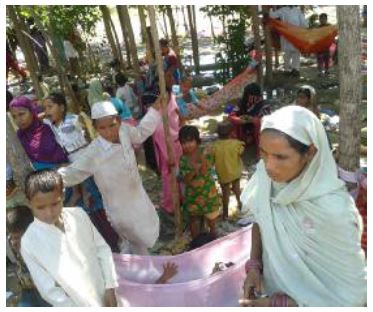
A human tragedy unfolds, as the State watches, In the relief camps of Muzaffarnagar and Shamli Districts
A Preliminary Citizens’ Report
September 20, 2013
A. On September 17-18, 2013, an 11 member team consisting of both independent activists as well as activists affiliated with 5 organizations based in Lucknow, Chitrakoot, Muzaffarnagar and Delhi visited relief camps in two affected districts of Muzaffarnagar (3 Relief Camps – Madrasa camp at Bassi Kalan, Madrasa camp at Tawli and camp at Haji Aala’s house, Shahpur) and Shamli (3 Relief Camps – Madrasa camp on Panipat Road in Kairana, Malakpur camp in Kairana, and the Idgah camp in Kandhla). In Shamli District the team also met with senior members of the district administration – the District Magistrate and the Superintendent of Police.
B. This was not conceived of as a fact-finding visit, but was a recce visit to determine the human needs on the ground in the relief camps, and to see how we might plan to help survivors in initiating procedures towards criminal justice (lodging of FIRs and complaints), accessing compensation for death, injury, destruction of property, planning rehabilitation, and also to confirm unverified news reports of sexual violence against women. Continue reading In the relief camps of Muzaffarnagar and Shamli
भाषा का फासीवाद
भाषा का कार्य न तो प्रगतिशील होता है और न प्रतिक्रियावादी, वह फासिस्ट है: क्योंकि फासिज़्म अभिव्यक्ति पर पाबंदी नहीं लगाता, दरअसल वह बोलने को बाध्य करता है. रोलां बार्थ का यह वक्तव्य पहली नज़र में ऊटपटांग और हमारे अनुभवों के ठीक उलट जान पड़ता है. हम हमेशा से ही फासिज़्म को अभिव्यक्ति का शत्रु मानते आए हैं. लेकिन बार्थ के इस वक्तव्य पर गौर करने से, और हमारे आज के सन्दर्भ में खासकर, इसका अर्थ खुलने लगता है. इसके पहले कि हम आगे बात करें, यह भी समझ लेना ज़रूरी है कि बार्थ की खोज कुछ और थी. वे अर्थापन की नई विधि या पद्धति की तलाश में थे. अंततः उनकी खोज अर्थ से मुक्ति की थी, एक असंभव संधान लेकिन दिलचस्प: स्पष्टतः वह एक ऐसी दुनिया का स्वप्न देखता है जिसे अर्थ से मुक्ति हासिल होगी( जैसे किसी को अनिवार्य सैन्यसेवा से छूट मिली होती है). हम हिन्दुस्तानियों के लिए इसका पूरा अभिप्राय समझना कठिन है लेकिन एक अमेरीकी या रूसी या इस्राइली के लिए नहीं. उन्हें पता है कि वयस्क होते ही राज्य उनको सेना में भर्ती होने के लिए बाध्य कर सकता है. प्रसंगवश अनेक न्यूनताओं के बावजूद भारतीय लोकतंत्र के पक्ष में यह बात भी है कि उसने अपने नागरिक को सैन्य पदावली में परिभाषित नहीं किया. भारतीय होने की शर्त या उसकी कीमत अपना सैन्यीकरण नहीं है. Continue reading भाषा का फासीवाद
Muzaffarnagar 2013 – Violence by Political Design: Centre for Policy Analysis
This fact-finding exercise was coordinated by the CENTRE FOR POLICY ANALYSIS. Team members were the human rights activist and former civil servant Harsh Mander; former Director-General of the Border Security Force, E N Rammohan; Professor Kamal Mitra Chenoy of Jawaharlal Nehru University; National Integration Council member John Dayal; senior journalist Sukumar Muralidharan and CPA Director and senior editor Seema Mustafa.
Introduction and Overview
The first impression of the Muzaffarnagar countryside, now green with the sugarcane ripening for harvest, is of utter desolation. Villages are tense with fear. Kasbas and hamlets are purged of their Muslim presence and the Hindu quarters have also emptied out in a self-imposed curfew even at midday, as women and children peep out from behind closed doors and windows, their menfolk having fled to avoid arrest as criminal complaints are made out against them. Fear is in the air. The atmosphere reeks of embitterment and betrayed trust, with neighbour now unwilling to trust neighbour, and apprehensive of ever returning to their accustomed lives. All the evidence points towards people who were forced to flee their habitations in sheer terror and seek out the safety of gathering among others of their own faith, occupying any vacant space in areas where they could be sure of not being targets just because of who they were.
“We will never go back to our villages”, say Muslim women refugees in a makeshift camp in the tehsil town of Budhana, some twenty kilometres from Muzaffarnagar. Continue reading Muzaffarnagar 2013 – Violence by Political Design: Centre for Policy Analysis
How Would You Like your Death Penalty Steak, Rare, Well Done, or Medium Rare?: Arguments Against the Death Penalty
The anger that I felt when a young woman was brutally raped and killed by a group of men on the night of December 16 last year is not something that will ever go away. It marked not just me, but millions of people in Delhi, and elsewhere. That anger has no closure. Nor do I seek the convenience of such a closure. I do not seek the convenience of closure for the rape and murder of dalit women in Haryana, or of women in Kunan-Poshpora and elsewhere in Jammu & Kashmir or in Manipur who were raped and killed by the soldiers of the Indian army and who are still unpunished. I would like such men to be punished, but I will never demand the penalty of death for them. Not because I have any affection for rapists, but because I have a greater regard and respect for human life, which I do not think that we should allow the state to take away, in cold pre-meditation, whatever the circumstances.
The Many Avatars of Fear: Amrita Nandy
Guest Post by AMRITA NANDY
I have recently come to the US for a year. My “settling down” has happened under the viral shadows of the Rose Chasm debates. (See HERE and HERE)
Personally, the online exchanges struck a chord for me because I too, like Rose, am a student who is new in a foreign country and to its culture, trying to feel at home, adjust, mingle, accommodate and, most of all, make sense of some new experiences.
Before you point out that this juxtaposition of Rose’s context with mine is too simplistic and reductive, allow me to say “of course”.
Of course! A comparison, contrast or parallel of our respective experiences is not where I am headed to.
This is merely my account of being an outsider in America. More precisely, this is my attempt to engage with the articulation of fear in its many avatars and contexts.
Yes, fear!
Report of the Fact Finding Investigation conducted to ascertain facts in the case of alleged rape and murder of Dalit girl in Jind district of Haryana
Report of Fact Finding Team put together by ALL INDIA DALIT MAHILA ADHIKAR MANCH. Received via Kalyani Menon-Sen
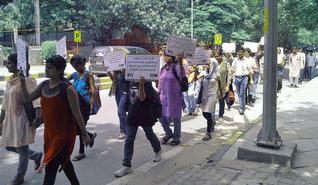
Women activists protest outside Haryana Bhavan in Chandigarh on September 1 demanding a CBI probe into the death of the Dalit girl in Jind. Image from The Hindu
On 24th August, a 20 year old Dalit girl was brutally raped and murdered in Jind, Haryana, while she was on her way to write an examination. Her body was found near a canal the next day by the police. There were cigarette burn marks on her body and significant indications of sexual violence. It is clear that she was kidnapped, raped and then murdered.
However, at the time of the fact finding, even after four days the culprits had not been identified or arrested, and there was no progress on the investigation beyond sending the body for post mortem. In fact, the parents of the girl, members of her village and various Dalit activists refused to cremate the body and were sitting on dharna in front of the Jind Civil Hospital to protest against police and administrative apathy and callousness. It was very clear that the Haryana police and administration was exhibiting gross negligence in this case, ignoring the law and evading established investigative procedure.
It is at this point that the All India Dalit Mahila Adhikar Manch (AIDMAM) decided to put together a fact finding committee to visit the area, meet the key people involved and ascertain the facts of the case. Continue reading Report of the Fact Finding Investigation conducted to ascertain facts in the case of alleged rape and murder of Dalit girl in Jind district of Haryana
Race too, after all, along with Gender: Arvind Elangovan
A few facts and some thoughts on the reception of Michaela Cross’s experience of India – Guest Post by ARVIND ELANGOVAN
Since Michaela Cross’s experience was part of a study abroad program conducted annually by the University of Chicago, and I was part of the program – for three years as a graduate student assistant (for the Fall quarters of 2007-2009), and one year as faculty in the program (Fall of 2010) – I think I could most usefully contribute by highlighting a few facts about the program itself. In the process I would think aloud about some of the issues that have come up in the reception of Cross’s experience in India, especially in the responses of Rajyashree Sen and Ameya Naik. I choose Sen’s and Naik’s responses partly because they have been the most recent, but also because between them they represent the spectrum of possible positions that one could usefully take about this issue. Needless to add, there have been other responses, such as the one posted by another fellow University of Chicago student on the trip, an article titled ‘In Defence of Rose Chasm (Michaela Cross) and countless other comments, criticisms, and responses that have flooded the Internet world.
However, between Sen and Naik, the basic ends of the spectrum are quite clear. Sen contends that it is not only a white woman’s problem but an issue for all women and that some self-regulation and discipline would have gone a long way to avert the unsavory experiences if not completely eliminate their possibility. Naik, at the other end of the spectrum, points out that the expectation of preparedness or caution urged by Sen belies the possibility of questioning the pervasive culture of sexual violence, in which any cautionary attempt to be safe, is to pay merely lip service to acknowledging the crime of sexual violence, instead of combating more difficult questions about such a culture. Continue reading Race too, after all, along with Gender: Arvind Elangovan
When the lid will burst: Fahad Shah
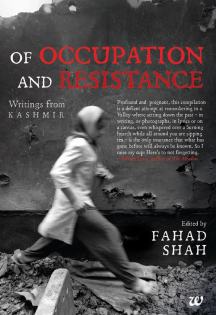 This is an excerpt from the introduction to the anthology Of Occupation and Resistance: Writings from Kashmir, edited by FAHAD SHAH
Once militancy took root in the Valley, it continued unabated, with a few exceptions in the years to come. The sentiment of the resistance movement prevailed across Jammu and Kashmir. At one point in time, blasts and encounters occurred almost every day. The first few years of the 1990s were the most brutal in the history of the conflicted Valley. After the 1996 assembly elections, when people were forced to vote at gunpoint, the National Conference Party and counter-insurgent groups ruled the state. People lived with trauma and threat – treating the injured, mourning for the dead and searching for those who had disappeared.
This was the story for more than a decade. A shift in the nature of resistance has been seen in the past few years; the generation that was born during the start of the war has been able to glean the nuances of the homeland’s political situation. Most of the youngsters from this generation, born between the late 80s and early 90s, choose stones over guns. Continue reading When the lid will burst: Fahad Shah
A Burden of Proof: A Response to “White Woman’s Burden” by Ameya Naik
This is a guest post by AMEYA NAIK
[On the 26th of August 2013, Newslaundry carried a piece by Rajyasree Sen titled “White Woman’s Burden“. This post is offered as a rebuttal of the views expressed in the essay.]
Dear Rajyasree,
Michaela Cross, aka RoseChasm’s CNN blog piece about her experience of India is, as you say, currently unavoidable on the internet. It does seem to be provoking a dialogue on women and safety in India – at least in social media circles. If the result is that Indian girls and women acknowledge and share their own negative experiences, perhaps thereby to make some Indian men re-examine their perceptions and behaviour, it would still be a step forward.
Unfortunately, some responses represent two steps backwards instead. Your writing (“White Woman’s Burden”, 26 Aug, 2013) is one such; it made me profoundly uncomfortable. The gist of your argument appears to be this: Michaela was not suitably prepared, and she *SHOULD* have known better. Indeed, given her account of her actions and experiences, and the trauma she has experienced therein, it is surprising (to you) how unprepared she was.
Did I just read a young, educated Indian woman entrepreneur – from the hospitality industry, no less – say that an exchange student left traumatised after experiencing molestation (and worse) because she was unprepared? I describe myself as a cynic, but surely this is a new low!
What, pray tell, would suggest she was sufficiently prepared? That she came here, had the experiences she did, and considered them “par for the course” in India? Or that she came here aware of (what you call) the skewed psycho-sexual dynamic between Indian men and women in all its rich and diverse forms, behaved in the most conservative and appropriate fashion – only dancing in “safe places”, avoiding public transport entirely, staying only with trusted hosts or in one of Goa’s five star hotels – and left having experienced only milder forms of violation, like the persistent gaze (which she would know to expect)?
This assertion of yours does have one unexpected benefit – it lets us ignore the fair skin debate. If complexion plays no role, she should still be at least as careful as any Indian woman. If complexion does play a role, she should be even more careful! As silver linings go, though, this is pewter on a thundercloud.
How, pray tell, would the students or the University prepare for their visit to the land of the skewed psycho-sexual dynamic? With little docu-dramas of all the kinds of harassment you can expect, and how to be safe at all times? Would you not seed the most pernicious mistrust in your potential visitors? In fact, why would any of them come at all? Surely the University would simply cancel the trip!
And, while you seem to suggest that this is precisely what the “easily traumatised” should do, we would be the first to protest. Already we cry ourselves hoarse over travel advisories saying India is unsafe for women. That, apparently, is an insult to our national pride. And that seems to be the source of this article: “how dare this unprepared white girl write about India this way?” Only Indian writers can suggest that India has a skewed psycho-sexual dynamic, right? (An interesting dynamic which, of course, makes some – but not all – lechers or potential rapists. And on current evidence, I shudder to ask you who these corrupted ones are, and why only they succumb to this taint.) Because Indian women are prepared for such behaviour, and they know – even when they face it abroad – that it is only an aberration.
Too many responses, too many comments, seem to be in this vein. Why this parochial-with-my-fingers-crossed-so-as-not-to-offend-gendered-perspectives reply at all? My thesis is that it is because Michaela’s account makes us ask a few uncomfortable questions. Such as, how many aberrations to make a norm? How much preparation is enough?
Answering those questions is not a White Woman’s Burden – the onus to answer to them lies on us. Discrediting the person who asked them as “easily traumatised” – and really, as someone who says she has lived through incidents enough of her own, how dare you! – is a thoroughly inadequate reply.
[Ameya Naik is currently in a graduate programme in Boston. A psychologist and lawyer by qualification, he worked in New Delhi across 2012-13.]
 KAFILA - COLLECTIVE EXPLORATIONS SINCE 2006