Giving democracy in Pakistan a chance: Raza Rumi

Guest post by RAZA RUMI

Endless predictions about the fall of the PPP-led coalition government in Pakistan have been made by pundits since the very day it came to power. The recent hullabaloo about this has been in the context of the forthcoming Senate Elections, due in March 2012, which ceteris paribus will ensure a simple majority to the PPP and its allies in the upper house. Given that the Senate is an equaliser in federalist politics, this would mean that legitimate representatives of smaller provinces would be permanent stakeholders in the system beyond this government. Continue reading Giving democracy in Pakistan a chance: Raza Rumi →

A prologue to memory: Arif Ayaz Parrey

Guest post by ARIF AYAZ PARREY

Over the corner shop at the busy crossing near home hangs a white board on which the words ‘Muzaffar Pan-House’ are painted in bright red. On the right side of the words, an artistic rendition of the side-view of Muzaffar’s face can be seen. His left hand is also painted in, holding a cigarette. The grey smoke emanating from the cigarette does not vanish before it touches the top of the board.
Continue reading A prologue to memory: Arif Ayaz Parrey →

AFSPA in Kashmir – “Armed Forces’ Say Prevails Anyway”: Gowhar Geelani

Guest post by GOWHAR GEELANI

There is a lot of noise in the media over AFSPA. Ask any senior Indian security official, a turn-coat politician or a retired Army General what AFSPA stands for. “Armed Forces Special Powers Act,” they will say. Now pose the same query to an ordinary Kashmiri living there in the hapless Vale for the past two decades. The answer perhaps would be: “Armed Forces’ Say Prevails Anyway”. Continue reading AFSPA in Kashmir – “Armed Forces’ Say Prevails Anyway”: Gowhar Geelani →

Understanding the Nepali Revolution: Baburam Bhattarai

(Nepal’s Prime Minister, Dr BABURAM BHATTARAI, visited India in his first bilateral trip since taking office, in the third week of October. Bhattarai spoke at the Jawaharlal University, Delhi, where he had earned his PhD from the Centre for Study of Regional Development, about the political evolution in Nepal, particularly after the 1990 and 2006 movements as seen through the prism of the Unified Communist Party of Nepal (Maoist).
Before beginning his substantive speech, he declared, “I am what I am because of JNU,” amidst thundering applause and cries of Lal Salaam.

The full text of the speech, provided to Kafila by his office, is being posted below for the record.)  Continue reading Understanding the Nepali Revolution: Baburam Bhattarai →

Bhutan’s cautious tryst with democracy

Bhutan’s shift to plural politics remains carefully calibrated, but the emergence of a relatively free press and democratic institutions are important achievements. An account from Thimpu

Political changes in Bhutan over the past five years — the introduction of a ‘democratic constitution,’ the retreat by the fourth King and the coronation of his son, elections to Parliament which now has both a ruling and an opposition party, and governance being the prerogative of the elected government — have triggered two opposite reactions generally. One school has hailed the vision of the Bhutanese monarchy and its act of ‘renunciation,’ and has declared the ‘democracy story’ to be a success. Many others dismiss the transition as being a ‘farce,’ claiming that the King still calls the shots and that Bhutan remains a tight autocracy. Continue reading Bhutan’s cautious tryst with democracy →

From Manhattan to Manesar: Naeem Moahaiemen

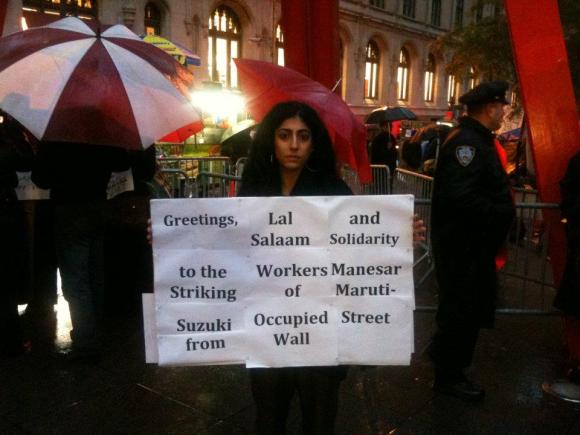
Greetings to the Workers of Manesar from Occupied Wall Street (Photograph by Naeem Moahaiemen)

A few days ago, in a post on the rally in solidarity with the (then) striking Maruti Suzuki, Suzuki Powertrain and Suzuki Motorcycles Factory workers in Manesar, Gugaon in Haryana, we had reported a worker saying: Continue reading From Manhattan to Manesar: Naeem Moahaiemen →

‘The Quality of Mercy’: Kindness and Compassion in Higher Education: Prasanta Chakravarty

Guest post by PRASANTA CHAKRAVARTY

There is a moral compass that every freshman must inculcate, says Harvard College Dean Thomas Dingman. To that end, Dean Dingman has asked incoming Harvard students to sign the ‘Class of 2015 Pledge,’ a solemn testament that reflects a set of distinctive values: “That message serves as a kind of moral compass for the education Harvard College imparts. In the classroom, in extracurricular endeavors, and in the Yard and Houses, students are expected to act with integrity, respect, and industry, and to sustain a community characterized by inclusiveness and civility.” The document goes on to hope that entryways and yards will be places where everyone can thrive and where the “exercise of kindness holds a place on a par with intellectual attainment…we want to have an environment in which people can flourish academically.”

Continue reading ‘The Quality of Mercy’: Kindness and Compassion in Higher Education: Prasanta Chakravarty →

End the culture of impunity, not just AFSPA: APDP

This is a press release from the ASSOCIATION OF PARENTS OF DISAPPEARED PERSONS

The Bund Amira Kadal, Srinagar – 190001, Jammu and Kashmir
28th October 2011

APDP feels that the recent announcement by the Chief Minister Omar Abdullah on the partial revocation of Armed Forces (Special Powers) Act (AFSPA) from some areas of Jammu and Kashmir would be insignificant for improving the human rights situation and also for providing justice to those affected by the mindless violence by armed forces.
Continue reading End the culture of impunity, not just AFSPA: APDP →

‘This is like a editorial kind of things no, I can’t mention on the paper you know’

Goa-based journalist MAYABHUSHAN NAGVENKAR posed as a politician planning to contest the Goa assembly elections 2012, and called up a marketing executive of the Goa newspaper, Herald, asking for an interview to be published in the newspaper, for a price, as editorial content rather than advertisement. He has posted online four conversations he had with the executive, one of which you can hear below.

See the full story: Goa’s Paid Piper – Paid political interview in Goa’s Herald newspaper for Rs 86,400

And the newspaper’s response.

Small is Beautiful: Lushkary

Guest post by LUSHKARY

Of all the things about my last workplace, being summoned by one of our editors to her cabin was one that I did not particularly like. The problem was that, unlike other parts of the office, in her cabin I could not even pretend to seem interested in what she had to say. My eyes would involuntarily travel to the soft-board above her desk and get fixated on a slightly hazy colour photograph of Gujarat Chief Minister Narendra Modi. And if I shifted focus a bit towards the left, then I could also see another familiar figure standing next to Mr. Modi. That of the cabin’s proud occupant.

Now, it is not a hidden secret that the Indian business news community admires Mr. Modi. His biennial Vibrant Gujarat Summits, desi version of international pseudo-events like the Davos World Economic Forum, are a definite hit among business news hacks. How can you not be at a place where deals upwards of $452 billion get signed over just a couple of days?

Continue reading Small is Beautiful: Lushkary →

Signs of improving times

Two incidents that took place recently provide hope, underlining that the India-Pakistan peace process must indeed be on track. One incident was related to the UN and the other to Kashmir, if you can believe it. Continue reading Signs of improving times →

Guardian Angelic Moral Police

[co-authored with Bobby Kunhu]


Of all the different kinds of moral police that inhabit the land of Kerala, the species that should be feared most must probably be the ‘Guardian Angelic Moral Police'(GAMP). The GAMP is just as potent as the Goonda-Activist Moral Police (G-AMP) but in striking contrast to the latter, the former thrives on the surface precisely on values dear to the Malayalee middle-class – the sanction of law, paternal concern, state protectionism of women as the ‘weaker sex’. This makes it much harder for victims of moral policing to fight off their intrusions all of which are couched in the language of benevolent concern. We just got a taste of that from the Hon. Justice V R Krishna Iyer with his controversial Women’s Code Bill, but since so much of his language is such antiquated hyperbole, it was impossible to take any of it seriously. However, it appears that the judiciary in Kerala has more sophisticated GAMP, and  recent orders passed by the bench consisting of Justices R Basant and M C Hari Rani of the Kerala High Court seem to leave no reason for scepticism. Continue reading Guardian Angelic Moral Police →

Be a man. Drive like a woman

The Delhi Traffic Police says women make better drivers:

“The number of women drivers is just a fraction of the number of men who drive. But even proportionately, women are involved in far fewer accidents and incidents of rash driving than their male counterparts,” said joint commissioner of police (traffic) Satyendra Garg.

“Our impression is women are far safer drivers, with a tendency to follow traffic rules. This disproves the contention that women cannot drive,” he added. [Don’t miss the colourful comments there!]

“We are not like Iran here”: Alia Allana reports from Tunisia

This guest post by ALIA ALLANA is an account of polling day in Tunisia

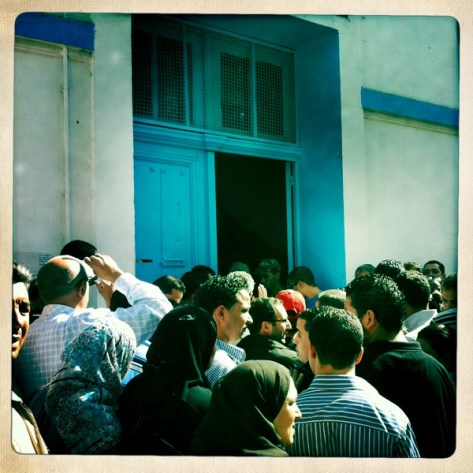
They had already waited so long, what was a few more hours? Continue reading “We are not like Iran here”: Alia Allana reports from Tunisia →

Human Development and other Holy Cows: Sajan Venniyoor

Guest post by SAJAN VENNIYOOR

The press is full of the India Human Development Report 2011 released by the Centre recently, and Gujarat figures prominently in newspaper headlines for reasons Mr. Modi is unlikely to quote in self-congratulatory ads. As The Telegraph put in tortured prose, Gujarat has a ‘Gnawing record fasting Modi won’t flaunt‘.

Kerala once again topped the Human Development Index. One of the more charming images that accompanied the story is from Rediff, which showed a fairly archetypal Kerala landscape with paddy fields, coconut trees and a cow. No humans, though, developed or otherwise. It struck me, then, that part of Kerala’s high ranking in the health and nutrition stakes may come from its willingness to consume all three: rice, coconuts and the cow. And thereby hangs a tale. Continue reading Human Development and other Holy Cows: Sajan Venniyoor →

Child Malnutrition in Karnataka- A Report

In light of the Planning Commission’s cruel joke of pegging the poverty level at an expenditure level of Thirty Rupees day, I wanted to bring our attention to a recent report compiled by Clifton D’Rozario in his capacity as an advisor  to the Commisioners on the right to food. The report may be downloaded from here


Continue reading Child Malnutrition in Karnataka- A Report →

Lies about sanctions under AFSPA: JKCCS

This press statement was issued by the JAMMU AND KASHMIR COALITION OF CIVIL SOCIETY on 19 October 2011 
 
Over the last 22 years in Jammu and Kashmir, the Armed Forces Special Powers Act (AFSPA) and Cr.P.C. 197 has provided absolute legal impunity to the armed forces and the Jammu and Kashmir Police.
The Government of India claims that despite the imposition of AFSPA, mechanisms of justice are functional and deliver whenever anyone is found indulging in human rights abuses, but facts provided by the state institutions contradict the claim of the Indian state. Continue reading Lies about sanctions under AFSPA: JKCCS →

Mickey wants to be the first one to vote: Alia Allana reports from Tunisia

This guest post for Kafila by ALIA ALLANA from Sidi Bou Said on the outskirts of the capital Tunis captures the mood a day before Tunisia goes to the polls. Photos by Alia Allana

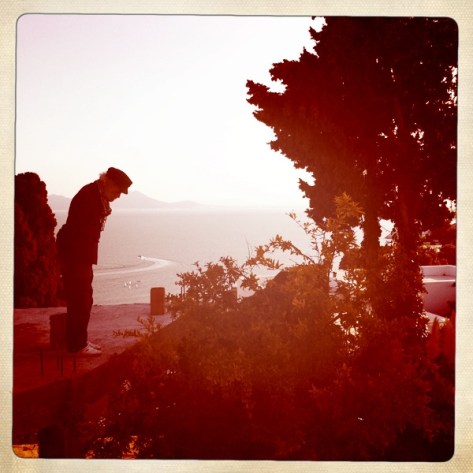
Continue reading Mickey wants to be the first one to vote: Alia Allana reports from Tunisia →

When Openness is Unfreedom (alternatively, when data is unfreedom) – Part I

“I think we need to remember that a point of view brought under public scrutiny and discussion in an isolated manner may sometimes present a distorted or incomplete picture of what really happened in the process of making the final decisions.”

– Dr. Manmohan Singh, talking in the context of RTI and decision-making

Lately, one of the things that has been bothering me about news reportage in the media is its propensity to react to any and every quote from a politician on issues of corruption, freedom of information, transparency and the likes. Beginning from April this year, newspapers such as the Times of India have latched on to every quote they have felt to be controversial, without even so as much reflecting on the veracity, validity or the thinking that has gone behind the statement.

Continue reading When Openness is Unfreedom (alternatively, when data is unfreedom) – Part I →

Thinking Truth and Reconciliation in Kashmir: Shuja Malik

Guest post by SHUJA MALIK

“Truth and Reconciliation Commission (TRC)” is a recent addition in the lexicon of the Kashmir conflict/dispute. IT gained currency after recent confirmation of reports about presence of unmarked, unidentified and mass graves in Kashmir. The idea of a TRC for Kashmir raises questions about its relevance and context, especially unidentified graves and enforced disappearances.

Truth and reconciliation commissions have been established in the past with varied powers and purposes, usually at points where the parties involved are ‘emerging out of conflict’ or are at ‘transitional stage’, and after modalities have been established for conflict resolution.

Continue reading Thinking Truth and Reconciliation in Kashmir: Shuja Malik →

The Minister of Information maintains that there is no revolution: Alia Allana reports from Damascus

This guest post by ALIA ALLANA is a despatch for Kafila from Damascus, the Syrian capital. All photos by Alia Allana

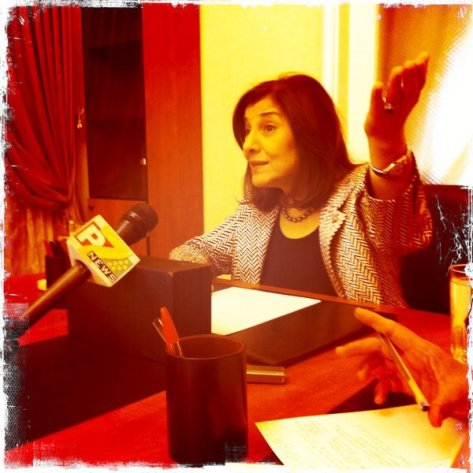
“You don’t think I’m afraid?” asked Bouthaina Shaaban, advisor to Syrian President, Bashar al Assad.

We were sitting in the Ministry of Protocol in Damascus and she tugged on her black pearl necklace and fidgeted with her black and white tweed jacket. She had more reason to be afraid, she said – not just because she was a woman but also because she is a supporter of the current regime.

Continue reading The Minister of Information maintains that there is no revolution: Alia Allana reports from Damascus →

DISSENT, DEBATE, CREATE