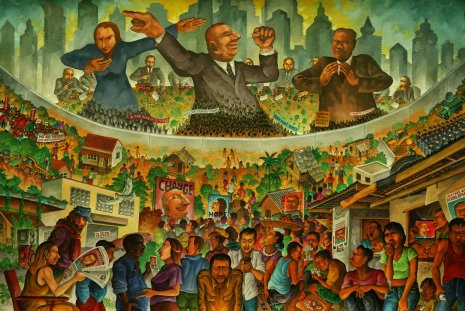
Why does the Left in Kerala fear Rehana Fathima and not COVID- 19?

Before I start, a request:    Friends who are reading this, if you are close to Noam Chomsky, Amartya Sen, or Soumya Swaminathan, or the other left-liberals who appear in the Kerala government-sponsored talk series from outside Kerala, please do forward this to them? I hope to reach them.


The Left government in Kerala is gathering its international intellectual-activist support base to cash on its commendable  — ongoing — success in dealing with the COVID-19 pandemic.  This is not new — it has always been part of the dominant Left’s hegemony-bolstering exercises, especially after the 1990s, when its unquestionable hegemony in Kerala began to face a series of challenges. It has also been forced to pay attention to the oppositional civil society which relentlessly questions the dominant Left’s fundamental understanding of social justice and forces it to take seriously such ideas as freedom, autonomy, as well as identities not reducible to class. Continue reading Why does the Left in Kerala fear Rehana Fathima and not COVID- 19?

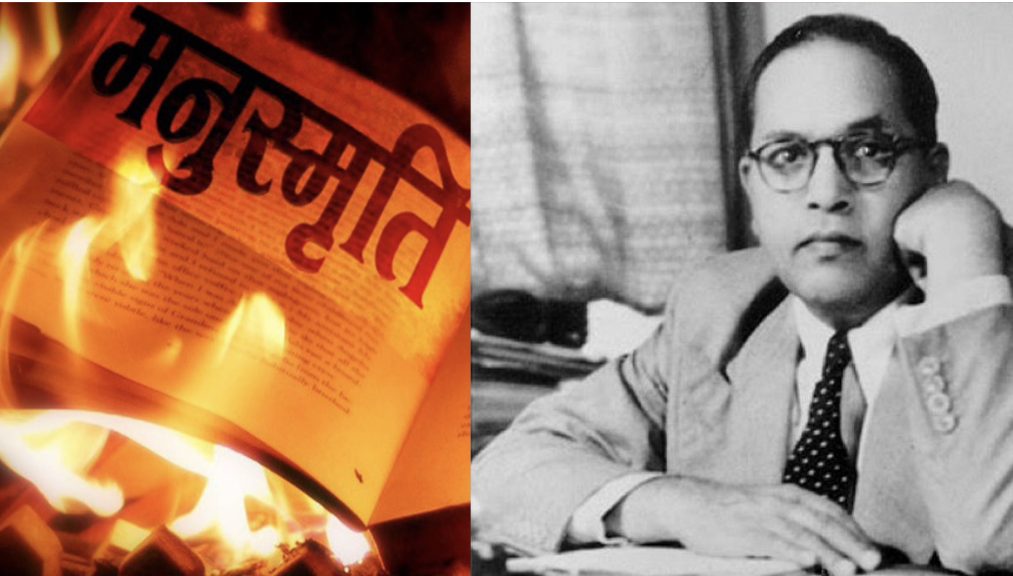
Treacherous Road to Make Manu History

Even today the attempt is to whitewash Manusmriti, not shun it. But all is not lost as the ripples of Black Lives Matter have reached Indian shores.

manusmiriti ambedkar hindutva

It was 1927, the second phase of the historic Mahad Satyagrah was on, and Dr. Bhimrao Ambedkar led thousands of people in burning the Manusmriti, an act he compared with the French Revolution of 1789. Time and again, in speeches and writings, he categorically opposed the world-view of Manu, the legendary figure to whom are attributed the tenets of the Manusmriti, said to be dated to around 100 CE.

In the book written by scholar and activist Anand Teltumbde, Mahad: The Making of the First Dalit Revolt, published by Navayana in 2017, is recorded the resolution which was proposed by the social activist Gangadhar Sahasrabuddhe, and then read out at the Mahad Satyagrah. It states that the firm opinion of this conference is that the Manusmriti, “taking into consideration its verses which undermined the Shudra caste, thwarted their progress, and made their social, political and economic slavery permanent…is not worthy of becoming a religious or a sacred book. And in order to give expression to this opinion, this conference is performing the cremation rites of such a religious book which has been divisive of people and destroyer of humanity.”

Twenty three years later, Dr Ambedkar marked the promulgation of the Constitution of India as the “end of the rule by Manu”. And yet, 70 years thereafter, a significant section of Indians are still fascinated by Manu and have no qualms in venerating him. Even the Black Lives Matter protests in the United States and large parts of Europe, in which statues of slave-owners and colonialists are being knocked down or disfigured, the Indian followers of Manu have no regrets about deifying him.

( Read the full article here)

Crisis of Working Class Politics – Challenges for Rebuilding the Left


In this year of COVID19, the organized ‘working class’ movement completes a hundred years of its history. It was on October 31 1920, that the All India Trade Union Congress (AITUC), the first central trade union organization, came into being. This might be a good occasion to take stock – to look back into history from what can only be described as a very troubled and difficult present – and peer forward into the future.

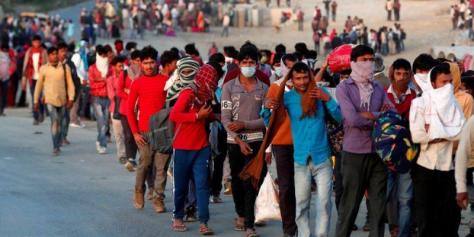
Workers, the long trek
Workers – the long trek, Image courtesy, The Wire

The year of COVID19 reveals, among other things, the very fragile and unstable nature of this entity called ‘the working class’ in countries like India. The monstrous situation arising out of the pandemic only provides us the window to that long and endless process by which the ‘working class’ is constantly made and remade. In a very important sense, unlike the peasantry which has a far more stable existence (till, for the requirements of Capital, it is uprooted and thrown into urban labour markets), the working class is an inherently structurally unstable social group. Given that its fate is tied to the requirements, caprices and maneouvres of Capital, the working class is not given to us readymade, once and for all. For as long-term changes in industry and technology occur or capital takes flight in the face of worker militancy, the working class too undergoes changes.

Continue reading Crisis of Working Class Politics – Challenges for Rebuilding the Left

How Many Times Will India Deny Apartheid?

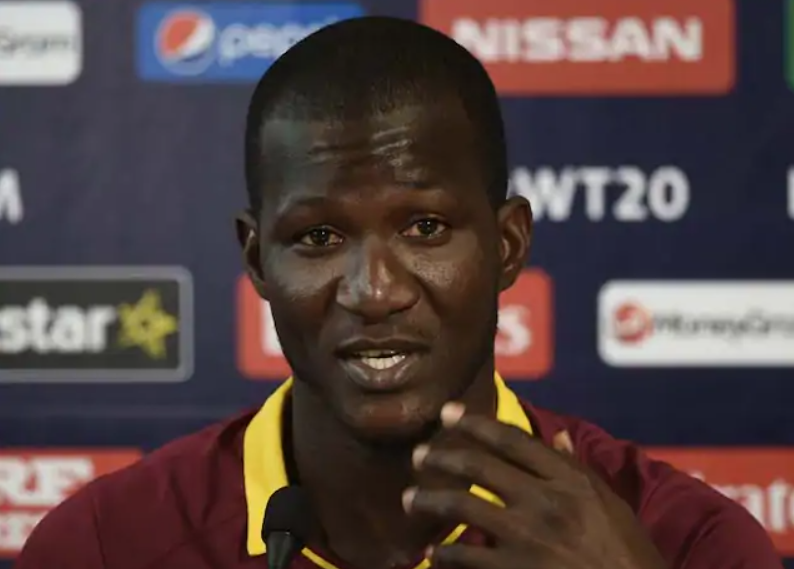
Darren Sammy has revealed he faced racism in India at a time when the world is battling racism. India needs to join this fight.

Darren Sammy has revealed he faced racism

Darren Sammy, the famous all-rounder from West Indies, is a legend. He has led his country team and is the only captain to have won two T20 World Cups, in 2012 and 2016. His achievements in the arena of cricket are not limited to his country. He played a singular role in reviving Pakistan’s cricket team and preparing it for international matches, which earned him an honorary citizenship.

And thus the revelation that he was subjected to racial taunts by his own teammates, during his tour to India in 2013 and 2014, while he played IPL matches, was a bolt from the blue. His admirers were naturally aghast when Sammy disclosed that his teammates at SunRisers Hyderabad used to address him with a pejorative term and collectively sneer at him.

On some occasions, Sammy said, he too would smile back at his gleeful teammates, for he had innocently believed that it was light-hearted banter, even though directed at him. Sammy was completely oblivious to the fact that they were targeting him with a racist invective and enjoying “jokes” that he could not comprehend at his expense.

No doubt many of those who subjected him to humiliation were big names in Indian cricket. Yet it did not cause any uproar in India when Sammy made the truth known to the world via an Instagram post. The 24/7 news channels, which are forever searching for sensational news, and the cricketing fraternity, were quiet. None came forward to denounce the humiliation of Sammy, nor was there a public apology from the offenders. Only Swara Bhaskar, the actress, who espouses social causes rather fearlessly, demanded an apology from his teammates.

( Read the full text here)

कोविड संक्रमण की चेन तोड़ने के लिए मलप्पुरम ने नई ज़मीन तोड़ी है

आज जब पूरे देश में धार्मिक स्थलों को खोला जा रहा है, तब बीते दिनों ‘सांप्रदायिक’ होने का इल्ज़ाम झेलने वाले केरल के मलप्पुरम ज़िले ने अपनी अलग राह चुनी है. कोरोना के बढ़ते मामलों के मद्देनज़र वहां की पांच हज़ार मस्जिदों को अनिश्चितकाल तक बंद रखने समेत कई धार्मिक स्थलों को न खोलने का फ़ैसला लिया गया है.

Minara masjid wears a deserted look on the first day of the holy fasting month of Ramzan, amid unprecedented circumstances due to the coronavirus pandemic and a nationwide lockdown, in Mumbai. PTI

लॉकडाउन के दौरान बंद एक मस्जिद. (फाइल फोटो: पीटीआई)

मलप्पुरम, केरल के एकमात्र मुस्लिम बहुल जिले, जहां उनकी आबादी 75 फीसदी है, ने एक इतिहास रचा. तय किया गया है कि जिले की 5,000 मस्जिदें अनिश्चितकाल के लिए बंद रहेंगी.

इस निर्णय के पीछे का तर्क समझने लायक है. क्योंकि राज्य में कोरोना वायरस संक्रमण के मामले बढ़ते दिख रहे हैं, इसलिए यह तय करना मुनासिब समझा गया कि उसके दरवाजे श्रद्धालुओं के लिए बंद ही रहें.

जाने-माने इस्लामिक विद्वान पनक्कड सययद सादिक अली शिहाब थंगल, जो इंडियन यूनियन मुस्लिम लीग के जिला अध्यक्ष हैं, उन्होंने इस खबर को मीडिया के एक हिस्से में साझा किया.

इस तरह जबकि बाकी मुल्क में प्रार्थनास्थल, धार्मिक स्थलों को खोला जा रहा है, मलप्पुरम ने अपनी अलग राह चुनी है.

इस बात पर जोर देना जरूरी है कि आठ मुस्लिम संप्रदायों (denomination) की उस बैठक में, जहां 9 जून के बाद प्रार्थनास्थलों को खोलने के सरकारी निर्णय पर विचार करना था, यह फैसला एकमत से लिया गया.

सभी इस बात पर सहमत थे कि उन्हें इस छूट का इस्तेमाल नहीं करना चाहिए. एक ऐसे वक्त में जबकि कोविड-19 के मामले सूबे में बढ़ रहे हों, मस्जिद कमेटियों और धार्मिक नेताओं ने यह जरूरत महसूस की कि उन्हें सतर्कता बरतनी चाहिए.

खबरें यह भी आ रही हैं कि न केवल मस्जिदें बल्कि इलाके के कई मंदिरों और चर्च ने भी उन्हें तत्काल खोलना नहीं तय किया है.

मिसाल के तौर पर, श्री कदमपुजा भगवती मंदिर जो मलप्पुरम में है तथा श्री तिरूनेल्ली मंदिर जो वायनाड में है, वह बंद रहेंगे.

नायर सर्विस सोसायटी से संबंधित मंदिर भी 30 जून तक नहीं खुलेंगे. एर्नाकुलम-अंगमाली आर्चडाओसिस ऑफ सिरो मलबार चर्च ने भी तय किया है कि उसके मातहत चर्च 30 जून तक बंद रहेंगे.

निस्संदेह इस बात को लेकर इलाके के लोगों में गहरा एहसास दिख रहा है कि राज्य ने जिन भी सावधानियों को बरतने की बात की हो, स्पेशल ऑपरेटिंग प्रोसिजर्स का ऐलान किया है, हकीकत में उन पर अमल करना नामुमकिन होगा लिहाजा कोविड-19 के समुदाय आधारित संक्रमण की संभावना बनी रहेगी.

( Read the full article here)

Remembering Ibn-e-Insha, Poet and Satirist: Jamal Kidwai

Guest Post by JAMAL KIDWAI

Ibn-e-Insha (15 June 1927 – 11 January 1978) would have turned 93 today. We celebrate his birthday by curating some of his best poetry, sung by leading vocalists from India and Pakistan.

Born in Jalandhar, Punjab, on 15 June 1927, he was named Sher Mohammad Khan by his parents. Ibn-e-Insha was his pen- name; loosely translated it means Ibn, son of Insha, referring to a famous 18th century classical poet, Inshallah Khan Insha.

Insha also means, simply, writing, or expression.

Continue reading Remembering Ibn-e-Insha, Poet and Satirist: Jamal Kidwai

The gendered myth of the front-line care giver as ‘warrior’: Panchali Ray

Guest post by PANCHALI RAY

Image credit Prashant Nadkar Indian Express. 

The COVID-19 crisis has laid bare some of the most significant and deep-rooted fault lines of society, whether it is attacks on Indians from the North-east part of the country including racial slurs, holding returning migrants responsible for the spread of the virus or even downright Islamophobia leading to a hashtag #CoronaJihad going viral on social media. Sections of the hyper-vocal, privileged Indian middle-class, along with frenzied nationalist media houses let no opportunity pass to demonize its minorities.

However, what came as a surprise was that along with the stigmatization of migrant workers, ethnic minorities and Muslims, health care workers too faced intense hostility worldwide. Already facing a severe lack of resources including no or few Personal Protection Equipment (PPE) making them even more vulnerable to infection, they are now facing the additional hazard of being labelled as agents of the pandemic.

While on the one hand, medical workers are being labelled as ‘warriors’ and ‘super heroes’ with orchestrated events to show gratitude, on the other hand, they are being hunted down, mobbed, and evicted from their homes. India went a step further, and did a grandiose display of felicitating health care workers by having the armed forces fly past fighter jets, shower flower petals aerially and have their military bands perform outside state hospitals.

This article focuses specifically on the gendering of the organization of the health care sector, which reflects wider binaries of masculine/feminine, cure/care, science/affect.

Continue reading The gendered myth of the front-line care giver as ‘warrior’: Panchali Ray

Paradigms Lost, Past Continuous – Saraswati and some other rivers: Janaki Nair

Guest post by JANAKI NAIR

Maj General GD Bakshi (hereafter MGB) feels enough is enough. Having dealt with the Information Warfare and Psychological Operations in the Indian Army, he has now trained his guns on the internal enemy, abandoning the trenches of Jai Jawan for the far messier archaeologists’ hangout. In his battle dress – impeccable suits and ties– he wages war in the cause of snatching back History from historians, particularly Marxist Historians, Oxford and Harvard Historians, Colonial Historians, Tony Joseph, and above all JNU Historians who pose the Greatest Threat to the Continuity of our National Past. (Fortunately, he has not heard of Subaltern Historians, who have dared to polish up arguments instead of his shoes; or of feminist or Dalit historians, who impertinently ask whatever happened to the Vedic dasi).  While waging this war, he also hopes to win some minor battles on behalf of the Indian Taxpayer by shutting down JNU.

Then MGB had a second think: why waste a chance of planting a flag on a beautiful 1000-acre campus just because it was a Marxist redoubt? And what safer flag in these times of COVID than a Webinar in the JNU ether?  So MGB is ready to announce the Paradigm Shift in the study of the Saraswati Civilisation.  (For those who were reared on that disloyal diet of NCERT books, it refers to the Indus Valley Civilisation, or Harappan Culture).  This Paradigm Shift will fortunately not be as fickle as the Sutlej,  which changed its course mid-holocene. In fact, this Paradigm Shift does not rely much on historians or archaeologists,  but more on scientists – geologists, geneticists, accurate carbon dating physicists – who along with MGB, alone are capable of Total Objectivity, and know that only Good Things happened in the Indian past. Continue reading Paradigms Lost, Past Continuous – Saraswati and some other rivers: Janaki Nair

Can Rest of India ‘Do’ a Mallapuram ?

Ruins of an ancient Jain temple in Arimbra

Ruins of old Jain Style Temple at Arimbra 

Mallapuram, Kerala’s lone Muslim-majority district, made history recently.

The 5,000 mosques in the district would remain closed indefinitely.

Logic behind this decision is simple.

As the state is witnessing spike in Coronavirus infection recently, it was found more prudent to keep the doors closed for devotees. Panakkad Sayyed Sadiq Ali Shihab Thangal, a leading Islamic Scholar and Malappuram district president of the Indian Union Muslim League, shared this news with a section of the media.

Thus while the rest of the country is witnessing opening of places of worship under Unlock 1, Mallapuram has decided otherwise. Continue reading Can Rest of India ‘Do’ a Mallapuram ?

The George Floyd Protests – a view from Philadelphia: Ania Loomba and Suvir Kaul

Guest post by ANIA LOOMBA AND SUVIR KAUL

Protest in Philadelphia, June 7, 2020 (Video by Teren Sevea))

In 2002, when we moved to Philadelphia to join the faculty of the University of Pennsylvania, a friend invited us for breakfast to his home in West Philadelphia, abutting the university. We learned then that in May 1985, rowhouses in this area, then a largely African American residential neighborhood, were bombed by the police (a military-grade explosive was thrown down from a helicopter). The police action followed a confrontation with a group called Move, whose members combined Black liberation and environmentalist ideals. When flames spread, the then Police Commissioner decided to “let the fire burn.”11 of the 13 people in the Move house were incinerated; 5 were children between the ages of 7 and 13.

Four years earlier, in another well-publicized case that scarred Philadelphia, a Move associate and Black Panther, Mumia Abu-Jamal was incarcerated for the murder of a police officer; he, considered by many to be a political prisoner, remains in jail. In 1963, just when Martin Luther King delivered his “I have a dream speech,” a Black family who moved into a white working-class neighbourhood faced a mob of 1500 shouting “Two, four, six, eight—we don’t want to integrate!” In 1967, a man called Frank Rizzo became Police Commissioner, and led a brutal attack on school students who demanded that Black history be included in their curriculum. Dozens were injured. In 1972 Rizzo was elected mayor of the city, a post he held for eight years. His tenure was so notorious for brutality against African Americans that the U.S. Justice Department sued the city’s police department, saying that its use of excessive force “shocks the conscience.” In spite of this terrible history, or more probably because of it, his statue loomed for years near the City Hall, a symbol of racist policing and governance in a city which is 44% African-American and one of the most segregated cities in the country.

Until last week.

Continue reading The George Floyd Protests – a view from Philadelphia: Ania Loomba and Suvir Kaul

Truth Behind India’s Hierarchies of Pain

Perhaps celebrities know that talking about the plight of an animal—who died in a state not ruled by the ruling dispensation at the Centre—is a safe bet

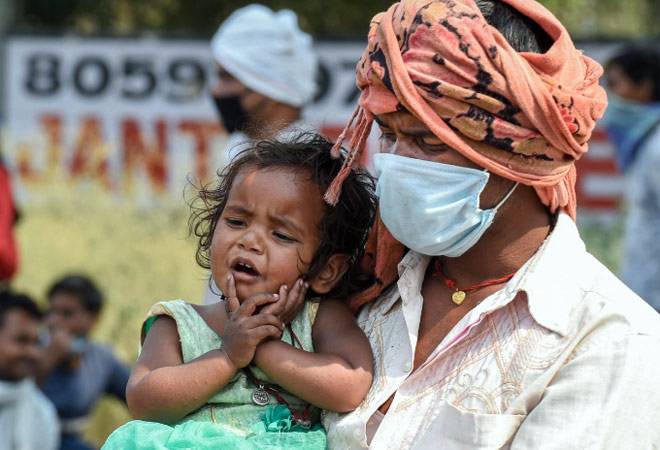
Migrants

Migrants wait for a means of transport to travel to their native places during the fourth phase of the ongoing COVID-19 nationwide lockdown, at Kundali Industrial Area in Sonipat. (Photo: PTI)

The killing of a pregnant elephant has caused national outrage. The elephant had strayed into a village in Palakkad, Kerala, and is said to have been fed a fruit stuffed with firecrackers, which exploded in its mouth. It is impossible to comprehend the tremendous suffering of the elephant, who died a painful death. It is also learnt that people in the region have in the past used incendiary materials to protect their crop from animals, particularly wild boar.

One person was arrested after the matter came to light and few others have been identified. Kerala Chief Minister Pinarayi Vijayan has promised “justice will prevail”, but one does not know if that includes legal action against the hatemongers—including a former cabinet minister who gave the incident a communal colour by claiming, incorrectly, that the incident occurred in Muslim-majority Malappuram. A sitting cabinet minister also retweeted this fake news, which further vitiated the atmosphere.

In a complaint to the Malappuram Police, a lawyer has urged the police chief to file an FIR against the former minister and others for a “derogatory” campaign against the district.

Now, many Indian celebrities, for example Indian cricket team captain Virat Kohli, have said that they are “appalled” by the incident. The chairman of India’s biggest corporate giant, Ratan Tata, has compared the “criminal act” with “meditated murder”. The celebrities, the anchors of 24/7 news channels and many other prominent figures are undeniably upset by the plight of the elephant. But do they also feel the same kind of outrage and disquiet over the communal overtones being imparted to it?

( Read the full article here)
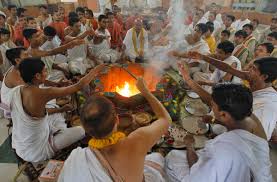
Public Display of Faith Can Wait, Humanity Cannot

It is inevitable that the virus will spread anywhere people gather in numbers.

Faith in India

Representational Image

India went for the world’s toughest lockdown in March, when just about 500 Covid-19 cases had been reported. And it has started withdrawing the lockdown when India has become the seventh-worst pandemic-affected nation, with over 1.91 lakh infections and close to 5,500 deaths. India is registering giant spikes in active cases of Covid-19, but the home ministry has come out with a phased plan to unlock India. The current phase of re-opening will focus on the economy. It has been decided that malls, hotels, restaurants and places of worship will reopen from 8 June onwards.

Concerns over the economic downturn are understandable. The latest GDP data shows the slowest pace of growth in 11 years in the last quarter of 2019-20, and the economy has been hit hard by the Covid-inspired sudden and complete lockdown. But one fails to understand the decision to open religious places at such an early date.

It remains unanswered whether religious places are being thrown open to pre-empt Mamata Banerjee, the Chief Minister of West Bengal, who has announced that her state would open all places of worship from 1 June. It is also not known whether this is being done, as BS Yediyurappa, the Chief Minister of Karnataka, wrote in his letter to the Prime Minister, because devotees are insisting that religious sites be opened.

( Read the full article here )

Online Education, the Latest Stage of Educational Apartheid: Maya John

Guest post by MAYA JOHN

Given the rampant social and economic inequalities in our society, education has been seen by majority of the common masses as a tool for moving up the social ladder. Their aspirations for higher segment jobs and status constitute the largest component of the growing demand for higher education.Nevertheless, the opinion of the dominant classes that the state cannot pay for the education of all has come to enjoy hegemonic status, resulting in the lack of adequate development of educational infrastructure to meet the rapidly growing demand.In response to the widening gap between the demand and supply for education, successive governments have pushed through measures that allow for greater penetration of private capital in higher education, and its corollary, the persistent decline in per capita government allocation of funds towards education. Consequently, private colleges and universities have mushroomed across the country. Likewise,the expansion of the open and distance learning (ODL) mode and mainstreaming of e-learning have been consistently projected by policy makers as credible alternative routes to accessing higher education when higher educational institutions (HEIs) are not within reasonable distance, or when students do not have the marks or financial condition to enroll in formal education.

Continue reading Online Education, the Latest Stage of Educational Apartheid: Maya John

‘National Populisms’, the Little Man and Big Men


Populismo – ISS Conference poster by Filipino artist Boy Dominguez, image courtesy future-agricultures.org

In an earlier post last month, I had discussed the global rise of the Right as related to the revolt of the ‘little man’ (a term I borrow from Wilhelm Reich) and his search for a ‘father-figure’ of authority. I had also argued in that post that the revolt of the little man in itself could not have led to the rise of the Right, were it not for  the ways in which Capital moved to appropriate and channelize that revolt against the Left and Left-of-Centre politics – and regimes that dominated the scene earlier. It is virtually impossible to understand this huge tectonic shift in the politics of the past few decades without understanding the conjunction of the little man and Capital – the Big Men – as it were. No less important, it is impossible to understand this shift without understanding the revolt of the liittle man in relation to the different structures of privilege that appear before us as culturally encoded power relations – as tradition, as ‘our way of doing things’, so to speak.

Continue reading ‘National Populisms’, the Little Man and Big Men

Part III – THE VIRUS, THE MUSLIM AND THE MIGRANT: Rewilding, pirate care and solidarity

THIS IS THE FINAL PART OF A THREE PART POST

India has been effectively under an RSS coup d’etat  since May 2019, after the  extremely dubious “sweeping victory” of the BJP in the Lok Sabha elections. Since then, there has been a concerted and relentless onslaught on democracy from the twin forces of Hindu chaudhrahat and predatory capitalism, an assault accelerated under cover of the lockdown since March 2020.

Part I of this post discussed how the triumphant Hindu supremacist Indian state has been producing Hindu chaudhrahat,  both formally through law, as well as informally (by “stealth”), through the sabotaging of institutions.

Part II discussed the accelerated offensive by state-backed private capital; in all its old forms, of course, including treating human labour as just another resource for it to exploit, like coal or oil; but also in its more recent and dazzling avatar of data capitalism.

The lockdown only made sense if it was used as a breathing space (a sad, unintended pun), to prepare for contact-tracing and infrastructure to deal with the spike in infections that was bound to result upon the lockdown ending. It has instead been used by the current regime as a full blown political emergency. Civil liberties are effectively suspended and large scale arrests of anti-CAA protesters have been carried out. In addition, the mythology of the “Urban Naxal-Jihadi network” has been produced to continue the arrests of  academics, journalists and activists. This deranged script, concocted in RSS HQ, blends the twin projects of Hindu supremacism (“jihadi”) and predatory capital (“urban Maoist”) to effectively turn the lockdown into a lockup for opponents of these projects.

Meanwhile, since the actual pandemic is not the concern of the government, infections and deaths are on the rise, and once the lockdown is lifted we can expect much worse.(There are of course, non-BJP state governments that have done much better, and too much has been written about Kerala as an exemplar for me to add anything here.)

In the midst of the breathless rage and frustration of the moment, the millions of us who still resist both Hindu Rashtra and the depredations of capitalism, are connecting to ideas across the globe that dare to imagine other worlds.

How are we to combine, come together, connect to other stories the virus tells us, find our way to other lanes down which it leads us? How will we find and inhabit  those fissures and chinks in which green things can grow, and solidarities, and compassion and hope. Continue reading Part III – THE VIRUS, THE MUSLIM AND THE MIGRANT: Rewilding, pirate care and solidarity

SAB YAAD RAKHA JAEGA: Nationwide Protest against repression on anti-CAA activists and democratic voices of dissent

WhatsApp Image 2020-06-01 at 15.33.28

Guest Post by PEOPLE UNITED AGAINST REPRESSION ON ANTI CAA PROTESTERS

Over the past two months the Delhi Police has arrested Jamia students Safoora Zargar, Meeran Haider, Asif Iqbal Tanha, JNU students Natasha Narwal and Devangana Kalita along with activists Ishrat Jahan, Khalid Saifi, Gulfisha Fatima, Sharjeel Imam and hundreds of other Muslim youth. Some among them have been booked under the amended UAPA as a means of punishing the widespread protests against the CAA-NRC that emerged across the country in December last year. Most recently AMU students Farhan Zuberi and Ravish Ali Khan have been arrested by the UP police for participating in the anti-CAA protests. It is clear that the spate of arrests are far from over and new names of democratic activists are likely to be added to this already long list. Meanwhile those openly advocating violence against peaceful protesters such as Kapil Mishra, Parvesh Verma and Anurag Thakur have gone scot-free. Continue reading SAB YAAD RAKHA JAEGA: Nationwide Protest against repression on anti-CAA activists and democratic voices of dissent

Coalition Against Fascism in India (CAFI) Stands with Anti-Racist Protests in the USA

As Indians and people of Indian origin in the United States, we stand in solidarity with Black communities and their allies who are protesting this racism, and demanding structural change.

The killings of Breonna Taylor, Ahmaud Arbery, and George Floyd have highlighted the systemic racism against African-Americans that is a continuation of the long history of the criminalization, dehumanization, and oppression of Black lives in the United States. From the economy to the electoral system, this society has been built on the simultaneous exploitation and marginalization of Black people. The COVID pandemic too shows how their lives continue to be the most vulnerable in our society today.

Continue reading Coalition Against Fascism in India (CAFI) Stands with Anti-Racist Protests in the USA

Statement against the arrest of Pinjra Tod Activists, Devangana Kalita and Natasha Narwal: Students Against Fascism, Johns Hopkins University

Statement by Students Against Fascism, Johns Hopkins University, USA. Students Against Fascism is a group of international students at Johns Hopkins University (Baltimore, USA), which aims to build solidarities against fascism across borders.

We have been deeply saddened by the recent arrests of Natasha Narwal and Devangana Kalita, the founding members of the Feminist group, Pinjra Tod. At a time, when the entire country has been dealing with the pandemic of COVID-19 and the economic hardships of the lockdown, it is of extreme concern to see that the Indian state is selectively targeting the human rights activists who have been raising their voices against the pro-Hindutva fascist policies of the Indian state.

It is abundantly clear that these arrests are a part of the series of the crackdown on the activists, who have particularly been vocal against the CAA and anti-Muslim violence in north-east of Delhi, including Umar Khalid, being threatened with sedition charges alongside other protestors like Shifa-ur-Rahman, President of Jamia Alumni Association and Zafarul Khan, Chairman of Delhi Minorities Commission. In connection with this, it is also extremely disturbing to see the arrest of student activists Safoora Zargar, Meeran Haider and Asif Iqbal Tanha of Jamia Milia Islamia University and activists Gulfisha Fatima, Khalid Saifi and Ishrat Jahan, under the Unlawful Activities Prevention Act. This arbitrary branding of students and activists, particularly Muslim and women student activists, as “terrorists”, instead of investigating into the anti-Muslim violence in north-east Delhi and bringing the perpetrators to justice indicates the deepening of authoritarian tendencies in the Indian state. Pinjra Tod’s Natasha and Devangana’s arrests are the latest examples of this dangerous trajectory. Continue reading Statement against the arrest of Pinjra Tod Activists, Devangana Kalita and Natasha Narwal: Students Against Fascism, Johns Hopkins University

In solidarity with #Blacklivesmatter – Tamika Mallory, Langston Hughes

Tamika Mallory addresses a protest in Minneapolis May 2020


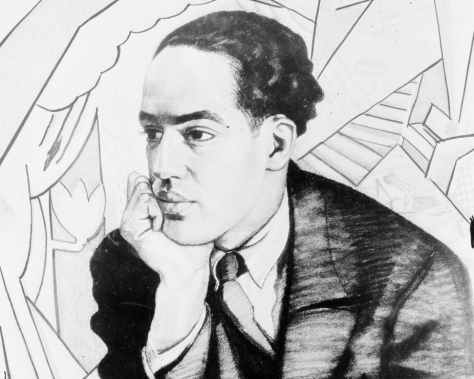
Langston Hughes 1902-1967

Let America Be America Again

Let America be America again.
Let it be the dream it used to be.
Let it be the pioneer on the plain
Seeking a home where he himself is free.

(America never was America to me.)

Let America be the dream the dreamers dreamed—
Let it be that great strong land of love
Where never kings connive nor tyrants scheme
That any man be crushed by one above.

(It never was America to me.)

O, let my land be a land where Liberty
Is crowned with no false patriotic wreath,
But opportunity is real, and life is free,
Equality is in the air we breathe.

(There’s never been equality for me,
Nor freedom in this “homeland of the free.”)

Continue reading In solidarity with #Blacklivesmatter – Tamika Mallory, Langston Hughes

International Feminist Solidarity / Solidaridad Internacional Feminista – con feministas de la India/with Indian feminists Devangana Kalita and/y Natasha Narwal

Please read and sign below /por favor lea y firme abajo

We, the undersigned feminists, community activists and academics from around the world stand in solidarity with Devangana Kalita and Natasha Narwal who are being held as part of the Narendra Modi government’s brutal clampdown on dissent against the deeply discriminatory Citizenship Amendment Act (CAA) and the National Register of Citizens (NRC). The government is taking advantage of the dispersion caused by the COVID19 crisis.

Nosotras/xs las personas abajo firmantes, como feministas, activistas comunitarias y académicas de distintas partes del mundo, nos solidarizamos con Devangana Kalita y Natasha Narwal, detenidas como parte de la ola de represión contra el movimiento nacional de protesta por la naturaleza profundamente discriminatoria del Acta de Enmienda a la Ciudadanía (CAA en ingles) y del Registro Nacional de Ciudadanos (NRC) impulsados por gobierno Indio de Narendra Modi.

Devangana and Natasha are feminist activists and founding members of the Pinjra Tod -‘Break the cage’ collective (For more info: https://www.facebook.com/pinjratod)
made up of women students fighting for their rights. Devangana studies an MPhil at Centre for Women’s Studies, Jawaharlal Nehru University, and Natasha is a doctoral student at the Centre for Historical Studies, at the same university.

Crisis for the People, Opportunity for the Corporate-Government Nexus : NSI

Statement of New Socialist Initiative (NSI) on India’s ‘war against Covid 19’

#
Today, India has emerged as a new epicentre for the novel corona virus in the Asia Pacific region.With 1,58,333 confirmed cases of Covid 19 and deaths of total of 4,531 people after contracting the virus, it has already crossed China’s Covid-19 numbers.

#
New Socialist Initiative (NSI) feels that the grim news of steadily rising infections and fatalities reveal before everyone a worrying pattern but the government either seems to be oblivious of the situation or has decided to shut its eyes. It is becoming increasingly clear that the Union government has used incomplete national-level data to justify arbitrary policy decisions, defend its record and underplay the extent of Covid-19 crisis.

#
Absence of transparency vis-a-vis data collection of Covid infection levels could be said to be the tip of the iceberg of what has gone wrong with India’s ‘war against Covid 19’.
The Prime Minister’s announcement of a 21-day countrywide lock down came with a mere four-hour notice. It was done without engaging in any collective decision-making process with states to honour and enhance the spirit of “cooperative federalism” between the Centre and the States. Continue reading Crisis for the People, Opportunity for the Corporate-Government Nexus : NSI

DISSENT, DEBATE, CREATE