Tag Archives: Kashmir

Lessons from Scotland for South Asia: Satya Sagar

Guest Post by Satya Sagar

Though ‘No’ finally trumped ‘Yes’ and the United Kingdom stayed ‘united’ the recent referendum for Scottish independence holds several important lessons for both votaries of separatism as well as national unity everywhere.

It also raises many questions, chief among them being, on a planet run by corporations and shaped by tsunami-like capital flows, do terms like national ‘independence’, ‘unity’ or ‘sovereignty’ have real meaning anymore? An even more fundamental question would be whether the nation-state, in its current form, has any future at all or not?

Coming to the lessons first, among the most obvious is the fact that it is possible to hold a referendum on independence peacefully, without a single shot being fired or spilling a single drop of blood.This has been hailed as a triumph of democracy and rightly so too.  How many countries around the world, which call themselves democracies, can muster the guts to allow a section of their citizens to exercise their right to self-determination through a simple vote? Continue reading Lessons from Scotland for South Asia: Satya Sagar

Sailaab Nama – An Insider’s View of the Flood in Kashmir from the Outside: Gowhar Fazili

Guest Post by Gowhar Fazili

The floods in Kashmir can provide an outsider a momentary glimpse into the reality of Kashmir behind the corporate media propaganda smokescreen that is fumbling at the moment and like Truman Show (1998) exposing bits of the backstage. At the moment there are three key actors in Kashmir. There are the floods, the state and the people. Each one is on its own. One limb of the state—the state government was the first to crumble before the approaching waters.   The other limb—the mammoth military apparatus that has already inundated Kashmir since several decades, took two days to wake up to the crisis and when it finally did, its priority was to fish out the rich Indian tourists and the people close to the establishment out of the state. In the initial days, local people had to risk their own lives to get their marooned relatives to safety. Some hired local boats, some swam or waded through water, some made makeshift rafts out of anything that floats, including water tanks, car tubes, foam sheets, inflated baby bathtubs, so on and so forth to save their dear ones. The rest either drowned or kept moving up the floors of their houses as the waters kept rising until they reached their attics.

Continue reading Sailaab Nama – An Insider’s View of the Flood in Kashmir from the Outside: Gowhar Fazili

Happy Independence Day India, Blessings from Kashmir: Onaiza Drabu

Guest post by ONAIZA DRABU

??????????????????????????????????????Dear India,

As you celebrate yet another year of the glorious independence; the independence that was the beginning of an era of doom for most of us here, I must inform you that I was unable to get my morning bread. Sixty Eight is a big number and I’m sure the proceedings will be aplenty and that and you have plenty of ‘ache din’. Somehow, I have my doubts but then again, I’m sure our definitions of good differ greatly. However it may be, I have one tiny request.  Please let me eat my breakfast in peace.

It is still two days to go for the Independence Day Parade in Srinagar and I am one of the privileged few who live within a two-kilometer radius of the Bakshi Stadium, the place where the annual flag hoisting ceremony is held. Excess army is deployed all around and as in all such times, our local baker wasn’t allowed to open shop this morning.

As a child, I read your textbooks in school. I read about how Pinky and Shyam would go to their school for the flag hoisting on Independence Day and of course I’d wonder where this would happen. Independence day meant a crackdown or a curfew for all us kids here. Independence day meant that the morose army guy I hated to look at would stand at my gate, staring straight ahead with a blank, yet frightening constancy. Independence day meant my dedicated doctor of a mother had to walk to work for sometimes, they’d not even allow ambulances to ply.

The independence you celebrate to commemorate freedom has forever been associated with barbed wires on streets that restricted access to locations. It is ironical how roadblocks, surprise checks and general inconvenience is what I have forever associated with this independence. General inconvenience here also includes times where each one of the dozen, army-men on every street eyes you with contempt and suspicion. I snigger if you tell me we celebrate freedom on this day. To the many things that are already restricted here this day adds more. Continue reading Happy Independence Day India, Blessings from Kashmir: Onaiza Drabu

A Matter of Honour ? A Response to B. G Verghese’s views on the Kunan Poshpora Mass Rape: Shrimoyee Nandini Ghosh

Guest post by Shrimoyee Nandini Ghosh

 I have thought hard about why I want to write this piece at all, since so many others before me, have made robust critiques of Mr B.G Verghese’s well-known views on the Kunan Poshpora mass rape. Past criticism has focussed on questions of his obvious biases– both personal and professional, his misogyny and profound lack of empathy for the victims, his blinding nationalism, the tenor and language of his reportage. Most however accept his version of the facts, given his (often self proclaimed) claims to veracity bolstered by official hospitality, access to documents, and his reputation as an eminent journalist. ‘There was a delay in making an official complaint’ ‘medical evidence shows that the mass rapes did not take place’, ‘villager’s and early official accounts of that night are full of gaps and contradictions’, these have become the pervasive truths about the events of February 23-24, 1991, to the point where his decriers can often only counter him by explaining away the inconvenient and the inexplicable, within the narrative and factual scaffolding that he provides. Mr Verghese points to this when he writes, ‘Sadly, it [the Press Council of India Report] was and is widely criticised to this day, without critics having read it or controverted its substantive findings’. Mr Verghese fails to disclose that until recently no one has had access to the ‘substantive’ material that could allow such a critique, because the state had never disclosed that any other investigative material existed simply replying to RTIs seeking information on the status of the case, with the inscrutable ‘closed as untraced’. The unwieldy length of this piece (8000 words) will, I hope, serve to finally pursuade him that not only is his work read, it is read in painstaking detail.

Continue reading A Matter of Honour ? A Response to B. G Verghese’s views on the Kunan Poshpora Mass Rape: Shrimoyee Nandini Ghosh

Report of a Protest by Students at UP Bhavan in Delhi against Harrassment and Slapping of Sedition Charges on Kashmiri Students at SVSU, Meerut: Kashif Ahmed Faraz

Guest Post by KASHIF AHMED FARAZ

Several students protested on the 7th of March in Delhi against the harassment and eviction of Kashmiri students in SVSU (Swami Vivekanand Subharti University), Meerut and the slapping of sedition charges against 67 Kashmiri students. The protesters included activists, students from universities, mostly from JNU and also Kashmiri Students residing in Delhi. The protest took place at Uttar Pradesh Bhawan, New Delhi.

Signs at Protest at UP Bhavan against Harrassment of Kashmiri Students in Meerut

Continue reading Report of a Protest by Students at UP Bhavan in Delhi against Harrassment and Slapping of Sedition Charges on Kashmiri Students at SVSU, Meerut: Kashif Ahmed Faraz

राष्ट्रवाद का मौसम

मेरठ के एक निजी विश्वविद्यालय में भारत-पाकिस्तान के बीच हुए क्रिकेट मैच में पाकिस्तान की जीत पर कश्मीरी छात्रों की खुशी जाहिर करने पर स्थानीय छात्रों द्वारा उनकी पिटाई और तोड़-फोड़ के बाद तीन दिनों के लिए छियासठ छात्रों के  निलंबन (निष्कासन नहीं) और फिर ‘उनकी हिफाजत के लिए’ उन्हें उनके घर भेजने के विश्वविद्यालय के फैसले के बाद उन छात्रों पर राष्ट्रद्रोह की धाराएं लगाने से लेकर उन्हें वापस लेने तक और उसके बाद भी जो प्रतिक्रियाएं हुई हैं,वे राष्ट्रवादी नज़रिए मात्र की उपयोगिता को समझने के लिहाज से काफी शिक्षाप्रद हैं.आज यह खबर आई है कि ग्रेटर नॉएडा के शारदा विश्विद्यालय में भी छह छात्रों को छात्रावास से ऐसी ही घटना के बाद निकाल दिया गया है जिनमें चार कश्मीरी हैं. मामला इतना ठंडा क्यों है, ऐसी निराशा जाहिर करते हुए फेसबुक पर टिप्पणी की गयी है और उसके बाद तनाव बढ़ गया है.

रोशोमन नियम के अनुसार घटना के एकाधिक वर्णन आ गए हैं और तय करना मुश्किल है कि इनमें से कौन सा तथ्यपरक है. स्थानीय (राष्ट्रीय या राष्ट्रवादी?) तथ्य यह है कि पाकिस्तानी खिलाड़ियों के प्रदर्शन और फिर उस टीम की जीत पर कश्मीरी छात्रों ने पाकिस्तान जिंदाबाद के नारे लगाए जिससे  भारतीय टीम की हार से पहले से ही दुखी स्थानीय छात्रों में रोष फैल गया. निलंबित कश्मीरी छात्रों का कहना है कि वे हर उस खिलाड़ी के प्रदर्शन पर ताली बजा रहे थे जो अच्छा खेल रहा था. बेहतर टीम पकिस्तान के जीतने पर उनका खुशी जाहिर करना कहीं से राष्ट्रविरोधी नहीं कहा जा सकता. उनके मुताबिक  इसके बाद उन्हें पीटा गया और तोड़-फोड़ की गई. Continue reading राष्ट्रवाद का मौसम

Documented Lives: Aadhar and the Identity Effect in Kashmir: Shrimoyee Nandini Ghosh

A version of this essay appeared in the Kashmir Reader, 10 December 2013

Guest Post by Shrimoyee Nandini Ghosh

On the road to the city from Srinagar Airport, I recently saw a billboard. Beneath the radiantly beaming faces of Manmohan Singh, and Sonia Gandhi, it bore the declaration ‘One Nation. One Card. AADHAR.’ Public Service advertisements in the same cheery vein have been airing on Radio Kashmir, and the state owned TV station Doordarshan- Kashir. Its critics assert that the AADHAR (‘its not a card, just a number!’) scheme exemplifies the financialisation of citizenship (each AADHAR number will require a corresponding bank account), a regime of biometric surveillance, the creation of a database nation and an expansion of the global corporate- military-intelligence empire. But AADHAR is only the latest chapter in the largely undocumented history of India’s intimate stranglehold over Kashmir through identity documents. It is a history told anecdotally, through stories about the sinking feeling of being stopped at a barricade and rifling through empty pockets, of cold hours spent pleading on a street or at a police station, of late night rescues of hapless friends from lonely check points, of miraculously narrow escapes despite having left home without it.

Though no Kashmiri adult I know leaves home without their ID, no one can seem to pin point exactly when the carrying of a photo-identity card became mandatory. Trying to understand the basis for the practice, I asked a friend under what law it was required that every person be able to prove their identity at all times. ‘Under the gun law!’ he replied succinctly. While its legal origins are uncertain, what is quite clear is that by the early 1990s no Kashmiri male could afford to be, quite literally, caught dead without one. As my plain speaking friend explained, “the most important reason for carrying one was if you were killed, somebody would hopefully find your card and inform your family.” The ID card was the tenuous piece of laminated paper that stood between him and an unmarked grave, an unmourned death.

Continue reading Documented Lives: Aadhar and the Identity Effect in Kashmir: Shrimoyee Nandini Ghosh

Condemn Attack on AAP Headquarters, Defend Freedom of Expression, Oppose Politics of Hurt Sentiments : New Socialist Initiative

New Socialist Initiative Condemns Attack on AAP Headquarters

New Socialist Initiative condemns the attack on the headquarters of AAP (Aam Aadmi Party) office at Kaushambi, Ghaziabad by vigilantes of the Hindutva Brigade and demands stern action against the culprits. Given the inordinate delay by the police in reaching the place and nabbing the hooligans in the case of an emergent political party and high-profile politicians, one can only imagine the safety and security of common citizen under such dispensation.

It is distressing that each time any individual or group has expressed views on the violation of human rights by Armed Forces protected by the draconian Armed Forces Special Powers Act, frenzied jingoism by the rightwing forces as well as by the print and electronic media turn to the rhetoric of hurt sentiments. It is equally distressing that the Aam Aadmi Party too succumbed to such jingoism, found it necessary to distance itself from Prashant Bhushan and turned the question of human rights violation by the armed forces into a question of national integrity. Continue reading Condemn Attack on AAP Headquarters, Defend Freedom of Expression, Oppose Politics of Hurt Sentiments : New Socialist Initiative

The Aam Aadmi Party and Animal Farm

The plot of George Orwell’s ‘Animal Farm’ can be summarized in a single sentence – “This novel demonstrates the consequences of the addition of four important words -‘but’,  ‘some’, ‘more’, and ‘others’ to the phrase – <all animals are equal>”.

In other words, it describes the transition from the axiomatic statement <all animals are equal> to the qualified formula <all animals are equal, but some animals are more equal than others>.

Aam Aadmi Party founder and Delhi’s new chief minister Arvind Kejriwal’s ruling out the possibility of referendums in Kashmir about the presence of the armed forces in Jammu & Kashmir (in response to his party colleague Prashant Bhushan’s endorsement of the idea of such a referendum during a recent television appearance) could signify a shift within the Aam Aadmi Party’s evolving political doctrine that parallels the transition that the pigs in Animal Farm made while turning their revolution into a counter-revolution. Continue reading The Aam Aadmi Party and Animal Farm

Beating AAP with the Kashmir stick

When Prashant Bhushan first made his remarks supporting a referendum in Kashmir to decide whether Kashmir will stay in India, a hooligan had gone to his office and slapped him. The Aam Aadmi Party made it clear that these were Bhushan’s personal views and were not endorsed by the AAP, but the stick was too good to ignore. At a loss of words to see the rise of the AAP, somewhat dimming the euphoria over the rising fortunes of Narendra Modi, the BJP has gone on and on over Bhushan’s views on Kashmir. Even when the AAP was proving its majority on the floor of the house, the leader of the opposition, Harsh Vardhan, made Prashant Bhushan’s personal views out be somewhat of a national security threat to India. Just saying that a people should be allowed to decide their fate is anti-national because we know that making such an allowance would bring results we’d rather not see. Continue reading Beating AAP with the Kashmir stick

National Interest and the Aam Aadmi: Abhijit Dutta

Guest post by ABHIJIT DUTTA

Yesterday, Delhi Chief Minister and Common Man-in-Chief of the AAP, Arvind Kejriwal, declared that “We don’t agree with what Prashant Bhushan said about Kashmir, it’s his personal view. Whatever the Army wants to do regarding the deployment, there is no question of a referendum on it. We do not support Prashant Bhushan’s statement.”

Bhushan’s comments, made on NDTV’s ‘We The People’ show, which, in a matter of happy coincidence happens to be the Constitutional term for Aam Aadmi, was simply this: wishes of the people of Kashmir be taken into account while determining whether the Army was needed for internal security or not. Unreasonably, and with shattering common sense, Bhushan had argued that if the Armed Forces deployed within Kashmir (as opposed to the border areas) were meant to protect the general Kashmiri population, might it not be a good idea to ask that population whether they wanted the protection or not. Continue reading National Interest and the Aam Aadmi: Abhijit Dutta

Azadi in the Lexicon of the Aam Admi: Gowhar Fazili

Guest Post by GOWHAR FAZILI

During the swearing in speech at Ram Leela Maidan, the word Azadi found its place of pride on Arvind Kejriwal’s symbolic cap. ‘ Mujhe Chahiye Poori Azadi’ it said.   The word Azadi has travelled from the freedom struggle in Kashmir, to the movement against gendered violence in Delhi and is now entering the lexicon of Aam Aadmi.  The Aam Aadmi’s historic ascension to power through a referendum resonates well with the long standing demand in Kashmir seeking to let the people decide their political future directly.

Continue reading Azadi in the Lexicon of the Aam Admi: Gowhar Fazili

Courage is silent and Stoic – Tortured in Kashmir: Aditya Prakash

Guest post by ADITYA PRAKASH

The following is a narrative of a torture victim I gathered during my time in Kashmir as a researcher. The person interviewed was tortured by the 2nd Dogra regiment of the Indian Army.

Where is your gun?

On the night of 28th October 1991, the 2nd Dogra Regiment of the Indian Army was conducting interrogations in Palhallan. Palhallan is a large village in the Baramulla district of Jammu and Kashmir.

People suspected of having links with terrorists were interrogated. The women and men were asked to come out of their homes. The women were asked to gather at the local dargah (shrine) and the men were lined up in the village school.

A major from the 2nd Dogra handpicked Manzoor Ahmad Naikoo to step forward. Others were also short listed for interrogation. Manzoor was taken inside the school and forced to strip. He was made to sit on a chair. His hands were fastened to his back.

‘Taaki main kuch na kar sakoon’

He was completely immobilized. The army personnel then asked him for his gun. Manzoor Ahmad said he had no gun. He tried to convince them that he was a shopkeeper and never owned a gun. Continue reading Courage is silent and Stoic – Tortured in Kashmir: Aditya Prakash

When the lid will burst: Fahad Shah

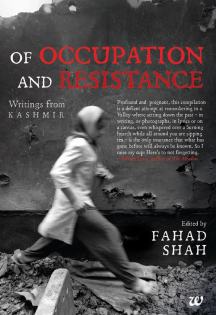
This is an excerpt from the introduction to the anthology Of Occupation and Resistance: Writings from Kashmir, edited by FAHAD SHAH
Once militancy took root in the Valley, it continued unabated, with a few exceptions in the years to come. The sentiment of the resistance movement prevailed across Jammu and Kashmir. At one point in time, blasts and encounters occurred almost every day. The first few years of the 1990s were the most brutal in the history of the conflicted Valley. After the 1996 assembly elections, when people were forced to vote at gunpoint, the National Conference Party and counter-insurgent groups ruled the state. People lived with trauma and threat – treating the injured, mourning for the dead and searching for those who had disappeared.

This was the story for more than a decade. A shift in the nature of resistance has been seen in the past few years; the generation that was born during the start of the war has been able to glean the nuances of the homeland’s political situation. Most of the youngsters from this generation, born between the late 80s and early 90s, choose stones over guns. Continue reading When the lid will burst: Fahad Shah

To the German ambassador in India, a letter from Kashmir

This letter was faxed from Srinagar on 26 August 2013 to the German embassy in New Delhi and the Bavarian State Opera. List of signatories given at the end.

To,
Ambassador Michael Steiner,
German Embassy,
New Delhi, India.

Subject:  URGENT Protest Letter to German Embassy on scheduled Zubin Mehta concert in Srinagar, Jammu and Kashmir on 7 September 2013

On 22 August 2013, a press release was issued by the German Embassy that Zubin Mehta would be conducting an orchestra on 7 September 2013 at Shalimar Bagh, Srinagar, Jammu and Kashmir.

The press release quoted you as stating that the concert was for the people of Jammu and Kashmir by way of a cultural tribute. The press release also reads that the concert was intended to give a message of hope and encouragement to the people of Jammu and Kashmir. The concert, said to be a part of a “broader engagement” is being organized by the German Embassy and supported by the “competent authorities both at Central as well as at Union State level”. The costs of the concert are covered by “benevolent sponsors mainly from the business world in India and Germany, as well as “Incredible India‟ and the German Foreign Office”. Continue reading To the German ambassador in India, a letter from Kashmir

Communalisation in the name of Security and Sovereignt: JKCCS

As Kishtwar continues to be under curfew, this public statement put out on 15 August 2013 by the Srinagar-based JAMMU AND KASHMIR COALITION OF CIVIL SOCIETY is pertinent.
On 29 July 2013, Village Defence Committee [VDC] members were alleged to have killed 16 year old Shamim Ahmed Lone, resident of Noutaas, Thatri, Doda. Further, a few days prior to the murder of Shamim Ahmed, a 16 year old girl, resident of Kuntwara, Kishtwar, was kidnapped and raped by persons backed and protected by the VDC. According to newspaper reports from last over a month at many places in Doda-Kistwar region masked men have terrorized people. Over the last week, several places in the Jammu region, particularly Kishtwar, have been subjected to violence at the hands of VDC members, supported by Hindu communal groups, which resulted into loss of three lives, numerous injuries and loss of public property. The unabated support and encouragement to VDCs by Government of India, has ensured deepening communal strife. Continue reading Communalisation in the name of Security and Sovereignt: JKCCS

आत्मा से मुठभेड़ की चुनौती: अपूर्वानंद

इशरत जहाँ एक उन्नीस साल की लड़की थी जब वह मारी गई.शायद उसके बारे में इसके अलावा इस निश्चितता के साथ हम कुछ और कभी नहीं जान पाएंगे. इसकी वजह सिर्फ यह है कि जिन्हें इस देश में सच का पता लगाने का काम दिया गया है वे एक लंबे अरसे से झूठ को सच की तरह पेश करने का आसान रास्ता चुनने के आदी हो गए हैं. उनके इस मिथ्याचार पर कभी सवाल न खड़ा किया जा सके इसका सबसे अच्छा तरीका है राष्ट्र रक्षक की अपनी छवि का दुरुपयोग निस्संकोच करना. जो राष्ट्र की रक्षा करता है उसे उसकी रक्षा के लिए किसी को मात्र संदेह के आधार पर मार डालने का हक है, यह हमारे देश का सहज बोध है. सिर्फ अशिक्षितों का नहीं, उसने कहीं ज़्यादा राजनीति शास्त्र की किताबों से नागरिक अधिकारों का ज्ञान प्राप्त किए हुए स्नातकों का. उन सबका जिन्हें देश की जनता के पैसे से संविधान की हिफ़ाजत के लिए अलग-अलग काम सौंपे जाते हैं. और भी साफ़ कर लें, इन स्नातकों में भी उनका जो प्रशासनिक और पुलिस अधिकारी हैं, जासूसी के अलग-अलग महकमों से जुड़े ऑफिसर हैं, जिनकी असली पहचान कभी उजागर नहीं हो पाती. अगर दूसरे मुल्क में वे पकड़े जाएं तो वही देश उनसे हाथ धो लेता है जिसकी सुरक्षा में वे अपनी असली पहचान छिपाए फिरते हैं.

क्या कोई यह कहने की हिमाकत कर सकता है कि राष्ट्र-राज्य के खिलाफ साजिशें नहीं होतीं, कि राष्ट्र-विरोधी शक्तियों का अस्तित्व ही नहीं! यह बिलकुल अलग बात है कि राष्ट्र विरोधी का बिल्ला किन पर आसानी चस्पां किया जा सकता है और किन पर वह बिलकुल चिपकता ही नहीं. मसलन, इस्लामी राष्ट्र का तस्सवुर धर्मनिरपेक्ष भारतीय राष्ट्र के बिलकुल खिलाफ है, क्या इसके लिए किसी अतिरिक्त व्याख्या की आवश्यकता है? लेकिन यह समझना और समझाना टेढ़ी खीर है कि हिन्दू राष्ट्र की कल्पना भी उतनी ही राष्ट्रविरोधी है! आज से बीस साल पहले और आज भी   खालिस्तान का ख़याल इस्लामी राष्ट्र जितना ही राष्ट्र विरोधी माना जाता था. Continue reading आत्मा से मुठभेड़ की चुनौती: अपूर्वानंद

Eleven things India must do in Kashmir: Justin Podur

india_kashmir_rebel_attack
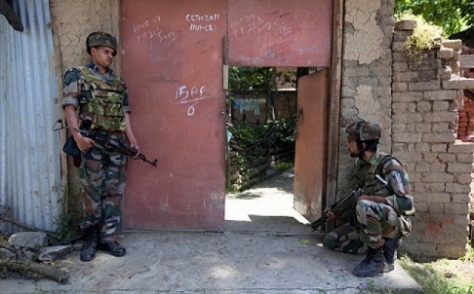
Indian Army soldiers at an encounter site with militants in Kashmir on Friday. AP photo

Guest post by JUSTIN PODUR: I spent a week in Srinagar, the capital of Kashmir, at the end of April 2013, talking to people among whom there was a wide range of opinion. While almost everyone supports freedom, some are resigned to India never letting Kashmir go, others believe that the struggle will go on and take different forms, some are just trying to survive. It seemed to me, at the end of a calm week during tourist season, that India is bringing about all of the things that it fears: Pakistani influence, violence,  radicalisation of youth, political Islam, and hatred of India. Continue reading Eleven things India must do in Kashmir: Justin Podur

Gandhi’s fourth monkey: Suvaid Yaseen

Guest post by SUVAID YASEEN: Incredible India is a land of promises. Amnesia and half narratives. Selective remembrance and deliberate forgetting. The national interest is incredibly important. And everything is allowed in this war.

Gandhi’s – the father of the nation – maxim of bura mat kaho, bura mat suno, bura mat dekho (don’t say evil, don’t hear evil, don’t see evil), interestingly forgets to say bura mat karo (don’t do evil). So, you can do it, and forget it. Gandhi should smile. And his monkeys can make merry.

Mohammad Yasin Malik, the Jammu Kashmir Liberation Front commander turned ‘Gandhian leader’ must know this irony very well.

When, in the early nineties, the guns started ringing, Kashmiris were told that they should leave the path of the armed struggle and have a peaceful agitation, and they would be listened to, by India and by the international community. Continue reading Gandhi’s fourth monkey: Suvaid Yaseen

Showkat Ahmad Paul is no terrorist: APDP

This is a press release from the Parveena Ahangar-led ASSOCIATION OF PARENTS OF DISAPPEARED PERSONS on 11 April 2013:

The Association of Parents of Disappeared Persons (APDP) strongly refutes the recent claim of the police that Showkat Ahmad Paul, of Lawaypora, is part of a fidayeen squad of a militant group planning to carry out a strike in the civil lines area of Srinagar City.  APDP states that the claim floated through a section of the media quoting police sources is utterly baseless and false.  After having abducted and disappeared Showkat Ahmed Paul in 2003, this is a fabricated attempt by the security forces and  state intelligence agencies to obfuscate and deny responsibility in the case of his disappearance. The family who are being harassed by the security agencies fear for the safety of their son who is in their illegal and unlawful custody since 2003. They fear that after branding him as a Fidayeen the security agencies now intend to murder Showkat, by staging an encounter or using some other extra judicial method. Continue reading Showkat Ahmad Paul is no terrorist: APDP

India, International Law and an Act of Hypocrisy: JKCCS

Press release put out 24 March by the JAMMU AND KASHMIR COALITION OF CIVIL SOCIETY

Srinagar: The 21 March 2013, United Nations Human Rights Council [UNHRC] resolution is a welcome initial step in the ongoing struggle to hold countries responsible for human rights violations, ranging from Genocide, Crimes against Humanity and War Crimes to Enforced Disappearance, Torture, Rape and Extra-judicial executions. The watered down resolution, moved by the United States, and India’s support for the resolution, requires both commendation and severe criticism at the same time.

There can be no selective morality when it comes to standing against the commission of human rights violations by State’s. Every country must be held to the same standards, as Sri Lanka has been in the instant case, regardless of economic or geo-political concerns. In this regard, the United States and India stand accused of hypocrisy in their dealings with human rights violations in their regions or across the world. Similarly, Pakistan’s vote against the resolution raises serious questions on its own approach to human rights violations in the region or elsewhere. Continue reading India, International Law and an Act of Hypocrisy: JKCCS