Gujarat Today Could be What ‘Hindu Rashtra’ Will Look Like for Dalits

The recent spate of attacks on dalits in the state is an indicator of the fact that the unfolding project of RSS’s Hindu Rashtra has entered a new phase where the community is being construed as the ‘new other’.
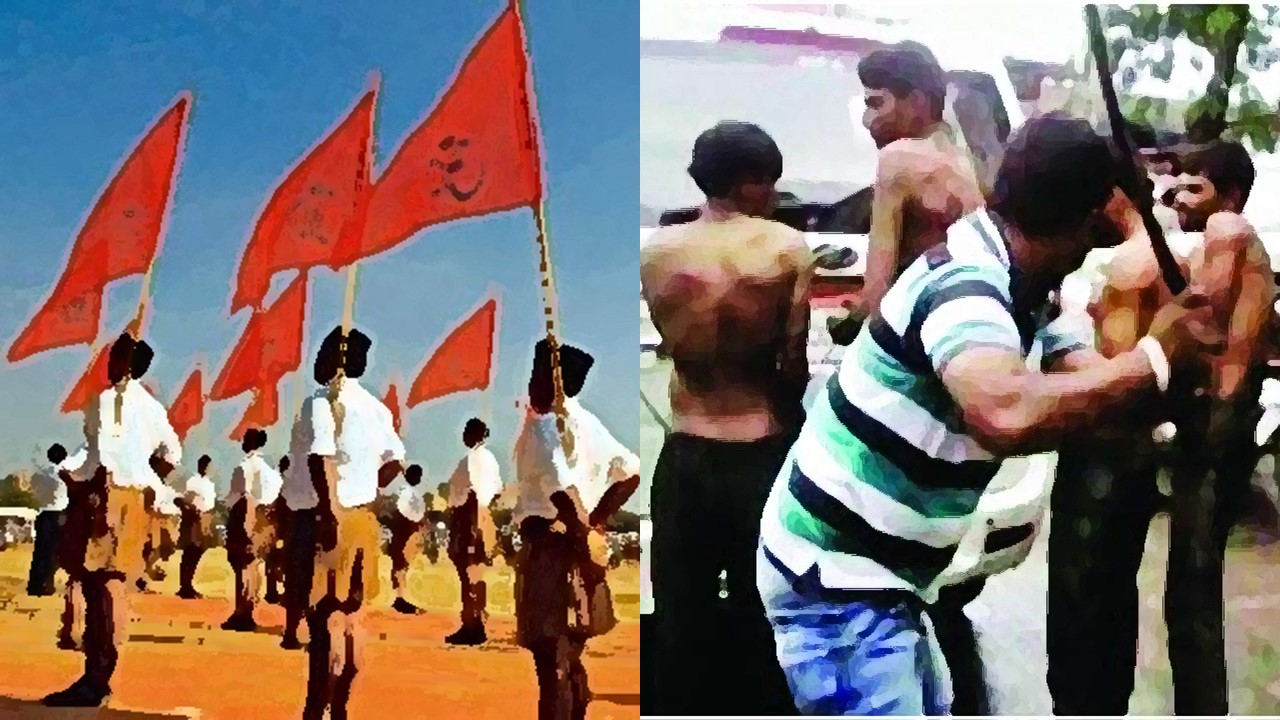
Hindu Rashtra

When I was born, I was not a child

I was a dream, a dream of revolt

that my mother, oppressed for thousands of years,

dreamt.

Still it is untouched in my eyes

Covered with wrinkles of thousand years, her face

her eyes, two lakes overflowing with tears

have watered my body….

– Sahil Parmar (Noted Gujarati Poet)


‘You are Welcome to Enter … Village of Hindu Rashtra’!

It was around two decades ago that headlines in a few national newspapers reported the ‘arrival’ of Hindu Rashtra in parts of Gujarat. A few inquisitive journalists had even displayed photographs detailing the nascent phenomenon then.

The shock generated by the news died down in a short while.

Hardly anybody then could have a premonition that it won’t take much time for the idea of Hindu Rashtra to gain wider acceptability across India with a commonsense gaining ground rather getting consolidated where religious minorities were increasingly understood as ‘the other’.

Could it be said that the recent spate of attacks on dalits — leading to at least three deaths in the past one month in the same state, coupled with growing instances of life of insecurity of many concerning their lives or their continued deprivation by the dominant castes, is an indicator of the fact that the unfolding project of Hindu Rashtra has entered a new phase where dalits are being construed as the ‘new other’, one who could wreck the project of ‘Hindu Unity’ from within.

Perhaps it is too early to draw any such conclusion, but portents are there for everyone to see.

( Read the full article here : https://www.newsclick.in/Hindu-Rashtra-Gujarat-BJP-RSS-Dalits)

Statement of Academics on Rabindra Bharati University Incident of Harassment

Dear Friends,

As some of you might be aware, our friend and colleague, Dr. Saraswati Kerketta (Assistant Professor in the Department of Geography, Rabindra Bharati University), has recently been a victim of caste-based attack in the university. We write this statement to unequivocally condemn the attack.

We, the concerned faculty members/research scholars across institutions in India and abroad, are deeply disturbed by this incident of caste-based attack on Dr. Kerketta. Dr. Kerketta is a young faculty member from a Scheduled Tribe background, and the sole faculty member appointed in a substantive position in her department, thereby taking on the tremendous task of running the department on her young shoulders. This brazen instance of caste-based harassment meted out to her by a group of students who claim to be affiliated to a political party has hurt and disturbed us immensely as citizens of India. The nature of attack meted out to her – for instance she has been followed by the students up till home after the incident – also showcases the gendered nature of her vulnerability. The incident has been followed by mass resignation on the part of other faculty members from various positions in the university, thereby showing indirect proof of the same.

Continue reading Statement of Academics on Rabindra Bharati University Incident of Harassment

Draft New Education Policy 2019 through a Gender and Sexuality Lens

Recommendations on Draft New Education Policy (DNEP) by a collective of women’s groups, queer groups, NGOs, students, and academics working in the field of gender, sexuality and education.

We, a collective of women’s groups, queer groups, NGOs, students, and academics working in the field of gender, sexuality and education, across India strongly recommend and reiterate that for all the recommendations given here, the policy and thereafter, the Government of India and State Governments must ensure that there is a proactive strengthening of democracy within educational institutions. The right to expression, liberty, equality and diversity are rights enshrined in the Constitution of India. We welcome that the DNEP 2019 as it states that it will promote constitutional values in education. However, for the implementation of this objective, changes in the content of the curriculum will not suffice. Constitutional values must be protected in the processes and institutional structures of schools and higher education bodies.

We commend the policy for introducing the following provisions:

  1. DNEP 2019 addresses the issue of early childhood education, especially the timely recommendation of making Years 3 to 8 as a foundational stage. This becomes critical as early education and experiences are the most formative in a child’s life, and a holistic pre-school education continues well beyond traditional schooling years.
  2. It is the first policy to uphold the Honourable Supreme Court’s 2014 directives around transgender inclusion in education.
  3. The policy has taken cognizance of many children who continue to dropout at different levels, and the even more serious problem of enrolled children not attending school regularly.
  4. It seeks to strengthen departments/ centres of education at universities.

Having said this, the subsequent list of recommendations is laid down to strengthen the DNEP 2019 from the lens of gender and sexuality, especially for the most marginalised communities. We feel that gender and sexuality related rights could only be ensured if there is a larger enabling environment, in which diversity of thought and practices are respected. These, we feel, would be critical in developing a robust educational policy for the country, which would address the fundamental intersectionalities that individuals and communities face in their lives. Continue reading Draft New Education Policy 2019 through a Gender and Sexuality Lens

Standing up for those who stood with us – Statement of support for Lawyers Collective

We, the undersigned concerned citizens, are extremely perturbed at the increasing tendency of the Government, through its agencies, to use excessive power to curb the voice of the people, which is the very essence of democracy.

The work of Lawyer’s Collective in general and that of Indira Jaising and Anand Grover in particular, has contributed to changing the lives not just of individuals but of citizens of a democratic republic. They have not only represented the rights of individuals and communities such as slum dwellers, workers, trade unions, prisoners, SC/ST associations, Bhopal Gas tragedy victims, women, LGBTQ+ and other marginalized communities as lawyers, but have also contributed immensely to the discourse of human rights and state accountability as public intellectuals.

Continue reading Standing up for those who stood with us – Statement of support for Lawyers Collective

Draft New Education Policy 2019 – Mass Feedback Campaign: Better Universities

In support of the campaign launched by BETTER UNIVERSITIES.

The Government of India has finally unveiled the much-awaited draft of the National Educational Policy (NEP) 2019, and with that, has come a host of new issues to address and engage with.

To access a copy of the draft, please click here.

Here is the full point by point critique made of the Draft NEP by Better Universities, that anybody concerned about education in India should read very carefully.

At the end you will find the link that will take you the campaign for mass feedback on the NEP.

Response to the Draft National Education Policy 2019

Most significant point in my opinion:

What is even more damning is that the appointments to all statutory bodies in the higher education sector will have to be made by the RSA – and must, by default, await the nod of the Prime Minister. It is unambiguously stated that appointees to the NHERA, HEGC, NRF, NAAC and all other standard-setting bodies must report to the RSA and thus be beholden to the infirmities of political will and favour. Needless to say, this amounts to the NEP’s unashamed surrender to ruling party intervention and an effective imagining of higher education as subservient to political interests. Autonomy is shown the door, both structurally and ideologically – despite the Draft making a shrill pitch for it through the previous chapters.

Introduction

While the former HRD minister’s message (included in the Draft policy) congratulates the exercise as evolving “path breaking reforms” based on the “foundational pillars of Access, Equity, Quality, Affordability and Accountability”, the higher education sector is instead coming under greater political control and contributing to wider inequities with respect to institutional inputs and outcomes. Even the employment goals envisioned by the curricular reforms proposed in the Draft policy might produce greater job insecurities among students coming into higher education from across different social and economic backgrounds. Continue reading Draft New Education Policy 2019 – Mass Feedback Campaign: Better Universities

Tabrez is dead, India lives

My friends from Jharkhand sent me a video of a man – to be exact, a Muslim – being lynched. I avoided opening it. Then a message followed – that the man being beaten up on camera has now died. They were at the police station and were meeting senior officers later. I decided to watch the video.

It is a long clip: ten minutes and 49 seconds. In it, you see a man – a young man – tied to a pole. He is half bent. You can see that he is writhing in pain. His head is unsteady and his legs twisted. There is darkness around him, but there is also some light – from the mobiles being flashed at him, to keep him in focus. There are sounds. Human sounds. Abuses. People moving. You can see eyes. Again, human eyes.

A stick is swung in the air and then you see a hand catching it. The man cries out loud. You cannot see if he has been hit or has cried out anticipating a beating. The camera is brought closer to the face. The man is asked to look into the camera. The crowd is moving around, you can sense some excitement in the air. He is asked his name. Continue reading Tabrez is dead, India lives

The politics of Hindutva and its erotic charge: Jaya Sharma

Guest post by JAYA SHARMA

In the post election bewilderment that continues to grip us, might it be that we are asking the wrong questions?

The questions are by now familiar. How can it be that a Pragya Thakur wins and an Atishi loses? How can it be that demonetization doesn’t translate into loss of votes? How can it be that the party under whom lynching of Dalits and Muslims becomes a norm gets re-elected? How can it be that hatred for the other wins over humanity?

In response, journalists, political scientists and writers have pointed out that our assumptions related to the significance of macro economic indicators, caste-based voting patterns, among other things, were faulty. But the questions still remain,  including the big one: why did facts and logic lose so dramatically?

Might it be that the bewilderment continues because there is a glaring blind spot in the way in which we understand politics? Might it be that facts and logic were never the only driving force? I will argue here that in order to understand the recent election results and the power of Hindu Nationalism more broadly, we need the lens of the psyche. The play of desire and the erotic is key to understanding politics and dipping into our own sex and love lives can help us see this.  ‘The personal is political’ mantra can come to the rescue in the bewilderment that we feel today.  In making this argument I will draw upon research that I have undertaken for a book that I am in the process of writing called Fantasy Frames: Sex, Love and Indian Politics, to be published later this year. Continue reading The politics of Hindutva and its erotic charge: Jaya Sharma

Caste and other demons

Can Dalits rightfully claim that they have a ‘homeland’?

Dr Babasaheb Ambedkar

( Review of The Doctor and the Saint: The Ambedkar-Gandhi Debate — Caste, Race, and Annihilation of Caste; By Arundhati Roy, Penguin, Rs 299)

“Gandhiji, I have no homeland.” The first meeting between Gandhi and B.R. Ambedkar, who later became chairman of the drafting committee of independent India’s Constitution and its first law minister, is memorialized in this sentence. It expresses the centuries-old plight of those most oppressed in the varna hierarchy under the “institutionalised social injustice at the heart of the country”.

Has there been a qualitative change in the situation of the ‘ex-untouchables’ since this meeting some 90 years back? Can Dalits rightfully claim that they have a ‘homeland’? Figures collated by National Crime Records Bureau show that “a crime is committed against a Dalit by a non-Dalit every sixteen minutes”, including four rapes a day and murders of 13 Dalits every week. And these figures do not include “the stripping and parading naked, the forced shit eating, the seizing of land and the social boycotts…” This is the backdrop of the book, The Doctor and The Saint: The Ambedkar-Gandhi Debate — Caste, Race, and Annihilation of Caste by Arundhati Roy. It earlier formed part of an introduction to an annotated 2014 edition of Annihilation of Caste — the historic pamphlet Ambedkar wrote when invited by the ‘Jat Paat Todak Mandal’ in Lahore. The invitation was withdrawn after the hosts read the lecture draft. Continue reading Caste and other demons

How Many More ‘Halal’ Ponzi Schemes?

It is important to note that the very idea of Islamic banking and promoting it as a parallel to conventional banking – which is being portrayed as un-Islamic – and which has caught the imagination of a section of god-fearing Muslims, is a clear manifestation of shifts in Muslim politics over the world.

'Halal' Ponzi Schemes

Image for representational use only.Image Courtesy : Business Today

Afzal Pasha, a 55-year-old labourer, is dead. He died of a heart attack a few days back.

The news that the attractive scheme in which he had invested his life’s savings worth Rs 8 lakh went bust proved unbearable for him.

While Afzal’s tragic death could catch headlines, we will never know the plight of the thousands of investors – all of them belonging to the Muslim community – who had similarly invested their hard-earned savings in the said investment scheme launched by Mohammed Mansoor Khan in 2006 through his firm I Monetary Advisory (IMA).

The scheme was declared ‘Shariah-compliant’ and worked on ‘“no interest” policy of Islamic banking. A section of the clergy had even certified this scheme as “halal”, which means “lawful” or “permitted” in Arabic, which helped it easily earn the trust of the Muslim community. Small investors from across the state of Karnataka had flocked to it with their investments ranging from a few thousand rupees to a few lakhs.

A few days back, the promoter of IMA just disappeared from Bengaluru and is supposed to have fled to Dubai.

Continue reading How Many More ‘Halal’ Ponzi Schemes?

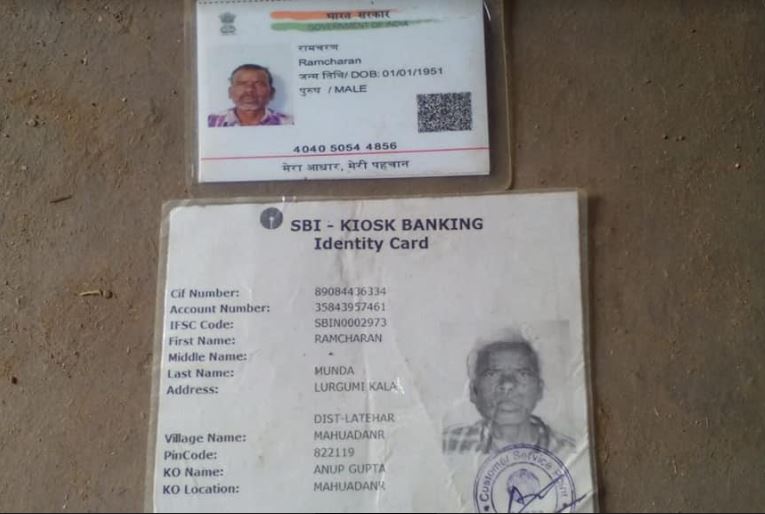
रामचरण मुंडा की मौत पर दो मिनट का मौन!

सोचने का सवाल है कि क्या इन मौतों को महज तकनीकी गड़बड़ियों तक न्यूनीकृत किया जा सकता है? क्या इसके कोई संरचनागत कारण नहीं हैं? ‘आखिर अधिक अनाज पैदा करने के बावजूद हम भूख की समस्या को मिटा क्यों नहीं पा रहे हैं।
Munda

‘‘रामचरण मुंडाउम्र 65 साल को विगत दो माह से सार्वजनिक वितरण प्रणाली के तहत राशन नहीं दिया गया था। हमारे अधिकारियों ने इसकी सत्यता की पड़ताल की है।’’

लातेहारझारखण्ड के डिप्टी कमीशनर जनाब राजीव कुमार द्वारा लातेहार के दुरूप गांव के रहने वाले उपरोक्त आदिवासी की मौत पर की ऐसी स्वीकारोक्ति बहुत कम देखने में आती है।

अपनी पत्नी चमरी देवी और बेटी सुनिला कुमारी के साथ रामचरण गांव में ही रहते थे उनके बेटे की मौत दो साल पहले टीबी के चलते हुई थी। राशन डीलर की बात मानें तो चूंकि इलाके में इंटरनेट की सेवा में दिक्कते हैंऔर राशन वितरण के लिए ऑनलाइन बायोमेट्रिक सिस्टम कायम किया गया हैइसलिए रामचरण को अनाज नहीं दिया जा सका था।

इस मामले की असलियत कभी सामने आएगी इस पर संदेह है।

वैसे भूख से होने वाली मौतें अब देश में अजूबा चीज़ नहीं रही।

दो साल पहले झारखण्ड के ही सिमडेगा जिले के कारीमाटी गांव की 11 वर्षीय हुई संतोषी की मौत के बाद ऐसी मौतों पर लोगों एवं समाज की अधिक निगाह गयी थी। पता चला था कि पूरा परिवार कई दिनों से भूखा था और राशन मिलने के भी कोई आसार नहीं थे क्योंकि राशन कार्ड के साथ आधार लिंक न होने के चलते उनका नाम लिस्ट से हटा दिया गया था। अपनी मां के गोद में ‘भात भात कहते हुए दम तोड़ी संतोषी की दास्तां ने लोगों को विचलित किया था।

( Read the full article here : https://hindi.newsclick.in/raamacarana-maundaa-kai-maauta-para-dao-mainata-kaa-maauna)

Who cares for bengal?

( First published in a different form in the Wirehttps://thewire.in/communalism/bengal-violence-tmc-bjp on 14 June, 2018. This article is its revised and updated version.)

Do all of us, those who love Rabindra Sangeet, those who wistfully talk about Satyajit Ray, Ritwik Ghatak, Mirnal Sen, Aparna Sen, those who cannot live without Nazrul Islam, those whose first love across generations remains Sukanto Bhattacharji, women and men, ever thankful to Raja Ram Mohan Roy for his relentless struggle against his own people for abolishing the practice of Sati ,and this list is long, just sit and wring our hands and let Bengal bleed to death?  

Bengal is being ravaged by a cynical game between political parties. It is up for grabs. The Bhartiya Janata Party is relishing the moment and the Trinamul Congress, by its foolishness and hotheadedness is driving the state into the hands of the BJP. Mamata Banerjee needs to realise that she is the Chief Minister of the state and not merely the head of her party. It is unbecoming of her when she says that among the people killed after elections, the number of her people is higher than their( BJP’s) number. All suffering violence are the citizens of Bengal and therefore it is her responsibility, as the CM of the state  to give them a sense of security. It is not for her to only speak for her party members. But we can see that she is doing exactly this. She has started looking partisan and her appeal to save the Bangla culture sounds hollow and unconvincing to the people. Cannot she see that her own party people are now joining the BJP in large numbers?

Continue reading Who cares for bengal?

Update on “tally mismatch” in 2019 Lok Sabha Elections: Ravi Nair

In an earlier post  we made note of the serious matter of unaccounted movement of EVMs in private vehicles in different parts of the country and the mismatch between the ECI figures for voter turnout and EVM votes cast, neither of which the EC has satisfactorily explained until today.

Now in a detailed analysis in NewsClick, Ravi Nair points out that even three weeks after the last phase of the election, ECI is yet to publish the “final data”, and whatever it has put out till now is “provisional numbers”.  More worryingly, Nair points out that when glaring anomalies came into the public domain, ECI not only deleted the uploaded data from both Suvidha Portal and its main website, but also issued a release to say that whatever was published was “the provisional voter turnout data”, which was “tentative”.

However, the ECI never bothered to answer the fundamental questions: How did it announce winners based on these “provisional” and “tentative” data? How did the automated counting of votes polled in EVMs become “tentative”?

Read Ravi Nair’s article “ECI’s stance on data discrepancies: No right to question?” on NewsClick here.

God in the Classroom!

Unfolding Debate about Secularising Education

( To be published in ‘Indian Journal of Secularism)

“There is in every village a torch – the teacher; and an extinguisher – the priest.”
-Victor Hugo

Introduction
“Keep the words God, Jesus and the devil out of the classroom.”

A school teacher’s message on the first day of the school for first-grade students had caused tremendous consternation among a section of the parents.

She had a simple rationale to present her proposal. With their being a public school with children coming from different religions and beliefs joining it, she did not “[w]ant to upset a child/parent because of these words being used,” In her letter she had also advised them to talk to the children when they go to the church/temple/synagogue – whatever might be the case – or discuss the issue at home at an appropriate time and place of talking about it.” (https://www.indystar.com/story/news/education/2017/08/30/teacher-tells-first-graders-dont-talk-god-classroom/612118001/)

Well, instead of the discussion getting fixed on the slow imposition of the concept of God or closing of child’s minds it turned into a debate on students’ free speech rights. It did not take much time for the management of the school to rescind this proposal.

There is nothing new about this dilemma faced by a teacher who has welfare of students at the center of her/his concerns. Continue reading God in the Classroom!

A Case of Harassment of Dalit Student in Jadavpur University: Srijan Dutta

Guest post by SRIJAN DUTTA

The value of a man was reduced to his immediate identity and nearest possibility.

The line quoted above is from Dalit PhD scholar Rohith Vemula’s ‘last’ letter, discovered after he was found hanging in his hostel room in January 2016. The letter had exposed how caste-based discrimination is used as a medium of oppression against Dalits and other minorities. Casteism serves both as an ideology and as a means for exploitation by the upper castes and upper classes of the Indian society.

Recently, a complaint has been made by a second year Masters student of the Department of Library and Information Science in one of the hotbeds of Bengal student politics, Jadavpur University. Jadavpur Uiversity is also a premier institution of higher learning, with a well deserved reputation.  Raja Manna, a student belonging to the ‘Scheduled Caste’ category, has revealed that he has been facing a lot of harassment and discrimination at the hands of his dissertation guide, Prof. Udayan Bhattacharya, an upper caste Brahmin.

Continue reading A Case of Harassment of Dalit Student in Jadavpur University: Srijan Dutta

हमदर्दी और हमशहरीयत: ट्विंकल, टप्पल और भारत

( सत्य हिंदी.कॉम पर 10 जून,2019 को सहनागरिकता का भाव विकसित करना ज़रूरी शीर्षक से प्रकाशित टिप्पणी https://www.satyahindi.com/waqt-bewaqt/twinkle-sharma-murder-case-aligarh-102906.html का परिवर्द्धित रूप)

अलीगढ़ के क़रीब टप्पल में दो साल की ट्विंकल की हत्या के बाद सिर्फ़ अलीगढ़ नहीं, देश के कोने कोने से बच्ची के लिए इंसाफ़ की माँग की जा रही है। हत्या पर अफ़सोस, शर्म और नाराज़गी का इजहार किया जा रहा है।

दो साल की बच्ची को आपसी रंजिश के चलते ही क्यों नहीं, मार डालना परले दर्जे की विकृति है और उसका कोई मनोवैज्ञानिक औचित्य नहीं दिया जा सकता। यह तथ्य कि अभियुक्त पहले से ही ऐसा था, कि उसपर अपनी बच्ची के साथ बलात्कार का आरोप था, मारी गई बच्ची के परिजनों को कोई राहत नहीं पहुँचाता।दो साल की बच्ची की हत्या इसलिए भी अधिक क्रूर है कि वह किसी भी तरह अपनी रक्षा नहीं कर सकती थी।

शायद ट्विंकल बच जाती अगर पुलिस ने पहले ही परिवार की गुहार सुन ली होती। इसलिए ज़िम्मेवार पुलिसकर्मियों को सज़ा भी ज़रूरी है।

Continue reading हमदर्दी और हमशहरीयत: ट्विंकल, टप्पल और भारत

The “massive mandate” of 2019 and the role of the Election Commission

Caution: Long read!

This is the elephant in the room, is it not? Was this “massive mandate” of the Lok Sabha elections 2019, the result of a free and fair election? Should we continue to discuss this outcome – the scale of the BJP victory, the numbers of seats, the margins by which seats were won – through political analysis alone?

Rather, has not political analysis of the election become inevitably deeply influenced by these margins and these numbers of seats, by the scale of the sweep?  In other words, the analysis is of necessity post facto, assuming that these seats have actually been won fairly, and therefore represent the views of the electorate.

I found very revealing a story by two Reuters journalists who covered rural North India extensively.  Mayank Bhardwaj and Rajendra Jadhav ruminate on how they could have gone so wrong in assessing the mood of the electorate. Although they say they never thought Modi would lose this election, it looked certain that he would return with a reduced majority. There was nothing  they heard and observed on the ground that suggested the actual outcome. They conclude that next time they will travel even more, push their respondents harder, “be more aware of our limitations.”

Many seasoned journalists have the same sense of shock. But what if they were not wrong after all?

Continue reading The “massive mandate” of 2019 and the role of the Election Commission

Picking Humanity Over Religion: A Small but Critical Step

The idea of education being imparted without any compulsion to declare one’s religion is definitely a welcome thing

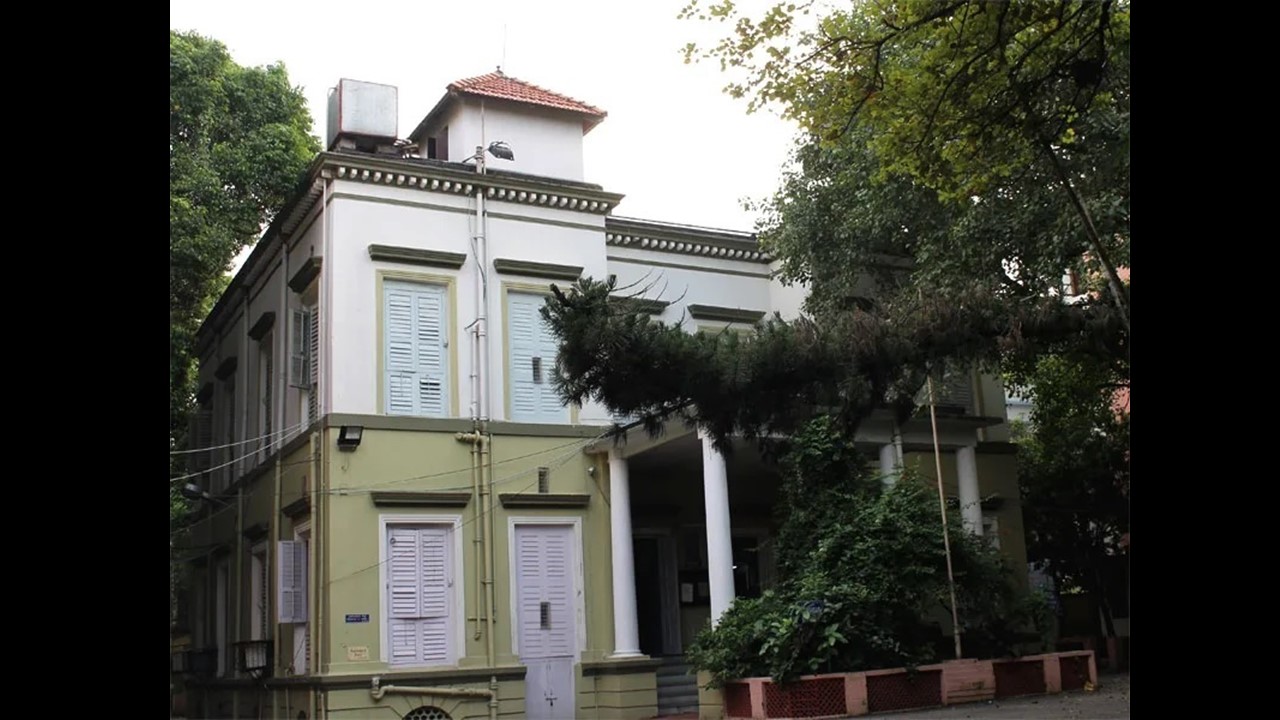
Bethune_College_Kolkata

Principal’s office of Bethune College, Kolkata, which included Humanity as an option under the religion category. Image Courtesy: college dunia


A college admission form introducing new options under ‘religion’? Talking about humanity, secular, non-religious, atheism!

Well, in an ambience loaded with religiosity and its increasing conflation with the State, it is rather difficult to believe that some colleges may take such a creative step to convey how they see what is happening around them? No doubt this is a small step but, as noted by analysts, this is an attempt to break/challenge the ‘construction of identity, thought and social and political space, indirectly conveying the vision of a secular and diverse India.’

The significance of this little step can be better understood if one looks into the fact that the elections held to the 17th Lok Sabha — which has returned the Bharatiya Janata Party (BJP) to power — have demonstrated that BJP is ‘the most preferred party of young India’. It drew support cutting across caste as well as class lines. This is the same BJP which, along with its ‘Parivar’ siblings, has consciously tried to conflate religion with exercise of power and has been successful in collapsing the majority faith into rabid nationalism that targets differences and dissent and other specific groups, as the ‘other’ according to its worldview.

( Read the full article here : https://www.newsclick.in/Religion-Humanity-College-Admissions-BJP-School-Education)

Arming Children, Securing a Future?

By distributing knives to meritorious children, organisations like the Hindu Mahasabha, are trying to give religious legitimacy to what is essentially a political use of faith.

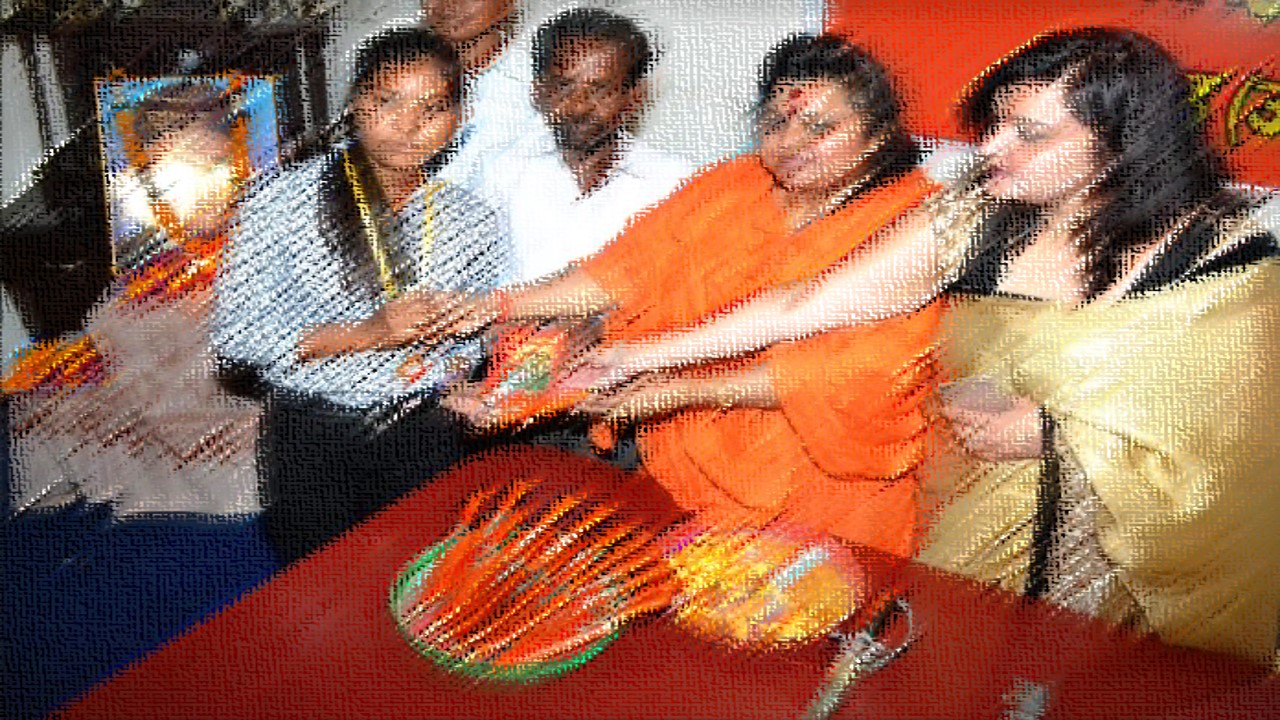
Hindu Mahasabha distributing knives to children

Image courtesy: Twitter

What does an organisation do when it wants to congratulate meritorious students who have excelled in exams?

Reward them with some gifts, say, books, and (if finances allow) give them scholarships or laptops to facilitate their further studies. Definitely not gift them knives.

Well, Pooja Shakuni Pandey, the national secretary of Hindu Mahasabha, who had been making news for controversial reasons for more than a year, exactly did this on Savarkar Jayanti. This mathematics professor made it clear that she was not much interested in how they study further or what they wanted to become. With this knife distribution programme, along with a copy of Bhagwad Gita, she wanted to ‘create Hindu soldiers out of these children’ and it was basically a “[s]tep to motivate Hindus and empower them, especially the younger generation, with knives to protect themselves.”

( Read the complete text here : https://www.newsclick.in/Hindu-Mahasabha-Distributing-Knives-Meritorious-Children-Political-Use-of-Religion)

Sexual Harassment ‘in-house’ for the Supreme Court – is sunlight the best disinfectant? Pratiksha Baxi

Guest Post by PRATIKSHA BAXI

The publication of a sworn affidavit by a former Supreme Court staffer testifying to sexual harassment by the Chief Justice of India has been treated as a scandal, whether the complainant was believed or not. And the subsequent events – an extraordinary suo moto hearing, allegations of a conspiracy against the independence of the judiciary, the in-house committee’s decision to exonerate the CJI – have evoked the normative question whether such forms of judicial exceptionalism are the necessary condition for judging in our courts.

Yet asking such questions ran the risk of being labelled as an ‘institution de-stabiliser’. The intent was to invent social consensus by deploying labelling as a technique of censoring and delegitimising feminist critique. Not so long ago women who challenged male authority were described as witches, today they are labelled anti-national, institution destabilisers, presstitutes or simply, left-liberal/JNU type.

However, whether one walks right, left, centre or zigzag, it cannot be denied that jurisprudential questions need answers beyond the specifics of this case. One would have thought that it is also in the interest of all judges to devise a procedure that is constitutionally sound and invested in gender justice, while recognising the specific problems that judges may have because of the nature of their work. And that the Supreme Court would recognise that it is in the interest of every survivor of sexual harassment, irrespective of ideology or status, to be provided normative answers.

Continue reading Sexual Harassment ‘in-house’ for the Supreme Court – is sunlight the best disinfectant? Pratiksha Baxi