All posts by Nivedita Menon

A State of ‘Encounters’: Madhumita Dutta

This guest post has been written by MADHUMITA DUTTA, a Chennai-based activist and writer, in conversation with Savukku Shankar, a former employee of the police department and a freelance journalist

“This state has witnessed more than 90 encounters in the last 15 years.  Tamil Nadu is a state of encounters!” laments ‘Savukku’ Shankar. ‘Encounters’, a euphemism for extra-judicial killings, began in the state in the 1980s when the government started cracking down on members of Maoist organisations around Dharmapuri district of Tamil Nadu.

On April 9th of this year, a Division Bench constituted by the Madras High Court was to commence its final hearing on PILs filed by Advocate Puzhalenthi, asking filing of murder charges against policemen involved in the recent ‘encounter’ deaths of five alleged bank robbers in Velachery; and questioning the magisterial enquiry ordered by the government under Cr. P.C. 176 (1A). Said Shankar, “That section applies only to custodial deaths, but this is an encounter killing”. The matter finally got adjourned to 5th of June. It is not uncommon for cases like this to drag on for years in the Courts. A special bench constituted by the court to hear 26 ‘encounter’ cases that took place in Tamil Nadu between 2006 and 2010 is yet to commence its hearings. Continue reading A State of ‘Encounters’: Madhumita Dutta

Does your misogyny have enough racism in it? Fairer vaginas for all

The recent advertisement on television for fairer vaginas has done its bit to engage, enrage and amuse. What more can a little ad do, after all?
Rupa Gulab “shamefully confessed” to not being outraged by the ad, she was so busy rolling on the floor with mirth. In any case, it’s not advisable, she sagely counsels, to look down your nose on fairness cream manufacturers:

“they may notice that your nostrils resemble black holes and cannily invent a specialized fairness cream to lighten them up.”

Lindy West is thrilled:

“Splendid! God, I was just saying the other day that my misogyny didn’t have enough racism in it.”

Continue reading Does your misogyny have enough racism in it? Fairer vaginas for all

Occupy Monsanto!

Some good news for a change…

Peru Passes Monumental Ten Year Ban on Genetically Engineered Foods

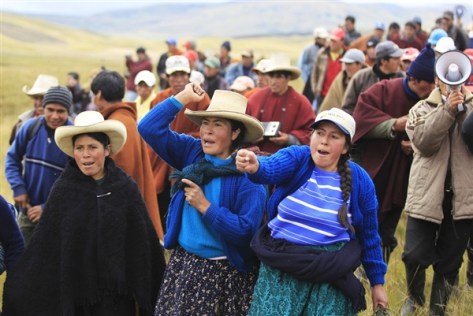
In a massive blow to multinational agribiz corporations such as Monsanto, Bayer, and Dow, Peru has officially passed a law banning genetically modified ingredients anywhere within the country for a full decade before coming up for another review. Peru’s Plenary Session of the Congress made the decision 3 years after the decree was written despite previous governmental pushes for GM legalization due largely to the pressure from farmers that together form the Parque de la Papa in Cusco, a farming community of 6,000 people that represent six communities. They worry the introduction of genetically modified organisms (GMOs) will compromise the native species of Peru, such as the giant white corn, purple corn and, of course, the famous species of Peruvian potatoes. Anibal Huerta, President of Peru’s Agrarian Commission, said the ban was needed to prevent the ”danger that can arise from the use of biotechnology.”

Read the rest of this story here.

Set Top Boxes: State-Corporate Nexus (Again)

When I came across this headline over my morning coffee, “Set-top boxes a must from July for greater choice“, I was very excited.  More choices always make my little heart beat very hard.

So this is the deal:

Starting July, every household in Delhi will need a set-top box to be able to view channels of one’s liking. The information and broadcasting ministry is planning to implement a ‘must-provide clause’ for cable operators to enable TV viewers in the four Metro cities to ask for their favourite channels as a right. After July 1, the sub-divisional magistrates across Delhi will take action against all cable operators who are found violating the new norms, which mandate provision of set-top box enabled digital facilities to all viewers.

Hold on, so I can no longer go with the local cable operator who already provides me with all the channels I want legally, at a very low cost, but will be forced to pay larger amounts directly to the big companies (Tata, Reliance)?

This is more choice?

Continue reading Set Top Boxes: State-Corporate Nexus (Again)

Modesty of Dress and Indian Culture: Suchi Govindarajan

Widely circulating just about everywhere, but for the unfortunate few who may have missed it…

I for one want to kiss the hem of her salwar/sari/jeans/other modest outfit.

Sir/Madam,
I write to complain about the abysmal standards of modesty I am noticing in Indian society. All bad things – sensationalist TV, obscene movies, diabetes among elders, pickpocketing, dilution of coconut chutney in Saravana Bhavan – are a result of Evil Western Influences. However, to my surprise, in this issue of modesty, even the Great Indian Culture (we had invented Maths and pineapple rasam when westerners were still cavemen) seems to encourage this.

The problem, sir/madam, is that revealing attire is being worn. Deep-neck and sleeveless tops, exposed legs–and these are just the middle-aged priests! Some priests are even (Shiva Shiva!) doing away with the upper garment. And I am told some temple managements even encourage this.

Read the rest of this brilliant and biting piece here.

Feminism and the Family – Thoughts on International Women’s Day

Excerpts from my forthcoming book Seeing Like a Feminist (Penguin India/Zubaan Books).

Have you heard of ‘nude make-up’?

This is what it is:

‘Nude makeup looks are all about your skin looking fresh and dewy, without looking like you’re even wearing any makeup. All you need is eyeliner, mascara, nude lipstick, and a highlighting blush that will give your skin a natural-looking glow.’[1]

The whole point of nude makeup clearly, is to spend hours painting your face in order to make it look like you never touched it at all.

The maintaining of social order is rather like that. It requires the faithful performance of prescribed rituals over and over again throughout one’s lifetime. Complex networks of cultural reproduction are dedicated to this sole purpose. But the ultimate goal of all this unceasing activity is to produce the effect of untouched naturalness.

When one ‘sees’ the world like a feminist though, with the gaze of a feminist, it’s rather like activating the ‘Reveal Formating’ function in Microsoft Word (what an earlier generation of WordPerfect users knew as ‘Reveal Codes’). The feminist gaze reveals the strenuous, complex formatting that goes on below the surface of what looked smooth and complete. Continue reading Feminism and the Family – Thoughts on International Women’s Day

Joint Statement on police atrocities and state repression on anti-POSCO struggle

See names of signatories below; please send your endorsement to asit1917 at gmail dot com

We strongly condemn the attack on and illegal abduction by the Odisha police of Umakanta Biswal, a famer belonging to Dhinkia village of Odisha, and an active member of POSCO Pratirodh Sangram Samiti (PPSS), that has been engaged over the last six years in resisting the forcible acquisition of their land by the Odisha government for handing over to the South Korean multinational corporation POSCO. This incident, which occurred on 2nd March 2012, is the latest in the series of atrocities inflicted by the Odisha government and by hired goons associated with the government and the POSCO company, on the people of these villages. Umakanta Biswal, who was engaged in agricultural activity in his paddy field at the time of his abduction, was pursued by a group of armed plainclothes policemen on a motorbike, and shot at when he tried to escape. He has reportedly been kept in Paradip prison, and has not been produced in front of a magistrate within 24 hours of his arrest, as is required under law. We have cause to fear that he is being tortured in police custody, and are gravely concerned about his safety. Continue reading Joint Statement on police atrocities and state repression on anti-POSCO struggle

UGC’s point system – Why should we care? Pratiksha Baxi and Umesh O

Guest post by PRATIKSHA BAXI and UMESH O

Is it really surprising that Jawaharlal Nehru University has implemented the controversial UGC guidelines on the Career Advancement Scheme (CAS) with effect from its date of announcement in 2008 (rather than date of notification in 2010, thereby benefiting Associate Professors rather than Assistant Professors? Is it really shocking that JNU did not register protest with the UGC about the case of CAS, dubbed by some as the Comic and Sad Guidelines? Perhaps not?

This scheme does not merely impact all academics already hired, especially at the rank of lecturers/assistant professors, but will also impact all those who will apply for the many vacancies now advertised, especially senior doctoral students, now looking for teaching jobs.

However there has been little concern about how does a scheme, which prolongs promotions for Assistant Professors from 5 years to 12 years (9 odd years in JNU), impact junior academics?

Continue reading UGC’s point system – Why should we care? Pratiksha Baxi and Umesh O

Gujarat genocide – the state, law and subversion: R B Sreekumar

Guest post by R B SREEKUMAR, former Director General of Police, Gujarat, who deposed before the Nanavati Commission.

Gujarat riot victims prevented from protesting against Narendra Modi during his sadbhavna fast in September 2011.

The Gujarat genocide in 2002, resulting in killing of nearly 1,500 innocent citizens, mostly from India’s major minority community and subsequent pervasive subversion of governmental machinery to sabotage justice delivery to riot victims, has to be understood as a man-made disaster. A disaster broughtabout by lack of professionalism and lack of integrity and commitment to the letter, spirit and ethos of the Constitution of India, on the part of all officials of the state, from the Chief Minister Narendra Modi to the police constables.

An analysis of the sequence of events from the time of the gruesome killing of 59 Hindu passengers in the train burning incident on 27 February, 2002 to this day, will bring up many unambiguous facts and data on deliberate acts of omission and commission by political leaders, bureaucrats and policemen, aiming at the actualization of the anti-Muslim carnage in Gujarat in 2002, and since then, the lopsided justice delivery to riot victims.

Continue reading Gujarat genocide – the state, law and subversion: R B Sreekumar

Delhi Police Special Cell – Encounters, Frame-ups, Impunity: Manisha Sethi

Guest post by MANISHA SETHI

An RTI enquiry has revealed that Delhi Police Special Cell’s conviction rate is a paltry 30 per cent. Nearly 70 per cent of the accused it charge-sheeted over the past five years were acquitted for want of credible evidence. Do these figures tell us something? A news story in a leading English daily bemoans this trifling record and quotes a senior police officerattributing this to the fact that “police sometimes get tangled in cross evidences and it becomes tough when you rely more on circumstantial evidences”. [i] This evokes the image of a bumbling policeman, reminiscent almost of Jacques Clouseau, tripping over reams and strings of evidences, in an impossible attempt to build a watertight case against the villains. But Special Cell couldn’t be farther from this sort of cute sloppiness. Continue reading Delhi Police Special Cell – Encounters, Frame-ups, Impunity: Manisha Sethi

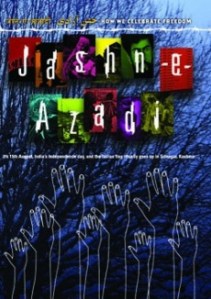
Screening Jashn-e-Azadi at Presidency University, Kolkata: Waled Aadnan

Guest post by Waled Aadnan

It can be said that 86/1 College Street, Calcutta, has seen a microcosm of the history of modern India unfold within its walls. Since 1874 when the already fifty-nine year old Presidency College shifted to its current address, future Presidents and Prime Ministers of  India, Pakistan and Bangladesh; Nobel Laureates, freedom fighters, an Academy Award winner, Bharat Ratnas; the leadership of the Naxalite movement of the 60s and 70s; and eminent judges, writers, journalists, scientists and actors, have spent their student days at 86/1.

Two years ago, soon after I joined the institution, the Left Front government upgraded Presidency College to the status of a state University in a last-gasp bid to hold on to the votes of the bhadralok intellectuals. 2012 dawned with no Student Union elections having been held the previous year, and it is in this backdrop that the following events unfold.

Salman Rushdie’s well-publicised ostracism from the Jaipur Literature Festival was met not with outrage in Presi’s canteen addas, but with the absence of even a poster put up in protest. News filtered in of a seminar in Symbiosis University being “threatened.” But little awareness existed among students who were more inclined to read tabloid-like, unputdownable newspapers than their relatively austere counterparts, including The Hindu which broke the story.

Continue reading Screening Jashn-e-Azadi at Presidency University, Kolkata: Waled Aadnan

Some pictures from Occupy the World

Continue reading Some pictures from Occupy the World

Compounding the Error – Marks inflation at Delhi University: Shobhit Mahajan

Guest post by SHOBHIT MAHAJAN

In politics, policy making or indeed any interaction with the larger world, one notices a distinct characteristic – one makes a decision, then facts or circumstances make it obvious that it was a wrong or bad one.  And what does one do? In most cases, one continues to take further decisions to bolster the impression that the original decision taken was correct and in the process, makes matters worse. This is relatively innocuous in normal social interaction but disastrous in the public sphere as we have witnessed in mishandling of the events related to the Lokpal movement. A very similar situation has recently emerged in the University of Delhi. Continue reading Compounding the Error – Marks inflation at Delhi University: Shobhit Mahajan

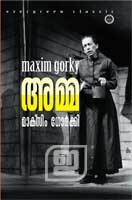
The Book of Mothers: P K Medini

P K MEDINI still recollects the day when she first sang for the election campaign of the Communist party. Now, six decades later, the spirit isn’t one bit lost for the veteran singer. Medini, 78, says she sang first for Communist leader T V Thomas. Since then, she had been a regular presence at the election campaigns of the Communist party.”  From expressbuzz April 1, 2011

Delhi-based journalist JACOB SEBASTIAN sent us his translation of a piece by PK Medini in Malayalam (published in the journal Mathrubhumi earlier this month ), along with a background note that he wrote for our readers.

The following piece was written by P.K. Medini, the one-time ‘singing sensation’ of the Communist Party in Kerala. It originally appeared in the Matrubhumi Weekly, as part of a series where people talk about their favourite books. It offers a glimpse of a time and place where literature and books and the whole culture of reading, mattered in an urgent and vital way.

She gives us an intimate snapshot of the new reading culture at the time when it was putting down its first tentative roots. For someone who readily admits that her own reading was ‘impoverished’, she shows a keen awareness of the power of ideas – and of books as objects of an almost talismanic power – andreveals their absolute centrality to the social and political transformations of the time.

If such a thing is unimaginable to us today, even more unexpected are the ways in which it actually played out – the many tortuous routes the word had to take before it could become flesh (she calls it ‘social reading’). She also has a sharp eye for how political propaganda actually works ‘on the ground’. Along with other movements, Medini’s party too can take some credit for the fact that life in Kerala isn’t so desperate today that a society could catch fire from a book.

Continue reading The Book of Mothers: P K Medini

Open Letter to Haryana CM on Forced Land Acquisition for Gorakhpur Nuclear Power Plant, Fatehabad

Farmers of Gorakhpur village hold a protest in Fatehabad against acquisition of their agricultural land by the Haryana government for a nuclear power plant in the area, August 2010. (The Tribune on-line)


January 16, 2012

Bhupinder Singh Hooda,
Chief Minister, Haryana
Chandigarh

Dear Mr. Chief Minister,

It was with gravest concern and misgivings that we heard of Section 9 of the Land Acquisition Act, 1894, being issued in Fatehabad, Haryana, to forcibly acquire land for the proposed Gorakhpur Nuclear Power Plant Project. This action by the Harayana State Govt. is completely unacceptable on the following two counts:

Farmers of Gorakhpur and nearby villages have been sitting in continuous opposition to the proposed nuclear power plant from August 2010. They are fighting for their right to life, livelihood and to safeguarding their fertile and irrigated, three-crop land, all of which will be severely threatened if the project were passed. The fact that a community is in such a long drawn and strong opposition to this project, is of crucial concern and cannot be ignored arbitrarily or repressed in democracy. Continue reading Open Letter to Haryana CM on Forced Land Acquisition for Gorakhpur Nuclear Power Plant, Fatehabad

Tribute to Homai Vyarawalla, India’s first woman photojournalist

Homai Vyarawalla passed away at the age of 98 yesterday. We reproduce here the curator’s note written by cinematographer SABEENA GADIHOKE, biographer and friend of the legend, on the occasion of her staging a retrospective of Vyarawalla’s work at the National Gallery of Modern Art in 2011.

Having worked for thirty three years of her life Homai Vyarawalla gave it all up one day. Why did she give up photography?

Often meant for a fleeting glimpse in the newspaper, press photographs become visual archives of the future. Homai Vyarawalla’s photographs chronicling the defining moments of India’s Independence have acquired an iconic status and are now integral to a Nationalist version of history. According to this version, some people led and others followed. As important people dominated photographs, ordinary citizens or `the masses’ frequently found themselves relegated to the margins. Sometimes, they would be `cropped’ from the frame to accommodate more prominent figures.

Continue reading Tribute to Homai Vyarawalla, India’s first woman photojournalist

Women’s groups stopped from meeting Soni Sori in Raipur

Press statement from Saheli, Delhi; Women Against Sexual Violence and State Repression (WSS), Delhi; WSS Orissa and Madhya Pradesh Mahila Manch, Bhopal.

A team of women representing various women’s groups from across the country were in Raipur on 12-13th January to meet Ms. Soni Sori, currently lodged in Raipur Central Jail. Ms Sori is a tribal school teacher who has been hounded by the Chhattisgarh Police as a Maoist conduit. She was arrested in October 2011 and was brutally assaulted sexually in police custody on the night of 8-9th October.

Even after applying for permission as per procedure and repeated requests to various concerned officials on 12th, the women were denied permission to meet her, despite already having an assurance from the Principal Secretary, Mr. Baijendra Kumar, during his visit to Delhi in October.For two whole days the team was shuttled from one authority to the other and back, with each and every official avoiding taking a decision or give in writing any denial or reasons for it. Finally, permission was denied on 13th citing `security’ concerns.

Read full statement here.

The Regulation of Surrogacy in India – Questions and Concerns: SAMA

Guest post by SAMA, a resource group for women and health.

As the clamor dies down, of news reports celebrating the ‘miracle of science’ that made the arrival of Aamir Khan and Kiran Rao’s baby boy possible,  it would serve to look more closely at commercial surrogacy in India.  Estimated to be a multi-million dollar industry, Assisted Reproductive Technologies  (ARTs, through which surrogacies are conducted) are a recent and fast-growing addition to India’s medical market and medical tourism sector. Their unregulated proliferation over the last few years has raised serious issues of safety, ethical practice, costs, and rights. While the proposed Draft Assisted Reproductive Technologies (Regulation) Bill & Rules-2010 is a long-awaited step towards regulation, several clauses, especially concerning commercial surrogacy, leave much to be desired.

Continue reading The Regulation of Surrogacy in India – Questions and Concerns: SAMA

Why are Americans so mean to Walmart? Never mind, come to India

They don’t want you in California…


They don’t want you in Chicago… Continue reading Why are Americans so mean to Walmart? Never mind, come to India

Indian Government’s Claims About Corporate Retail and the Reality: Shankar Gopalakrishnan

The vociferous supporters of corporate retail in India seem to believe, or would like us to believe, that there is no previous experience of corporate retail anywhere in the world to learn lessons from. In this guest post, SHANKAR GOPALAKRISHNAN analyses available data on the experience of the entry of corporate retail globally, to outline the disastrous consequences it has had everywhere it has been introduced.  On the basis of extensive research, he concludes:  “The growth of corporate retail not only will not address the key problems plaguing India’s economy today – it will greatly exacerbate many of them. In particular, the crisis in agriculture, environmental destruction, declines in land productivity, urban unemployment, price volatility and unequal access to resources would all be worsened by unchecked growth of corporate retail.” Shankar’s article follows.

In the flood of rhetoric following the government’s decision to permit FDI in retail, the actual reality of what this will mean is being lost. For that it is necessary to look at international data and what it shows about the claims being made. Commerce Minister Anand Sharma’s letter offers a good place to start. His claims can be summarised as follows: Continue reading Indian Government’s Claims About Corporate Retail and the Reality: Shankar Gopalakrishnan

When an Ecofeminist Dies: Anupam Pandey

Guest post by ANUPAM PANDEY

“The government said, “If they only planted trees, we wouldn’t bother with them. But they also plant ideas. And I say, it’s true”

Wangari Mathaai (1940-2011)

When the death of Steve Jobs evoked such unprecedented emotions of manic proportions in India which is not even a market of consequence for Apple, it is astounding that the passing away of Wangari Mathaai (a few days before Jobs’ death) did not even create a ripple of interest. But then, in the power hierarchy of global capitalism, what is the worth of the life of an ecofeminist compared to that of the one which is associated with one of the most popular consumer brands in the world? Continue reading When an Ecofeminist Dies: Anupam Pandey