All posts by Nivedita Menon

Andre Schiffrin in conversation with S Anand

‘Most publishing conglomerates are owned by people very far to the right’ said André Schiffrin to S Anand of Navayana, his Indian publisher, during this conversation, of which a short version appeared in The Hindu Sunday Magazine on 20 November 2011.

Legendary publisher André Schiffrin warns us that we are witnessing ‘a rebirth of the old colonialist methods of export and import’.  Schiffrin founded the The New Press in 1991 after being forced to quit Pantheon (a division of Random House), where he could no longer work with the new CEO, Alberto Vitale, who would ask Schiffrin who Carlos Ginzburg was and why books could not have a sell-by date like cheese and milk do. Schiffrin, who has published Jean-Paul Sartre, Michel Foucault, Noam Chomsky, Günter Grass, Art Spiegelman, Matt Groening, Margurite Duras and Gunnar Myrdal among others, was in India earlier in November for the launch of the Indian edition of his memoir The Business of Words, a combined edition of The Business of Books (2001) and Words & Money (2010). Continue reading Andre Schiffrin in conversation with S Anand

Some FAQs about Koodankulam and Nuclear Power: Nityanand Jayaraman and G. Sundar Rajan

Steel drums with nuclear waste. The inescapable byproduct generated from the fission of nuclear fuel in the form of uranium or plutonium creates what is called nuclear waste. This waste comes in a huge variety of extremely radioactive material with half-lives ranging from 8 days to hundreds of thousands of years. In other words their radioactivity takes a really, really long time to decay, thousands of times our human life-times. These fission products if released to the environment will last a long time, and it is almost impossible to decontaminate them.

NITYANAND JAYARAMAN and G. SUNDAR RAJAN of the Chennai Solidarity Group for Koodankulam Struggle developed  the  fact-sheet below in response to real questions that they encountered during the course of street and college campaigns. They say: “The questions were sincere, so we felt a sincere response was warranted.”

Continue reading Some FAQs about Koodankulam and Nuclear Power: Nityanand Jayaraman and G. Sundar Rajan

Air India Hostesses Vindicated: Press statement by Air India hostesses

It’s been a long struggle for Air India hostesses who have been fighting for the basic right to be treated equally with their male counterparts. What follows is  a press statement they issued after finally having won the right to be considered for appointments to the position of In-Flight Supervisor, the person in charge of all the cabin crew. It is shocking enough that Air India maintained a system where only men could be appointed to this post until December 2005, when a Delhi High Court decision finally permitted women to be considered for the post. Even more disturbing is the fact that the union claiming to represent the ‘workers’ of Air India, the Air India Cabin Crew Association, chose to contest this decision, as if the women employees of Air India are not as much ‘workers’ as the men are. Continue reading Air India Hostesses Vindicated: Press statement by Air India hostesses

Statement on the killing of Niyamat Ansari and “apology” by the CPI (Maoist)

Summarized version of statement by concerned academicians, students and activists.

For full text of the statement visit

http://www.petitions.in/petition/statement-on-the-killing-of-niyamat-ansari-and-apology-by-the-cpi-maoist/1492

and http://www.pragoti.in/node/4567 .

In a statement of apparent ‘self-criticism’, dated September 1 2011, the Communist Party of India (Maoist) has offered an apology for the posters threatening Aruna Roy, Jean Dreze, Gokul Vasant and Nandlal Singh and members of Gram Swaraj  Abhyan.  But they have not tendered an unconditional apology for the brutal murder of NREGA activist Niyamat Ansari and threat to Bhukan Singh for allegedly being ‘police informers’ and ‘cheating local people’ of their forest land.

86 families in Kope Gram Panchayat, including Bhukhan and Niyamat, were part of a larger movement to secure legal entitlements over forest land under the Forest Rights Act, 2006, which was opposed by the same corrupt contractors involved in committing malpractices in the NREGA Programme. His team exposed a scam involving Rs 2.5 lakhs leading to an FIR being filed against the local Block Development Officer. Within days after this, on 2nd March 2011, Niyamat was beaten to death. The fact finding report published by Gokul Basant- Nandlal Singh has hinted towards possible involvement of Maoist with corrupt middlemen, illegal contractors, forest department and local administration.

Continue reading Statement on the killing of Niyamat Ansari and “apology” by the CPI (Maoist)

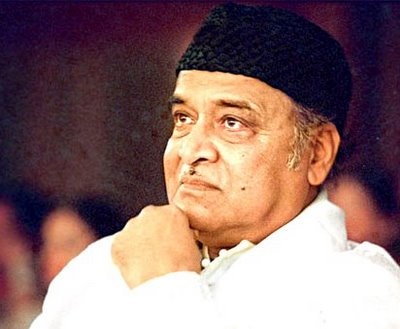
Bhupen Hazarika – The Sub-nationalist Imagination of a Universalist: Bikram Bora

Guest post by BIKRAM BORA

The unprecedented number of mourners crowding the otherwise sleepy streets of Guwahati at night following the demise of the maestro, proves testimony to his genius. In his life, there was no dearth of followers, some logical, some blind; while in his death, grief engulfs both the sections. What could be the reasons for Hazarika’s powerful grip over people’s emotions? It can’t be just his musical dexterity; it’s more the aura surrounding him, emanating from his multi-dimensional persona and life-span.

Continue reading Bhupen Hazarika – The Sub-nationalist Imagination of a Universalist: Bikram Bora

Taking the Jajabor’s Journey Forward – The troubled legacy of Bhupen Hazarika: Mayur Chetia and Nayanjyoti

Guest post by MAYUR CHETIA and NAYANJYOTI

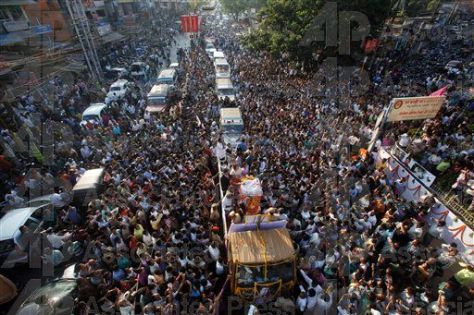
Mourning people from across Assam assemble in miles and miles of roads leading up to Bhupen Hazarika’s funeral. He’s a restless jajabor/wanderer no more. Paeans after paeans are being sung now after the ‘great cultural hero’, the ‘greatest Assamese’, the believer in ‘the power of the nation’ (the ‘nation’ being Akhand Bharat or Brihottor Axom, depending on whichever variety of nationalists sing). Bhupenda is dead.  Assam is in despair.

Continue reading Taking the Jajabor’s Journey Forward – The troubled legacy of Bhupen Hazarika: Mayur Chetia and Nayanjyoti

The nuclear energy debate in India: Response to Dr APJ Abdul Kalam from Dr Surendra Gadekar

Dr. SURENDRA GADEKAR is a well-published physicist of international renown, and a Gandhian. After an MSc and PhD (in theoretical physics) in 1979 from IIT Kanpur, he worked for two years as a post-doctoral fellow at Iowa State University, US and then two years as a research associate at IISc in Bangalore. He resigned in 1986 (a little before Chernobyl) to do antinuclear work when the Kakrapar Nuclear Power Plant was started. In 1987, he started Anumukti A Journal Devoted to Non-Nuclear Indiaand has carried out and published studies of the impact of nuclear energy around the plants at Kakrapar, Rawatbata and Jadugoda.  He has also carried out a study at Pokharan, which is as yet unpublished. Dr Gadekar’s response follows:

Dr A P J Abdul Kalam and‭ ‬Mr.‭ ‬Srijan Pal Singh deserve a special thanks for their article in the Sunday edition of The Hindu‭ (‬November‭ ‬6,‭ ‬2011‭) ‬entitled‭ ‬“Nuclear power is our gateway to a prosperous future.‭”‬

Although most of what they write is irrelevant to their topic and the rest just plain wrong,‭ ‬the very fact that the establishment has to bring out its‭ ‬‘Big Guns‭’‬ to answer the questions raised by the Koodankulam movement,‭ ‬is a testimony to the success of the movement.

Originally I had intended to write a point by point refutation of their article,‭ ‬but I have been deterred by the sheer length of the article.‭ ‬What I intend to do here instead is to paraphrase their points and answer them one by one.‭ ‬I would urge activists to visit the Hindu website at and to read the article in the full. I make this request specially so that friends can point out if I have been unfair in summarizing their work or have missed something important.

Continue reading The nuclear energy debate in India: Response to Dr APJ Abdul Kalam from Dr Surendra Gadekar

Bistirno Parore: A tribute to Bhupen Hazarika

Bhupen Hazarika was cremated this morning in Guwahati, at a ceremony on the banks of the Brahmaputra that was attended by an estimated 100,000 people present to pay their tribute to the legendary singer.

His politics did go  somewhat awry in his last years,  but I don’t want to think about that right now.  Here is Bhupen Hazarika, with the original Assamese of the song many of us have heard him sing in Hindi, Ganga behti ho kyon.  While studying at Columbia University, New York, Hazarika met Paul Robeson, whose song Ol’ Man River moved him so much that he rendered it into his mother tongue Assamese as bistirno parore.   In  Ol’ Man River, Robeson had adapted to the context of slavery, an American folk song of the Mississipi region. It is believed that this song in turn was an American version of a popular Russian song, Song of the Volga Boatmen. Hear the song in Robeson’s voice here.

Hooligans of Bhagat Singh Kranti Sena strike again

Maraa, a media and arts collective in Bangalore, has been organizing a monthly event called Pause: Creative Practice in Conflict.  This is a public event, inviting one speaker to present examples of creative practice in a conflict afflicted area. Previous events have showcased examples from Palestine and Afghanistan. In November, Maraa had planned a similar event on Kashmir, scheduled to be held on November 5th 2011.  

Bhagat Singh Kranti Sena (the same people who physically assaulted Prashant Bhushan recently for his statement on Kashmir), and its president, Mr. Tejinder Pal Singh Bagga, wrote a letter to the police alleging that the event which was to be held in the premises of a theatre organization, rafiki, was being organized by the Hurriyat Conference, at which Syed Shah Geelani or Mirwaiz Umar Farukh from the Hurriyat Conferece would speak. They warned the police that if they would not come to stop the event, their organization would make it a situation with unpleasant consequences.

Further, the Bhagat Singh Kranti Sena and Mr. Tejinder Pal Singh Bagga, posted online invitations on social networking site, Facebook, inviting people to come with stones, paint, eggs and tomatoes, to merge in with the audience, and then create chaos. There have been various comments responding to it, by promising violence to those who attend and organize such events.

The following statement has been issued by Maraa in this context:

Continue reading Hooligans of Bhagat Singh Kranti Sena strike again

Naming the Seven Billionth Child: Mitu Sengupta

Photo via The Hindu / Subir Roy

Guest post by MITU SENGUPTA

Last Monday, Nargis Yadav was declared the world’s symbolic seven billionth resident by Plan International, a child rights group. She was born to a family of farmers in a sleepy little village in Uttar Pradesh.

Nargis is surely an unwelcome child, given the grim projections that surrounded the UN Population Fund’s declaration last month, that the world’s population was about to breach seven billion.  Experts have issued sombre warnings of the devastating impact of the growing number of humans on earth. We face a bleak future of environmental distress and scarcity, they say, in which even the basics of food and water will be in short supply.

One wonders why, on October 31st – Halloween, to be precise – the UN did not name a blue-eyed baby boy from Washington, Bonn, Sydney or Toronto as our uncertain world’s symbolic seven billionth? To be sure, this would be politically incorrect, for we live in times when the well-meaning, in their bid to be representative and inclusive, scramble to push women and minorities to the forefront.  But here is an instance where keeping to pedantic liberal pieties has suppressed an honest portrayal of things as they are.

Continue reading Naming the Seven Billionth Child: Mitu Sengupta

An open letter to Tarun Tejpal: Hartman de Souza

On 27 October the Hindustan Times published an article by Hartman de Souza and on 30 October a response to it by Tarun Tejpal, editor of Tehelka newsmagazine. This guest post by HARTMAN DE SOUZA is his rejoinder

There are some of us in Goa who will know in about 20 days or so, thanks to two RTIs filed, whether Tarun Tejpal did in fact get all the necessary permissions and clearances needed to add to the lovely property he now owns in the village of Moira… or, as he more pointedly said of the village when he called me up in the Pune, “I mean, look at Moira man, it’s a dying Goan village” …emphasis on ‘dying’, and the implication being one suspects, that the Tejpals of the world can and will breathe life into it. I wonder if he remembers and can parse what I said to him in reply. Continue reading An open letter to Tarun Tejpal: Hartman de Souza

The Politics of Prizes and Silencing of Adivasi Voice: Nandini Sundar

Guest post by NANDINI SUNDAR


Adivasi Mahasabha rally in Raipur

Last weekend, I attended a wonderful rally by the Adivasi Mahasabha in Raipur – some 10-15 busloads of people came from Dantewada and Bastar alone, while large numbers came from other parts of Chhattisgarh and even other states like Maharashtra, Orissa and West Bengal. The procession was flagged off by Dhurwa dancers while the rear end was brought up by Marias with their large dhols and bison horns. In between were thousands of militant marchers shouting slogans against militarization, demanding peace talks, the release of their arrested leaders, the implementation of the Supreme Court judgement on Salwa Judum, and all their constitutional rights with respect to land, forest and water.  These were men and women who had lost everything to arson and loot by Salwa Judum, who had been interned in camps but managed to return home and pick up their ploughs again, who face the daily threat of arrests, beatings and encounters by the security forces, who have to negotiate with the Maoists everytime they wanted to access panchayat funds, who live a life on the razor edge of survival.  And yet here they were, laughing, cheering and vowing to fight till the last breath, fight for their constitutional rights and in a constitutional way.

This remarkable struggle has been waged, not just over one weekend, but over years.  Indeed, the Salwa Judum leaders themselves credit the CPI with the destruction of their movement – both through mass actions and through legal means.

Continue reading The Politics of Prizes and Silencing of Adivasi Voice: Nandini Sundar

Everybody Loves a Good War – Tehelka and Essar: Bobby Kunhu

Update: A Day after the publication of this post, Tehelka changed the status of Essar from “Principal Sponsor” to merely one of several “patrons” on the Goa ThinkFest website.

Guest post by BOBBY KUNHU

Tehelka: Free, Fair, Fearless?

Without doubt, one of the most important documents to make its appearance after the arrest of Soni Sori by the Chattisgarh Government in Delhi on 4th October 2011 was the cover story titled, “The inconvenient truth of Soni Sori” that appeared in Tehelka, written by Shoma Chaudhary. It tells the story of Soni Sori and her nephew Linga Kodopi as narrated to Tehelka and the sequence of events that led to their persecution.

Nonetheless there is an intriguing twist to how this story was framed. The introduction of the story goes:  “Why were two tribals and the Essar group framed by the Chhattisgarh police? Why are Soni Sori and Linga Kodopi being systematically silenced? This chilling story of one family reveals more about India’s Naxal crisis than any official document can.”

In other words, Tehelka is arguing that Essar is also being framed in this narrative along with Soni Sori and Linga Kodopi.

Continue reading Everybody Loves a Good War – Tehelka and Essar: Bobby Kunhu

Letter from Japan to the Prime Minister of India

Respected Prime Minister of India, and Chief Minister of Tamilnadu:

We are residents and organisations from Japan, and are intimately aware of the unpredictability and uncontrollable nature of nuclear power. We are the unfortunate witnesses of two nuclear holocausts.  It is with pain that we see the Indian Government pursuing a dangerous path of constructing large nuclear power plants within even larger nuclear “parks” where power generation capacities are pegged at up to 10,000 MW.

Continue reading Letter from Japan to the Prime Minister of India

Which populism?: Saroj Giri

Guest post by SAROJ GIRI

As I read it, neither Aditya, nor Partha nor Gyan seems to deny that the Anna Hazare movement is populist. The debate here seems to be about: what kind of populism is it? Aditya is saying that this populism can lead to progressive political consequences, ‘by the presence of an anti-institutional dimension, of a certain challenge to political normalization’, while Partha (and Gyan too if I read him correctly) seem to be arguing that this populism is not progressive even if sometimes anti-institutional. And here Aditya reads Laclau contra Partha: that populism may indeed be the royal road to the constitution of the political. Partha and Gyan maintain that this populism works with a notion of ‘we the people’ who are free from corruption defined against ‘they the corrupt enemy’ (the government and netas). This ‘we the people’ can very well gloss over all internal contradictions, social divides and heterogeneities – hence Gyan points out that Dalits and minorities will not be counted or simply assumed away.

Continue reading Which populism?: Saroj Giri

Against Corruption = Against Politics: Partha Chatterjee

Guest post by PARTHA CHATTERJEE

Shuddhabrata Sengupta has done a great service by opening up the question of corruption which lies at the heart of the Anna Hazare movement but which has been, surprisingly, accepted quite uncritically as a universally known and universally condemned evil. It is actually quite puzzling how this effect has been achieved. It is a question which, I think, touches the core of the populist mobilization brought about by the Anna Hazare movement.

Think of it. Who are the beneficiaries of corruption? The entire middle class in India (lower, upper, aspirant lower to upper, whatever category one wants to use) seems to think that it is the victim of corruption. “It touches the lives of everybody”, as Nivedita Menon said in her recent piece in Kafila. But then who are the engineers, the accountants, the babus in the offices, the touts who surround the courts and the hospitals and the railway ticket counters? Aren’t they our uncles and nephews and sisters-in-law? The corrupt people of India are blood relations of those who are flocking Ramlila Maidan. But, needless to say, no one you meet there will accept that.

Continue reading Against Corruption = Against Politics: Partha Chatterjee

What is right-wing about the anti-corruption movement? – Saroj Giri

Guest post by SAROJ GIRI


A draft for discussion

A ruling class contradiction is being played out as anti-corruption movement. It is however politically articulated as ‘a movement of the people’ with possibly a space for the left to intervene. Can the tide be turned against the right-wing upper classes?

“What we are witnessing (the anti-corruption movement) is nothing short of a revolution. Only on two earlier occasions in recent memory such grand scale people’s participation was recorded. The first was under Loknayak Jayaprakash Narayan in mid-seventies. The second was during the Ayodhya movement, in the early nineties, propelled by L K Advani’s historic Rath yatra.” This is the RSS Organiser magazine (August 21-28, 2011).

“The anti-corruption movement must resist repression in every form and align itself with the struggles for democratic transformation in India. Only then can it defeat the UPA Government’s efforts to defend corruption and unleash repression, and expose the BJP’s false claims of championing democracy and resisting corruption.” This is the CPIML Liberation (ML Update, 07-13 June 2011)

Continue reading What is right-wing about the anti-corruption movement? – Saroj Giri

If only there were no people, democracy would be fine…

This post has been jointly written by Nivedita Menon and Aditya Nigam

At Ramlila Maidan

We went to Ramlila Maidan yesterday, the four of “us” considerably swelling the numbers of about a lakh and a half of people there by 6.30 pm, when we left. They were either sitting inside, milling about outside all around its walls, or pouring in having walked from India Gate.  (Is the media exaggerating the numbers? In our opinion it is underestimating them considerably).

Continue reading If only there were no people, democracy would be fine…

We should be there: The Left and the Anna moment

My head has been in a whirl the past few days with a single question – how do we on ‘the Left’ manage so unerringly to be exactly where ‘the people’ are not, time after time?

At this moment I don’t mean the organized Left, for the Left parties  have been cautious about criticizing  the current upsurge; they strongly defended the right to democratic protest when Anna Hazare and his colleagues were arrested, and now have launched a Third Front initiative on the issue of corruption and the Lokpal Bill; the students’ front of CPI (ML), AISA, has been organizing militantly on the issue for a very long time now, and is very much part of the campaign.

I mean the few hundreds who form my own community, the people with whom I have organized protests and run campaigns and sat on dharna and drafted petitions;  struggled against communal violence and sexual harassment,  for queer freedom and workers’ rights, against the nuclear bomb and nuclear energy, in support of reservations and against the moves in our universities to hold up appointments to reserved posts. Many of these people I know personally, some are among my closest friends, and many more I know as part of the broad Left/secular non-party tendency in the country’s politics, where I feel most at home.

Continue reading We should be there: The Left and the Anna moment

Indian Academics Urge Divestment from POSCO: Sign petition

Children and women of Gobindpur village in  Jagatsinghpur district form a human chain to stop the forces from destroying their homes

The US-based Mining Zone Peoples Solidarity Group (MZPSG) has been working on an international solidarity campaign as part of the anti POSCO campaign in Orissa. They  launched a divestment campaign some months ago aimed at four retirement funds, all of which have significant investments in POSCO.

One of these is the TIAA CREF, that is, the US-based Teachers Insurance and Annuity Association – College Retirement Equities Fund, a financial services non-profit organization that is the leading retirement provider for people who work in the academic, research, medical and cultural fields.

As part of the campaign 600 US based faculty wrote to TIAA CREF some weeks ago, asking it to divest from POSCO. They are now seeking support from faculty based in India, expressing solidarity with their US -based colleagues and pressing upon TIAA CREF the urgency of the need to divest from POSCO.

Please consider signing the petition using the link provided below.

PLEASE DO NOT SIGN IN AS ANONYMOUS.

Indian Academics Urge Divestment from POSCO

If you do sign, please forward this to at least five to ten colleagues and friends working in your university or any other Indian university/college.

Please note that the signatures page will be updated manually by the admin, so you may not see your signature immediately on signing the petition.

Breivik’s model nation and migrants in South Korea: Bonojit Hussain

Guest post by Bonojit Hussain

Norwegian mass killer Anders Behring Breivik, in his manifesto, hailed Hindutva forces in India as an important ally in his envisaged fight against what he calls the “cultural Marxist/social humanist” world order. But he seems to be far more impressed by the conservative cultural milieu of South Korea as far as migrants are concerned; so much so that his manifesto is not only replete with praises for South Korean society and State but also his stated goal for Europe is to achieve a “mono-cultural” ethos, modeled on South Korea. Breivik believes that South Korea being a “scientifically advanced, economically progressive” society “out rightly rejects multiculturalism and Marxist cultural principles”.

Breivik’s manifesto might appear to be full of rambling political rants; but it seems he is not radically off the mark in understanding Korea’s hatred for migrants. So much so that right wing groups in Korea must have smiled and said in Unison “At last! Somebody recognizes our real value”.

Continue reading Breivik’s model nation and migrants in South Korea: Bonojit Hussain