Category Archives: Debates

Marxism’s Long March in the Global South

Arab Spring composite image, courtesy Middle East Eye ( and AFP, Reuters, Creative Commons)

It is interesting that though Marxism was born in Europe, it has found its most enduring habitat in the Global South, but this has meant very little in terms of its overall theoretical formation and structure. Thinking about this encounter of ‘Marxism’ and the ‘Global South’ – the continents of Africa, Asia and Latin America – is a daunting task for the sheer range of experiences and questions it has thrown up. It has thrown up fundamentally new concerns as well as produced, in practice, some of the most grotesque outcomes.  But the task is also daunting because despite the range of experiences that Marxism has gone through and has put us through, it has not so far given us any serious body of theoretical knowledge that reflects this experience. It has not given us anything like the way, say,  Tibetan, Chinese, Japanese and Sinhala Buddhism have produced their own versions of Buddhist philosophy. One could also perhaps say the same thing about Christianity in Europe, where – at least up to a point – its philosophy was elaborated and innovated or transformed by the best minds of their time.

Continue reading Marxism’s Long March in the Global South

नरेंद्र मोदी स्टेडियम: आज़ादी के नायकों की जगह लेते ‘नए इंडिया’ के नेता

मोटेरा स्टेडियम का नाम बदलना दुनिया के इतिहास में- ख़ासकर उपनिवेशवाद के ख़िलाफ़ संघर्ष कर आज़ाद हुए मुल्कों में, ऐसा पहला उदाहरण है, जहां किसी स्वाधीनता सेनानी का नाम मिटाकर एक ऐसे सियासतदां का नाम लगाया गया हो, जिसका उसमें कोई भी योगदान नहीं रहा हो.

नरेंद्र मोदी स्टेडियम. फोटो: रॉयटर्स)

Courtesy – नरेंद्र मोदी स्टेडियम. फोटो: रॉयटर्स

क्रिकेट का खेल भारत का सबसे लोकप्रिय खेल है. पिछले दिनों यह खेल नहीं बल्कि इस खेल के लिए फिलवक्त मौजूद दुनिया का ‘सबसे बड़ा क्रिकेट स्टेडियम’ एक अलग वजह से सुर्खियों में आया.

मौका था अहमदाबाद के मोटेरा स्टेडियम- जिसे सरदार वल्लभभाई पटेल स्टेडियम के तौर पर जाना जाता रहा है – के नए सिरे से उद्घाटन का, जो वर्ष 2015 में नवीनीकरण के लिए बंद किया गया था और अब नयी साजसज्जा एवं विस्तार के साथ खिलाड़ियों एवं दर्शकों के लिए तैयार था.

याद रहे कि पहले गुजरात स्टेडियम के तौर जाने जाते इस स्टेडियम का स्वाधीनता आंदोलन के महान नेता वल्लभभाई पटेल – जो आज़ादी के बाद देश के गृहमंत्री  भी थे- के तौर पर नामकरण किया गया था, जब तत्कालीन गुजरात सरकार ने स्टेडियम के लिए सौ एकड़ जमीन आवंटित की, जिसका निर्माण महज नौ महीनों में पूरा किया गया था. (1982)

दरअसल हुआ यह कि जिस दिन उसका उद्घाटन होना था, उस दिन अचानक लोगों को पता चला कि अब यह सरदार वल्लभभाई पटेल स्टेडियम नहीं बल्कि ‘नरेंद्र मोदी स्टेडियम’ के तौर पर जाना जाएगा.

सबसे विचित्र बात यह थी कि इस नामकरण को बिल्कुल गोपनीय ढंग से किया गया. गोपनीयता इस कदर थी कि खुद समाचार एजेंसियों प्रेस ट्रस्ट आफ इंडिया या एएनआई आदि तक को पता नहीं था कि उसका नामकरण किया जाने वाला है.

जाहिर था कि पीटीआई या एएनआई जैसी संस्थाओं की सुबह की प्रेस विज्ञप्ति भी उसे सरदार वल्लभभाई पटेल स्टेडियम के तौर पर संबोधित करती दिख रही थी. यह अलग बात है कि अगली प्रेस विज्ञप्ति में अचानक नरेंद्र मोदी स्टेडियम का जिक्र होने लगा.

अब जैसी कि उम्मीद की जा सकती है कि इस नामकरण- जो दरअसल नामांतरण था- पर तीखी प्रतिक्रिया हुई. न केवल इसे सरदार वल्लभभाई पटेल के अपमान के तौर पर देखा गया बल्कि यह भी कहा गया कि एक पदेन प्रधानमंत्री का नाम देकर प्रस्तुत सरकार ने एक तरह से दुनिया में अपनी हंसी उड़ाने का ही काम किया है.

विपक्ष ने साफ कहा कि यह एक तरह से मोदी के पर्सनालिटी कल्ट को अधिक वैधता प्रदान करने का काम है. मिसालें पेश की गईं कि समूची दुनिया में भी ऐसी मिसालें बहुत गिनी-चुनी ही मिलती हैं, जो अधिनायकवादी मुल्कों में दिखती हैं.

( Read the full text here : http://thewirehindi.com/160559/renaming-of-motera-stadium/)

Communist Manifesto, Late Marx and the Farmers’ Struggle


Spot the difference between the two quotations below.

“The bourgeoisie has subjected the country to the rule of the towns. It has created enormous cities, has greatly increased the urban population as compared with the rural, and has thus rescued a considerable part of the population from the idiocy of rural life. Just as it has made the country dependent on the towns, so it has made barbarian and semi-barbarian countries dependent on the civilised ones, nations of peasants on nations of bourgeois, the East on the West.” – [Marx and Engels, Manifesto of the Communist Party, 1848. Emphasis added]

Farmers’ protest at Delhi borders, image courtesy New Indian Express

“Hence, the historical movement which changes the producers into wage-workers, appears, on the one hand, as their emancipation from serfdom and from the fetters of the guilds, and this side alone exists for our bourgeois historians. But, on the other hand, these new freedmen became sellers of themselves only after they had been robbed of all their own means of production, and of all the guarantees of existence afforded by the old feudal arrangements. And the history of this, their expropriation, is written in the annals of mankind in letters of blood and fire.” – [Karl Marx, Capital Volume 1, Chapter 26, ‘The Secret of Primitive Accumulation’. 1867. All emphasis added]

Look closely at both, and if you have any doubts, you can return to the original texts from which these two passages have been extracted – the Communist Manifesto, by the youthful Marx and Engels, published in 1848 and Capital, Volume I, published in 1867. If the Communist Manifesto almost celebrates the ‘fact’ that capitalism has “rescued a considerable part of the population [i.e. the peasant] from the idiocy of rural life”, what does the text of Capital say? It underlines that precisely these people who had been thus ‘rescued’, “became sellers of themselves after they had been robbed of all their means of production“.

And if we take a step outside their context and read these lines in the context of contemporary India – from Singur and Nandigram to the ongoing saga of the epic farmers’ struggle – it is not difficult to see why the text of Capital insists that the history of their expropriation is written in “letters of blood and fire.” The big difference is that while literally millions perished in the storm of capitalist industrialization in the 17th, 18th and 19th centuries in Europe and simply disappeared into history; today, the peasants, farmers and indigenous people – all the so-called ‘pre-capitalist’ populations  –  are fighting back. There were no institutions of democracy, no language of struggle back then; it was the sheer exercise of naked power by the rising bourgeoisie that enforced the expropriation of agrarian and artisanal communities.

Continue reading Communist Manifesto, Late Marx and the Farmers’ Struggle

If Comment is Free, Why are Dissenters Being Locked Up?

THE STATE LOOKS THE OTHER WAY ONLY WHEN RIGHT-WING FOOTSOLDIERS TARGET INNOCENT PEOPLE AND PROVOKE VIOLENCE.

If Comment is Free, Why are Dissenters Being Locked Up?

A foreigner, returning from a trip to the Third Reich,

When asked who ruled there, answered:

Fear…

The Regime, Bertolt Brecht.

Those occasions on which judicial verdicts bring cheer are getting rarer. As everyone who supports gender justice rejoices over the victory of senior journalist Priya Ramani in the defamation case filed against her by ex-minister MJ Akbar, it is also time to get excited over another judgement passed in another court.

In an ambience in which dissent is increasingly criminalised, this judgement by a Delhi court, which grants bail to two people accused of posting “fake” videos related to the ongoing farmer movement, is also a breath of fresh air.

The prosecution argued that these videos—which seemed to express discontent among police officers against the government—could create disaffection against the government. Instead of agreeing, the judge hearing the case handed out a tutorial to the government as to when the law on spreading disaffection is actually to be applied.

The law, the prosecution was told, can be invoked only when there is a “call to violence”. The judge underlined that the law to punish sedition is an important instrument to maintain peace and order, and it cannot be invoked to quieten disquiet while pretending to muzzle miscreants.

Any student of law knows that the judge’s declarations resonate with two historic judgements delivered by the highest court of the country, namely the Kedarnath Singh vs State of Bihar ruling from 1962 and the Balwant Singh and Bhupinder Singh vs State of Punjab government case from 1995, which specifically emphasise that the charge of sedition can be used only when violence is invoked or where there are attempts to create disorder.

( Read the full text here)

Mass Psychology of Neofascism – The rationale underlying political ‘irrationality’ : Dr Abhay Shukla

Dr Abhay Shukla, public health physician and health activist will be delivering  the 8 th lecture in the ‘Democracy Dialogues Lecture Series’  on ‘Mass Psychology of Neofascism : The rationale underlying political ‘irrationality’  organised by New Socialist Initiative on Sunday, 21 st February, 2021 at 6 PM (IST)


Continue reading Mass Psychology of Neofascism – The rationale underlying political ‘irrationality’ : Dr Abhay Shukla

Molehills from mountains and other stories from kerala

Recently, on fieldwork in a peri-urban panchayat in Kerala devastated by illegal large-scale granite quarrying, a local resident pointed us to what looked like a hillock. It was covered with vegetation — and flowers of a pleasant lilac — which made a very pretty sight — and to the naked eye, looked as solid as any other hillock in the peripheries of the Western Ghats. “This hillock,” he clarified, “is actually just a heap. It is the earth loosened by quarrying, heaped up here over a long time. Because it is overgrown by weeds, we think it is a verdant hill.” Far from being the latter, he said, it poses a serious danger to the neighborhood. “A spell of really heavy rain can bring it down and just imagine what will happen to the houses below?”

Continue reading Molehills from mountains and other stories from kerala

Hinduism, Hindu Way of Life and RSS Hindutva


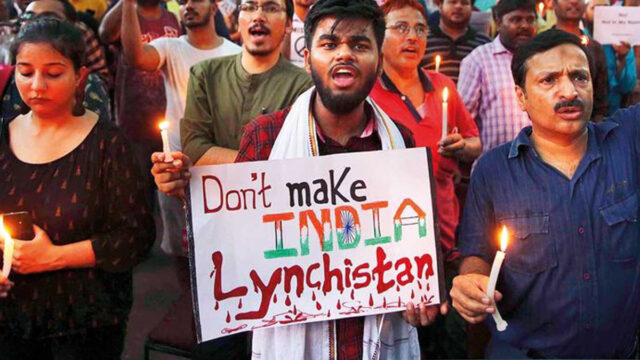
Generic image of demonstration against mob lynching, courtesy ED Times

[In this column this time, I am reproducing a piece that I recently wrote at the request of some friends – as a popular pamphlet, meant primarily for election purposes. Therefore, while it draws on the work of experts in the field, it does not really address the academic reader.]

“Hinduize all politics and militarize Hindudom – And the resurrection of our Hindu Nation is bound to follow it as certainly as the Dawn follows the darkest hour of the Night!” – Hindutva’s founding ideologue Vinayak D. Savarkar’s message to Hindudom on his 59th birthday, 25 May 1941.

“Our arms stretched as far as America on the one side – that was long before Columbus ‘discovered’ America – and on the other side to China, Japan, Cambodia, Malay, Siam, Indonesia and all the South-East Asian countries and right up to Mongolia and Siberia in the North. Our powerful political empire too spread over these South-East areas and continued for 1,400 years, the Shailendra empire alone flourishing for over 700 years – standing as a powerful bulwark against Chinese expansion.” M. S. Golwalkar, [Second Sarsanghchalak of the Rashtriya Swayamsevak  Sangh (RSS)], Bunch of Thoughts, Vikrama Prakashan, Bangalore 1968, p. 9.

“Emotions have more connection with the senses than with the faculty of reason; and therefore when principles are entirely lost sight of and emotions prevail, religions degenerate into fanaticism…They are no better than party politicsThe most horribly ignorant notions will be taken up, and for these ideas thousands will be ready to cut the throats of their brethren.” – Swami Vivekananda, “The Methods and Purpose of Religion”, The Definitive Vivekananda, Rupa, New Delhi, 2018, p. 211]

Hindutva is about Politics, Not about Religion

Continue reading Hinduism, Hindu Way of Life and RSS Hindutva

A people’s planning adequate to twenty-first century kerala

It is now about twenty-five years since the CPM in Kerala took the calculated risk of meeting neoliberalism half-way through an experiment in localising development. The People’s Planning Campaign drew eclectically on a range of ideologies, from Gandhian self-reliance to neoliberal self-help, not always in ways that were sufficiently self-conscious, but there can be little doubt that there was a conscious effort to build in some mechanisms, however minimal, to counter the possible ill-being that neoliberal responsibilized welfare could inflict.

Continue reading A people’s planning adequate to twenty-first century kerala

हमको डिक्टेटर मांगता!

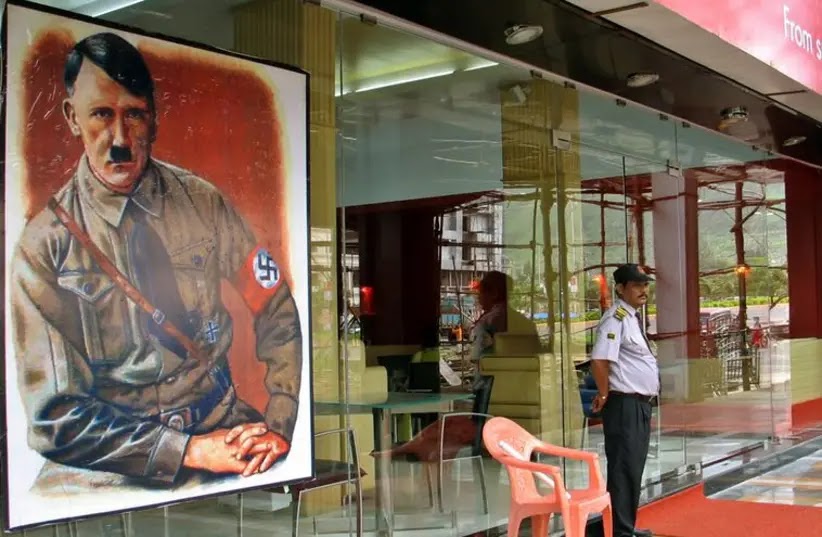
(अक्सर लोग बातचीत में यह कहते पाये जाते हैं कि इस देश में सैनिक शासन लागू कर देना चाहिए. ऐसा कहते समय वे यह भूल जाते हैं कि उनके पड़ोसी देशों में यह सब होता रहा है और इसने उन देशों का जहाँ पीछे किया है वहीं लोगों के जीवन को भी संकट में जब-तब डाल दिया है. जिस देश ने अपने इतिहास का सबसे महान और बड़ा संघर्ष अहिंसा, लोकतंत्र और धर्मनिरपेक्षता जैसे विराट मानवीय मूल्यों से जीता हो. वहां हिटलर की बढ़ती लोकप्रियता चिंतित करती है.

क्यों हम हिटलर को पसंद करने लग गयें हैं, क्यों हम किसी तानाशाह की प्रतीक्षा कर रहें हैं ? जबकि यह भारत और मानवजाति के लिए किसी विभीषिका से कम नहीं होगा.

प्रस्तुत आलेख इसी परिघटना की पड़ताल करता है .)

( मुंबई के एक रेस्तरां का दृश्य, फोटो आभार REUTERS)


“History teaches, but it has no pupils.”

Antonio Gramsci, (१)

क भारतीय प्रकाशक को इस मसले पर वर्ष 2018 में आलोचना का शिकार होना पड़ा जब बच्चों के लिए तैयार की गयी एक किताब जिसका फोकस विश्व के नेताओं पर था ‘जिन्होंने अपने मुल्क और अपनी जनता की बेहतरी के लिए जिंदगी दी’ उसमें हिटलर को भी उसने शामिल किया.

जानकार लोग बता सकते हैं कि ऐसी घटनाएँ- कम-से-कम यहां अपवाद नहीं हैं. अपनी मौत के लगभग 75 साल बाद हिटलर भारत में बार-बार ‘नमूदार’ होता रहता है.

एक स्पैनिश फिल्म निर्माता अल्फ्रेडो डे ब्रागान्जा- जो एक स्वतंत्र फिल्म निर्माता रहे हैं- और जिन्होंने कुछ साल पहले भारत में रह कर काम किया था, उन्होंने भारत में हिटलर की अलग किस्म की ‘मौजूदगी’ को लेकर एक फोटो निबंध तैयार किया था जिसमें बहुत कम लिखित सामग्री थी. वह हिटलर की उपस्थिति को लेकर इस कदर विचलित थे कि अपने इस निबंध की शुरूआत में उन्होंने पूछ ही डाला:

‘भारत हिटलर-प्रेम के गिरफ्त में है. हालांकि आबादी का बड़ा हिस्सा यह नहीं जानता कि आखिर ऐसा क्यों हैं, वे अपने निजी एवं पेशागत चिन्ताओं से परे सोचना भी नहीं चाहते कि क्यों भारत हिटलर से प्रेम करता है? क्या किसी लॉबी का हित इसके पीछे है.’ (2)

आज भारत में आलम यह है कि  यहूदी विरोधी हिटलर की चर्चित रचना ‘माईन काम्फ’ (मेरा संघर्ष) को आप किसी किताब की दुकान में ‘डायरी ऑफ़ एन फ्रांक- जो उस यहूदी लड़की की आत्मकथा है जो खुद हिटलर की यहूदी विरोध की नीतियों का शिकार हुई थी, के बगल में देख सकते हैं.

हिटलर ने भारतीयों के बारे में काफी अपमानजनक टिप्पणियां की थीं और उसने भारत की आज़ादी के संग्राम का कतई समर्थन नहीं किया था. ‘डिअर हिटलर’ इस फिल्म पर- जिसमें यह दावा किया गया था कि ‘हिटलर भारत का दोस्त रहा है’ अपनी प्रतिक्रिया देते हुए एक लेखक ने हिटलर के चित्रांकन पर आश्चर्य प्रकट करते हुए तथा निराशा जताते हुए लिखा था :

“हिटलर ने कभी भी भारतीय स्वशासन की हिमायत नहीं की. उसने ब्रिटिश राजनेताओं को सलाह दी कि गांधी और आज़ादी के आन्दोलन के सैकड़ों नेताओं को वह गोली से उड़ा दे. बार-बार उसने ब्रिटिश साम्राज्यवाद के प्रति अपना समर्थन दोहराया. वह यही सोचता था कि वह (ब्रिटिश शासन) उतना सख्त नहीं रहा है. ‘अगर हम भारत पर कब्जा जमा लेते हैं’ उसने कभी धमकाया था, तब भारतीय लोग ‘अंग्रेजी शासन के अच्छे दिनों को याद करते फिरेंगे.’ (3)

( Read the full article here : https://samalochan.blogspot.com/2021/02/blog-post_3.html)

When-an-Assassin-Fascinates-a People”

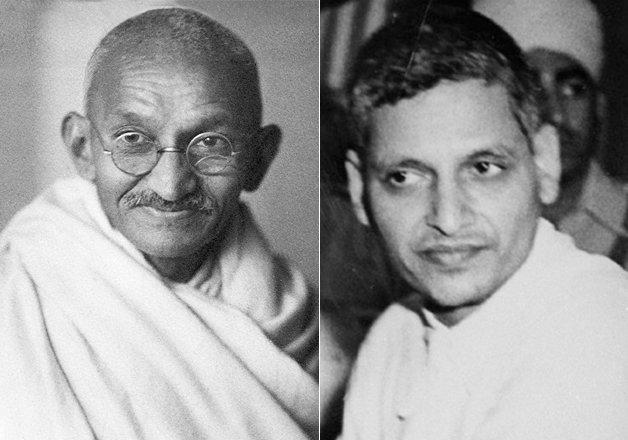
Behavioural psychologists say hatred and fear are two sides of the same coin. That explains the Hindu Right obsession with Gandhi and Godse.

Gandhi and Godse

Image Courtesy: India TV News

For now, the invidious project of the Hindu Mahasabha to set up a Nathuram Godse Gyan Shala in Gwalior has been shelved. Perhaps what terminated thill-conceived venture was the sheer anachronism: while the country would mark Gandhi’s 73rd death anniversary on 30 January, one section would be found singing paens to his assassin, Nathuram GodseIt would only have served to remind people of how an unarmed man was shot down on his way to prayer meeting.

This killing was Godse’s so-called contribution and, according to leaders of the Mahasabha, marked his patriotism. The same Hindu Mahasabha haalready launched “Godse workshop”, where the members exhort Indians to “strive to follow his path”. It was also instrumental in installing his statue in the city which had invited opprobrium.

The killing of Gandhi has been shown to be part of an elaborate conspiracy hatched by the higher-ups in the Hindutva supremacist forces. Remembrance of Godse would have been a reminder of the five attempts on Gandhi’s life since the mid-thirties that involved Hindutva forces. There was even a sixth attempt, according to Chunnibhai Vaidya, a Gandhian from Gujarat. Justice Jinvanlal Kapur, who was entrusted with examining the conspiracy to assassinate the Mahatma had concluded in 1969, “All these facts taken together were destructive of any theory other than the conspiracy to murder by Savarkar and his group.”

( Read the full article here)

From Neo-liberalism to Neo-fascism : Prof Prabhat Patnaik

Eminent political economist and public intellectual, Prof Prabhat Patnaik, delivered the 7th Democracy Dialogues Series lecture on ‘From Neo-Liberalism to Neo-Fascism’ organised by the New Socialist Initiative on January 24, 2021, 6 PM IST

Facebook : facebook.com/newsocialistinitiative.nsi

Abstract:

FROM NEO-LIBERALISM TO NEO-FASCISM

There has of late been a sudden and rapid growth of neo-fascism all over the world. The neo-fascists are not yet in a position to capture power in many countries; and even where they do, they are not yet in a position to make the transition to a fascist State. But they contribute everywhere towards a fascification of the society and the polity. This emergence of neo-fascism is the culmination of the global pursuit of the neo-liberal trajectory, which greatly widened income and wealth inequalities in every country and led even to an absolute immiserization of vast masses of the working people in third world countries like India. For a while the hope was entertained that the people would become better off in due course as rapid growth continued. But with the onset of the global economic crisis, itself a result of the widened economic inequalities, such hopes have been belied. The corporate-financial oligarchy therefore has to find a new prop for itself and forms an alliance with neo-fascist elements to shift the discourse away from conditions of material life towards vilifying the “other”, typically a hapless religious and ethnic minority.

The gender between men’s legs and other learnings from a college in kerala

Over the past one year, I have been trying to make a college in Kerala – in a women’s college in Kerala– take some action against one of their faculty members who rained abuse on me publicly, including a public assertion about his possession of a penis, at a seminar in which I was an invited guest. This happened in November 2019.

Continue reading The gender between men’s legs and other learnings from a college in kerala

A lesson in political theory from farmers’ unions

A little bemused, I heard a writer addressing the farmers’ protests recently say in all solidarity and sincerity – “What we have been writing about for long, you have demonstrated at ground level.”

On the contrary, I believe that this massive and electrifying protest against the farm laws is at the cutting edge of political theory and political practice, from which writers and academics must listen and learn.

Please listen to the statement by Kanwaljeet Singh on the Supreme Court judgement staying the farm laws, and setting up an “expert” committee to “negotiate” between the farmers and the government.

Speaking on behalf of the joint forum of farmers’ unions, Kisan Ekta Morcha, Kanwaljeet (of Punjab Kisan Union) makes what I think are two critical points regarding the law and how movements can relate to it. These thought provoking points have larger resonance and require wide ranging debate and consideration. Continue reading A lesson in political theory from farmers’ unions

Invention of Merit and the ‘Millstone of Caste’: Mohan Rao

Guest post by MOHAN RAO

“And yet there must be deliverance for we are all otherwise convicted at birth.”

I want to thank Srivats and Anveshi for inviting to be part of a discussion about the book, Caste as Merit, by Ajantha Subramaniam.* I am not a scholar on these issues and I must confess this scares me sometimes, for I wonder if we can discuss these issues at all? Some friends actually advised me not to take part in this discussion, because I was, ineluctably,  going to be labelled as Brahmin, talking about a book written by a Brahmin in the US! In my own estimation though, I remain a nastika, a non-believer, out of Brahminical bounds.

I would like to begin by showing a lithograph – and a story.

Continue reading Invention of Merit and the ‘Millstone of Caste’: Mohan Rao

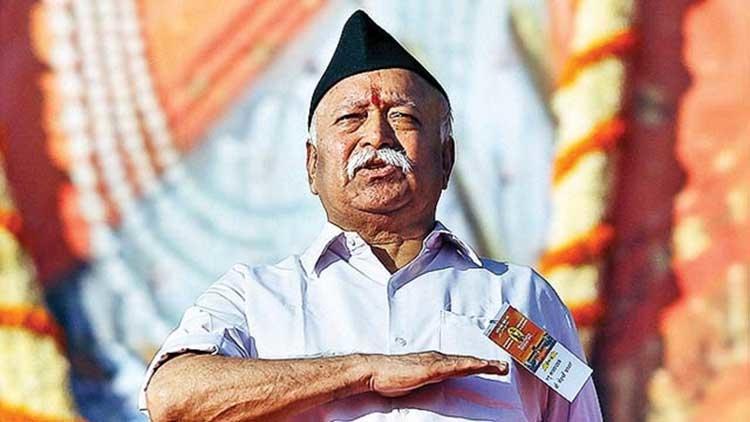
Mohan Bhagwat’s Divisive Mantra on Automatic Patriotism

It is a mischievous denigration of constitutional principles and values which declare every human equal and bar discrimination.

Mohan Bhagwat

“A Hindu is an automatic patriot and can never be an anti-national.” Remember the line? It is of Mohan Bhagwat, the Sangh supremo, who was at his best last week, at the launch of the book, Making of a Hindu Patriot: Background of Gandhiji’s Hind Swaraj. The book on Gandhi’s journey from Porbandar in Gujarat to England and South Africa and back to India, by JK Bajaj and MD Srinivas, was released by the Centre for Policy Studies.

In this book is the controversial claim that during 1893-94, Gandhi was pressurised to change his religion by both his Muslim employer and Christian colleagues in South Africa, which he refused. And by 1905, the book says, he became a devout Hindu.

Sure, everybody has a right to express their views, the authors and Mohan Bhagwat included, but the veracity of their claim still needs to be tested. As for the alleged pressure on Gandhi, the claim seems to come from out of the blue, and I would take it with a pinch of salt.

(Read the full article here )


0

मौजूदा किसान आन्दोलन पर वक्तव्य : रवि सिन्हा

Guest Post by Ravi Sinha

Image may contain: 1 person, beard

किसानों के इस आन्दोलन को उसके तात्कालिक उद्देश्यों और सम्भावनाओं मात्र के सन्दर्भ में देखें तो भी यह ऐतिहासिक है. अपनी अंतिम और सम्भावित सफलता से स्वतन्त्र इसकी उपलब्धियाँ अभी ही ऐतिहासिक महत्त्व की साबित हो चुकी हैं. लेकिन इस आन्दोलन के अर्थ और इसकी सम्भावनायें और भी बड़ी हैं. भारत की दुर्दशा के इस घोर अँधेरे में, जहाँ अधिनायकवादी फ़ासिस्ट शक्तियों के ख़िलाफ़ प्रतिरोध की सम्भावनााओं को एक के बाद एक कुचल दिया जाता रहा है, यह आन्दोलन एक मशाल बनकर सामने आया है. किसानों से शुरू होकर यह आन्दोलन सिर्फ़ किसानों का नहीं रह गया  है. पंजाब और हरियाणा के किसानों के द्वारा दिल्ली को घेरने से शुरू हुई यह मुहिम अब दिल्ली की सत्ता को घेरने वाली चौतरफ़ा मुहिम का रूप लेती जा रही है. हम किसानों के इस आन्दोलन को सर्वप्रथम इसलिए समर्थन देते हैं और उसमें इस लिये शामिल हैं कि उनकी माँगें जायज़ हैं और इस सरकार द्वारा ज़बरदस्ती लाये गये तीनों क़ानूनों को लेकर उनकी आशंकायें वास्तविक हैं. और हम इस आन्दोलन को इसलिये सलाम करते हैं और इससे प्रेरणा लेते हैं कि यह अँधेरे में रौशनी की मशाल बनकर सामने आया है.

 अगर हम आंदोलन की तात्कालिक माँगों और उद्देश्यों की विस्तृत चर्चा यहाँ नहीं करते हैं तो इसका अर्थ यह नहीं कि इनके जायज़ और ऐतिहासिक महत्त्व के होने में हमें कोई संदेह है. अब यह जगज़ाहिर है कि ये तीनों क़ानून उस शैतानी योजना का हिस्सा हैं जिसके तहत कृषि क्षेत्र को कारपोरेट पूँजी के प्रत्यक्ष आधिपत्य में ले जाने की तैयारी है. यह न केवल किसानों की रही-सही आर्थिक सुरक्षा को समाप्त करेगा, सरकार को उसकी जिम्मेदारी से मुक्त करेगा और न्यूनतम समर्थन मूल्य तथा राज्य-संचालित मंडियों की व्यवस्था को तोड़ देगा, बल्कि यह पूरे देश की आम जनता की खाद्य-सुरक्षा – जितनी भी है और जैसी भी है – को ख़तरे में डाल देगा. साथ ही ये क़ानून भारत के संघीय ढाँचे के विरुद्ध भी हैं, और केन्द्र द्वारा राज्यों के अधिकारों का अतिक्रमण हैं. यह सब आप सभी को मालूम है और इन कारणों से ही इस आंदोलन का सूत्रपात हुआ है.

Continue reading मौजूदा किसान आन्दोलन पर वक्तव्य : रवि सिन्हा

Farming the Future, Farming As Future

Today is the last day of the dreadful year that 2020 was – not only because of the pandemic but it has been a year full of the most vicious attacks on dissent and protests. It has also seen wanton arrests of those who raised their voices against the myriad injustices of this regime. The year that began with the epic struggle against the CAA-NRC ends while another epic struggle – that of the farmers – is going on. This post is dedicated to them and to the future of the farmers in struggle.

In the video above, Narayana Reddy, a farmer talks about farming. Having run away from home at a young age and worked as a cleaner earning Rs 40 a month, Reddy gradually got better jobs and saved some money with which he bought land for farming. Listen to his brief account here and you will realize that this charismatic and much celebrated farmer started off farming exactly the way it was understood in those days – that is to say, with standard ‘Green Revolution’ techniques.  In five to six years, Narayana Reddy tells us, he became a spectacularly successful model farmer but something was amiss. Despite high yields, I was continuously losing money, he says. The story, with minor variations, was the same as that of Green Revolution farmers in Punjab: a few years of prosperity, accompanied by huge losses due to rising input costs (tractors, fuel, fertilizers, high-yielding variety seeds, pesticides, electricity run pumps), and rapidly deteriorating soil quality, depleting water table, disappearing of locally suitable crops.

There was no historical destiny or necessity in all this. Major US foundations like Ford and Rockefeller Foundations were involved in pushing this new way of doing ‘industrial’ agriculture developed by Norman Borlaug. I am not suggesting that this was a conspiracy but it was certainly something that took away control from the hands of the peasants and in the name of modernizing agriculture, made them dependent on big corporations (backed by the state) who were lurking behind this innocent-sounding rhetoric of increased productivity and prosperity. With the new farm laws, we are currently facing a fresh round of attacks on the autonomy and livelihooods of the farmers – and this time the government can’t pretend to any innocence in this regard.

So let us ask an elementary question: Why do people work and produce? The answer obviously is because they want to live well and live better in this world, here and now.

Continue reading Farming the Future, Farming As Future

Pandemic Lowers India’s Level of Democracy

THIS GOVERNMENT HAS STIGMATISED THE VERY IDEA OF PROTEST, YET IT IS STRUGGLING TO MANAGE THE MASS UPSURGE AGAINST THE FARM LAWS.

Parliament Closed

For nearly a month, lakhs of farmers have staged sit-ins on various points along the border shared by the national capital and neighbouring states. Their peaceful movement, which is drawing support from farmers across the country, is meant to persuade the government to repeal the farm-related laws that it pushed through Parliament in September.

The farmers have refused to accept the government’s claim that the new laws would benefit them. They insist that these laws would dismantle state procurement and open up agriculture to contract farming, which would only help big corporations. They have also been insisting that corporations will amass essential food commodities and manipulate stocks and prices, for the government has also revoked stocking limits.

The three laws were initially introduced as ordinances this summer while the Covid-19 pandemic was raging and the country was still segregated into red, green and amber zones. Thereafter, they were passed in Parliament without discussion or debate. The manner of their introduction—rather, imposition—threw all democratic norms to the winds and so farmers see no reason to trust the intention behind them either.

Farmers do not look forward to a time when large retail chains would dictate terms and impose conditions on them. They rightly say that these laws would usher in an attack on the right to food security of working people and escalate food prices, which would hurt all consumers.

The immediate response of the government to the concerns of farmers was to repress and distort their movement. Not a day has passed without fresh abuse hurled at them. Starting from “Khalistani” to “Urban Naxal” to “anti-national” to “fake farmers”, every trick in the book has been tried to stigmatise them. Nor have the authorities made serious efforts to stop those who are maligning this historic peaceful protest.

( Read the full article here)

Farm Laws, Farmer Protests and Agrarian Crisis : Dr Jaya mehta


Dr Jaya Mehta, economist and activist, has been associated with the Joshi-Adhikari Institute of Social Studies, author of many books who coordinated an all India study of the Agrarian Crisis delivered a special lecture on ‘Farm Laws, Farmer Protests and Agrarian Crisis’ on 27 th December 2020.
Abstract of talk :
The reforms in agricultural marketing contained in the three farm laws were first announced by the finance minister on 15th May 2020 as Prime Minister’s relief package for the people. When Covid and lock-down had created crisis in the entire economy, migrant workers were walking hundreds of kilometers to reach home and the majority of households desperately needed state support and protection, the Modi government chose to withdraw state intervention and deregulate market forces in agriculture to leave people in complete disarray. After the controversial monsoon session of parliament, the reforms to deregulate market became laws.

Continue reading Farm Laws, Farmer Protests and Agrarian Crisis : Dr Jaya mehta

Mass Politics and ‘Populism’ in the World of Indian Languages

Image courtesy Netherlands Institute for Multiparty Democracy

The label ‘populism’ has acquired unprecedented currency lately and is used to indiscriminately describe such a wide range of poliical figures and political tendencies that it seems to have lost all conceptual meaning. In the best of times, it was always a slippery concept that has been linked to democracy at one end and fascism at the other. On the one hand, it is seen as the democratic ‘excess’ that escapes the attempt of liberal-representative institutions to rein it in; on the other, it is seen as being of a piece with the fascist resort to antipolitical demagoguery and the rhetoric of the (national) ‘underdog’ oppressed by an elite (usually with international links).
The way the term is used these days to describe everyone from a Donald Trump, a Recep Erdogan or a Narendra Modi on the one hand, to the late Hugo Chavez, Evo Morales, Rafael Correa or even Bernie Sanders or Podemos and Syriza, on the other, defies all logic. What possible common denominator can one find between such diverse figures and political formations? That common denominator is simply ‘the people’ or the ‘underdog’ that they invoke – even if in completely different ways.

Continue reading Mass Politics and ‘Populism’ in the World of Indian Languages

Fascism, Democracy and the Left : Com Dipankar Bhattacharya


The 6th lecture in the Democracy Dialogues series organized by the New Socialist Initiative was delivered by Com Dipankar Bhattacharya, General Secretary of CPI (ML) Liberation on 20 th December 6 pm (IST) where he spoke on ‘Fascism, Democracy and the Left’

Abstract  : ‘Fascism, Democracy, and the Left’

With the rise of the Modi government, BJP has managed to establish a vicious grip on Indian polity. Parliamentary democracy and the constitutional vision of a secular democratic Indian republic have come under fierce attack. Instead of remaining busy with studying historical parallels we should treat the present phase as the rise of the Indian model of fascism and resist it with all our might. While we can locate the present Indian developments in the context of global economic and political trends in the post-Soviet world, there are strong roots in Indian history and society. One should revisit Ambedkar and the warnings he had issued right at the time of adoption of India’s Constitution.
The Left vision and role in politics has been historically identified with ideas and experiments of building socialism, but the challenge for socialism to offer a superior model of democracy has remained fatally neglected. In the face of a fascist offensive, the Left in India must emerge and assert as the most consistent and reliable champion of democracy.

Continue reading Fascism, Democracy and the Left : Com Dipankar Bhattacharya