Category Archives: Debates

Have Indian Muslims become the new ‘Make in India’ Punching Bag? Sabiha Farhat

Guest Post by Sabiha Farhat

[ A month ago from yesterday, a teenager called Junaid was lynched and murdered on a train in Haryana. Sabiha Farhat writes in the wake of visiting his house and meeting his family. The news cycles may have moved on to other stories, but we need to keep remembering Junaid, and why he was killed. – Kafila]

Once upon a time there  was a 15 year old boy called Hamid, who went shopping on the day of Eid with his Eidi .  A few days ago there was Junaid who went shopping on the eve of Eid.  Premchand’s Hamid was an orphan and lived with his grandmother in extreme poverty.  Junaid lived surrounded with love of his brothers, a sister, a doting mother, father and friends. Instead of the old, decrepit house of Hamid,  Junaid’s house has two rooms, it is not falling apart but it’s size and unplastered walls, do speak about the economic condition of his family.

As we approached Khandawli, Junaid’s village in Ballabhgarh a fear gripped me.  I did not have the courage to walk upto the house.  Junaid was brutally murdered on 22nd and here I was on 25th.  It was too soon, my mind said.  I should have let Eid pass.  But how could I have prepared Sewai in my house when a mother like myself had lost a young, healthy, happy child to hindutva fanatics?  I am a mother, I was angry and ashamed at home. And here, standing outside Junaid’s door, I was weak and helpless. Useless too.

Continue reading Have Indian Muslims become the new ‘Make in India’ Punching Bag? Sabiha Farhat

Bharat Mata and her unruly daughters

Bharat Mata’s daughter? But the Hindutvavadi motherland produces only sons – Hindu, savarna sons – to protect their mother’s ever fragile honour.

Let us begin these reflections with a moment from Nisha Pahuja’s disturbing film the World Before Her, which tracks two young women – Ruhi, a beauty pageant contestant and Prachi, a trainer with the Durga Vahini, women’s wing of the Vishwa Hindu Parishad.

While Ruhi and her fellow participants emerge as conventional and pallid, Prachi is fierce and questioning, independent minded. But towards the end of the film, you realize that for both women (and not for Ruhi alone), this period of training was only a small window that gave them a brief glimpse of broader horizons. It was only a brief moment of excitement and hope, and what seemed like freedom, before real life – the real lives of real women – closed in on them.

Throughout the film, Prachi has been telling the film-maker that she will never get married, she will live her life as a Hindutva activist. She emphatically rejects the ordinary life of a wife and mother. But towards the end, her father declares quite explicitly that this is out of the question. She can never be a full time activist. Of course she must get married. She has a womb, do men have wombs? Her responsibility then, is to bring up children. Initially in this sequence, Prachi argues against him vehemently, verges on the insolent, but gradually she falls silent. Her expression, still rebellious, but devastated, resigned, signals to us her recognition that the daughter of the Hindu nation is only in training to be a mother. That is the highest ambition she can have.

Continue reading Bharat Mata and her unruly daughters

Women’s Cricket – Rules Based Only on Gender Stereotypes Need to Go: Surabhi Shukla

This is a guest post by SURABHI SHUKLA

Playing for the Oxford University Women’s team and the Oxford Cricket Club, I have noticed three different rules for women’s cricket. These may be observed in other countries as well. I argue that these rules are based only on gender stereotypes about women’s inferior sporting abilities and even if were once instituted to encourage them to join the game, have now outlived their utility. 1. The women’s match ball is lighter than the men’s ball (also true at the international level). 2. The women’s match boundary is smaller than the men’s and; 3. One of my coaches here told me that the men’s bat is different from the women’s. This is incorrect, and the England and Wales Cricket Board (ECB) website states that both men and women are entitled to use Type A bats for one-day internationals. However, I include this point in my analysis because regardless of a rule, these kinds of statements from a coach translate into the lived experience of a female cricketer, and act as a rule for them.  Continue reading Women’s Cricket – Rules Based Only on Gender Stereotypes Need to Go: Surabhi Shukla

Promoting Superstition – Everything Official About It !

Image result for superstition

Bhupendra Singh Chudasama, Education minister of Gujarat and his colleague Atmaram Paramar, who handles the Social Justice Ministry, were in the news sometime back- albeit for wrong reasons. A video went viral which showed them participating in a felicitation ceremony of exorcists in Botad. They were also seen watching how a couple of the exorcists were beating themselves with metal chains to live music near the stage.

Perhaps it did not matter to them that the Constitution frowns upon such activities and Article 51A (h) of the Indian constitution clearly says that it shall be a fundamental duty of all citizens “to develop the scientific temper, humanism and the spirit of inquiry and reform.” Neighbouring state Maharashtra has even enacted a law (The Maharashtra Prevention and Eradication of Human Sacrifice and other Inhuman, Evil and Aghori Practices and Black Magic Act, 2013) to rein in all such activities and it criminalises practices related to black magic, human sacrifices, use of magic remedies to cure ailments and other such acts which exploit people’s superstitions. And it was a culmination of a prolonged movement led by activists led by Dr Dabholkar – who even faced martyrdom for his activities. Continue reading Promoting Superstition – Everything Official About It !

No Flag Large Enough – Jubilation in India and Collateral Damage in Kashmir

The recent incident of violence that led to the death of a police officer, DSP Ayub Pandith, was condemned by all kinds of people in Kashmir, as well as elsewhere. It prompted introspection, sadness and regret – like any tragedy of this nature should.

Yesterday two unarmed civilians, Tahira Begum, a forty three year old woman and a young man called Shahdab Ahmed Chopan of Brenty Batapora Village in Anantnag district in South Kashmir were killed along with two Kashmiri combatants (Bashir Ahmed Lashkari and another person who may or may not be called Abu Maz) in the course of a joint operation by the 19th Rasthriya Rifles of the Indian Army, CRPF and the Special Operations Group of Jammu & Kashmir police.

Continue reading No Flag Large Enough – Jubilation in India and Collateral Damage in Kashmir

प्रधानसेवक का मौन

ऊपर से शांत दिखने वाली भीड़ का हिंसक बन जाना अब हमारे वक्त़ की पहचान बन रहा है. विडंबना यही है कि ऐसी घटनाएं इस क़दर आम हो चली हैं कि किसी को कोई हैरानी नहीं होती.

The Prime Minister, Shri Narendra Modi participates in the mass yoga demonstration at the Ramabai Ambedkar Maidan, on the occasion of the 3rd International Day of Yoga - 2017, in Lucknow on June 21, 2017.

15 वर्ष का जुनैद ख़ान, जिसकी चाहत थी कि इस बार ईद पर नया कुर्ता पाजामा, नया जूता पहने और इत्र लगा कर चले, लेकिन सभी इरादे धरे के धरे रहे गए. उसे शायद ही गुमान रहा होगा कि ईद की मार्केटिंग के लिए दिल्ली की उसकी यात्रा ज़िंदगी की आख़िरी यात्रा साबित होगी. दिल्ली बल्लभगढ़ लोकल ट्रेन पर जिस तरह जुनैद तथा उसके भाइयों को भीड़ ने बुरी तरह पीटा और फिर ट्रेन के नीचे फेंक दिया, वह ख़बर सुर्ख़ियां बनी है.

दिल्ली के एम्स अस्पताल में भरती उसका भाई शाकिर बताता है कि किस तरह भीड़ ने पहले उन्हें उनके पहनावे पर छेड़ना शुरू किया, बाद में गाली गलौज करने लगे और उन्हें गोमांस भक्षक कहने लगे और बात बात में उनकी पिटाई करने लगे. विडम्बना है कि समूची ट्रेन खचाखच भरी थी, मगर चार निरपराधों के इस तरह पीटे जाने को लेकर किसी ने कुछ नहीं बोला, अपने कान गोया ऐसे बंद किए कि कुछ हुआ ही न हो.

ट्रेन जब बल्लभगढ़ स्टेशन पर पहुंची तो भीड़ में से किसी ने अपने जेब से चाकू निकाल कर उन्हें घोंप दिया और अगले स्टेशन पर उतर कर चले गए. एक चैनल से बात करते हुए हमले का शिकार रहे मोहसिन ने बताया कि उन्होंने ट्रेन की चेन भी खींची थी, मगर उनकी पुकार सुनी नहीं गई. इतना ही नहीं, रेलवे पुलिस ने भी मामले में दखल देने की उनकी गुजारिश की अनदेखी की.

विडंबना ही है कि उधर बल्लभगढ़ की यह ख़बर सुर्ख़ियां बन रही थी, उसी वक़्त कश्मीर की राजधानी श्रीनगर की मस्जिद के बाहर सादी वर्दी में तैनात पुलिस अधिकारी को आक्रामक भीड़ द्वारा मारा जा रहा था. जुनैद अगर नए कपड़ों के लिए मुंतज़िर था तो अयूब पंडित को अपनी बेटी का इंतज़ार था जो बांगलादेश से पहुंचने वाली थी.

( Read the full article here : http://thewirehindi.com/12095/mob-lynching-and-india/)

The method in madness and the case of Adarsha Vidyalayas in Assam : Delhi Action Committee for Assam

Statement by Delhi Action Committee for Assam 

Displaying Amar Asom 20-6-2017.jpg

(Protest in Guwahati against unconstitutional and discriminatory policy of the Assam govt. in teacher recruitment, organised by KMSS on 19 June 2017 (Photo courtesy: Amar Asom)

In an unconstitutional and discriminatory move, the Education Department of the Assam government has recently come up with a notification that bars candidates who have studied in the vernacular medium from appearing for the Special Teachers Eligibility Test (TET) for Graduate Teachers in the Adarsha Vidyalayas in Assam. The advertisement No. RMSA/Special TET/842/2017/2 dated 7 June 2017, issued by the Secondary Education Department of the state government states: “The candidates must be passed out from English Medium Schools as Adarsha Vidyalayas are CBSE affiliated English Medium School (sic).” To further clarify the matter, the Education Minister of the state, Himanta Biswa Sharma, said in a press conference that those who studied in Assamese or vernacular medium schools do not have the essential ability to teach in English medium schools. Mr. Sharma not only ridiculed and questioned the qualifications of those who studied in the vernacular medium but also invalidated the entire vernacular medium education system of the state. Continue reading The method in madness and the case of Adarsha Vidyalayas in Assam : Delhi Action Committee for Assam

Mathematics, Decolonization and Censorship: C. K. Raju

Guest post by C.K.RAJU
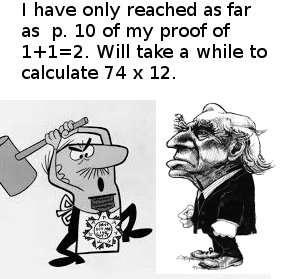
Did you find math difficult in school? Does your child? If so, what is the solution: change the teacher or change the child? Blaming the teacher or the child for math difficulties is a common but unsound explanation. Thus, problems with teachers or students should equally affect all subjects, not only math.The right solution is to change math. That seems impossible. People naively believe that math is universal. In fact, the math taught today, from middle school onward, is called formal math; it began only in the 20th c. with David Hilbert and Bertrand Russell. It differs from the normal math which people earlier did for thousands of years, across the world, and still do in kindergarten.Formal math adds enormously to the difficulty of math but nothing to its practical value. The practical value of math comes from efficient techniques of calculation, used in normal math, not prolix formal proofs. For example, the proof of 1+1=2 took Whitehead and Russell 368 pages of dense symbolism in their Principia. That proof is a liability in a grocer’s shop. In contrast, normal math is easy. One apple and one apple make two apples as most people learn in kindergarten. So should we switch back to normal math at all levels?

Russell

Continue reading Mathematics, Decolonization and Censorship: C. K. Raju

धर्म का बोझ और बच्चे

आखिर जिन छोटे बच्चों को क़ानून वोट डालने का अधिकार नहीं देता, जीवनसाथी चुनने का अधिकार नहीं देता, उन्हें आध्यात्मिकता के नाम पर इस तरह जान जोखिम में डालने की अनुमति कैसे दी जा सकती है?

Aradhna Varshil

17 साल का वर्षिल शाह – जिसने 12 वीं की परीक्षा में 99.93 परसेन्टाइल हासिल किए, अब इतिहास हो गया है.

दुनिया उसे सुविरा महाराज नाम से जानेगी और वह अपने गुरु कल्याण रत्न विजय की तरह बाल भिक्खु में शुमार किया जाएगा, ऐसे लोग जिन्होंने बचपन में ही जैन धर्म की दीक्षा ली और ताउम्र जैन धर्म के प्रचार में मुब्तिला रहे.

बताया जा रहा है कि इन्कम टैक्स आफिसर पिता जिगरभाई शाह और मां अमीबेन शाह ने अपनी सन्तान को बिल्कुल ‘धार्मिक’ वातावरण में पाला था, उनके घर में टीवी या रेफ्रिजरेटर भी नहीं था और बिजली का इस्तेमाल भी बहुत जरूरी होने पर किया जाता था क्योंकि शाह दंपति का मानना था कि उर्जा निर्माण के दौरान पानी में रहने वाले जीव मर जाते हैं, जो जैन धर्म के अहिंसा के सिद्धांत के खिलाफ पड़ता है.

वर्षिल-जो अभी कानून के हिसाब से वयस्क नहीं हुआ है, जो वोट भी डाल नहीं सकता है, यहां तक कि अख़बारों में प्रकाशित उसकी तस्वीरों में मासूमियत से भरे उसके चेहरे को भी देखा जा सकता है- के इस हालिया फैसले ने बरबस तेरह साल की जैन समुदाय में जन्मी हैदराबाद की आराधना (जो चार माह से व्रत कर रही थी) के बहाने उठी बहस को नए सिरे से जिंदा किया है, जो पिछले साल खड़ी हुई थी.

( Read the full article here : http://thewirehindi.com/11503/monk-jain-bal-diksha-fasting/)

Losing the Soul’s Acid Tongue … Terrorist State, Unbowed Children at Kerala’s Puthvype

[The title is inspired by Balachandran Chullikkad’s searing poetry]

I have recently been asked about why I didn’t write anything about the anniversary of the CPM-led government of Kerala.  Have also been asked why I don’t write about politics in Kerala anymore. The answer to the first is easy and painless: governments are not organic things. You measure your kid’s height and weight and other things and think about how they have grown in their minds and hearts on their birthdays. There is nothing that proves that anniversaries are the best occasions to reflect on how governments have grown and thrived. The answer to the second question is more conflicted and excruciatingly painful: it is because we have no politics in Kerala, but plenty of anti-politics. therefore, what one needs to do is invest in the silent, unglamorous, unpopular,  long-haul intellectual and political labour that may preserve the possibilities of politics in the future, and that may even create internalities capable of courage and responsibility necessary for being political. Continue reading Losing the Soul’s Acid Tongue … Terrorist State, Unbowed Children at Kerala’s Puthvype

Elephants in the Room – Who Gets the Autonomy in Autonomous Colleges? : Sanjay Kumar

Guest Post by Sanjay Kumar

In February this year, University of Delhi officials invited chairpersons of the six best known colleges to apply for  autonomy. So far, only the governing body of St Stephen’s College has reacted, authorising its principal to take up the application process. Teachers and staff associations of the university, DUTA (Delhi University Teachers’ Association) and DUCKU (Delhi University Karamchari Union), are against the move. Besides affecting the working conditions of faculty and staff, college autonomy has bearing on the academic content of undergraduate learning. It is surprising that many of the academic red flags are not even noticed in the policy. These obvious blind spots indicate that real motivations are not academic, but lie elsewhere.

The XII plan document of the UGC sets the target to make 10 percent of eligible colleges autonomous by the end of the plan period. It boldly declares, ‘(t)he only safe and better way to improve the quality of undergraduate education is to the link(sic) most of the colleges from the affiliating structure’. The claim is surprising, because world over university education is considered a good undergraduate education. A university with active research, accomplished faculty and diversity of subjects to offer is the best place for a young person to get initiated into the adventure and challenges of higher education. How taking students away from the ambit of a university becomes the way to better education requires a bit of an explanation. Continue reading Elephants in the Room – Who Gets the Autonomy in Autonomous Colleges? : Sanjay Kumar

1984 and Punjab’s Transformation to a Hindutva Laboratory: Gurpreet Singh

Guest post by GURPREET SINGH

It was summer of 1985 when we were visiting New Delhi, the national capital of India to attend a wedding in the family. I had a long hair back then and was aged 15. Both me and my uncle who were wearing turbans like other Sikh men were waiting at a bus stand for the next bus to go to our relatives. As soon as the bus arrived and we were about to climb in after other waiting passengers, the door was slammed on us.  When my uncle protested, the conductor shouted that there is no seat inside. Even as we pointed out at some empty seats, the answer was – “we have told you there is no seat.” Before we could argue the bus sped away.

The incident left me shocked but I wasn’t surprised.  Continue reading 1984 and Punjab’s Transformation to a Hindutva Laboratory: Gurpreet Singh

A Day Against Kalluri at IIMC, Delhi: Bastar Solidarity Network Delhi Chapter

Guest Post by Bastar Solidarity Network Delhi Chapter

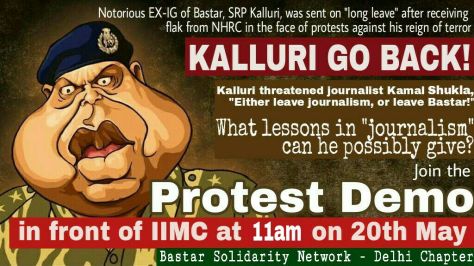
The democratic forces, organizations and the thinking minds of IIMC took part in a spirited protest today against the invitation extended to notorious ex-IG Kalluri by the IIMC administration to take part in a seminar. To start with, since last two days, there were several attempts on the part of the organizers to confuse/conceal Kalluri’s invitation. Immediately after the declaration of the protest, Kalluri’s name was dropped from the poster. There were also threats of counter-mobilisation by the BJP goons. But undeterred, as we reached the gates of IIMC at 11am, the site echoed with slogans of “Killer Kalluri Go Back”!

Continue reading A Day Against Kalluri at IIMC, Delhi: Bastar Solidarity Network Delhi Chapter

Violence against Dalits in Saharanpur, UP : A Report by CPI-ML (Liberation) & AISA Team that Visited Saharanpur

Guest Post by Sucheta De

CPI-ML- AISA Team’s Visit to Saharanpur – A Report

“Sarkar Hamari Hai, Police-Prashashan Bhi Hamara Hai”- Yogi Government Boosts Up Morale of Casteist Feudal Goons Who Burnt Dalit Village in Shabbirpur!

Casteist Goons from Dominant Rajput Community Enjoy Complete Impunity while Bhim Army Activists Continue to Face Witch-Hunt!

CPI-ML-AISA Appeal Everyone to Join Hands with the Dalits of Saharanpur in their Struggle for Justice!

Saharanpur Carnage: Teaching a Lesson to Politically Assertive, Self-Reliant Dalits Who Refuse to be Foot Soldiers of Hindutva’s Hate Politics

When BJP gains electoral majority, Saharanpur happens.

For last several years the belt of western Uttar Pradesh has been made the laboratory of the RSS-BJP’s sinister design of communal polarization and violence against Muslims. The 2013 Muzaffarnagar riots was a planned design by the RSS-BJP to polarize the belt on communal lines and reap electoral benefits. And now, after that design had delivered ‘electoral success’ for the RSS and BJP, upper caste feudal forces have started celebration of their ‘victory’ by unleashing attack on Dalits.

Continue reading Violence against Dalits in Saharanpur, UP : A Report by CPI-ML (Liberation) & AISA Team that Visited Saharanpur

कट्टरता के खिलाफ अज्ञेय: वैभव सिंह

Guest post by VAIBHAV SINGH

सच्चिदानंद हीरानंद वात्स्यायन अज्ञेय हिंदी के ही नहीं वरन समूचे भारतीय साहित्य में निरंतर जिज्ञासा और पाठकीय आकर्षण पैदा करने वाले रचनाकार के रूप में देखे जाते हैं। विभिन्न किस्म की दासता-वृत्तियों, परजीवीपन और क्षुद्र खुशामद से भरे मुल्क में उनका स्वाधीनता बोध जितना गरिमावान लगता है, उतना ही चौंकाने वाला भी। इसी स्वाधीनता बोध ने अज्ञेय की दृष्टि को भारत के लोकतांत्रिक मिजाज के अनुसार ज्यादा खुला व अपने रचना संसार को स्वेच्छा से निर्मित करने लायक बनाया। उनके इस स्वाधीनता बोध का प्रभाव व्यापक रूप से सृजन के बहुत सारे आयामों पर पड़ा है।

अज्ञेय के साहित्य पर लिखने वाले कई आलोचकों ने इस प्रभाव के मूल्यांकन का प्रयास किया है। जैसे कि निर्मल वर्मा ने स्वाधीनता बोध से उत्पन्न उनकी इसी खुली, व्यापक दृष्टि को उनके संपादन कर्म से जोड़कर देखा था। अपने द्वारा संपादित पत्र प्रतीक व दिनमान  में उन्होंने मुक्तिबोध, शमशेर बहादुर सिंह व सज्जाद जहीर को जोड़ा तो तार सप्तक के विविध खंडों में अपने से पूर्णतया भिन्न दृष्टिकोण वाले कवियों को। स्वाधीनता के प्रति तीव्र संवेदनशीलता को व्यक्तिवाद के दायरे में रखकर समझने की सरल चिंतन-प्रक्रिया साहित्य में बहुतायत से मौजूद रही है। ऐसा मानने वालों की सीमा प्रकट करते हुए निर्मल वर्मा ने कहा है कि स्वाधीनता के प्रति अत्यंत सचेत अज्ञेय के प्रति लोगों को झुंझलाहट उस समाज में स्वाभाविक थी जहां लोगों को हर समय किसी ‘ऊपर वाले’ का मुंह जोहना पड़ता है। इन ऊपर वालों में परिवार, जाति, रूढ़ि, पार्टी, विचारधारा, संगठन आदि सभी कुछ शामिल रहा है। यहां तक कि गांव में जातिवाद-परिवार की गुलामी करने वाले लोग जब शहर आए तो उन्होंने विभिन्न पार्टियों, संगठनों व विचारधाराओं की गुलामी को बिना किसी आलोचना के स्वीकार कर लिया। जिन्होंने नहीं स्वीकारा उन्हें कुलद्रोही, जनविरोधी, परंपराद्वेषी, धर्मविरोधी, व्यक्तिवादी आदि आरोपों का सामना करना पड़ा।

Continue reading कट्टरता के खिलाफ अज्ञेय: वैभव सिंह

The Elephant in the Room – Silence on Class Issues in Indian Politics : Sanjay Kumar

Guest Post by SANJAY KUMAR

Ramesh has been working as a daily wager in a Government of India office in Delhi for ten years. He is one of the army of peons, office assistants, security guards, gardeners, and cleaning staff which government offices, city municipalities, hospitals, schools and colleges of the metropolis employ regularly. He is a graduate, but gets the wage of an unskilled worker. He is among the fortunate ones who at least get government mandated minimum wage. Most private employers in the city violate the minimum wage act; either they pay less than the mandated amount, or make daily wagers work more than eight hours without any overtime.

Ramesh was pleasantly surprised this April when he noted a more than 30% increase in his wages. His daily wage that stood at Rs 360/ earlier was now Rs 513/. This was due to a Government of Delhi notification issued on 3rd March, 2017. The news was covered in the inner pages of some newspapers. Most TV news channels ignored it. Hence, it is not surprising that employees like Ramesh who are not associated with any organsiation of workers were not aware of this increase. Continue reading The Elephant in the Room – Silence on Class Issues in Indian Politics : Sanjay Kumar

LBJ, Kashmir, and Indian Liberals: Rajive Kumar

Guest Post by RAJIVE KUMAR

Towards the end of his presidency, Lyndon B Johnson, the 36th President of the United States of America, had been reduced to a figure of universal scorn and derision. His escalation of the Vietnam War to a point from which it became impossible to extricate the US ended up  in becoming one of the defining human tragedies of twentieth century. This was war fought on the basis of pretexts that did not actually exist.  The slur “Hey, hey, LBJ, how many kids did you kill today?” which became an anthem of sorts for protestors eventually compelled him to forgo running for a second term in office in 1968.  Those protesting against the war, those who eventually forced Lyndon Johnson to leave the political arena were Americans who were overcome with images of atrocities and the rising count of civilian deaths in a mindless war.

Continue reading LBJ, Kashmir, and Indian Liberals: Rajive Kumar

Linger Like Moisture Within – On Viren Dangwal’s Pitr-Paksh: Prasanta Chakravarty

Guest Post by Prasanta Chakravarty

Pitr-paksh/ पितृ-पक्ष (also pitru-paksh) is the 16 day lunar period in the Hindu diurnal calendar when believers pay homage to their ancestors, through specific food offerings. Most years, the autumnal equinox falls within this period, that is, the Sun transitions from the northern to the southern hemisphere during this time. In Northern and Eastern India and Nepal, among the cultures following the purnimanta or the solar calendar, this period usually corresponds with the waning fortnight of the month Ashwin. The souls of three preceding generations of one’s ancestor reside in Pitr-loka, a realm between heaven and earth. Continue reading Linger Like Moisture Within – On Viren Dangwal’s Pitr-Paksh: Prasanta Chakravarty

Karl Marx in the Times of Climate Change

The Communist Manifesto had, as its object, the proclamation of the inevitable impending dissolution of modern bourgeois property. But in Russia we find, face-to-face with the rapidly flowering capitalist swindle and bourgeois property, just beginning to develop, more than half the land owned in common by the peasants. Now the question is: can the Russian obshchina, though greatly undermined, yet a form of primeval common ownership of land, pass directly to the higher form of Communist common ownership? Or, on the contrary, must it first pass through the same process of dissolution such as constitutes the historical evolution of the West?

The only answer to that possible today is this: If the Russian Revolution becomes the signal for a proletarian revolution in the West, so that both complement each other, the present Russian common ownership of land may serve as the starting point for a communist development. [Marx and Engels, ‘Preface’ to the 1882 Russian Edition of The Communist Manifesto; all emphasis added]

The above passage, jointly signed by Marx and Engels, appears at the end of the 1882 ‘Preface’ to the Russian edition of The Communist Manifesto. It also appears, towards the end of a decade-long engagement with the Russian social formation and the social formation of many Eastern societies like India’s. The detailed notes, excerpts and commentaries compiled by Marx, published later as The Ethnological Notebooks of Karl Marx, belong precisely to the end of this period, the years 1880-1882. Marx passed away the following year, in 1983. Continue reading Karl Marx in the Times of Climate Change

A Non-believing Muslim’s Experience of Islamophobia

Guest post by SARAH ATHER

My life has revolved around the concept of God. I have been a Muslim, a theist, an agnostic and an atheist in all types of phases of my life. I am sure, I am still just growing and my perceptions will mature as I grow. My Muslim identity slowly faded when I picked Dawkins and Ayaan Hirsi Ali in my late teens. To put it simply I was a perpetually angry Muslim. Angry at Islam, angry at Wahabism, angry at imposed patriarchy in Islam. I believed religion was so bad for the world, so unscientific. And so I wrote and I discussed with my fellow Hindu friends. They opened their hearts out. A lot of them told me how Muslims were always cruel and misogynistic. And they told me how I was different to see the truth. I felt a sense of moral superiority, I felt I was so unbiased and rational that I could see faults in my own religion. Continue reading A Non-believing Muslim’s Experience of Islamophobia

Thinking Labour in Contemporary India – For a Different May Day Agenda

Massive Chalo Una rally, image courtesy, thenewsminute.com

This May Day comes at a very crucial juncture in our history. Crucial, not simply because there is a belligerent Hindu Right government in power but also because it comes in the wake of the most unprecedented belligerence of the upper castes and their all-round violence, especially on the Dalit communities across the land. Last year we had witnessed the most shameful incident of violence in the flogging of four Dalit youth by the cow gangs of Hindutva, which was followed by massive protests by Dalits and joined in by other sections of people, including some of the Left forces, as well. The attack had to do with the very specific form/s of labour that Dalit communities have been made to traditionally perform in Hindu society, in this case, the work of disposing of carcasses of dead animals, skinning them and so on.  Continue reading Thinking Labour in Contemporary India – For a Different May Day Agenda