Category Archives: Debates

Love In The Time Of Hate: Nikita Azad

Guest Post by NIKITA AZAD

It is easy to hate. In fact, one of the strongest emotions to have lasted so long and so vividly in our minds is hate. From La La Land to competitions in schools, we are taught to become self-serving narcissists; we are fed jealousy and hatred strategically. From the day we are born, we learn hating. We learn to mock our classmates for following a different faith, belonging to another caste, non-confirming to given genders, and everything else. As we grow, we learn to despise them for their grades and perhaps, reservations they deserve. And, when looking for jobs, we start hating them absolutely because we believe they are the cause of all our problems.

People hate what others eat. They hate what others wear. They hate Africans who study in this country because they wear ‘revealing’ dresses; they hate Muslim women because they do not wear those dresses. We let our lives be governed by this continuous production of systematic hatred that encompasses all our choices and decisions. For example, some people would never rent a room to independent women or Muslims because they cannot stand the sight of something or someone who doesn’t accrue to their ostensibly ‘homogenous’ culture. And, some would threaten a woman with rape, a woman who wants nothing else but peace and non-violence.

Then there are people like me. Who hate hate; who hate bigotry and prejudices, and who wish to transform this scenario and end this vicious cycle of reproduction of hatred and self-centeredness amongst humans. Continue reading Love In The Time Of Hate: Nikita Azad

Bovines, India And Hinduism: Rajani K. Dixit

Guest post by RAJANI K. DIXIT

In Vedic mythology we come across the story of sage Trita looking for fire and finding it in the head of a cow. Today we face a really big and scorching fire ensuing from bovines in India. Cows, we are told, are worshipped by Hindus and cow slaughter is therefore a religiously sensitive subject. Dalits and non-Hindus have been severely tortured or killed on suspicion of  cow slaughter by such sensitive people.

Let us see what the laws and constitution of our secular state as well as the religion claimed to be that of the majority of India’s population, have to say about cow slaughter.

In the Constitution of India, prohibition of cow slaughter is included in the Directive Principles of State Policy (guidelines to the central and state government for framing policies, not enforceable in any court of law). The directives on cow slaughter are recorded in Article 48 which reads

“The state shall endeavor to organize agriculture and animal husbandry on modern and scientific lines and shall, in particular, take steps for preserving and improving the breeds and prohibiting the slaughter of cows, calves and other milch and draught cattle” (Directive Principles of State Policy, Ministry of Law and Justice).

This makes it clear that, India being secular, the Directive Principles of the Constitution are not against the slaughter of cows, but of milch cattle in general, and not for religious but for economic reasons. The term ‘milch cattle’ includes cows, buffaloes as well as goats. India consumes much more of buffalo milk as compared to cow milk. Also, since more than 65% of the world population drinks goat milk, it is highly possible that large proportion of Indians also drink goat milk.

Continue reading Bovines, India And Hinduism: Rajani K. Dixit

India owes answers to the world for Samjhauta blasts :   Gurpreet Singh

समझौता एक्सप्रेस के लिए चित्र परिणाम

( Photo Courtesy : Indian Express)

Guest Post by Gurpreet Singh

India which has always claimed to be a victim of terrorism for all these years owe answers for one of the worst terrorist incident that is hardly discussed by the anti terror activists across the world either due to silence over Hindutva violence or Islamophobia that continues to grow in the post 9/11 environment.

Ten years have passed as the families of the victims of Samjhauta blasts continue to wait for justice.

On February 18, 2007 explosions aboard Samjhauta rail express that connects India and Pakistan left 68 people dead and about 50 injured. At least 42 of the victims were Pakistani citizens most of them returning to their home country after visiting relatives in India. The rail service was started to connect the families divided by partition of India and Pakistan in 1947 and promote people to people contact between the neighbouring nations that have gone to two major wars in 1965 and 1971. Continue reading India owes answers to the world for Samjhauta blasts :   Gurpreet Singh

Remembering Chandu, Friend and Comrade: Kavita Krishnan

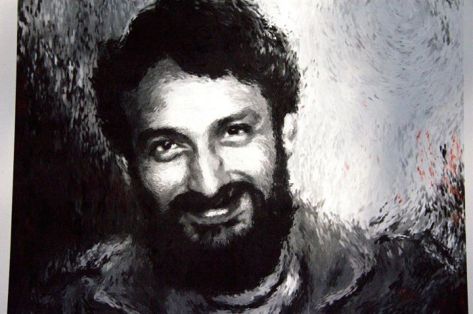
Chandrashekhar (Comrade Chandu)

Guest Post by Kavita Krishnan

It’s been twenty years since the assassin’s bullets took Chandu away from us, at 4 pm on 31 March 1997.

I still recall my sheer disbelief when a phone call from my party office at my hostel that evening informed me ‘Chandu has been killed.’ Chandrashekhar as well as youth leader Shyam Narayan Yadav had been shot dead while addressing a street corner meeting in Siwan – ironically at a Chowk named after JP – Jaiprakash Narayan, icon of the movement for democracy against the Emergency. A rickshaw puller Bhuteli Mian also fell to a stray bullet fired by the assassins – all known to be henchmen of the RJD MP and mafia don Mohd. Shahabuddin.

In the spring of 1997, as JNU began to burst into the riotous colours of amaltas and bougainvillea, Chandu bid us goodbye. He had served two terms as JNUSU President (I was Joint Secretary during his second stint) and had decided to return to his hometown Siwan, as a whole-time activist of the CPI(ML) Liberation. He had made the decision to be a whole-time activist a long time ago. Chandu’s friends know that for him, the decision to be an activist rather than pursue a salaried career was no ‘sacrifice.’ It was a decision to do what he loved doing and felt he owed to society.

Continue reading Remembering Chandu, Friend and Comrade: Kavita Krishnan

Slimes Group Vice-Chairman Ameer Jain accused of molesting SOI employee Aaj Faker Shah? Breaking Faking News: Shehla Rashid

Guest Post by Shehla Rashid

Mar 21, Delhi: In a shocking revelation that has triggered panic amongst the media fraternity, renowned media tycoon, Ameer Jain, who is Vice-Chairman of the prestigious Parrot, Caveman & Co. Ltd, has been accused of sexual harassment by an employee of The Slimes of India newspaper, namely Aaj Faker Shah. Parrot, Caveman & Co. Ltd. (PCCL) is the group that owns Slimes of India, Slimes Now, Economic Slimes, Radio Tirchi, Movies Now and Then, Dhoom, Navbharat Slimes, Mumbai Broken Mirror and numerous other media outlets.

After the sexual harassment case filed by an employee of a major news magazine against its high profile editor some years ago, this is the most high-profile case of sexual harassment at the workplace in the media fraternity and is likely to result in a public spectacle, as the complainant, Aaj Faker Shah, has taken to Twitter to publicly make serious accusations of sexual assault against Jain. Normally, in cases of sexual harassment, the complainant must be accorded due anonymity. However, Shah reasons that he was forced to take this extreme step because the Slimes Group, in total violation of the norms prescribed by the Sexual Harassment at the Workplace Act (2013), sat on his complaint, victimised him for speaking out against Jain and even threatened to sack him. This reflects the state of implementation of the Workplace Harassment Law, rules for which were notified in 2014. Continue reading Slimes Group Vice-Chairman Ameer Jain accused of molesting SOI employee Aaj Faker Shah? Breaking Faking News: Shehla Rashid

Free the Maruti Workers: Maruti Suzuki Workers Union


Guest Post by Maruti Suzuki Workers’ Union

[This is a statement and an appeal by the Maruti Suzuki Workers Union condemning the unjust handing down of a life sentence to 13 workers of the Maruti Suzuki Manesar Factory for a ‘murder’ (of an HR Manager) that the prosecution could not prove that they had committed. Here too, the prosecution, and the judgement, relies on a chimera, ‘the reputation of make-in-india’ to justify a harsh punishment. Those who have watched this space will recognize that this recourse to figures of speech in the absence of evidence is a familiar move. It has happened before – to satisfy the hunger of a ‘collective conscience’ when a so-called ‘temple of democracy’ was attacked. This time it has been invoked to defend the ‘fake-in-India temple that houses the deity of a rising GDP’, which would of course otherwise be besieged by insurgent workers.

This text contains a hyperlink to a detailed reading and rebuttal of the prosecution’s arguments, which demonstrates how money and muscle power can always be an adequate replacement for legal acumen in the State of Haryana. Please do follow that link. For the further edification of our readers, we append a short video interview by Aman Sethi of the Hindustan Times of the special public prosecutor, which spins some imaginative legal theory and also radically updates our sense of class struggle. Please do have the patience to view that video. We promise that this will be rewarded. – Kafila Admin.]

Continue reading Free the Maruti Workers: Maruti Suzuki Workers Union

Deendayal in Government Schools : Neglecting Education, Indoctrinating Exclusion

चित्र परिणाम

(Photo courtesy : livehindustan.com, From left to right – Golwalkar, Deendayal Upadhyay and Atal Bihari Vajpayee, . Photo taken in Mathura during Goraksha/Cow Protection movement, 1965)

“DEENDAYAL UPADHYAYA is to the BJP [Bharatiya Janata Party] what Mohandas Karamchand Gandhi was to Congress” opined R. Balashankar, former editor of the Rashtriya Swayamsewak Sangh’s (RSS) organ Organiser and now a member of the BJP’s central committee, on Prasikhshan Maha Abhiyan

(The Indian Express,; September 24, 2016).

Cows inhale, exhale oxygen, says Rajasthan education minister Vasudev Devnani

(http://timesofindia.indiatimes.com/city/jaipur/cows-inhale-exhale-oxygen-says-rajasthan-education-minister-vasudev-devnani/articleshow/56612529.cms)

Rajaram (name changed) Principal of a school near Jaipur, Rajasthan is a worried man.

An honest teacher all his life, is not able to comprehend the rationale behind the recent order by the state education ministry asking every secondary and senior secondary school to purchase collected works of Deendayal Upadhyay Continue reading Deendayal in Government Schools : Neglecting Education, Indoctrinating Exclusion

UAPA – A Video Dossier: Media Collective, Arun Ferreira &Vernon Gonsalves

Video by Media Collective, Article by Arun Ferreira and Vernon Fernandes

Fifty Years of Unreasonable Restrictions

Arun Ferreira & Vernon Gonsalves 

Soon after its adoption, the Constitution of India was amended in 1951. At the time several progressive judgements[i] by the Judiciary held that laws which curb fundamental rights are essentially unconstitutional and fundamental freedoms could only be curbed in the most extreme of cases. The First Amendment, countered this by amending Article 19 to add the word ‘reasonable’ before restrictions and to add ‘public order’ as being one more ground for abridging Fundamental Rights.

The evolution of UAPA[ii] has to be seen in the background of this gradual but steady constriction of Article 19 which guarantees the fundamental freedoms of expression, assembly, association, etc. Continue reading UAPA – A Video Dossier: Media Collective, Arun Ferreira &Vernon Gonsalves

Radhika Vemula on Bhim Auto

radhika vemula के लिए चित्र परिणाम

(Photo Courtesy : indiatoday.intoday.in, Photo Illustration by Saurabh Singh)

..The value of a man was reduced to his immediate identity and nearest possibility. To a vote.  To a number. To a thing. Never was a man treated as a mind. As a glorious thing made up of star dust.  In every field, in studies, in streets, in politics, and in dying and living.

..My birth is my fatal accident. I can never recover from my childhood loneliness. The unappreciated child from my past.

(Excerpts from Rohith Vemula’s suicide note)


The middle of this month would witness a different type of Yatra on the streets of Telangana and Andhra Pradesh. Neither it would be led by high profile leaders – who have the aura of Z plus security with them – nor it would be undertaken in an ultramodern bus – fitted with latest facilities and which could even be used as podium for a public meeting.

It would be taken out on a blue pickup truck renamed Bhim Auto and would be led by a fifty year old woman Radhika Vemula  along with her son Raja demanding justice for her elder son Rohith. During this Yatra Radhika intends to visit one Velivada ( Dalit hamlet) after other in these two states to tell people how castiest forces are hell bent upon denying dalits their due rights and how justice is still being denied to her son who committed suicide because of the machinations of such people. (http://nsi-delhi.blogspot.in/search/?q=rohith+vemula). She would also communicate to them that not only the ruling dispensation at the centre led by BJP but the state governments in Andhra Pradesh and Telangana have been callous towards the plight of the Dalits and have joined hands to deny justice to her son. Not some time ago the government of Andhra Pradesh had made outrageous statements about Rohith not being dalit and earlier in February had demanded that Radhika ‘prove’ that she is Dalit in 15 days. Continue reading Radhika Vemula on Bhim Auto

Looking ‘Right’, Talking ‘Liberal’ – The Twists and Turns of Makarand Paranjape: Anirban Bhattacharya

Guest Post by ANIRBAN BHATTACHARYA

[This missive to Makarand Paranjape, who is a professor at Jawaharlal Nehru University, comes in response to his recent op-ed piece in the Indian Express where he comments on the events at Ramjas College, Delhi University on the 21st of February and in their wake, in Delhi University, on the 22nd of February]

Mr. Makarand Paranjape. In your analysis of the post-Ramjas fallout in Delhi University in Indian Express on the 4th of March, one can see that you have donned a “liberal” cloak. But there were way too many holes in that cloak to go without a counter and hence this response.

Continue reading Looking ‘Right’, Talking ‘Liberal’ – The Twists and Turns of Makarand Paranjape: Anirban Bhattacharya

Sterilization Death Camps in Bilaspur: An Open Letter to the Chhattisgarh Chief Minister by Concerned Citizens

[ This is a letter addressed to Raman Singh, the Chief Minister of Chhattisgarh by several concerned individuals and organizations regarding the impunity with which medical guidelines are put aside by professionals who enjoy the patronage and protection of the state government.]

We, the 138 undersigned individuals and organizations working across the country on health and women’s rights are shocked and dismayed that the case against surgeon Dr. R. K. Gupta has been dismissed by the Hon’ble High Court on grounds that “the alleged act committed by the petitioner was while acting in discharge of his official duty and admittedly no previous sanction was obtained before initiating prosecution case against him”.

The Anita Jha Judicial Enquiry Commission report has clearly pointed out that “It is evident from the facts that in the camps organized on 8.11.2014 and 10.11.2014 there was a breach in the important necessities hence the standard operating procedure were not followed. As a result of which the symptoms of infections were found in post operative female beneficiaries“. It further states that “On the background of deliberation of investigation point number 1 to 3, investigation committee has found following persons Guilty/responsible, functionary, during 08 and 10 November, 2014:- 4.1 For not following standard procedures and for medical negligence by immediate functionary Block Medical Officer, Takhatpur…………….and surgeon who conducted surgery in tubectomy camp at Sakri and Gaurella ( Surgeries were completed by the same surgeon in the both camps)”.

Continue reading Sterilization Death Camps in Bilaspur: An Open Letter to the Chhattisgarh Chief Minister by Concerned Citizens

“Karenge politics, karenge pyar” – New slogan and new politics: Baidik Bhattacharya

Guest post by BAIDIK BHATTACHARYA

[While the media worked overtime to present the developments in Ramjas College and Delhi University as a clash between two student organizations and two political formations, Baidik Bhattacharya here reflects on the new kinds of politics, rooted in the everyday and in love, that found expression in the University.- AN]

On 28 February, 2017, thousands of students and teachers of Delhi University and other academic institutions of the NCR region marched across the North Campus, protesting against the recent acts of vandalism and violence at Ramjas College. As the march progressed through the winding roads, touching various colleges and departments of the university, feisty students raised several slogans to oppose the perpetrators of such violence, the student organization of the RSS—the Akhil Bharatiya Vidyarthi Parishad or ABVP. Some of these slogans were well-known, some predictable, but some were really creative. I want to briefly discuss one such creative slogan, and its implications: “Karenge politics karenge pyar, ABVP hoshiyar.” Chanted primarily by groups of women and queer activists, this innovative rendering of one’s rights across the university campuses captured some of the pressing issues that have surfaced in the last couple of years in student politics.

Continue reading “Karenge politics, karenge pyar” – New slogan and new politics: Baidik Bhattacharya

A Tale of Two and a Half Marches – Two for Azadi and a Half for Ghulami.

[Videos of song by Shehla Rashid and of speeches by Nivedita Menon, Kavita Krishnan, Umar Khalid and Jignesh Mevani, courtesy, Samim Asgor Ali]

February gives way to March and spring returns to Delhi. And what a spring it is. The right wing thugs of the ABVP choose the wrong time to attack, once again. They must really get themselves a better astrologer, or at least a better class of charlatan who can tell them if there ever is a right time to stage their goon show. I suspect there isn’t.

Spring in DU - Fight Back DU
Spring in DU – Fight Back DU

Continue reading A Tale of Two and a Half Marches – Two for Azadi and a Half for Ghulami.

Hard Ways of Lucidity – Thinking About the Crisis in the University: Prasanta Chakravarty

Guest Post by Prasanta Chakravarty

As I see it, university spaces are being assaulted at least from two sides; though it seems as if the two sides are antagonistic to each other, in practice they come dangerously close to each other. How and why is this happening, and what can be done about it?

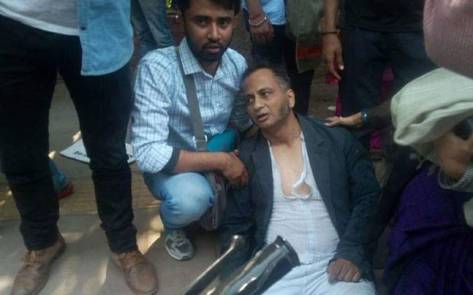
Prasanta Chakravarty, immediately after being assaulted on February 22nd. Image from the India Today Website.

Continue reading Hard Ways of Lucidity – Thinking About the Crisis in the University: Prasanta Chakravarty

Are Students at their Work? Prashant Kumar

Guest Post by PRASHANT KUMAR

Students who are protesting across the country are being charged that they are not doing what they are supposed to do. What I understand this charge say is that they are not doing their “duties” or fulfilling their “responsibilities” as a student. I seriously doubt thislimited understanding of being a “student”. To say this, I feel an intellectual burden to explicate what it means to be a student. I will argue that these students are also the one who, contrary to the charge, does their “duties” and carries out their “responsibilities”.

Generally speaking, anyone who tries to learn and reflect upon what he learnt can be considered as a student. However, one becomes a student technically when he does this job within an academic institution. In this sense, studentship is a job to get mature with the help of institutional academic training(s) as well as reflecting back on these. Maturity, as I discern, is nothing but to understand the real meaning of a world, and act according to this apprehension. In this sense, understanding and acting go together. Lack of one will categorically destruct the purpose of a student.

There is one more aspect of this maturity with relation to, what Kant terms, enlightenment. Continue reading Are Students at their Work? Prashant Kumar

A Small Matter of Security – Holding the Guilty Accountable for What Happened in Ramjas College on the 22nd of February: Shafey Danish

This is a guest post by SHAFEY DANISH

imag0406
Ramjas students and faculty held hostage inside campus by ABVP cadre

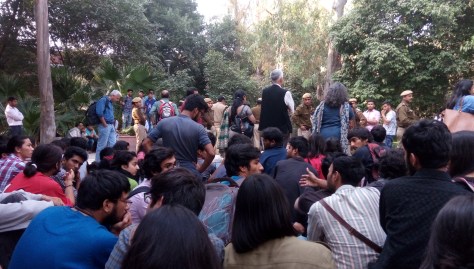
The violence that gripped Ramjas College on the 21st and 22nd of this month is now national news. We heard belligerent slogans by ABVP members of ‘chappal maro saalon ko’ (beat them with slippers), we saw students being chased on the campus, and we saw students being beaten up. All this culminated in a situation where students and teachers were held captive for over five hours within the campus premises. Let me emphasize that this violence was completely unprovoked.

On the 22nd of February, some of the students who were simply sitting with their friends were attacked. The police came and formed a cordon around them. Others joined the students in a gesture of solidarity. Teachers joined them to ensure that the students were not assaulted. The police cordon became their prison for the next five hours. And even then they were not safe.

They were repeatedly assaulted, threatened, and abused. All of this happened in front of their teachers and, more importantly, in front of the police, who, as is well known by now, did not do anything substantial. They could have maintained the cordon around the protesters, arrested those who were repeatedly carrying out the assaults, or – at the very least – prevented the attackers from coming back in (they had left for some time to attack the protest going on outside). But they did not. Whether this was because they were under pressure or because they were complicit is besides the point. The point is that students and teachers remained at the mercy of their attackers for over five hours.

But on the same day something far more ominous was also going on.

Continue reading A Small Matter of Security – Holding the Guilty Accountable for What Happened in Ramjas College on the 22nd of February: Shafey Danish

Gender Justice In Naga Society – Naga Feminist Reflections: Dolly Kikon

DOLLY KIKON in raiot.in

Dolly Kikon points out that Article 371 (A) is breached also in the ongoing coal mining operations and the oil exploration negotiations in Nagaland. Naga politicians, landowners, village councils, and business families have all interpreted the provision for their benefit to mine for minerals and not be held accountable for the environmental degradation. But it is only when women may enter the decision-making process (and potentially reverse such policies) that Article 371 suddenly becomes sacrosanct.

What is the meaning of gender? What is the meaning of Justice? Which comes first in Naga society and how do we understand it? Like many nationalist societies around the world, the issue of gender justice and rights have remained marginal for a long time. We were told that issues like women’s rights or gender justice could wait till the Naga people gained their freedom. In that context, what did it mean to bestow any kinds of rights on women in Naga society? When terms like gender ‘rights’ and ‘equality’ remains extremely resentful terms for a larger section of powerful Naga traditional bodies, they become meaningless words. I ask these questions in relation to the opposition against 33% reservation that escalated into a violent protest and brought the entire state of Nagaland to a standstill recently. If Naga customary law is seen as the foundation of justice, the exclusion of women from these powerful decision making-bodies negates the entire notion that these are pillars of justice. The Indian state and the male traditional bodies alike are responsible for excluding the Naga women from all spheres of representative political processes. Article 371 (A) is a prime example of the patriarchal nature of the Indian constitution that bestows the Naga male bodies to have full authority and power to interpret customary affairs covering social, religious, and criminal cases.

असहमतियाँ इस दौर में – प्रसंग जोधपुर विश्वविद्यालय : हिमांशु पंड्या

Guest post by HIMANSHU PANDYA

1-2 फरवरी को अंग्रेज़ी विभाग द्वारा आयोजित संगोष्ठी में प्रो. निवेदिता मेनन के व्याख्यान के बाद जयनारायण व्यास विश्वविद्यालय सुर्ख़ियों में है. विश्वविद्यालय में घट रहे विवाद को देखकर लग रहा है कि एक साल पहले की सारी कहानी ज्यों की त्यों दोहराई जा रही है. एक साल पहले उदयपुर में सुखाडिया विश्वविद्यालय में हुए व्याख्यान के बाद भी यही सब हुआ था. अफवाहें, तथ्यों का गलत सलत प्रस्तुतीकरण, मनगढ़ंत आरोप और तत्काल सजा. फ़र्क यह है कि इस बार हमले की तीव्रता और फैसले की हड़बड़ी ज्यादा है.

सबसे पहले उन बिन्दुओं पर चर्चा कर लें, जो आरोप की शक्ल में जोर जोर से दोहराए जा रहे हैं.

प्रो. मेनन के व्याख्यान पर मुख्य आरोप यह है कि उन्होंने देश का नक्शा ‘उल्टा’ दिखाकर राष्ट्र का अपमान किया. जिस बात को इतना बड़ा हौव्वा बनाकर पेश किया जा रहा है, वह एक सामान्य सा अकादमिक अभ्यास है, जो दुनिया भर में मान्य है. दुनिया गोल है और नक़्शे में उत्तर-दक्षिण-पूर्व-पश्चिम सिर्फ हमारी संकल्पनाएँ हैं. उत्तर आधुनिक विचारकों द्वारा पूर्व पश्चिम के द्वैत को बरसों पहले खारिज किया जा चुका है. उत्तर औपनिवेशिक इतिहास लेखन की एक सम्पूर्ण धारा है जो यूरोकेंद्रित इतिहास दृष्टि को खारिज करके नई सोच के साथ इतिहास को देखने की कोशिश करती आयी है. (और इस धारा में गैर मार्क्सवादी ही नहीं, दक्षिणपंथी रुझान वाले इतिहासकार भी शामिल हैं) इसी क्रम में नक्शों के यूरोकेंद्रित होने को चिह्नित करते हुए न मालूम कितने प्रयोग हुए हैं. आप एक लेख से इसकी झलक पा सकते हैं. (1) और तो और, आप चाहें तो उल्टा नक्शा अमेज़न पर जाकर खरीद भी सकते हैं. (2) सिर्फ उल्टा ही नहीं, ग्रीनविच रेखा की केन्द्रीय स्थिति (यानी यूरोप की केन्द्रीय स्थिति) को बदलकर या ध्रुवों के परिप्रेक्ष्य से दुनिया को देखकर या और भी अनेक तरीकों से भूगोलवेत्ता नक़्शे को बनाते और प्रदर्शित करते रहे हैं. उदाहरण के लिए यूनाइटेड नेशंस का लोगो जिस पद्धति का अनुसरण करता है वह सरल भाषा में ‘पोलर मैप’ कहा जा सकता है.

यू एन का लोगो

यू एन का लोगो

वैसे आपका नक्शा जैसा भी हो, जो चाहे उसे आयताकार फैला दे पर दुनिया गोल ही है और भारत के विश्वविद्यालय, मध्ययुगीन चर्च नहीं हैं.

सबसे मजेदार बात यह है कि जो विवादित चित्र प्रो. मेनन ने अपने व्याख्यान के दौरान दिखाया, वह NCERT की कक्षा 12 की किताब में एक दशक से है, अभी भी है और उसे देश भर के लाखों शिक्षक और विद्यार्थी रोज देखते हैं. और तो और एक साल पहले तक यही किताब हमारे अपने राजस्थान पाठ्य पुस्तक मंडल की किताब भी थी और इस तरह हमारे राज्य में भी लाखों शिक्षक-विद्यार्थी इस नक़्शे को देखते आये हैं. अंग्रेज़ी-हिन्दी दोनों पुस्तकों का पेज नं 150 देख लीजिये. अंग्रेज़ी वाला हमारे दोस्त ने उपलब्ध करवा दिया है. Continue reading असहमतियाँ इस दौर में – प्रसंग जोधपुर विश्वविद्यालय : हिमांशु पंड्या

The story of the Indian budget: Where the camera failed? Muhammed Shafeeque CM

Despite the controversies of demonetization, the central government has again succeeded in deftly hijacking the minds of Indian citizens through a riveting speech made by Finance Minister Arun Jaitley. The budget seemed to be especially important given third quarter statistics which are filled with drawbacks of the demonetization policy. Thus we had a budget speech completely focused on digitalization of a country where the ‘digital divide’ stubbornly persists. As the budget theme (Transform, Energize, and Clean) attempted to glorify existing conditions, there were unsurprisingly no transformations in the overall economic framework except the expected tax reduction. In the zeal for “energizing”, the budget had clean forgotten the needs of the informal sector including agricultural sector. Even though the government provocatively claimed that it had cleaned up black money, it revealed no data regarding the amount of black money actually mopped up from the market.

Continue reading The story of the Indian budget: Where the camera failed? Muhammed Shafeeque CM

ABVP Riots in Delhi University with Police Protection

For the second successive day, goons affiliated to the RSS-BJP backed right wing student mafia gang called ABVP (Akhil Bharatiya Vidyarthi Parishad) pelted stones and violently attacked peaceful assemblies of students and teachers in Delhi University. Journalists who were present were also beaten up. Phones and cameras and filming equipment were destroyed. An attempt was made to strangle a professor with his own scarf. He, and some other students who were injured had to be hospitalized. Luckily, they are shaken, but out of immediate danger. The incidents have been characterized as ‘clashes’ between right wing and left wing student groups by some sections of the media. Nothing can be further from the truth. These were not ‘clashes’. They were straight-forward one sided attacks by a mob intent on violence. A riot is not a clash. Continue reading ABVP Riots in Delhi University with Police Protection

An Appeal to the Education Minister of Kerala and the Teachers of the University College, Thiruvananthapuram


We, the undersigned, wish to express our dismay and deep concern about the recent violent events at University College, Thiruvananthapuram, which seem to indicate that the rights of college students, especially women students, are seriously compromised in this venerable institution. As women researchers, academics and teachers of Malayali origin, we are deeply disappointed by the responses of the police, the concerned college authorities, and the teachers there. Continue reading An Appeal to the Education Minister of Kerala and the Teachers of the University College, Thiruvananthapuram