It is a common sight to see professors today wandering through the corridors of our premier universities with a look of quiet desperation, but they should instead be offering prayers of thanks to the students who never show up. We have reached a peak of administrative efficiency where the traditional classroom, built to house a modest forty souls, is now legally mandated to accommodate sixty or even eighty. This logistical miracle, where two bodies are expected to occupy the space of one, is only possible because of the profound civic duty exercised by the truant. By choosing the comfort of their beds over the cramped benches of the lecture hall, these absent students prevent a literal stampede. They are the only thing standing between a smooth seminar and a public health crisis.
Two early-career teachers in private universities in India reflect on what has quietly transformed in their classrooms over the last few years, as they trace the rise of a new norm of ‘silence’. Their reflections ask what it means to teach in the intimate classroom space as it begins to mirror the shrinking democratic space and what forms of care, courage and pedagogy might keep the classroom thinking in these changing times.
I
In the last half a decade, i’ve felt my classroom in a private Indian university change in ways that are hard to capture through the usual metrics. The checklist is enviable: i retain full freedom to design courses, assign authors i want and structure electives around questions that matter to me. And yet, in one of the courses while teaching Margaret Canovan’s piece on ‘Two Faces of Democracy’, i realised what had changed. There is a subtle paradox: the formal freedoms of the private university remain in place, but the informal ecology of the classrooms has altered.
The resignation of Professor Nandini Sundar from the convenorship of the seminar colloquium at the Department of Sociology, Delhi School of Economics, has left an emptiness that language struggles to fill and words can barely cover. The seminar she was to host, titled Land, Property and Democratic Rights, was to be delivered by Dr. Namita Wahi, a senior fellow at the Centre for Policy Research and one of India’s most thoughtful legal scholars on land rights.
The event formed part of the department’s long-standing Friday Colloquium series—among the oldest and most cherished intellectual traditions in Indian academia. Over the decades, nearly every major figure in the social sciences has presented a paper here at least once. More than a seminar, it has been a ritual of conversation—one that has weathered political shifts, personal rifts, intellectual disagreements, and institutional flux, sustaining across generations a living legacy of thought, dialogue, and learning. Continue reading The Day the Colloquium Fell Silent – Bureaucratic Diktat and the Fate of Thought: S. M. Faizan Ahmed→
Report prepared by Jawaharlal Nehru University Teachers’ Association
(October 7, 2025 – updated version of report first released in September 2023)
Jawaharlal Nehru University (JNU) has suffered terribly under the effects of the concerted attack it has faced since February 2016. The vicious campaign slandering the image of the institution, its faculty, and its students, that was unleashed at that point of time was only the beginning of a long drawn process of sapping the institution of the vital energies that underlay its remarkable achievements and earned the institution such great prestige across the country and the world. What followed that attack has been a systematic process of undermining the institution from ‘within’, with the office of the Vice Chancellor serving as its hotbed. The current and the previous occupant of that office have shared the responsibility for this. Even as old wounds continue to fester, new injuries continue to be inflicted on the institution’s body politic – whereby JNU is being subjected to a process of death by a thousand cuts. This is happening despite the current Vice Chancellor being an alumna of the University.
In the last one decade, the terms ‘governance’ and ‘leadership’ have been turned on their heads to acquire rather ominous meanings, whereby they have in effect become synonyms for their antonyms. From being a ‘public’ institution in which the quest for knowledge and learning in all its dimensions thrives through the lives of its students and faculty, the University has been steadily pushed in the direction of being reduced to being an expression of the Vice Chancellor’s persona, into a fiefdom in which the writ of the occupant of that office reigns supreme. Displaying utter contempt for institutional norms and statutory provisions that made for democratic self-governance and orderly functioning, a centralised, arbitrary and dictatorial mode of (mis)governance was put in place, which tolerated no questioning of decisions. Currently, the JNU Administration under the leadership of the Vice Chancellor is waging a war against the University faculty. Continue reading JNU – The State of the University: JNU Teachers’ Association→
The statement and full list of signatories is below.
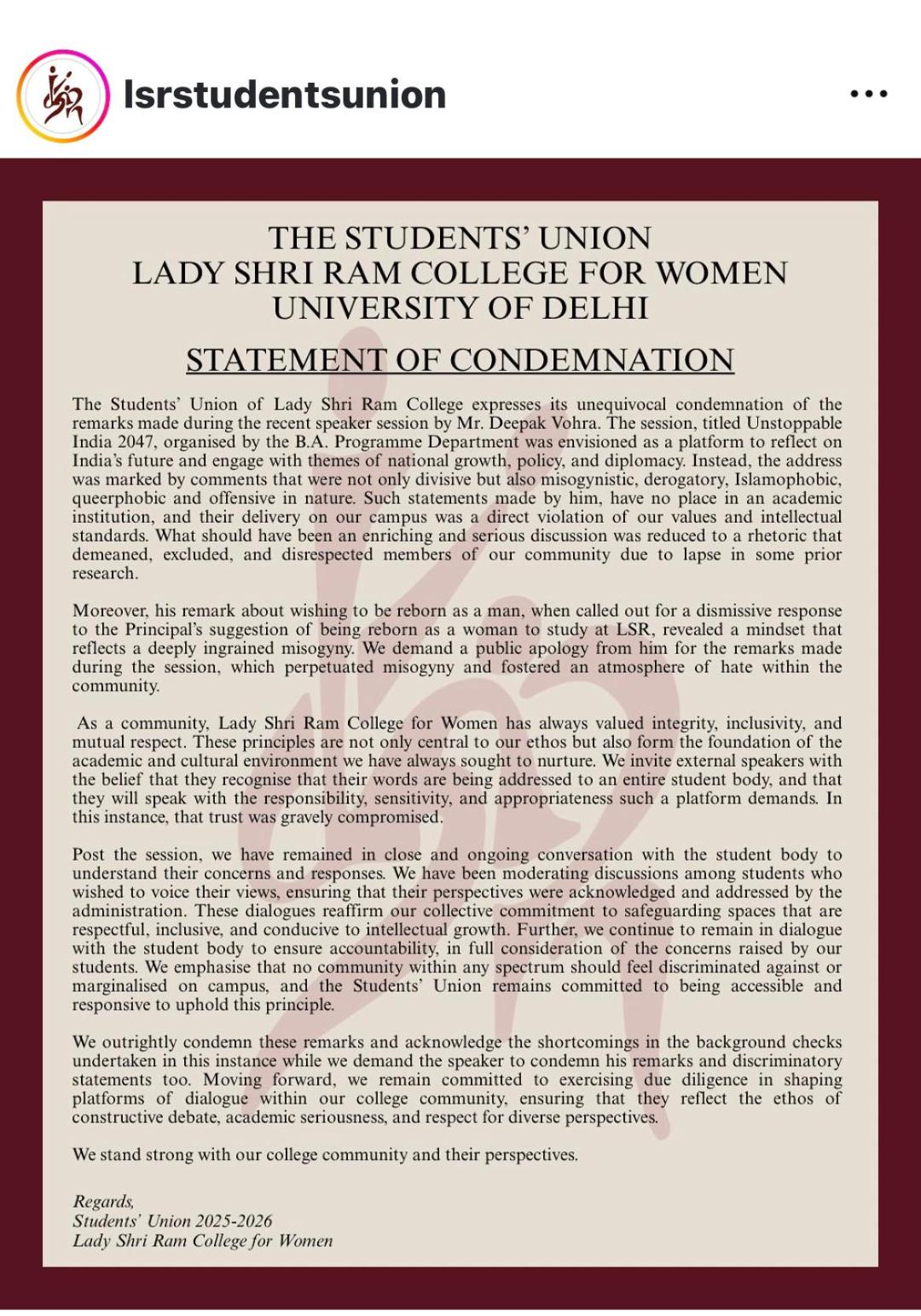
As proud alumnae of Lady Shri Ram College across the globe, we condemn the recent episode concerning Deepak Vohra in the strongest possible terms and call upon the college, and its senior management to explain how this came to happen.
This week, Lady Shri Ram College invited a retired diplomat Deepak Vohra, who freely articulated misogynist and communal views without being challenged at a lecture on college premises. He made openly anti-Muslim comments, told the young women in the audience that their roles were primarily that of mothers of future citizens, directed wholly inappropriate remarks to the principal of the college from the stage thereby insulting also the institution she heads. And yet, there was no censure or objection expressed at the event itself and students were not even allowed to walk out in protest.
Lady Shri Ram College (LSR) is not simply an undergraduate women’s college, it stands for a vision of a world in which women have space to explore their interests and capabilities and rests on the legacy of a newly democratic India that chose to make world class higher education accessible to women from a diversity of backgrounds. LSR as an institution exists to actively enable such a vision. Despite the deeply patriarchal contexts many students come from, LSR gives them the space to experiment with ideas, explore freedoms, be inspired by other women, all outside the constant censorious gaze of men. The teaching in the classroom has always been of an excellent standard, and outside it, there are a host of enrichment activities that makes an LSR education the well-rounded experience it should be. Continue reading LSR graduates express outrage at former diplomat’s comments at the college→
How saffron forces weaponise ignorance and stigmatise intellectauls
Silence gives consent
[Qui tacet consentire videtur – In Latin]
“Intellectual terrorists” are “more dangerous than cross-border terrorists”
These were the pearls of wisdom of the then Human Resource Development minister, who was addressing a conference of the Bharatiya Janata Yuva Morcha (December 19, 2001). Murli Manohar Joshi had even asked the ‘nationalist youths’ to counter ‘both types of terrorism effectively.’
…It would be 25 years soon since these objectionable remarks were targeted at India’s topmost historians, scholars, public intellectuals, even provoking followers to deal with them effectively’ like the way they deal with ‘cross border terrorists.’
Later commenting on these controversial remarks, the legendary historian Romila Thapar had famously said: ‘And then the government fell. But the books continued!”
Time for Thought Police?
As everybody can see, there is a sea change in the situation since the past more than a decade in this part of South Asia…
…..The target of attacks has now become broader, more expansive and more unpredictable. It is no longer restricted to ‘leftist’ ‘progressive’ writers, historians.
The recent move to ban 25 books on Kashmir history at a single go ‘for propagating false narrative and secessionism‘ — written by a spectrum of national and international scholars — which even do not share a similar world view, books which had been in circulation for years, even decades together is a case in point.
Is a resistance of some kind slowly emerging from the teaching community to save the secular character of education and foil Supremacist designs?
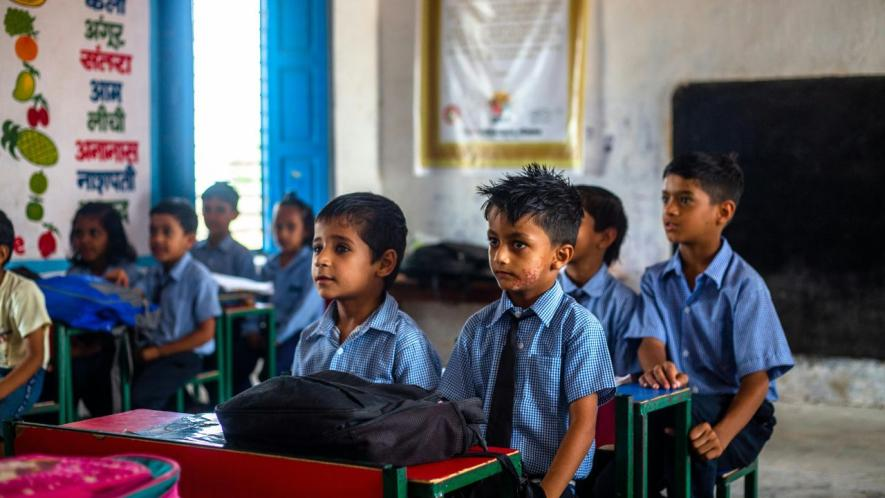
Representational Image. Image Courtesy: Pexels
“To learn to read is to light a fire.
Every syllable that is spelled out is a spark.” –
– Victor Hugo
Victor Hugo, (1802- 1885), the great French poet, novelist, and dramatist, once considered a national hero and a living symbol of republicanism in France, would not have imagined in his wildest dreams that a day would arrive where one of his famous quotes ‘“There is in every village a torch – the teacher; and an extinguisher – the priest”, would suddenly start reverberating across a section of learned people engaged in educating future generations in far away India, rather discreetly.
Close on the heels of an intervention by concerned citizens/activists on education in Uttar Pradesh, to stop Ramayana and Vedic workshops in Schools, as it violates Article 28 of the Constitution that specifically enjoins the State not to use public funds for religious instruction, one has come across two important and bold interventions from honourable members of the teaching community themselves, especially in the Hindi belt.
FIR For Asking ‘Light the Lamp of Knowledge’?
The police case against a school teacher from Bareilly for a Kanwad song is a case in point. The ‘offence’ of the teacher, Rajneesh Gangwar, is that he was singing a song in front of students asking them “not to bring kanwars“, instead “go light the lamp of knowledge’. A purported video of the incident, has gone viral. [ Read the complete article here : https://www.newsclick.in/why-no-gita-recitation-schools]
How they have become arsenal for the majoritarian Hindutva forces to convert the sovereign, independent, secular, socialist republic into a Hindu Rashtra.
25 th June 2025 happened to be the fiftieth year of the internal emergency imposed by the then Indira Gandhi regime. Much has changed during all these years but till date we are still far away from a balanced review of that period.
What really prompted Indira Gandhi to declare emergency , whether drive for personal power was the key factor, as has been reiterated multiple times…..
On the other hand, whether it could be said that she correctly perceived how sinister forces in the subcontinent were hell bent on sabotaging the democratic experiment at the behest of imperialist powers , who were even found to be provoking police and security forces to pursue their dubious agenda.
No doubt such a holistic review is a need of the hour but one thing cannot be denied that the biggest beneficiary of this whole exercise has been the Hindutva rightwing forces who are keen to transform India into a Hindu Rashtra
‘मैंने जापान में जनता को अपनी स्वतंत्रता की सीमाएं अपनी सरकार द्वारा स्वेच्छा से स्वीकार करते हुए देखा है…लोग इस सर्वव्यापी मानसिक दासता को प्रसन्नता और गर्व के साथ स्वीकार करते हैं क्योंकि वे अपने आपको शक्ति की एक मशीन, जिसे राष्ट्र कहा जाता है, में बदलने की तीव्र इच्छा रखते हैं…’
-रवीन्द्रनाथ ठाकुर, ‘नेशनलिज्म’
बच्चों के लिए फौजी तालीम !
भारतीय संघ के सबसे समृद्ध सूबा कहलाने वाले महाराष्ट्र ने स्कूली शिक्षा के क्षेत्र में एक नयी पहल हाथ में ली है। वह स्कूली छात्रों के लिए कक्षा 1 से ही बुनियादी फौजी प्रशिक्षण देना शुरू करेगा ताकि बच्चों में ‘देशभक्ति, अनुशासन और बेहतर शारीरिक स्वास्थ्य की नींव डाली जा सके।’ एक स्थूल अनुमान के हिसाब से चरणबद्ध तरीके से लागू की जाने वाली इस योजना में लगभग ढाई लाख सेवानिवृत्त सैनिकों को तैनात किया जाएगा। …..
यह प्रस्ताव कई स्तरों पर चिन्तित करने वाला है:
एक, जैसा कि जानकारों एवं शिक्षा शास्त्रियों ने बताया है कि राज्य का शिक्षा जगत एक जटिल संकट से गुजर रहा है, जिसका प्रतिबिम्बन कमजोर होती अवरचना / इन्फ्रास्टक्चर /infrastructure, अध्यापकों की कमी और नीतियों को लागू करने के रास्ते में आने वाली प्रचंड बाधाओं में उजागर होता है। ..अगर सरकार की तरफ से कक्षा एक से आगे फौजी प्रशिक्षण प्रदान करने की योजना को लागू किया गया तो उसका असर स्कूली शिक्षा के लिए आवंटित किए जा रहे संसाधनों में अधिक कटौती में दिखाई देगा।
Why this latest move by the state government is a worrying development.
“I have seen in Japan the voluntary submission of the whole people to the trimming of their minds and clipping of their freedom by their government, which through various educational agencies regulates their thoughts, manufactures their feelings, becomes suspiciously watchful when they show signs of inclining toward the spiritual, leading them through a narrow path not toward what is true but what is necessary for the complete welding of them into one uniform mass according to its own recipe. The people accept this all-pervading mental slavery with cheerfulness and pride because of their nervous desire to turn themselves into a machine of power, called the Nation, and emulate other machines in their collective worldliness.”
-Rabindranath Tagore, Nationalism
The richest state in the Indian union, Maharashtra, has embarked on a new initiative in the field of school education. It would provide basic military training to school students starting from Class 1, to promote “patriotism, discipline, and physical fitness among young learners from an early age”. Around 2.5 lakh ex-servicemen would be involved to deliver this training which will be introduced in a phased manner.
Undoubtedly, in the aftermath of Operation Sindoor, this proposal will be able to gather enough eyeballs in the rest of the country and it would not be surprise that few other Bharatiya Janata Party-ruled states would implement similar schemes in education.
Why the Yogi Adityanath-led BJP government’s move of using public funds for imparting religious instruction violates Article 28 of the Constitution.
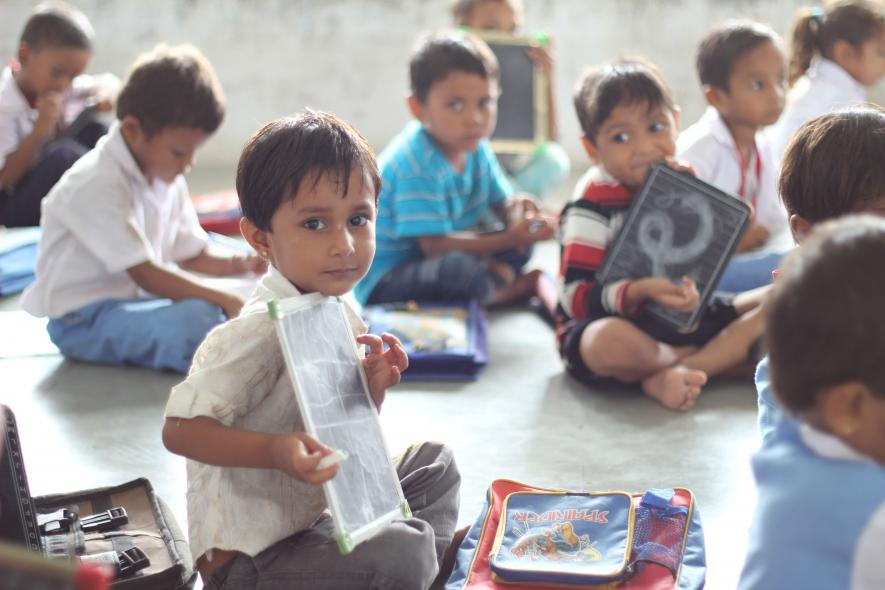
Representational Image. Image Courtesy: Pexels
“No religious instruction shall be provided in any educational institution wholly maintained out of State Funds” unless “established under any endowment or trust which requires that religious instruction shall be imparted in such institution”. (Article 28 of the Indian Constitution)
It has been more than 75 years since the founding fathers (and mothers) of the Constitution took this bold stand when they were shaping the guidelines around which the newly independent country would move forward. ..
…..Much water has flown down the Ganges, the Jamuna and all rivers of the country and it appears that slowly, but not so silently, attempts are on to water down the provisions of this Article and facilitating religious instruction in government schools through the back door.
The manner in which Yogi Adityanath-led Bharatiya Janata Party (BJP) government in Uttar Pradesh has suddenly decided to hold summer workshops on the Ramayana and the Vedas in government schools across the state, without any broader consultation with the stakeholders involved in this endeavour, is symptomatic of the brazen attitude of the government. We are told that these workshops will be organised under the aegis of the International Ramayana and Vedic Research Institute, Ayodhya, and will include activities, like Ramlila, Ramcharitmanas recitation, Vedic chanting, painting, and mask-making.
Keeping aside disagreement about customs like ‘Santhara’, one can at least agree that only an adult can make a decision to opt for death voluntarily in times of sickness.
Men never do evil so completely and cheerfully as when they do it from religious conviction.
Blaise Pascal (1623–1662)
French mathematician, physicist, inventor, philosopher, and Catholic writer
Namrata (name changed), the three-year-old daughter of IT professionals from Indore, is dead.
She had brain tumour which was successfully operated upon in January in Mumbai but it relapsed in March, and within less than a week, she breathed her last.
Apropos nothing seems amiss in her story.
The child got the best treatment available, and for her parents, belonging to Jain community, money was never a problem.
Despite all these relevant details, it is rather difficult to forget or disremember the past few hours of her life when she was still alive, when she must have been in tremendous pain and the way she was made to undergo some ritual to ‘improve her next birth’ — as impressed upon her parents by their spiritual leader.
We learnt that instead of hospital bed, where she should have been given palliative care, the child was shifted to the ashram of one Maharaj, a Jain monk, who had convinced his gullible disciples – her parents – to opt for Santhara“to decrease her suffering and improve her next birth”.
And these young IT professionals, barely in their 30s, had no qualms in shifting their dying daughter to the ashram, despite knowing full well that she was in tremendous pain and any sudden change would exacerbate her death. [ Read the full article here : https://www.newsclick.in/why-3-year-old-childs-death-will-haunt-us-long-time]
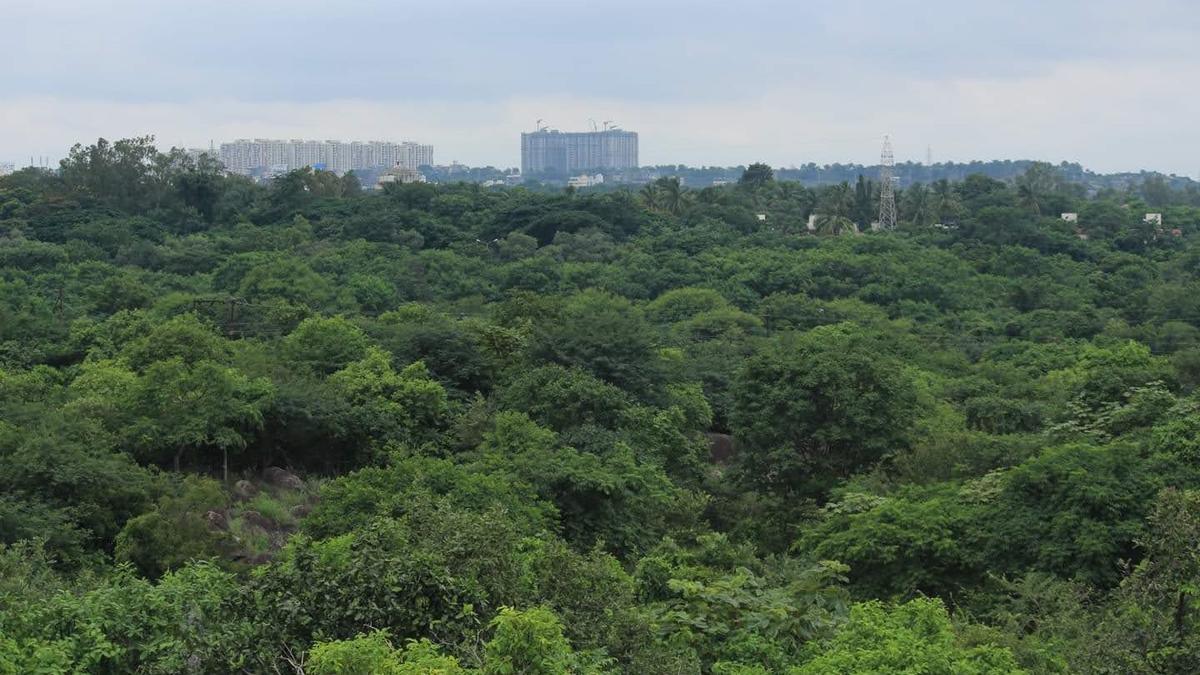
Recently, the students of the University of Hyderabad were protesting the Telangana state government’s bulldozing of 400 acres of ecologically vibrant, species-rich land within the university, undertaken as a preparatory step to auction it off. The state government sought to quell the protest by force, asserting that the land does not belong to the university and that it is within its rights to auction it. However, the Supreme Court has intervened and stayed the activities for the time being. Ego-bruised by the setback they have faced at the hands of the campus community, the Telangana government has now proposed that the entire 2300 acres of the university be turned into an eco-park, uprooting the campus in toto to a hundred-acre campus on the city’s outskirts.
Kancha Gachibowli forest, image courtesy The Hindu
Strangely, the university has not secured legal rights for the land it has occupied for several decades. However, the emphasis in the following note is on an aspect of the protest that lies beyond the legal dispute over ownership. It rather seeks to articulate the inarticulable—why the preservation of the ecology of these 400 or 2300 acres is not a standalone question but one that co-constitutes the very question of preserving the university itself.
As the debate on the three-language policy has intensified, what was originally an exchange between ministers of the union government and the government of Tamil Nadu, or between leaders of the Bharatiya Janata Party (BJP) and the Dravida Munnetra Kazhakam (DMK), has become a subject of commentaries and criticisms coming from observers, intellectuals and activists. The union government says that no state could be exempted from the implementation of the three-language formula as envisioned in the New Education Policy (NEP) 2020 and adds that Hindi is not made mandatory under the present formula. The condition is that two of the three languages must be native Indian languages. The DMK leadership argues in response that the three-language policy can still be an indirect route to push Hindi into the state. The latter has appeared firm in its argument that it is the state’s prerogative under the federal system to determine its language and education policy (though during emergency education was shifted to the concurrent list of the union government). It also opposes the measure adopted by the union government, that is, to link the funding under the Samagra Shiksha Abhiyan to the implementation of NEP 2020 and the language formula it includes. The parties which are not in alliance with the DMK in the state allege that the DMK has staged this conflict in order to ignite sub-national/regional sentiment to strengthen its position before the elections.
How Hindutva Supremacists are engaged in ‘rewriting history’.
‘There are times when madness reigns
And then it is the best who hang’
– Albrecht Haushoffer
[January 7, 1903 – April 23, 1945, German geographer, diplomat, author, who faced martyrdom for his resistance to Nazism]
Uday Bhembre, the 87-year-old widely respected Konkani writer, son of legendary freedom fighter Laxmikant Bhembre, who has been a Sahitya Akademi awardee, is a worried man these days.
He has discovered to his dismay that his courage to speak the truth and challenge a narrative being peddled by the ruling dispensation in Goa, .. regarding well established facts of Goa’s own history, would lead to protests, led by Right-wing formations and many among them trespassing his house at night and pressuring him to issue an public apology.
Not very many people outside Goa know how this great writer – he was even a MLA (1984-89) — had neglected his literary career to fight for rights of Konkani language and has been against attempts to merge Goa into Maharashtra, to preserve its culture.
Thanks to the existence of powerful voices of resistance and a vibrant civil society in Goa, a significant number of people have publicly condemned these attempts to intimidate Bhembre and demanded strict action against the perpetrators and exposed the collusion of the Right-wing formations with people in power. Many even went to meet the noted writer to express solidarity with him. ( Read the full article here :https://www.newsclick.in/goa-who-fears-truth)
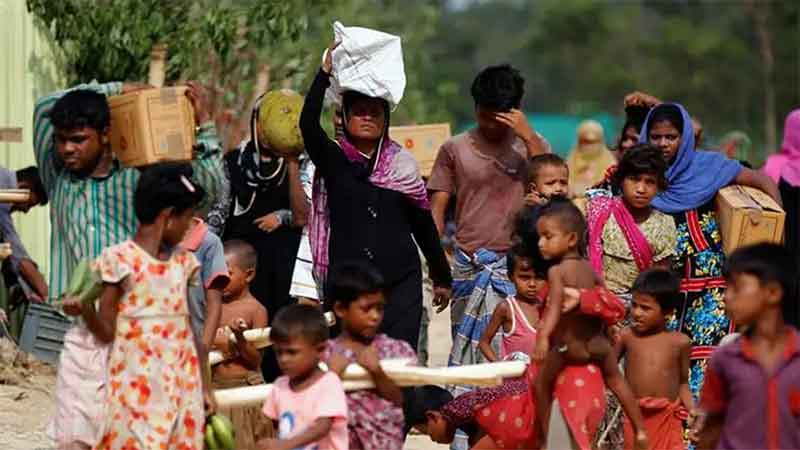
Aisha, a 7 year old girl living in Khajuri Khas Colony of Delhi, is yearning for a day when like her elder sister Asma, she would also be admitted to a nearby government school.(1)
This possibility is growing dimmer by the day, as the school has refused her admission and asked for Indian documents like Aadhar – which refugees do not possess.
Aisha is the younger daughter of Ahmad, a Rohingya refugee who has finally reached Delhi and has duly received his UNHCR card – which refers to the document issued by the UN refugee agency.
Thanks to the circular issued by Delhi government ( Dec 24) led by AAP asking schools to ensure strict guidelines during admissions perhaps Aisha will have to remain satisfied with the same private school which lacks facilities.With a drive underway to ensure that children of “illegal Bangladeshi immigrants” are not allowed enrolment, Aisha knows very well that her fate is sealed. (2)
Anita Ghai (October 23, 1958 – December 11, 2024) psychology scholar and practitioner, feminist and disability rights activist, taught at Jesus and Mary College, Delhi University, for about three decades, then moved to Ambedkar University Delhi, from where she retired as Professor. She is the author of (Dis)embodied Form: Issues of Disabled Women (2003),Rethinking Disability in India (2015) and a significant edited volume Disability in South Asia: Knowledge and Experiences (2018)
How much I learnt from you, Anita my friend, and how am I performing this unthinkable task of writing your obituary! I feel as if I am writing this for you to read, for you to be gently critical about, because for sure I would have missed a nuance or two while writing about the points at which gender and disability intersect, for you cannot be written about without reference to your thinking and your scholarship. About three decades ago you sought me out to have a conversation on disability, and that destablizing conversation never ever ended. You blew open my theoretical horizons by introducing me to the field of Disability Studies, to the idea of decentering disability from a medical to a social model, to the idea that we are not divided between abled and disabled bodies, but that we all occupy a continuum of being Temporarily Abled Bodies. A sudden fracture, an illness, and within a split second you move from abled to disabled body. You wear spectacles, your hearing is mildly impaired, you have that problem in bending your wrist because of a childhood fall – each one of us is on that continuum. Continue reading Salaam Anita! 1958 – 2024→
We are reproducing below a statement by the Democratic Teachers’ Initiative seeking wider support from the university community in the struggle against the termination of employment of Prof Sali Mishra and Prof Asmita Kabra by the Ambedkar University Delhi administration. Those willing to sign may please do so by clicking on the link at the end of the statement.
We express deep shock and rage over the termination of two esteemed faculty members of Dr. B. R. Ambedkar University (AUD), Prof. Salil Misra and Prof. Asmita Kabra, and request your solidarity in building a struggle against this unprecedented and grave act of injustice.
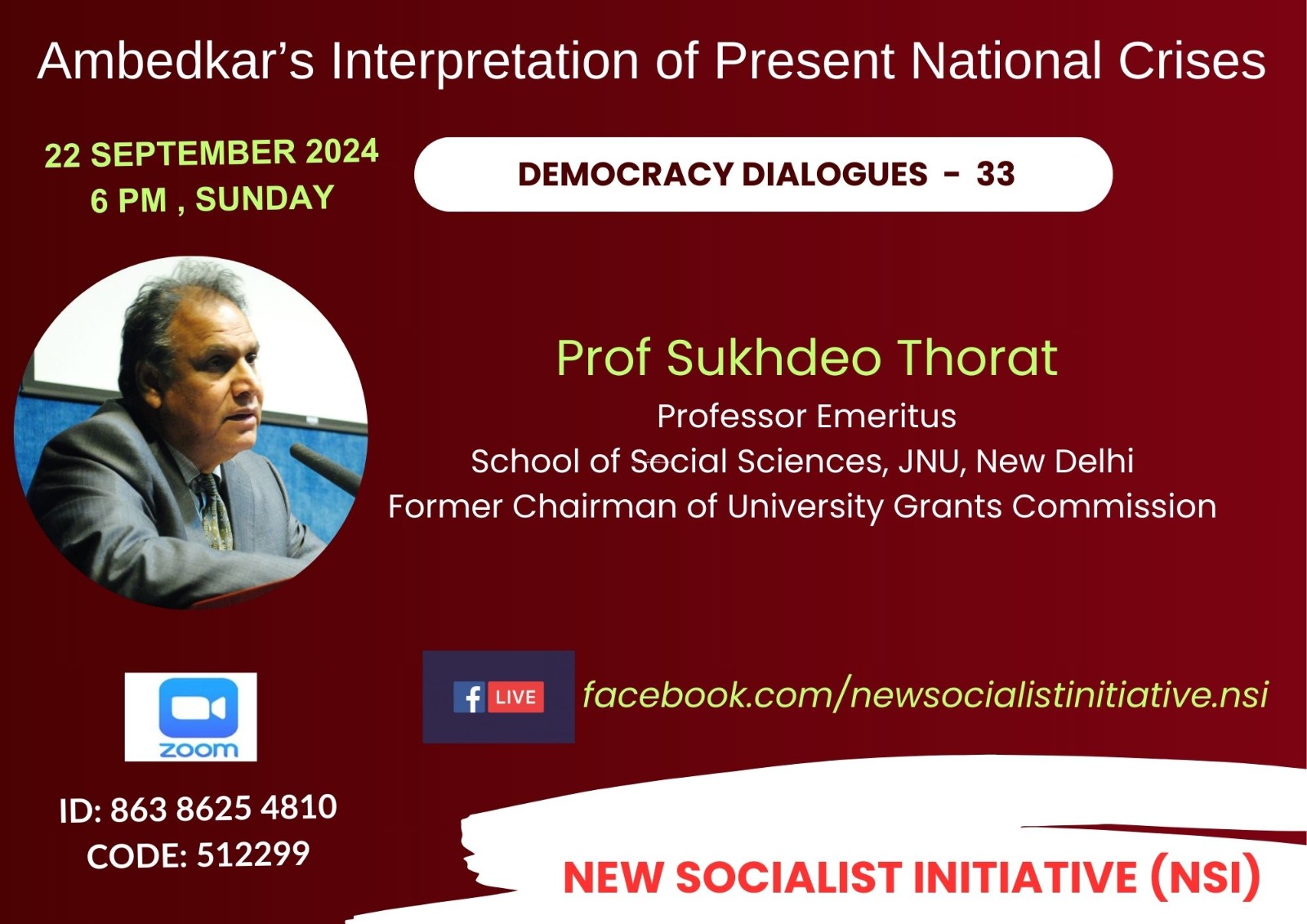
Professor Emeritus, School of Social Sciences, Jawaharlal Nehru University, New Delhi
Theme :Dr. Ambedkar’s Interpretation of Present National Crises
Number of scholars have tried to explain the present crisis by drawing insights from the experience of Fascism of Hitler in Germany 1930’s and/or similar viewpoints . Without undermining these attempts, I feel that Ambedkar’s theoretical perspective on Indian history presumably helps us more to grapple with the present crisis .In Ambedkar’s view it is continuation of the non-stop efforts from ancient times to bring back Brahmanism . Ambedkar observes that “that there was in ancient India, a great struggle between Buddhism and Brahmanism. It is not even a struggle but a quarrel over some creed ,The Buddhism was revolutionary and while Brahminsm was counter-revolutionary. It was a revolution and counter revolution in doctrine by a revolution in political and social philosophy”. The present attempt is an on-going legacy of the ancient Indian where it began , and carried through the medieval to British and to the present time with tenacity and stubbornness to maintain the privileges that the Brahmanical ideology bestowed on those who coined this ideology .The lecture will try to bring insights on Ambedkar’s perspective .
About the Speaker Prof Sukhdeo Thorat, Professor Emeritus, School of Social Sciences, Jawaharlal Nehru University, New Delhi ; former Chairman of University Grants Commission and former Chairman of ICSSR (Indian Council of Social Science Research) is a leading economist, educationist and writer. A renowned Ambedkar scholar Prof Thorat graduated with a B.A. from Milind College of Arts, Aurangabad, Maharashtra and has done PhD in Economics from Jawaharlal Nehru University. He was a Faculty Member at Jawaharlal Nehru University, New Delhi and visiting faculty at Department of Economics, Iowa State University, Ames, USA and has been associated with various national-international institutes and organisations. Recipient of many awards including Dr Ambedkar National Award (2011) and Padmashree ( 2008), he has authored and edited many books and monographs. Here is a list of his major publications : – Ambedkar on Social Exclusion and Inclusive Policy – Dalits in India? Social and Economic Profile (Sage) – Ambedkar in Retrospect: Essays in Economics, Society, and Politics (edited) with Aryama & Negi. (Rawat Publication) – Social Science Research in India : Status, Issue and Policies ( co-authored with Samar Varma) – Oxford University Press ( 2016) – Politics of Representation : Historically Disadvantaged Groups in India’s Democracy ( co edited with Prof Sudha Pai) Palgrave Macmillan ( 2012) – Untouchability in Rural India Sage, 2006 (with G. Shah, Harsh Mander, Satish Deshpande & Amrita) – Caste, Race, and Discrimination – Discourse in International Context (edited) (with Umakant), Rawat Publication, Jaipur (2004)
Bhakti Era as the Plebeian Plateau in the Civilizational Landscape of India
Guest Post by Ravi Sinha on a possible framework for looking at the millennial trajectory of Indian civilization
We have by now devoted several sessions to mapping the millennial trajectory of the Bhakti Movement across the history and the cultural geography of the subcontinent. Starting with the Tamil lands in the 7th century we followed Bhakti performing the pradakshina of the cultural landmass of the subcontinent, crossing the Vindhyas in its northward journey sometime in the 13-14th century. Our endeavour has been to understand the role of Bhakti in shaping the cultural and the civilizational mind of India. This, in turn, has been motivated by task of making sense of the role this mind plays in contemporary politics and in the rise of fascistic Hindutva in recent decades.
As we stated in the proposal to a previous session, we seek to understand the impact of Bhakti at two different time-scales. On the shorter time-scale of contemporary politics one looks at the phenomenon of communalism. The mainstream of the anti-colonial national movement considered Bhakti Movement as the harbinger of religious tolerance and syncretism that would help evolve the Indian brand of secularism. The subsequent history, however, paints a mixed picture. A social fabric and a cultural mind weaved by the Bhakti ideologies do not offer the kind of resistance to communalism and sectarianism as was expected of them. In our previous sessions we mainly stayed with evaluating the impact of Bhakti at the political-historical time-scale characterized by the problem of communalism and the rise of Hindutva.
On a longer – millennial – time-scale, however, one can evaluate the Bhakti phenomenon in the civilizational context. One can ask something like the Needham Question – why did the Indian civilization, despite its glory and accomplishments in the ancient and the medieval periods, fail to realize its cultural and scientific potentials? Why was it defeated often and why was it eventually colonized? Why did the West forge ahead, why has India lagged behind? Did the cultural mind and social ethos prepared by the Bhakti Movement play a role in the civilizational decline of India? These are very large questions not amenable to easy answers. But one must prepare to wrestle with them as they are of crucial importance for imagining and fashioning a desirable future for India. In this session, we finally arrive at the task of outlining a framework for asking and answering these questions.
For this purpose, we propose to take help of two large concepts – one of Axiality and the other of Modernity. The idea of axial revolutions was proposed for the civilizational breakthroughs that happened in the middle centuries of the first millennium BC in several different and unconnected societies – Judea (land of the Old Testament in the era of prophets), Greece (of pre-Socratic philosophers as well as of Socrates, Plato and Aristotle), China (of Confucius, Mencius and others) and India (of Upanishads, six systems of philosophies, and of Buddha) being the prime examples. We will briefly go through the idea of Axiality and see how we can understand it in the sequence of human cultural and cognitive evolution progressively from the mimetic (pre-linguistic, primarily based on gestures, rituals and body-language) to the mythic (linguistic but largely oral and narrative-based) to the theoretic (rational, abstract, normative and self-reflective). We will try to locate the Indian antiquity in the sequence of cultural evolution.
We will then make a millennial jump and outline the idea of Modernity, which can, in this context, be seen as a new kind of axial transition. The first axial transition did take the civilizations concerned from the mythic era to the theoretic era, but it still depended on the idea of the transcendental to reorder life in the realm of the mundane. The transition to Modernity, for the first time in human history, brings human autonomy to the centre-stage of history and civilization. Elimination of human dependence on the super-natural and on the transcendental is brought explicitly on the agenda and an objective and scientific knowledge of the cosmos is deployed into the service of human emancipation and freedom.
While the Indian civilization was a key example of the axial breakthrough two and a half millennia ago, its transition to Modernity has been faltering and patchy. While this may be true for many civilizations, it is especially disconcerting in the case of India which has had such a glorious antiquity at least in the domains of the mythic and of the theoretic. Of course, entire history of the intervening two millennia culminating in the colonial subjugation at the hands of the modernist imperialists is implicated in the complex and faltering progress of Modernity on the subcontinent and it cannot be explained on the basis of one cause or developments in any single arena. But one can be reasonably certain that the developments in the cultural-religious-civilizational arena play an important role in the civilizational transitions and transformations. The role of the millennial march of Bhakti must be assessed and evaluated in this context.
We will also engage with the theoretical issues that arise in this context of the materialist explanation of historical progress. There is no doubt that the historicalbreakthroughs and the transitions from one stage of history to the next happen through the push of advancing forces of production and, in this respect, the cultural-civilizational transformations are correlated with the developments in the material conditions of life. But there is a significant difference between the respective dynamics of systems and civilizations. While history progresses through replacement of one system by the next, in case of civilizations the older ones never entirely go out of existence. The older ones merely become the subterranean layers on which new layers arise or get deposited. The mimetic-ritualistic and the mythic, for example, have not disappeared from human civilization even after the axial-theoretic and the modernist-scientific stages have become increasingly entrenched.
Once again, I am not sure whether all this can be covered in one session even at the level of very sketchy outline of the argument. But the idea is to start thinking about these issues which, abstract and theoretical as they may sound, are of critical importance in making sense of contemporary politics and history.
Select Bibliography
Johann P Arnason, “The Labyrinth of Modernity: Horizons, Pathways and Mutations”, Rowman and Littlefield, 2020
Robert N Bellah, “Religion in Human Evolution: From the Paleolithic to the Axial Age”, Harvard University Press, 2011
S N Eisenstadt, “The Great Revolutions and the Civilizations of Modernity”, Brill, 2006
Neville Morley, “Antiquity and Modernity”, Wiley-Blackwell, 2009
Sheldon Pollock, “The Language of the Gods in the World of Men: Sanskrit, Culture, and Power in Pre-modern India”, University of California Press, 2006





 KAFILA - COLLECTIVE EXPLORATIONS SINCE 2006