Category Archives: Government

Swat Flogging and Public Outrage: Beena Sarwar

[This article was first published in Dawn 12 April 2009. It is reproduced here courtesy South Asia Citizens Web. The recent reports of the most spine-chilling instance of flogging of a young woman by Taliban goons unleashed a wave of indignation across Pakistan. This comment by Pakistani journalist Beena Sarwar is self-explanatory. For all the political illiterates and those given to anti-Muslim hate-speech in this country, this report and the innumerable discussions and posts on sites like Chowk, should indicate how much the Taliban and terrorism are hated and resisted by ordinary ‘secular’ people and women’s and human rights groups in Pakistan. They should indicate that ‘Islam’ and ‘being Muslim’ are themselves intensely contested ideas. But of course, we know that nothing can teach these hate-mongers anything, for they are the mirror-image of the Taliban. And as for us, as the old song goes: hum korea mein hum hain hindustan mein/ hum roos mein hain, cheen mein japan mein…And one might add: Pakistan mein bhi hain aur sare jahaan mein

(There we are in korea and in hindustan/in russia we are, in china and in japan/and in pakistan too we are, we’re in the whole wide world…)

It is people like us there who must fight the Taliban, and people like them here who must fight the Hindutva fascists  – always, relentlessly…Even when in the minority and especially when the political parties and leaders desert en masse. – AN]

Demo against womans flogging, courtesy LA Times
Demo against woman's flogging, courtesy LA Times

In the “flogging video’s” undated footage shot with a cellphone in Swat (judging by the language and clothes) a man whips a woman in red, her pinned face down on the ground and encircled by men. The leather strap strikes her back as she cries out in pain.

The video, circulated on the Internet before local television channels broadcast it, caused a furore both in Pakistan and internationally. What caused the outrage? The public punishment meted out to a woman — or the fact that it was broadcast?

Continue reading Swat Flogging and Public Outrage: Beena Sarwar

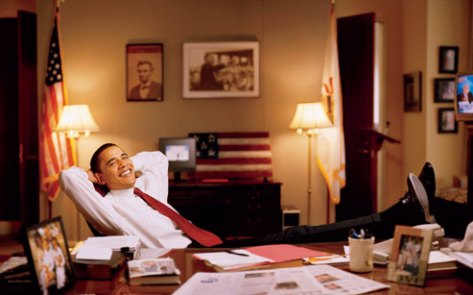
Obama and the End of Other Dreams?

poar01_obama0803

This guest post comes to us from NISSIM MANNATHUKKAREN

And I have seen the promised land. I may not get there with you. But I want you to know tonight, that we, as a people, will get to the promised land.

Martin Luther King, Jr.

Continue reading Obama and the End of Other Dreams?

Who Is Responsible For The Slaughter Of Civilians In The Vanni?: Rohini Hensman

guest post by ROHINI HENSMAN

With the military defeat of the LTTE imminent, the terrible plight of civilians in the Vanni has attracted worldwide concern and sympathy, and rightly so. While the circumstances are completely different, the civilian death toll in the Vanni over the past few months (over 2700) is already triple the number of civilians killed in the Gaza massacre of December-January, and is still mounting. The thousands who suffer serious injuries are further victimised by the delay or lack of medical attention, which means, for example, that injuries to limbs which could have been saved with prompt treatment, instead result in gangrene and amputations. Even those who have not lost lives, limbs or loved ones, have lost their homes and livelihoods, and live in appalling conditions which could well claim more lives through disease or even starvation.

Meanwhile, the LTTE and Government of Sri Lanka (GOSL) trade charges, each accusing the other of being responsible for the slaughter. What truth is there in their respective allegations? Continue reading Who Is Responsible For The Slaughter Of Civilians In The Vanni?: Rohini Hensman

Fighter for a Great Yesterday

Brand Advani: Perils of Rebranding

[It is for the first time in his nearly five year old tenure as PM that Prime Minister Manmohan Singh made a stinging attack on L. K. Advani – PM in waiting as far as the Sangh Parivar is concerned. Prime Minister was candid enough to remind about the “prominent role” played by Mr Advani in the Babri Masjid demolition, or how he presided over Gujarat riots and failed to prevent terror attacks on Parliament and Red Fort as Home Minister.]

1.

L.K. Advani, the ‘Swayamsevak’ from across the border, the hawk of the nineties or the rediscoverer of Jinnah wants to do a makeover. Not a day passes when we are presented with a new look of the old man who has already crossed eighties. Sudheendra Kulkarni, his speechwriter shared the understanding behind LKA’s rebranding mission. ‘Man of Eighties, Vision of Twenties’. If one day he is presented as an emotional patriarch who has no qualms in shading tears after seeing a movie the next day he is packaged as the man in his energetic twenties and shown raising dumbells at a gymnasium or the next day he is with a family in hospital which tried to committ suicide because of financial problems. Continue reading Fighter for a Great Yesterday

How to know if (when) your bank is insolvent

Analysing a bank’s financial statements is a bit like suing your family lawyer for malpractice; the jury may be on your side but the evidence is invariably circumstantial.  However, in times such as these  when even charities are screwed by their bankers – it is best not to trust anyone. Worry not, we at Kafila are not just concerned with playing theory-theory and pseudo-secular Hindu-bashing, we are also deeply concerned about the financial crisis – it has a direct impact on the bonuses taken home by our CEO and board-members. Accordingly, I offer you a simple step by step way to figure out when your bank will go under.Written in an easy conversational style, this post is an invaluable tool pedagogic for Kafila readers both young and old. Stay with me guys, this is going to be fun.

First a bit of background: In May 2008, Vikram Pandit finally stamped his authority on the behemoth company that he had been chosen to lead. Signalling a bold break from the past, he replaced Citigroup’s 2007 slogan “Let’s get it done” by reviving Citigroup’s 1970s slogan “The Citi Never Sleeps”.   While the new/old ad campaign is sure to bring back memories of more profitable times, the firm’s precarious financial situation suggests that The Citi apart, Pandit won’t be getting much rest either. Mystery Question: What will it take to wipe Citi out?

Continue reading How to know if (when) your bank is insolvent

Silencing Social Activists

An escalating wave of attacks on social activists has been sweeping the country. Several recent incidents indicate an increase in the number of cases alleging grave human rights abuses against social activists, and a shift from low-level targeting, such as intimidation and harassment, to more serious violations, such as detention, prosecution, imprisonment and threats to their physical integrity. The authorities are also trying to silence them through unfair trial, denial of bail and long prison terms. There is excessive use of force, torture and other ill-treatment by the police. Women social activists are facing further violations, as women and as human rights defenders, including sexist verbal abuse and derogatory accusations. Continue reading Silencing Social Activists

The Arrest of Shamim Modi at Industrialists’ Behest

Activist Working for Rights of Tribal People Arrested

Ms Shamim (nee Meghani) Modi, a law graduate working among the tribals in Betul district, Madhya Pradesh, has had to pay a heavy price for taking up the cause of tribal people and other industrial workers. Shamim, who works with the Samajwadi Jan Parishad (an organization of socialist-Gandhian orientation) has been put behind bars in Hoshangabad jail for exposing the corrupt nexus between politicians and the mining mafia.  She was arrested in gross violation of democratic rights on 10th February 2009 from her residence at Harda, M.P. The process of attempting to secure bail from M.P High Court is now on.

The arrest was made on false charges, one of instigating tribals to ‘attack forest officials’ and another of ‘kidnapping with the intention to kill’ these officials! These charges were brought against her (and her husband) two years ago in 2007. Subsequently no enquiries were conducted, and no follow-up was done but the fact that these charges hung over their heads was presumably meant to cow them down. These charges have suddenly been resurrected because the administration has been under pressure from industrialist lobbies. Earlier, the trial court had rejected her bail plea despite the fact that the person supposed to have been ‘kidnapped’ was said to be present in court and denied any such thing. Another evidence, if any was still required, of the deep nexuses of power that operate at these levels. Continue reading The Arrest of Shamim Modi at Industrialists’ Behest

Bailout or Bankruptcy?

With the economy in the doldrums, Barack Obama in the White House, and Elton John releasing a line of crystal encrusted Ipods for charity, it’s suddenly fashionable to talk about “Sacrifice” once more; a trend that senior management at General Motors seems to have picked up on.  Their December 2, 2008 proposal to the Senate Banking Committee calls for sacrifices no less than nine times in twenty four pages from everyone including stake holders, share holders, bond holders, management, senior executives and in one instance, even the GM balance sheet (it has been asked to sacrifice leverage).   That the Company wrangled out $13.4 billion from the TARP suggests an era in which nothing succeeds like sacrifice, but the accompanying term sheet suggests that the time for martyrdom has just begun.

Continue reading Bailout or Bankruptcy?

A Fragile Peace in Nepal

In the six months that Maoist chairman Pushpa Kamal Dahal ‘Prachanda’ has been Prime Minister, he has realised that running a state is more complex than waging a war.

Since mid-August when he took charge, the PM has had to deal with multiple challenges – an intense ideological debate within his party; a deadlock in the peace process; breakdown of consensus with the G P Koirala led Nepali Congress (NC); acrimony between the defence ministry and Nepal Army (NA); opposition from sections of civil society suspicious of Maoist commitment to democratic norms; rampant lawlessness in the eastern Tarai and ethnic assertion in eastern hills; the collapse of basic services with 16 hour power cuts; and the impact of the global meltdown with remittances dipping. Continue reading A Fragile Peace in Nepal

Interview with Ragavan on Tamil Militancy (Early Years)

As the Tamil community in Lanka is at the crossroads with twenty five years of war nearing an end with the increasing marginalization of the LTTE, I would like to do a series of interviews on the social, economic and political conditions that led to the emergence of armed politics and militarization of the Tamil community.  Returning to those years in the seventies and early eighties then is an attempt to also think about ways forward out of the militarized and armed politics of the last few decades.  I intend to do a series of interviews to capture that important political period for Lankan Tamils.  This important shift in Lankan politics and the decades of war that followed it did irreparable damage to the Lankan Tamil community and all the peoples of Lanka.

I begin with an interview of Ragavan, a founding member of the LTTE, who left the movement in 1984 and has since moved to London where he lives in exile.  In this first interview, Ragavan speaks about his background and early years of militancy.

This is an interview by Ahilan Kadirgamar of Ragavan at his London home on 25 January 2009. Continue reading Interview with Ragavan on Tamil Militancy (Early Years)

Why Mulally can af-Ford to dilly dally

Vodpod videos no longer available.

more about “Una-ford-able Risk?“, posted with vodpod

You know it’s been a bad season for auto sales when the Chief Executive of Ford personally calls you up when you buy a car. Michael Snapper, a lawyer from Grand Rapids Michigan, received such a call from Ford Chief Exec Alan Mulally to thank him for choosing a 2010 Ford Fusion hybrid over rival Toyota Motor Corp.’s wildly popular Prius. Snapper was quoted as saying that Mulally’s actions “reflect a new attitude and a real commitment” to improving the company. Given that US auto sales plunged 38 % in January and Ford’s sales fell 39 %, Mulally is going to have to make a lot more calls if he hopes to save the company.

Continue reading Why Mulally can af-Ford to dilly dally

India’s Terror Dossier. Further Evidence of a Conspiracy: Raveena Hansa

This guest post has been sent to us by RAVEENA HANSA

On 5 January 2009, the Indian government handed a 69-page dossier of material stemming from the ongoing investigation into the Mumbai terrorist attacks of 26-29 November 2008 to the Pakistani government. This was subsequently made accessible to the public, so it is possible for us to examine it.

The most striking point about the dossier is its vague and unprofessional character. Enormous reliance is placed on the interrogation of the captured terrorist, Mohammed Amir Kasab, despite the fact that there is an abundance of other evidence – eyewitness accounts, CCTV and TV footage, forensic evidence, etc. – which could have been called upon to establish when, where, and what exactly happened during the attacks. This gives rise to the suspicion that the interrogation is being used as a substitute for real investigation because it can be influenced by intimidation or torture, whereas other sources of evidence cannot be influenced in the same way.

Continue reading India’s Terror Dossier. Further Evidence of a Conspiracy: Raveena Hansa

Jayampathy Wickramaratne on Political Solution in Sri Lanka

I am posting a longer version of an interview with Jayampathy Wickramaratne.  The February 2009 issue of Himal Southasian, a special issue on Sri Lanka, has a shorter version of this interview.  At a time when there is much concern about the ongoing humanitarian catastrophe there have also been increasing voices calling for a political solution.  On the history of displacement and humanitarian concerns with the twenty-fire year war in Sri Lanka, I recommend Rajan Hoole’s article in Himal.  This interview with Jayampathy Wickramaratne might engage those interested in past attempts at a political solution as well as the problems with the 13th Amendment (which came out of the Indo-Lanka Accord of 1987 and is currently being talked about both in Sri Lanka and India).

Ahilan Kadirgamar talked to Jayampathy Wickramaratne, who is President’s Counsel, a constitutional lawyer, a former senior advisor for the Ministry of Constitutional Affairs, and a member of the team that drafted the 2000 Constitution Bill.  Wickramartane was a member of the panel of experts to assist the All Party Representative Committee and signatory to the “Majority Report” (December 2006) that proposed extensive restructuring of the state, with extensive devolution and power sharing at the centre.   Wickramaratne is a politburo member of the Lanka Sama Samaja Party. Continue reading Jayampathy Wickramaratne on Political Solution in Sri Lanka

Dead Hence Guilty?

“Governments have always lied. They naturally deny it, even long after it is abundantly clear that they have lied, trailing multiple red herrings, dismissing inconvenient evidence, implying that there is counter-evidence they are not free to produce. When a lie can no longer be credibly denied it is justified, usually by an appeal to the national interest. Governments of modern representative democracies are no different, even if they are more liable than dictators to be exposed.”
Colin Leys, Quoted in Socialist Register, 2006

The National Capital Region (NCR) witnessed a police encounter on the eve of the republic day. Two young men who were supposedly carrying a big cache of arms and ammunition were killed on the spot. We were told that this duo was part of a larger LeT module, which wanted to wreak havoc in the capital.
The killings of the two young men did not cause much uproar.
The police officers appeared jubilant over this episode for foiling such attempt. To blunt any possible criticism of the incident a due enquiry was also ordered by the powers that be and has even promised that it would be completed in a stipulated time.

Continue reading Dead Hence Guilty?

Beyond violence and non-violence – K Balagopal

Via Jamal Kidwai

[We are posting this piece by K Balagopal, hoping to continue our reflections on violence and non-violence in political movements. – AN]

The public arena is witness to dispirited discussion of the ineffectiveness of people’s movements, which are at the most able to slow down things, and nothing more. The discussion often turns around violence and non-violence, not as moral alternatives but as strategic options. Those who are sick of sitting on dharna after dharna to no effect are looking with some envy at violent options,
while many who have come out of armed groups find the Narmada Bachao Andolan (NBA) fascinating.

It is good that there is some openness in the matter now, for dogmatic attitudes have done considerable harm. To say that one should not be dogmatic about violence may be morally a little unsettling but it is a defensible position even without adopting a relativistic attitude towards the preciousness of life or a casual attitude towards one’s moral responsibility for injury caused in the course of a struggle. More of that in the right context. But the
discussion will unavoidably be based on assessments  of the effectiveness of the alternatives, and a distant view is likely to colour the reality with hopes and assumptions, even illusions. A realistic assessment of what each strategy has been able to achieve would better inform the debate.

The plain and stark fact is that while all strategies have been effective in curbing some injustice, none has succeeded in forcing the government to take back a single major policy in any sphere. And none has been able to reverse the trends inherent in the structures of society and economy. Yet no serious political movement or social struggle we know of is only for softening oppression or improving relief. The general understanding is that governance of the country – and may be the systemic infrastructure of society – is fundamentally wrong and needs remedying, maybe overturning. Do we know of any
effective strategy for that? I am not talking of political strategies,
but strategies of struggle that will successfully put pressure upon the State and the polity to stop them in their tracks. The struggle may be built around class or caste or any other social combination. It may in the end seek reform or the upturning of the polity. It may operate mainly or in part within the polity or keep out of it altogether. Whichever it is, the common problem is this: the experience of this country is that governments do not stop doing some thing merely because it has been demonstrated to be bad. Or even contrary to constitutional directives and goals. They stop only if going along is made difficult to the point of near impossibility. No democratic dispensation should be thus, but Indian democracy is thus. Short of that, you demonstrate the truth of your critique till you are blue in the face or shout till you are hoarse in the throat, it is all the same.

Continue reading Beyond violence and non-violence – K Balagopal

Corporate Complicity and Gujarat

The 4th ‘Vibrant Gujarat Global Investors’ Summit, organized by the Gujarat government on 12-13 January 2009 in Ahmedabad, and the statements by some prominent Indian corporate leaders, have spawned protests, analysis, debates and questions about corporate accountability, complicity, responsibility and rights in Indian democracy. At this biennial event, ‘Jai Jai Garvi Gujarat’ has been showcased as an ‘ideal investment destination, both for Indian and foreign investors’, where prospective investors have ‘only Red Carpet and no Red Tape and it is where investors can sow a rupee and reap a dollar as returns’ (see Official portal of Gujarat Government).

Bringing together business leaders, investors, corporations and policy makers by a democratically-elected government, exploring business opportunities and signing memorandum of understandings are legitimate economic activities. However, the projection of the Chief Minister of the State, Narendra Modi, as the next Prime Minister of India by corporate cheerleaders is much more than mere economic activity. It is turning a blind eye to gross abuses of rule of law, and knowingly assisting a political leader and his government to continue committing them. It is becoming party to a specific political vision in a manner that incurs responsibility and blame. Such corporate leaders thus become complicit with a government and its leader in serious human rights abuses. It is negative and unacceptable.

Continue reading Corporate Complicity and Gujarat

“Why?”

(Uma Singh, a journalist with Radio Today in the southern town of Janakpur in Nepal, was killed on 11th January 2009. The Federation of Nepali Journalists has mounted a campaign asking for immediate action against Uma’a killers and a firm commitment by the government to the freedom of press. Uma’s killinng comes in the wake of attacks on different media houses in Kathmandu. Like Lasantha Wickrematunge in Sri Lanka, Uma was killed for writing and speaking fearlessly at the other end of Southasia.)

Janakpur: It was impossible to believe that Uma Singh at Ganga Sagar Ghat on Tuesday morning – an FNJ flag draped over her still body, face bandaged all across, the cuts on the head visible – was the same Uma I had met two months ago.

Uma’s looks were deceptive, for the tiny frame contained abundant energy. By the time I strolled into Radio Today’s studio at 6 am in mid-November, Uma had wrapped up her morning bulletin. She was running around the office and passing instructions in a matter-of-fact professional way

She briefed me on the format of Janakpur’s most popular Maithili political discussion show, Garma garam chai. I still remember how Uma said to both her co-anchor and me, “Please avoid English words. The programme is meant for people in villages.” I nodded, a little ashamed my Maithili was not as fluent. Continue reading “Why?”

The use of “Lese majeste” in Thailand against freedom of speech

Lese majeste literally means an offense or crime committed against the ruler or supreme power of a state – or, in other words, the crime of dissent. In Thailand, this provision is routinely used to silence any form of criticism of the government.

A recent case that has been brought to our attention is that of Associate Professor Giles Ji Ungpakorn, from the Faculty of Political Science, Chulalongkorn University. He is facing Lese Majeste charges for writing a book A Coup for the Rich, which criticised the 2006 military coup. He also wrote an article on the coup for Asia Sentinel. Others who have been accused of Lese Majeste are former government minister Jakrapop Penkae, who asked a question at the Foreign Correspondent’s Club in Bangkok, about exactly what kind of Monarchy they have in Thailand. There is also the case of Chotisak Oonsung, a young student who failed to stand for the King’s anthem in the cinema. Apart from this there are the cases of Da Topedo and Boonyeun Prasertying. In addition to those who opposed the coup, the BBC correspondent Jonathan Head, an Australian writer names Harry Nicolaides and social critic Sulak Sivaraksa are also facing charges. The latest person to be thrown into jail and refused bail is Suwicha Takor, who is charged with Lese Majeste for surfing the internet. The Thai Minister of Justice has called for a blanket ban on reporting these cases in the Thai media. The mainstream Thai media are obliging. Thus there is a medieval style witch hunt taking place in Thailand with secret trials in the courts.

A petition of protest in support of Giles is available here.

Character builders of the nation

‘Na Taala Toota na tijori, Phirbhi BJP Mukhyalaya se dhai karod chori.’
(Neither the lock was broken nor the safe, yet 2.5 crore Rs were stolen from the Party headquarters.)
– An SMS which was circulated widely in the journalist community.

What is the weight of Rs. 2.5 crore if one decides to have the whole amount packed in the denomination of Rs.1,000 notes ?

It is exactly 31 kilograms.

Please do not get surprised over my correct reply. I just wanted to share few details of the ‘theft’ at the headoffice of the main opposition party namely BJP which has appeared in different newspapers.

According to the treasurer of the party there is no cause of worry and once the ‘ankeshan” (auditing) is over then only something definite can be said about it. The latest news is that amount supposedly missing from the coffers has been reduced without any further explanation. Continue reading Character builders of the nation

UAPA: Legalising the police state

Guest post by ANUJ BHUWANIA

Recently the clamour for a draconian terror bill came to fruition with rare alacrity. The Unlawful Activities (Prevention) Amendment (UAPA) Bill was introduced and passed within two days by both houses of Parliament – quite a contrast to, say, the Women’s Reservation Bill, gathering dust now for more than a decade. Coming from a government that repealed POTA soon after it assumed power, the Bill unimaginatively mimics POTA almost entirely, revealing that little has been learnt from the recent history of TADA and POTA and the problems leading to their removal. While such statutes giving extraordinary powers to the police are introduced to cater to ‘exceptional’ situations, they can easily be deployed in ‘ordinary cases’ and indeed routinely are. The bleeding of one category into the other is inevitable, when the police alone decide which is which.

Continue reading UAPA: Legalising the police state

Army wanted Abdullah, who’s surprised?

Ashish Sinha in Mail Today:

Any political decision on Kashmir — especially when the ball is in the Congress’s court — cannot afford to ignore the sentiments of lakhs of troops stationed here because, at least for now, they appear to be a more permanent fixture than any party, even the National Conference (NC). [Full text]

I told you so…

And Siddharth Varadarajan asks the right question:

But if these motives propelled the ISI to either mount or at best turn a blind eye to the Mumbai plot, why did the same agency — which essentially manages Rawalpindi’s links with militant groups active in Jammu and Kashmir — not seek to disrupt the assembly elections? [Here]