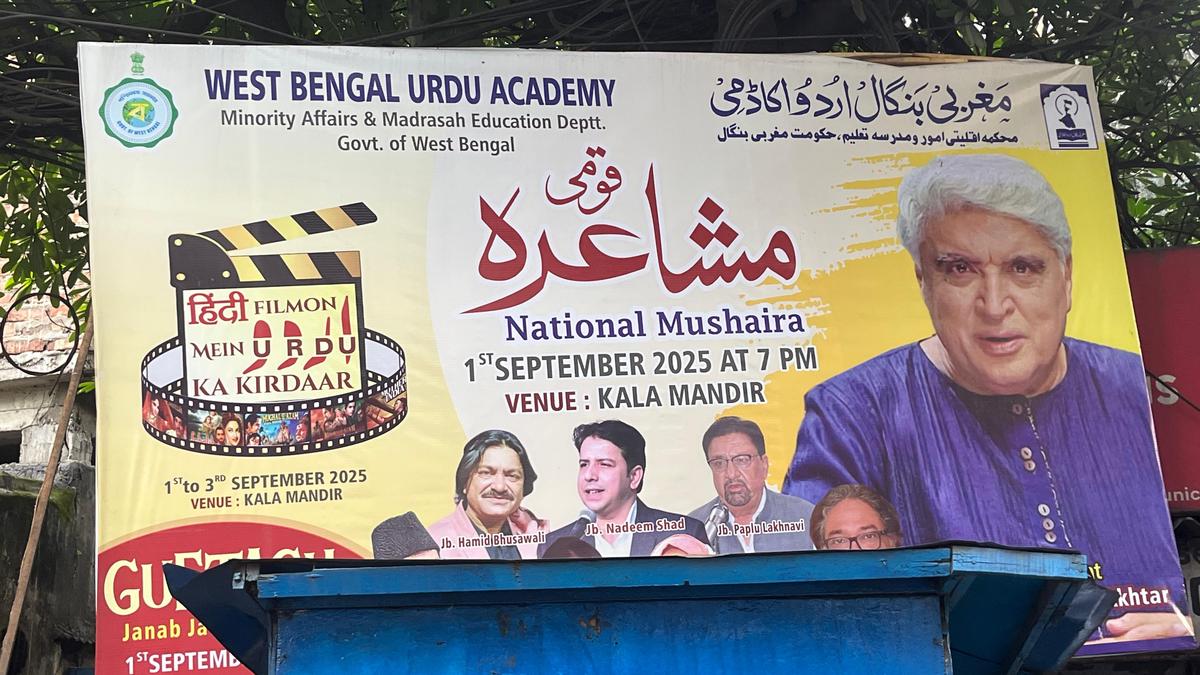
Javed Akhtar’s recent ‘exile’ from the West Bengal Urdu Academy event did more than generate headlines. It dwarfed a bigger debate about Urdu in Hindi cinema, which was the event’s main theme. The media precipitately reduced the whole issue to the conflict between the lyricist and the Urdu Academy. The controversy carried a tinge of ‘Muslim fundamentalism,’ reflecting today’s cultural and political ideologemes. However, the discussion on Bollywood’s uneven relationship with Urdu was lost in the sound and fury of cultural climate of the country. Et tu, Brutus?’ finds a new stage – ‘Et tu, Bollywood?’ You speak against the very world that gives you voice. Continue reading Javed Akhtar, Bollywood and Urdu’s Ghostly Existence – Rashid Ali→
Why this latest move by the state government is a worrying development.
“I have seen in Japan the voluntary submission of the whole people to the trimming of their minds and clipping of their freedom by their government, which through various educational agencies regulates their thoughts, manufactures their feelings, becomes suspiciously watchful when they show signs of inclining toward the spiritual, leading them through a narrow path not toward what is true but what is necessary for the complete welding of them into one uniform mass according to its own recipe. The people accept this all-pervading mental slavery with cheerfulness and pride because of their nervous desire to turn themselves into a machine of power, called the Nation, and emulate other machines in their collective worldliness.”
-Rabindranath Tagore, Nationalism
The richest state in the Indian union, Maharashtra, has embarked on a new initiative in the field of school education. It would provide basic military training to school students starting from Class 1, to promote “patriotism, discipline, and physical fitness among young learners from an early age”. Around 2.5 lakh ex-servicemen would be involved to deliver this training which will be introduced in a phased manner.
Undoubtedly, in the aftermath of Operation Sindoor, this proposal will be able to gather enough eyeballs in the rest of the country and it would not be surprise that few other Bharatiya Janata Party-ruled states would implement similar schemes in education.
As the debate on the three-language policy has intensified, what was originally an exchange between ministers of the union government and the government of Tamil Nadu, or between leaders of the Bharatiya Janata Party (BJP) and the Dravida Munnetra Kazhakam (DMK), has become a subject of commentaries and criticisms coming from observers, intellectuals and activists. The union government says that no state could be exempted from the implementation of the three-language formula as envisioned in the New Education Policy (NEP) 2020 and adds that Hindi is not made mandatory under the present formula. The condition is that two of the three languages must be native Indian languages. The DMK leadership argues in response that the three-language policy can still be an indirect route to push Hindi into the state. The latter has appeared firm in its argument that it is the state’s prerogative under the federal system to determine its language and education policy (though during emergency education was shifted to the concurrent list of the union government). It also opposes the measure adopted by the union government, that is, to link the funding under the Samagra Shiksha Abhiyan to the implementation of NEP 2020 and the language formula it includes. The parties which are not in alliance with the DMK in the state allege that the DMK has staged this conflict in order to ignite sub-national/regional sentiment to strengthen its position before the elections.
The third lecture in the ‘Sandhan Vyakhyanmala’ series – initiated by New Socialist Initiative ( Hindi Pradesh) will be delivered by Prof Savita Singh, leading poetess, feminist scholar and writer on Saturday 19 th February 2022, at 6 PM (IST). She will be speaking on ‘Hindi Literature and New Light of Feminist Thought (हिंदी साहित्य और स्त्रीवादी चिंतन का नया आलोक’ )
The focus of this lecture series – as you might be aware – is on the Hindi belt, especially, on literature, culture, society and politics of the Hindi region where we intend to invite writers, scholars with a forward looking, progressive viewpoint to share their concerns.
You are cordially invited to attend and participate in the ensuing discussion.
वक्ता: प्रोफ़ेसर सविता सिंह प्रसिद्ध कवयित्री, नारीवादी सिद्धांतकार और लेखिका
विषय: ‘हिंदी साहित्य और स्त्रीवादी चिंतन का नया आलोक’
19 फरवरी शाम 6बजे
सारांश स्त्रीवाद को लेकर हिंदी साहित्य में आजकल बहुत सारी बातें हो रही हैं। वे अपनी अंतर्वस्तु में नई भी हैं और पुरानी भी। यह भी कह सकते हैं की पितृसत्ता ने अपने भी स्त्रीवादी विमर्श तैयार किए हैं स्त्रियों के लिए। जब स्त्रियां इसे अपना लेती हैं, अपना कह कर इसे किसी वसन की तरह पहन लेती हैं तो जरूरी हो जाता है इनपर गहनता और गहराई से बात करना। वह एक बात थी जब स्त्री लेखिकाओं ने अपने को स्त्रीवादी होने या कहे जाने से परहेज किया, और यह दूसरी जब स्त्रीवाद के अनेक रूप गढ़े गए। भारतीय परिवेश में स्त्री विमर्श के भीतर बहुलता और भिन्नता तो होनी ही थी। इसी विषय पर हम क्यों न इसपर बात करें। क्या हिंदी में स्त्रीवादी लेखन कोई नया समाज बनाने के संकल्प से लिखा जा रहा है या फिर अभी भी पितृसत्ता का सह उत्पादन ही हो रहा है, यह हमारे लिए चिंता और बहस का मुद्दा बनना ही चाहिए।
हिन्दी इलाके को लेकर विचार-विमर्श के लिये “सन्धान व्याख्यानमाला” की शुरुआत इस शनिवार, 13 नवम्बर, को शाम 6 बजे प्रख्यात कवि और विचारक श्री अशोक वाजपेयी के व्याख्यान से हो रही है.
इस व्याख्यानमाला की शुरुआत के पीछे हमारी मंशा ये है कि हिन्दी में विचार, इतिहास, साहित्य, कला, संस्कृति और समाज-सिद्धान्त के गम्भीर विमर्श को बढ़ावा मिले. हिन्दी इलाक़े के सामाजिक-सांस्कृतिक विकास को लेकर हमारी चिन्ता पुरानी है. आज से बीस साल पहले हमारे कुछ अग्रज साथियों ने “सन्धान” नाम की पत्रिका की शुरुआत की थी जो अनेक कारणों से पाँच साल के बाद बन्द हो गयी थी. इधर हम हिंदी-विमर्श का यह सिलसिला फिर से शुरू कर रहे हैं. यह व्याख्यानमाला इस प्रयास का महत्वपूर्ण अंग होगी.
हममें से अधिकांश लोग “न्यू सोशलिस्ट इनिशिएटिव” नाम के प्रयास से भी जुड़े हैं. यह प्रयास अपने आप को सामान्य और व्यापक प्रगतिशील परिवार का अंग समझता है, हालाँकि यह किसी पार्टी या संगठन से नहीं जुड़ा है. इसका मानना है कि भारतीय और वैश्विक दोनों ही स्तरों पर वामपन्थी आन्दोलन को युगीन मसलों पर नए सिरे से विचार करने की और उस रौशनी में अपने आप को पुनर्गठित करने की आवश्यकता है. यह आवश्यकता दो बड़ी बातों से पैदा होती है. पहली यह कि पिछली सदी में वामपन्थ की सफलता मुख्यतः पिछड़े समाजों में सामन्ती और औपनिवेशिक शक्तियों के विरुद्ध मिली थी. आधुनिक लोकतान्त्रिक प्रणाली के अधीन चलने वाले पूँजीवाद के विरुद्ध सफल संघर्ष के उदहारण अभी भविष्य के गर्भ में हैं. दूसरी यह कि बीसवीं सदी का समाजवाद, अपनी उपलब्धियों के बावजूद, भविष्य के ऐसे समाजवाद का मॉडल नहीं बन सकता जो समृद्धि, बराबरी, लोकतन्त्र और व्यक्ति की आज़ादी के पैमानों पर अपने को वांछनीय और श्रेष्ठ साबित कर सके.
“सन्धान व्याख्यानमाला” का प्रस्ताव यूँ है कि हिन्दी सभ्यता-संस्कृति-समाज को लेकर हिंदी भाषा में विचार की अलग से आवश्यकता है. हिन्दी में विचार अनिवार्यतः साहित्य से जुड़ा है और हिन्दी मनीषा के निर्माण में साहित्यिक मनीषियों की अग्रणी भूमिका है. हम हिन्दी साहित्य-जगत के प्रचलित विमर्शों-विवादों से थोड़ा अलग हटकर साहित्य के बुनियादी मसलों से शुरुआत करना चाहते हैं. प्रगतिशील बिरादरी का हिस्सा होते हुए भी हम यह नहीं मानते कि साहित्य की भूमिका क्रान्तियों, आन्दोलनों और ऐतिहासिक शक्तियों के चारण मात्र की है. हम यह नहीं मानते कि साहित्यकार की प्रतिबद्धता साहित्य की उत्कृष्टता का एकमात्र पैमाना हो सकता है. हम अधिक बुनियादी सवालों से शुरू करना चाहते हैं, भले ही वे पुराने सुनायी पड़ें. मसलन, साहित्य कहाँ से आता है – ऐसा क्यों है कि मानव सभ्यता के सभी ज्ञात उदाहरणों में साहित्य न केवल पाया जाता है बल्कि ख़ासकर सभ्यताओं के शैशव काल में, और अनिवार्यतः बाद में भी, उन सभ्यताओं के निर्माण और विकास में महती भूमिका निभाता है. साहित्य के लोकमानस में पैठने की प्रक्रियाएँ और कालावधियाँ कैसे निर्धारित होती हैं? क्या शेक्सपियर के इंग्लिश लोकमानस में पैठने की प्रक्रिया वही है जो तुलसीदास के हिन्दी लोकमानस में पैठने की? निराला या मुक्तिबोध के लोकमानस में संश्लेष के रास्ते में क्या बाधाएँ हैं और उसकी क्या कालावधि होगी? इत्यादि. हमारा मानना है कि “जनपक्षधर बनाम कलावादी” तथा अन्य ऐसी बहसें साहित्य के अंतस्तल पर और उसकी युगीन भूमिका पर सम्यक प्रकाश नहीं डाल पातीं हैं. बुनियादी और दार्शनिक प्रश्न संस्कृतियों और सभ्यताओं पर विचार के लिए अनिवार्य हैं.
इस व्याख्यानमाला में हम विचार-वर्णक्रम के विविध आधुनिक एवं प्रगतिशील प्रतिनिधियों को आमन्त्रित करेंगे. ज़रूरी नहीं है कि वक्ताओं के विचार हमारे अपने विचारों से मेल खाते हों. हमारी मंशा गम्भीर विमर्श और बहस-मुबाहिसे की है.
प्रख्यात कवि और विचारक श्री अशोक वाजपेयी इस शृंखला के पहले वक्ता होंगे जिनका मानना है कि साहित्य की अपनी “स्वतन्त्र वैचारिक सत्ता होती है; उस विचार का सामान्यीकरण नहीं किया जा सकता; वह विचार अन्य विचारों से संवाद-द्वन्द्व में रहता है पर साहित्य को किसी बाहर से आये विचार का उपनिवेश बनने का प्रतिरोध करता है; साहित्य का विचार विविक्त नहीं, रागसिक्त विचार होता है.”
आप सभी इस शृंखला में भागीदारी और वैचारिक हस्तक्षेप के लिये आमन्त्रित हैं.
A Decolonization mural in Oakland, USA, photo HiMYSYeD, Oakland Wiki
This post is prompted by a discussion that followed some remarks I had made on social media regarding the way in which a certain common sense that we may call ‘Hindu Nationalist’, had come to dominate the sensibilities of even those intellectuals in the Hindi world who otherwise might stand opposed to the Hindu Right. ‘Decolonizing’ has lately become a banner of the Hindu Right and for many otherwise secular Hindi intellectuals too, an occasion for an often strident anti-West rhetoric. Such a common sense assumes, simply by default, that the only “authentic” position of critique of the West is one framed by Hindu/ Indian exceptionalism. Needless to say, as I have argued at length in my recent book (Decolonizing Theory), the narrative that structures the imaginative world of many such modern Hindus is already a narrative produced by colonialism.
The post below is hard to read. It is written with a great deal of rage and pain and grief. It is a post about sexual violence. It is not explicit in any way. It does not describe sexual violence. It describes the feeling of being before the violence of masculinity. It describes the violence of the feeling of feeling. Which is why it is hard to read. You may wish to think carefully about whether you want to read further. Please consider this a trigger warning.
Today I performed an exorcism. I performed an exorcism of every image that floods the media of sexual violence, of rape and mutilation, of violation, of violence that should be undoable and unthinkable. I decided to think it. I let these images move through my mind and my body. I performed an exorcism for every woman, and everyone who believes herself woman, and lives woman, and every one who lives as not man. I performed an exorcism for everyone who is not a man. I performed an exorcism for every man who is not a man. I let image, upon image, upon image, upon image, upon image, upon image, flood my mind. I opened my mind as wide as I could, without filter and protection. Eventually I let my mind break at the seams, for many hours. I let my mind descend into terror. I let my mind touch madness. I let my mind become a not mind. And not by reaching atman or bhramaan believe you me. I let my mind become incoherent.
Image courtesy Netherlands Institute for Multiparty Democracy
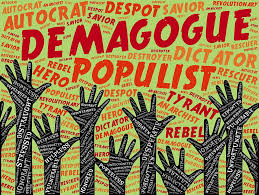
The label ‘populism’ has acquired unprecedented currency lately and is used to indiscriminately describe such a wide range of poliical figures and political tendencies that it seems to have lost all conceptual meaning. In the best of times, it was always a slippery concept that has been linked to democracy at one end and fascism at the other. On the one hand, it is seen as the democratic ‘excess’ that escapes the attempt of liberal-representative institutions to rein it in; on the other, it is seen as being of a piece with the fascist resort to antipolitical demagoguery and the rhetoric of the (national) ‘underdog’ oppressed by an elite (usually with international links).
The way the term is used these days to describe everyone from a Donald Trump, a Recep Erdogan or a Narendra Modi on the one hand, to the late Hugo Chavez, Evo Morales, Rafael Correa or even Bernie Sanders or Podemos and Syriza, on the other, defies all logic. What possible common denominator can one find between such diverse figures and political formations? That common denominator is simply ‘the people’ or the ‘underdog’ that they invoke – even if in completely different ways.
Darren Sammy has revealed he faced racism in India at a time when the world is battling racism. India needs to join this fight.
Darren Sammy, the famous all-rounder from West Indies, is a legend. He has led his country team and is the only captain to have won two T20 World Cups, in 2012 and 2016. His achievements in the arena of cricket are not limited to his country. He played a singular role in reviving Pakistan’s cricket team and preparing it for international matches, which earned him an honorary citizenship.
And thus the revelation that he was subjected to racial taunts by his own teammates, during his tour to India in 2013 and 2014, while he played IPL matches, was a bolt from the blue. His admirers were naturally aghast when Sammy disclosed that his teammates at SunRisers Hyderabad used to address him with a pejorative term and collectively sneer at him.
On some occasions, Sammy said, he too would smile back at his gleeful teammates, for he had innocently believed that it was light-hearted banter, even though directed at him. Sammy was completely oblivious to the fact that they were targeting him with a racist invective and enjoying “jokes” that he could not comprehend at his expense.
No doubt many of those who subjected him to humiliation were big names in Indian cricket. Yet it did not cause any uproar in India when Sammy made the truth known to the world via an Instagram post. The 24/7 news channels, which are forever searching for sensational news, and the cricketing fraternity, were quiet. None came forward to denounce the humiliation of Sammy, nor was there a public apology from the offenders. Only Swara Bhaskar, the actress, who espouses social causes rather fearlessly, demanded an apology from his teammates.
Under the condition of lockdown while we are confronted with images and accounts of the suffering of the labouring poor, and all around us there appears to be a pervasive social chaos, in our universities students and teachers are supposed to return to an atomized life condition, and essentially pursue academic work as if all is normal. Teachers and students are expected to simply ignore wider public responsibilities and recoil to their private window to online teaching-learning. The diktats of university bureaucracies that have been issued in the midst of tremendous socio-economic crisis reduce teachers to a role akin to those of musicians who continued to entertain on the sinking Titanic. Now, after the formalities of so-called online education have been fulfilled, a specter of online examinations haunts the wider student community.
Disappearance of education in the online mode
The pronouncements of Delhi University (DU) regarding online examinations for its final year students of undergraduate and postgraduate (Masters) courses, have added to the anxieties of large number of students and teachers, who have been grappling with a disrupted semester in the wake of the lockdown, and the stupendous challenges of online teaching-learning. More or less, institutions of higher education across the country are facing this predicament. The grim situation warrants a close scrutiny of the concerns of teachers and students about e-learning and online examinations.
Since the beginning of the COVID-19 epidemic, several statements have been propagated about “immunity boosting” substances such as mustard oil, hydroxychloroquine and tea; alternative remedies claiming to provide either immunity or cure; and remedial effects of cow urine or even taweez. Some of these assertions were also supported by a few government functionaries at the centre and in various states. We, the undersigned, wish to put the following scientific facts in the public domain.
–> As of now, no scientific studies show that any substance boosts the immune system specifically against COVID-19, be it modern medicines like hydroxychloroquine or homeopathic solutions like Arsenicum Album D30 or Ayurvedic preparations.
–> Scientific evidence for the efficacy of any of these substances can only be obtained by rigorous testing through randomized clinical trials with COVID-19 patients, and additional laboratory analyses. Anecdotes of cure or temporary relief from symptoms or usefulness against similar diseases are not scientific proof of efficacy against COVID-19.
–> Specific immunity against a bacterium or a virus can only arise in two ways. Either we were infected and recovered from the illness, or we are vaccinated; in either case we develop antibodies that can target the specific virus or bacterium.
Current VI semester undergraduate students of the University pursuing the ‘Sociology – III Law and Society’ course, at the National Law University Jodhpur were sent outright homophobic content purportedly as essential reading (details of the readings are in the letter below). The material presented outdated notions of homosexuality. When the faculty member was challenged via email by a student, she said she had shared it to encourage debate and present one side of the prevailing views on homosexuality. However, the material was sent without providing any such context. The faculty committed that she would be sending updated material presenting sociological developments on the subject in the coming few days. However, instead of doing so, she delegated her responsibility to the student who had written to her, a move that can only be interpreted as reprisal.
The interim student body wrote to the Vice Chancellor on the issue. 150 alumni members also wrote to the Chancellor, Vice Chancellor and General Council of NLU-J asking for disciplinary action against the faculty member, an external resource person to teach the subject, and review of the course curriculum.
This is the letter
Dear Dr. Saxena and Members of the General Council,
We, the undersigned alumni of National Law University, Jodhpur, much to our consternation, have learnt that current VI semester undergraduate students of the University pursuing the ‘Sociology – III Law and Society’ course were sent outright homophobic content purportedly as essential reading by Dr. Asha Bhandari, Assistant Professor, Faculty of Humanities and Social Sciences, and Member, Academic Council, on April 11, 2020. On a perusal of the content, it is evident that the material sent by Dr. Bhandari is unscientific, uncritical, based on outdated notions of homosexuality, perpetuates dangerous stereotypes, and legitimizes prejudice against the LGBTIQ community. As you would all agree, this is unacceptable in any institute of learning, much less in one that prides itself on being a premier national law school.
We, the undersigned, condemn in the strongest possible terms the police brutality in Jamia Millia Islamia University, New Delhi, and the ongoing illegal siege and curfew imposed on Aligarh Muslim University, Aligarh. On 15th December 2019 Delhi police in riot-gear illegally entered the Jamia Millia campus and attacked students who are peacefully protesting the Citizenship Amendment Act. The Act bars Muslims from India’s neighboring countries from the acquisition of Indian citizenship. It contravenes the right to equality and secular citizenship enshrined in the Indian constitution.
On the 15th at JMIU, police fired tear gas shells, entered hostels and attacked students studying in the library and praying in the mosque. Over 200 students have been severely injured, many who are in critical condition. Because of the blanket curfew and internet blockage imposed at AMU, we fear a similar situation of violence is unfolding, without any recourse to the press or public. The peaceful demonstration and gathering of citizens does not constitute criminal conduct. The police action in the Jamia Millia Islamia and AMU campuses is blatantly illegal under the constitution of India.
We stand in unconditional solidarity with the students, faculty and staff of Jamia Millia Islamia and Aligarh Muslim University, and express our horror at this violent police and state action. With them, we affirm the right of citizens to peaceful protest and the autonomy of the university as a non-militarized space for freedom of thought and expression. The brutalization of students and the attack on universities is against the fundamental norms of a democratic society.
As teachers, students, scholars and members of civil society across the world, we are watching with extreme concern the situation unfolding at Jamia Millia Islamia and Aligarh Muslim University. We refuse to remain silent at the violence unleashed on our colleagues (students, staff, and faculty) peacefully protesting the imposition of a discriminatory and unjust law.
( Note : To be published in the Annual Number of ‘Mainstream’)
In this conversation academician, writer and social activist Zaheer Ali talks about his latest book ‘Romancing With Revolution : Life and Works of Faiz Ahmed Faiz’ (Aakar Books, Delhi, 2019) and why Faiz is ‘ extremely relevant in today’s India’
This is the hour of madness, this too the hour of chain and noose You may hold the cage in your control, but you don’t command The bright season when a flower blooms in the garden. So, what if we didn’t see it? For others after us will see The garden’s brightness, will hear the nightingale sing
(This Hour of Chain and Noose (Faiz, Tauq o dar ka Mausam, 1951)
The idea of education being imparted without any compulsion to declare one’s religion is definitely a welcome thing
Principal’s office of Bethune College, Kolkata, which included Humanity as an option under the religion category. Image Courtesy: college dunia
A college admission form introducing new options under ‘religion’? Talking about humanity, secular, non-religious, atheism!
Well, in an ambience loaded with religiosity and its increasing conflation with the State, it is rather difficult to believe that some colleges may take such a creative step to convey how they see what is happening around them? No doubt this is a small step but, as noted by analysts, this is an attempt to break/challenge the ‘construction of identity, thought and social and political space, indirectly conveying the vision of a secular and diverse India.’
The significance of this little step can be better understood if one looks into the fact that the elections held to the 17th Lok Sabha — which has returned the Bharatiya Janata Party (BJP) to power — have demonstrated that BJP is ‘the most preferred party of young India’. It drew support cutting across caste as well as class lines. This is the same BJP which, along with its ‘Parivar’ siblings, has consciously tried to conflate religion with exercise of power and has been successful in collapsing the majority faith into rabid nationalism that targets differences and dissent and other specific groups, as the ‘other’ according to its worldview.
मार्क ट्वेन ने कभी कहा था – धूम्रपान की आदत छोड़ने में मैं ख़ासा माहिर हूँ; यह काम मैंने हज़ारों बार किया है.सन्धान की यह केवल तीसरी शुरुआत है. वह भी काग़ज़ पर छप कर नहीं. अभी केवल वेब-पेज़ के रूप में. अतः यह दावा तो नहीं किया जा सकता कि हमलोग शुरुआत करने के विशेषज्ञ हो गए. बल्कि ये मनायें कि इस मामले में ट्वेन सरीखी महारत न हासिल हो. इरादा नयी शुरुआत का और हौसले दूर तक चलने के हों तो फिर से शुरू करने में कोई बुराई नहीं है.
हज़ारों साल पहले एक्लेसियास्टीज़ की किताब में कहा गया था – जो हो चुका है, वही फिर होगा. जो किया जा चुका है, वही फिर किया जायेगा. सूरज के तले कुछ भी नया नहीं है. लेकिन दूसरी तरफ़ हेराक्लिटस का कहना था – तुम एक ही नदी में दो बार पाँव नहीं रख सकते. पानी हर पल बदल चुका होता है. अगला पाँव नयी नदी में पड़ेगा.बुद्धिमानी शायद इसमें हो कि एक जेब में एक्लेसियास्टीज़ और दूसरी में हेराक्लिटस को रख कर चला जाय. एक कुछ बिल्कुल नया कर गुज़रने के घमण्ड को क़ाबू में रक्खेगा तो दूसरा नये का सामना करने की हिम्मत देगा. जो हो चुका है वही फिर होगा तो भी कुछ नया होगा. और, उम्मीद है, जो कहा जा चुका है वही फिर से कहा जाय तो भी कुछ नया कहा जायेगा और अर्थ कुछ नये निकलेंगें. समय की उसी नदी में आप दो बार पाँव नहीं रख सकते.
और, इस नदी में त्वरण है. समय के बदलने की रफ़्तार बदल चुकी है. पिछली एक सदी में जितना कुछ हुआ है, उतना पहले के हज़ार सालों में नहीं हुआ था. इन्सानी इतिहास का प्रवाह समय के उबड़-खाबड़ भूगोल से गुज़रा है. थोड़ी देर का समतल थके विजेताओं को उस असीम-अनन्त चरागाह की तरह दिखने लगता है जिसकी खोज में वे पाँच सौ या पाँच हज़ार साल पहले निकले थे. इतिहास के अन्त की घोषणाएँ होती हैं. लेकिन घोषणाओं की समाप्ति के पहले ही समय का समतल समाप्त होने लगता है. आगे कुछ के लिये ख़तरनाक ढलान है तो दूसरों के लिये कठिन चढ़ाई है.
If Prime Minister Narendra Modi were to write about the recent deaths of sewer workers in India, the headline would be:
Some people attained moksha (nirvana) while experiencing spirituality,
Protest against deaths in sewers, photo courtesy The Hindu
In his casteist book Karmayog, he wrote that manual scavenging is a spiritual experience, hence if some people die during cleaning sewers manually, that would be attaining moksha! In a caste Hindu society this should have been a matter of joy, that even in Kaliyuga, there are still some ‘pious’ soul who could give up all moh-maya and do this punya karma! How true this depiction/ description, one feels like saying: why not make the umpteen godmen-led spiritual movements in India take this route to spiritual moksha? This would perhaps have saved the many rapist-rioter babas from arrest and they could truly do their prayaschit (atonement) in these various, very Indian jails. This is after all the real world of this ‘spiritual experience’ of manual scavenging/sewer cleaning, where ‘Moksha’ means institutional killing!
After the floods comes the pestilence. Even as the rest of us are focusing all our energies on making sure that epidemics and sheer psychological trauma aren’t going to bring our people devastated by floods to the brink of their endurance, here is a bizarre person, a certain P C George, MLA from Poonjar, Kerala, indulging in the worst kinds of patriarchal excess. At this time one would expect our elected representatives to be aiding and comforting people in their respective constituencies. Instead, we have this man spew unspeakable, stupid trash on the public. I do not want to reproduce it here; you can read for yourself. I’d rather try to think of how we may deal collectively with those of his ilk. Continue reading How to Deal with Male Chauvinist Piorge: Ten Tips→
Happy International Mother Language Day. This day, declared by UNESCO, is straight up South Asia’s alley as it celebrates linguistic diversity and multilingualism. In other words, it celebrates each Indian.
Here’s what you can do from now on to celebrate it:
1. Resist Hindi imposition. An official language is not the national language. Persian was the language of administration for close to three hundred years, Sanskrit has been the language of knowledge for close to two thousand years, but neither were the only languages in the room. And we know what happened to those languages over time.
2. Defend diversity: Understand that, as in nature, numerical strength is not might (e.g., there may be more cockroaches in the world than humans), so if you belong to a large group of people, then this doesn’t mean that your language is better and more representative of the ‘heart and soul’ of ‘Indianness’. In India, literally hundreds of languages with populations ranging between 500 to 10,000 have flourished (many reported over all the Census) because










 KAFILA - COLLECTIVE EXPLORATIONS SINCE 2006