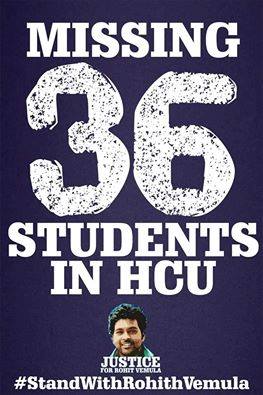
UoH Alumni Open Letter against the institutional murder of Rohith Vemula, the return of Dr. Appa Rao as UoH’s VC, and the brutal display of state violence in campus.
As alumni of the University of Hyderabad, we observed with dismay the return of Dr. Appa Rao Podile as the Vice-Chancellor of University of Hyderabad (UoH) on March 22. We strongly condemn this provocation that led to the police brutality on campus. The shutdown of the university which has followed is unacceptable and unlawful.
A couple of days ago, a report ranked three departments of the University of Hyderabad among the top 500 university facilities in the world. The education we received at UoH helped us to not only shape our careers, but also to question, critique and analyse concepts such as equality, fraternity and social justice. Upon entering a central university of this size, we were exposed to the sheer diversity of this country. UoH, like other central universities in India, is an amalgam of many languages, cultures, religions and regions.
However, much like the rest of the country, the university campus is a space where systematically oppressive caste structures operate and are institutionally legitimised. Recent events at UoH have left us dismayed and angered at the treatment meted out to peacefully protesting students at the hands of the administration and the police.
This is an English translation by SOUMASHREE SARKAR of a column by Buddhadeb Dasgupta which appeared in the Sunday special supplement, Rabibashoriyo, of the Bengali daily Anandabazar Patrika on March 20, 2016 and can be found in the original Bengali here.
It was probably the month of November. Winter had set in firmly in a city that neighboured Kolkata. The quilts had come out even before that. Morning had not even broken and there was still a lot of sleep left to be slept when Ma yanked the quilt away from me and woke me up, “Don’t you remember who’s coming today? Get up and hurry, I’ve been calling you for the longest time, Khrushchev and Bulganin are coming, they might have reached already. My cooking’s almost done.” The words were pouring out of my mother’s mouth with frightening speed and excitement, all in the Dhaka’s native Bengali tongue.
Bathed in cold water, shivering through chattering teeth, and sufficiently clothes, we siblings went and stood in front of our mother. With a comb in hand, Ma sat on a chair, and neatly parted all our heads of hair.
I asked, “What does Khrushchev look like? What does Bulganin look like? The same rice-dal-fish curry that we eat – do they also eat that?”
Guest Post by HCU students (Taken from Youtube Uploads and Facebook Status Updates)
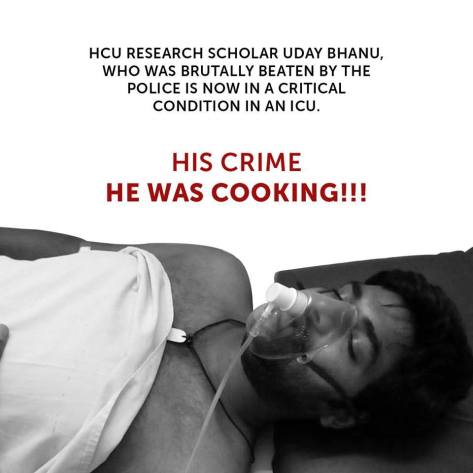
[Since there is a virtual media blackout of the situation in Hyderabad Central University we have decided to share video testimonies by students of the violence unleashed by CRPF (Central Reserve Police Force) and the RAF (Rapid Action Force) which were called in at the behest of the Vice Chancellor Appa Rao – who is already under a cloud for having created the circumstances that led to Rohith Vemula’s suicide, which many students consider to be an ‘institutional murder’. When Appa Rao returned to the University, students were enraged, and they started a ‘sit-in’ outside the Vice Chancellor’s lodge. It was then that the central forces were called in. Later, electricity, water and internet facilities were cut off. The debit card used by the students, linked to the State Bank of India branch on the campus, were blocked. The non teaching staff was persuaded not to give food in university hostel canteens to students. Some students who started a community kitchen were taken away by the police. One of them, a research scholar called Uday Bhanu was so badly beaten up that he has been admitted to intensive care at a local hospital. His condition remains critical.
(Dr. Ambedkar’s editorial on Bhagat Singh-Rajguru-Sukhdev execution on 13th April 1931-available in English here – http://www.bhagatsinghstudy.blogspot.in/2016/03/dr-ambedkars-editorial-on-bhagat-singh.html)
समसामयिक विचार
(जनता, 13 अप्रैल 1931)
भगतसिंह, सुखदेव और राजगुरू इन तीनों को अन्ततः फांसी पर लटका दिया गया। इन तीनों पर यह आरोप लगाया गया कि उन्होंने सान्डर्स नामक अंग्रेजी अफसर और चमनसिंह नामक सिख पुलिस अधिकारी की लाहौर में हत्या की। इसके अलावा बनारस में किसी पुलिस अधिकारी की हत्या का आरोप, असेम्ब्ली में बम फेंकने का आरोप और मौलमिया नामक गांव में एक मकान पर डकैती डाल कर वहां लूटपाट एवं मकानमालिक की हत्या करने जैसे तीन चार आरोप भी उन पर लगे। इनमें से असेम्ब्ली में बम फेंकने का आरोप भगतसिंह ने खुद कबूल किया था और इसके लिए उसे और बटुकेश्वर दत्त नामक उनके एक सहायक दोस्त को उमर कैद के तौर पर काला पानी की सज़ा सुनायी गयी। सांडर्स की हत्या भगतसिंह जैसे क्रांतिकारियों ने की ऐसी स्वीकारोक्ति जयगोपाल नामक भगतसिंह के दूसरे सहयोगी ने भी की थी और उसी बुनियाद पर सरकार ने भगतसिंह के खिलाफ मुकदमा कायम किया था। इस मुकदमें में तीनों ने भाग नहीं लिया था। हाईकोर्ट के तीन न्यायाधीशों के स्पेशल ट्रीब्युनल का गठन करके उनके सामने यह मुकदमा चला और उन तीनों ने इन्हें दोषी घोषित किया और उन्हें फांसी की सज़ा सुना दी। इस सज़ा पर अमल न हो और फांसी के बजाय उन्हें अधिक से अधिक काला पानी की सज़ा सुनायी जाए ऐसी गुजारिश के साथ भगतसिंह के पिता ने राजा और वायसराय के यहां दरखास्त भी दी । अनेक बड़े बड़े नेताओं ने और तमाम अन्य लोगों ने भगतसिंह को इस तरह सज़ा न दी जाए इसे लेकर सरकार से अपील भी की। गांधीजी और लॉर्ड इरविन के बीच चली आपसी चर्चाओं में भी भगतसिंह की फांसी की सज़ा का मसला अवश्य उठा होगा और लार्ड इरविन ने भले ही मैं भगतसिंह की जान बचाउंगा ऐसा ठोस वायदा गांधीजी से न किया हो, मगर लार्ड इरविन इस सन्दर्भ में पूरी कोशिश करेंगे और अपने अधिकारों के दायरे में इन तीनों की जान बचाएंगे ऐसी उम्मीद गांधीजी के भाषण से पैदा हुई थी। मगर यह सभी उम्मीदें, अनुमान और गुजारिशें गलत साबित हुई और बीते 23 मार्च को शाम 7 बजे इन तीनांे को लाहौर सेन्ट्रल जेल में फांसी दी गयी। ‘ हमारी जान बकश दें’ ऐसी दया की अपील इन तीनों में से किसी ने भी नहीं की थी; हां, फांसी की सूली पर चढ़ाने के बजाए हमें गोलियों से उड़ा दिया जाए ऐसी इच्छा भगतसिंह ने प्रगट की थी, ऐसी ख़बरें अवश्य आयी हैं। मगर उनकी इस आखरी इच्छा का भी सम्मान नहीं किया गया। न्यायाधीश के आदेश पर हुबहू अमल किया गया ! ‘अंतिम सांस तक फांसी पर लटका दें’ यही निर्णय जज ने सुनाया था। अगर गोलियों से उड़ा दिया जाता तो इस निर्णय पर शाब्दिक अमल नहीं माना जाता। न्यायदेवता के निर्णय पर बिल्कुल शाब्दिक अर्थों में हुबहू अमल किया गया और उसके कथनानुसार ही इन तीनों को शिकार बनाया गया।
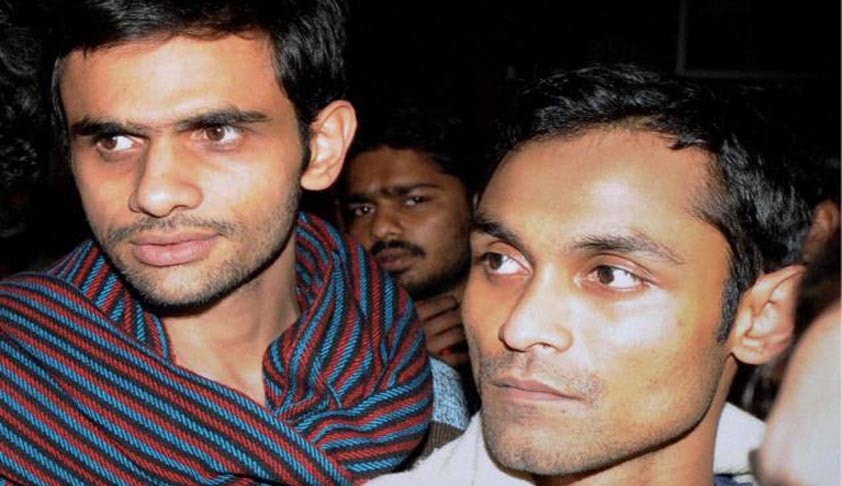
I have come home a little while ago from Jawaharlal Nehru University after listening to Umar Khalid and Anirban Bhattacharya take back the night. As I drove home through the quiet streets of Delhi after midnight it occurred to me that somebody should whisper into Narendra Modi’s ear that he should now start stocking up on sleeping pills. (Maybe Baba Ramdev’s enterprise makes some that he could prescribe to the Prime Minister, unadulterated). With young people like Umar and Anirban as his adversaries, the Prime Minister can only have sleepless nights ahead of him. It is perhaps fortunate for him that the team from Madame Tussaud’s came by and did their job yesterday. Because from now on, his real skin tone will only envy the lustre of his wax work. Umar and Anirban, and their friends, took away the little remaining shine that Modi had left at midnight.
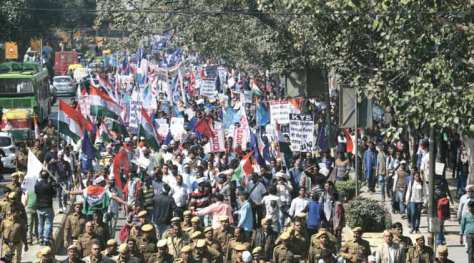
For the fourth time since the early February, students, faculty and their friends marched in Delhi. Once again, there were thousands of people, walking from Mandi House to Jantar Mantar. This time, there was focused attention on the demand for the release of the detained JNU students – Umar Khalid and Anirban Bhattacharya, the DU Professor S.A.R Geelani, solidarity with JNU Prof. Nivedita Menon and the poet-scientist Gauhar Raza against their media trials, and a direct attack on the creeping fascism of the Modi regime. Here are some moments from this march.
(Thanks to Aniket Prantdarshi, Kavita Krishnan, Samim Asgor Ali and Anish Ahluwalia, ‘We are JNU’ for their photos and videos, which I have taken from their Facebook pages and Youtube Channels)
[ Here are five joyous excerpts of recordings from a recent night on the JNU campus – after Kanhaiya Kumar came back – recorded by a young person called Veer Vikram. We do not know who Veer Vikram is, but came across his Youtube Channel, and were struck by the raw freshness of the voices and of the footage. So we are sharing them with you, saluting the generosity of Veer Vikram, who recorded these and uploaded them on to Youtube for everyone to enjoy. May there be many long nights of joy, music, dancing and poetry – in campuses, factories and neighborhoods – everywhere Think so what a beautiful sight a ‘vishaal jan jagaran’ (as distinct from a ‘bhagawati’ jagaran) can make in different corners of Delhi, and in every city and town where young people can no longer take the rubbish offered by TV channels and the Modi regime. The revolution will be danced, sang, dreamt, recorded, uploaded, downloaded, shared and enjoyed. No more words necessary ]
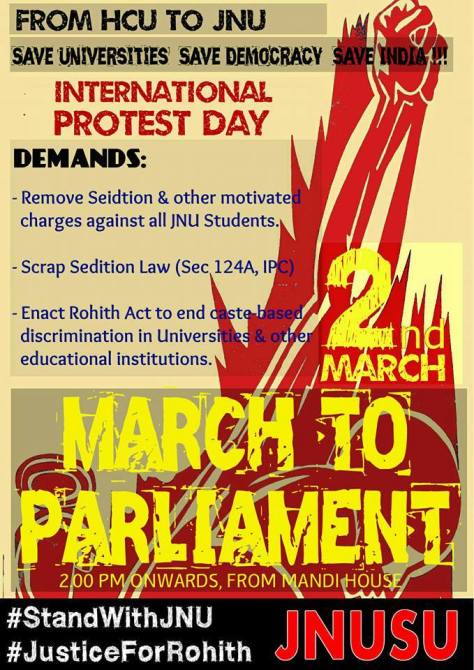
In response to JNUSU’s call for observing 2nd March as International Day of Protest and to demand justice for Rohith Vemula and the release of the then three arrested students, numerous organisations decided to gather outside Dadar station (E) and carry out a peaceful protest. Among them were All India Students’ Association (AISA), All India Students’ Federation (AISF), Students’ Federation of India (SFI), Democratic Youth Federation of India (DYFI), All India Youth Federation (AIYF), University Committee for Democracy and Equality (UCDE) and others. The protest was supposed to begin at 5pm. Continue reading Encounters With the State and Other Comedies: Asmit Pathare→
The dominant narrative around the recent JNU incident has been that the unwarranted police action and the concerted acts of violence, incitement and misinformation that followed are all part of a determined push by the saffron brigade. After love jihad and beef, the story has it, it is “sedition” and “Pakistani agent” this time—we are living in a state of undeclared emergency. A sense of disbelief and apocalyptic doom seem to underpin these sentiments, along with a nostalgic optimism for a quick return to harmony and normalcy. But such things have happened far too many times, and far too often for us to harbour such illusions. For what we are going through is in effect a recalibration of that normalcy.
To read political slogans literally is an absurdity. But in the hands of the present government, it is a calculated absurdity that reads “Bharat ki barbadi…” as armed conspiracy against the state. The variables are many—arrests, fake tweets, rampaging lawyers, patriotic house-owners and now, open calls for murder. But the calculus resolves itself into the same formula every time: national/anti-national.
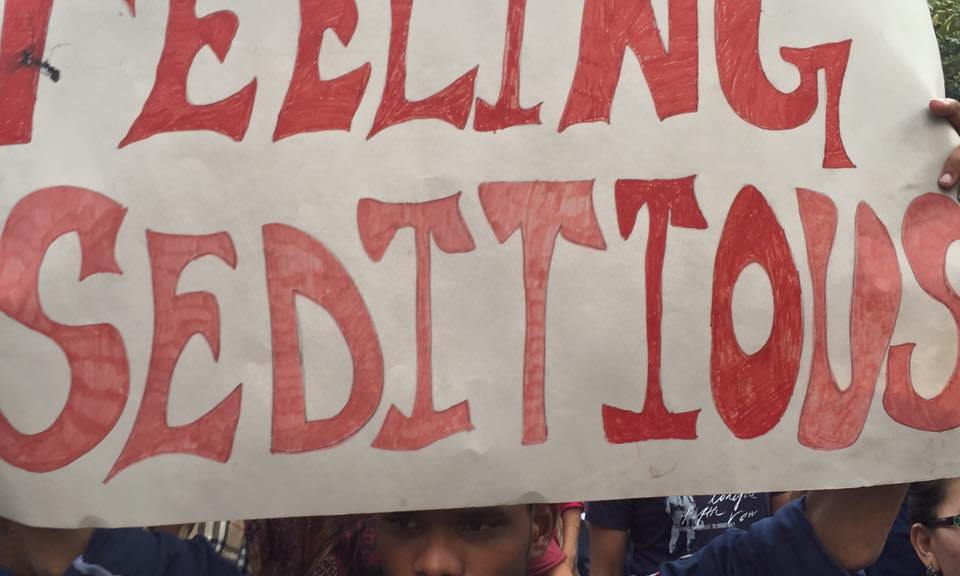
At the outset, the opposition to the attack on the university campus seems to have coalesced around two points—first, maintaining a safe distance from the “anti-India” slogans raised at the meeting; and second, showing themselves as the real nationalists, standing against the saffron thugs in patriot’s disguise. Partly in response to a vicious media campaign, videos of “real nationalist” speeches at the protest venue are being posted on social media everyday. We are told at length about the “real” Indian behind the deshdrohi, his credentials, and how he wants his India to be. Things reached a disturbing pitch when spokespersons of the traditional Left went on record to express their displeasure at the real culprits not being caught. Without doubt, the saffron brigade cannot be allowed the prerogative of deciding what “the nation” means. But why do so from the flimsy ramparts of sedition? Continue reading Sedition is a Shade of Grey or, Bharat Mata’s Smothering Embrace: Ankur Tamuliphukan and Gaurav Rajkhowa→
There has been a lot of talk about what exactly ‘Azadi’ (freedom) means, especially in the wake of Kanhaiya Kumar’s post release midnight speech at JNU on the 4th of March. So lets talk some more. No harm talking. If there is noise, there must also be a signal, somewhere.
Kanhaiya Kumar clarified in his electrifying, riveting speech that his evocation of Azadi was a call for freedom ‘in’ India, not a demand, or even an endorsement of a demand for freedom ‘from’ India.
This may come as a sigh of relief to some, – Kanhaiya , the man of the moment, proves his ‘good’ patriotic credentials, leading to an airing of the by now familiar ‘good nationalist vs. bad nationalist’ trope. And everyone on television loves a nationalist, some love a good nationalist even more.
[ P.S. : Since writing this last night, a more careful reading of the bail order has suggested to me that the actual terms of bail are not so bad after all. Bail is in fact granted, as far as I can see, fairly unconditionally. Kanhaiya is not asked, for instance, to step down from his position in the students’ union, nor are restrictions placed on his movement and activity. So in technically legal sense, the bail provisions need not be interpreted in a tightly restricted manner. The egregious political hortations, the references to infection, antibiotics, amputation and gangrene, which are over and above the legal instructions, are indeed terrible, but operationally, they have no executive authority backing them.]
But to say just that the text of the bail order is what shaped Kanhaiya’s midnight speech would be ungenerous, and miserly, especially in response to the palpably real passion that someone like Kanhaiya has for a better world, and for a better future for the country he lives and believes in. I have no doubt about the fact that coming as he does from the most moderate section of the Indian Left (the CPI – well known for their long term affection for the ‘national bourgeoisie’ despite the national bourgeouisie’s long term indifference/indulgence towards them), Kanhaiya is a genuine populist nationalist patriot [I have corrected ‘nationalist’ to ‘patriot’ here in response to the criticism and suggestion held out by Virat Mehta’s comment – see below in the comments section] and a democrat moulded as he says, equally by Bhagat Singh and Dr. Ambedkar. There is a lot to admire in that vision, even in partial disagreement. And while some may not necessarily share his nationalism, this does not mean that one has to treat it with contempt either. I certainly don’t.
For the third time within a span of two weeks since the middle of February, thousands of people came out on the streets of Delhi to express their solidarity with the detained students of JNU (Kanhaiya Kumar, Umar Khalid and Anirban) and to voice their anger with the venal Modi regime.
Protest demonstrations (at least in northern India) tend to have something of the monotonous in them, the same cadence, the same rhythm and the same wailing, complaining tone. They tend to have an air of events staged by the defeated, for the defeated. But if we take the last three big protests in the city, and the many gatherings in JNU in the last two weeks or so, as any indicator of what the pulse of our time is, we will have to agree that there has been a qualitative transformation in the language, vocabulary and affect of protests. This afternoon, like the afternoon of the 18th (the first big JNU solidarity march), and of the 23rd of February (the Justice for Rohith Vemula March), was as much about the joy of togetherness and friendship as it was about rage and anger.
Kafila posted a set of solidarity statements recently in support of the students, faculty and autonomy of JNU. We are posting another set, received from the following organisations:
First-Decade JNU Graduates and Other Graduates – 548 signatories.
Faculty, Staff and Students at the Indian Institute of Management, Bangalore.
California Students and Faculty. California, U.S.
Current Fellows of the Jawaharlal Nehru Institute of Advanced Study, JNU, Delhi.
Colorado College, Colorado, U.S.
Faculty at DePaul University, Chicago, U.S.
Faculty, Students and Staff, Brown University, Rhode Island School of Design (RISD) and University of Rhode Island, Providence, U.S.
McGill and Concordia Universities, Canada.
Canadian Academics from Various Universities.
Please click on Read More below for the statements and signatories:
There is an uncanny academic public silence over the Jat quota stir and the unjustified violence enacted during the stir in Haryana. The scale of violence and destruction is such that it competes for the worst instance of caste violence in Haryana’s post-Independence history. So far 30 people have lost their lives while over 200 people were injured in the nine-day violent Jat agitation demanding job quotas in Haryana. There is anger, fear and helplessness among those who lost their kin, homes, businesses and properties.At least 10 Haryana districts were severely affected by the violence. After such a huge loss, as if it was a routine, matter the Union Home Minister announced that a committee led by M Venkaiah Naidu will examine the demand by Jats for reservation in central government jobs.
In Haryana, the BJP’s government in the state has promised to bring a Bill granting OBC status to Jats in the upcoming assembly session. The Jats’ demand for reservations in the central OBC list is not new. Since 1995, Jats in Haryana have been demanding an OBC (Other Backward Class) status, which will help them secure the 27 per cent reservation in government jobs. Earlier in 1997, the Jats in Haryana, Uttar Pradesh and Madhya Pradesh had demanded themselves to be included in the central OBC list. It was rejected by the National Commission for Backward Classes. Subsequently UPA government’s decision to include Jats from 9 states in the OBC list was also rejected by the Supreme Court in March 2015. Despite all this, political parties such as Congress and BJP continue promising quota to Jats during election campaigns. These promises have encouraged the Jats to organize and agitate for quotas. However, their agitations for reservations have not been so violent. That is why the most pressing and important question that needs analyses is why has the current agitation by Jats been so violent? Perhaps three factors will help us to understand this severe violence and loss of property worth crores of rupees.
Guest Post by Shehla (Vice-President, JNUSU) and Rama Naga (General Secretary, JNUSU)
To all Friends (in Delhi, India and the World) who have Supported the Struggle of JNU students and students elsewhere in India in the past few weeks.
Thank you for your message of solidarity. In this hour of unprecedented attack on us, what has been a source of great strength are messages like these, which we have pasted all over the Administration Building. We have not been able to respond to each message because of being extremely overburdened. However, we are writing back today, in order to update you regarding the status of the struggle, and with a call to action on the 2nd of March, 2016 in your city.
Call for Global Day of Protest and March to Parliament for JNU – March 2nd, 2016
संसद में दिए गए आपके भाषण को सुना. इससे पहले की मै अपनी बात रखूँ , यह स्पष्ट कर दूं की यह पत्र किसी “बच्चे” का किसी “ममतामयी” मंत्री के नाम नहीं है बल्कि यह पत्र एक खास विचारधारा की राजनीति करने वाले व्यक्ति का पत्र दूसरे राजनैतिक व्यक्ति को है. सबसे पहले मै यह स्पष्ट कर दूं कि मै किसी भी व्यक्ति की योग्यता का आकलन उसकी शैक्षणिक योग्यता के आधार पर नहीं करता हूँ बल्कि साफ़ साफ़ कहूं तो मै “योग्यता”(मेरिट) के पूरे कांसेप्ट को खारिज करता हूँ.
मानव संसाधन मंत्रालय का पद भार लेने के साथ ही यह अपेक्षा की जाती है कि आप इस देश के केंद्रीय विश्वविद्यालयों में उनकी ऑटोनोमी का सम्मान करते हुए उसके लिए उत्तरदायी होंगी. रोहित वेमुला के मामले में आपने क्या किया यह सबके सामने है कि किस तरह से वहाँ के प्रशासन पर आपने दबाव डाला जिसका नतीजा रोहित के institutional मर्डर के रूप में हमारे सामने आया. लेकिन मै इन सारी चीजो पर अभी बात नही करना चाहता. आप बार बार अपनी औरत होने की पहचान (आइडेंटिटी) को assert करतीं हैं और इसको करना भी चाहिए क्यूंकि नारी जाति उन ढेर सारे हाशिये पर किए गए लोगों में एक है जिनको सदियों से शोषित किया गया है. मै आपसे यह पूछना चाहता हूँ कि एक दलित स्त्री जो कि हर तकलीफ उठाते हुए अकेले अपने दम पर जब अपने बेटे बेटियों को इस समाज में एक सम्मानपूर्ण जगह देने के लिए संघर्ष कर रही थी तब एक नारी होने के कारण आप की क्या जिम्मेदारी बनती थी ? क्या आपको उस महिला के जज्बे को सलाम करते हुए उसकी बहादुरी के आगे सर झुकाते हुए उसके साथ नहीं खड़ा होना चाहिए था? हाँ, मै रोहित की माँ के बारे में बात कर रहा हूँ. जो महिला इस ब्रहामणवादी व पितृसत्तात्मक समाज से लड़ी जा रही थी, अपने बच्चों को अपने पहचान से जोड़ रही थी, उस महिला को आप व आपकी सरकार उसके पति की पहचान से क्यूँ जोड़ रहे थे? आपको भी अच्छा लगता होगा की आपकी अपनी एक स्वतंत्र पहचान है. लेकिन यह अधिकार आप उस महिला से क्यूँ छीन रहीं थीं? क्या आप भी पितृसत्तात्मक व ब्रहामणवादी समाज के पक्ष में खड़ी होती हैं? अपना पूरा नाम बताते हुए अपनी जाति के बारे में आपने सवाल पूछा और आपका भाषण खत्म होने के पहले ही लोगों ने आपकी जाति निकाल दी. मै आपकी जाति के बारे में कोई दिलचस्पी नहीं रखता हूँ और मै यह बिलकुल नहीं मानता हूँ की अगर आप उच्च जाति के होते हैं तो आप जातिवादी ही होंगे लेकिन आपके विभाग/मंत्रालय के तरफ से जो चिट्ठियाँ लिखी गई उसमे रोहित और उसके साथियों को जातिवादी /caste-ist बताया. मैडम क्या आप caste-ism और caste assertion का अन्तर समझती हैं? मै समझता हूँ की आप ये अन्तर भली – भाँति समझती हैं क्यूंकि आर एस एस जो आपकी सरकार और मंत्रालय को चलाता है, वह वर्ण व्यवस्था के नाम पर जाति व्यस्वस्था को भारतीय समाज की आत्मा समझता है और आर-एस-एस के एजेंडे को लागू करवाने की राजनैतिक दृढ़ता हमने समय समय पर आप में देखी हैं.
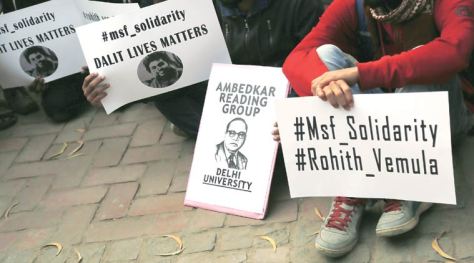
The call for a protest rally by the Joint Action Committee for Social Justice, constituted in the aftermath of Hyderabad Central University research student Rohith Vemula’s suicide galvanised large number of students and activists on 23rd February. On a bright sunny day, thousands descended on the streets of central Delhi marching from Ambedkar Bhawan to Jantar Mantar. The attendance was perhaps lower and the organization less cohesive than the JNU protest rally of 18th February. However, it trumped its predecessor in terms of attracting a far-wider political cross-section of the voices openly choosing to dissent against the current ruling establishment. The protestors proudly displayed anti-Brahmanism banners, flags, badges (featuring excerpts of Rohith’s suicide note) and even a radical inversion of Modi-style masks (featuring Rohith Vemula’s smiling face) thereby signaling that the same youth-brigade which was instrumental in BJP’s rise to political power in 2014 has started turning against it.
Earlier this week, I tried to join the many dots of violence at universities into a coherent pattern. My central contention is:
Spirited resistance in campuses across the country suggests the politics of India’s youth are more fluid and assertive than expected. The mid-1990s empowerment of historically oppressed castes, narratives of economic aspiration from the 2000s and an instinctive suspicion of authoritarianism have come together to forge a bold poetic new politics of desire that has befuddled even ruthless and astute politicians like the prime minister.
and
Modi’s government uses outdated laws, a pliant police force and Hindu student organizations as a battering ram to crush this awakening, exacerbating the discord between a prime minister determined to stamp his authority on an unruly nation and students enraptured by a thrilling moment of unlikely solidarities that could define their generation.
I noticed yesterday, a tweet from Anupam Kher where he compared state action over the events of the last few weeks, as a kind of “pest control” – required, of course to keep the house clean. His exact tweet is – “Gharon mein pest control hota hai to cockroach, keede makode ityadi bahar nikalte hain. ghar saaf hota hai. waise hi aajkal desh ka pest control chal raha hai.”
The similarity of this thought to Hitler’s on ethnic cleansing hasn’t gone unnoticed (look at Rajdeep Sardesai’s tweet and this article – http://www.jantakareporter.com/india/anupam-kher-hitler-modi/38514) and I’m sure much more will be written about it in the days to come. Anupam Kher’s inability to develop a logical argument or even notice the illogicality of his own actions has never ceased to surprise me, but the casualness with which he endorses state violence is interesting. But mere tweeting is not sedition. Do I find this tweet distasteful, offensive and also legitimizing state and mob violence? Yes, I do. Am I worried by the sentiment expressed in this tweet? Yes, I am. Am I additionally worried because this is not a man, sitting in an obscure corner somewhere, just airing his views, but a well known personality whose words seem to garner some weird kind of legitimacy because of his status as a Hindi film actor? Yes, I am. Do I think he should be arrested? No. Continue reading Does the Nation Really Even Want to Know? Shweta Radhakrishnan→
We, the undersigned members of the Bangalore Research Network and a consortium of academics and researchers from Bangalore, declare our solidarity with the students and faculty of the Jawaharlal Nehru University, New Delhi protesting the illegal police arrest of JNUSU president Kanhaiya Kumar on charges of sedition. We unequivocally stand by them in affirming that universities are autonomous spaces for the free expression of a plurality of beliefs and cannot become military spaces of thought control that go against the very grain of a democratic society. With them, we condemn the blatantly authoritarian attempt by the police and the central government to witch hunt students on the basis of their political beliefs. We also condemn the unethical media trial of JNU students such as Kanhaiya Kumar and Umar Khalid. Continue reading Bangalore Research Network’s Letter of Solidarity with JNU→