Category Archives: Right watch

राष्ट्रवाद का मौसम

मेरठ के एक निजी विश्वविद्यालय में भारत-पाकिस्तान के बीच हुए क्रिकेट मैच में पाकिस्तान की जीत पर कश्मीरी छात्रों की खुशी जाहिर करने पर स्थानीय छात्रों द्वारा उनकी पिटाई और तोड़-फोड़ के बाद तीन दिनों के लिए छियासठ छात्रों के  निलंबन (निष्कासन नहीं) और फिर ‘उनकी हिफाजत के लिए’ उन्हें उनके घर भेजने के विश्वविद्यालय के फैसले के बाद उन छात्रों पर राष्ट्रद्रोह की धाराएं लगाने से लेकर उन्हें वापस लेने तक और उसके बाद भी जो प्रतिक्रियाएं हुई हैं,वे राष्ट्रवादी नज़रिए मात्र की उपयोगिता को समझने के लिहाज से काफी शिक्षाप्रद हैं.आज यह खबर आई है कि ग्रेटर नॉएडा के शारदा विश्विद्यालय में भी छह छात्रों को छात्रावास से ऐसी ही घटना के बाद निकाल दिया गया है जिनमें चार कश्मीरी हैं. मामला इतना ठंडा क्यों है, ऐसी निराशा जाहिर करते हुए फेसबुक पर टिप्पणी की गयी है और उसके बाद तनाव बढ़ गया है.

रोशोमन नियम के अनुसार घटना के एकाधिक वर्णन आ गए हैं और तय करना मुश्किल है कि इनमें से कौन सा तथ्यपरक है. स्थानीय (राष्ट्रीय या राष्ट्रवादी?) तथ्य यह है कि पाकिस्तानी खिलाड़ियों के प्रदर्शन और फिर उस टीम की जीत पर कश्मीरी छात्रों ने पाकिस्तान जिंदाबाद के नारे लगाए जिससे  भारतीय टीम की हार से पहले से ही दुखी स्थानीय छात्रों में रोष फैल गया. निलंबित कश्मीरी छात्रों का कहना है कि वे हर उस खिलाड़ी के प्रदर्शन पर ताली बजा रहे थे जो अच्छा खेल रहा था. बेहतर टीम पकिस्तान के जीतने पर उनका खुशी जाहिर करना कहीं से राष्ट्रविरोधी नहीं कहा जा सकता. उनके मुताबिक  इसके बाद उन्हें पीटा गया और तोड़-फोड़ की गई. Continue reading राष्ट्रवाद का मौसम

The Buttocks of Naked Women and Further Meditations on Sacred Art: Sajan Venniyoor

Guest Post by  SAJAN VENNIYOOR

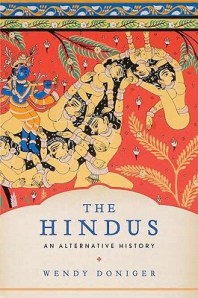
“There is no Hindu canon,” declares Wendy Doniger in The Hindus. “The Vedas did not constitute a closed canon, and there was no central temporal or religious authority to enforce a canon had there been one.”

This is a curious argument in defence of heterodoxy. Canons don’t spring fully formed like Athena from the head of Zeus, or drop from the lips of a passing Archangel. Someone has only to do the hard work, and it’s never too late to make a nice hard canon.

As Doniger says, Hinduism as we know it today “is composed of local as well as pan-Indian traditions, oral as well as written traditions, vernacular as well as Sanskrit traditions, and nontextual as well as textual sources.” That’s good news – plenty of material there to choose a canon from.

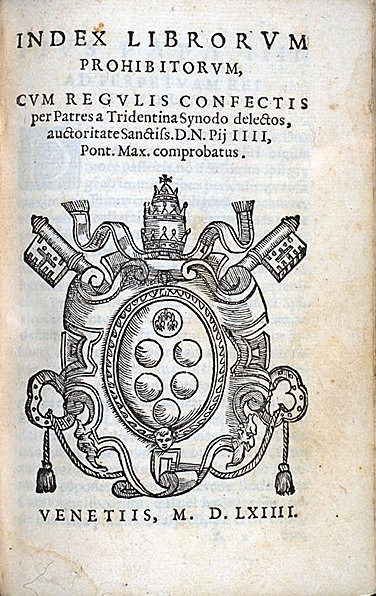
Back in the 16th century, the Church found itself up the creek without a canon. Plagued by fifteen hundred years of heresies and heterodoxies, disagreements over the sacraments and the scriptures, not to mention a perfect storm of lusty, busty images in Renaissance religious art, the Catholic Church sat in ecumenical council between 1545 and 1563 and decided, once and for all, what was IN and what was OUT.

Index of Prohibited Books (1)

Index of Prohibited Books 

It took the Church just over 1500 years – from the crucifixion of its founder to the Council of Trent – to decide which of its written books and unwritten traditions were truly sacred and which were profane (and which were to be banned).  Continue reading The Buttocks of Naked Women and Further Meditations on Sacred Art: Sajan Venniyoor

The Double Cruelty of the Rights of Persons With Disabilities bill: Rijul Kochhar

Guest Post by Rijul Kochhar

In the lives of the disabled, the disability certificate is a commanding entity. It is the artefact of government and the state that interprets the myriad experiences of persons dealing with disabilities, translating and transforming those experiences into a public fact. Thus, the disability certificate offers a particular form and definition of disability, with its attendant mathematical percentage, supplanting the shards of experience with bureaucratic rationality and certitude. This transformation of messy lived experience into mathematical and medical certainty, at once, also affects that larger lived experience of lives lived with a disability[1].

Continue reading The Double Cruelty of the Rights of Persons With Disabilities bill: Rijul Kochhar

The Embarrassed Modern Hindu (Upper Caste Man)

Perhaps the clearest statement on what exactly it is in Wendy Doniger’s work that bothers some people – and who these people are – is outlined in Jakob De Roover’s empathetic account of the imagined ‘Hindu boy with intellectual inclinations’ born in the 1950’s.  This boy grows up going to the temple, hearing stories about Bhima’s strength, Krishna’s appetite, Durvasa’s temper. If you were this boy,

Perhaps you rejoice when Rama rescues Sita, feel afraid when Kali fights demons, or cry when Drona demands Ekalavya’s thumb as gurudakshina.

The boy goes to school and learns about caste discrimination in Hinduism (that he had to go to school to learn about caste discrimination establishes his own caste position very clearly).  This makes

You feel bad about your “backward religion” and ashamed about “the massive injustice of caste.”

But

You sense that it misrepresents you and your traditions—it distorts your practices, your people, and your experience…Everywhere you turn, people just reproduce the same story about Hinduism and caste as the worst thing that ever happened to humanity: politicians, activists, teachers, professors, newspapers, television shows… Continue reading The Embarrassed Modern Hindu (Upper Caste Man)

Terrorized By The Past: Janaki Nair

Kafila normally does not carry guest posts that have appeared elsewhere, but I think JANAKI NAIR’s article from The Telegraph needs to be read widely – a scholarly, lively, feminist take on sexuality in Hindu traditions.

It is our good fortune that our knowledge of Hinduism does not come from the authorized versions that Dina Nath Batra and his Shiksha Bachao Andolan wish to propagate. Neither does our collective imagination remain reined in by his fantasies about the Indian past. This large and luxuriantly complex society, even when all else has been brutally taken from its wretched millions, has its imagination intact. And, we fervently hope, for some time to come. Therein lies the challenge to our desperately needed “historical temper”.

As an 18-year-old, I had read the sexually frank passages of the Rig Veda with wonder and amazement. In a small village called Sanehalli, Karnataka, where the performing arts have been vigorously patronized by Swami Panditaradhya, I recently watched, along with the people from surrounding villages, the Kathakali performance at the annual theatre festival, in which Shakuntala incrementally raised the decibel level and shouted “Anarya!” at Dushyanta, violating all norms of womanly behaviour and appropriate performance voice. There was thunderous appreciative clapping at the end. I have filed past, with lots of ardent devotees of Krishna, the brilliant murals at the Cochin Palace at Mattancherry, where Krishna does not waste a single digital extremity of his eight hands and two feet in pleasing his gopis (his two flute playing hands excepted). Ditto the Guruvayur Temple, whose sexually explicit murals are now, alas, being modestly covered in (NRI-sponsored) gold plate. The erotic sculptures at the Nellaiappar Temple at Tirunelveli, the great Chalukyan temples at Aihole Pattadakkal and Badami, all visited daily by hundreds of chattering and irreverent school children, continue to stand as testimony to what our illustrious forebears were also preoccupied with. One could go onad nauseum, about the little and great traditions of Indian mythology which are not only sexually explicit but bloodstained to boot. It is Wendy Doniger’s triumph that she brings us these complexities in just one book. Continue reading Terrorized By The Past: Janaki Nair

CHS, JNU Statement on the Wendy Doniger Issue

The following is the text of a statement issued by the Faculty of the CENTRE FOR HISTORICAL STUDIES, Jawaharlal Nehru University, protesting against the recent decision by Penguin India to withdraw and pulp all remaining copies of Wendy Doniger’s Hinduism. An Alternative History

We are outraged by the news that Penguin India has agreed to withdraw Wendy Doniger’s much acclaimed book The Hindus: An Alternative History and pulp all existing copies of the book in stock. Professor Doniger is one of the most respected Indologists in the world. She has spent a lifetime exploring the richness of India’s religious pasts, showcasing the creative interplay between multiple traditions — the Puranic and the Vedantic, the folkloric and the Brahmanic. Innovatively drawing on many disciplines, she has investigated the variegated world of Hindu mythology and theology, to explore what they say about order and chaos, morality and ethics, the good and the evil, the erotic and the non-erotic. Her reading of Hinduism has inevitably disturbed those who wish to sanitize and straitjacket Hinduism, and repress the multiplicity of traditions that constitute it. While welcoming all critical engagements with the book, the faculty of the CHS condemns any attempt to curtail the circulation of this book in any form.

The decision of Penguin India to sign an out-of-court settlement to withdraw Professor Doniger’s book is therefore an act of abandoning the basic ethics of publishing. What is most disturbing is the fact that Penguin Books — which had in the past a sturdy reputation of defending freedom of expression — has agreed to a settlement even without the Indian state or the Indian judiciary taking a position against the book. This decision will affirm the power of the forces of religious intolerance, encourage further attacks on authors who question the fundamentalist interpretation of the past, and subvert the right to freedom of expression. It will undermine further the rapidly eroding public space wherein critical debates and discussions can take place. This is a space that all who believe in democratic values — publishers included — need to preserve and defend.

Please note that individual names are not being listed in this statement as this is emanating from the entire faculty.

Thank you,

Professor Rajat Datta

Statement by Scholars in North American Universities on Withdrawal of Wendy Doniger’s book

This statement expresses the views of the individuals listed below and does not represent the views of the University of Chicago or any of its departments.

We, the undersigned, as students of South Asia, strongly condemn the withdrawal by Penguin Press India of Wendy Doniger’s The Hindus: An Alternative History from distribution in India. We believe that this work has been attacked because it presents a threat to orthodox Brahminical interpretations of Hinduism. We believe that this attack is part of ongoing attempts by upper-caste extremist Hindu forces to stifle any alternative understandings of Hinduism. As students in the United States, we are acutely aware that North American organizations of the Hindu right initiated the protests against Wendy Doniger’s scholarship. Hindu right wing organisations in India have worked in tandem with their North American counterparts to suppress alternative voices in India and too often violently. We are deeply concerned about the alarming increase in attacks on any academic study of Hinduism that does not fit these groups’ narrow and exclusionary vision of Hinduism which is part of their desire to create a Hindu India that excludes the religious minorities of Indian Muslims and Indian Christians. Continue reading Statement by Scholars in North American Universities on Withdrawal of Wendy Doniger’s book

This is not Wendy Doniger’s The Hindus – An Alternative History

download

“This is not a pipe” (Rene Magritte)

5263037

This is not Wendy Doniger’s The Hindus. An Alternative History

None of the following are, either. They are links from which you can download the entire text:

Epub version
pdf version 


 WENDY DONIGER: Finally, I am glad that, in the age of the Internet, it is no longer possible to suppress a book. The Hindus is available on Kindle; and if legal means of publication fail, the Internet has other ways of keeping books in circulation.

People in India will always be able to read books of all sorts, including some that may offend some Hindus.

And no, this is not a penguin, a notoriously brave bird!
chicken

An Ice Age for Indian scholarship

These are lonely times for scholarship in India.Shiksha Bachao Andolan Samiti( SBAS) has claimed yet another scalp in the form of the withdrawal of Wendy Doniger’s book ‘The Hindus:An alternative history’ by its publishers Penguin,India. The author, while ‘angry and disappointed’ by this decision has said that she can understand the plight of her publishers who were fighting a criminal case and not a civil suit. It had serious implications for their physical safety. Fellow scholars and academics are upset and angry that the publishers have caved in.

The question we need to ask ourselves, however is about our own role in this whole affair. There were not too many voices of protest  when the same SBAS forced the Calicut University to remove a poem by an unknown poet from an English language textbook alleging that the poet was a ‘terrorist’. Its editors felt compelled to apologize as they were threatened with a probe into their possible involvement in a conspiracy network to jeopardize national security. Continue reading An Ice Age for Indian scholarship

Pulping Doniger Can Put Penguin in Peril

It was with great anger and sadness that many readers in India heard yesterday of Penguin Books India’s decision to enter into an out-of-court settlement with a group of busy-bodies led by one Dina Nath Batra of the so called ‘Shiksha Bachao Andolan’ (Save Education Movement) – one of the many poisonous heads of the RSS hydra – to recall and pulp all extant copies of Wendy Doniger’s “The Hindus: An Alternative History” (Penguin India, 2009).

Dina Nath Batra (infamous for leading the campaign that led to the withdrawal of A.K. Ramanujan’s essay on the Ramayana from the Delhi University syllabus) and others, through their advocate, one Monika Arora, had filed a suit in a Saket, New Delhi against Wendy Doniger (whom they address, as ‘You, Noticee’) and Penguin Books on the grounds that Doniger’s book offends their religious sentiments. Continue reading Pulping Doniger Can Put Penguin in Peril

Will the new Bill benefit the freshly included disabilities? : Amita Dhanda

Guest Post by AMITA DHANDA

The Rights of Persons with Disabilities Bill 2014 has got caught in the crossfire of different disability groups. Whilst one body of opinion holds that the Bill is regressive, incoherent and needs to be heavily reworked before it can be enacted; the other perspective is that the Bill may not be perfect but at least it provides something to those who are not included in the 1995 Act.  People propounding the something is better than nothing logic, also pertinently point out, that while persons with disabilities who are included in the 1995 Act can afford to wait, that luxury is not available to them.

Thus, the strongest case for passing a less than perfect legislation comes from persons with impairments which are not covered by the 1995 Act.   Significantly, the Bill of 2014 has changed the definition but other provisions, which need to be incorporated in theBill, to ensure that the freshly inducted persons with disabilities obtain all the entitlements (including job reservations) have not been included.  It is submitted that without those provisions being included the expanded definition is going to be of little benefit to the freshly included disabilities. Continue reading Will the new Bill benefit the freshly included disabilities? : Amita Dhanda

A Critique of The Draft Rights of Persons with Disabilities Bill, 2014: Amba Salelkar

Guest post by  Amba Salelkar, Inclusive Planet Centre for Disability Law and Policy 

The Rights of Persons with Disabilities Bill was meant to be an enactment to codify India’s obligations under the UNCRPD, which it ratified without reservations. There was a Committee set up in 2009 by the Ministry of Social Justice and Empowerment, headed by Smt. Sudha Kaul, to draft a Bill to this effect. Like the UNCRPD says, the Committee included different people with disabilities – across disabilities – to draft this Bill. The Draft Bill of 2011 was submitted to the Ministry, and in response to that or otherwise, the Ministry released a Draft Bill in 2012, which are both on the Ministry’s website.

The Draft Bill of 2012 is not as comprehensive and inclusive as the 2011 one, and there were certain serious issues raised before the Ministry on the notification of the 2012 Draft. Thereafter the Draft, apparently still in its 2012 format, went to the various Cabinet Minstries, and then circulated among States. Some version of this Bill was cleared by Cabinet in December 2013. Thereafter, organizations of persons with disabilities, confident that the 2012 Draft was intact, began protests for the speedy introduction and passage of the Bill. I do not know why they did not believe that there had been changes made, but I assume it was in good faith. These protests were largely led by groups in Delhi who had better access to information. Some pockets of regional groups were demanding for information on the contents of the Bill. They remained unanswered. Meenakshi B of the Disability Rights Alliance, Tamil Nadu, followed up with the Ministries and the general passage of the Bill, and she was told that the Bill was ‘top secret’. Vaishnavi J, one of the founders of The Banyan, also received similar cryptic feedback.

Continue reading A Critique of The Draft Rights of Persons with Disabilities Bill, 2014: Amba Salelkar

Homophobia and Islamobphobia – The Jamaat e Islami Hind and the Supreme Court’s Decision on Section 377: Fahad Hashmi

Guest Post by Fahad Hashmi

[ Yesterday, the Supreme Court of India, dismissed the ‘review petition’ that had been filed with a plea to reverse the Supreme Court’s recent (December 2013) decision to uphold the constitutionality of Section 377 of the IPC. This decision effectively ‘re-criminalized’ Homosexuality in India and is a severe blow to human rights. Various religious groups, Hindu, Muslim and Christian had appealed to the Supreme Court to act against the rights and interests of homosexuals. In a sad instance of the erosion of  secular and democratic values, the Supreme Court has endorsed their view. The Jamaat -e-Islami Hind, a right wing, muslim fundamentalist organization that claims to speak for Indian Muslims has welcomed the Supreme Court’s decision. This post by Fahad Hashmi attacks the Jamaat-e-Islami Hind’s position on homosexuality and challenges its claim to speak in the name of muslims and their faith. We see it as an important contribution to the ongoing discussion on section 377 on Kafila ]

“There was once…a sad city, the saddest of cities, a city so ruinously sad that it had forgotten its name.
In the north of the sad city stood mighty factories in which (so I’m told) sadness was actually manufactured, packaged and sent all over the world, which never seemed to get enough of it. Black smoke poured out of the chimneys of the sadness factories and hung over the city like bad news”.
(Haroun and Sea of Stories, Salman Rushdie)

It is one of the ironies of democracies across the world that minorities of all shades are always in the crosshairs of majoritarianism. This minority-majority is a function of numbers and power though this is not a thorough definition since we have had seen altered power equation of this binary. The apartheid South Africa is a case in point. For stating the obvious the strength of a democracy is a function of safety and rights that minorities enjoy in it. However, minorities on the whole are always drawing majority’s fire. On the subcontinent one could see this happening in Pakistan, Bangladesh, Sri Lanka, and of course India is not an exception.

Continue reading Homophobia and Islamobphobia – The Jamaat e Islami Hind and the Supreme Court’s Decision on Section 377: Fahad Hashmi

सतत क्रान्ति की पैरोडी

पिछले कुछ समय से नागार्जुन और हरिशंकर परसाई की याद बेइंतहा सता रही है: भारतीय राजनीति के इस दौर का वर्णन करने के लिए हमें उनकी कलम की ज़रूरत थी !

क्रान्ति सतत चलने वाली प्रक्रिया है और असली विद्रोही वह है जो छह महीने बाद अपनी कुर्सी खुद उलट दे. आम आदमी पार्टी और दिल्ली सरकार के मुखिया ने केंद्र सरकार के खिलाफ़ बगावत की शुरुआत की,तो ऐसा ही लगा. दिल्ली के केंद्र में रेल भवन के पास दिल्ली की पूरी सरकार  अपने समर्थकों के साथ दस दिनों के धरने पर बैठ गए. उन्होंने धमकी दी कि वे राजपथ को लाखों लोगों से पाट देंगे और केंद्र सरकार की नींद हराम कर देंगे.किसान और सैनिक जब मिल जाएं तो क्रांति शुरू हो जाती है. इसकी पैरोडी करते हुए अरविंद ने दिल्ली के पुलिसवालों को वर्दी उतार कर धरने पर शामिल होने का आह्वान किया. कुछ लोगों को जयप्रकाश नारायण की याद आ गई. एक साथ लेनिन, लोहिया,क्रोपाटकिन और जयप्रकाश का तेज अरविंद केजरीवाल के रूप में पुंजीभूत हुआ. गांधी का आभा वलय अन्ना हजारे से हट कर अरविंद के माथे के पीछे पीछे तो तब ही लग गया था जब उनका भरपूर इस्तेमाल कर ठिकाने लगा दिया गया. क्या यह 2014 का भारतीय तहरीर चौक होने जा रहा है?

दिल्ली के मुख्य मंत्री ने एक बार फिर  आज़ादी की  नई लड़ाई की घोषणा की.यह दृश्य क्रांतिकारियों,समाजवादियों,अराजकतावादियों, सबके के लिए एक पुराने सपने के  पूरा होने जैसा ही था. एक पुरानी, दबी हुई इच्छा के पूरा होने का क्षण!यह आज़ादी झूठी है वाले नारे , वंदे मातरम और भारत माता का जयकार से रोमांचित होने का सुख!! Continue reading सतत क्रान्ति की पैरोडी

Why I joined AAP and Quit the CPI: Kamal Mitra Chenoy

Guest post by KAMAL MITRA CHENOY

I first became conscious of politics as a student of economics in Kirorimal College, Delhi University in 1969 when I was elected to the students union executive committee. The same year I was persuaded by a senior to stand for the Delhi University Students Union’s Supreme Council. The latter body elected the DUSU office bearers. These were heady days with some of the leading pro- Naxalites students, students like Avdesh Sinha, who later became a highly respected IAS officer, and Rabindra Ray now a sociology professor in Delhi University. Another leading star who has written on his experiences was Dilip Simeon. I also became Left but did not agree with armed struggle. At this stage I watched the mainstream Left parties and along with Marxist texts read some Left Party pamphlets.

However, a deeper and much more expansive debate was snowballing where I joined in JNU in 1972. Prakash Karat who had earlier written a thought provoking book on the nationality and language question in India was widely respected as a political leader of the JNU students and a formidable theorist. In 1973, the Student Federation of India and the All India Students Federation of which I was the unit secretary aligned for the first time after the split in the communist movement in 1964. We called the alliance progressive democratic front. We were also attacked by an extremely erudite Trotskyist Jairus Banaji who considered us revisionist and quoted extensively from Marxist classics as well as literature, philosophy and the social sciences. Because of this challenge all of us had to do our readings. Continue reading Why I joined AAP and Quit the CPI: Kamal Mitra Chenoy

Naz and its detractors: A response by Jordan Osserman

Guest Post by Jordan Osserman

Amidst the outcry of queer rage and mourning against the Supreme Court judgment has emerged a strand of skepticism (For examples See here , here and here)  from within queer circles, directed at the participants in the anti-377 campaign. These skeptics allege that the 377 organizers failed to adequately consider the impact of their activism on the most marginal queers in India (lower class/caste hijras, kothis, MSM, etc.). In the most biting version of the critique, the 377 campaign is portrayed as an elite middle class movement, fueled by foreign-funded NGOs, against a largely symbolic, immaterial enemy. 377, these critics allege, was never a central cause of LGBT oppression; a paper tiger, relatively unknown by police and Indian society writ large until middle-class queers arbitrarily put it on the agenda and invested it with symbolic meaning. To the extent that marginal sexual minorities have been represented at all, their voices have been appropriated in the service of a campaign at best irrelevant, and at worst dangerous, to their lives.

In this post, I’d like to challenge some of these claims. We can summarize the critics’ arguments as follows: 1. Section 377 has not historically targeted LGBT people, and rarely affected the lives of sexual minorities prior to the activist mobilization against it. 2. Instead of fighting 377, activists should have prioritized campaigns which would concretely benefit LGBT people, particularly the most marginalized. Alternately, if the 377 campaign had to go forward, the legal strategy and organizing should have been more inclusive. 3. The “liberal outrage” against 377 may be as much to blame for violence justified in the name of the law as the Supreme Court’s decision. For, now that queer activists and the Indian media have popularized the notion that the Supreme Court has “re-criminalized homosexuality,” homophobes have become aware of a new weapon with which to target sexual minorities. I will attempt to address these interlinked arguments in their respective order, before drawing some final conclusions about activism and organizing.

Continue reading Naz and its detractors: A response by Jordan Osserman

Beating AAP with the Kashmir stick

When Prashant Bhushan first made his remarks supporting a referendum in Kashmir to decide whether Kashmir will stay in India, a hooligan had gone to his office and slapped him. The Aam Aadmi Party made it clear that these were Bhushan’s personal views and were not endorsed by the AAP, but the stick was too good to ignore. At a loss of words to see the rise of the AAP, somewhat dimming the euphoria over the rising fortunes of Narendra Modi, the BJP has gone on and on over Bhushan’s views on Kashmir. Even when the AAP was proving its majority on the floor of the house, the leader of the opposition, Harsh Vardhan, made Prashant Bhushan’s personal views out be somewhat of a national security threat to India. Just saying that a people should be allowed to decide their fate is anti-national because we know that making such an allowance would bring results we’d rather not see. Continue reading Beating AAP with the Kashmir stick

Independent inquiry into Muzaffarnagar ‘Riots’: Mohan Rao, Ish Mishra, Pragya Singh, Vikas Bajpai

Press Statement on the Report  prepared by Mohan Rao, Ish Mishra, Pragya Singh and Vikas Bajpai                                                                                

December 30, 2013

A team of independent academics and a journalist carried out an inquiry into the communal violence that shook Muzaffarnagar district in UP this past September. The report is based on the findings of the team during its visit to Muzaffarnagar district on the 9th and the 10th of November and again on the 27th November. The members of the team were:

  • Dr. Mohan Rao, Faculty, Centre for Social Medicine and Community Health, JNU.
  • Mr Ish Misra, Faculty, Department of Political Science, Hindu College, Delhi University.
  • Ms.Pragya Singh, Journalist, Outlook, and
  • Dr. Vikas Bajpai, Ph.D. Scholar, Centre for Social Medicine and Community Health, JNU.

The team also drew upon the assistance of Dr. Subhash Tyagi, Professor of Geography, Machra College, Meerut, and Praveen Raj Tyagi, Principal Greenland Public School, Duhai, Ghaziabad, in the collection of some data and the conduct of the visit.

OBJECTIVES OF OUR ENQUIRY:

  1. To investigate the role of state agencies in either preventing or containing violence, in taking appropriate punitive actions against the guilty and also to investigate some incidents of communal violence.
  2. To investigate the role of the government in providing relief and rehabilitating the displaced and the progress made in displaced people going back to their villages and homes.
  3. To understand economic, social and political reasons that led to the recent spate of communal violence in this area of Western Uttar Pradesh. Continue reading Independent inquiry into Muzaffarnagar ‘Riots’: Mohan Rao, Ish Mishra, Pragya Singh, Vikas Bajpai

ऐसा तो गुजरात में भी नहीं हुआ था: अपूर्वानंद

ऐसा तो गुजरात में भी नहीं हुआ था! हाँ! हमें 2002 की गर्मियां ज़रूर याद हैं, मस्जिदों में चल रही पनाहगाह की याद है, याद हैं गम से खामोश और समझदार आँखें जो हमें देख रही थीं जो उनका दुःख बँटाने आए थे वहाँ, कुछ घंटे, कुछ दिन, कुछ वक्त गुजारने, फिर जो अपने घरों को लौट जाने को थे क्योंकि हमारे घर थे जहां हम लौट सकते थे, घर जो आपका इंतज़ार जितना करता है उससे कहीं ज़्यादा दिन-हफ्ते उससे बाहर गुजारते हुए आप उसका करते हैं. वे आँखें जानती थीं कि हमारे घर हैं लौटने को और उनके नहीं हैं. वे अशफाक, सायरा, शकीला होने की वजह से बार-बार घर खोजने को नए, सिरे से उन्हें बसाने को मजबूर हैं, कि उनको  और उनकी आगे की पीढ़ियों को इसका इत्मीनान दिलाने में यह धर्मनिरपेक्ष भारत,यह हिन्दुस्तान लाचार है. जिसकी हस्ती कभी नहीं मिटती, उस हिन्दुस्तान को बनाने वालों में कई को ज़रूर एक ज़िंदगी में कई जिंदगियां गढ़नी पड़ती हैं. एक घर के बाद कई घर बसाने पड़ते हैं. Continue reading ऐसा तो गुजरात में भी नहीं हुआ था: अपूर्वानंद

The Year That Was and the Challenge of 2014

This is a slightly modified version of the article ‘Winds of Change’, published in Economic and Political Weekly (28 December, 2013). As the year ends and we brace up for the big battle that lies ahead in the coming year, here are some reflections on matters that may have a bearing on that battle. Politics is undergoing a transformation, in India as elsewhere. But perhaps, more importantly, it is also what we have so far understood as politics, that is on the point of transformation. For over a century, social science disciplines have maintained a neat distinction between the political and the economic, between state and capital and so on. Marxism ostensibly challenged this false division – but only to assert that the real thing was ‘economics’; that politics was mere epi-phenomenon. But the story of capital was never an economic story alone. In diverse ways, movements in different parts of the world are about this forced division, and the destruction of politics that followed in actual life as economics became a domain of so-called iron laws and economic models began to determine the ways we were taught to see and understand politics.  In the neoliberal 1990s and part of the 2000s, economic laws and the ‘needs’ of capital became sacrosanct – all politics was made to sing and dance to its tune. Only rank outsiders to this world could ask the emperor’s new clothes kind of questions. That is what seems to be happening. Till now, even those who saw that the emperor was naked, went on a maun vrata (vow of silence), fearing ridicule.

The dying old Kulin Brahmin in Goutam Ghose’s Bengali film Antarjali Jatra suddenly sprang to life on seeing his new attractive wife who had been married to him for the sole purpose of accompanying him in his life beyond as sati. Much like that character, the decrepit and ramshackle BJP seems to have suddenly sprung to life at the fantasy of power, having been out in the cold for almost a decade. And just as the young bride in the film was provided by another old impoverished Brahmin (his unmarried daughter), so an utterly impoverished Congress has provided the BJP with the most tantalizing possibility of what it might get in its life beyond.

How else do we explain the fact that the BJP after 2004, already in shambles with all its old leaders gone and its organization ridden with internal bickering and loss of direction, suddenly seems to have made such a comeback in the recent elections in five states? The ‘return of the BJP’ seems to be the overt message of the results of these elections. For there is certainly no doubt that in the past one year so, ever since the orchestrated rise of Narendra Modi in all-India level politics, the BJP’s fortunes too seem to have started turning. This development, however, was greatly facilitated by the Congress in more ways than one. The Congress seemed determined to hand over the game to Modi and the Hindu Right. Continue reading The Year That Was and the Challenge of 2014

Sex and the courtroom

A politician is exposed using State surveillance to allegedly woo his love interest. An editor tells a reporter his daughter’s age that the easiest way for her to keep her job would be to have sex with him. A godman and his son are both arrested for sexual assault and rape. A riot in Muzaffarnagar over false rumours of inter-religious ‘eve teasing’ left 48 dead and 15,000 homeless. The debate on rape, consent, gender relations sparked by December 16, 2012 continued throughout 2013. And by the end of it the Indian Supreme Court decided that the Indian Constitution’s letter and spirit were not being violated by criminalising consenting adults for having sex, in case the sex happened to be anything other than peno-vaginal.

India 2013 is like a pubescent 13 year old realising there’s something about the body that the mind needs to grapple with. There’s something about power, pleasure, social mores, class, law and so on, that comes together in the body and negotiates its way through bodily desire. There’s a sexual churning out there, and it’s not as titillating as the annual sex surveys news magazines do, nor is it as literary and profound as the language an incarcerated editor wields. Continue reading Sex and the courtroom