
[This is the text of the open letter written by eminent economist and leading development activist Prof. Amit Bhaduri, to Com. Pinarayi Vijayan] Continue reading Let us rise to the defense of the Indian Constitution: Letter to the Kerala Chief Minister from Prof. Amit Bhaduri
Category Archives: Violence/Conflict
The Gravity of Newton : Rituparna Sengupta
This is a guest post by RITUPARNA SENGUPTA
Amit V Masurkar’s recently-released film Newton explores facets of Indian democracy at its most vulnerable. For these times of ‘nationalist’ bravado, this is a courageous topic. The film is so named because it adopts for the most part, the point of view of its protagonist, Newton (Nutan) Kumar (Rajkummar Rao, thank you once again!) who resists corruption and hypocrisy at home and work. Continue reading The Gravity of Newton : Rituparna Sengupta
Help us resist the Hindutva thought-machine: K Satchidanandan writes to the Chief Minister of Kerala
[This is the text of the open letter written by the eminent poet and public intellectual K Satchidanandan to Com. Pinarayi Vijayan] Continue reading Help us resist the Hindutva thought-machine: K Satchidanandan writes to the Chief Minister of Kerala
Restore Hadiya’s Dignity as an Adult: Prof. Samita Sen to the Chief Minister of Kerala
(This is the text of the open letter from leading women’s studies scholar and renowned feminist intellectual, Prof. Samita Sen, to the Chief Minister of Kerala on the Hadiya case) Continue reading Restore Hadiya’s Dignity as an Adult: Prof. Samita Sen to the Chief Minister of Kerala
Check Hindutva Patriarchy: Prof. Akeel Bilgrami writes to the Chief Minister of Kerala
The Left Must Fight for Human Rights: AIPWA to the Chief Minister of Kerala
This is the text of the open letter to Com. Pinarayi Vijayan from Kavita Krishnan, Secretary, All-India Progressive Women’s Association]
Continue reading The Left Must Fight for Human Rights: AIPWA to the Chief Minister of Kerala
Free Hadiya March on 3 Oct: Citizens for Hadiya
On October 3, students, human rights activists, muslim-dalit-adivasi-bahujan organisations from all over India are converging in Thiruvananthapuram to march for the freedom of the twenty-four-year-old Hadiya, who is under virtual house arrest in the home of her father, Mr Asokan after the shocking annulment of her marriage to her chosen partner by the Kerala HC. The march will begin from the Martyr’s Column, Palayam, at 11 AM and end at the Kerala State Government Secretariat junction. Through this we hope to draw the attention of the public to the grave dangers posed by these decisions of the judiciary and by the shameful silence and criminal inaction of the Kerala government , which claims leftist and secular credentials. We invite all to participate in this march and strengthen the hands of those who are fighting to undo this unspeakable violation of justice to an Indian citizen and the gross attack on the fundamentals of Indian democracy. We also request you to kindly change your Facebook profile pictures to Citizens for Hadiya and/or write supporting posts.
Continue reading Free Hadiya March on 3 Oct: Citizens for Hadiya
Are We Heading towards a Nuclear Winter? A Theoretical Framework: Rameez Raja
Guest post by RAMEEZ RAJA
The discovery of nuclear energy or radioactivity in 1930s and 1940s by the scientists in a sense murdered the true spirit of science. After the bombings by the United States over Japan in 1945, physicists and nuclear scientists practically got to know about the massive amount of energy a nuclear explosion can release. At around the same time, scientists started experimenting to harness nuclear energy for generating electricity as well. However, after the destruction caused by atomic explosions in Japan, Albert Einstein changed his stance towards using nuclear energy after witnessing the horrifying episode in human history. Along with him, many other nuclear scientists and bomb designers like Ted Taylor, John Gofman, Michio Kaku turned anti-nuclear activists after studying about the harmful effects nuclear radiation can cause.
Kennette Benedict, a senior advisor to Bulletin of the Atomic Scientists argued that the three communities which benefit by supporting nuclear warheads are “weapons scientists and engineers, private military contractors, and the government nuclear weapon bureaucracy.” Some realists and neo-realists like Hans Morgenthau (Politics Among Nations), Kenneth Waltz (Theory of International Politics) and John Mearsheimer (The Tragedy of Great Power Politics) championed the deterrence theory for avoiding major wars. Surprisingly, the nuclear hawks feel proud of their nuclear achievements and development, despite the fact that nukes failed to provide them with total security and also that nuclear energy is not a cheap source for generating electricity as reported by physicist, M. V. Ramana in his book The Power of Promise. Continue reading Are We Heading towards a Nuclear Winter? A Theoretical Framework: Rameez Raja
Statement Against Genocide and Deportation of Rohingya Muslims
Violence is sweeping Myanmar and in a short span of two weeks lakhs of ethnic Rohingya refugees have fled to Bangladesh and thousands have lost their lives. Satellite data shows, large parts of the Rakhine state, home to most of the Burmese Rohingya population have been set on fire, and murders, rape, arson, loot and forced displacement of the Rohingya population is taking place on a scale, that should be alarming for all humanity. Even the UN secretary general has called out to Mayanmar to end violence against the Rohingya and Nobel laureate Desmond Tutu has urged Mayanmar state Councillor Aung San Suu Kyi to speak out against the persecution of the Rohingya. The tragedy facing the Rohingya is of an unprecedented scale and needs to be addressed with a sense of utmost urgency.
As Indian citizens, we need to break the silence on ethnic violence against the Rohingya and the unconstitutional proposed deportation of a wide and long-residing Rohingya community from India, to certain death that awaits them in Myanmar. The Rohingyas have been living as a peaceful refugee community in various parts of India since the 1970s, with no criminal records or history of crime. Let us not be a part of this genocide. Let us stand up for justice and humanity, and raise our voice against the killings, displacement and deportation of the Rohingya!
Continue reading Statement Against Genocide and Deportation of Rohingya Muslims
Sad at Killing of My Ambedkarite Elder Sister Gauri Lankesh, says Chandrashekhar of Bhim Army, as Govt Moves to Slap NSA on BA Activists
This is an amazing moment. From what we at the Committee for the Defense of Bhim Army have gathered, and from Chandrashekhar’s own letter from Saharanpur District Jail (see below), the administration is moving to slap charges under the National Security Act on Chandrashekhar and other activists. However, while expressing his resolve to fight on, Chandrashekhar also makes it clear in this letter (the facsimile and the text below) that he is equally concerned and saddened at the killing of Gauri Lankesh. He refers to her as his ‘Ambedkarite elder sister’ and pledges to carry forward the struggle to get her justice as well. This is how different dots in the struggle get connected. This is how new nodes of thinking and doing politics emerge. Right now, for us however, the struggle, for the legal defense of Chandrashekhar and other Bhim Army activists is paramount. They want to crush the movement in its infancy and we must ensure it can grow and carry on its struggle for liberation from the yoke of Hinduism and Hindutva.
It is worth placing on record here that when the formation of the Committtee for the Defense of Bhim Army was announced, Gauri had got it touch and expressed her wish to be on the Committee. Unfortunately, that was not to be. But we are sure that this is perhaps the best tribute we can offer to Gauri – carry on the fight for the defense of Bhim Army!
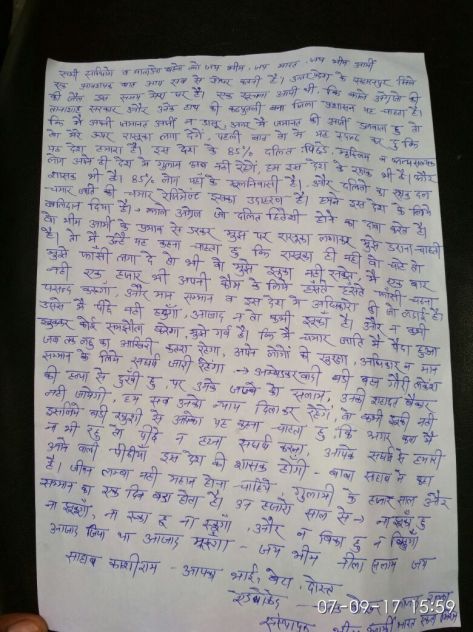
सभी साथियों व माताओं बहनों को जय भीम जय भारत, जय भीम आर्मी,
एक आवश्यक बात आप सब से शेयर करनी है उत्तर प्रदेश के सहारनपुर जिले की जेल इस समय मेरा घर है. एक सूचना आई थी की काले अंग्रेजों की तानाशाह सरकार और उनके हाथ की कठपुतली बना जिला प्रशासन यह चाहता है कि मैं अपनी जमानत अर्जी ना डालू अगर मैं जमानत की अर्जी डलवाता हूं तो वो मेरे ऊपर रासुका लगा देंगे.
पहली बात तो मैं यह स्पष्ट कर दूं कि यह देश हमारा है इस देश के 85 % दलित पिछड़े मुस्लिम वह अल्पसंख्या लोग अपने ही देश में गुलाम अब नहीं रहेंगे हम इस देश के Rakshak भी है और शासक भी है 85 % लोग यहां के मूल निवासी है और दलितों का रक्षक दल चमार जाति की चमार रेजिमेंट इनका उदाहरण है हमने इस देश के लिए बलिदान दिया है काले अंग्रेज जो दलित विदेशी होने का दावा करते हैं वह भीम आर्मी के प्रभाव से डरकर मुझ पर रासुका लगाकर मुझे डराना चाहते हैं तो मैं उन्हें यह कहना चाहता हूं कि रासुका ही नहीं वह चाहे तो मुझे फांसी लगा दे तो भी वह मुझे झुका नहीं सकते.
मैं एक बार नहीं एक हजार बार भी अपनी कौम के लिए हंसते हंसते फांसी चढ़ना पसन्द करुगा और मान-सम्मान वे इस देश में अधिकारों की जो लड़ाई है उसे पीछे नहीं हटूंगा. आजाद न तो कभी झुका है और ना कभी झुक कर कोई समझौता करेगा मुझे गर्व है कि मैं चमार जाति में पैदा हुआ जब तक लहू का आखरी करता रहेगा अपने लोगों की सुरक्षा अधिकार वह मान सम्मान के लिए संघर्ष जारी रहेगा ।।
अंबेडकरवादी बड़ी बहन गौरी लंकेश की हत्या से दुखी हूं पर इनके जज्बे को सलाम उनकी शहादत बेकार नहीं जाएगी हम सब उनको न्याय दिलाकर रहेंगे वो कभी झुकी नहीं इसलिए बड़ी खुशी से आपको यह कहना चाहता हूं कि अगर कल मैं ना भी रहूं तो पीछे न हटना संघर्ष करना आपके संघर्ष से हमारे आने वाली पीढ़ियां इस देश की शासक होगी बाबा साहब ने कहा जीवन लंबा नहीं महान होना चाहिए गुलामी और सम्मान का एक दिन बड़ा होता है उन हजारों साल से ना झुका हु ना झुका गा ना रुका हु ना रुकू गा और ना बिका हु ना बिकुगा आजाद जिया था आजाद मरूँगा जय भीम नीला सलाम जय साहब कांशीराम ।
आपका भाई बेटा दोस्त
*(एडवोकेट चंद्रशेखर आजाद रावण संस्थापक भीम आर्मी भारत मिशन)*
The True Bargain : How Dr. Ram Rahim Singh Insaan Defined His Time
[ Random notes made in the wake of the conviction of Dr. Baba Ram Rahim Singh Ji Insaan of Dera Saccha Sauda for the offense of rape in Panchkula, Haryana, with some attention paid to the testimonials of his close friends. ] Continue reading The True Bargain : How Dr. Ram Rahim Singh Insaan Defined His Time
Committee for the Defense of Bhim Army Formed Amidst Continuing Repression
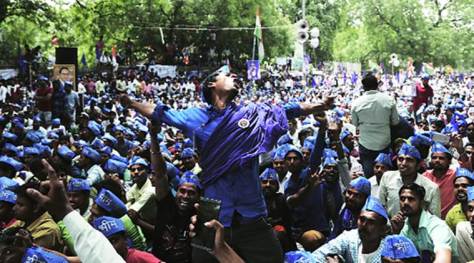
Even as the state government’s repression on Bhim Army continues, most of its leaders still in jail and some forced to leave Saharanpur, a committee has been formed for the defense of Bhim Army. (For background information, please see the ‘Note on Bhim Army’, appended at the end of this post, which carries links to informative videos as well). A group of activists and committed lawyers have been following up the legal struggle practically at their own expense – which at the moment involves getting the arrested activists, including the founder-President Chandrashekhar out of bail as the topmost priority. Some of the activists have started getting bail many still remain, including just ordinary people simply picked up by the people and framed by the police as Bhim Army activists.
However, getting the jailed activists out on bail is simply the first step in a long battle. The deliberate campaign of vilification that has been going on about Bhim Army has tried to paint the organization as ‘antinational’ and ‘instigators of violence’ who apparently have ‘Naxalite’ connections. Even though none of this could be substantiated and thus brought by the police into their charges against the jailed activists, the campaign of demonization has nevertheless continued through some sections of the media. Needless to say, such misleading campaign is meant to incite popular feelings against such groups who have been working mainly for education and self respect among the Dalit population in their area. Such a campaign of vilification cannot but affect the chances of wining the legal battle as well. It also ends up driving people who may have initially been sympathetic to their cause by sowing doubts about them in the popular mind.
It is with this concern in mind that a large number of citizens from different walks of life have come together to form the Committee for the Defense of Bhim Army, in order to mobilize all possible support for the embattled activists.
The Committee for the Defense of Bhim Army has been constituted comprising the following members from different walks of life:
Coordinators: Pradeep Narwal and Sanjeev Mathur
Treasurers: Presenjit Gautam and Nakul Singh Sawhney
- Anand Teltumbde, Civil rights thinker and activist, Mumbai
- Jignesh Mewani, Rashtriya Dalit Adhikar Manch
- Kancha Ilaiah, Political scientist, thinker and writer, Hyderabad
- Chandrabhan Prasad, Dalit thinker
- Radhika Ramaseshan, Senior journalist with Business Standard
- Harsh Mander, Human rights activist and Director, Centre for Equity Studies, Delhi
- Syeda Hamid, Former member, Planning Commission
- Om Thanvi, Senior journalist, former editor, Jansatta
- Sambhaji Bhagat, Cultural activist, Maharashtra
- Meera Velayudhan, Academic, Centre for Development Studies, Trivandrum
- Martin Macwan, Social activist, Gujarat
- Ratan Lal, Academic, Hindu College, Delhi University
- Sachin Mali, Cultural activist
- Sheetal Sathe, Cultural activist
- S.R Darapuri , Former IPS officer, social activist
- Colin Gonzalves, Lawyer
- Anand Patwardhan, Film maker
- Anil Chamadia, Journalist
- Subhash Gatade, Writer and social activist
- Akram Hassan, Social activist, Shamli
- Surender, Dalit youth activist, Delhi University
- N. Sukumar, Academic, Delhi University
- Rehana Adib, Social activist, Saharanpur
- Banojyotsna Lahiri, Academic and independent researcher
- Mohammad Zeeshan Ayyub, Actor
- Amar Singh, SC/ST Trade Union, Delhi University
- Dr. Mahesh Chandra, Bhim Army
- Sanjay Tegwal, Bhim Army
- Zakia Soman, Bharatiya Muslim Mahila Andolan
- Presenjit Gautam, Jati Todo Manch, Ghaziabad
- Pradeep Narwal, Dalit youth activist, Jawaharlal Nehru University
- Saroj Giri, Academic, Delhi University
- Tushar Parmar, IRS
- Sanjeev Mathur, Journalist
- Nakul Singh Sawhney, Film maker
- Praveen Verma, Research scholar, Delhi University
- Aditya Nigam, Academic, Centre for the Study of Developing Societies, Delhi
- Amar Paswan, Ambedkarvadi Chhatra Sabha, Gorakhpur
- Dhirendra, Poorvanchal Sena
- Anil Yadav, Rihai Manch
- Sagar Raghunath, Chhatra Bharati activist
- Dr J.K. Gautam, Doctor
- Dr. Sushil Kumar Gautam, Dalit Youth Activist, Chaudhary Charan Singh University, Meerut
- Subhashini Ali, Social Activist
- Mohinder Singh, Professor, JNU
- Prashant Nihal, Social Activist (Bihar)
- Atul Meena, Research Scholar JNU
Continue reading Committee for the Defense of Bhim Army Formed Amidst Continuing Repression
Noida’s Domestic Workers’ Take on the ‘Madams’ – A Report from Ground Zero: Maya John, Sunita Toppo and Manju Mochhary
This guest post is an investigative report by MAYA JOHN, SUNITA TOPPO and MANJU MOCHHARY, who are associated with Gharelu Kamgar Union and actively involved in organizing domestic workers.
Recently, the otherwise docile workforce of domestic workers – most of whom are migrant labourers from the poorest states in the country – showed remarkable collective zeal against their wealthy employers in Noida (Uttar Pradesh). On the morning of 12th July 2017, a confrontation broke out between wealthy residents in a posh housing society, Mahagun Moderne in Noida Sector 78, and a gathering of agitated domestic workers and their families. The rampant exploitation of domestic workers, and the huge antagonism between their interests and those of their employers was directly exposed with the outbreak of this agitation.
The 12th July incident and subsequent developments have also revealed the sickening nexus between the police, employers, and right-wing politicians who have extended support to the wealthy residents. Within hours, an obvious labour issue, and the struggle of workers against the alleged illegal confinement of a female domestic worker was projected as a communal confrontation. With the accused employers and their sympathizers identifying the protesting workers and the missing domestic worker as ‘Bangladeshis’, the social media exploded with communal diatribe and messages of hate. Conditions for communal discord were consciously sown by Mahagun residents, putting at risk the lives of hundreds of workers living in neighbouring slums.
Under the sign of security – Why the bogey of ‘the illegal Bangladeshi immigrant’ is so powerful across urban Indian homes: Sahana Ghosh & Rimple Mehta
Guest Post by SAHANA GHOSH & RIMPLE MEHTA
From the night of July 11 when Zohra Bibi did not return home to the evening of July 16 when union minister Mahesh Sharma, member of parliament for Gautam Budh Nagar, UP met with residents of Mahagun Moderne, much has transpired. Promptly after the minister’s assurances of ‘justice’ and even retribution to the flat-owners, the settlement of tin walled shacks in which Zohra Bibi and other workers like her lived with their families was demolished the next day. Many of the ‘facts’ of the matter remain disputed – while Zohra Bibi maintains that she neither admitted to the theft of cash nor hid in the basement of the building, the allegation that her employers Harshu and Mitul Sethi harassed and detained her, confiscating her mobile phone is denied by them. Meanwhile, thirteen men, a majority of them Bengali Muslims from West Bengal, arrested from the workers’ settlement are denied bail on the charge of attempted murder on the might of three FIRs filed by residents of Mahagun Moderne and languish in judicial custody. The Noida police are yet to commence any investigation of the Sethis as required by the FIR filed by Zohra Bibi and her husband Abdul Sattar. What does this language of the riot, of murderous mobs with which residents of the swanky apartment complex took to social media with #MaldainNoida accomplish? As security cards, required by domestic and other workers to enter the gated community, were revoked for 80-odd workers under the cry of ‘ban the Bangladeshi maid’, the bogey of the illegal Bangladeshi immigrant reared its ugly head. Continue reading Under the sign of security – Why the bogey of ‘the illegal Bangladeshi immigrant’ is so powerful across urban Indian homes: Sahana Ghosh & Rimple Mehta
Have Indian Muslims become the new ‘Make in India’ Punching Bag? Sabiha Farhat
Guest Post by Sabiha Farhat
[ A month ago from yesterday, a teenager called Junaid was lynched and murdered on a train in Haryana. Sabiha Farhat writes in the wake of visiting his house and meeting his family. The news cycles may have moved on to other stories, but we need to keep remembering Junaid, and why he was killed. – Kafila]
Once upon a time there was a 15 year old boy called Hamid, who went shopping on the day of Eid with his Eidi . A few days ago there was Junaid who went shopping on the eve of Eid. Premchand’s Hamid was an orphan and lived with his grandmother in extreme poverty. Junaid lived surrounded with love of his brothers, a sister, a doting mother, father and friends. Instead of the old, decrepit house of Hamid, Junaid’s house has two rooms, it is not falling apart but it’s size and unplastered walls, do speak about the economic condition of his family.
As we approached Khandawli, Junaid’s village in Ballabhgarh a fear gripped me. I did not have the courage to walk upto the house. Junaid was brutally murdered on 22nd and here I was on 25th. It was too soon, my mind said. I should have let Eid pass. But how could I have prepared Sewai in my house when a mother like myself had lost a young, healthy, happy child to hindutva fanatics? I am a mother, I was angry and ashamed at home. And here, standing outside Junaid’s door, I was weak and helpless. Useless too.
Continue reading Have Indian Muslims become the new ‘Make in India’ Punching Bag? Sabiha Farhat
#BreakTheSilence – Chennai against mob lynching: Madhura Balasubramaniam and Padmapriya Govindarajan
Guest Post by Madhura Balasubramaniam and Padmapriya Govindarajan

On July 1, 2017 a gathering of citizens congregated at the Valluvar Kottam monument in Chennai, India, in solidarity with the spate of demonstrations across the nation condemning the rise in instances of mob lynching and violence that disproportionately targeted Dalit and Muslim citizens for beef consumption. The protests were triggered by the murder of 16 year old Junaid Khan by a train mob. Since July 28, peaceful citizen gatherings have joined a wave that attempts to call out government silence, and thereby perceived tacit complicity, regarding the actions ofGau Rakshaks and other vigilante mobs that engage in lynching with a strongly communal or casteist skew. They have been collectively termed as #NotInMyName protests, alluding to the argument that these murders occurred in the name of the cow and in the name of Hinduism. Continue reading #BreakTheSilence – Chennai against mob lynching: Madhura Balasubramaniam and Padmapriya Govindarajan
No Flag Large Enough – Jubilation in India and Collateral Damage in Kashmir
The recent incident of violence that led to the death of a police officer, DSP Ayub Pandith, was condemned by all kinds of people in Kashmir, as well as elsewhere. It prompted introspection, sadness and regret – like any tragedy of this nature should.
Yesterday two unarmed civilians, Tahira Begum, a forty three year old woman and a young man called Shahdab Ahmed Chopan of Brenty Batapora Village in Anantnag district in South Kashmir were killed along with two Kashmiri combatants (Bashir Ahmed Lashkari and another person who may or may not be called Abu Maz) in the course of a joint operation by the 19th Rasthriya Rifles of the Indian Army, CRPF and the Special Operations Group of Jammu & Kashmir police.
Continue reading No Flag Large Enough – Jubilation in India and Collateral Damage in Kashmir
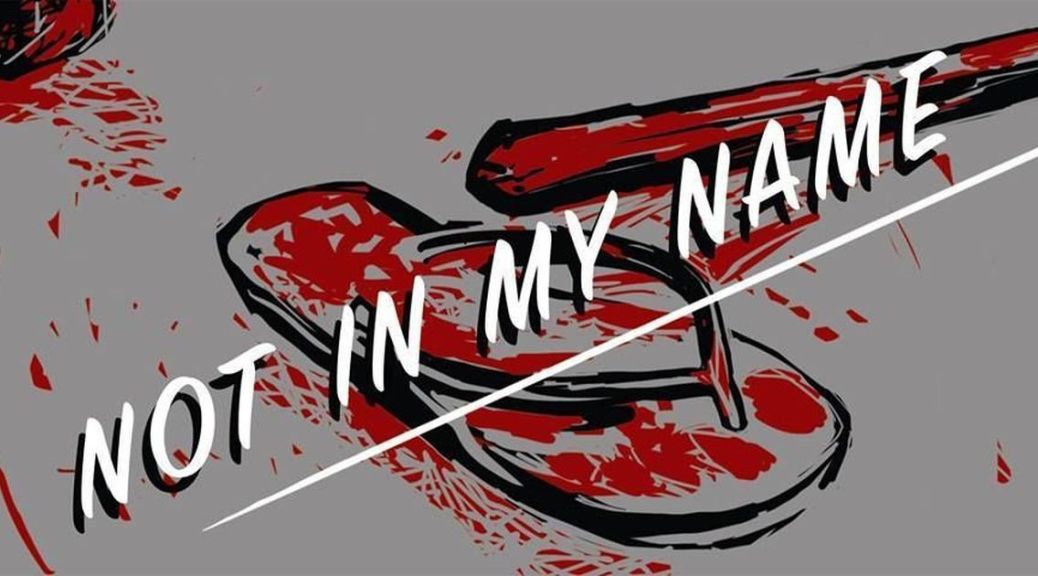
After #NotinMyName at Jantar Mantar on June 28: Sanjay Kak for NotinMyName, Delhi
Guest Post by Sanjay Kak, for #Notinmyname / Statement from Not In My Name, Delhi
Last evening’s (June 28th) spirited protest at Jantar Mantar, New Delhi, under the banner of Not In My Name, was an autonomous citizens protest against the recent spate of targeted lynchings of Muslims in India – the most recent of 16 year old Junaid, stabbed to death on 23 June 2017 in Delhi (NCR).
For an audience that was estimated to be 3500 strong, the torrential downpour at a little past 8 pm may have rained out a part of the programme. But something remarkable had already been achieved: the evening had washed away, even if temporarily, an almost overwhelming sense of despondency, of hopelessness, and of fear.
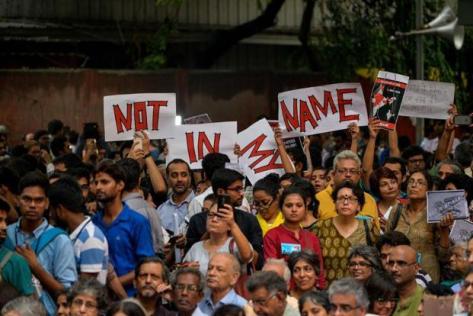
Since the Not In My Name protest had announced that the platform was not meant for political parties, and their banners and slogans, the stage saw the marked absence of the speeches (and faces) of routine protest meetings at Jantar Mantar. Rhetoric was displaced by feeling, and it was left to the poets and musicians to carry the sharp political messages of the day. On an evening that was often very emotional, the most difficult moments came when a group of young men from Junaid and Pehlu Khan’s extended families (and residents from their respective villages) came on stage and spoke to the audience.
When the call for a protest meeting went out last Sunday we were hoping that a few hundred people would gather to express their outrage at what is happening around us. For the attacks on Muslims are part of a pattern of incidents that targets Dalits, Adivasis, and other disadvantaged and minority groups across the country. In almost all these incidents the possibilities of justice seem remote, as the families of the victims are dragged into procedures they are ill-equipped to handle. Through all these heinous crimes the Government has maintained a silence, a gesture that is being read as the acquiescence of all Indians.
Not In My Name aimed to break that silence. But the scale and spirit of the protest meeting at Jantar Mantar became amplified many times over, as similar gatherings were spontaneously announced all over the country. As word spread through social media, groups in 19 other locations announced Not In My Name protests, and this phenomenal synergy inevitably drew media attention to all the events, and gave the protest a solidarity and scale that was truly unprecedented – there were at least 4 protests in cities abroad too. (And more protests have been announced for later this week…) The protest meeting ran on the shoulders of a group of volunteers who managed to put together everything in less than four days. No funds were received (or solicited) for the expenses from any political party, NGO, or institution. Instead volunteers worked the crowd and our donation boxes received everything – from Rs 10 coins to currency notes of Rs 2000, and everything in between.
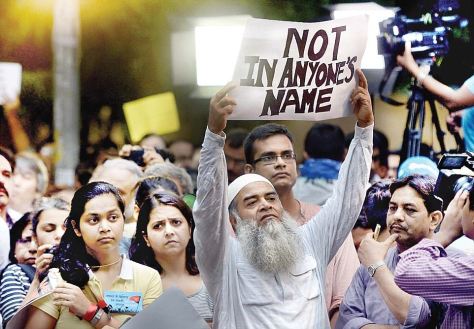
The impact of the Not In My Name protest at Jantar Mantar yesterday only points to the importance of a focused politics to deal with the crisis this country seems to be enveloped by. Less than a day after the protests Prime Minister Modi broke his silence on the matter of lynchings. It could not have been a coincidence: speaking in Ahmedabad he said killing in the name of gau bhakti is unacceptable. But to protect the life of a 16 year old being brutalised in a train needs more than a tweet, and we all wait and watch.
This fight has just begun. In the days to come the exceptional solidarity attracted by the protest in New Delhi will have to become less exceptional, and more everyday.
Sanjay Kak is a filmmaker and writer based in Delhi.
The #NotinMyName protests, which began in a response to a Facebook post uploaded by Delhi filmmaker Saba Dewan, have since taken place in more than twelve cities in India, and also in the UK, USA and Pakistan. More protests, under the #NotinMyName tag, as well as independently of it are being planned by citizens groups, organizations and individuals in many places.
Tomorrow, July 2nd, 2017 will see a sit in at Jantar Mantar from 11 in the morning, at Jantar Mantar, New Delhi called by families, individuals and panchayats from Nuh, Ballabhgarh and Faridabad, they will be joined by students, activists and other individuals.
Eid in solidarity, united against Hindu Rashtra
At some point during the Khalistan movement, I came across a brief news item about a constable of the Punjab Police killed by Delhi Police personnel. The two teams had completed their interrogation of a suspected militant. Whose job was it to clean up the blood? Disagreement, a scuffle, a killing.
Legitimized brutality; the stench of blood inflaming the senses; the knowledge of absolute power and absolute impunity.
All of India is that interrogation room now.
Hindu Rashtra is here.
Has there not been violence earlier in this land? Yes of course there has been. A full seven decades of an independent state’s violence against the people of the land declared to be India – against dispossessed peasants and tribal people, against industrial workers, against the people of Kashmir, and of the states of the North East; centuries of violence by savarna Hindu society against the Dalit-bahujan; misogynist, sexist violence against women, up to and including female foetuses in the womb; decades of coldly planned and executed communal violence by institutionalized systems of riot production coordinated by the organizations of the RSS – against Muslims, against Christians, and as a secondary force, against Sikhs in 1984.
What is unique about this conjuncture, then? Continue reading Eid in solidarity, united against Hindu Rashtra
उना कांड की पहली बरसी पर राष्ट्रीय आह्वान, गुजरात में होगा ‘आज़ादी कूच’ : जिग्नेश मेवाणी
On the First Anniversary of the Una Floggings – Call from JIGNESH MEWANI and RASHTRIYA DALIT ADHIKAR MANCH
उना से आई फिर आवाज़,नहीं सहेंगे हिंदु राष्ट्र, भगवा आतंकवाद और पूंजीवाद!
दलित, मुस्लिम, मज़दूर और किसान साथ मिलकर मांगेगे तीन साल का हिसाब
बहुजन,मज़दूर और किसान साथ मिल फिर ललकारेंगे ‘गाय की पूंछ तुम रखो, हमें हमारी जमीन दो’
साथियों,
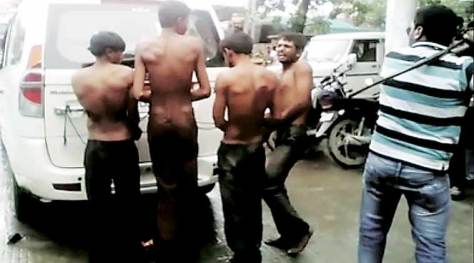
आप जानते हैं, 11 जुलाई को उना के दलितों के उत्पीड़न की जगानेवाली घटना को एक वर्ष होने जा रहा है. जिस तरह पिछले वर्ष 11 जुलाई को गुजरात के गिर सोमनाथ जिले के मोटा-समधियाला गांव के बालू भाई सरवैया और उनके चार बेगुनाह लड़कों को दिन दहाड़े, भरे बाजार गाड़ी के साथ बांधकर पुलिस थाने के सामने बेरहमी के साथ मारा गया और जिस तरह इस कारनामे को अंजाम देने वाले इन तथाकथित गौ रक्षकों ने खुद ही अपने इस कारनामे को सोशल मीडिया पे वायरल किया, उससे पूरा देश हिल गया था.
इस अमानवीय कारनामे को अंजाम देने वाले लोग खुद ही अपनी इस घिनौनी हरकत को सोशल मीडिया पे वायरल करे उससे पता चल जाता है कि यह तथाकथित गौ रक्षक कितना बेखौफ महसूस करते और उनको राजसत्ता की कितना संरक्षण मिला हुआ है.
Losing the Soul’s Acid Tongue … Terrorist State, Unbowed Children at Kerala’s Puthvype
[The title is inspired by Balachandran Chullikkad’s searing poetry]
I have recently been asked about why I didn’t write anything about the anniversary of the CPM-led government of Kerala. Have also been asked why I don’t write about politics in Kerala anymore. The answer to the first is easy and painless: governments are not organic things. You measure your kid’s height and weight and other things and think about how they have grown in their minds and hearts on their birthdays. There is nothing that proves that anniversaries are the best occasions to reflect on how governments have grown and thrived. The answer to the second question is more conflicted and excruciatingly painful: it is because we have no politics in Kerala, but plenty of anti-politics. therefore, what one needs to do is invest in the silent, unglamorous, unpopular, long-haul intellectual and political labour that may preserve the possibilities of politics in the future, and that may even create internalities capable of courage and responsibility necessary for being political. Continue reading Losing the Soul’s Acid Tongue … Terrorist State, Unbowed Children at Kerala’s Puthvype
 KAFILA - COLLECTIVE EXPLORATIONS SINCE 2006