Mohan Bhagwat’s Divisive Mantra on Automatic Patriotism

It is a mischievous denigration of constitutional principles and values which declare every human equal and bar discrimination.

Mohan Bhagwat

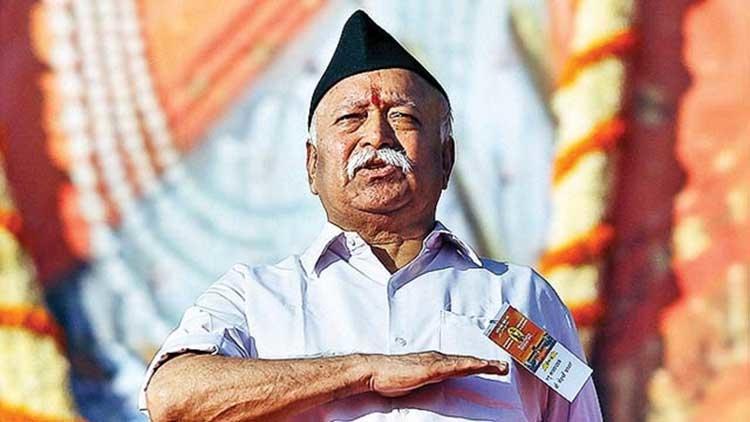
“A Hindu is an automatic patriot and can never be an anti-national.” Remember the line? It is of Mohan Bhagwat, the Sangh supremo, who was at his best last week, at the launch of the book, Making of a Hindu Patriot: Background of Gandhiji’s Hind Swaraj. The book on Gandhi’s journey from Porbandar in Gujarat to England and South Africa and back to India, by JK Bajaj and MD Srinivas, was released by the Centre for Policy Studies.

In this book is the controversial claim that during 1893-94, Gandhi was pressurised to change his religion by both his Muslim employer and Christian colleagues in South Africa, which he refused. And by 1905, the book says, he became a devout Hindu.

Sure, everybody has a right to express their views, the authors and Mohan Bhagwat included, but the veracity of their claim still needs to be tested. As for the alleged pressure on Gandhi, the claim seems to come from out of the blue, and I would take it with a pinch of salt.

(Read the full article here )


0

Can Delhi Experience Blue Yamuna once again? Dilli hai jiska naam VIII: Manoj Misra

We thought of a series on Delhi that does not talk only of the narrow lanes of Shahjahanabad, the Mughalia, aka Mughlai delights and the lip-smacking Chaats of Chandni Chowk or the grand ruins of the seven Delhis and the wide open spaces and broad roads, but a series that also looks at the way Delhi has evolved. We wanted to explore the logic of the city and of the forces that have shaped the idea of the city itself.  It was this idea that made us approach people who have engaged with the city with love and care for decades and we requested them to write for Kafila.

This series is titled Dilli hai jiska naam and the links to the previous posts can be found at the end.

This is the eighth post in the series by MANOJ MISRA

The article that follows is dedicated by the author to the memory of Prof. Brij Gopal, a leading authority on Wetlands and Aquatic Systems, who passed away on the 4th of January 2021. Manoj Misra, the author of the article was keen that his tribute to Prof. Brij Gopal be placed at the head of his piece. The article, which focuses on the issues that bedevil the once mighty river Yamuna, follows the tribute. 

In Memoriam – Prof. Brij Gopal (1944-2021)

Prof. Brij Gopal, a former Professor of Environmental Sciences at JNU breathed his last suddenly on 4 January 2021. An internationally renowned expert on wetlands and aquatic systems he was associated with the National Institute on Ecology (NIE). After retiring from JNU he set up in 2009 the “Centre for Inland Waters in South Asia” (CIWSA) at a small village named Peera near Khajuraho in Madhya Pradesh with an objective to encourage and mentor budding researchers and to work on water related issues of Bundelkhand region.

He was amiable and yet firm. To him science and scientific facts were paramount. Having seen increasing threats to rivers and their floodplains he convinced the union Ministry of Environment & Forests to consider legal protection to them in form of a River Zone Regulation (RRZ) on the lines of CRZ. He became the key architect of the draft notification but which for largely political reasons is still to get notified.

His vast scholarship was acknowledged by ministries and courts and he was asked to help as a member on various expert committees.

To us at the India Rivers Week/Forum (IRF) and Yamuna Jiye Abhiyaan (YJA) he was a constant source of encouragement and advice. His passing away is an irreplaceable loss and his absence would be gravely felt.

May his soul rest in peace!   

Can Delhi Experience Blue Yamuna once again? Manoj Misra

Let us ‘clean’ the river….has been the rallying call.

To see a ‘clean’ river be it Ganga or Yamuna has for decades been a fond national wish. Appropriately the apex government agency for Ganga rejuvenation has been named the ‘National Mission for “Clean” Ganga’ (NMCG). Continue reading Can Delhi Experience Blue Yamuna once again? Dilli hai jiska naam VIII: Manoj Misra

Farmers’ discontent – a report from Karnataka: Ganesh Devy

Guest post by GANESH DEVY

9 January 2021

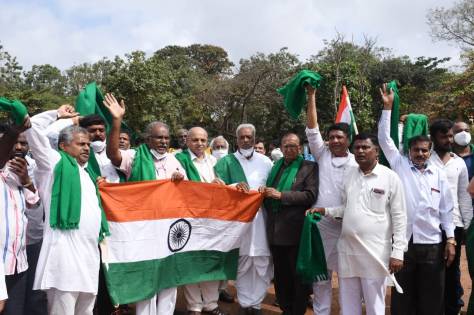
 As a spontaneous reaction to the failure of the government to bring the discussions with the farmers to a conclusion even after eight rounds of discussion, many farmer-organizations in North Karnataka took out a tractors protest rally today. A broad-spectrum of farmer organizations, civil society organizations and members of political parties participated in it.

One saw active presence of the former BJP Union Minister in Atal Bhari Government  Baba Gowda Patil, now in JDS , Gururaj Hansimarad, JDS, farmer activist Gangadhar Patil-Kulkarni, CPM-Union activist Abdul Khan, Gandhian social worker Adv. Nerlikar, Congress member Basavaraja Malkari, Secular Unity activist Ashraf Ali and many other prominent figures form North Karnataka standing on tractors and shouting slogans.

Continue reading Farmers’ discontent – a report from Karnataka: Ganesh Devy

‘उत्तर प्रदेश विधि विरुद्ध धर्म-समपरिवर्तन प्रतिषेध अध्यादेश’ फ़ौरन रद्द करो : एक बयान

133 संगठनों और 858 लोगों की तरफ़ से जारी बयान

Scrap the “Uttar Pradesh Prohibition of Unlawful Conversion of Religion Ordinance” Immediately

इस बयान पर दस्तख़त करने वाले संगठनों और व्यक्तियों की फ़ेहरिस्त इसके अंग्रेज़ी वर्ज़न में देखें.

प्रिय मित्रों,

18 वर्ष की आयु में हम अपने पार्षदों, विधायकों, सांसदों को वोट दे सकते हैं। 18 की उम्र में, हम तय करते हैं कि कौन ऐसी नीतियां बनाएगा और लागू करेगा जो हमें, हमारे प्रियजनों, हमारे समुदाय, हमारे देश को प्रभावित करती हैं 18 में, हमें अपने मताधिकार का जिम्मेदारी से प्रयोग करने के लिए पर्याप्त परिपक्व माना जाता है  

हालांकि, चाहे 18 साल की उम्र में हो या 50 की उम्र में, हमें अपने रोमांटिक पार्टनर तय करने की या किससे शादी करनी है की, इजाज़त नहीं है!! अल्पसंख्यक धर्म, जातियों, दबीकुचली जातियों, समलैंगिक ट्रांस और क्वीयर के साथ दोस्ती और रोमांटिक संबंध नहीं बनाने के लिए हमारे परिवारों द्वारा चेताया जाता है ।अगर कोई हिंदू महिला किसी मुस्लिम पुरुष से प्रेम करती है तो यह समाज में अपराध माना जाता है, अगर वे शादी करते हैं और महिला मुस्लिम धर्म में धर्मांतरण करती है तो यह मान लिया जाता है कि मुस्लिम पुरुष ने उसे धर्मांतरण के लिए मजबूर किया है। अंतरविश्वास और अंतरजाति विवाहों में भी, यह मान लिया जाता है कि दूसरा व्यक्ति महिला की इच्छा के विरुद्ध धोखा देकर उसे बाध्य कर रहा है और उसके इरादे गलत हैं। अक्सर हम सुनते हैं कि कैसे समलैंगिक जोड़ों को उनके जैविक परिवारों, समाज और पुलिस द्वारा प्रताड़ित किया जाता है जिसमें पुलिस कानूनी प्रक्रिया पूर्ण करने और संरक्षण देने के बजाए परिवार की आकांक्षा को ही पूरा कर रही होती है  ।समलैंगिक महिलाओं, समलैंगिक पुरुषों, ट्रांस व्यक्तियों को तथा सिर्फ स्त्रीपुरुष सम्बन्धों पर विश्वास करने वाले ब्राह्मणवादी परिवार इस से परे, अंतरंग संबंधों और सामाजिक जीवन जीने के  आकांक्षीलोगों को घरों पर गंभीर दमन का सामना करना पड़ता है

27 नवंबर 2020 को पारित उत्तर प्रदेश सरकार के धर्मांतरण  निषेध अध्यादेश मेंरोमांटिक पार्टनर चुनने में धर्म, जाति, लिंग और लैंगिकता की सीमाओं का उल्लंघन करने वाले लोगों पर परिवारधर्मसमुदायों द्वारा की गई हिंसा को मंजूरी देने की बात कही गई है।एक्ट के मुताबिक हर धर्मांतरण गैरकानूनी है। धर्मांतरण के लिए जिलाधिकारी से पूर्व मंजूरी जरूरी है।अधिनियम में यह भी कहा गया है कि किसी व्यक्ति के पिछले धर्म में पुनर्परिवर्तन अवैध नहीं है, भले ही जबरन किया जाए ।जबकि हिंदू दक्षिणपंथी समूहों और दक्षिणपंथी नेतृत्व वाली सरकारों ने अंतरविश्वास रोमांटिक संबंधों के बारे में लोगों कोलवजिहादके रूप में भड़काया, जहां ज्यादातर मामलों में मुस्लिम आदमी को आतंकवादी मान लिया जाता है, ऐसी कोई घटना या आंकड़े नहीं हैं जो यह साबित करें कि ऐसे रोमांटिक रिश्ते कभी आतंकवादी गतिविधियों से जुड़े मिले हों दूसरी ओर, ऐसे असंख्य उदाहरण हैं जहां राज्य और समुदाय ने अंतरविश्वास प्रेम और विवाहित वयस्क जोड़ों पर गलत तरीके से हमले किये हैंI स्थानीय पंचायतों ने भी समुदाय के मानदंडों का उल्लंघन करने के लिए युवा जोड़ों को मौत के घाट उतार दिया है। हाल ही में शेफिनजहां मामले 2018, मेंजहां अंत में सुप्रीम कोर्ट ने विश्वास बदलने का अधिकार माना, और कहा कि विश्वास बदलने का अधिकार पसंद का मौलिक अधिकार है और यह भी देखा गया है कि, एक बार दो वयस्क व्यक्ति रोमांटिक साझेदारी में प्रवेश करने के लिए सहमत होते हैं तो परिवार, समुदाय, कबीले की सहमति आवश्यक नहीं है Continue reading ‘उत्तर प्रदेश विधि विरुद्ध धर्म-समपरिवर्तन प्रतिषेध अध्यादेश’ फ़ौरन रद्द करो : एक बयान

Scrap the “Uttar Pradesh Prohibition of Unlawful Conversion of Religion Ordinance” Immediately: A Statement

A STATEMENT BY 133 ORGANIZATIONS and 858 INDIVIDUALS

Dear friends,

At the age of 18, we can vote for our councilors, MLAs, MPs. At 18, we decide who will make and implement policies that affect us, our loved ones, our community, our country. At 18, we are supposed to be mature enough to responsibly exercise our voting rights.

However, whether at the age of 18 or at the age of 50, we are not allowed to decide our romantic partners or who to marry. We are not allowed to have friendships and romantic relationships with people of `the other’ religion, caste, ethnicity, genders, sexualities.

If a Hindu woman chooses a Muslim man as her romantic partner, it is considered a crime in society and if they marry and the woman converts to Muslim religion, it is assumed that the Muslim man has forced her for conversion. In inter-faith and also in inter-caste marriages, it is taken for granted that the other person is bound to cheat you or dupe you and that the person you have chosen to be your partner has some wicked, ulterior motive to `make’ you fall in love.

In homo-erotic romantic relationships, often we hear how lesbian couples are being tortured by biological family, community and the police often acting on behalf of the family. Lesbian women, gay men, trans persons face severe repression at home for transgressing gender norms, aspiring for intimate and social lives beyond the compulsory Brahmanical hetero-normative family system. Many of us have similar painful and traumatic experiences.

`The Uttar Pradesh Prohibition of Unlawful Conversion of Religion Ordinance 2020’ passed on 27th November 2020, seeks to sanction the violence committed by family-religion-communities on people who transgress boundaries of religion, caste, gender and sexuality in choosing romantic partners.

This Ordinance is simultaneously an attack on any person who wishes to change her religion. According to the Act, every conversion is illegal. The conversion requires the prior sanction from the District Magistrate. The Ordinance also says that `reconversion’ to a person’s previous religion is not illegal even if done forcibly. This is the gateway to what is termed `ghar wapasi’.

Over the last few years, the Hindu right-wing groups and right-wing led governments have accelerated their attempts at whipping up paranoia about inter-faith romantic relationships. They deliberately call it ‘love-jihad’, equating the Muslim lover with terrorism, while there have been no incidence or statistics that even the right-wing gangs or governments have been able to furnish. Continue reading Scrap the “Uttar Pradesh Prohibition of Unlawful Conversion of Religion Ordinance” Immediately: A Statement

A confession of its own loss of legitimacy – the Modi government must resign

Farmers across the country have geared up to escalate their protests against the farm laws, as the government remains adamant in its commitment to its crony capitalists. The talks yesterday failed as three Union ministers part of the negotiations said it was not possible to commit to a rollback of the legislation without “consultations with higher authorities”.  

Who are these mysterious higher authorities whom they dare not name? Do they mean the Pradhan Sevak Himself, who is after all, within tweeting distance at all times, and could have deigned to talk to the farmers’ representatives; or do they mean his paymasters? 

Meanwhile 60 farmers have died at the Singhu Border protest site alone, according to doctors, to deafening silence from this utterly shameless government, that has tear-gassed and lathi charged its people, and forced them to brave the bitter cold and torrential rain in protest at these laws, which will wreak devastation on agriculture and on food security for all.

But the most revealing statement of all comes from the Union Agriculture Minister Narendra Singh Tomar, an explicit admission of the total loss of legitimacy of his government. Continue reading A confession of its own loss of legitimacy – the Modi government must resign

ONION CITY – Dilli hai jiska naam VII: Anisha Shekhar Mukherji

We thought of a series on Delhi that does not talk only of the narrow lanes of Shahjahanabad, the Mughalia, aka Mughlai delights and the lip-smacking Chaats of Chandni Chowk or the grand ruins of the seven Delhis and the wide open spaces and broad roads, but a series that also looks at the way Delhi has evolved. We wanted to explore the logic of the city and of the forces that have shaped the idea of the city itself.  It was this idea that made us approach people who have engaged with the city with love and care for decades and we requested them to write for Kafila.

This series is titled Dilli hai jiska naam and the links to the previous posts can be found at the end.

This is the seventh post in the series by Anisha Shekhar Mukherji

Onion City: Anisha Shekhar Mukherji

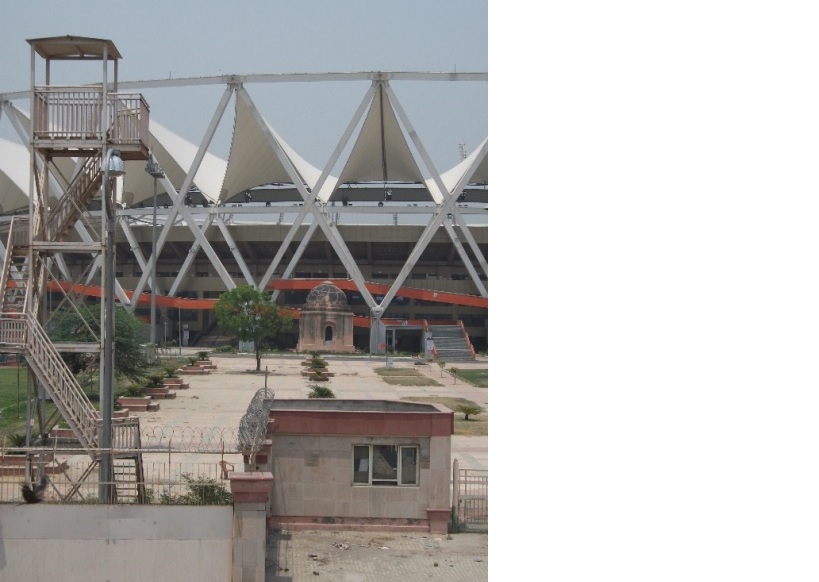
 Apparitions of different Delhis : A medieval structure engulfed by the expansion of Jawaharlal Nehru Stadium, 2010 (Photo: Snehanshu Mukherjee)

Delhi often reminds me of an onion. Imperfectly taken apart, many layered, veined, maimed. Its layers are not coherent or visibly bound. Scattered stray wisps forlornly curl at the edges in some corner, many centuries lie bunched together in another. Yet within them lie hidden vapours of many pasts, rising unbidden to sting you into an awareness of a different time.

Celebrated in tradition, song and history, the region of Delhi has been an urban centre almost continuously for more than 3000 years. The legendary epic Mahabharata[1] refers to Indraprastha—the capital of the kingdom of the five Pandavas, each embodying a virtue, and their beautiful wife, Draupadi—on whose site it is said, present-day Delhi sits. The Pandavas lost and won Indraprastha again. And that has been the fate of Delhi through the ages—to be lost and won successively by different rulers. Archaeological fragments and architectural remains of later dynasties, who built their cities here, may still be seen—from those of the Tomars in the eleventh century to the Mughals in the nineteenth century CE—vast palaces, intricate temples, looming gateways, arched bridges, domed mosques and tombs. In actuality each ruler demarcated a portion of land, within the larger area of what is now termed Delhi, as his city. So, effectively, the various cities of Delhi consisted of separate stakes of land with their own city walls, forts and supporting fabric. Sometime these cities encompassed and integrated the older ones. Sometimes they appropriated, ousted or ignored them. Continue reading ONION CITY – Dilli hai jiska naam VII: Anisha Shekhar Mukherji

मौजूदा किसान आन्दोलन पर वक्तव्य : रवि सिन्हा

Guest Post by Ravi Sinha

Image may contain: 1 person, beard

किसानों के इस आन्दोलन को उसके तात्कालिक उद्देश्यों और सम्भावनाओं मात्र के सन्दर्भ में देखें तो भी यह ऐतिहासिक है. अपनी अंतिम और सम्भावित सफलता से स्वतन्त्र इसकी उपलब्धियाँ अभी ही ऐतिहासिक महत्त्व की साबित हो चुकी हैं. लेकिन इस आन्दोलन के अर्थ और इसकी सम्भावनायें और भी बड़ी हैं. भारत की दुर्दशा के इस घोर अँधेरे में, जहाँ अधिनायकवादी फ़ासिस्ट शक्तियों के ख़िलाफ़ प्रतिरोध की सम्भावनााओं को एक के बाद एक कुचल दिया जाता रहा है, यह आन्दोलन एक मशाल बनकर सामने आया है. किसानों से शुरू होकर यह आन्दोलन सिर्फ़ किसानों का नहीं रह गया  है. पंजाब और हरियाणा के किसानों के द्वारा दिल्ली को घेरने से शुरू हुई यह मुहिम अब दिल्ली की सत्ता को घेरने वाली चौतरफ़ा मुहिम का रूप लेती जा रही है. हम किसानों के इस आन्दोलन को सर्वप्रथम इसलिए समर्थन देते हैं और उसमें इस लिये शामिल हैं कि उनकी माँगें जायज़ हैं और इस सरकार द्वारा ज़बरदस्ती लाये गये तीनों क़ानूनों को लेकर उनकी आशंकायें वास्तविक हैं. और हम इस आन्दोलन को इसलिये सलाम करते हैं और इससे प्रेरणा लेते हैं कि यह अँधेरे में रौशनी की मशाल बनकर सामने आया है.

 अगर हम आंदोलन की तात्कालिक माँगों और उद्देश्यों की विस्तृत चर्चा यहाँ नहीं करते हैं तो इसका अर्थ यह नहीं कि इनके जायज़ और ऐतिहासिक महत्त्व के होने में हमें कोई संदेह है. अब यह जगज़ाहिर है कि ये तीनों क़ानून उस शैतानी योजना का हिस्सा हैं जिसके तहत कृषि क्षेत्र को कारपोरेट पूँजी के प्रत्यक्ष आधिपत्य में ले जाने की तैयारी है. यह न केवल किसानों की रही-सही आर्थिक सुरक्षा को समाप्त करेगा, सरकार को उसकी जिम्मेदारी से मुक्त करेगा और न्यूनतम समर्थन मूल्य तथा राज्य-संचालित मंडियों की व्यवस्था को तोड़ देगा, बल्कि यह पूरे देश की आम जनता की खाद्य-सुरक्षा – जितनी भी है और जैसी भी है – को ख़तरे में डाल देगा. साथ ही ये क़ानून भारत के संघीय ढाँचे के विरुद्ध भी हैं, और केन्द्र द्वारा राज्यों के अधिकारों का अतिक्रमण हैं. यह सब आप सभी को मालूम है और इन कारणों से ही इस आंदोलन का सूत्रपात हुआ है.

Continue reading मौजूदा किसान आन्दोलन पर वक्तव्य : रवि सिन्हा

Farming the Future, Farming As Future

Today is the last day of the dreadful year that 2020 was – not only because of the pandemic but it has been a year full of the most vicious attacks on dissent and protests. It has also seen wanton arrests of those who raised their voices against the myriad injustices of this regime. The year that began with the epic struggle against the CAA-NRC ends while another epic struggle – that of the farmers – is going on. This post is dedicated to them and to the future of the farmers in struggle.

In the video above, Narayana Reddy, a farmer talks about farming. Having run away from home at a young age and worked as a cleaner earning Rs 40 a month, Reddy gradually got better jobs and saved some money with which he bought land for farming. Listen to his brief account here and you will realize that this charismatic and much celebrated farmer started off farming exactly the way it was understood in those days – that is to say, with standard ‘Green Revolution’ techniques.  In five to six years, Narayana Reddy tells us, he became a spectacularly successful model farmer but something was amiss. Despite high yields, I was continuously losing money, he says. The story, with minor variations, was the same as that of Green Revolution farmers in Punjab: a few years of prosperity, accompanied by huge losses due to rising input costs (tractors, fuel, fertilizers, high-yielding variety seeds, pesticides, electricity run pumps), and rapidly deteriorating soil quality, depleting water table, disappearing of locally suitable crops.

There was no historical destiny or necessity in all this. Major US foundations like Ford and Rockefeller Foundations were involved in pushing this new way of doing ‘industrial’ agriculture developed by Norman Borlaug. I am not suggesting that this was a conspiracy but it was certainly something that took away control from the hands of the peasants and in the name of modernizing agriculture, made them dependent on big corporations (backed by the state) who were lurking behind this innocent-sounding rhetoric of increased productivity and prosperity. With the new farm laws, we are currently facing a fresh round of attacks on the autonomy and livelihooods of the farmers – and this time the government can’t pretend to any innocence in this regard.

So let us ask an elementary question: Why do people work and produce? The answer obviously is because they want to live well and live better in this world, here and now.

Continue reading Farming the Future, Farming As Future

Shahjahanabad My Love Affair – Dilli hai jiska naam VI:  Jayshree Shukla

 We thought of a series on Delhi that does not talk only of the narrow lanes of Shahjahanabad, the Mughalia, aka Mughlai delights and the lip-smacking Chaats of Chandni Chowk or the grand ruins of the seven Delhis and the wide open spaces and broad roads, but a series that also looks at the way Delhi has evolved. We wanted to explore the logic of the city and of the forces that have shaped the idea of the city itself.  It was this idea that made us approach people who have engaged with the city with love and care for decades and we requested them to write for Kafila.

This series is titled Dilli hai jiska naam and the links to the previous posts can be found at the end.

This is the sixth post in the series, by JAYSHREE SHUKLA

Shahjahanabad My Love Affair: Jayshree Shukla

(All images by Jayshree Shukla)


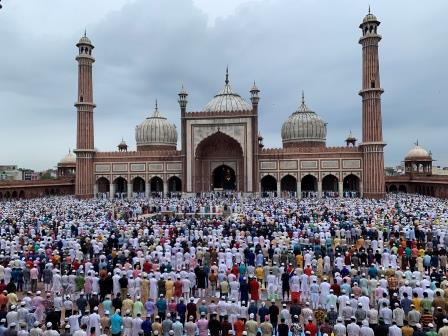
Ja’ama Masjid

My love affair with Shahjahanabad is only five years old. But it has the passion and intensity of star crossed lovers who fight to be together against all odds. It all began when I enrolled to go for a heritage food walk with a cousin of mine.

The omens were not good. Mohammed (my friend and family driver) and I made the unwise decision to drive to Chandni Chowk and we got stuck in the mother of all jams almost right away. I frantically checked my watch over and over again. My cousin, who had wisely chosen to use the Metro, was already there. Finally, the group left without me.

As they moved to halt number one, I thought I could join them there. But to no avail. I was still stuck. I finally caught up with my group at halt number three. They were having Kanji Vadas. Then we crossed over to the other side and stopped briefly at the Sunehri Masjid. Here we learnt that Nadir Shah had ordered the massacre of the citizens of Delhi standing atop the roof of the Masjid. Exactly there, I too got slaughtered. In my enthusiasm I remained blissfully unmindful of the purse slung carelessly over my shoulder. I discovered soon enough that my wallet was gone. As were all my IDs, my credit and debit cards, all the money I had – everything. I had been foolish enough to keep everything in the wallet and bring it along that evening. So the heritage food walk ended for me in ten minutes. I was not even able to pay for it! And I spent the evening at the Kotwali trying to get an FIR registered. Continue reading Shahjahanabad My Love Affair – Dilli hai jiska naam VI:  Jayshree Shukla

Pandemic Lowers India’s Level of Democracy

THIS GOVERNMENT HAS STIGMATISED THE VERY IDEA OF PROTEST, YET IT IS STRUGGLING TO MANAGE THE MASS UPSURGE AGAINST THE FARM LAWS.

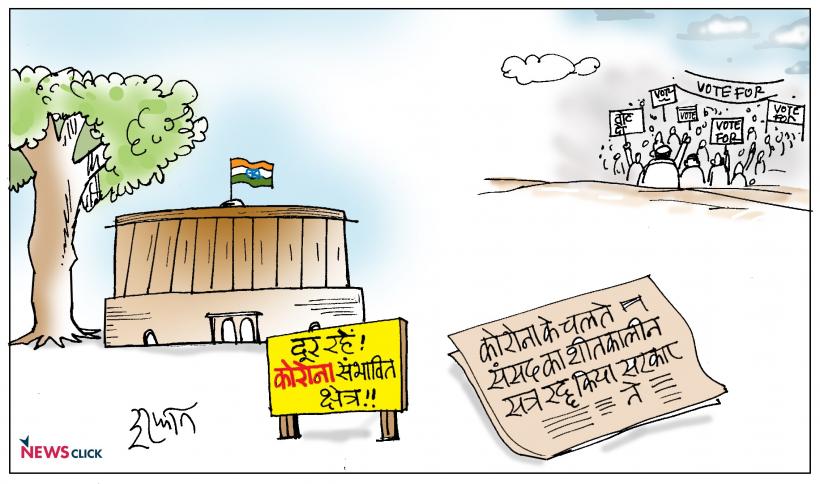
Parliament Closed

For nearly a month, lakhs of farmers have staged sit-ins on various points along the border shared by the national capital and neighbouring states. Their peaceful movement, which is drawing support from farmers across the country, is meant to persuade the government to repeal the farm-related laws that it pushed through Parliament in September.

The farmers have refused to accept the government’s claim that the new laws would benefit them. They insist that these laws would dismantle state procurement and open up agriculture to contract farming, which would only help big corporations. They have also been insisting that corporations will amass essential food commodities and manipulate stocks and prices, for the government has also revoked stocking limits.

The three laws were initially introduced as ordinances this summer while the Covid-19 pandemic was raging and the country was still segregated into red, green and amber zones. Thereafter, they were passed in Parliament without discussion or debate. The manner of their introduction—rather, imposition—threw all democratic norms to the winds and so farmers see no reason to trust the intention behind them either.

Farmers do not look forward to a time when large retail chains would dictate terms and impose conditions on them. They rightly say that these laws would usher in an attack on the right to food security of working people and escalate food prices, which would hurt all consumers.

The immediate response of the government to the concerns of farmers was to repress and distort their movement. Not a day has passed without fresh abuse hurled at them. Starting from “Khalistani” to “Urban Naxal” to “anti-national” to “fake farmers”, every trick in the book has been tried to stigmatise them. Nor have the authorities made serious efforts to stop those who are maligning this historic peaceful protest.

( Read the full article here)

Farm Laws, Farmer Protests and Agrarian Crisis : Dr Jaya mehta


Dr Jaya Mehta, economist and activist, has been associated with the Joshi-Adhikari Institute of Social Studies, author of many books who coordinated an all India study of the Agrarian Crisis delivered a special lecture on ‘Farm Laws, Farmer Protests and Agrarian Crisis’ on 27 th December 2020.
Abstract of talk :
The reforms in agricultural marketing contained in the three farm laws were first announced by the finance minister on 15th May 2020 as Prime Minister’s relief package for the people. When Covid and lock-down had created crisis in the entire economy, migrant workers were walking hundreds of kilometers to reach home and the majority of households desperately needed state support and protection, the Modi government chose to withdraw state intervention and deregulate market forces in agriculture to leave people in complete disarray. After the controversial monsoon session of parliament, the reforms to deregulate market became laws.

Continue reading Farm Laws, Farmer Protests and Agrarian Crisis : Dr Jaya mehta

कृषि क़ानूनों पर नयी सरकारी किताब में बड़े बड़े दावों के अलावा सफ़ेद झूठ भी : राजिंदर चौधरी

Guest post by RAJINDER CHAUDHARY

हाल ही में मोदी सरकार ने हिंदी, अंग्रेजी एवं पंजाबी में 106 पन्नों की एक किताब कृषि क़ानूनों के पक्ष में निकाली है.  मोदी ने यह भी कहा है कि किसान आन्दोलन जारी रखने से पहले इस को ज़रूर पढ़ें. मोदी की बात मान कर हम ने इस को पढ़ा. सब से पहले तो यह देख कर धक्का लगा कि 106 पन्नों की किताब में नए कृषि क़ानूनों वाले अध्याय में मात्र 28 पृष्ठ हैं और इन 28 पन्नों में भी मोदी के भाषणों, मोदी सरकार के कृषि कार्यों और मोदी द्वारा गुजरात में किये कामों का विवरण शामिल है. इस लिए इन 28 पन्नों में भी सीधे सीधे नए कृषि क़ानूनों पर तो मात्र 13 पेज हैं. इस में भी बहुत दोहराव है, एक ही बात को बार बार कहा गया है.  शेष पुस्तिका तो मोदी सरकार द्वारा किसानों के हित में किये गए कामों के दावों पर ही केन्द्रित है. यहाँ हम मोदी द्वारा गुजरात और केंद्र में कृषि और किसानों के लिए किये गए सारे दावों की पड़ताल करने की बजाय नए क़ानूनों के पक्ष में किये गए दावों की ही पड़ताल करेंगे. (यहाँ पर कई स्थानों पर दो तरह के पृष्ठ नंबर दिए गए हैं. पहले पीडीएफ फ़ाइल के और फिर छपी हुई पुस्तिका के; अगर एक पृष्ठ नंबर है तो वो पीडीएफ का है). इन का संक्षिप्त विवरण इस प्रकार है.  Continue reading कृषि क़ानूनों पर नयी सरकारी किताब में बड़े बड़े दावों के अलावा सफ़ेद झूठ भी : राजिंदर चौधरी

Mass Politics and ‘Populism’ in the World of Indian Languages

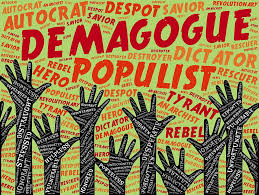
Image courtesy Netherlands Institute for Multiparty Democracy

The label ‘populism’ has acquired unprecedented currency lately and is used to indiscriminately describe such a wide range of poliical figures and political tendencies that it seems to have lost all conceptual meaning. In the best of times, it was always a slippery concept that has been linked to democracy at one end and fascism at the other. On the one hand, it is seen as the democratic ‘excess’ that escapes the attempt of liberal-representative institutions to rein it in; on the other, it is seen as being of a piece with the fascist resort to antipolitical demagoguery and the rhetoric of the (national) ‘underdog’ oppressed by an elite (usually with international links).
The way the term is used these days to describe everyone from a Donald Trump, a Recep Erdogan or a Narendra Modi on the one hand, to the late Hugo Chavez, Evo Morales, Rafael Correa or even Bernie Sanders or Podemos and Syriza, on the other, defies all logic. What possible common denominator can one find between such diverse figures and political formations? That common denominator is simply ‘the people’ or the ‘underdog’ that they invoke – even if in completely different ways.

Continue reading Mass Politics and ‘Populism’ in the World of Indian Languages

Fascism, Democracy and the Left : Com Dipankar Bhattacharya


The 6th lecture in the Democracy Dialogues series organized by the New Socialist Initiative was delivered by Com Dipankar Bhattacharya, General Secretary of CPI (ML) Liberation on 20 th December 6 pm (IST) where he spoke on ‘Fascism, Democracy and the Left’

Abstract  : ‘Fascism, Democracy, and the Left’

With the rise of the Modi government, BJP has managed to establish a vicious grip on Indian polity. Parliamentary democracy and the constitutional vision of a secular democratic Indian republic have come under fierce attack. Instead of remaining busy with studying historical parallels we should treat the present phase as the rise of the Indian model of fascism and resist it with all our might. While we can locate the present Indian developments in the context of global economic and political trends in the post-Soviet world, there are strong roots in Indian history and society. One should revisit Ambedkar and the warnings he had issued right at the time of adoption of India’s Constitution.
The Left vision and role in politics has been historically identified with ideas and experiments of building socialism, but the challenge for socialism to offer a superior model of democracy has remained fatally neglected. In the face of a fascist offensive, the Left in India must emerge and assert as the most consistent and reliable champion of democracy.

Continue reading Fascism, Democracy and the Left : Com Dipankar Bhattacharya

From the Electron to the Higgs- The Long Twentieth Century of Particle Physics – :Dr Ravi Sinha

Guest Post by Dr Ravi Sinha


The 9th lecture (in Hindi) in the Umang Library popular science series will happen this Sunday, December 13, at 5 PM IST. The series is aimed at creating awareness about science in the Hindi belt of India.

Abstract : From the Electron to the Higgs: The Long Twentieth Century of Particle Physics

In 1897 J J Thomson discovered the electron with a Cathode Ray Tube that could fit on a small table in his Cavendish Laboratory. In 2012 the Higgs particle was discovered at the Large Hadron Collider which is the largest scientific instrument ever built (it is a particle accelerator that sits in a tunnel 27 kilometres in circumference and required billions of dollars to build). If the 1897 discovery inaugurated particle physics, the 2012 one was the culmination of the chain of stunning discoveries of new particles spread across these 115 years. In this lecture we will tell the story of the major landmarks of this long century of particle physics which include discoveries of the proton, of anti-particles and of quarks. This is the epic story of the eternal quest of humankind for the most fundamental laws of Nature and the most fundamental constituents of matter. Like all the lectures in this series this lecture too will be accessible to high school students and to curious lay persons. Continue reading From the Electron to the Higgs- The Long Twentieth Century of Particle Physics – :Dr Ravi Sinha

Shehernama – Dilli hai jiska naam V: Dunu Roy

We thought of a series on Delhi that does not talk only of the narrow lanes of Shahjahanabad, the Mughalia, aka Mughlai delights and the lip-smacking Chaats of Chandni Chowk or the grand ruins of the seven Delhis and the wide open spaces and broad roads, but a series that also looks at the way Delhi has evolved. We wanted to explore the logic of the city and of the forces that have shaped the idea of the city itself.  It was this idea that made us approach people who have engaged with the city with love and care for decades and we requested them to write for Kafila.

This series is titled Dilli hai jiska naam, and the links to the previous posts can be found at the end.

This is the fifth post in the series, by DUNU ROY

Shehernama: DUNU ROY

सीने में जलन आँखों में तूफ़ान सा क्यूँ है

इस शहर में हर शख़्स परेशां सा क्यूँ है

-Shaharyar

Twenty-fifth March 2020 marked yet another step forward in the emergence of a strong-arm State in India. An unprecedented lockdown began on that day; a draconian net of control and supervision descending on a people deeply divided, restive about one issue after another, plagued by an economy that makes the rich richer and the poor poorer, and now struck with the double whammy of a virus running amok with the State engineering a siege. Within a week, with work evaporating, savings running out, and stomachs clamouring for nourishment, the great exodus also began. In cities and towns across the land workers launched the long trek back home, dragging trolleys, head-loading baggage, carrying the very young the very old and the very sick, and evading – as best they could – a rampant police. The song from the 1978 film Gaman (Departure) strikes a wailing echo to the rhythm of purposeful feet – “Burning chests and stormy eyes; what ails all in this city”?

What is this city which gives birth to such imaginations?

Continue reading Shehernama – Dilli hai jiska naam V: Dunu Roy

Stand by farmers – boycott Adani and Reliance

The farmers unions have called for a boycott of all products of Adani and Reliance, the two corporates closest to the Modi-Shah regime and which stand to benefit the most from the opening up of the farm sector to agribusiness, which will not only destroy farmers’ livelihoods but affect food security for everyone.  The new laws have been drafted to facilitate ease of doing business for these corporations, eliminating safeguards for both farmers and consumers.

This post is simply a quick, not comprehensive, list of products we could all boycott (compiled with help from Anindita Bose and Rohit).

And just a reminder – the rapacious Adani corporation is wreaking havoc on Australia’s ecology too, and there is a huge people’s campaign there against Adani – #StopAdani . Continue reading Stand by farmers – boycott Adani and Reliance

किसान आंदोलन की माँगों और 8 तारीख के भारत बंद के समर्थन में जारी बयान

( न्यू सोशलिस्ट इनीशिएटिवदलित लेखक संघअखिल भारतीय दलित लेखिका मंचप्रगतिशील लेखक संघजन संस्कृति मंचइप्टासंगवारीप्रतिरोध का सिनेमा और जनवादी लेखक संघ द्वारा किसान आंदोलन की माँगों और  तारीख के भारत बंद के समर्थन में जारी बयान  )
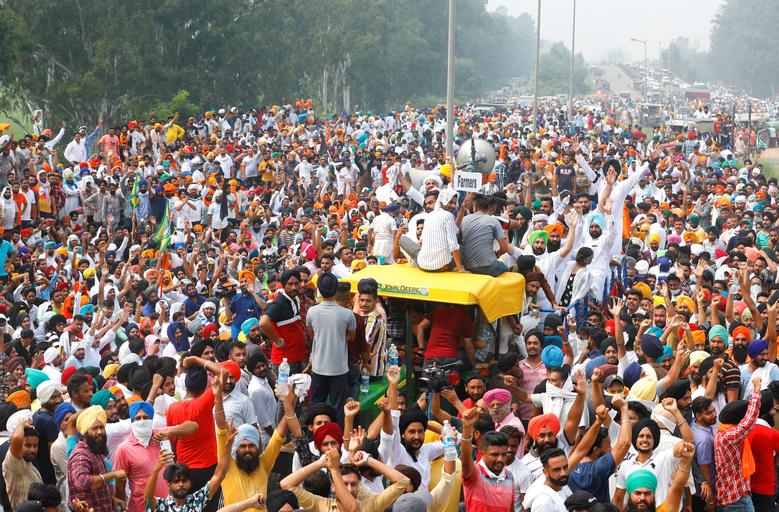
Image : Courtesy Reuters

तीन जनद्रोही कृषि-क़ानूनों के खिलाफ़ किसानों के ऐतिहासिक आन्दोलन का साथ दें!

केन्द्र सरकार के कार्पोरेटपरस्त एजेण्डा के विरोध में अपनी आवाज़ बुलन्द करें!

दिसम्बर के भारत बंद को सफल बनाएं!

 भारत का किसान – जिसके संघर्षों और कुर्बानियों का एक लम्बा इतिहास रहा है – आज एक ऐतिहासिक मुक़ाम पर खड़ा है।

हज़ारों-लाखों की तादाद में उसके नुमाइन्दे राजधानी दिल्ली की विभिन्न सरहदों पर धरना दिए हुए हैं और उन तीन जनद्रोही क़ानूनों की वापसी की मांग कर रहे हैं जिनके ज़रिए इस हुकूमत ने एक तरह से उनकी तबाही और बरबादी के वॉरंट पर दस्तख़त किए हैं। अपनी आवाज़ को और बुलंद करने के लिए किसान संगठनों की तरफ़ से 8 दिसम्बर को भारत बंद का ऐलान किया गया है।

सरकार भले ही यह दावा करे कि ये तीनों क़ानून – जिन्हें महामारी के दिनों में पहले अध्यादेश के ज़रिए लागू किया गया था और फिर तमाम जनतांत्रिक परंपराओं को ताक़ पर रखते हुए संसद में पास किया गया – किसानों की भलाई के लिए हैं, लेकिन यह बात बहुत साफ़ हो चुकी है कि इनके ज़रिए राज्य द्वारा अनाज की खरीद की प्रणाली को समाप्त करने और इस तरह बड़े कॉर्पोरेट घरानों के लिए ठेका आधारित खेती करने तथा आवश्यक खाद्य सामग्री की बड़ी मात्रा में जमाखोरी करने की राह हमवार की जा रही है।

लोगों के सामने यह भी साफ़ है कि यह महज़ किसानों का सवाल नहीं बल्कि मेहनतकश अवाम के लिए अनाज की असुरक्षा का सवाल भी है। अकारण नहीं कि किसानों के इस अभूतपूर्व आन्दोलन के साथ खेतमज़दूरों, औद्योगिक मज़दूरों के संगठनों तथा नागरिक समाज के तमाम लोगों, संगठनों ने अपनी एकजुटता प्रदर्शित की है।

 जनतंत्र और संवाद हमेशा साथ चलते हैं। लेकिन आज यह दिख रहा है कि मौजूदा निज़ाम की ओर से जिस ‘न्यू इंडिया’ के आगमन की बात की जा रही है, उसके तहत जनतंत्र के नाम पर अधिनायकवाद की स्थापना का खुला खेल चल रहा है।

आज की तारीख में सरकार किसान संगठनों के साथ वार्ता करने के लिए मजबूर हुई है, मगर इसे असंभव करने की हर मुमकिन कोशिश सरकार की तरफ़ से अब तक की जाती रही है। उन पर लाठियां बरसायी गयीं, उनके रास्ते में तमाम बाधाएं खड़ी की गयी, यहां तक कि सड़कें भी काटी गयीं। यह किसानों का अपना साहस और अपनी जीजीविषा ही थी कि उन्होंने इन कोशिशों को नाकाम किया और अपने शांतिपूर्ण संघर्ष के काफ़िलों को लेकर राजधानी की सरहदों तक पहुंच गए।

किसानों के इस आन्दोलन के प्रति मुख्यधारा के मीडिया का रवैया कम विवादास्पद नहीं रहा। न केवल उसने आन्दोलन के वाजिब मुद्दों को लेकर चुप्पी साधे रखी बल्कि सरकार तथा उसकी सहमना दक्षिणपंथी ताक़तों द्वारा आन्दोलन को बदनाम करने की तमाम कोशिशों का भी जम कर साथ दिया। आंदोलन को विरोधी राजनीतिक पार्टी द्वारा प्रायोजित बताया गया, किसानों को खालिस्तान समर्थक तक बताया गया।

दरअसल, विगत कुछ सालों यही सिलसिला आम हो चला है। हर वह आवाज़ जो सरकारी नीतियों का विरोध करती हो – भले ही वह नागरिकता क़ानून हो, सांप्रदायिक दंगे हों, नोटबंदी हो – उसे बदनाम करने और उसका विकृतिकरण करने की साज़िशें रची गयीं। किसानों का आंदोलन भी इससे अछूता नहीं है।

यह सकारात्मक है कि इन तमाम बाधाओं के बावजूद किसान शांतिपूर्ण संघर्ष की अपनी राह पर डटे हैं।

हम सामाजिक-सांस्कृतिक संगठन किसानों के इस अभूतपूर्व आन्दोलन के प्रति अपनी एकजुटता प्रगट करते हैं। हम जनता तथा जनता के संगठनों, पार्टियों से अपील करते हैं कि वे इस आन्दोलन के साथ जुड़ें और 8 दिसम्बर के भारत बंद को सफल बनाकर केंद्र सरकार को एक स्पष्ट संदेश दें।

हम सरकार से यह मांग करते हैं कि वह अपना अड़ियल रवैया छोड़े और तीन जनद्रोही कृषि-क़ानूनों को रद्द करने का ऐलान करे।

 हम आंदोलनरत किसानों से भी अपील करते हैं कि वे शांति के अपने रास्ते पर अडिग रहें।

जीत न्याय की होगी ! जीत सत्य की होगी !! जीत हमारी होगी !!

न्यू सोशलिस्ट इनीशिएटिव   दलित लेखक संघ   अखिल भारतीय दलित लेखिका मंच   प्रगतिशील लेखक संघ   जन संस्कृति मंच   इप्टा   संगवारी   प्रतिरोध का सिनेमा   जनवादी लेखक संघ

जेल और थानों में सीसीटीवी: क्या इससे पुलिस ज़्यादतियों पर अंकुश लग सकता है?

अदालत ने यह भी निर्देश दिया कि राज्य एवं जिला स्तरों पर ऐसी निगरानी कमेटियों का भी निर्माण किया जाए तथा ऐसे कैमरों को स्थापित करने की दिशा में तेजी लायी जाए।

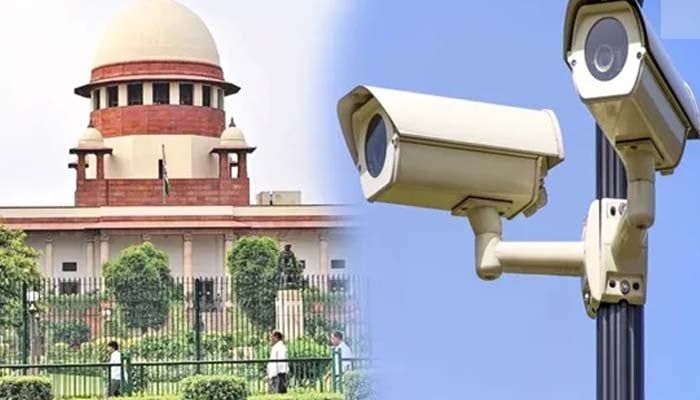
सीसीटीवी

सर्वोच्च न्यायालय ने एक जनहित याचिका के संदर्भ में पिछले दिनों एक अहम फैसला दिया। इसके तहत उसने तमाम राज्यों और केंद्रशासित प्रदेशों को निर्देश दिया कि वह हर थाने में क्लोजड सर्किट टीवी (सीसीटीवी), जिसमें आवाज़ रिकॉर्डिंग की भी सुविधा हो तथा रात में ‘देखने’ की व्यवस्था हो, जल्द से जल्द स्थापित करे। अदालत की इस त्रिसदस्यीय पीठ ने – जिसमें न्यायमूर्ति आर एफ नरीमन, न्यायमूर्ति के एम जोसेफ और न्यायमूर्ति अनिरूद्ध बोस भी शामिल थे – अपने आदेश में यह भी जोड़ा कि ऐसी सुविधा केन्द्रीय एजेंसियों के दफ्तरों में भी स्थापित की जानी चाहिए फिर चाहे सीबीआई हो, नेशनल इनवेस्टिगेशन एजेंसी (एनआईए) हो या नारकोटिक्स कन्टोल ब्यूरो (एनसीबी) हो या एनफोर्समेण्ट डायरेक्टोरेट हो।

भारत जैसे मुल्क में पुलिस बलों या अन्य केन्द्रीय एजेंसियों के दस्तों द्वारा की जाने वाली प्रताड़ना एवं यातनाओं से अक्सर ही रूबरू होना पड़ता है। आप तमिलनाडु के थोडकुडी जिले में पिता पुत्रों- जयराज उम्र 62 वर्ष और बेंडक्स उम्र 32 साल – की हिरासत में मौत के प्रसंग को देखें, जब दोषी पुलिसकर्मियों की संलिप्तता को साबित करने के लिए जन आंदोलन करना पड़ा था। जून, 2020 या आप कुछ वक्त़ पहले राजधानी दिल्ली से ही आर्म्स एक्ट के तहत बंद विचाराधीन कैदी की पुलिस द्वारा निर्वस्त्र कर की गयी पिटाई का दृश्य चर्चित हुआ था जब किसी न कैमरे में उपरोक्त नज़ारा कैद कर मजिस्ट्रेट के सामने पेश किया था।

त्रिसदस्यीय पीठ का मानना था कि चाहे मानवाधिकार आयोग हो या मुल्क की अदालतें हो, वह किसी विवाद की स्थिति में इस सीसीटीवी फुटेज का इस्तेमाल कर सकती हैं, जहां हिरासत में बंद लोगों के मानवाधिकारों के हनन की अक्सर शिकायतें आती रहती हैं और जनाक्रोश भी सड़कों पर उतरता रहता है। अदालत ने यह भी निर्देश दिया कि राज्य एवं जिला स्तरों पर ऐसी निगरानी कमेटियों का भी निर्माण किया जाए तथा ऐसे कैमरों को स्थापित करने की दिशा में तेजी लायी जाए।

गौरतलब है कि जहां तक थानो में सीसीटीवी लगाने का सवाल है, देश के अन्य न्यायालय भी इस किस्म का निर्देश पहले दे चुके हैं।

( Read the full article here)

Mera Gaon, Mera Desh: Kabir Kidwai

A short film on the handloom weavers of Barabanki, UP, by KABIR KIDWAI

Kabir Kidwai is a student and independent film-maker.  You can see his other work on his YouTube channel.

DISSENT, DEBATE, CREATE