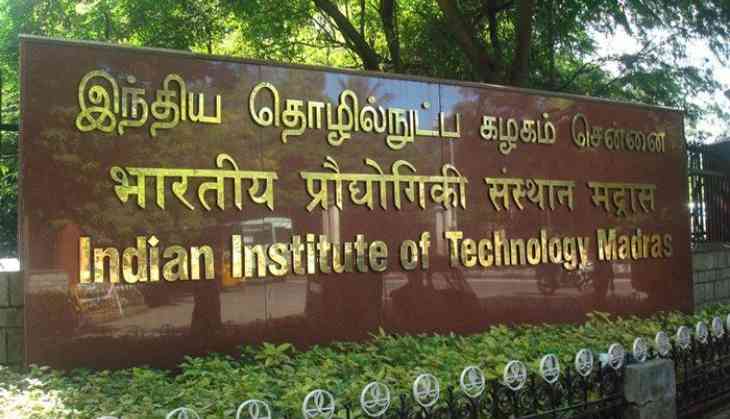
IIT-Madras, a Modern Day Agraharam ?

The institute’s recent order, now withdrawn, of separate entrance for non-vegetarians is just a part of the overall policing and push for vegetarianism after the Modi government’s ascent.
IIT Madras
Image Courtesy: Catch News


Nagesh (name changed), a bright student at the Indian Institute of Technology- Madras, who hails from a very poor economic background, had a shock of his life when he was entering the hostel mess. Someone literally stopped him at the gate and asked him to enter the mess from the other door if he is not a vegetarian.

A notice was duly pasted at the entrance of the mess, informing everyone of this ‘new order’. Even separate basins were demarcated for the students’ cuisine choices. Talking to a reporter with rage in his eyes, Nagesh questioned how the IIT-Madras management could issue such a discriminatory order without even consulting the students.

As of now, the notices have been removed after taking into consideration the uproar this ‘untouchability of a different kind’ caused at the national level. management is now trying to save itself by putting the blame on the caterer. Anybody can guess that a caterer, who is basically a contractor serving food for a fixed period, cannot suddenly disturb the existing arrangements, divide the mess into two separate sections, and have the courage ‘instructing’ his customers to use separate gates.

Commenting on this episode, the Ambedkar Periyar Study Circle – a student group within the institute- which brought this issue to national attention, says:

“Caste masquerades as something else in ‘modern’ society. In IIT Madras campus, it manifests itself as separate entrance, utensils, dining area and wash area in the mess for vegetarian and non-vegetarian students…:

( Read the rest of the article here : https://www.newsclick.in/iit-madras-modern-day-agraharam)

Continue reading IIT-Madras, a Modern Day Agraharam ?

JNU GSCASH statement on ICC punishments for complainant

We, the undersigned faculty and student members of Gender Sensitisation Committee Against Sexual Harassment (GSCASH) who have been elected by the faculty and students of JNU to ensure gender justice in the university (2017), are shocked by the news report on the recommendations of the Internal Complaints Committee’s (ICC) for a specific case. The report published in Indian Express (13.12.2018) states that the ICC found the complaint a frivolous one after inquiry and consequently has recommended that the complainant be completely debarred from entering JNU Campus, her degree should be withdrawn, and that she should never be allowed to take up any course or employment in JNU.

As per the ICC Rules and Procedure, Rule No. 11 states the “Action against frivolous complaint” in order “to ensure that the provisions for the protection of employees and students from sexual harassment do not get misused”. It further states “If the ICC concludes that the allegations made were false, malicious or the complaint was made knowing it to be untrue, or forged or misleading information has been provided during the inquiry, the complainant shall be liable to be punished as per the provisions of sub- regulations (1) of regulations 10, if the complainant happens to be an employee and as per sub-regulation (2) of that regulation, if the complainant happens to be a student. However, the mere inability to substantiate a complaint or provide adequate proof will not attract attention against the complainant. Malicious intent on the part of the complainant shall not be established without an inquiry, in accordance with the procedure prescribed, conducted before any action is recommended”. Continue reading JNU GSCASH statement on ICC punishments for complainant

Statement by JNU faculty against targeting of complainants of sexual harassment by ICC

We, the undersigned faculty at the Jawaharlal Nehru University express our shock and outrage at the extreme penalties recommended against a doctoral student for bringing a sexual harassment complaint against her teacher.

According to a report in the Indian Express (dated 13 December 2018),  JNU’s Internal Complaints Committee (ICC) has decided to punish a student for allegedly filing a ‘false’ sexual harassment complaint against a teacher in what it has deemed to be a ‘frivolous’ complaint. While we are not privy to either the details of the complaint or the justification the ICC has for arriving at this conclusion — rather than simply noting the failure to substantiate a complaint— we find the severity of the penalties imposed extremely troubling.

Continue reading Statement by JNU faculty against targeting of complainants of sexual harassment by ICC

Scrap the Citizenship (Amendment) Bill, 2016, It is Unconstitutional, Illegal and Immoral : 70 People’s Organizations of Assam

Guest Post by 70 People’s Organizations of Assam 

Image result for citizenship (amendment) bill 2016

( Photo Courtesy : AISA)

Protestors from various democratic organisations in Assam have began an indefinite dharna in Jantar Mantar from today 9 Dec. This includes KMSS and peasant leader Akhil Gogoi, AJYCP, Tai Ahom Satra Sontha, Asom Moran Sabha, All Asam Motok Sonmilon, All Asam Minority Students Union, and 70 other organizations of indigenous population of Assam, who are part of an umbrella platform against the Citizenship (Amendment) Bill 2016. This Bill seeks to change the very definition of a Citizen of the country and include a religious dimension to it as part of the RSS’s ideological project. The effects of this Bill can be seen in starkly in Assam – which has been to fuel ethnic and religious anxieties and conflict. Protests against it has also taken unprecedented forms in recent months with participation of millions of indigenous people, including Assam bandhs, and so on.
Find below the text of the Leaflet issued by them. Please forward and Join in the Solidarity.
The Citizenship (Amendment) Bill, 2016 which was introduced in the Lok Sabha on 15thJuly, 2016 [Bill No. 172 of 2016] has already caused deep anguish in the minds of the democratic India. A Joint Parliamentary Committee has also been constituted to examine this Bill. Despite wide-spread protests in Assam against the Bill, the BJP aggressively aims to pass the Bill in the coming Winter Session of the Parliament which will help to make their dream of the Hindurashtra a reality. 
 
*Why the Citizenship (Amendment) Bill, 2016 is unconstitutional, illegal, unethical and immoral?*
 
The Citizenship (Amendment) Bill, 2016 seeks to make fundamental alterations in the citizenship and immigration norms of India on the basis of religion. The Bill proposes to exclude ‘minority communities, namely, Hindus, Sikhs, Buddhists, Jains, Parsis and Christians from Afghanistan, Bangladesh and Pakistan’ – from the scope of the definition of being ‘illegal migrant’. The Bill further reduces the requirement of 11 years to acquire “citizenship by naturalization” to only six years of ordinary residence for such immigrants. The ‘Statement of objects and reasons’ of the Citizenship (Amendment) Bill, 2016 also makes it clear that the Bill intends to declare ‘illegal migrants’ as Indian citizens. Several Indian government notifications and orders have already enabled persons of these communities who had entered India till 31st December, 2014 to get shelter without valid documents. 
 
The Bill will change the philosophical premise on which Indian citizenship is granted. The principle on which Indian citizenship is granted is jus soli where citizenship of a person is determined by the place where a person is born. However,if the Bill passes, it will make a shift from jus soli to jus sanguinis, where a person acquires citizenship on the principle of blood, which our Constitution-makers consciously avoided. India’s Constitutional experts have opined that the Bill is unprecedented as never before has religion been specifically identified in the citizenship law as the ground for distinguishing between citizens and non-citizens. The ideas spelt out in the proposed Bill are against the ethos and spirit of the Indian Constitution. It will violate the spirit of the Preamble of the Indian Constitution and is also against the Articles 14, 15, 25 and 26 of the Indian Constitution. 
 
An extra-ordinary and widespread peoples’ movement has now swept across Assam and the entire North-East India against the Bill. We, the people of Assam feel that the Bill will change Assam’s political, economic and social fabric forever. The Bill will violate the clause 6 (A) of the Citizenship Act, 1955, a special provision for Assam, which is a non-obstante clause. If the Bill passes, it will make the Assam Accord null and void. It will be a violation of the national promise. The people of Assam are afraid that the Bill will open ways to creating further insecurity and pressures in a region already over-burdened with large-scale demographic changes due to illegal migration. It will create religious basis for it, and fuel fresh rounds of ethnic and religious conflict.
 
*We, an umbrella platform of 70 ‘Jatiya’ (national) organizations of Assam, are on a hunger strike for an indefinite period in Delhi from 9th December, 2018 demanding the immediate scrapping of the Citizenship (Amendment) Bill, 2016 for the sake of the Indian Constitution, and its moral, legal and ethical values, and to protect Assam and her inhabitants from another long spell of social and political strife.*
 
*The Government of India plans to pass the Bill in this Winter Session of the Parliament. We appeal all political parties, organizations and individuals of India to be united to oppose this unconstitutional Bill. We sincerely believe that you will extend your support to us, and oppose the Bill to save our Constitution and democracy.*
 
contact: secretarykmss@gmail.com, 8638084494, 8826219749


पवित्र गाय, त्याज्य लोग !

..बुलंदशहर की घटनाएं इस बात की ताईद करती हैं कि  हिंदुत्व वर्चस्ववाद का यह नज़रिया जिसमें मानवीय जीवन के प्रति गहरी असम्वेदनशीलता और असम्पृक्तता  टपकती है और जो एक चतुष्पाद को पूजनीय बनाती है, आज उरूज पर है।..

( Photo Courtesy : indianculturalforum.in)

कभी कभी एक अदद वक्तव्य किसी नेता की एकमात्र निशानी बन कर रह जाती है। विश्व हिन्दू परिषद के नेता गिरिराज किशोर इसका क्लासिकीय उदाहरण कहे जा सकते हैं जिनका नाम लेने पर अक्सर उनका विवादित वक्तव्य ही लोगों की जुबां पर आ जाता है। याद है कि उन्होंने कहा था कि ‘‘पुराणों में गाय को मनुष्य से अधिक पवित्रा समझा गया है।’’

वह अवसर बेहद शोकाकुल करनेवाला था, जब उनका वह वक्तव्य आया था। दिल्ली से बमुश्किल पचास किलोमीटर दूर दुलीना नामक स्थान पर पांच दलितों की भीड़ द्वारा पीट पीट कर हत्या कर दी गयी थी Continue reading पवित्र गाय, त्याज्य लोग !

വിട, IFFK! വിട, ബീനാ!

പ്രിയ ബീനാ

IFFK എന്ന പ്രസ്ഥാനത്തിനോട് വിട പറയാൻ സമയമായിയെന്ന് തോന്നുന്നു. ബീനയ്ക്ക് വേണം ഈ വിടവാങ്ങൽ കത്തെഴുതാനെന്നും തോന്നി. കാരണം ഇതിനെ ഒരു ജനകീയ പ്രസ്ഥാനമാക്കിയത് നിങ്ങളാണ്. ഇന്ന് അത് മറ്റൊന്നായി മാറിയിരിക്കുന്നു. ഇടങ്ങളെല്ലാം മാറിക്കൊണ്ടിരിക്കുന്ന ഈ കാലത്ത് ഇതു പ്രതീക്ഷിതമാണ്, അതുകൊണ്ട് ഇതു വ്യക്തിപരമായ കുറ്റപ്പെടുത്തലല്ല. Continue reading വിട, IFFK! വിട, ബീനാ!

Sacred Cows, Disposable Humans

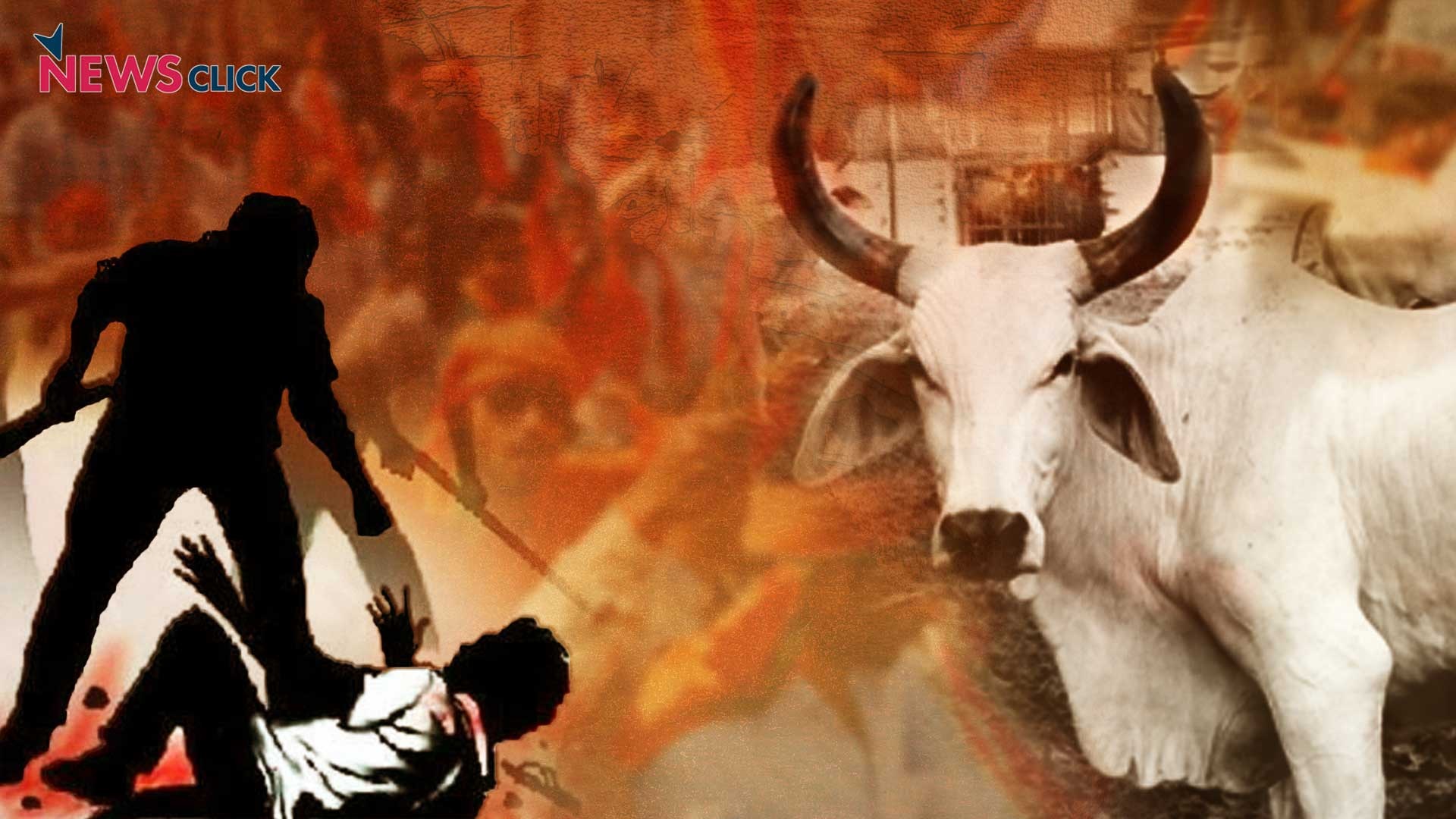
The Bulandshahr mob killings show that the Hindutva Supremacist world view, which has complete apathy and indifference toward human life and puts a four-legged animal on a pedestal, is on the ascendance.

mob lynching

“It is a curious people. With them, all life seems to be sacred except human life.”

– Mark Twain on Indians.

A single quote sometimes remains the sole memory of a leader.

Giriraj Kishor, a Vishwa Hindu Parishad (VHP) leader, can be considered a classic example to demonstrate the thought behind Mark Twain’s quote. Kishor had rather (in)famously said, “Cow is considered more sacred than human beings in the Puranas(Hindu scriptures)”. The occasion was a tragic one when five Dalits — who were carrying dead cows — were lynched by a vigilante mob in front of a police station (Dulina, Jhajjar in Haryana, October 2002) with many senior government officials turning mute spectators.

The spectacle-type killing was followed by another grotesque drama when police personnel, who by their inaction had connived with the crime, promptly sent the dead cows for examination, and filed cases against the dead Dalits over cow ‘slaughter’.

Kishor died few years ago but the worldview he represented, which has complete apathy and indifference towards human life and which puts a four-legged on the pedestal, is on the ascendance.

( Read the full text here : https://www.newsclick.in/sacred-cows-disposable-humans)

Justice denied – the Dharmapuri rape: Ila Ananya

Guest Post by ILA ANANYA

IMG-20181114-WA0002

On the night of November 12th 2018, more than fifty people from Sittilingi, a village in Dharmapuri district of Tamil Nadu, made their way back home from Dharmapuri Government Medical College Hospital with the body of a 16-year-old Adivasi (Malaivasi) girl. The girl had been raped on November 5th by two drunk men, and had died in the hospital five days later – a death that her family have described as linked to blatant police negligence, beginning with their refusal to file an FIR, and involving the questionable role of the Child Welfare Committee (CWC) in Dharmapuri. Manjunathan*, a resident of Sittilingi, says that on November 12th, around ten police vehicles and 100 policemen had followed the girl’s funeral procession through the village, all the way to the graveyard. “Till now we have never seen the police,” Manjunathan attests, “now suddenly, since the day of the protest, they have remained in the village, especially at the junction, harassing people.”

This large and unusual police presence in Sittilingi began on November 10th, after around 2000 people gathered on the main road of the village, frequented by buses connecting Salem and Thiruvannamalai, to protest against the rape and death of the girl. Continue reading Justice denied – the Dharmapuri rape: Ila Ananya

The Kisan Charter – ‘Farmers are not just a residue from our past but integral to the future of India and the world’

Kisan Mukti March in Delhi, image courtesy New Indian Express
Till just the other day, they were committing suicide, while some of them were demonstrating in Jantar Mantar, Delhi, humiliating themselves by disrobing and eating rats, trying in vain to draw the attention of the political establishment to their plight.  And to pour salt on their wounds, BJP leaders were saying that committing suicide had become a fashion among farmers! Today they are out on the streets, demanding, among other things, that their own debts be written off, not of the powerful and predatory capitalists. (See the Charter of the All India Kisan Sangharsh Coordination Committee below). This is, in all probability, the sign of a decisive shift, for today the charter relseased by the Coordination Committee declares loud and clear that
Farmers are not just a residue from our past; farmers, agriculture and village India are integral to the future of India and the world.

Continue reading The Kisan Charter – ‘Farmers are not just a residue from our past but integral to the future of India and the world’

Remote Islands, Savage Tribes: Sajan Venniyoor

Guest post by SAJAN VENNIYOOR

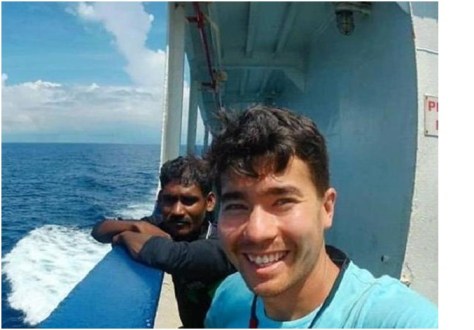
If you key in “remote island” on Google, most of the news stories it throws up are about an unfortunate and very dead young man named John Allen Chau. If you type in “remote Indian island”, Google will take you immediately to North Sentinel Island.

We are all, by now, familiar with sad tale of John Allen Chau and his ill-fated voyage to Sentinel Island. A young evangelical from the United States, Chau was – apparently from a very tender age – fired with zeal to convert to Christianity the natives of a very specific island in the Bay of Bengal: viz., North Sentinel Island in the Andaman & Nicobar archipelago.

John Allen Chau

Continue reading Remote Islands, Savage Tribes: Sajan Venniyoor

Of Angry Women and Insecure Men – Hindi cinema and the MeToo Age: Rama Srinivasan

Guest Post by RAMA SRINIVASAN

Men have had every advantage of us in telling their own story. Education has been theirs in so much higher a degree; the pen has been in their hands. I will not allow books to prove anything.”
― Jane Austen, Persuasion

Austen’s words, a searing commentary on how patriarchy controls the narrative, remains relevant today despite tenacious efforts by women to wrest authorial control from men and narrate our own stories. Even as the struggle to find one’s voice and to be heard continues, we might also ask ourselves what we will be left with after we have successfully challenged male authority and supremacy in our stories, the idea of heroes and villains, of chaste wives and women of disreputable characters. In the moment of triumph, is there also a need of introspection? The MeToo movement, in India and elsewhere, opens our world(s) up to these and many other questions that do not have easy or ready answers. A standard reply, reproduced in several platforms when questions like ‘why now’ or ‘what next’ are raised is illuminating of the problem societies face when women tell stories: “For now, we should just listen to the women who want to speak up.” It not only represents the struggle to tell our stories on our own terms but also tell them without a fixed agenda or plan.

The current moment in Hindi cinema has been complementing these societal struggles, perhaps even foreshadowing the MeToo challenges to patriarchy by both wresting authorial power to tell stories of relatable people, especially of women, but also displacing plot devices and narrative arcs familiar to stories that end up reaffirming patriarchal authority. Continue reading Of Angry Women and Insecure Men – Hindi cinema and the MeToo Age: Rama Srinivasan

Ideas as Crime in a Majoritarian Democracy

idea as crime in democracy

Image Courtesy: Vappingo

To such a degree has Religion fuelled conflict, complicated politics, retarded social development and impaired human relations across the world, that one is often tempted to propose that Religion is innately an enemy of Humanity, if not indeed of itself a crime against Humanity … it is time that the world adopted a position that refuses to countenance Religion as an acceptable justification for, excuse or extenuation of – crimes against Humanity.

-Wole Soyinka

A modern critique of Sacred Books of any religion — which are worshipped by its followers — is an act which is full of dilemmas.

What should one say if they have references about burning of infidels, permitting a man to marry many women, instructing the rulers to cut somebody’s tongue or pour hot lead into somebody’s ears if s/he sings/listens to religious hymns, ordering a particular section of its devotees to be kept aloof even from places of worship or spotting a ‘divine figure’ engaged in abusing one’s own daughter or harassing women.

Should a critical intellectual just look the other way, pretending that s/he does not see, decide to keep quiet or rationalise such acts to further re-ensure her/his faith or say few things, albeit in a mild tone, that such acts do not match modern values?

And what should a modern state — which claims to be not based on faith — do in such a case? Facilitate flourishing of such critiques or allow faith merchants/fanatics of different shades to criminalise such acts taking recourse to its own statue books.

( Read the full article here : https://www.newsclick.in/ideas-crime-majoritarian-democracy)

An Open Letter to Brinda Karat about Rehana Fathima: Why are we being hunted in Kerala?

Dear Comrade

Last year, around this time, I wrote you an open letter about the plight of Hadiya Asokan who was being hunted down by the Hindutva groups for her choice of faith and partner while the CPM and its cyber force was either actively abetting the violence or watching passively. I wrote in joy, because you had taken a firm stand and despite angry howls of protest against you from your own party. However, this time, I write in sheer despair at your silence; not just yours, but of the AIDWA in Kerala in general, in the wake of the twisted machinations of the Hindutva forces around the Supreme Court’s order permitting the entry of women of menstruating ages to the Sabarimala temple. Continue reading An Open Letter to Brinda Karat about Rehana Fathima: Why are we being hunted in Kerala?

Under the Shadow of ‘Holy Book!’

Inching Towards Majoritarian Democracy

Image result for madhu dandavate

( Madhu Dandavate)

1.

These are times when the state of democracy is a cause of worry everywhere. With the emergence of populists, demagogues of various hues as custodians of the future of their countries, growing fascination for illiberal ideologies among masses in different parts of the world, the concern is not misplaced and it is apt that we are having this brainstorming where our focus would be on India itself.

‘Working Group on Alternative Strategies’ – which comprises of some of the finest public intellectuals and activists of our times – need to be thanked that they have been organising such seminars since last thirteen years and in this way commemorating the life and works of Prof Madhu Dandavate, a great Parliamentarian and Socialist ideologue. Continue reading Under the Shadow of ‘Holy Book!’

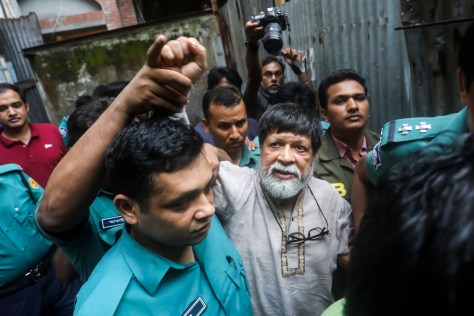
100th day of Shahidul Alam’s Detention – Eminent South Asians Write to Bangladesh Prime Minister

Today, it is 100 days of the detention of acclaimed photographer and cultural activist Shahidul Alam. On this occasion, Arundhati Roy, Aparna Sen, Vikram Seth, Romila Thapar, Amitav Ghosh, Shabhana Azmi, Buddhadeb Dasgupta, Nandita Das, Mohammad Hanif, Anish Kapoor among other eminent persons from across South Asia have written a letter to Bangladesh Prime Minister Sheikh Hasina Wazed demanding his immediate release.  on the 100th day of his detention.

Shahidul 3

H.E. Sheikh Hasina Wazed
Prime Minister of Bangladesh
Prime Minister’s Office
Dhaka, Bangladesh
13 November 2018

Subject: Appeal for release of Shahidul Alam on 100th day in custody

Your Excellency:
As well-wishers of Bangladesh and supporters of its 166 million citizens’ struggle for dignity, social justice and prosperity, we are distressed by the continued imprisonment of photographer and cultural activist Shahidul Alam. Since the founding of the nation in 1971, the people of Bangladesh have led by example, fighting poverty, ending social injustices and being standard-bearers of participatory development. This advance has been made possible by the democratic spirit of the people, who have challenged military rulers and autocrats alike. As well-wishers of Bangladesh, we fear that these gains are in danger due to the rising political intolerance and denial of fundamental freedoms.

Shahidul Alam is a Bangladeshi citizen, but the rest of us in South Asia are also proud to call him our own, for the values of truth, justice and social equality he promotes. His work and activism are respected all over our region and beyond, with innumerable friends who admire his concern for the voiceless and marginalised. One example is his latest work highlighting the tragedy of the Rohingya people, who have been given refuge in Bangladesh by your Government.

Since Shahidul Alam was forcefully taken from his home on the 5th of August, he was remanded first in Detective Branch custody for seven days and, then held at Dhaka Central Jail at Keraniganj. He is accused of ‘hurting the image of the nation’ while reporting on protests by young students demanding road safety.
It is clear to us that the case of Shahidul Alam is being used as a means to suppress criticism by others in civil society. His arrest and continued detention appear to be manifestation of an intolerant political atmosphere, an attempt to threaten and silence the voice of Bangladeshi citizens. With the country preparing for general elections, this is a time when there should be more space for debate and discussion, not less.

As believers in the rule of law, we are shocked to learn that government lawyers continue to oppose Shahidul Alam’s release on bail using various stratagems and delays intended to deprive him of his fundamental rights to liberty and due process. Across South Asia, politicians and citizens have fought for the right to speak, and to write, and it is astonishing to us that a government today, especially one which seeks to harness technology for progress, should choose to use a law to proscribe online speech to jail a citizen.

Prime Minister,

We the undersigned urge you to ensure the release of Shahidul Alam on this, the 100​th​ day of his detention. We look forward to Bangladesh retaining its place as an exemplar of
participatory democracy in South Asia.

Sincerely,
1. Akram Khan, London
2. Amar Kanwar, New Delhi
3. Amitav Ghosh, Goa
4. Anish Kapoor, London
5. Aparna Sen, Kolkata
6. Arundhati Roy, New Delhi
7. Ashok Vajpeyi, New Delhi
8. Buddhadeb Dasgupta, Kolkata
9. Dayanita Singh, New Delhi
10. Ina Puri, Kolkata
11. Jayadeva Uyangoda, Colombo
12. Kanak Mani Dixit, Kathmandu
13. Laila Tyabji, New Delhi;
14. Manjushree Thapa, Toronto
15. Mohammed Hanif, Karachi
16. Moushumi Bhowmik, Kolkata
17. Nandita Das, Kolkata
18. Nimalka Fernando, Colombo
19. Patricia Mukhim, Shillong
20. Pooja Sood, New Delhi
21. Rachana Singh, New Delhi
22. Raghu Rai, New Delhi
23. Rajdeep Sardesai, New Delhi
24. Ramchandra Guha, Bangalore
25. Romila Thapar, New Delhi
26. Salima Hashmi, Lahore
27. Sanjay Kak, New Delhi
28. Sanjoy Hazarika, Shillong
29. Sankha Ghosh, Kolkata
30. Shabana Azmi, Mumbai
31. Sushila Karki, Kathmandu
32. Vijay Prashad, New Delhi
33. Vikram Seth, New Delhi
34. Vrinda Grover, New Delhi

One month at an Indian Yoga Centre: Dhruv Ramnath

Guest post by DHRUV RAMNATH

“When you are in India, you must follow Modi. When you are in America, you must follow Trump,” said the semi-literate Odia instructor to a batch of 70-odd students at Swami Vivekananda Yoga Anusandhana Samsthana (S-VYASA), a university which received crores from our prime minister not so long ago. 30 kms from Bangalore, its Vice-Chancellor, Dr. H. R. Nagendra (“Guruji” to his devotees), went further. “Thanks to Modi, we are now taking yoga to the world,” he said on the first day. Both the Odia speaker and Guruji told us to “have a smile on our face all the time”. Repeated so often whilst we performed our asanas, it became patently corny and destroyed any sense of feeling welcome and of enjoying a simple, one-hour class.
Continue reading One month at an Indian Yoga Centre: Dhruv Ramnath

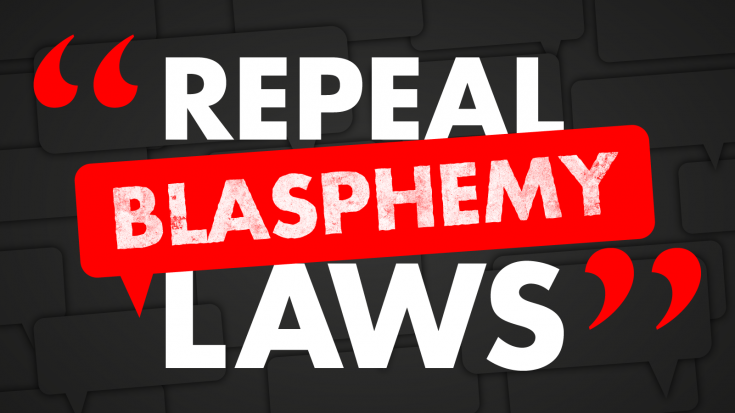
Time to Dump Blasphemy Laws

Can the countries from this part of Asia walk in the footsteps of Ireland?
Blasphemy Laws

Mera azm itna bulund hae, Parae sholon se dar nahin.

Mujhe dar hae tu atish e gul se hae, Ye kahin chaman ko jala na dein

(my confidence in self is strong, I’m unafraid of foreign flames

I’m scared those sparks may ignite, that in the blossom’s bosom lay )

— Shakeel Badayuni’s couplet which was very dear to Salman Taseer who was assassinated by Islamists

Know Meilana, a 44-year-old ethnic Chinese Buddhist from Indonesia, whose conviction under Indonesia’s controversial blasphemy laws, caused an uproar in the country, merely few months ago. The only ‘offence’ registered against her was that this woman from Sumatra had merely complained about ‘the volume of adzan or call to prayer, from her local mosque’. Her complaint was considered ‘blasphemous’ and even triggered an anti-Chinese riot in which several Buddhist temples were burnt.

(Read the full article here : https://www.newsclick.in/time-dump-blasphemy-laws)

‘आधार’ न बचा, न मरा, बचा केवल मदमस्त सफ़ेद हाथी : राजेन्द्र चौधरी

Guest post by RAJINDER CHAUDHARY

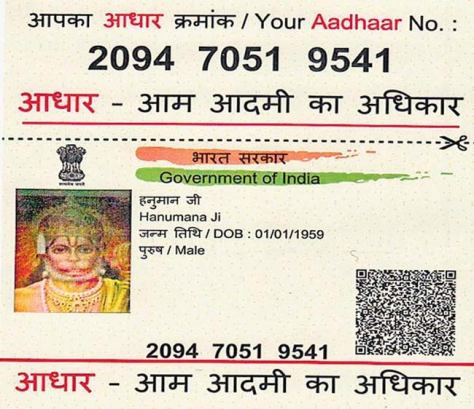
Aadhar for Hanumanji
Aadhar for Hanumanji, image courtesy Aaaj Tak

उच्चतम न्यायालय के बहुमत ने ‘आधार’ पर दिये गए हालिया फैसले में सरकारी योजनाओं, सब्सिडी इत्यादि का लाभ लेने के लिए आधार अनिवार्य करने के सरकारी फैसले को सही ठहराया है। इस के साथ ही आयकर दाता के लिए भी आधार अनिवार्य कर दिया है। इस के अलावा बाकी जगह इस के प्रयोग को अवैध ठहरा दिया है; अब न मोबाइल फोन और न बैंक खातों के लिए यह ज़रूरी रहेगा। न निजी कंपनियाँ इसे मांग या प्रयोग कर पाएँगी। यह सब अब बच्चा बच्चा जानता है। सवाल यह है कि इस परिस्थिति में अब आधार का क्या प्रयोजन बचा है?
सरकार ने अदालत में आधार को कर-चोरी, काले-धन और आतंकवाद के खिलाफ लड़ाई और राष्ट्रीय सुरक्षा के लिए एक सशक्त हथियार के तौर पर प्रस्तुत किया है (बहुमत समेत तीनों फैसलों की एक संयुक्त फाइल का पृष्ठ 1095-6)। काले-धन के खिलाफ लड़ाई के लिए बैंक खातों और पैन को आधार से जोड़ना अनिवार्य किया गया था। आतंकवाद से लड़ने एवं राष्ट्रीय सुरक्षा के लिए मोबाइल फोन के लिए आधार अनिवार्य किया गया था। अब जब बैंक खातों और मोबाइल फोन के लिए आधार अनिवार्य नहीं रहा, तो अब आधार इन दोनों उद्देश्यों की पूर्ति के लिए किसी काम का नहीं रहा। लोगों के छद्म नाम से कई-कई खाते चलते रहेंगे और काले धंधे का कारोबार जैसे अब तक चलता रहा है, वैसे ही चलता रहेगा। आयकर दाता के लिए आधार अनिवार्य करने से काले धंधे और काली कमाई पर कोई खास फर्क नहीं पड़ेगा। अदालत के आधार को वैध ठहराने वाले एक जज ने भी अपने फैसले में कहा है कि बैंक खाता और पैन कार्ड दोनों का लिंक होना ही प्रभावी होगा (अकेला पैन कार्ड नहीं; इस लिए उन्होने बैंक खातों के लिए भी आधार को वैध ठहराया है हालांकि अल्पमत होने के चलते उन के फैसले का यह अंश प्रभावी नहीं होगा (पृष्ठ 55 माननीय जज अशोक भूषण के फैसले का/पृष्ठ 1103 तीनों फैसलों की संयुक्त फाइल का)।
Continue reading ‘आधार’ न बचा, न मरा, बचा केवल मदमस्त सफ़ेद हाथी : राजेन्द्र चौधरी

Love Patriarchy, Hail Hindu Rashtra!

From Hindu Code Bill to Sabarimala via Roop Kanwar’s Sati — keeping women subjugated under the cloak of tradition
Sati System

It was the mid-1980s when a 18-year-old Roop Kanwar’s burning on the pyre of her husband — under controversial circumstances — had made national headlines. There was national outrage over the incident because more than 150 years after the banning of this custom — the practice of Sati, was seeing a revival of sorts. One can still recollect how thousands of women had come out on streets then in different parts of North India, glorifying the act in the name of tradition.

Women were ‘celebrating’ a woman’s self-immolation on the pyre of her husband and resisting state intervention which wanted to enforce her autonomy, her individuality!

This may sound strange today, but was true!

India, had its ‘Roop Kanwar moment’ — albeit a bit differently — once again recently when in  Kerala women came out in hundreds or thousands to resist the implementation of Supreme Court judgement that had removed the bar on women aged 10-15 or ‘menstruating women’s entry in the temple of Ayappa at Sabarimala’.

( Read the full article here : https://www.newsclick.in/love-patriarchy-hail-hindu-rashtra)

Bharatiya Janata Party or Bharatiya Jumla Party !

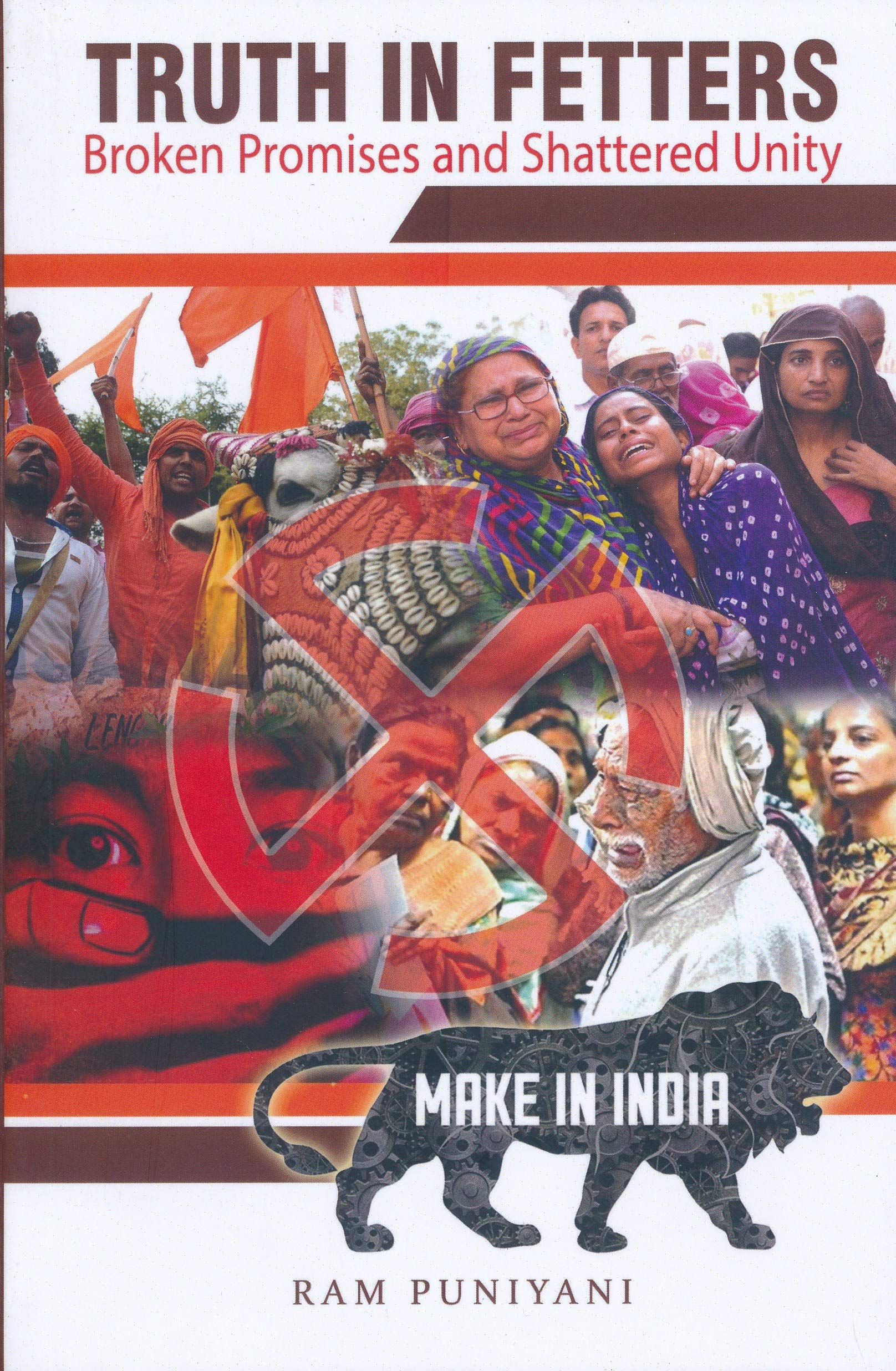
Review of ‘Truth in Fetters : Broken Promises and Shattered Unity’

Image result for media house ram puniyani truth in fetters

“Change is in the air”!

A retired academic who had his last assignment as Vice Chancellor of a leading university said to me the other day, while we were discussing the contemporary political scenario. Frankly admitting that he had supported Modi’s candidature then and had even discreetly campaigned for him, during 2014 elections, he said that what a ‘disaster’ it has been these last four and half years to our polity with him at the helm of affairs.

What surprised me more was that he was from Eastern UP and belonged to one of the dominant upper castes in the region. Continue reading Bharatiya Janata Party or Bharatiya Jumla Party !

Now What? After the Betrayal of Women at Sabarimala

At the end of the five-day worship in the month of Tulam, it is clear that women have been betrayed. The right wing which promised not to violently stop women devotees did precisely that; their leader also hurled vicious insults are trans people. The dominant left which foamed Ayyankali and Sree Narayana Guru at the mouth ended up reinforcing the ‘good woman’/bad woman’ division, saying first that only the former would be allowed to proceed, made the term ‘activist’ into a code word for ‘bad woman’, and then finally threw up its hands saying that it was impossible to implement the court order. The government and the CPM had obviously not done enough to make sure that women would indeed enter the shrine. Clearly, they are reluctant to touch the savarna moral majority.  Continue reading Now What? After the Betrayal of Women at Sabarimala

DISSENT, DEBATE, CREATE