Statement Against Genocide and Deportation of Rohingya Muslims

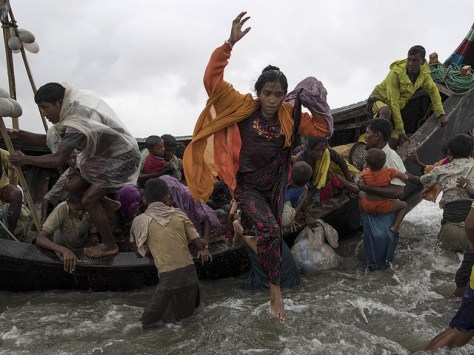
Violence is sweeping Myanmar and in a short span of two weeks lakhs of ethnic Rohingya refugees have fled to Bangladesh and thousands have lost their lives. Satellite data shows, large parts of the Rakhine state, home to most of the Burmese Rohingya population have been set on fire, and murders, rape, arson, loot and forced displacement of the Rohingya population is taking place on a scale, that should be alarming for all humanity. Even the UN secretary general has called out to Mayanmar to end violence against the Rohingya and Nobel laureate Desmond Tutu has urged Mayanmar state Councillor Aung San Suu Kyi to speak out against the persecution of the Rohingya. The tragedy facing the Rohingya is of an unprecedented scale and needs to be addressed with a sense of utmost urgency.

As Indian citizens, we need to break the silence on ethnic violence against the Rohingya and the unconstitutional proposed deportation of a wide and long-residing Rohingya community from India, to certain death that awaits them in Myanmar. The Rohingyas have been living as a peaceful refugee community in various parts of India since the 1970s, with no criminal records or history of crime. Let us not be a part of this genocide. Let us stand up for justice and humanity, and raise our voice against the killings, displacement and deportation of the Rohingya!

Continue reading Statement Against Genocide and Deportation of Rohingya Muslims

In the Forbidden Land of Iran – the past, survival and imperial nostalgia: Inshah Malik

Guest post by Inshah Malik
Iran is politically and economically isolated and in that isolation, to call it an experiment of nation building is misleading, but nevertheless, it is an on-going exercise. Under the crippling sanctions, the party is still on!

I don’t have the usual agenda to visit Iran. I’m not an intrepid western traveler barging into the forbidden land, to explore my political other. My two year journey within Iran is a certain sojourn necessitated by my consistent desire to unravel the personal and political meaning of my existence. As a Kashmiri scholar burdened by a political inheritance of the prolonged Kashmir conflict, I seek to unearth the connection between Kashmir and Iran. This connection, as I understand now, is not simply political, in that both places are Muslim dominated, but more spiritual. It is in the erasure and random references to Kashmir in Farsi through which I attempt to understand the crisis of a Muslim consciousness entwined with the political domination of an imperial world order.

I encounter Kashmir as a meaningful reference in the poetry of Iran’s national poet, Hafiz Continue reading In the Forbidden Land of Iran – the past, survival and imperial nostalgia: Inshah Malik

In Which Swaminathan Iyer McDonaldises the Tribals and Serves Other Junk Food : Shripad Dharmadhikary and Nandini Oza

Guest Post by SHRIPAD DHARMADHIKARY AND NANDINI OZA

Reposted from Manthan

What can one expect when one is faced with a blog by “India’s leading economic journalist” which is titled “Most of the ousted tribals are flourishing and loving it”? That there will be a large helping of fries on the side? That it will taste great but is really junk? In all of these expectations, one is not disappointed.

First, a little background. The leading economic journalist is Swaminathan Iyer, who along with a colleague carried out a survey of some tribals ousted by the Sardar Sarovar Narmada dam, comparing their situation with those left behind in the hilly areas near the river, and others in the hilly areas but near a mining project. On 10th Sept 2017, Iyer wrote a blog titled “Why many tribals don’t mind being ousted” based on his study. In a matter of just two days, Iyer has come out with a second blog based on the same study on the same topic. One wonders why. But then, again, one may not wonder, for the Sardar Sarovar has become an important topic with the Prime Minister scheduled to dedicate to the nation the dam on 17th Sept 2017.

The first blog was a classic case of misinterpretation of data, hiding the more important issues, and conclusions not supported by research findings, as we showed in our response. We showed that the tribals do mind being ousted. Now Iyer has written another blog on the matter, which skirts the issues we had raised in our response and omits some crucial survey findings given in the earlier blog, but still tries to show the Sardar Sarovar rehabilitation program as being successful.

Continue reading In Which Swaminathan Iyer McDonaldises the Tribals and Serves Other Junk Food : Shripad Dharmadhikary and Nandini Oza

Poo’, poo’ Dilip and his Valiant Knights

Poo’ poo’ Dilip is an effect of the discourse on the Malayalam cine actor Dilip , who is facing trial for his alleged involvement in the conspiracy behind the despicable attack on a young woman actor in Kochi in February 2017.  Now, as his next bail plea (thrice refused) draws near, there seems to be a concerted effort to produce public sympathy for the jailed actor – which has produced its own discourse, much to the distaste of those who feel that the wronged actor, and not the one accused of wrong-doing, needs to be supported. Poo'(r) Poo'(r) Dilip is a direct (and feminist) translation of the funny distortion of the piece of sentimental shit going around social media on his behalf – Dilip paavamaa, eda (Dilip is a nice guy, bro). Continue reading Poo’, poo’ Dilip and his Valiant Knights

Why tribals do mind being ousted by dams: Shripad Dharmadhikary and Nandini Oza

SHRIPAD DHARMADHIKARY and NANDINI OZA write a stinging response to Swaminathan Anklesaria Iyer’s unsupported claims in Times of India about how much tribals love being ousted for big dams. The newspaper did not care to publish this rebuttal so the authors posted this on Dharmadhikary’s blog and also in the comments section to Iyer’s article.

We reproduce Dharmadhikary and Oza’s original response in full below from Manthan.

However, here is an update from Shripad:

I put my comment in brief, within the allowed 3000 characters, yesterday in the Comments section. Today, it’s gone.

Then, a friend brought to my notice that Swaminathan has written a completely new version of the blog and put it out yesterday. Wonder if he is in the habit of writing different versions of the same blog within a matter of two days! https://blogs.timesofindia.indiatimes.com/Swaminomics/most-of-the-ousted-tribals-are-flourishing-and-loving-it-thank-you-activists/

Have yet to read the new version of his bog properly (am out since early morning), but it appears that he has rewritten it in a way that tries to skirt the response we had given. Now I am planning to write another response to the new blog….but can only do it tomorrow as busy with meetings today.

And now, Dharmadhikary and Oza’s original response in Manthan:

SA Iyers’s piece in Times of India dated 10 Sept 2017, “Why many tribals don’t mind being ousted by dams”, examining the condition of some of the oustees of Sardar Sarovar Narmada dam is a classic case of misinterpretation of data, hiding the more important issues, and conclusions not supported by research findings. Indeed, a proper reading of the article itself shows that unlike Iyer’s assertion, his own figures show that tribals do mind being ousted. Some important points are given below.

Iyer claims that their “surveys showed, unambiguously, the resettled villagers were better off than their former neighbours in semi-evacuated villages.” In support, among the figures given from their survey, they point out that comparing the resettled with their former neighbours who remain in the original areas, the access to drinking water was 45% against 33%, to PHCs was 37% versus 12% and to hospitals 14% versus 3%. Given that the oustees were resettled between 25-30 years ago, and that the Sardar Sardar project has poured in hundreds of crores of rupees for resettlement, these figures don’t speak of oustees being better off, but indeed, point to the pathetic case of the oustees.

Continue reading Why tribals do mind being ousted by dams: Shripad Dharmadhikary and Nandini Oza

Delhi University’s Students Union Elections and the Discreet Charm of Exceptionalism: Rina Ramdev

This is a guest post by RINA RAMDEV


Public discourse on Delhi University’s staging of student union elections typically picks the ubiquitary narratives of money, muscle power and its floutings of Lyngdoh guidelines, year after clamorous year. College campuses, arterial roads and their flooding by posters, both in excess of their expenditure limit (Rs 5000 per candidate) and their prescribed nature (printed, as against handmade), as also the prohibited yet brazen processioneering of SUV armies, are experiences annually played out in tedious familiarity. Mainly configured as a contest between the NSUI and the ABVP (even as the AISA has in its recent resurgence, negotiated a space for Left politics beyond the two party dominance), the Presidential wins and panel sweeps are usually congruent with the dips and surges experienced by their parent political party on the national stage. Continue reading Delhi University’s Students Union Elections and the Discreet Charm of Exceptionalism: Rina Ramdev

Take back our government – BJP’s Electoral Bonds and Corporate Control: Bharat Sarkar Bachao Committee

Received from Bharat Sarkar Bachao Committee, Delhi

Sign Petition Against the BJP’s Electoral Bonds – An Open Door for Corporates to Control Our Government

Sign petition here

हिंदी के लिए नीचे देखें

In this year’s budget session of Parliament, the Modi government quietly introduced a new provision in the Finance Act that throws open the door for corporates to purchase our government – and for the BJP to get huge unaccounted funds.

The new instrument is called an “electoral bond.” An electoral bond is just a piece of paper, worth a certain amount of money, that can be purchased from a notified bank and given to a registered political party. The party can then cash the bond and get the money.

But – and this is the key – all laws and regulations have been changed to prevent anyone from knowing who purchased the bond and who encashed it. The Income Tax Act has been amended to state that the political party is not required to disclose who gave them the money. The Companies Act has been amended to say that a company can give any amount of money to political parties, and it does not have to disclose who it donated to (earlier, companies could only donate up to 7.5% of their profits and had to make the recipients public). The bank is not required to disclose who purchased the bond.

The only institution who will know which company gave money to which political party is the bank – and, therefore, the party in charge of the Finance Ministry, namely the BJP. The government claims they want to “protect donors from harassment”. But, of course, the ruling party at the Centre will know about donors using electoral bonds, and it can and will harass them if they donate to the opposition.

In short, electoral bonds are just a giant, open funding channel for corporate cash to flow to the BJP.

They are also a perfect route for money laundering. Once money is put into an electoral bond it is untraceable. Sources that preferred to remain anonymous in the RBI have effectively pointed this out – noting that bearer bonds are just another form of cash.

Multiple institutions have already opposed the bonds. The opposition in the Rajya Sabha voted to reject money bonds, but using the ‘money bill’ provisions of the Constitution, the BJP overruled them by a vote of the majority in the Lok Sabha. The Election Commission has called electoral bonds a “retrograde step”. The outgoing Chief Election Commissioner, Naseem Zaidi, has said the “public has a right to know who is making donations” and that “electoral bonds will rob poll funding of transparency.”

In 2002, when directing candidates to disclose their assets when standing for elections, the Supreme Court had said that voters’ right to know is “fundamental and basic for the survival of democracy”. Electoral bonds are not just one more bad policy. They are a direct threat to the foundations of Indian democracy. We face the prospect of corporates not only influencing policy through the back door, but of effectively purchasing the government through the front door. It is vital for people to raise voices against this ‘reform’ before it is too late.

Hindi petition follows.

Continue reading Take back our government – BJP’s Electoral Bonds and Corporate Control: Bharat Sarkar Bachao Committee

Sad at Killing of My Ambedkarite Elder Sister Gauri Lankesh, says Chandrashekhar of Bhim Army, as Govt Moves to Slap NSA on BA Activists

This is an amazing moment. From what we at the Committee for the Defense of Bhim Army have gathered, and from Chandrashekhar’s own letter from Saharanpur District Jail (see below), the administration is moving to slap charges under the National Security Act on Chandrashekhar and other activists. However, while expressing his resolve to fight on, Chandrashekhar also makes it clear in this letter (the facsimile and the text below) that he is equally concerned and saddened at the killing of Gauri Lankesh. He refers to her as his ‘Ambedkarite elder sister’ and pledges to carry forward the struggle to get her justice as well. This is how different dots in the struggle get connected. This is how new nodes of thinking and doing politics emerge. Right now, for us however, the struggle, for the legal defense of Chandrashekhar and other Bhim Army activists is paramount. They want to crush the movement in its infancy and we must ensure it can grow and carry on its struggle for liberation from the yoke of Hinduism and Hindutva.
It is worth placing on record here that when the formation of the Committtee for the Defense of Bhim Army was announced, Gauri had got it touch and expressed her wish to be on the Committee. Unfortunately, that was not to be. But we are sure that this is perhaps the best tribute we can offer to Gauri – carry on the fight for the defense of Bhim Army!
Chandrashekhar’s letter from jail
सभी साथियों व माताओं बहनों को जय भीम जय भारत, जय भीम आर्मी,
 एक आवश्यक बात आप सब से शेयर करनी है उत्तर प्रदेश के सहारनपुर जिले की जेल इस समय मेरा घर है. एक सूचना आई थी की काले अंग्रेजों की तानाशाह सरकार और उनके हाथ की कठपुतली बना जिला प्रशासन यह चाहता है कि मैं अपनी जमानत अर्जी ना डालू अगर मैं जमानत की अर्जी डलवाता हूं तो वो मेरे ऊपर रासुका लगा देंगे.
पहली बात तो मैं यह स्पष्ट कर दूं कि यह देश हमारा है इस देश के 85 % दलित पिछड़े मुस्लिम वह अल्पसंख्या लोग अपने ही देश में गुलाम अब नहीं रहेंगे हम इस देश के Rakshak भी है और शासक भी है 85 % लोग यहां के मूल निवासी है और दलितों का रक्षक दल चमार जाति की चमार रेजिमेंट इनका उदाहरण है हमने इस देश के लिए बलिदान दिया है काले अंग्रेज जो दलित विदेशी होने का दावा करते हैं वह भीम आर्मी के प्रभाव से डरकर मुझ पर रासुका लगाकर मुझे डराना चाहते हैं तो मैं उन्हें यह कहना चाहता हूं कि रासुका ही नहीं वह चाहे तो मुझे फांसी लगा दे तो भी वह मुझे झुका नहीं सकते.
मैं एक बार नहीं एक हजार बार भी अपनी कौम के लिए हंसते हंसते फांसी चढ़ना पसन्द करुगा और मान-सम्मान वे इस देश में अधिकारों की जो लड़ाई है उसे पीछे नहीं हटूंगा. आजाद न तो कभी झुका है और ना कभी झुक  कर कोई समझौता करेगा मुझे गर्व है कि मैं चमार जाति में पैदा हुआ जब तक लहू का आखरी करता रहेगा अपने लोगों की सुरक्षा अधिकार वह मान सम्मान के लिए संघर्ष जारी रहेगा ।।
अंबेडकरवादी बड़ी  बहन गौरी लंकेश की हत्या से दुखी हूं पर इनके जज्बे को सलाम उनकी शहादत बेकार नहीं जाएगी हम सब उनको न्याय दिलाकर रहेंगे वो कभी झुकी नहीं इसलिए बड़ी खुशी से आपको यह कहना चाहता हूं कि अगर कल मैं ना भी रहूं तो पीछे न हटना संघर्ष करना आपके संघर्ष से हमारे आने वाली पीढ़ियां इस देश की शासक होगी बाबा साहब ने कहा जीवन लंबा नहीं महान होना चाहिए गुलामी और सम्मान का एक दिन बड़ा होता है उन हजारों साल से ना झुका हु  ना झुका गा ना रुका हु ना रुकू गा और ना बिका हु ना बिकुगा आजाद जिया था आजाद मरूँगा  जय भीम नीला सलाम जय साहब कांशीराम ।
       आपका भाई बेटा दोस्त
*(एडवोकेट चंद्रशेखर आजाद रावण संस्थापक भीम आर्मी भारत मिशन)*

पाकिस्तान का वर्तमान अब भारत का भविष्य नज़र आने लगा है

शब्द और विचार हर किस्म के कठमुल्लों को बहुत डराते हैं. विचारों से आतंकित लोगों ने अब शब्दों और विचारों के ख़िलाफ़ बंदूक उठा ली है.

New Delhi: Demonstrators hold placards with the picture of journalist Gauri Lankesh during a 'Not In My Name' protest at Jantar Mantar in New Delhi on Thursday. PTI Photo(PTI9_7_2017_000157B)

Gauri, you are more than a memory

You are a direction

For a world that should not be!

– K P Sasi

1
कुछ लोग जीते जी किवदंती बन जाते हैं. कन्नड़ भाषा के अग्रणी हस्ताक्षर पी लंकेश (जन्म 8 मार्च, 1935) ऐसे ही शख़्सियतों में शुमार किए जा सकते हैं. समाजवादी आंदोलन से ताउम्र सम्बद्ध रहे लंकेश, जो कुछ समय तक अंग्रेज़ी के प्रोफेसर भी रहे.

आज भी उनकी अपनी साप्ताहिक पत्रिका ‘लंकेश पत्रिके’ के लिए याद किए जाते हैं, जो उत्पीड़ितों, दलितों, स्त्रियों और समाज में हाशिये के तबकों का एक मंच बनी थी, जिसने कन्नड़ भाषा में आज सक्रिय कई नाम जोड़े, जो उसूल के तहत विज्ञापन नहीं लेती थी और एक समय था जब उसकी खपत हज़ारों में थी और उसके पाठकों की संख्या लाखों में.

लंकेश के बारे में मालूम है कि 25 जनवरी, 2000 को अपने साप्ताहिक का संपादकीय लिख कर सोने चले गए तो फिर जगे ही नहीं. कर्नाटक का समूचा विचारजगत स्तब्ध था. इसे विचित्र संयोग कहा जाना चाहिए कि दिल का दौरा पड़ने से हुई उनकी मौत के सत्रह साल आठ महीने और दस दिन बाद महज कर्नाटक ही नहीं, पूरे देश का विचारजगत स्तब्ध है, जब उनकी बड़ी बेटी गौरी लंकेश की मौत की ख़बर लोगों ने सुनी है, जो हत्यारों की गोलियों का शिकार हुईं.

( Read the full text of the article here : http://thewirehindi.com/18088/gauri-lankesh-murder-fundamentalist-dissent/)


The Need to Integrate the Sciences for an Integral Society: Vikas Bajpai

Guest post by VIKAS BAJPAI

There couldn’t be a more opportune time than the present moment in India’s history for an impassioned cry for science to arise from the scientific community in the country. On the 9th of August 2017 scientists from across India carried out the ‘March for Science’ in twenty six cities with the plea addressed to the Prime Minister of the country demanding that:

the Government to uphold Article 51A of the Constitution and to restrain the attempts that run counter to the development of scientific temper, human values and spirit of inquiry enshrined in the Constitution (Organizing Committees of the India March for Science in different cities, 2017).

It was further stated:

Science is not a set of beliefs. Science tries to understand the laws governing the material world and society following a well-established methodology where nothing is accepted without evidence. Thus science has created a body of knowledge that has been tested by practice, which provides the basis for advancement of society. That is why it is now an established canon of governance that all decisions that impact people’s lives should be based, not on personal beliefs, but on scientific evidence (ibid).

Within days, Avijit Pathak, a sociologist teaching at Delhi’s Jawaharlal Nehru University wrote his piece, the ‘Hubris of Science’ in The Indian Express as a rejoinder to this ‘March for Science’.

Continue reading The Need to Integrate the Sciences for an Integral Society: Vikas Bajpai

Indian State, Society and ‘Public’ Through the Lens of Panchkula Killings : Sanjay Kumar

Guest Post by Sanjay Kumar

Nearly forty people were killed last Friday (25th August) during public disturbances at Panchkula in Haryana after the CBI court verdict in the rape case of Gurmeet Ram-Rahim. Surprisingly, even though these people died in public, till Tuesday, little information was available on how were they killed. The burning, arson and assault by followers of Ram-Rahim hogged the attention of media, state administration and judiciary. Yet, a deafening silence reined on the cause of death of forty people! It is as if the media, state administration, and judiciary, had implicitly assumed that people  indulging in arson after conviction of a rapist deserve to be killed any way. Continue reading Indian State, Society and ‘Public’ Through the Lens of Panchkula Killings : Sanjay Kumar

Literature and Silence: Prasanta Chakravarty

Guest post by PRASANTA CHAKRAVARTY

“Then is Now. The star you steer by is gone, its tremulous thread spun in the hurricane spider floss on my cheek.”
~ Basil Bunting, Briggflatts


“He who writes the work is set aside; he who has written it is dismissed. He who is dismissed, moreover, doesn’t know it. This ignorance preserves him.”
~Maurice Blanchot, The Space of Literature


“Blanchot is even greater waste of time than Proust,” Georges Poulet had famously remarked. Poulet was hinting at the grandeur of wasted time. A ruthless negativity, a rigorous retreat must take on all forms of reparation and facile optimism of human agency. Unconcern must be at the front and centre of our concern. The work of art is. Nothing more. The very idea of elucidation—to dwell upon the actual object that a writer has to offer us—is aesthetically vulgar and politically reactionary. A deep futility marks all perfection. A creation, like Eurydice when Orpheus looks at her, must disappear. The work is remote from itself. It is the incapacity to stop feeling what is not there to be felt.

All quests are echoes. Foreign to presence. Any presence. Quests grasp us rather. But they exclude the writer. He is stupefied. He is idled out of his own work—hence he must go back to work, tirelessly. The lucidity of his insomniac regression keeps on emerging infernally in what we call art. Write he must. But only and solely by being on the verge of his ruinous look back.

Continue reading Literature and Silence: Prasanta Chakravarty

Politics of Convenience and the Anti-Defection Law: Anmolam and Farheen Ahmad

Guest post by ANMOLAM and FARHEEN AHMAD


The ghar-wapsi of Mr. Nitish Kumar and the rupture of the grand alliance in a ‘not-so-grand’ manner came as a major surprise to all. Political pundits have expressed much on it with views ranging from ‘credibility crisis and convenient conscience’ to ‘the anti corruption crusade’. Without getting into debate pertaining to the socio-political ramification of the step taken by Mr Kumar and the political perception generated in this regard, what interests us is the legal framework dealing with the issue. Although, there does not seem to exist definite legal provisions addressing the issue, the closest legislation in this regard is ‘Anti defection’ law. But for specific reasons, the anti-defection law does not seem to provide a remedy in such instances of ‘de facto defections’. Continue reading Politics of Convenience and the Anti-Defection Law: Anmolam and Farheen Ahmad

Free Hadiya – An apeal to the Chief Justice of India from Pinjra Tod

Guest post by PINJRA TOD, a Delhi-based collective of students fighting to “Break the Cages” of women denied the rights of adult citizens by the restrictive and patriarchal rules of women’s hostels.

Your Lordship,

We write to you, to bring to your notice a recent judgement of the Kerala High Court which has annulled a consensual marriage of an adult Muslim woman. The judgement also makes many other remarks which can completely undermine any claim for equal citizenship for women and are violative of their fundamental and constitutional rights. Hadiya is a young woman, 24 years of age who has went on record to say that she willingly converted to Islam. Her parents have since approached the court twice asserting that she has converted to Islam under external force, demanding that she return to living with them. In their second petition to the Kerala High Court they also raised the allegation that she would be transported outside the country and demanded the court’s intervention.

During the proceedings of the second petition, Hadiya contracted a marriage with a Muslim man according to Islamic rites and rituals and stated her full consent in the marriage. The Kerala High Court has finally annulled the marriage and forced Hadiya into the custody of her father. She has not even been allowed a phone and has been denied any contact with the rest of the world beside her parents, in effect putting her under house arrest for no proven crime committed by her. Policemen guard her every day and just beyond stand RSS cadre further ensuring that their prize catch finds no exit from the situation.

Continue reading Free Hadiya – An apeal to the Chief Justice of India from Pinjra Tod

हिंदुत्व और निजता का अधिकार : वैभव सिंह

Guest post by VAIBHAV SINGH

सुप्रीम कोर्ट के द्वारा निजता के अधिकार संबंधी फैसले ने निजी बनाम सार्वजनिक, व्यक्ति बनाम समाज, सरकार बनाम नागरिक के द्वैत को फिर बहस के केंद्र में ला दिया है।ऐसा समाज जहां गली-मोहल्लों व गांव-देहातों में निजी जानकारी छिपाने की कोई धारणा न तो रही है, न उसका सम्मान रहा है, उसी समाज में बड़े कारपोरेशन, सरकारी तंत्र व राज्य ने जब निजी जानकारियों का दुरुपयोग करना आरंभ किया तो गहरी प्रतिक्रिया हुई। इसका मनोवैज्ञानिक कारण यह है कि राज्य व बड़े कारपोरेशन्स समाज के लिए ‘बाहरी शक्ति’ के रूप में रहे हैं। वे पराए, अजनबी और अनजान तत्व हैं जो मनुष्य की निजी सूचना जुटा रहे हैं। उनके बाहरी शक्ति और विशाल संरचना होने के बोध ने निजी जानकारी के मुद्दें पर लोगों को उद्वेलित कर दिया। आधार कार्ड, सोशल साइट्स, सरकारी स्कीम आदि कई चीजें ऐसी रही हैं, जिनका सहारा लेकर नागरिकों की निजी जानकारियों मे बड़े पैमाने पर सेंध लगाई जा रही है और उन जानकारियों को निहित स्वार्थ वाले बेचेहरा व अज्ञात समूहों में शेयर किया जा रहा है। ऐसे माहौल में सुप्रीम कोर्ट का ‘राइट टु प्राइवेसी’ को स्वीकृति देते हुए यह कहना काफी मायने रखता है कि अनुच्छेद 21 के तहत जीने के अधिकार की सार्थकता तभी है जब व्यक्ति की गरिमा और निजता की भी रक्षा की जाए। व्यक्ति को यह पता हो कि उसकी निजी जानकारियां किसे, कब और क्यों दी जा रही हैं। कानून या राज्य के पास निजता को समाप्त करने के मकसद से देश का विकास, प्रशासनिक मजबूरी या डेटा-कलेक्शन की जरूरत का तर्क देने का विकल्प नहीं है।कोर्ट ने अपने फैसले में ‘सेक्सुअल ओरियंटेशन’ के बारे में टिप्पणी करते हुए इसे भी निजता के दायरे में रखा है। Continue reading हिंदुत्व और निजता का अधिकार : वैभव सिंह

A letter to Kummanam-ji, but also to all Pujya/Poojya/Poo Hindutva fanatics from Kerala, in the wake of revolution in the prasad-giving practices in Haryana

Dear Kummanamji

This is to let you know how the events presently unfolding in Dharmakshetra- kurukshetra (or at least its vicinity) are making even me, a lapsed sudrathy from Kerala, more and more creative about convincing your masters in Delhi that Hindutva fanatics in Kerala are no less worthy of kind consideration than their own home-grown fanatics. Actually, is this not the time you should be making a splash? Alas, despite your earnest efforts, these days, the Kerala police (and even your arch-enemies in Kerala, though they seem to be a bit less enthusiastic  these days), take all the credit of minority-bashing and gender-criminalising. And the best you can do is go home to home telling Hindu women to cover up etc. and shout at Muslim groups doing the same, accusing them of nearly the same acts.

My ex-sudra blood boils perhaps when I notice how in the course of post-independence history, Kerala politicians in Delhi with the exception of a few of the likes of AK Gopalan, have performed mostly sudravritti especially after the 1980s even when they were in powerful posts (often clearing the shit your predecessors have made according to the instructions from above and to the extent to which they permit). Now is your chance, I think, to rise, or at least put your head above the ground. Continue reading A letter to Kummanam-ji, but also to all Pujya/Poojya/Poo Hindutva fanatics from Kerala, in the wake of revolution in the prasad-giving practices in Haryana

The True Bargain : How Dr. Ram Rahim Singh Insaan Defined His Time

[ Random notes made in the wake of the conviction of Dr. Baba Ram Rahim Singh Ji Insaan of Dera Saccha Sauda for the offense of rape in Panchkula, Haryana, with some attention paid to the testimonials of his close friends. ] Continue reading The True Bargain : How Dr. Ram Rahim Singh Insaan Defined His Time

Women’s groups & concerned individuals welcome Supreme Court judgement on triple talaq

Endorsements are still pouring in for this statement, but we are posting it here with just the first names with which it was sent out.

22 august 2017

We wholeheartedly welcome the judgment of the Hon’ble Supreme Court in the matter of Triple Talaq brought before it by a number of Muslim women and Muslim women’s rights groups. In arguing that the practice of Triple Talaq is both, un-Quranic and Un-Constitutional, it is an important departure from earlier judgments on all women’s rights, because it is based on the tenets of equality, dignity and secularism as enshrined in the Constitution.

As women’s groups and individuals we recognise that the current political climate of communalisation and violence, when the entire Muslim community is under attack in India and much of the Islamophobic world today, makes the fight for minority and gender rights an even more uphill task. Hence we extend our solidarity and salute the courage of the Muslim women who have fought everyday patriarchy within, religious institutions and the family, as well as communal forces to seek justice and equality from the courts.

Even as we celebrate this victory as one that strengthens the fight for secular rights, we are aware that this is but one step in our continued battle against all kinds of patriarchal power and the prevailing political order that seeks to convert this into a majority-minority issue.

In our joint struggles for gender justice in all laws relating to marriage and family, beyond the religious framework, we believe that the Supreme Court judgment on Triple Talaq is an important affirmation of Constitutional values of equality, secularism, pluralism and dignity for all citizens. We hope that this will be the framework in all matters of justice for gender and minority rights.

Hasina Khan, Bebaak Collective
Awaz-e-Niswaan, Mumbai
Saba Khan, Parcham, Mumbai
Parwaaz, Amedabad
Sahiyar, Baroda
Janvikas, Ahmedabad
Hameeda, Sadbhavna Trust, UP
Shabina, Vanangana, UP
Muslim Mahila Manch, Nagpur
Sandhya Gokhale, Forum against Oppression of Women, Mumbai
Chayanika Shah, Labia – A Queer Feminist LBT Collective, Mumbai
Vani Subramanian, Saheli Women’s Resource Centre, New Delhi
Renu Mishra, Association For Advocacy and Legal Initiatives, Lucknow
Kavita Srivastav, Peoples’ Union for Civil Liberties, Jaipur
Rahana Adib, Astitva, UP
Razia Patel, Indian Institute of Minority Education, Pune
Meena Seshu, SANGRAM/Nazariya, Sangli
Swati Sanyal, Swayam, Kolkata
Malobika, Sappho for Equality, A queer feminist activist group, Kolkata
Shyamala Natraj, South India Aids Action Programme, Chennai
Arundhati Dhuru, National Alliance of People’s Movements
Mamata, Humsafar Trust, Lucknow

Committee for the Defense of Bhim Army Formed Amidst Continuing Repression

Image courtesy Indian Express

Even as the state government’s repression on Bhim Army continues, most of its leaders still in jail and some forced to leave Saharanpur, a committee has been formed for the defense of Bhim Army. (For background information, please see the ‘Note on Bhim Army’, appended at the end of this post, which carries links to informative videos as well). A group of activists and committed lawyers have been following up the legal struggle practically at their own expense – which at the moment involves getting the arrested activists, including the founder-President Chandrashekhar out of bail as the topmost priority. Some of the activists have started getting bail many still remain, including just ordinary people simply picked up by the people and framed by the police as Bhim Army activists.

However, getting the jailed activists out on bail is simply the first step in a long battle. The deliberate campaign of vilification that has been going on about Bhim Army has tried to paint the organization as ‘antinational’ and ‘instigators of violence’ who apparently have ‘Naxalite’ connections. Even though none of this could be substantiated and thus brought by the police into their charges against the jailed activists, the campaign of demonization has nevertheless continued through some sections of the media. Needless to say, such misleading campaign is meant to incite popular feelings against such groups who have been working mainly for education and self respect among the Dalit population in their area. Such a campaign of vilification cannot but affect the chances of wining the legal battle as well. It also ends up driving people who may have initially been sympathetic to their cause by sowing doubts about them in the popular mind.

It is with this concern in mind that a large number of citizens from different walks of life have come together to form the Committee for the Defense of Bhim Army, in order to mobilize all possible support for the embattled activists.

The Committee for the Defense of Bhim Army has been constituted comprising the following members from different walks of life:

Coordinators: Pradeep Narwal and Sanjeev Mathur

Treasurers: Presenjit Gautam and Nakul Singh Sawhney

  1. Anand Teltumbde, Civil rights thinker and activist, Mumbai
  2. Jignesh Mewani, Rashtriya Dalit Adhikar Manch
  3. Kancha Ilaiah, Political scientist, thinker and writer, Hyderabad
  4. Chandrabhan Prasad, Dalit thinker
  5. Radhika Ramaseshan, Senior journalist with Business Standard
  6. Harsh Mander, Human rights activist and Director, Centre for Equity Studies, Delhi
  7. Syeda Hamid, Former member, Planning Commission
  8. Om Thanvi, Senior journalist, former editor, Jansatta
  9. Sambhaji Bhagat, Cultural activist, Maharashtra
  10. Meera Velayudhan, Academic, Centre for Development Studies, Trivandrum
  11. Martin Macwan, Social activist, Gujarat
  12. Ratan Lal, Academic, Hindu College, Delhi University
  13. Sachin Mali, Cultural activist
  14. Sheetal Sathe, Cultural activist
  15. S.R Darapuri , Former IPS officer, social activist
  16. Colin Gonzalves, Lawyer
  17. Anand Patwardhan, Film maker
  18. Anil Chamadia, Journalist
  19. Subhash Gatade, Writer and social activist
  20. Akram Hassan, Social activist, Shamli
  21. Surender, Dalit youth activist, Delhi University
  22. N. Sukumar, Academic, Delhi University
  23. Rehana Adib, Social activist, Saharanpur
  24. Banojyotsna Lahiri, Academic and independent researcher
  25. Mohammad Zeeshan Ayyub, Actor
  26. Amar Singh, SC/ST Trade Union, Delhi University
  27. Dr. Mahesh Chandra, Bhim Army
  28. Sanjay Tegwal, Bhim Army
  29. Zakia Soman, Bharatiya Muslim Mahila Andolan
  30. Presenjit Gautam, Jati Todo Manch, Ghaziabad
  31. Pradeep Narwal, Dalit youth activist, Jawaharlal Nehru University
  32. Saroj Giri, Academic, Delhi University
  33. Tushar Parmar, IRS
  34. Sanjeev Mathur, Journalist
  35. Nakul Singh Sawhney, Film maker
  36. Praveen Verma, Research scholar, Delhi University
  37. Aditya Nigam, Academic, Centre for the Study of Developing Societies, Delhi
  38. Amar Paswan, Ambedkarvadi Chhatra Sabha, Gorakhpur
  39. Dhirendra, Poorvanchal Sena
  40. Anil Yadav, Rihai Manch
  41. Sagar Raghunath, Chhatra Bharati activist
  42. Dr J.K. Gautam, Doctor
  43. Dr. Sushil Kumar Gautam, Dalit Youth Activist, Chaudhary Charan Singh University, Meerut
  44. Subhashini Ali, Social Activist
  45. Mohinder Singh, Professor, JNU
  46. Prashant Nihal, Social Activist (Bihar)
  47. Atul Meena, Research Scholar JNU

Continue reading Committee for the Defense of Bhim Army Formed Amidst Continuing Repression

The Heavy Footsteps of Brahmanical Dandaneethi : The Hadiya Case


It appears that for women in India, the modern judiciary is fading and in its place, the terrifying face of Brahmanical Dandaneethi is emerging. A ten year old rape victim is denied abortion, women fleeing dowry harassment are to submit to the rule of local elders and leaders of ‘family welfare committees’, and now, in the Hadiya case, the judges declared that unmarried daughters should be under their parents according to ‘Indian tradition’.

Read more:   https://thewire.in/169543/hadiya-islam-conversion-supreme-court/


Academic Community stands firmly with JNUSU President; 100+ academicians, activists, writers issue statement of solidarity

Guest Post by Shehla Rashid on behalf of the signatories
We, the undersigned, are deeply shocked by the shameful attempts by JNU Administration to crush dissent in the University through imposition of arbitrary fines on student activists, denial of registration to students engaged in protests against the administration, including the elected President of the Students’ Union, Mohit Pandey. We stand in solidarity with the JNUSU President who has decided not to pay the arbitrarily imposed fine of 20,000. Many more Students’ Representatives and activists of JNU campus are facing 5-6 inquiries and false FIRs for raising students’ issues.
It is also shocking that a duly elected representatives of the students is being fined such massive amounts for merely raising students’ issues. Several other students have paid the fines, in order to be allowed to register, being forced to succumb under the threat of having their registration held up. Several students with pending inquires are not getting their degree- mark sheets and unable to continue their studies further. This amounts to imposition of a tax/fee on dissent, thereby creating a chilling effect on freedom of expression in the University. This is unacceptable in a University where knowledge creation is contingent upon freedom of ideas.
We call upon the JNU administration to display maturity and stop penalising alternative viewpoints. The current fine of Rs. 20,000 that the JNUSU President is being asked to pay for restoration of his studentship pertains to an instance of anti-administration protests led by the students’ union against the complicity of the JNU Administration in the disappearance of an M.Sc. Biotechnology student named Najeeb Ahmed following a mob assault on him by members of a students’ group affiliated to the ruling party – who were indicted for the assault by a report of the Proctor’s Office, but shielded by the higher ups in the administration, leading the then Proctor to resign from office.
So, the students guilty of leading the lynch mob against Najeeb Ahmed were given no punishment at all, whereas students protesting against his disappearance – who were demanding that the JNU Administration should file a police complaint in the matter – were fined Rs.  20,000 each! Ever since the JNU VC has been appointed by the present government, students not belonging to the ruling party student group have been systematically targeted and penalised for speaking out. There is no record of similar fines upon right-wing groups which routinely engage in vandalism on campus. This clearly amounts to blatant viewpoint discrimination and also serves as a green signal to lynch mobs on campus.
The JNU Administration is using an archaic statute in the book to ban protests at the Administration Block. However, JNU has always had a healthy culture of dissent and protest. Protests against the administration have always been held outside the administration block itself. That the protests disturb the working of the administration is the most dubious pretext for crushing dissent, as there have been historic student movements on JNU campus which have only made the University stronger, its academic traditions more robust and its intellectual environment more egalitarian.
We, therefore, demand that
1) the JNU administration must end its petty tactics of penalising dissent;
2) JNUSU President, Mohit Pandey, must be allowed to register for the next academic semester, unconditionally;
3) all fines against students being imposed for the mere act of protest must be revoked unconditionally;
4) JNU Administration must stop trying to deprive students of the right to protest at the Administration Block, and engage, instead in dialogue with the elected students’ body without bias against the ideology held by the student union representatives;
5) JNU Administration must punish the students who assaulted Najeeb Ahmed, resulting in his disappearance.
Sd/-
Prof. Anand Teltumbde, Senior Professor, Goa Institute of Management
Prof. Anil Sadgopal, Former Dean, Faculty of Education, University of Delhi; Member, Presidium, All India Forum for Right to Education
Dr. Rohan D’Souza, Associate Professor, Kyoto University, Japan
Prof. Chaman Lal, Retired Professor, JNU; Former President, JNUTA
Prof. Nivedita Menon, Professor, Centre for Comparative Politics and Political Theory, School of International Studies, JNU, New Delhi
Jairus Banaji, Research Professor, SOAS, University of London
Prof. Laxman Gaddam, Professor of Commerce, Osmania University
Anwesha Sengupta, Assistant Professor, Institute of Development Studies, Kolkata
Arvind, Professor, IISER Mohali
Rana Partap Behal, Associate Professor (Retd.), Deshbandhu College, University of Delhi. Association of Indian Labour Historians.
Madhu Kushwaha, Professor, BHU
Brinda Bose, Associate Professor, JNU
Debaditya Bhattacharya, Assistant Professor, Nivedita College, University of Calcutta
Dr. Rohini Hensman, Writer and Independent Scholar
Anand Mathew, Director, Prerana Kala Manch, Varanasi
Mary E John, Researcher, Centre for Women’s Development Studies
Padma Velaskar, Professor (Retd.), Tata Institute of Social Sciences
Ravi Kumar, Associate Professor, South Asian University
Ritajyoti Bandyopadhyay, Assistant Professor, IISER Mohali
R. Nandakumar, Art Historian, IGNCA
Madhu Prasad, Associate Professor (Retd.), Zakir Hussain College, DU
K. Laxminarayana, Professor, Hyderabad Central University
Jean Chapman, Adjunct Professor, Concordia University, Montreal, Quebec, Canada
T K Arun, Editor, Opinion, The Economic Times
John Cherian, Journalist, Frontline
Teesta Setalvad, Journalist, Activist, Educationist; Citizens for Peace and Justice; Sabrang India
Ravindra Tomar, Senior Researcher, Parliament of Australia
Manorama Sharma, Retired Professor, NEHU
Dr. Sushmita Sengupta, Associate Professor, NEHU
Prof. K. Chakradhar Rao, Member, Presidium, All India Forum for Right To Education
Perumal Vijayan, Research Associate, University of Saskatchew
Sangeeta Chatterji, Doctoral Candidate, Rutgers, The State University of New Jersey
Mohd Mushtaq, Assistant Professor, Govt. Degree College, Baramulla, J&K
Hiren Gohain, Retired University Teacher
Nandini Rao, Social Activist, JNU Alumnus
Devyani Borkataki, Activist, Northeast Network
Kiran Shaheen, Director, Media Action Group
Wilfred Dcosta, Convenor, Indian Social Action Forum (INSAF)
Firoz Ahmed, Teacher, Lok Shikshak Manch
Manoj Chahal, Research Scholar, University of Delhi
Manuj Mukherjee, Ph.D. Scholar, Indian Institute of Science
Sanjay Palshikar, Professor, University of Hyderabad
Dr Navneet Sharma, Assistant Professor, Central University of Himachal Pradesh
Bhangya Bhukya, Associate Professor, University of Hyderabad
Abani K Bhuyan, Professor, University of Hyderabad; President of the University of Hyderabad Teachers’ Association
Dr. G. Vijay, Assistant Professor, University of Hyderabad
Sohail Hashmi, Freelance Writer, Filmmaker, JNU Alumnus
Nikhil Kumar, Policy Analyst
Roger Alexander, Independent Journalist, Pink City Press Club
Saeed Haider, Associate Editor, Saudi Gazette
Rajesh, Activist, Lok Shikshak Manch
N.D. Jayaprakash, JNU Alumnus
Anjal Lele, Travel Consultant; former JNU Student
Dr. Vikas Bajpai, Assistant Professor, Centre for Social Medicine and Community Health, Jawaharlal Nehru University
Indira C, Public Health Researcher; Consultant
Rashmi Kumari, Ph. D., Jawaharlal Nehru Univerity
Dr. C. Sadasiva, Associate Professor, Deptt. of Botany, Dyal Singh College, University of Delhi
Sajid, National Vice-President, Campus Front of India; Ph.D. Scholar, JNU
Shehla Rashid Shora, Research Scholar, JNU
Mohit P Gandhi, Ph.D. Scholar, CSMCH, JNU
Vasanthi Gupta, Academician; JNU Alumnus
Apurba K. Baruah, Retired Professor, North Eastern Hill University, Shillong
K. Laxminarayana, Professor, University of Hyderabad
Dayaram Yadav, Former General Secretary
Dr. M. Gangadhar, Chief Editor, Adhyapaka Jwala; Democratic Teachers’ Federation, Telangana
Avinash Chandra Jha, former Associate Professor; former JNU student
Mohan Rao, Professor, JNU
Shashwati Goswami, Research Scholar, CSMCH, JNU
Joby Joseph, Associate Professor, University of Hyderabad
Sumegha, student, JNU
Caroline C. Netto, Ph.D. Scholar, JNU
Ramesh Patnaik, Former General Secretary, JNUSU
Sri Raghunath Joshi, Professor (Retd.)
Thokchom Surjit Singh, Social Activist; All India forum for Right to Education
Ratan Kumar, Ph.D. Scholar, Centre for Historical Studies, JNU
Susmit Isfaq, Student, NLU Assam; Students’ Federation of India
Roobala, Ressearch Scholar, Indian Institute of Science
Himangshu Baruah, student
D N Reddy, Professor of Economics (Retd.), University of Hyderabad
Akshay Pathak, General Secretary, AIRSO
K Venugopal, Chief Editor, Upadhyaya Dharshini
B Sudha, Retird Teacher, TPTF
M. Raghushankerreddy, State President, Democratic Teachers’ Federation; All India Forum for Right to Education
Aviroop Sengupta, Ph.D. Scholar, Centre for Historical Studies, JNU
M. Balakumar, Headmaster; DTF
Arunank, State General Secretary, Democratic Students’ Union, Telangana
V. Raji Reddy, HM, Democratic Teachers’ Federation
Manjari Gupta, Post Doctoral Fellow, HRI
M. Somaiah, Teacher; State Vice-President, DTF
Vijay Kumar, Central Committee Member, CPI(ML) Red Star
Somasekharasarma, Retd. English Lecturer; AIFRTE
Kalyani Menon Sen, JNU Alumnus, (1977 batch)
T. Sobha Rani, Associate Professor, University of Hyderabad
Shephali Frost, Writer, Poet, Musician
Srinivas Reddy A., Teacher, Democratic Teachers’ Federation
Bittu Karthik, Associate Professor, Ashoka University
Shuddhabrata Sengupta, Artist / Writer, Raqs Media Collective, Delhi
Madhu, State Secretary, Democratic Teachers’ Federation
Suraj Beri, Doctoral Candidate, Centre for the Study of Social Systems, JNU
Vijay Shankwe Choudhary, Producer/Director Films and Television, former JNU Student (1972-81 batch)
Shilpa Shital, Research Scholar, IIT Delhi
Partho Sarothi Ray, Assistant Professor, IISER Kolkata
Nupur, Research Scholar, JNU
Susie Tharu, Retired Professor, EFLU
Sarwat Ali, Associate Professor, IASE (Jamia Millia Islamia)
Dyuti, Researcher and Activist
P. S. Mukherjee, Founder Member, Friends of Latin America-India
D. M. Diwakar, Professor, A N Sinha Institute of Social Sciences, Patna, Bihar
Muzaffar Ahmad Dar, Research Scholar, Centre for Historical Studies, JNU
Aishik Gupta, Activist
Aijaz Ahmed, Lecturer, Shinas College of Technology, Ministry of Manpower, Oman
Vandana Mahajan, Independent Development Practitioner, Feminist Movement for Equality, Justice and Non-discrimination
Afzal Hussain, Masters Student, CAAS, JNU
Masood Ahmed Azhar, Research Scholar, JNU; NSUI
Harshad Tayade, Engineering Student, Pune University
Shivam, Student, University of Hyderabad
Dharti Putra, Student, BIT Sindri, Dhanbad, Jharkhand

DISSENT, DEBATE, CREATE