Tag Archives: Gandhi

The Struggle for a ‘Coloured Modernity’: Meghna Chandra and Archishman Raju

[This post is the fifth essay of the series in Kafila titled Decolonial Imaginations. Links to the previous essays are given at the end.

The terms ‘decolonization’ or ‘decolonial’ have become quite critical now, given that the impulse of justice lies at the core of these concepts. Neither postcolonial nor decolonial perspectives are compatible with right-wing ideologies but the fact that Hindutva ideologues in India and the rightwing globally are now trying to appropriate that language makes it seem to some that the very idea of the postcolonial or decolonial is suspect. We believe that this demonizing of decolonial theory from a position defensive of the European Enlightenment needs to be unpacked in the interests of a mutually productive debate. Kafila will be publishing a series of interventions on what the idea of the decolonial imagination involves, locating decolonial theory as speaking from the margins, drawing attention to identities which the orthodox Left subsumed under ‘class’ and which the rightwing in India seeks to assimilate into Brahminism. Additionally the orthodox left’s rejection of spiritual beliefs and inability to engage with them is also a factor that may have produced the space for right wing appropriations of a field marked “religion”. 

We hope that these interventions will clear the ground for productive conversations on the left rather than polarised and accusatory claims.]

The excerpt published in The Wire of Meera Nanda’s “Decolonising Ourselves into a Hindu Rashtra” argues that postcolonial and decolonial theorists bear the blame, at least in part, for the rise of Hindu nationalism in India. In eschewing “Enlightenment Secular Humanism”, Nanda argues, these theorists have opened epistemic space for right wing ideologues to justify reactionary politics. Furthermore, she argues that the ideas of postcolonial theory have their roots in the “neo-Hindu revivalist strains of anti-colonial nationalism.”, who she identifies with “Gandhi, Vivekananda, Aurobindo, and even Tagore”. These thinkers were apparently seeking an escape from the idea of modernity present in the “legacy of the British Raj”. This, apparently against the “enlightenment thinkers” of India in which she presents a bizarre counter grouping of “Ambedkar, Periyar, Nehru, M.N. Roy, and Narendra Dabholkar”. This opposition that Nanda sets up is so ludicrous to someone who has even spent a minimal amount of time studying our freedom struggle or any of these thinkers that it requires little comment.

Continue reading The Struggle for a ‘Coloured Modernity’: Meghna Chandra and Archishman Raju
Secularism in a Religious Mode ?-  Gandhi’s Practice during Partition : Prof Sucheta Mahajan

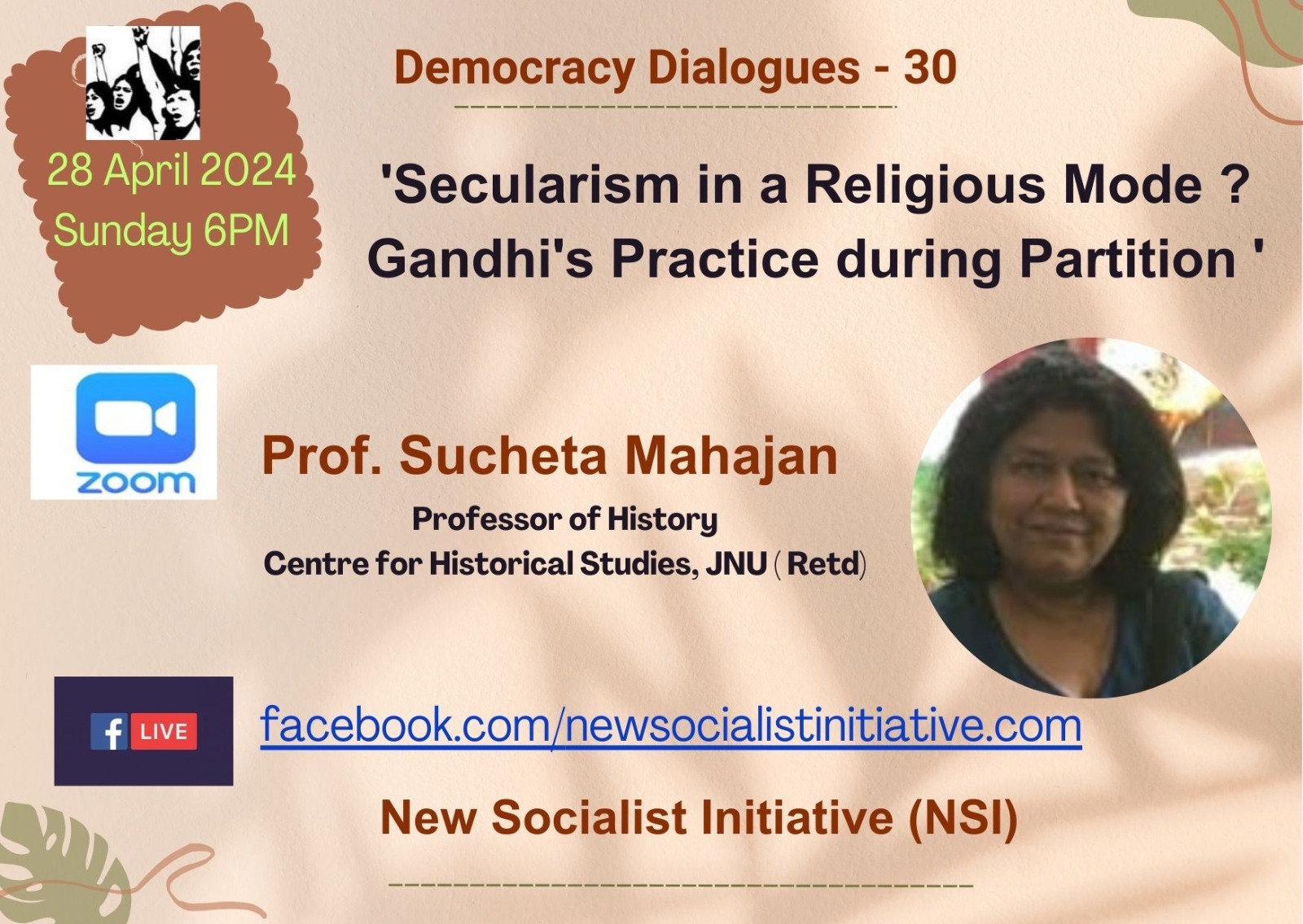
Democracy Dialogues Lecture 30 :

Speaker: 

Professor Sucheta Mahajan

Centre for Historical Studies, JNU ( retd)

Date: Sunday, 28 th April, at 6 PM (IST)

Theme :

‘Secularism in a Religious Mode ?-  Gandhi’s Practice during Partition ‘

Join Zoom Meeting
https://us02web.zoom.us/j/81056829791?pwd=VnRpK2xtWDA3elArZGR5WnN0MGNDdz09

Meeting ID: 810 5682 9791
Passcode: 433470

The lecture will be live on facebook.com/newsocialistinitiative.nsi

Abstract :

The talk looks at the practice of Gandhi in his struggle against communalism in the years leading up to Partition. 

This is a hugely controversial subject with polarised positions taken by his followers and critics. 

The perspective of the talk emerges from Gandhi’s oft quoted but not heeded statement, My Life is My Message. The talk is a reading of a life text in this sense: Gandhi’s mission in Noakhali to mend the social fabric torn by communal riots and spread of communal ideology.

Gandhi’s search for a way out may offer some insights to those sharing his concern for a secular, plural society and polity today.

About the Speaker :

Professor at the Centre for Historical Studies, Jawaharlal Nehru University, till the end of February 2023, Professor Mahajan has been visiting professor and Fellow at different International and National  Institutions.

She was member of the prestigious international research projects such as SPECTRESS and CHCI-MELLON Crises of Democracy, Global Humanities Institute. She has authored and edited many books on India’s Independence Struggle, Partition, Challenge of Communalism, Composite Culture etc

Publications :

Towards Freedom: Documents on the Movement for Independence in India, 1947, Parts One
and Two, (edited and with an Introduction) OUP, 2013 and 2015.
Education for Social Change: MVF and Child Labour, National Book Trust, New Delhi, 2008.
RSS, School Texts and the Murder of Mahatma Gandhi- The Hindu Communal Project (with
Aditya and Mridula Mukherjee) Sage Publications, 2008.
Composite Culture in a Multi-Cultural Society (Co-edited with Bipan Chandra), Pearson India & National Book Trust, New Delhi, 2006. 
Rites of Passage, A Civil Servant Remembers: H.M. Patel, (ed.), Rupa & Co., New Delhi,2005.
Independence and Partition: The Erosion of Colonial Power in India, Sage Publications, New Delhi, 2000. 


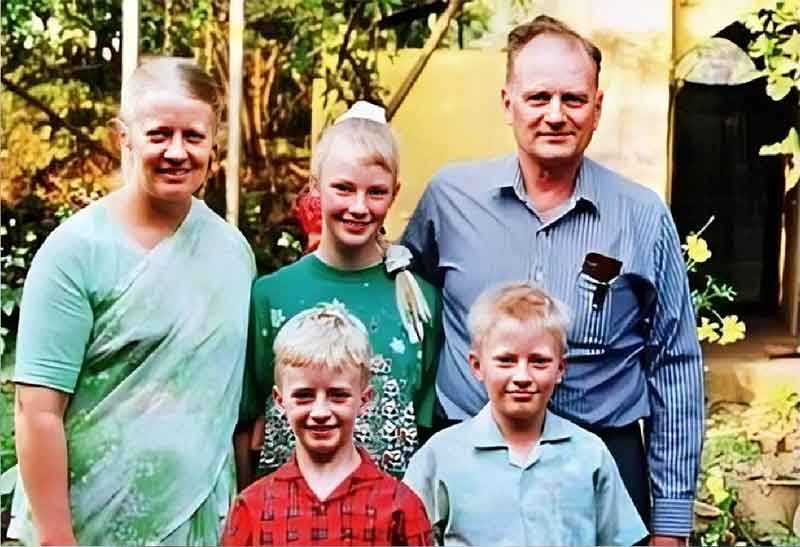
Thinking Graham Staines and his Children in times of Jubilation over Ram Temple

The life of the dead is placed in the memory of the living.

– Marcus Tullius Cicero

Politics is nothing but theology in action

– Ambedkar


Right-wing politics suffers from a common syndrome everywhere.

It never feels confident to project its own icons for the rest of the humanity, whatever might be their claims about their worldview,  it knows that its own icons are detested by a wide spectrum of people.

The easiest way it finds to overcome this lacunae is to appropriate already established icons – who  were even opposed to their world view as well  and claim them their own. In fact, it does not have any qualms in utilising dates – bearing special significance for exploited and oppressed and marginalised of the world – to put their stamp on it.

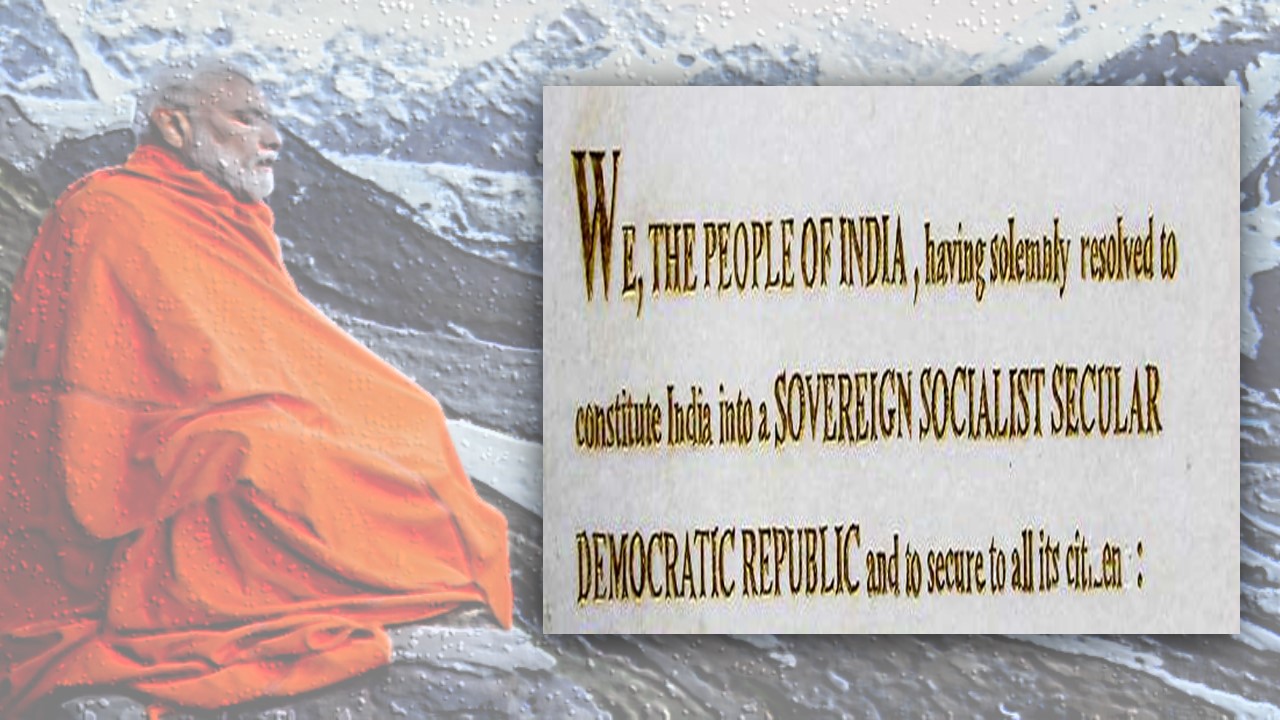
The project of Hindutva Supremacism – which yearns / strives to transform a Secular, Socialist, Democratic and Sovereign Republic into a Hindu Rashtra has perhaps achieved near perfection in this kind of politics.

The Lady Vanishes – Justice and Law in Our Age: Dilip Simeon

Guest post by DILIP SIMEON

[Names and publications of cited authors are listed at the end of the essay.]

The sophists taught, rather publicly, the view that the summit of happiness is to combine the appearance of justice with actual injustice: Gregory McBrayer (2015), p 44

To speak of justice has always been to plunge into a metaphysical abyss, especially as the issue has been intractable since (at least) Plato’s most famous work, The Republic was written some twenty-five centuries ago. Not least has been the permanently contentious issue – named the theological-political problem by Leo Strauss – of whether we should live according to divine or human guidance. But to speak of justice in India is confront our deeply divided souls; and in the most horrendous cases, to stare evil in the eye.

If Mrs Indira Gandhi dreamt of a ‘committed bureaucracy,’ our current rulers appear to be bent upon the complete domestication of civil society by their ideological enterprise. This requires a committed judiciary too, for which aspiration clues are ample, because they conspire in broad daylight. It was inevitable that some members of the judiciary were and continue to be complicit in this totalitarian project. We should be grateful that there are men and women of courage and conscience within. One of them was named Judge Loya.

Continue reading The Lady Vanishes – Justice and Law in Our Age: Dilip Simeon

वैष्णवजन की खोज में : अपूर्वानंद

न्यू सोशलिस्ट इनिशिएटिव की तरफ से आयोजित ‘डेमोक्रेसी डायलॉग्स सीरीज ‘  का 12 वां व्याख्यान अग्रणी लेखक, स्तम्भकार, दिल्ली विश्वविद्यालय में हिंदी विभाग से सम्बद्ध  प्रोफेसर अपूर्वानंद 6 बजे शाम, रविवार, 28 नवम्बर 2021 को प्रस्तुत करेंगे। 

विषय : ‘वैष्णवजन की खोज में’ 


वैष्णवजन  की  कल्पना को राजनीतिक और सामाजिक पटल पर स्थापित करने का श्रेय गाँधी को है। इस बात पर  ध्यान जाना चाहिए  कि उपनिवेशवाद विरोधी आंदोलन में या राष्ट्र की स्वतंत्रता  के संघर्ष में गाँधी ने  वैष्णवजन को संभवतः इस आंदोलन के लिए  आदर्श आंदोलनकारी के रूप में पेश किया। वह कैसा जन है? पीर और पराई , इन दोनों से उसका रिश्ता क्या होगा? और क्यों  एक सच्चा जनतांत्रिक जन वैष्णवजन ही हो सकता है? हमारे संविधान की प्रस्तावना में हम भारत के लोग जिस यात्रा पर निकले हैं क्या वह इस  वैष्णवजनत्व की तलाश की यात्रा है?”

हिंदी तथा अंग्रेजी  अख़बारों तथा अन्य प्रकाशनों में  तथा  टीवी की चर्चाओं में अपनी निरंतर सशक्त उपस्थिति दर्ज करते रहने वाले प्रोफेसर अपूर्वानंद सार्वजनिक जीवन में न्याय, समता  और तार्किकता के पक्ष में अपने सक्रिय हस्तक्षेप के लिए जाने जाते हैं .

आप ने कई किताबें भी लिखी  हैं, जिनमें से कुछ के शीर्षक इस प्रकार हैं : ‘सुंदर का स्वप्न ‘ ( वाणी प्रकाशन, 2001 ) , ‘साहित्य का एकांत’ ( वाणी प्रकाशन , 2008 ), The Idea of University ( Context, 2018 ) , Education at the Crossroads ( Niyogi Books, 2018 )

व्याख्यान फेसबुक पर live होगा  : facebook.com/newsocialistinitiative.nsi

अगर आप zoom पर जुड़ना चाहते हैं तो हमें democracydialogues@gmail.com पर लिखें 

When-an-Assassin-Fascinates-a People”

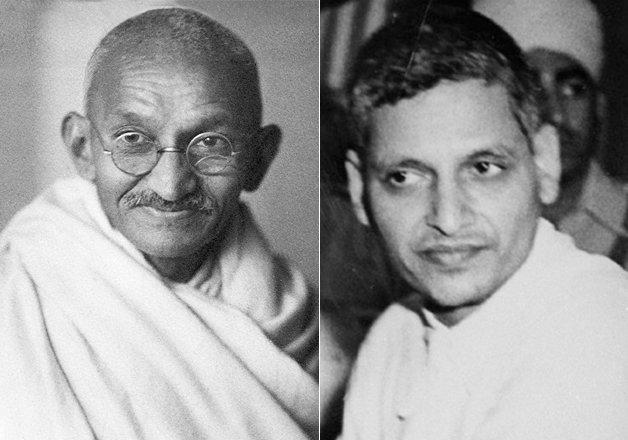
Behavioural psychologists say hatred and fear are two sides of the same coin. That explains the Hindu Right obsession with Gandhi and Godse.

Gandhi and Godse

Image Courtesy: India TV News

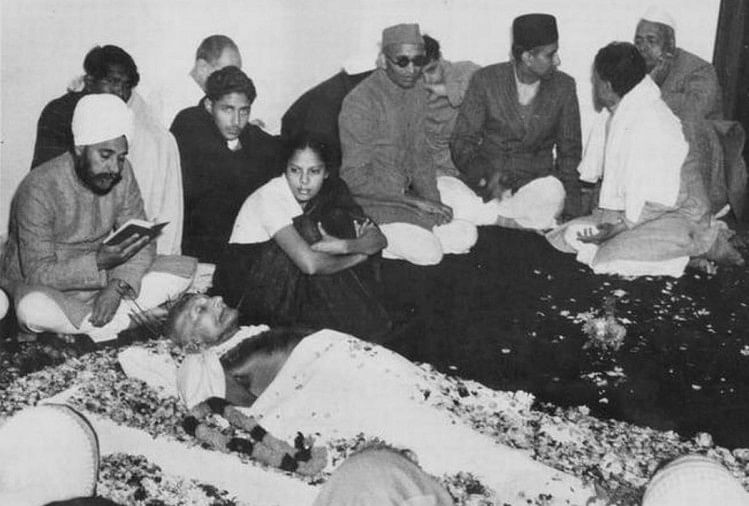
For now, the invidious project of the Hindu Mahasabha to set up a Nathuram Godse Gyan Shala in Gwalior has been shelved. Perhaps what terminated thill-conceived venture was the sheer anachronism: while the country would mark Gandhi’s 73rd death anniversary on 30 January, one section would be found singing paens to his assassin, Nathuram GodseIt would only have served to remind people of how an unarmed man was shot down on his way to prayer meeting.

This killing was Godse’s so-called contribution and, according to leaders of the Mahasabha, marked his patriotism. The same Hindu Mahasabha haalready launched “Godse workshop”, where the members exhort Indians to “strive to follow his path”. It was also instrumental in installing his statue in the city which had invited opprobrium.

The killing of Gandhi has been shown to be part of an elaborate conspiracy hatched by the higher-ups in the Hindutva supremacist forces. Remembrance of Godse would have been a reminder of the five attempts on Gandhi’s life since the mid-thirties that involved Hindutva forces. There was even a sixth attempt, according to Chunnibhai Vaidya, a Gandhian from Gujarat. Justice Jinvanlal Kapur, who was entrusted with examining the conspiracy to assassinate the Mahatma had concluded in 1969, “All these facts taken together were destructive of any theory other than the conspiracy to murder by Savarkar and his group.”

( Read the full article here)

Kejriwal and the ‘Dirty Hands Problem’

Guest Post by SURAJ JACOB

[Note: This article was written before the ongoing violence in Delhi began and is not about current affairs. It rather engages with the political problem at a broader philosophical level. – AN]

Analysts of Delhi’s recent election note thatAAP imaginatively courted voters on the BJP’s own turf (Shekhar Gupta): welfarism with a dash of nationalism and careful projection around religion. There are several critics of this strategy. Satish Deshpande criticises AAP’s quiescence in ‘mere’ development activities (its campaign “was about municipal matters such as water and electricity and nothing else”). He describes AAP as a “non-ideological management consultancy”, even arguing that its campaign conveyed the message: “Don’t worry, we have no problem with communal politics, but please don’t ask us to say it openly”. Apoorvanand also casts the AAP as “an ideology-agnostic party that does not impede the BJP’s nationalist drive”. Similar points are made by Yogendra Yadav. They castigate AAP for its ideological failure in resisting the BJP’s polarising tactics violating the spirit of the Constitution. AAP voted with the BJP on Article 370, welcomed the Supreme Court verdict on the Ayodhya temple and did not sufficiently support protests around the CAA/NRC especially in Shaheen Bagh. Besides ideological failure, Yadav also identifies AAP’s moral failures: choosing consultants and candidates based on winnability “without any moral or ideological hindrance” and undemocratically centralising power.

Deshpande, Apoorvanand and Yadav are scholars and public intellectuals with activist conscience and commitment to the public good. Taking their disquiet seriously, one may ask: How, indeed, should AAP’s campaign have been? Is the party and its dominant leader Kejriwal really “non-ideological” and “ideology-agnostic”, especially when it comes to toxic polarisation? The evidence simply doesn’t stack up for such a sweeping claim (though, according to Suhas Palshikar, “we will probably never know” Kejriwal’s real stand on these issues). Notes Monobina Gupta: “the AAP, within and outside parliament, has opposed the CAA and supported the protests in Shaheen Bagh in different ways. … What his [Kejriwal’s] ideologically-inflected critics mean to say is that he didn’t take the position they wanted him to. Yes, he didn’t run an ideological campaign.”

Continue reading Kejriwal and the ‘Dirty Hands Problem’

Lessons from Ambedkar and Gandhi to take forward

They represented two foundational but antagonistic visions of “what we as a society, what we as a state should embody”

( Review of ‘Radical Equality: Ambedkar, Gandhi, and The Risk of Democracy’ By Aishwary Kumar Navayana, Rs 599)

The book, Radical Equality: Ambedkar, Gandhi, and the Risk of Democracy by Aishwary Kumar, takes forward the conversation around the two “most formidable non-Western thinkers of the twentieth century, whose visions of moral and political life have left the deepest imprints”.

In the early 1990s D.R. Nagaraj published The Flaming Feet, a compilation of his essays in which he admired both Gandhi and Ambedkar. Coming close on the heels of the phenomenon of Dalit assertion, it argued that “there is a compelling necessity to achieve a synthesis of the two”. But that has not been the only attempt to examine how the ideas of these two leaders interacted, challenged each other, and how they extended or revisited the meanings of different concepts.

The book, Radical Equality: Ambedkar, Gandhi, and the Risk of Democracy by Aishwary Kumar, takes forward the conversation around the two “most formidable non-Western thinkers of the twentieth century, whose visions of moral and political life have left the deepest imprints”. For the author they “exemplified two incommensurable ways of forging a relationship between sovereignty and justice, force and disobedience”, or represented two foundational but antagonistic visions of “what we as a society, what we as a state should embody”.

Focusing mainly on Hind Swaraj — a monograph written by Gandhi on a ship to South Africa from London (1909) — and Annihilation of Caste, which happens to be the undelivered speech by Dr Ambedkar when he was invited by the Jat Pat Todak Mandal, Lahore (1936) — the organization rescinded the invite when it came across the ‘radical’ proposals he had put forward in the draft — this around 400-page book discerns “an insurrectionary element at the limit of politics” in the works of these two stalwarts. It is “an insurrection that sought to extract the political itself — and the social question — from the doctrinal prescriptions and certitude of its European past”

( Read the full text here : https://www.telegraphindia.com/culture/books/lessons-from-ambedkar-and-gandhi-to-take-forward/cid/1747042?ref=books_culture-books-page)

Winning Delhi Elections – AAP, Gandhi and the Ideology Wars

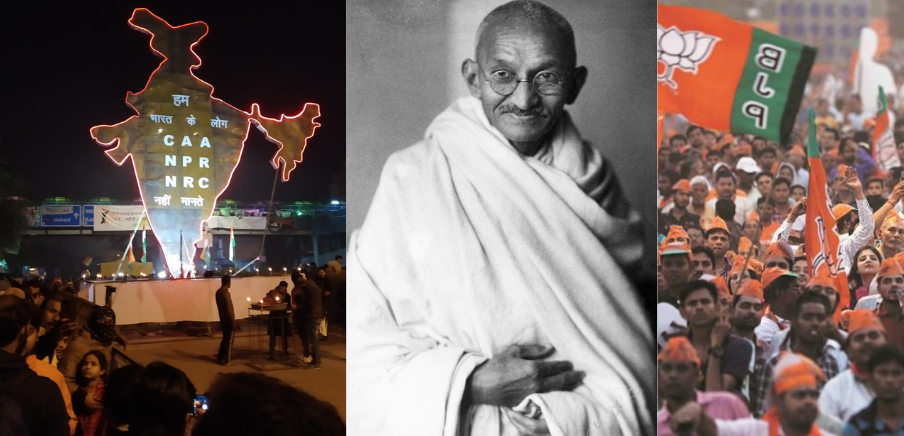
What has Gandhi got to do with the recently concluded elections in Delhi? On the face of it nothing. But at another level, the election process, its campaign and its results – all invite us to revisit Gandhi’s stupendous moral-political project of cementing the Hindu-Muslim division with his own blood and his heroic failure. He could not prevent the Partition and ultimately fell to the bullets of a fanatic Hindu nationalist of the kind who are in power today.

I remember Gandhi today because gung-ho secularists (the political community that I inhabit, if very uncomfortably) are once again at their favourite occupation of daring Arvind Kejriwal and AAP to ‘prove’ their ‘anti-communal stance’ and all that it can mean today – as though they alone have the talisman to fight communalism. I am reminded of Gandhi because his was by far the most audacious  attempt to fight the communal menace but he too failed. He had no ready-made answers to it but had perhaps the best sense of what moved the masses of this country.

Secular warriors have been basically daring Kejriwal and AAP to do and say things that he had been avoiding doing or saying all these days. Just two instances – of the quotes below from two dear friends – should suffice to indicate what I mean.  The first is from Apoorvanand, writing in the Business Standard,

‘Voters in Delhi were confident that the AAP victory in the assembly elections wouldn’t so much as serve as an irritant to the BJP, let alone rock its boat, as the saffron outfit was firmly and safely ensconced in power. An efficient delivery boy is all the electorate wanted. In the Delhi voters mindset, an ideology-agnostic party that does not impede the BJP’s nationalist drive is tolerable.’

Continue reading Winning Delhi Elections – AAP, Gandhi and the Ideology Wars

Gandhi and the Hindutva Right

From Nehru to Patel and Ambedkar, the saffron party has appropriated freedom-fighters or tarnished legacies. Gandhi, however, poses a different problem.

Why BJP’s Subjugation of Gandhi

Death ends all enmity’ (Marnanti Vairani) goes a maxim in Hinduism.

The story also goes that when Ravana was on death bed, Ram had even asked Laxman to go to him and learn something which no other person except a great scholar like him could teach him, declaring that though he has been forced to punish him for his terrible crime, ‘you are no more my enemy’.

It is a different matter that Hindutva supremacists — who are keen ‘to transform Hinduism from a variety of religious practices into a consolidated ethnic identity’ — are believers in the exact opposite.

For them, once the enemy is dead, the enmity flares up without any limits. They have no qualms that their adversary is no more to defend himself/ herself.

It has been more than five and half years that they are in power at the Centre and we have been witness to complete vilification, demonisation and obfuscation of many of their adversaries, all great leaders of the anti-colonial struggle. Of course, few were found to be ‘lucky’ enough that were promptly co-opted/appropriated by them, of course, in a sanitised form.

( Read the full article here : https://www.newsclick.in/BJP-Subjugation-Gandhi-Legacy-Roadblock-Shaheen-Bagh

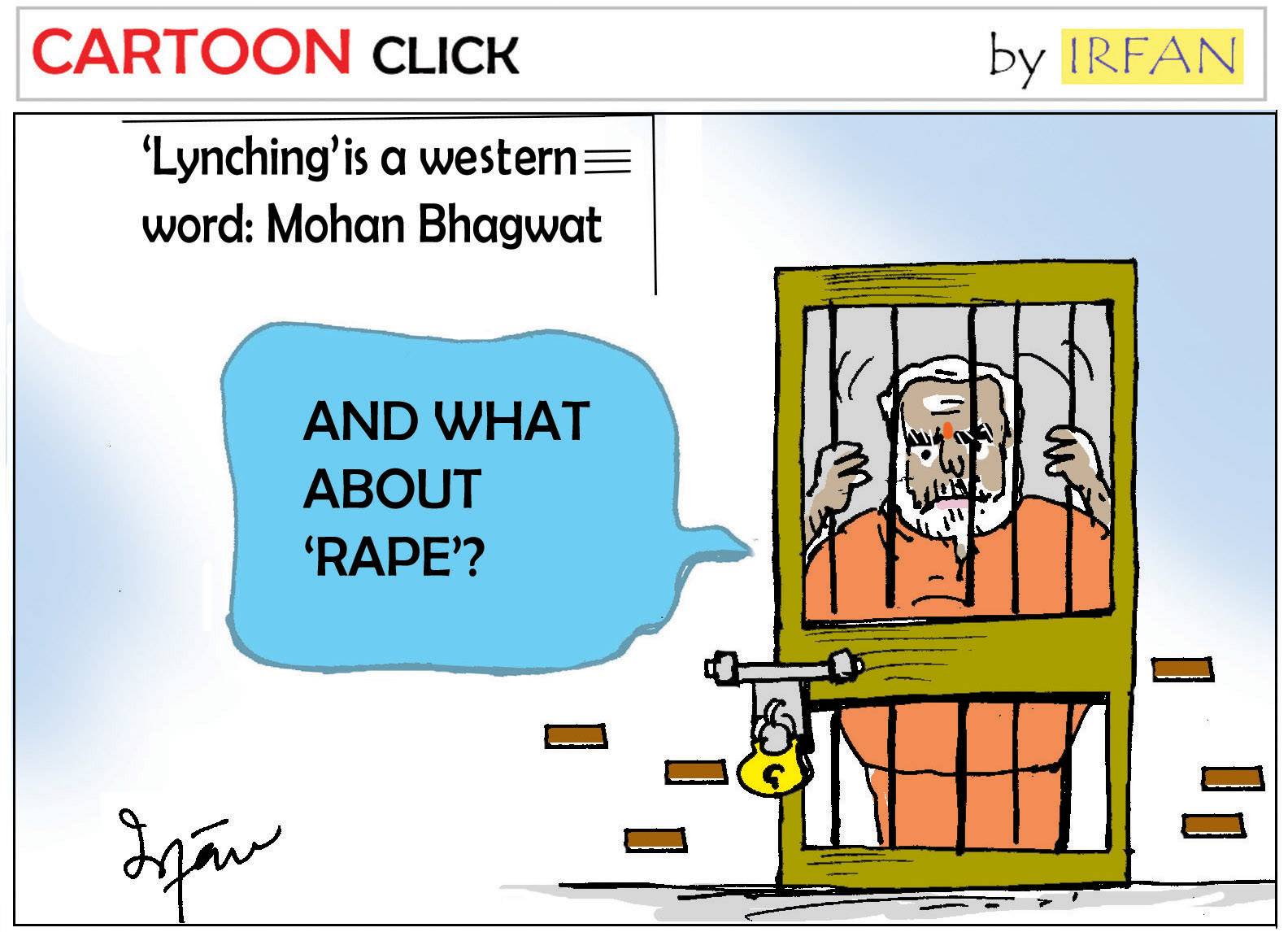
Will Lynching in Bharat Be Called Vaddh?

The Sangh’s obsession with vocabulary is not innocent.

Will Lynching in Bharat

The speech by Rashtriya Swayamsevak Sangh (RSS) supremo Mohan Bhagwat on its foundation day (Dusshera) has now become an event, watched with interest. The speech itself has a long tradition within the organisation, which all its affiliated (anushangik) bodies look upon as a guiding light.

This year was no different. Donning the Sangh’s uniform, the top echelons of its organisations attended the event. Union Minister Nitin Gadkari, Maharashtra Chief Minister Devendra Fadnavis attended too, and wore the black cap and Sangh “uniform”.

Yet, the speech by Bhagwat itself had nothing seemingly strategic. Some analysts even felt that he could not show any new direction to the RSS and its affiliates; that it seemed to have made a weak defence of the Bharatiya Janata Party (BJP) government that is ruling at the Centre and several states. “Have the tables turned on the Sangh Parivar?,’ The Wire asked, in its analysis of Bhagwat’s speech.

( Read the full text here : https://www.newsclick.in/Lynching-Bharat-Called-Vaddh)

New India  – New Father of Nation?

Image result for mahatma gandhi

Ms. Amruta Fadanavis – wife of Maharashtra Chief Minister Devendra Fadanavis – found herself at the centre of controversy two weeks back. Her birthday greetings to PM Modi – whom she wished ‘Father of Our Country @narendramodiji a very Happy Birthday -…’ – on her twitter evoked reaction from twitterati. Her ‘height of ignorance’,  was pointed out and her attempt was called ‘sycophancy at its top’ (https://twitter.com/fadnavis_amruta/status/1173877700290678785)

Anyway, as one hoped that this chapter around ‘discovery of a new Father of Nation’ was over and one was attempting to turn a new leaf what one witnessed was rather unusual.

The debate around ‘Father of Nation” came back with a vengeance. Continue reading New India  – New Father of Nation?

Modi’s Meditation ‘Tour’

The art of legitimising religiosity in a secular country and live happily ever after.

Modi in KedarnathReligion is regarded by the common people as true, by wise people as false and by the rulers as useful. — Seneca (4 BC-AD65)
A picture is worth a thousand words.

An outgoing Prime Minister of the ‘world’s biggest democracy’ seen meditating under the glare of cameras in a cave specially opened for the occasion and with a dress stitched for the event, conveys many things simultaneously.

First and foremost, it tells us that the present incumbent to the post would at least be remembered for his varied sartorial tastes among the galaxy of PMs who headed the republic earlier. It appears that either all the others lacked the sense to dress for the occasion or found it a mundane job not befitting the post and the responsibilities they held then. Continue reading Modi’s Meditation ‘Tour’

Dear Hitler

Why does Hitler’s legacy in India greatly differs from that in the West. More removed from the traumas associated with World War II and the Holocaust  

…………………………………………………………………….

..An innocent question sometimes comes up with very troubling answer(s).

J’admire ( I admire)… a simple exercise given to students to know from them whom they appreciate as a great historical figure or a hero, became a great learning experience for a teacher who taught French at a private school.

Writer and Journalist Dileep D’souza, who has authored many books, and writes on social-political causes shared the experience of his wife who posed the said question before them during a discussion. What she was expecting that they would mention Gandhi or Bhagat Singh or other luminaries of India’s struggle for freedom and progress but none of her predictions came true. There was a lone student whose choice was Mahatma Gandhi but nine out of 25 students in her class admired Hitler as hero or as a great historical figure. Continue reading Dear Hitler

‘Mother to Indians’ Kasturba, Bose versus Hindu Sangathanists

Image result for kasturba gandhi

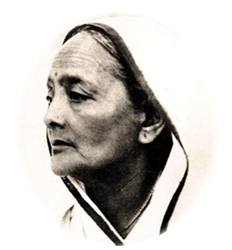
“Kasturba Gandhi is no more. She died at the age of 74 in British jail….I salute this great woman who was like a mother to Indians ….Kasturba was an inspiration for millions of Indian girls with whom she lived and met during the freedom struggle of our motherland. She was party to the many travails and tribulations of life with her great husband since the days of Satyagrah in South Africa.. She went to jail many times, which severely impacted her health but she did not fear going to jail even at the age of 74 years. When Mahatma Gandhi led the Civil Disobedience Movement, Kasturba was in the forefront of that struggle’

With these words Subhash Chandra Bose remembered Kasturba when she expired in detention at Agha Khan Palace – which had in fact been turned into a jail – on 22 nd February 1944. History bears witness to the fact that it was a death precipitated by the callous and ruthless colonial rulers who had refused to release her despite her worsening medical condition. She had been suffering from heart disease for more than four months. She also had a heart attack during this period. Continue reading ‘Mother to Indians’ Kasturba, Bose versus Hindu Sangathanists

The Impossible Gandhian Project and its Limits – Remembering the Mahatma Today

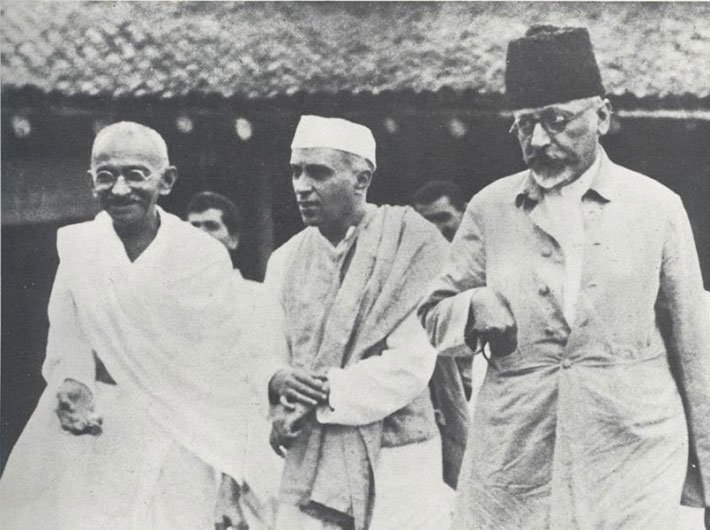
Gandhi, Nehru and Azad, Wardha 1935, image courtesy Governance Now

Majboori ka naam Mahatma Gandhi (Roughly: Compulsion thy name is Mahatma Gandhi)

I have grown up hearing this expression and have often wondered about its meaning and at the almost proverbial status acquired by it. Whose majboori or compulsion was Gandhi really? Well, at one level, everybody’s, for practically every current within the anti-colonial struggle was uncomfortable with his presence and his leadership. Jawaharlal Nehru had even remarked once that after independence, his fads would have to be kept in check. All nationalists who fought for independence from colonial rule (as opposed to the pseudo-nationalists who tried to convert it into a cow-protection movement) had their gaze fixed on the state. They wanted control of that coveted instrument – that was the crux of their anticolonial struggle. There were others like BR Ambedkar, who too invested a lot in the state but realized that the state in the hands of the nationalists would be a disaster for his people. But no one among them (poet-thinkers like Tagore apart) was prepared to look beyond the state. And Gandhi’s disavowal of the state – and of politics as such – was something that no one could digest. More than anything else, that was what made him a majboori for this set of people who could only lay their hands on their object of desire as long as Gandhi was in the leadership – for he alone could move millions like no one among his contemporaries could.

But my hunch is that these were not the people who coined this expression. Gandhi was a bigger majboori for another set of people who were, ironically, equally disinterested in the state and its ‘capture’ – at least till recently. Yes, these were the different currents of the Hindutva Brigade (VD Savarkar of the Hindu Mahasabha and his followers and the Rashtriya Swayamsevak Sangh). They had to tolerate Gandhi – that is exactly what their majboori meant – till they could finally eliminate him. And it was one Nathuram Godse, with connections to both Savarkar and the RSS, who eventually killed him. There were earlier attempts too on Gandhi’s life – all from upper caste Hindus (one lot being Chitpavan Brahmins). Continue reading The Impossible Gandhian Project and its Limits – Remembering the Mahatma Today

Nehru, Ambedkar and Challenge of Majoritarianism

Image result for nehru ambedkar

( Photo courtesy : The hoot)

(To be published in the special issue of ‘Janata’)


The spectacle of what is called religion, or at any rate organised religion, in India and elsewhere, has filled me with horror and I have frequently condemned it and wished to make a clean sweep of it. Almost always it seemed to stand for blind belief and reaction, dogma and bigotry, superstition, exploitation and the preservation of vested interests.

– Toward Freedom: The Autobiography of Jawaharlal Nehru (1936), pp. 240–241.

If Hindu Raj does become a fact, it will no doubt, be the greatest calamity for this country. No matter what the Hindus say, Hinduism is a menace to liberty, equality and fraternity. On that account it is incompatible with democracy. Hindu Raj must be prevented at any cost.

– Ambedkar, ‘Pakistan or Partition of India’, p. 358.

Introduction

India’s slow ushering into a majoritarian democracy is a matter of concern for every such individual who still believes in pluralism, democracy, equality and a clear separation of religion and politics. The way people are being hounded for raising dissenting opinions, for eating food of their choice or entering into relationships of their own liking or celebrating festivals according to their own faith is unprecedented. The situation has reached such extremes that one can even be publicly lynched for belonging to one of the minority religions or for engaging in an activity which is considered to be ‘suspicious’ by the majority community.

No doubt there is no direct harm to the basic structure of the Constitution, its formal structure remains intact, de jure India does remain a democracy as well as a republic, but de facto democracy has slowly metamorphosed into majoritarianism and the sine qua non of a republic—that its citizens are supreme—is being watered down fast. It does not need underlining that this process has received tremendous boost with the ascent of Hindutva supremacist forces at the centrestage of Indian politics. Continue reading Nehru, Ambedkar and Challenge of Majoritarianism

Gandhi – A Religion of the Question: Ajay Skaria

[The following is the ‘Preface’ to AJAY SKARIA’s recent book, Unconditional Equality: Gandhi’s Religion of Resistance by Ajay Skaria. The preface raises interesting questions not only about Gandhi’s politics but also about the idea/s of secularism and religion in what we might call a postsecular world – a world that is, where the naive and uninterrogated binary between the two terms is constantly put into question. Also of interest to readers might be the attempt made by the author to read Gandhi’s writings as a long and ongoing struggle to articulate or ‘understand’ his own politics – a politics that Skaria claims is as much premised on equality among humans as it is on the equality of all being/s.]

Unconditional Equality by Ajay Skaria

Somewhere in the early 2000s, while preparing to teach Mohandas Karamchand Gandhi’s English translation of Hind Swaraj to my undergraduate class, a passage about history in the text intrigued me. Since I happened to have the Gujarati version of that text at hand, I consulted it. The divergence is striking. The Gujarati text criticizes “history” (the English word occurs in the Gujarati text) and contrasts  it to itihaas [usually translated as “history”]. The English text criticizes “history,” but in it there is no equivalent for itihaas; the contrast between history and itihaas is thus obscured. The gap between the Gujarati and English texts, I have since come to realize, is symptomatic of Gandhi’s struggles to think his politics. What this politics involves is by no means clear to him; perhaps he writes so prolifically and indefatigably (his collected works run to ninety-eight volumes in English) precisely in order to try and understand his own politics. This politics becomes even more intriguing when we attend not only to Gandhi as an author or “intending subject,” but to his writing.[1] By dwelling in and on the gaps (between Gujarati and English and also within each of these languages) in his writing, this book tries to draw out his politics.

For me, writing this book has been difficult also because of another gap—that between Gandhi’s insistence that there can be “no politics without religion” and the secular inheritance that I have, as far as I know, no desire to abandon. Gandhi repeatedly describes satyagraha (his most famous neologism, which he coins initially as a translation of “passive resistance”) as his “dharma” or “religion,” even as the religion that stays in all religions.[2] Symptomatic of my difficulty with this religious politics was my inability for long to even recognize it. When Vinay Lal first asked me in 2007 to write an essay on Gandhi’s religion for a volume he was planning on political Hinduism, I protested that I was not interested in this aspect of Gandhi. But with his characteristic persistence, Vinay did not accept my protests, and I ended up writing that essay, which became a precursor of this book.

In the process, my own understanding of dharma and religion as “concepts” has been transformed.[3]

Continue reading Gandhi – A Religion of the Question: Ajay Skaria

Nation and its Violences: Sanjay Kumar

Guest Post by Sanjay Kumar

Violent thoughts and deeds are increasingly getting justified in the name of Indian nation. A mob of lawyers has attacked students, teachers and journalists, right in the middle of a court complex in the national capital. Leaders of these patriotic lawyers were later caught bragging on camera about how they will next time throw bombs on anti-nationals. A young woman in Delhi has received emails and face book posts threatening her with acid attack and sexual assault, because she happens to be a sister of Umar Khalid, one of the organisers of the JNU programme, during which according to police anti-India slogans were raised. The mere being of this woman, and her defence of her brother, is enough of a provocation for many men and women of the country to justify the threat of ultimate male violence against women. Another man, Mr Adarsh Sharma put posters in the central district of the capital announcing an award of Rs 11 lakh for anyone who kills Mr Kanhaiya Kumar, the president of  the JNUSU, charged with sedition. Mr Sharma claims that his ‘blood boiled’ when he saw Mr Kumar’s much publicised speech after his release on bail. The popular movie Pyasa (1957) of Gurudutt had a song ‘Jinhen Naz hai Hind par vo kahaan hain’, which used the reality of social degradation to question celebrations of the nation. Sahir’s poem worked because it asked Indians to look at themselves in the mirror of public morality of the recently independent India. That mirror has been cracked for long. With the brazenly violent now claiming that their violence and threat to violence should really be the pride of the nation, we are now witnessing the final shattering of that mirror. Continue reading Nation and its Violences: Sanjay Kumar

The Terror That Is Man: Shaj Mohan

Guest post by SHAJ MOHAN

Manifold is the un-homely, yet nothing is more un-homely than man — Sophocles

The middle of the previous century is understood to be the termination of all kinds of containments of man, having witnessed the worst containment in the Camp[i]. This termination resulted from a crisis that is both philosophical and political: what is the de-termination of man such that he is not the contained? A summary of this scenario is found in a trivial understanding of Foucault’s statements concerning “the end of man” (The Order of Things) and Derrida’s deconstruction of the notion of the “the end” in his essay “Ends of Man” (Margins of Philosophy). As a result of the exigencies of the philosophical and the political, the concept of the state located itself, in the occidental domain, away from the containers. The State would no longer claim to be the clergy and the sovereign of containers such as race and religion. Instead, the State demanded only the right to primary containment—first Indian and then Muslim, first British then White, first Spanish then Basque. The list, the differences, the classification and the management of all the other containers—religion, caste, language, race, public, private—were left up to the new clerics, the new academic disciplines and the NGOs. If all containers were opened up then everything should have flooded out and mixed to form a substance of a new world of people; rather, a substantiality for the in-terminable formation of people. This new people-substance should have dissolved the traces of all the containers, the way science-fiction often imagines the future to be. It should have left for us tales which are the negative of memories, that is, taboos, or myths. For example, the tales that we received about incest from the ancients, the tales of cannibalism in fairy tales, the tales of the world’s resistance to Nazism. Continue reading The Terror That Is Man: Shaj Mohan

Reading Phule – Now No More Silences!

“Lack of education lead to lack of wisdom,

Which leads to lack of morals,

Which leads to lack  of progress,

Which leads to lack of money,

Which leads to the oppression of the lower classes,

See what state of the society one lack of education can cause!”

  • Jyotiba Phule

..Most people do not realize that society can practise tyranny and oppression against an individual in a far greater degree than a Government can. The means and scope that are open to society for oppression are more extensive than those that are open to Government; also they are far more effective. What punishment in the penal code is comparable in its magnitude and its severity to excommunication? Who has greater courage—the Social Reformer who challenges society and invites upon himself excommunication or the political prisoner who challenges Government and incurs sentence of a few months or a few years imprisonment?..

(Ranade, Gandhi and Jinnah, Address delivered by Dr Ambedkar on the 101 st birthday celebration of M G Ranade, 18 th January, 1943)

 Introduction

Understanding or rereading a historical figure – whose life and times have impacted generations of scholars and activists – who has been subjected to praise as well scrutiny by best brains of our times becomes a challenging task.  One gets a feeling that whatever has to be said has already been said and perhaps there is not much novelty left. An added challenge becomes when you are face to face with scholars/activists who could be considered experts on the issue having done more detailed and through work on the subject. Continue reading Reading Phule – Now No More Silences!