Farming the Future, Farming As Future

Today is the last day of the dreadful year that 2020 was – not only because of the pandemic but it has been a year full of the most vicious attacks on dissent and protests. It has also seen wanton arrests of those who raised their voices against the myriad injustices of this regime. The year that began with the epic struggle against the CAA-NRC ends while another epic struggle – that of the farmers – is going on. This post is dedicated to them and to the future of the farmers in struggle.

In the video above, Narayana Reddy, a farmer talks about farming. Having run away from home at a young age and worked as a cleaner earning Rs 40 a month, Reddy gradually got better jobs and saved some money with which he bought land for farming. Listen to his brief account here and you will realize that this charismatic and much celebrated farmer started off farming exactly the way it was understood in those days – that is to say, with standard ‘Green Revolution’ techniques.  In five to six years, Narayana Reddy tells us, he became a spectacularly successful model farmer but something was amiss. Despite high yields, I was continuously losing money, he says. The story, with minor variations, was the same as that of Green Revolution farmers in Punjab: a few years of prosperity, accompanied by huge losses due to rising input costs (tractors, fuel, fertilizers, high-yielding variety seeds, pesticides, electricity run pumps), and rapidly deteriorating soil quality, depleting water table, disappearing of locally suitable crops.

There was no historical destiny or necessity in all this. Major US foundations like Ford and Rockefeller Foundations were involved in pushing this new way of doing ‘industrial’ agriculture developed by Norman Borlaug. I am not suggesting that this was a conspiracy but it was certainly something that took away control from the hands of the peasants and in the name of modernizing agriculture, made them dependent on big corporations (backed by the state) who were lurking behind this innocent-sounding rhetoric of increased productivity and prosperity. With the new farm laws, we are currently facing a fresh round of attacks on the autonomy and livelihooods of the farmers – and this time the government can’t pretend to any innocence in this regard.

So let us ask an elementary question: Why do people work and produce? The answer obviously is because they want to live well and live better in this world, here and now.
Continue reading Farming the Future, Farming As Future

Shahjahanabad My Love Affair – Dilli hai jiska naam VI:  Jayshree Shukla

 We thought of a series on Delhi that does not talk only of the narrow lanes of Shahjahanabad, the Mughalia, aka Mughlai delights and the lip-smacking Chaats of Chandni Chowk or the grand ruins of the seven Delhis and the wide open spaces and broad roads, but a series that also looks at the way Delhi has evolved. We wanted to explore the logic of the city and of the forces that have shaped the idea of the city itself.  It was this idea that made us approach people who have engaged with the city with love and care for decades and we requested them to write for Kafila.

This series is titled Dilli hai jiska naam and the links to the previous posts can be found at the end.

This is the sixth post in the series, by JAYSHREE SHUKLA

Shahjahanabad My Love Affair: Jayshree Shukla

(All images by Jayshree Shukla)


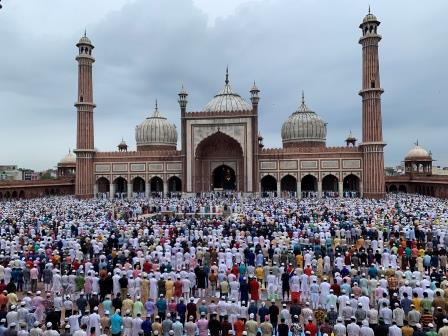
Ja’ama Masjid

My love affair with Shahjahanabad is only five years old. But it has the passion and intensity of star crossed lovers who fight to be together against all odds. It all began when I enrolled to go for a heritage food walk with a cousin of mine.

The omens were not good. Mohammed (my friend and family driver) and I made the unwise decision to drive to Chandni Chowk and we got stuck in the mother of all jams almost right away. I frantically checked my watch over and over again. My cousin, who had wisely chosen to use the Metro, was already there. Finally, the group left without me.

As they moved to halt number one, I thought I could join them there. But to no avail. I was still stuck. I finally caught up with my group at halt number three. They were having Kanji Vadas. Then we crossed over to the other side and stopped briefly at the Sunehri Masjid. Here we learnt that Nadir Shah had ordered the massacre of the citizens of Delhi standing atop the roof of the Masjid. Exactly there, I too got slaughtered. In my enthusiasm I remained blissfully unmindful of the purse slung carelessly over my shoulder. I discovered soon enough that my wallet was gone. As were all my IDs, my credit and debit cards, all the money I had – everything. I had been foolish enough to keep everything in the wallet and bring it along that evening. So the heritage food walk ended for me in ten minutes. I was not even able to pay for it! And I spent the evening at the Kotwali trying to get an FIR registered. Continue reading Shahjahanabad My Love Affair – Dilli hai jiska naam VI:  Jayshree Shukla

Pandemic Lowers India’s Level of Democracy

THIS GOVERNMENT HAS STIGMATISED THE VERY IDEA OF PROTEST, YET IT IS STRUGGLING TO MANAGE THE MASS UPSURGE AGAINST THE FARM LAWS.

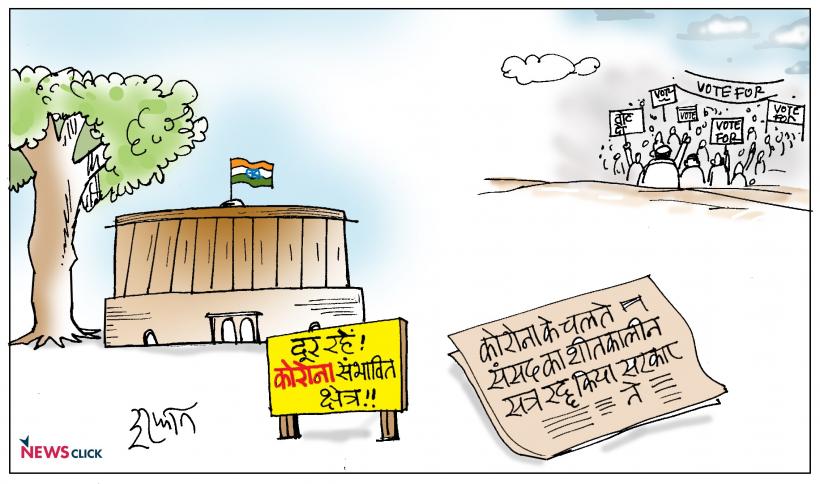
Parliament Closed

For nearly a month, lakhs of farmers have staged sit-ins on various points along the border shared by the national capital and neighbouring states. Their peaceful movement, which is drawing support from farmers across the country, is meant to persuade the government to repeal the farm-related laws that it pushed through Parliament in September.

The farmers have refused to accept the government’s claim that the new laws would benefit them. They insist that these laws would dismantle state procurement and open up agriculture to contract farming, which would only help big corporations. They have also been insisting that corporations will amass essential food commodities and manipulate stocks and prices, for the government has also revoked stocking limits.

The three laws were initially introduced as ordinances this summer while the Covid-19 pandemic was raging and the country was still segregated into red, green and amber zones. Thereafter, they were passed in Parliament without discussion or debate. The manner of their introduction—rather, imposition—threw all democratic norms to the winds and so farmers see no reason to trust the intention behind them either.

Farmers do not look forward to a time when large retail chains would dictate terms and impose conditions on them. They rightly say that these laws would usher in an attack on the right to food security of working people and escalate food prices, which would hurt all consumers.

The immediate response of the government to the concerns of farmers was to repress and distort their movement. Not a day has passed without fresh abuse hurled at them. Starting from “Khalistani” to “Urban Naxal” to “anti-national” to “fake farmers”, every trick in the book has been tried to stigmatise them. Nor have the authorities made serious efforts to stop those who are maligning this historic peaceful protest.

( Read the full article here)

Farm Laws, Farmer Protests and Agrarian Crisis : Dr Jaya mehta


Dr Jaya Mehta, economist and activist, has been associated with the Joshi-Adhikari Institute of Social Studies, author of many books who coordinated an all India study of the Agrarian Crisis delivered a special lecture on ‘Farm Laws, Farmer Protests and Agrarian Crisis’ on 27 th December 2020.
Abstract of talk :
The reforms in agricultural marketing contained in the three farm laws were first announced by the finance minister on 15th May 2020 as Prime Minister’s relief package for the people. When Covid and lock-down had created crisis in the entire economy, migrant workers were walking hundreds of kilometers to reach home and the majority of households desperately needed state support and protection, the Modi government chose to withdraw state intervention and deregulate market forces in agriculture to leave people in complete disarray. After the controversial monsoon session of parliament, the reforms to deregulate market became laws.

Continue reading Farm Laws, Farmer Protests and Agrarian Crisis : Dr Jaya mehta

कृषि क़ानूनों पर नयी सरकारी किताब में बड़े बड़े दावों के अलावा सफ़ेद झूठ भी : राजिंदर चौधरी

Guest post by RAJINDER CHAUDHARY

हाल ही में मोदी सरकार ने हिंदी, अंग्रेजी एवं पंजाबी में 106 पन्नों की एक किताब कृषि क़ानूनों के पक्ष में निकाली है.  मोदी ने यह भी कहा है कि किसान आन्दोलन जारी रखने से पहले इस को ज़रूर पढ़ें. मोदी की बात मान कर हम ने इस को पढ़ा. सब से पहले तो यह देख कर धक्का लगा कि 106 पन्नों की किताब में नए कृषि क़ानूनों वाले अध्याय में मात्र 28 पृष्ठ हैं और इन 28 पन्नों में भी मोदी के भाषणों, मोदी सरकार के कृषि कार्यों और मोदी द्वारा गुजरात में किये कामों का विवरण शामिल है. इस लिए इन 28 पन्नों में भी सीधे सीधे नए कृषि क़ानूनों पर तो मात्र 13 पेज हैं. इस में भी बहुत दोहराव है, एक ही बात को बार बार कहा गया है.  शेष पुस्तिका तो मोदी सरकार द्वारा किसानों के हित में किये गए कामों के दावों पर ही केन्द्रित है. यहाँ हम मोदी द्वारा गुजरात और केंद्र में कृषि और किसानों के लिए किये गए सारे दावों की पड़ताल करने की बजाय नए क़ानूनों के पक्ष में किये गए दावों की ही पड़ताल करेंगे. (यहाँ पर कई स्थानों पर दो तरह के पृष्ठ नंबर दिए गए हैं. पहले पीडीएफ फ़ाइल के और फिर छपी हुई पुस्तिका के; अगर एक पृष्ठ नंबर है तो वो पीडीएफ का है). इन का संक्षिप्त विवरण इस प्रकार है.  Continue reading कृषि क़ानूनों पर नयी सरकारी किताब में बड़े बड़े दावों के अलावा सफ़ेद झूठ भी : राजिंदर चौधरी

Mass Politics and ‘Populism’ in the World of Indian Languages

Image courtesy Netherlands Institute for Multiparty Democracy

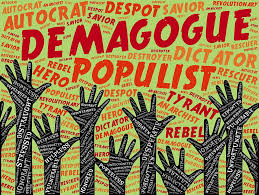
The label ‘populism’ has acquired unprecedented currency lately and is used to indiscriminately describe such a wide range of poliical figures and political tendencies that it seems to have lost all conceptual meaning. In the best of times, it was always a slippery concept that has been linked to democracy at one end and fascism at the other. On the one hand, it is seen as the democratic ‘excess’ that escapes the attempt of liberal-representative institutions to rein it in; on the other, it is seen as being of a piece with the fascist resort to antipolitical demagoguery and the rhetoric of the (national) ‘underdog’ oppressed by an elite (usually with international links).
The way the term is used these days to describe everyone from a Donald Trump, a Recep Erdogan or a Narendra Modi on the one hand, to the late Hugo Chavez, Evo Morales, Rafael Correa or even Bernie Sanders or Podemos and Syriza, on the other, defies all logic. What possible common denominator can one find between such diverse figures and political formations? That common denominator is simply ‘the people’ or the ‘underdog’ that they invoke – even if in completely different ways.

Continue reading Mass Politics and ‘Populism’ in the World of Indian Languages

Fascism, Democracy and the Left : Com Dipankar Bhattacharya


The 6th lecture in the Democracy Dialogues series organized by the New Socialist Initiative was delivered by Com Dipankar Bhattacharya, General Secretary of CPI (ML) Liberation on 20 th December 6 pm (IST) where he spoke on ‘Fascism, Democracy and the Left’

Abstract  : ‘Fascism, Democracy, and the Left’

With the rise of the Modi government, BJP has managed to establish a vicious grip on Indian polity. Parliamentary democracy and the constitutional vision of a secular democratic Indian republic have come under fierce attack. Instead of remaining busy with studying historical parallels we should treat the present phase as the rise of the Indian model of fascism and resist it with all our might. While we can locate the present Indian developments in the context of global economic and political trends in the post-Soviet world, there are strong roots in Indian history and society. One should revisit Ambedkar and the warnings he had issued right at the time of adoption of India’s Constitution.
The Left vision and role in politics has been historically identified with ideas and experiments of building socialism, but the challenge for socialism to offer a superior model of democracy has remained fatally neglected. In the face of a fascist offensive, the Left in India must emerge and assert as the most consistent and reliable champion of democracy.

Continue reading Fascism, Democracy and the Left : Com Dipankar Bhattacharya

From the Electron to the Higgs- The Long Twentieth Century of Particle Physics – :Dr Ravi Sinha

Guest Post by Dr Ravi Sinha


The 9th lecture (in Hindi) in the Umang Library popular science series will happen this Sunday, December 13, at 5 PM IST. The series is aimed at creating awareness about science in the Hindi belt of India.

Abstract : From the Electron to the Higgs: The Long Twentieth Century of Particle Physics

In 1897 J J Thomson discovered the electron with a Cathode Ray Tube that could fit on a small table in his Cavendish Laboratory. In 2012 the Higgs particle was discovered at the Large Hadron Collider which is the largest scientific instrument ever built (it is a particle accelerator that sits in a tunnel 27 kilometres in circumference and required billions of dollars to build). If the 1897 discovery inaugurated particle physics, the 2012 one was the culmination of the chain of stunning discoveries of new particles spread across these 115 years. In this lecture we will tell the story of the major landmarks of this long century of particle physics which include discoveries of the proton, of anti-particles and of quarks. This is the epic story of the eternal quest of humankind for the most fundamental laws of Nature and the most fundamental constituents of matter. Like all the lectures in this series this lecture too will be accessible to high school students and to curious lay persons. Continue reading From the Electron to the Higgs- The Long Twentieth Century of Particle Physics – :Dr Ravi Sinha

Shehernama – Dilli hai jiska naam V: Dunu Roy

We thought of a series on Delhi that does not talk only of the narrow lanes of Shahjahanabad, the Mughalia, aka Mughlai delights and the lip-smacking Chaats of Chandni Chowk or the grand ruins of the seven Delhis and the wide open spaces and broad roads, but a series that also looks at the way Delhi has evolved. We wanted to explore the logic of the city and of the forces that have shaped the idea of the city itself.  It was this idea that made us approach people who have engaged with the city with love and care for decades and we requested them to write for Kafila.

This series is titled Dilli hai jiska naam, and the links to the previous posts can be found at the end.

This is the fifth post in the series, by DUNU ROY

Shehernama: DUNU ROY

सीने में जलन आँखों में तूफ़ान सा क्यूँ है

इस शहर में हर शख़्स परेशां सा क्यूँ है

-Shaharyar

Twenty-fifth March 2020 marked yet another step forward in the emergence of a strong-arm State in India. An unprecedented lockdown began on that day; a draconian net of control and supervision descending on a people deeply divided, restive about one issue after another, plagued by an economy that makes the rich richer and the poor poorer, and now struck with the double whammy of a virus running amok with the State engineering a siege. Within a week, with work evaporating, savings running out, and stomachs clamouring for nourishment, the great exodus also began. In cities and towns across the land workers launched the long trek back home, dragging trolleys, head-loading baggage, carrying the very young the very old and the very sick, and evading – as best they could – a rampant police. The song from the 1978 film Gaman (Departure) strikes a wailing echo to the rhythm of purposeful feet – “Burning chests and stormy eyes; what ails all in this city”?

What is this city which gives birth to such imaginations?

Continue reading Shehernama – Dilli hai jiska naam V: Dunu Roy

Stand by farmers – boycott Adani and Reliance

The farmers unions have called for a boycott of all products of Adani and Reliance, the two corporates closest to the Modi-Shah regime and which stand to benefit the most from the opening up of the farm sector to agribusiness, which will not only destroy farmers’ livelihoods but affect food security for everyone.  The new laws have been drafted to facilitate ease of doing business for these corporations, eliminating safeguards for both farmers and consumers.

This post is simply a quick, not comprehensive, list of products we could all boycott (compiled with help from Anindita Bose and Rohit).

And just a reminder – the rapacious Adani corporation is wreaking havoc on Australia’s ecology too, and there is a huge people’s campaign there against Adani – #StopAdani . Continue reading Stand by farmers – boycott Adani and Reliance

किसान आंदोलन की माँगों और 8 तारीख के भारत बंद के समर्थन में जारी बयान

( न्यू सोशलिस्ट इनीशिएटिवदलित लेखक संघअखिल भारतीय दलित लेखिका मंचप्रगतिशील लेखक संघजन संस्कृति मंचइप्टासंगवारीप्रतिरोध का सिनेमा और जनवादी लेखक संघ द्वारा किसान आंदोलन की माँगों और  तारीख के भारत बंद के समर्थन में जारी बयान  )

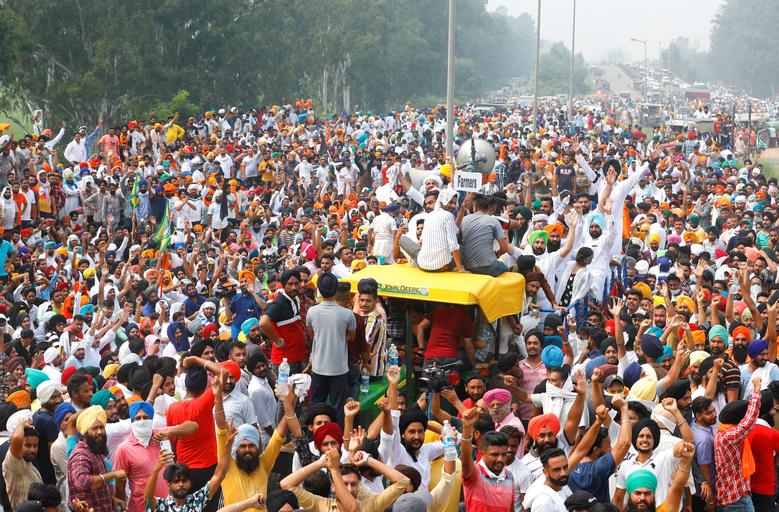
Image : Courtesy Reuters

तीन जनद्रोही कृषि-क़ानूनों के खिलाफ़ किसानों के ऐतिहासिक आन्दोलन का साथ दें!

केन्द्र सरकार के कार्पोरेटपरस्त एजेण्डा के विरोध में अपनी आवाज़ बुलन्द करें!

दिसम्बर के भारत बंद को सफल बनाएं!

 भारत का किसान – जिसके संघर्षों और कुर्बानियों का एक लम्बा इतिहास रहा है – आज एक ऐतिहासिक मुक़ाम पर खड़ा है।

हज़ारों-लाखों की तादाद में उसके नुमाइन्दे राजधानी दिल्ली की विभिन्न सरहदों पर धरना दिए हुए हैं और उन तीन जनद्रोही क़ानूनों की वापसी की मांग कर रहे हैं जिनके ज़रिए इस हुकूमत ने एक तरह से उनकी तबाही और बरबादी के वॉरंट पर दस्तख़त किए हैं। अपनी आवाज़ को और बुलंद करने के लिए किसान संगठनों की तरफ़ से 8 दिसम्बर को भारत बंद का ऐलान किया गया है।

सरकार भले ही यह दावा करे कि ये तीनों क़ानून – जिन्हें महामारी के दिनों में पहले अध्यादेश के ज़रिए लागू किया गया था और फिर तमाम जनतांत्रिक परंपराओं को ताक़ पर रखते हुए संसद में पास किया गया – किसानों की भलाई के लिए हैं, लेकिन यह बात बहुत साफ़ हो चुकी है कि इनके ज़रिए राज्य द्वारा अनाज की खरीद की प्रणाली को समाप्त करने और इस तरह बड़े कॉर्पोरेट घरानों के लिए ठेका आधारित खेती करने तथा आवश्यक खाद्य सामग्री की बड़ी मात्रा में जमाखोरी करने की राह हमवार की जा रही है।

लोगों के सामने यह भी साफ़ है कि यह महज़ किसानों का सवाल नहीं बल्कि मेहनतकश अवाम के लिए अनाज की असुरक्षा का सवाल भी है। अकारण नहीं कि किसानों के इस अभूतपूर्व आन्दोलन के साथ खेतमज़दूरों, औद्योगिक मज़दूरों के संगठनों तथा नागरिक समाज के तमाम लोगों, संगठनों ने अपनी एकजुटता प्रदर्शित की है।

 जनतंत्र और संवाद हमेशा साथ चलते हैं। लेकिन आज यह दिख रहा है कि मौजूदा निज़ाम की ओर से जिस ‘न्यू इंडिया’ के आगमन की बात की जा रही है, उसके तहत जनतंत्र के नाम पर अधिनायकवाद की स्थापना का खुला खेल चल रहा है।

आज की तारीख में सरकार किसान संगठनों के साथ वार्ता करने के लिए मजबूर हुई है, मगर इसे असंभव करने की हर मुमकिन कोशिश सरकार की तरफ़ से अब तक की जाती रही है। उन पर लाठियां बरसायी गयीं, उनके रास्ते में तमाम बाधाएं खड़ी की गयी, यहां तक कि सड़कें भी काटी गयीं। यह किसानों का अपना साहस और अपनी जीजीविषा ही थी कि उन्होंने इन कोशिशों को नाकाम किया और अपने शांतिपूर्ण संघर्ष के काफ़िलों को लेकर राजधानी की सरहदों तक पहुंच गए।

किसानों के इस आन्दोलन के प्रति मुख्यधारा के मीडिया का रवैया कम विवादास्पद नहीं रहा। न केवल उसने आन्दोलन के वाजिब मुद्दों को लेकर चुप्पी साधे रखी बल्कि सरकार तथा उसकी सहमना दक्षिणपंथी ताक़तों द्वारा आन्दोलन को बदनाम करने की तमाम कोशिशों का भी जम कर साथ दिया। आंदोलन को विरोधी राजनीतिक पार्टी द्वारा प्रायोजित बताया गया, किसानों को खालिस्तान समर्थक तक बताया गया।

दरअसल, विगत कुछ सालों यही सिलसिला आम हो चला है। हर वह आवाज़ जो सरकारी नीतियों का विरोध करती हो – भले ही वह नागरिकता क़ानून हो, सांप्रदायिक दंगे हों, नोटबंदी हो – उसे बदनाम करने और उसका विकृतिकरण करने की साज़िशें रची गयीं। किसानों का आंदोलन भी इससे अछूता नहीं है।

यह सकारात्मक है कि इन तमाम बाधाओं के बावजूद किसान शांतिपूर्ण संघर्ष की अपनी राह पर डटे हैं।

हम सामाजिक-सांस्कृतिक संगठन किसानों के इस अभूतपूर्व आन्दोलन के प्रति अपनी एकजुटता प्रगट करते हैं। हम जनता तथा जनता के संगठनों, पार्टियों से अपील करते हैं कि वे इस आन्दोलन के साथ जुड़ें और 8 दिसम्बर के भारत बंद को सफल बनाकर केंद्र सरकार को एक स्पष्ट संदेश दें।

हम सरकार से यह मांग करते हैं कि वह अपना अड़ियल रवैया छोड़े और तीन जनद्रोही कृषि-क़ानूनों को रद्द करने का ऐलान करे।

 हम आंदोलनरत किसानों से भी अपील करते हैं कि वे शांति के अपने रास्ते पर अडिग रहें।

जीत न्याय की होगी ! जीत सत्य की होगी !! जीत हमारी होगी !!

न्यू सोशलिस्ट इनीशिएटिव   दलित लेखक संघ   अखिल भारतीय दलित लेखिका मंच   प्रगतिशील लेखक संघ   जन संस्कृति मंच   इप्टा   संगवारी   प्रतिरोध का सिनेमा   जनवादी लेखक संघ

जेल और थानों में सीसीटीवी: क्या इससे पुलिस ज़्यादतियों पर अंकुश लग सकता है?

अदालत ने यह भी निर्देश दिया कि राज्य एवं जिला स्तरों पर ऐसी निगरानी कमेटियों का भी निर्माण किया जाए तथा ऐसे कैमरों को स्थापित करने की दिशा में तेजी लायी जाए।

सीसीटीवी

सर्वोच्च न्यायालय ने एक जनहित याचिका के संदर्भ में पिछले दिनों एक अहम फैसला दिया। इसके तहत उसने तमाम राज्यों और केंद्रशासित प्रदेशों को निर्देश दिया कि वह हर थाने में क्लोजड सर्किट टीवी (सीसीटीवी), जिसमें आवाज़ रिकॉर्डिंग की भी सुविधा हो तथा रात में ‘देखने’ की व्यवस्था हो, जल्द से जल्द स्थापित करे। अदालत की इस त्रिसदस्यीय पीठ ने – जिसमें न्यायमूर्ति आर एफ नरीमन, न्यायमूर्ति के एम जोसेफ और न्यायमूर्ति अनिरूद्ध बोस भी शामिल थे – अपने आदेश में यह भी जोड़ा कि ऐसी सुविधा केन्द्रीय एजेंसियों के दफ्तरों में भी स्थापित की जानी चाहिए फिर चाहे सीबीआई हो, नेशनल इनवेस्टिगेशन एजेंसी (एनआईए) हो या नारकोटिक्स कन्टोल ब्यूरो (एनसीबी) हो या एनफोर्समेण्ट डायरेक्टोरेट हो।

भारत जैसे मुल्क में पुलिस बलों या अन्य केन्द्रीय एजेंसियों के दस्तों द्वारा की जाने वाली प्रताड़ना एवं यातनाओं से अक्सर ही रूबरू होना पड़ता है। आप तमिलनाडु के थोडकुडी जिले में पिता पुत्रों- जयराज उम्र 62 वर्ष और बेंडक्स उम्र 32 साल – की हिरासत में मौत के प्रसंग को देखें, जब दोषी पुलिसकर्मियों की संलिप्तता को साबित करने के लिए जन आंदोलन करना पड़ा था। जून, 2020 या आप कुछ वक्त़ पहले राजधानी दिल्ली से ही आर्म्स एक्ट के तहत बंद विचाराधीन कैदी की पुलिस द्वारा निर्वस्त्र कर की गयी पिटाई का दृश्य चर्चित हुआ था जब किसी न कैमरे में उपरोक्त नज़ारा कैद कर मजिस्ट्रेट के सामने पेश किया था।

त्रिसदस्यीय पीठ का मानना था कि चाहे मानवाधिकार आयोग हो या मुल्क की अदालतें हो, वह किसी विवाद की स्थिति में इस सीसीटीवी फुटेज का इस्तेमाल कर सकती हैं, जहां हिरासत में बंद लोगों के मानवाधिकारों के हनन की अक्सर शिकायतें आती रहती हैं और जनाक्रोश भी सड़कों पर उतरता रहता है। अदालत ने यह भी निर्देश दिया कि राज्य एवं जिला स्तरों पर ऐसी निगरानी कमेटियों का भी निर्माण किया जाए तथा ऐसे कैमरों को स्थापित करने की दिशा में तेजी लायी जाए।

गौरतलब है कि जहां तक थानो में सीसीटीवी लगाने का सवाल है, देश के अन्य न्यायालय भी इस किस्म का निर्देश पहले दे चुके हैं।

( Read the full article here)

Mera Gaon, Mera Desh: Kabir Kidwai

A short film on the handloom weavers of Barabanki, UP, by KABIR KIDWAI

Kabir Kidwai is a student and independent film-maker.  You can see his other work on his YouTube channel.

Statement condemning the murder of Gulnaz Khatun

Statement Condemning the murder of Gulnaz Khatun and demanding a speedy investigation

We the undersigned feminist groups, activists and individuals are deeply anguished at the killing of a 20-year-old poor Muslim girl, Gulnaz in a village in Bihar‘s Vaishali district. The young girl, an economic support to the family and about to be married was killed after her stalkers poured kerosene oil on her and burnt her alive on 30 October 2020. The girl was admitted in a nearby hospital with 75 percent burns and later moved to Patna Medical College. In her video statement when she was in excruciating pain, she clearly identified the three attackers. She succumbed to her injuries on 15th November 2020. The case has made hardly any progress. There is very limited coverage about the case in electronic Media and print media. According to the reports one accused has been arrested and police is still looking for the other two.. There are also reports that the family of victim is being harassed by the accused. Continue reading Statement condemning the murder of Gulnaz Khatun

The Farmers’ Struggle and the Agrarian Crisis


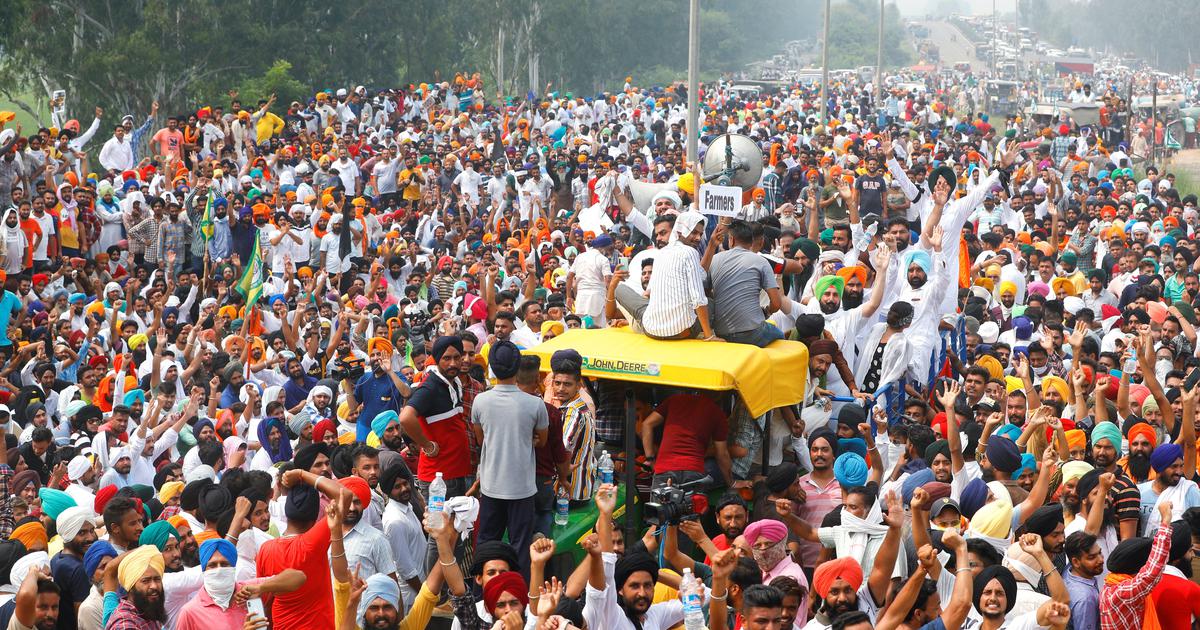
Famers’ struggle, image courtesy Scroll.in

Not only did the Modi government not pay any heed to the demands raised by the massive Kisan Mukti March of November 2018, it in fact, went on to surreptitiously promulgate three ordinances, in June this year, that go directly against everything that the farmers want. Indeed, they seek to hand over agriculture to the corporate sector – which will effectively mean destruction for a large mass of farmers. Naturally they are up in arms in what is perhaps the most determined struggle of the last four decades. The protests have been going on in many states since September 2020 and have reached the capital only now.

The three ordinances – now laws – that are currently pushing farmers into a ‘do or die’ struggle in different parts of the country, have been widely written about and their different dimensions explained (for instance, here, here and here). We will therefore not go into their analysis in this article. The ordinances are: (i) Farmers Produce Trade and Commerce (Promotion and Facilitation) Ordinance, 2020, (ii) The Farmers (Empowerment and Protection) Agreement on Price Assurance and Farm Services Ordinance, 2020, and (iii) The Essential Commodities (Amendment) Ordinance, 2020. Farmers’ organizations opposing the ordinances claim that they have been very misleadingly named so as to give the impression that they empower the farmers;  they suggest the ordinances might be more accurately renamed the “APMC Bypass Bill”, “Contract Farming Promotion Bill” and the “Food Hoarding by Corporates Bill” respectively.

The long and short of these ordinances is quite nicely summed up in these suggested names – for what the three together aim to achieve is the dismantling of state procurement (though on paper it may continue to remain), and thereby open agriculture to contract farming for big corporations, allowing them to corner essential food commodities in as large quantities as they want. The entire attempt, it is not hard to see, is to open out the agriculture sector to giant retail chains like Reliance – which is why it is necessary to remove the limits on purchase and storage of essential commodities. 

Contract farming, already happening informally at individual levels, once it is made the norm, is certainly going to seriously compromise food security for all. For if an agribusiness firm eyeing quick and massive profits wants farmers to change from essential food production to some other crop, it will decide what will be produced. And of course, what gets you quick profits is not what is sold as essential food item in the domestic or local market but it could be anything from potatoes for chips to maize to manufacture  ‘alternative fuel’ for US consumers. So entire cropping patterns can change, endangering our food sovereignty as a people.

The farmers, in a word, are not just fighting a battle for their own survival but one where the survival of all of us is at stake. If the design visualized in the three ordinances comes to pass, it will also lead to the complete destruction of lakhs of people who earn their livelihoods by selling fruit and vegetables – for those too will be produced by farmers under contract farming with corporations which will sell them at their retail stores. Prices for millions of consumers too will then be determined by these giant retail chains.

But these issues have only come up now. Why have the farmers/ peasants been agitating for the last couple of years?

Rewind to November 2018 Continue reading The Farmers’ Struggle and the Agrarian Crisis

The changing face of Delhi in travellers’ accounts – Dilli hai jiska naam IV: Swapna Liddle

We thought of a series on Delhi that does not talk only of the narrow lanes of Shahjahanabad, the Mughalia, aka Mughlai delights and the lip-smacking Chaats of Chandni Chowk or the grand ruins of the seven Delhis and the wide open spaces and broad roads, but a series that also looks at the way Delhi has evolved. We wanted to explore the logic of the city and of the forces that have shaped the idea of the city itself.  It was this idea that made us approach people who have engaged with the city with love and care for decades and we requested them to write for Kafila.

This series is titled Dilli hai jiska naam, and the links to the previous posts can be found at the end.

This is the fourth post in the series, by SWAPNA LIDDLE

The changing face of Delhi in travellers’ accounts : Swapna Liddle

There are many sources through which we can learn about the history of a city, and these are often the writings of its inhabitants, such as personal letters, diaries, newspapers, and official documents of various kinds. When it comes to basic descriptions of a place, however, it is often the writings of travelers that give us the most vivid accounts. Residents often take their surroundings for granted, neither very conscious of nor feeling any imperative to record their own impressions of their surroundings.

Visitors, on the other hand, are struck by the novelty of the place, and the farther they come from, the more this is true. They often also want to record their memories, in words and in images. In the case of Delhi, a particularly large number of European visitors passed through and recorded their experiences from the late 18th century onwards. This coincided with the expansion of the British East India Company’s control over the Gangetic plain, and became a deluge after the Company actually conquered and began to administer Delhi in 1803. Sometimes the records of these travellers were personal aide memoires for a journey undertaken, but often accounts to be shared with those back home, via letters to near and dear ones. Some of these ended up in the form of published journals with a larger readership.

To us today, the words and pictures left behind are a valuable peek into a landscape that has since then changed profoundly, and this article will be largely dealing with that change. At the same time, 18th century observers were also acutely aware that they were seeing a changing landscape, that had been affected by both natural and human factors. Antoine Polier, the Swiss adventurer visiting Delhi in 1776, was aware that the river Yamuna had quite recently changed its course, from just below the walls of the Red Fort, to about a mile eastwards, leaving only a narrow channel separating Red Fort from Salimgarh.

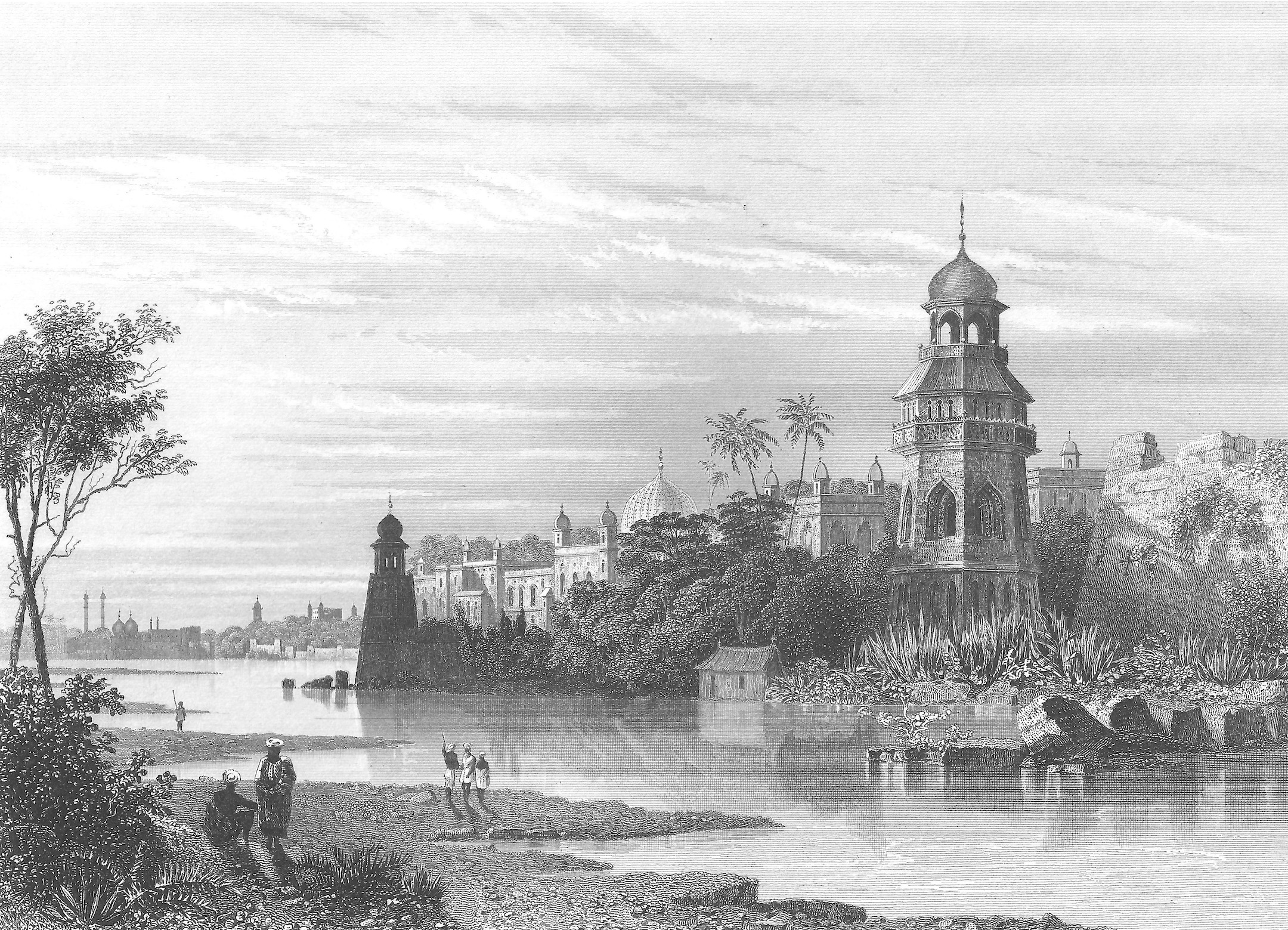
It is this narrow channel flowing between the two fortifications that we see in many of the earliest sketches, such as those of Captain John Luard in the 1820s and Charles Stewart Hardinge in 1847.

“Red Fort” by Charles Stewart Hardinge

Continue reading The changing face of Delhi in travellers’ accounts – Dilli hai jiska naam IV: Swapna Liddle

The Spectre of Evil…The world Since 1989 : Kumar Ketkar


The fifth lecture in the ‘Democracy Dialogues Series’ organised by New Socialist Initiative was delivered by Kumar Ketkar, Member of Parliament, Rajya Sabha at 6 PM (IST) on Sunday, 6 th December

Theme : The Spectre of Evil…The world Since 1989

Continue reading The Spectre of Evil…The world Since 1989 : Kumar Ketkar

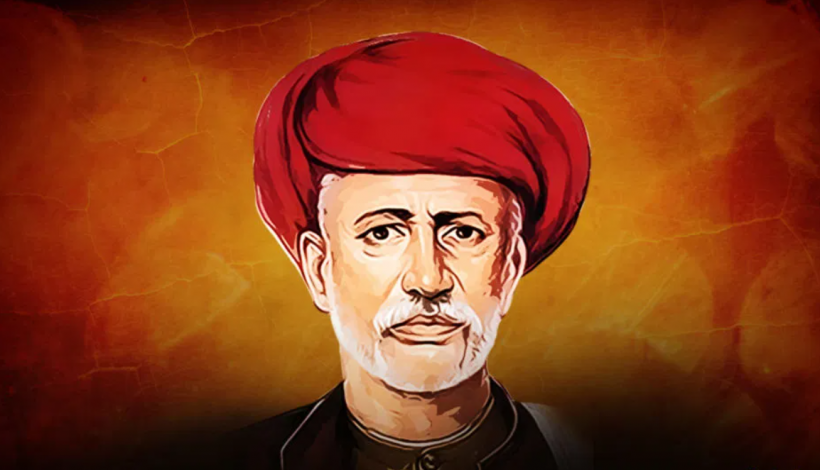
How Can India Reinvigorate Phule’s Revolutionary Legacy ?

Remembering a colossus in the times of Hindutva.

Jyotirao phule.

Who will reinvigorate Phule’s legacy? This question stares us in the eye on 28 November, the 130th death anniversary of Jyotirao Phule, considered the “father of social revolution in India”. Phule largely remains relegated to the background—a result of selective amnesia and identity politics in modern India, where his path-breaking contributions, and those of his wife Savitribai and her fellow traveller Fatima Sheikh are rarely remembered.

They are credited with opening the first school for girls from the historically “untouchable” communities in Pune, which was once ruled by the Peshwas. This school created an upheaval in the Brahmin-dominated Maharashtra of yore, as a 14-year-old Muktabai, belonging to the formerly “untouchable” Mang caste, who studied in the school, wrote: “O learned Pandits, wind up the selfish prattle of your hollow wisdom and listen to what I say.” The student’s essay was published in 1855 in Dnyanodaya, a journal popular then. (From Women Writing in India, Edited by Susie Tharu and K Lalitha, Pandora.)

Jyotirao Phule was given the honorific of “Mahatma” a few years before he breathed his last in 1890, for a life spent engaging in tremendous innovation and creativity. He initiated his wife into writing and she later became an independent activist too—a rarity in those days. He opened the doors of his home for those considered the lowliest among the low. He came to the defence of scholar-activists, such as Pandita Rambai, when she embraced Christianity. So he fought against the conservative onslaught single-handedly. Many such instances in his life are worth emulating today.

( Read the full article here)

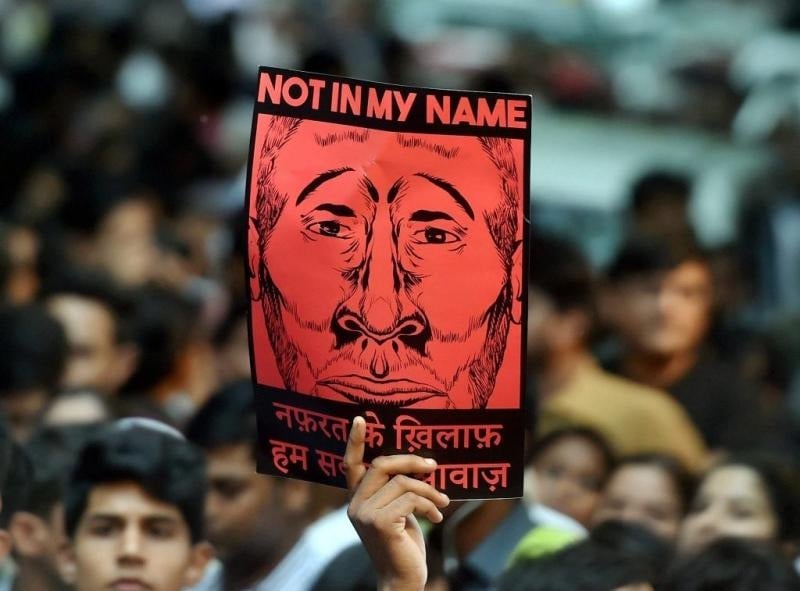
इस्लामिस्ट एवं हिन्दुत्ववादी: कब तक चलेगी यह जुगलबंदी!

आखिर इस्लामिस्ट क्यों खुश हैं नागरिकता संशोधन अधिनियम से

not in my name

प्रतीकात्मक तस्वीर। 

विजयादशमी के दिन सरसंघचालक की तकरीर आम तौर पर आने वाले समय का संकेत प्रदान करती है।

विश्लेषक उस व्याख्यान की पड़ताल करके इस बात का अंदाज़ा लगाते हैं कि दिल्ली में सत्तासीन संघ के आनुषंगिक संगठन भाजपा की आगामी योजना क्या होगी।

विगत माह विजयादशमी के दिन संघ सुप्रीमो के व्याख्यान का फोकस नागरिता संशोधन अधिनियम पर था, जिसमें उन्होंने यह दावा किया कि यह अधिनियम किसी भी ‘धार्मिक समुदाय’ के साथ भेदभाव नहीं करता है और मुसलमानों को एक छद्म प्रचार से गुमराह किया गया है। उनके मुताबिक संसद में यह कानून संवैधानिक प्रक्रिया का पालन करके पारित हुआ है, एक तरह से सरहद पार के उन भाइयों एवं बहनों को सुरक्षा प्रदान करता है, जिन्हें वहां धार्मिक प्रताडना झेलनी पड़ती है।

मालूम हो कि उन दिनों चूंकि बिहार चुनावों की सरगर्मियां बनी हुई थीं, लिहाजा उनके वक्तव्यों से निकले संकेतों पर अधिक बात नहीं हो सकी।

गौरतलब है कि बंगाल के चुनावों के मद्देनज़र भाजपा के कुछ अग्रणी नेताओं ने भी इसी किस्म की बातें शुरू कर दी हैं। मालूम हो कई बार अपनी आम सभाओं में उनके कई अग्रणी, ‘दीमक’ की तरह ऐसे ‘अवांछितों’ को हटाने की बात पहले ही कर चुके हैं।

प्रश्न यह है कि क्या कोविड काल में इस सम्बन्ध में नियम बनाने का जो सिलसिला छोड़ दिया गया था क्या उसी मार्ग पर सरकार चलने वाली है और इसे लागू किया जाने वाला है या यह सिर्फ चुनावी सरगर्मी बनाए रखने का मामला है।

( Read the full article here )

The Pride of piecemeal engineering : An open letter to the wcc

Dear Friends at the WCC

Seared by the news this morning, and knowing well that all of you are as burned as I am by it, I let my mind wander to graze and find its own source of comfort. It wandered, to my surprise, to a completely unexpected place: to some writings of a well-known philosopher of science, Karl Popper. More specifically, to Karl Popper’s vision of social intervention, which he called ‘piecemeal engineering’. Put very simply, ‘piecemeal engineering’ refers to taking small, even modest, cautious, self-critical steps towards some desired social goal of fighting a ‘concrete social evil’.

Continue reading The Pride of piecemeal engineering : An open letter to the wcc

RE-ORIENTING URBAN PLANNING STRATEGIES and The Master Plan of Delhi – Dilli hai jiska naam III: A.G. Krishna Menon

We thought of a series on Delhi that does not talk only of the narrow lanes of Shahjahanabad, the Mughalia, aka Mughlai delights and the lip-smacking Chaats of Chandni Chowk or the grand ruins of the seven Delhis and the wide open spaces and broad roads, but a series that also looks at the way Delhi has evolved. We wanted to explore the logic of the city and of the forces that have shaped the idea of the city itself.  It was this idea that made us approach people who have engaged with the city with love and care for decades and we requested them to write for Kafila. 

This series is titled Dilli hai jiska naam and the links to the previous posts can be found at the end.

This is the third post in the series by AGK MENON

Re-orienting urban planning strategies – The Master Plan of Delhi: A.G. Krishna Menon

Introduction

Delhi is an extraordinary historic city, comparable to Rome or Istanbul in the range and significance of its extant heritage. It is now the capital of a politically and economically aspiring Republican. However, unlike Rome or Istanbul, the significance of the city’s historic legacy plays little role in determining how the contemporary city is envisaged. In fact, this legacy is elided in civic planning and politically contested.  Therefore, when in January 2013, the Government of India forwarded a dossier to UNESCO, to nominate Delhi as a World Heritage City, it was a historic turnaround because it marked a paradigm shift in how the civic authorities sought to view its future.

Until then, India had never sought to celebrate any of its remarkable historic cities for their heritage characteristics let alone conserve it. However, it had been the contention of the Delhi Chapter of the Indian Trust for Art and Cultural Heritage (INTACH), that there was a strong correlation between not valuing the cultural legacy of historic cities and the degraded conditions they had been reduced to in contemporary times. For example, the Master Plan of Delhi officially identified Shahjahanabad, the pre-eminent Mughal city built by Emperor Shahjahan in 1648, as a slum that needs to be redeveloped in the manner the bombed out cities of Europe after World War II were rebuilt. These circumstances motivated INTACH to actively advocate the need to conserve historic cities and it worked to get Delhi nominated as a World Heritage City. Continue reading RE-ORIENTING URBAN PLANNING STRATEGIES and The Master Plan of Delhi – Dilli hai jiska naam III: A.G. Krishna Menon