भारत की कोरोना नीति के चंद नुक्सानदेह पहलू: राजेन्द्र चौधरी

Guest post by RAJINDER CHAUDHARY

कोरोना से हमारा वास्ता अभी लम्बे समय तक चलने वाला है. काफिला पर छपे पिछले आलेखों में (यहाँ एवं यहाँ) में हम ने इस के सही और गलत, दोनों तरह के सबकों की चर्चा की थी पर भारत की करोना नीति की समीक्षा नहीं की थी.  आपदा और युद्ध काल में एक कहा-अनकहा दबाव रहता है कि सरकार को पूरा समर्थन दिया जाए और उस की आलोचना न की जाय पर कोरोना के मुकाबले के लिए भारत में अपनाई गई रणनीति की समीक्षा ज़रूरी है; यह समीक्षा लम्बे समय तक चलने वाली इस आपदा में रणनीति में सुधार का मौका दे सकती है. कोरोना से कैसे निपटना चाहिए इस में निश्चित तौर पर सब से बड़ी भूमिका तो कोरोना वायरस की प्रकृति की है- ये गर्मी में मरेगा या सर्दी में या नहीं ही मरेगा; बूढों को ज्यादा मारेगा या बच्चों को, इन तथ्यों का इस से निपटने की रणनीति तय करने में सब से बड़ी भूमिका है. इस लिए भारत में कोरोना की लड़ाई के मूल्यांकन से पहले हमें वायरस की प्रकृति के बारे में उपलब्ध जानकारी को रेखांकित करना होगा.

कोरोना वायरस के नए स्वरूप की बुनियादी प्रकृति

कोरोना किस्म के वायरस वैज्ञानिकों के लिए नए नहीं हैं. ये पहले भी उभरते रहे हैं और वैज्ञानिक इन का लगातार अध्ययन करते रहे हैं. परन्तु हाल में कोरोना किस्म के वायरस का एक नया स्वरूप सामने आया है, जिस से उत्पन्न होने वाली नयी बीमारी को कोविड नाम दिया गया है.  इस लिए कोरोना के इस नए वायरस के बारे में अभी सब कुछ पक्के तौर पर नहीं कहा जा सकता. अभी इस की पड़ताल चल रही है.  फिर भी दुनिया भर के वैज्ञानिकों के मिले जुले काम से और कोरोना के पहले से उपलब्ध वायरसों के जीवन चक्र को ध्यान में रखते हुए कुछ बाते काफी हद तक स्पष्ट हैं.  इन के बारे में आम तौर पर वैज्ञानिकों में सर्वानुमति है. हालाँकि विश्व स्वास्थ्य संगठन को सर्वज्ञानी तो नहीं माना जा सकता परन्तु काफी हद तक इस द्वारा प्रदत जानकारी पर भरोसा किया जा सकता है.

Continue reading भारत की कोरोना नीति के चंद नुक्सानदेह पहलू: राजेन्द्र चौधरी
Hari Vasudevan, the Soviet Archives and the Left Establishment: Sobhanlal Datta Gupta

This tribute to Prof HARI VASUDEVAN by Prof SOBHANLAL DATTA GUPTA, who passed away in Kolkata recently, is being reproduced here, courtesy Mainstream Weekly.

Thereafter, as we proceeded in our work on the publication of the texts of the documents, we began to face insurmountable resistance, quite surprisingly, from a section of the Left establishment in West Bengal. We were threatened, maligned and discouraged not to proceed with this work any further and ridiculed for our research on documents which were described as “fake” and “doctored”.

It was May, 1995, exactly 25 years ago. Hari Vasudevan (Calcutta University), Purabi Roy (Jadavpur University) and I myself (Calcutta University) were in Moscow for two months, working as a team sent by The Asiatic Society, Calcutta in connection with a project of collection of documents from the newly opened Soviet archives on Indo-Russian Relations : 1917-1947. This project was the result of a Protocol signed between The Asiatic Society, Calcutta and Moscow’s Institute of Oriental Studies. With extremely limited funding we were expected to prepare catalogues of as many documents as possible and bring home photocopies/microfilms of those documents which we considered most important, depending, of course, upon their accessibility. It was a Herculean job, since we had no idea of the materials we had to handle. Working on hundreds and hundreds of documents, catalouging and copying them (in many cases because of paucity of funds and since we had no laptop, quite often we had to take down a document by hand) demanded a division of labour. While Purabidi worked in the State Archives of the Russian Federation (GARF), Archives of the Ministry of External Affairs (MID), Russian State Military Historical Archive (RGVIA), Hari and I worked in the former Central Party Archives, Institute of Marxism-Leninism (now known as Russian State Archive for Social and Political History or RGASPI ). Continue reading Hari Vasudevan, the Soviet Archives and the Left Establishment: Sobhanlal Datta Gupta

Community-Based Mapping of Covid: Nothing Official About it

No doubt the clarification that India will not map Covid-19 infections on the basis of religion has many heaving sighs of relief. But will the peace last?

Community-Based Mapping of Covid: Nothing Official About it

Image Courtesy: AP

Move for community-based mapping of coronavirus?” a recent news item in a prestigious daily asked, getting tongues wagging about “closed-door meetings at the highest level”, though no “official” decision had been taken in themThe Ministry of Health declared that any such news is “baseless, incorrect and irresponsible”. Lav Agarwal, the top bureaucrat in the ministry—who interacts with the media on Covid-related developments—called such news reports “…very irresponsible”. “The virus does not see people’s caste, creed or religion,” he said, quoting the Supreme Court’s directions on controlling non-factual or fake news.

No doubt the official clarification has many heaving sighs of relief.

The relief is understandable, because it was only last month—when the Novel Coronavirus pandemic had started taking a toll—that Muslims were being stigmatised as “super-spreaders” of the disease.

Taking a grim view of the situation, in its press conference o6 April, the World Health Organisation had given the Indian government some simple advice. The WHO said, in response to an India-specific question, that countries should not profile Covid-19 infections in religious, racial or ethnic terms. The WHO Emergency Programme Director Mike Ryan also underlined that every positive case should be considered a victim.

( Read the full article here)

Poetry of resistance against the suppression of dissent

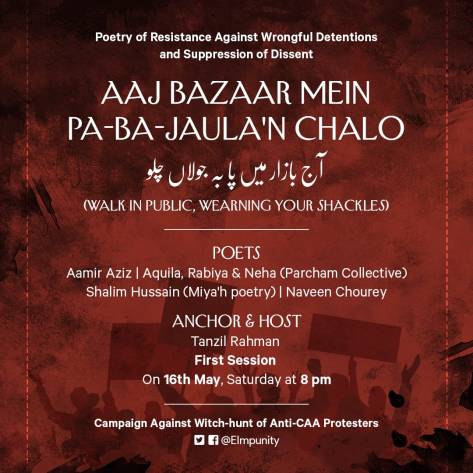
On 16th May 2020, the Campaign against Witch-hunt of Anti-CAA Activists inaugurates its Poetry Week.  

Poetry bears witness. It records, it remembers. Resistance, indeed life itself, has long been sustained and nourished by the words of poets.
So, it is with poetry that we celebrate the inspiring movement against the Citizenship Amendment Act, and with the power of words fight the wrongful arrests and malicious prosecution of anti-CAA activists.
The first session will feature poets Aamir Aziz, Aquila, Neha and Rabiya of the Parcham Collective, Miya’h poet Shalim Hussain & Naveen Chourey
Host and anchor: Tanzil Rahman
FIRST SESSION
On 16th May | Saturday | 8 pm onwards
Register using this link

https://forms.gle/iUwV6FimHsWd6ZLY7

Paean – A Song for Triumphs, For Usha Ganguly and Irrfan Khan: The Mocking Birds

Guest Post by the group THE MOCKING BIRDS

आज की रात न फ़ुट-पाथ पे नींद आएगी
सब उठो, मैं भी उठूँ तुम भी उठो, तुम भी उठो
कोई खिड़की इसी दीवार में खुल जाएगी
ये ज़मीं तब भी निगल लेने पे आमादा थी
पाँव जब टूटती शाख़ों से उतारे हम ने
उन मकानों को ख़बर है न मकीनों को ख़बर
उन दिनों की जो गुफाओं में गुज़ारे हम ने ( कैफ़ी आज़मी )
              सच है इस लॉक डॉउन में हमने लगभग गुफाओं में दिन गुजारे है, कुछ आब ला पा सड़क पर दर ब दर है, कुछ ऐसे है जो इस फानी दुनिया से चले गए, ऐसा लगता है जैसे उनको इस आगत का इलहाम हो गया था आज के ग़म का, और जल्द ही चले गए …. फ़ैज़ से कुछ पंक्तियां लेकर

Continue reading Paean – A Song for Triumphs, For Usha Ganguly and Irrfan Khan: The Mocking Birds

निरंकुशता के स्रोत, प्रतिरोध के संसाधन : रवि सिन्हा

Guest Post by Ravi Sinha

राजनीति का आम सहजबोध यह है कि सत्ता की निरंकुशता लोकतंत्र का निषेध है। लोकतंत्र राजनीतिक सत्ता का गठन तो करता है, लेकिन उसे निरंकुश नहीं होने देता। यदि किसी लोकतांत्रिक व्यवस्था के अंतर्गत निरंकुश सत्ता का उद्भव होता है तो उसे लोकतंत्रा की दुर्बलता, उसके विकार या उसमें किसी बाहरी अलोकतांत्रिक शक्ति के हस्तक्षेप के रूप में देखा जाता है। यदि लोकतंत्र का अर्थ यह है कि सत्ता के स्रोत लोक में स्थित हैं तो यह स्वयंसिद्ध है कि लोकतांत्रिक सत्ता निरंकुश नहीं हो सकती।

इसी तरह राजनीति का सहजबोध यह भी है कि सत्ता की निरंकुशता प्रतिरोध को जन्म देती है और प्रतिरोध की जड़ें लोक में स्थित होती हैं। निरंकुशता यदि लोकतंत्र का निषेध है तो यह भी स्वयंसिद्ध है कि लोक या जन ही प्रतिरोध के मूल आधार और उसके प्रमुख संसाधन हैं। यह दूसरी मान्यता पहली के साथ जुड़ी हुई है। यदि पहली मान्यता टिकती है तो दूसरी की सत्यता भी साबित होती है। यदि पहली संदेह के घेरे में आती है तो दूसरी के स्वयंसिद्ध होने पर भी प्रश्न खड़े होते हैं।

और, प्रश्न तो खड़े होते हैं। वास्तविकता की प्रकृति ही ऐसी होती है कि वह मान्यताओं की परवाह नहीं करती – बहुप्रचलित और स्वयंसिद्ध प्रतीत होने वाली मान्यताओं की भी नहीं। दूसरी तरफ़, मान्यताओं की – ख़ास तौर पर बहुप्रचलित मान्यताओं की – बनावट और उनकी ज़मीन ऐसी होती है कि वास्तविकताओं के उलट होने के बावजूद वे चलन में बनी रहती हैं। ऐसी स्थिति में पहले तो यह देखना होता है कि वास्तविकता क्या है और संबंधित मान्यताओं से उसकी संगति बैठती है या नहीं। फिर यह अलग से देखना होता है कि मान्यताएं जब ग़लत होती हैं, तब भी उनके चलते रहने के कारण कहां पर स्थित हैं। एक तरह से यह सहजबोध की जांच-पड़ताल का समय होता है। और कभी-कभी नये सहजबोध के निर्माण का समय भी होता है।

भारत की आज की हक़ीक़त यह तो है ही कि मौजूदा सरकार के अधीन राज्य और राजनीतिक सत्ता निरंकुश हो चले हैं। संवैधानिक, संस्थागत तथा लोकतांत्रिक नियमों, नियंत्रणों और परंपराओं को रौंदा जा रहा है और व्यवस्था तथा समाज, दोनों क्षेत्रों में मनमानी की जा रही है। कश्मीर से कन्याकुमारी तक, असम से गुजरात तक, संसद से और भीमा कोरेगांव से तीस हज़ारी तक और तिहाड़ तक नंगी निरंकुशता के उदाहरण सभी के सामने हैं। लेकिन क्या सभी को यह सब दिखायी दे रहा है? Continue reading निरंकुशता के स्रोत, प्रतिरोध के संसाधन : रवि सिन्हा

Colours of Trolls and Harassment :Vatya Raina

Guest Post by Vatya Raina

The fight for half the Earth and half the sky is never at rest around the globe. Women of the world are constantly fighting their oppressors in different colours. The debate around #BoisLockerRoom stories on Instagram and the trolls concerned about the marital status of a pregnant woman in jail, for practising her right to protest are of similar nature.

In 2017, The Jawaharlal Nehru University’s administration under the command of Vice-Chancellor M Jagadesh Kumar arbitarily dismantled the GSCASH (Gender Sensitization Committee Against Sexual Harassment). At the same time, women of Banaras Hindu University (BHU) were leading the movement against sexual harassment.

Today, when a pregnant student activist is fighting for her rights inside the jail, some women are continuing to resist and expose a group of young boys, by revealing the screenshots of an Instagram chat screen, where the participants of the group named ‘Bois Locker Room’ shared some non-consensual pictures of women as well as underage girls. After the screenshots went viral, these boys expressed their anger by suggesting gang-rape of all the women who shared it. On the other hand, Safoora Zargar, a research scholar of Jamia Millia Islamia, who was associated with the Jamia Coordination Committee (JCC), and was part of the anti-Citizenship Amendment Act protests organised by university students in December and January has been charged under Unlawful Activities (Prevention) Act (UAPA) and is send behind the bars. She has been arrested for allegedly leading the anti-CAA protest at Jaffrabad metro station in February.  Turning a blind eye to the medical condition of the student, the trolls are busy assassinating her character. Continue reading Colours of Trolls and Harassment :Vatya Raina

Operation Eklavya in Action at Premier Institutes

India is neglecting caste-based discrimination in higher educational institutions at its own peril.

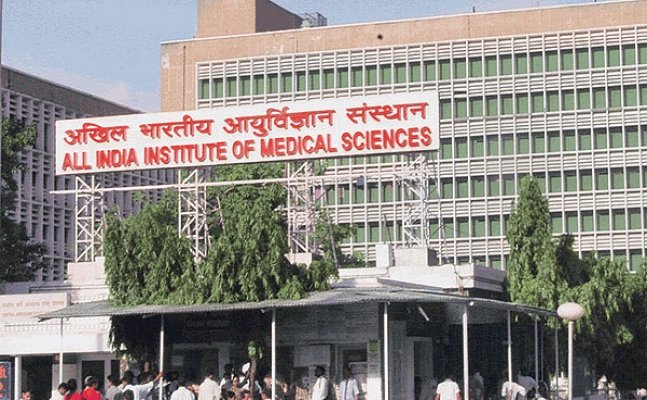
AIIMS Caste Discrimination

It was exactly 13 years back that the Thorat Committee, constituted in September 2006 to enquire into allegations of differential treatment of Scheduled Caste and Scheduled Tribe students at the premier medical institute, AIIMS—was released.

The first of its kind in independent India, this three-member committee led by then chairman of the University Grants Commission, Sukhdeo Thorat, had looked deeply into the many shades of discrimination faced by students of non-elite castes in the institute.

What it discovered after talking to students and faculty was, to say the least, shocking. Some 72% of SC/ST students mentioned facing some discrimination during the teaching sessions. Second, caste-based discrimination was prevalent in the hostels, for instance around 88% students reported experiencing of social isolation in various forms. The committee’s report also outlined the discrimination faced by SC/ST professors.

This context frames the alleged suicide attempt of a female doctor a fortnight ago in the same institute. The doctor, who worked at the Dental Research Centre of AIIMS, was allegedly facing sexual harassment and caste discrimination. This is another reminder that there has not been a qualitative change in the institute in the long years since the Thorat Committee report.

( )Read the full article here)

Beyond the ‘Employment’ Paradigm and Life After Capitalism – Manifesto of Hope IV


[This is the final instalment of the series on ‘Life After Capitalism – Manifesto of Hope’. Earlier parts can be accessed Part I here, Part II here and Part III here.]

Democratizing access to resources, Image courtesy AWID, created by Ana Abelenda

The Employment Paradigm

In this final instalment of the series, I want to discuss the vexed question of employment and what can be called the ’employment mindset’.  The mindset has dominated politics and the discipline of economics for the last century and a half for sure.  Before that youthful capitalism simply put people uprooted from their habitats and traditional occupations (the artisans and peasants) into ‘poor houses’ and enacted the most vicious laws to force the dispossessed poor work for it. Marxists give this violent pillage the scientific- sounding name of ‘primitive accumulation’ (or primary accumulation). ‘Scientific’ because it was seen by Marx as the ‘historical process of the separation of producer from “his” means of production’ – as if it was an objective process that was in some sense inevitable. Marx’s chapter on ‘primitive accumulation’ in Capital Vol I, certainly shows that he was revolted by the plunder and robbery that this phenomenon entailed but in a manner of speaking, by giving it an aura of historical inevitability, he could displace the solution to some future. There is also no doubt that the sections of Capital where Marx deals with the enactment of Poor Laws in Britain are full of passion and anger at what capitalism was doing – but then, what can you do with a process that is historically inevitable? Remember too that it was the same logic of ‘objectivity’ of ‘historical inevitability’ that was used to justify colonialism as the ‘unconscious tool of history’. The British Marxist historian, E.P. Thompson wrote of precisely these populations that perished in ‘the storm of industrialization’. He was so moved by their predicament that he wanted to ‘rescue them from the enormous condescension of posterity’. Yet, Thompson believed, like a good Marxist, that the artisan or the handloom weaver that he was writing about were ‘obsolete’ (Thompson’s term). Thus, he wrote, Continue reading Beyond the ‘Employment’ Paradigm and Life After Capitalism – Manifesto of Hope IV

Public Statement on Alternate Cures

Since the beginning of the COVID-19 epidemic, several statements have been propagated about “immunity boosting” substances such as mustard oil, hydroxychloroquine and tea; alternative remedies claiming to provide either immunity or cure; and remedial effects of cow urine or even taweez. Some of these assertions were also supported by a few government functionaries at the centre and in various states. We, the undersigned, wish to put the following scientific facts in the public domain.

–> As of now, no scientific studies show that any substance boosts the immune system specifically against COVID-19, be it modern medicines like hydroxychloroquine or homeopathic solutions like Arsenicum Album D30 or Ayurvedic preparations.

–> Scientific evidence for the efficacy of any of these substances can only be obtained by rigorous testing through randomized clinical trials with COVID-19 patients, and additional laboratory analyses. Anecdotes of cure or temporary relief from symptoms or usefulness against similar diseases are not scientific proof of efficacy against COVID-19.

–> Specific immunity against a bacterium or a virus can only arise in two ways. Either we were infected and recovered from the illness, or we are vaccinated; in either case we develop antibodies that can target the specific virus or bacterium.

Continue reading Public Statement on Alternate Cures

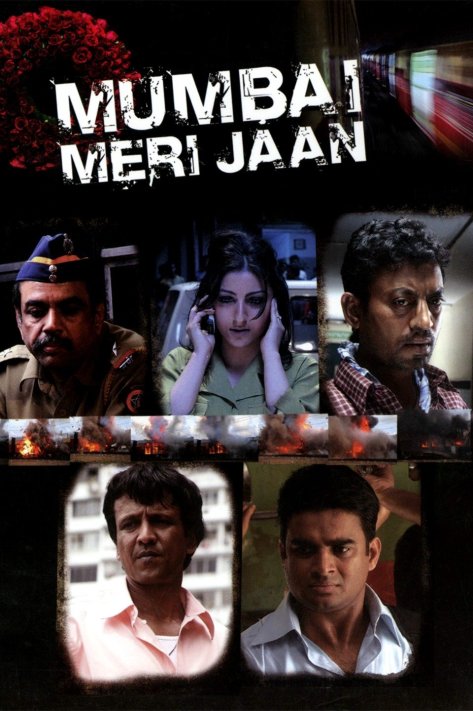
Playing the subaltern – Irrfan Khan as the migrant worker in Mumbai Meri Jaan: Umang Kumar

Guest post by UMANG KUMAR
 

Irrfan Khan reads the iconic poem, “Thakur ka Kuan”, by Dalit writer Om Prakash Valmiki, at the 2014 Jaipur Literary Festival.

While Irrfan Khan essayed a diverse range of roles, his hauntingly powerful cameo appearance in Mumbai Meri Jaan stands out for its intensity in the portrayal of working-class realities, especially those of migrant workers.

Mumbai Meri Jaan, a 2008 film, revolves around the tragedy of the 2006 Mumbai local-train blasts. Khan plays Thomas, a Tamil coffee-vendor who sells coffee from a roadside cart, and speaks minimum, Tamil-accented Hindi. His wife works as a domestic help.

Asif Kapadia, the British filmmaker, who worked with Irrfan on the movie The Warrior, recently shared what he had initially thought about Irrfan: “He looks like someone who’s killed a lot of people, but feels really bad about it.” While that probably had something to do with Khan’s brooding, prominent eyes, it does point to the deep volcano of emotions that Khan seemed to be harboring with perfect equanimity all the time.

Continue reading Playing the subaltern – Irrfan Khan as the migrant worker in Mumbai Meri Jaan: Umang Kumar

Data, New Data, Different kinds of Data, and Covid 19: Bharati Jagannathan

Guest post by BHARATI JAGANNATHAN

“There are three kinds of lies: lies, damned lies and statistics”, quoth Mark Twain. We could add a fourth, pretence of statistics in the absence of it. So, there’s data, more data, and the immensely useful pretend data about COVID-19. And almost all of it liable to totally dissimilar interpretations. In fact, this has been the best lesson, for those who in general find statistics challenging and humbly retreat in the face of data-based proofs in any argument, that the same set of data can serve completely opposite ends. However, I digress.

There was speculation in early March that India had fewer cases of infection owing to 1) exposure to malaria and sometime ingestion of quinine (in medical formulations like hydroxychloroquine), or 2) BCG vaccinations in childhood, or 3) warm weather hindering the spread of COVID-19 like many other influenza viruses. Till we realized that it was the effect of abysmal levels of testing. Continue reading Data, New Data, Different kinds of Data, and Covid 19: Bharati Jagannathan

Exploring Possibilities for Critical Alliances Between Animal Rights and Bahujan Politics: Krishnanunni Hari

Guest post by KRISHNANUNNI HARI

This essay emerged as a response to the following question that was raised during a Q&A session that I had run on social media:

“How does one tackle people who amalgamate veganism with upper caste vegetarianism?”

The immediate answer to this is that veganism avoids all animal products and all forms of animal ab/use, and hence cannot be amalgamated with vegetarianism and its caste baggage.

Such an answer, however, ignores crucial cultural issues that determine how Animal Rights (AR) and veganism are perceived, co-opted or taken forward in Indian society.

Vegetarians, contrary to what Right wing Hindutva will have us believe, comprise less than 40% of the country’s population.  Jains, most Sikhs and Brahmins and some rich urban forward castes make up the vegetarians in India1. Vegetarianism in India is connected to social power and caste hegemony, unlike its counterpart in the West, where it is an ethical lifestyle and a social justice movement.

Continue reading Exploring Possibilities for Critical Alliances Between Animal Rights and Bahujan Politics: Krishnanunni Hari

Medical Termination of Pregnancy during the Covid pandemic – Statement by concerned citizens

Statement by medical doctors, public health workers, researchers and feminists concerned with issues of reproductive health, rights and justice.

In the case of Sama vs Union of India and Ors, the Hon’ble High Court of Delhi ruled that the Union of India and Government of NCT Delhi

 …shall work in tandem to make sure that no barriers are faced by pregnant ladies and their family members residing in hot spots during the lockdown.”  (High Court of Delhi, W.P.(C)2983/2020 & CM APP Nos 10345-46/2020, dated 22/04/2020)

While this is a welcome move, we urge that access to safe abortion is specifically recognized and appropriate services extended to women seeking abortion.

 It is completely understandable, and correct, that all non-emergency procedures be suspended at hospitals in these times of Covid-19.  Thus, not only elective plastic surgery procedures, but surgeries such as that for inguinal hernia, or thyroid adenomas, have to be postponed. This is for two reasons: first, to prevent exposure of people to Coronavirus in hospitals and second, to reduce the demand on health systems, overwhelmed in the Coronavirus pandemic.

The situation with Medical Termination of Pregnancy (MTP) is however unique, and cannot be classified as a “non-emergency” procedure worthy of postponement. Continue reading Medical Termination of Pregnancy during the Covid pandemic – Statement by concerned citizens

Over 1100 Feminists Condemn Crackdown on Women Activists in Delhi

Issued on 3 May, 2020

Over 1,100  feminsts across religion, class, caste, ethnicity, ability, sexuality and genders

DENOUNCE false narratives that try to link anti-CAA protests with the violence in Delhi.

DENOUNCE false narratives that try to link anti-CAA protests with the violence in Delhi.

DEMAND an immediate stop to targeting of Muslim women activists
under the shadow of the Covid 19 lockdown.

SEEK ACTION against actual perpetrators of violence, not peaceful protestors.

STAND FIRM with the conscience keepers of the nation

We, the undersigned, strongly condemn the brazenly malicious attacks, arrests and intimidation by the Delhi Police of Muslim women, students and activists, as well as other citizens who have spoken up against the unconstitutional moves of the present ruling dispensation. Media reports that about 800 + anti-CAA protesters have been detained or arrested since the Covid 19 lockdown, which means they have had little or no access to lawyers and legal aid, and their families given no information of their whereabouts for extended periods after they were in custody. The impunity with which the Delhi Police is carrying out this sweep under direct orders from the Home Ministry is facilitated by the reduced media, public and legal scrutiny under the lockdown.

Continue reading Over 1100 Feminists Condemn Crackdown on Women Activists in Delhi

Remembering Marx in Lockdown Times – Beyond the “Corona” Paradigm: Maya John

Guest post by MAYA JOHN

On the occasion of the birth anniversary of Karl Marx, the greatest intellectual of the millennium, it is best to steer clear of hero-worshipping. Instead, let us commemorate Marx’s ideas by re-enacting his way of knowing things. Much can be drawn from his writings wherein we can see Marx reinvigorating the revolutionary agenda at a time of deep despair and defeat. Reflecting and writing after the failed revolutions of 1848, Marx provided an introspective critique of unfolding conditions in his essay The Eighteenth Brumaire of Louis Bonaparte (1852). Closely examining the events of the successful coup and assumption of dictatorial powers by Louis-Napoléon Bonaparte in republican France in 1851, Marx was the only contemporaneous political thinker to liken the ascendancy of Louis-Bonaparte to that of his uncle, Napoleon Bonaparte, who seized power in revolutionary France through the coup of 18 Brumaire (7 November 1799).

Continue reading Remembering Marx in Lockdown Times – Beyond the “Corona” Paradigm: Maya John

Why Activists Want Prisons Decongested

The Supreme Court also wants to reduce the Covid-19 risks posed by overcrowded jails, but there is little progress so far.

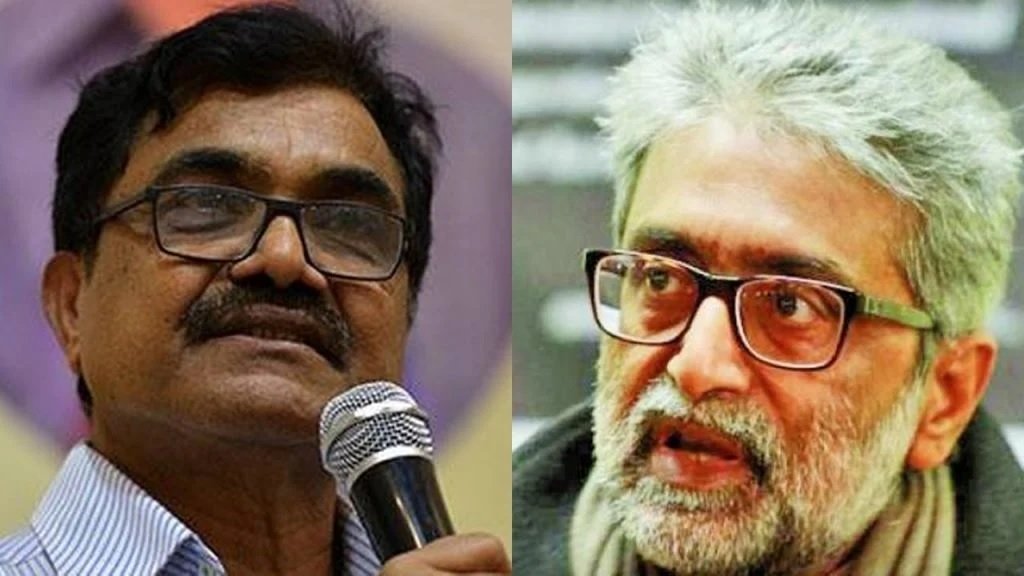
Navlakha and Teltumbde

Late in March, Sirous Asgari, a materials science and engineering professor from Iran, who is at present detained by the United States Immigration and Customs Enforcement (ICE), had warned about the “inhumane” conditions at the ICE facility that could turn it into a hot spot of Covid-19 fatalities.

April has made his worst nightmares come true. Asgari, who has a history of respiratory problems, has been infected by the Novel Coronavirus, which causes the Covid-19 disease. The news created international outrage last month. Not only the Iranian foreign ministry, many United States lawmakers and human rights groups also demanded his release, but it was not to be.

At the facility in which Asgari is still lodged (though he has been exonerated of all the charges he faced in the United States), people are usually detained for no more than 72 hours, but the Coronavirus outbreak has delayed deportations. People like him are simply caught up in the system. Asgari can leave the United States and resume work in Iran—where the viral epidemic has already claimed more than 60,000 lives—because he simply isn’t being taken before a judge.

Asgari’s plight reminds of another incarceration, this one in an Indian jail; that of Anand Teltumbde, who has been arrested in the Bhima-Koregaon case. On 26 April, noted activist-filmmaker Anand Patwardhan had, in a Facebook post, expressed deep concern about the health of 70-year-old Teltumbde, who also suffers from respiratory problems.

( Read the full text here : https://www.newsclick.in/Prisons-during-lockdown-needs-to-be-decongested)

The Many Debts We Owe to Lenin

‘The workers’ and peasants’ government… calls upon all the belligerent peoples and their government to start immediate negotiations for a just, democratic peace.

By a just or democratic peace, for which the overwhelming majority of the working class and other working people of all the belligerent countries, exhausted, tormented and racked by the war are craving [we mean] an immediate peace without annexations – that is, without the seizure of foreign lands, without the forcible incorporation of foreign nations and without indemnities.’

The ‘just and democratic peace’ sought by the workers and peasants government never arrived.

It was on 26 th October 1917 when Lenin, the 47 year old leader of this nascent Government, read out the Bolshevik Decree on Peace. This appeal fell on deaf ears.

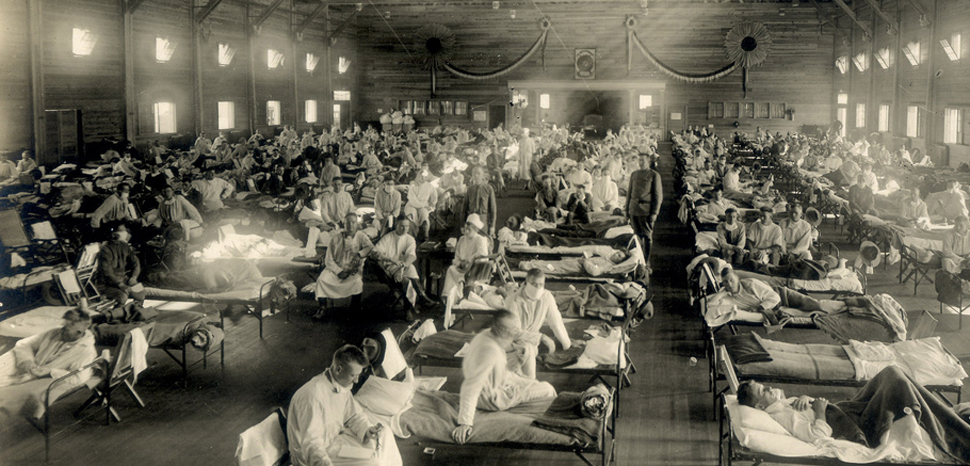
The many players and participants in the first World War,  the imperial powers fighting for a re-division of the world, which had already claimed millions of lives, refused to put a halt to their killing machines and the war continued for more than a year, adding menacing figures to the tally of the dead as well as the wounded. Students of history tell us that this ‘War to End Wars’ as it was termed then culminated in the deaths of more than nine million combatants and seven million civilians as a direct result of the War and the resulting genocides and related 1918 influenza pandemic causing another 20-50 million deaths worldwide.

Otis Historical Archives, modified, https://commons.wikimedia.org/wiki/File:Emergency_hospital_during_Influenza_epidemic,_Camp_Funston,_Kansas_-_NCP_1603.jpg, CC 2.0, modified

Looking back one knows that if this decree on peace had been positively responded, few more million deaths in the ongoing war could have been avoided and deaths due to the pandemic of Spanish Flu ( 1918) could have been contained more effectively. Experts can tell you how the trenches of the western front proved ideal for spread of the virus as “[t]renches were flooded much of the time. Blood and bodily remains from people and animals that had been blown to pieces, along with faeces and rotting food, formed the pathways and shelters for troops going to and returning from, the front.”

The World War I which eclipsed all previous wars by its scale of destruction finally came to an end in 1918. Continue reading The Many Debts We Owe to Lenin

The Pandemic as pretext – Murdering the university in India: Ayesha Kidwai

Guest post by AYESHA KIDWAI

The recommendations of the UGC panels are circulating on WhatsApp (See Appendix at the end of this article). If these are indeed what is going to be presented at the full UGC meeting, then there is no doubt in my mind that the pandemic is a pretext to get rid of the university altogether, to move it notionally online, to make education the tool for surveillance, and to change the way that all educational institutions function. If the recommendations are accepted, then 25% of the syllabus in any course henceforth will have to be completed online, all universities will have to form virtual classrooms, through an MHRD dedicated portal, develop e-learning syllabi, and change their degrees. What this will mean for academic jobs henceforth is obvious, but what it will entail for the content of education is far worse.

Continue reading The Pandemic as pretext – Murdering the university in India: Ayesha Kidwai

Part II – The Virus, the Muslim and the Migrant: Forced labour and data capitalism

THIS IS THE SECOND PART OF A THREE PART POST, THE FIRST PART OF WHICH CAN BE READ HERE.

Forced labour and data capitalism are the low end and high end of Coronacapitalism. Let us examine each of these.

Forced labour

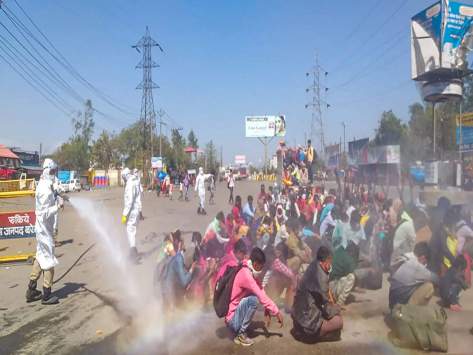
The gut-wrenching picture of migrant workers who managed to reach Bareilly, being sprayed with disinfectant by people protected by hazmat suits themselves, provoked such widespread outrage in India and negative publicity in the foreign media, that the Health Ministry issued a hasty statement that this should not be done.

Spraying of chlorine on individuals can lead to irritation of eyes and skin and potentially gastrointestinal effects such as nausea and vomiting. Inhalation of sodium hypochlorite can lead to irritation of mucous membranes to the nose, throat, respiratory tract and may also cause bronchospasm, the advisory said.

Workers at Bareilly bus terminus being sprayed with chemicals

But this brutality and callousness towards workers and the poor emanates from the very top of this regime – the signal is sent from there, as to who matters and who doesn’t. The difference in treatment is stark and unapologetic.  For example, during the lock-down, on April 18th,  even as thousands of workers walked long distances home because no transport was arranged for them, precisely in order to prevent them from leaving the states in which they were stranded, the Uttar Pradesh government organized 250 buses to bring back students from the state studying in Kota, Rajasthan.  As of April 24th, special flights and hospital beds are being prepared by the government to bring back Indians stranded abroad. Continue reading Part II – The Virus, the Muslim and the Migrant: Forced labour and data capitalism

The Limits of Public Health Management: Time to Rethink Development in Kerala

One of the effects of the pandemic in Kerala, like in most other parts of the world, is that the government’s narrative muffles all other narratives, and this is not just about the containment of the pandemic. Here the government’s narrative about the pandemic enjoys far greater legitimacy than elsewhere, and with good reason. It is true that Kerala’s greater successes in dealing with the pandemic are unique and commendable; however, to think that therefore, the government is right on everything else is probably a huge mistake. Continue reading The Limits of Public Health Management: Time to Rethink Development in Kerala