नरम हिन्दुत्व या ‘सेकुलर’ दलों की लड्डू पॉलिटिक्स?
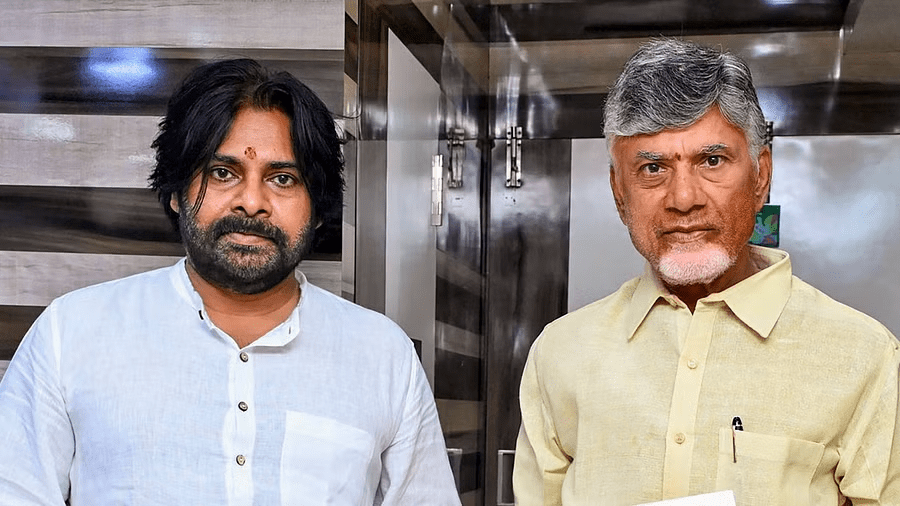
Credit: PTI photo
(क्या आंध्र प्रदेश दक्षिण में हिंदुत्व प्रयोग की नई प्रयोगशाला बनाने जा रहा है। दक्षिण के अग्रणी अख़बार डेक्कन हेराल्ड ने पिछले दिनों इस मसले पर विशेष सामग्री पेश की थी ा गौरतलब है कि इस सूबे की आंतरिक गतिविधियों पर शेष मुल्क की तब निगाह पड़ी, जब तिरुपति के लड्डू के मसले को सुर्खियां मिली . मगर ‘हिंदुत्व लाइट’ का यह सम्मोहन महज वहीं तक सीमित नहीं है )
सियासत भी अजीब होती है। अकसर इस बात का अंदाजा भी नहीं लग पाता कि कैसे वह शैतानों के सन्त में रूपांतरण को मुमकिन बना देती है और कैसे अन्य समुदायों के जनसंहारों को अंजाम देने वालों को ‘अपने लोगों’ के हृदयसम्राट या रक्षक के तौर पर स्थापित कर देती है।
शायद इसी विचित्रता की यह निशानी है कि अमेरिका के पूर्व राष्ट्रपति डोनाल्ड ट्रम्प द्वारा हैती से आए आप्रवासियों को लेकर फैलायी जा रही झूठी ख़बरें कि वे कुत्तों का भक्षण करते हैं, अमेरिका की आबादी के अच्छे-खासे हिस्से को अविश्वसनीय नहीं लग रही- जिनका लगभग अस्सी फीसदी हिस्सा साक्षर है। इन झूठी और नफरती ख़बरों को लेकर हैती से जुड़े समूहों को ही अदालत का दरवाजा खटखटाना पड़ रहा है।
जहां दुनिया का सबसे ताकतवर जनतंत्र कुत्तों को लेकर पैदा किए गए एक विवाद में उलझा दिखता है, वहीं खुद को दुनिया में डेमोक्रेसी की माता कहलाने वाले भारत में लड्डू के इर्द-गिर्द खड़े किए गए इसी किस्म के एक फर्जी विवाद में पिछले दिनों लचीले हिन्दुत्व की राजनीति के नए रणबांकुरे उलझे दिखे थे । ( Read the full article here : https://junputh.com/open-space/soft-hindutva-and-laddoo-politics-of-naidu/)
यारबाश दोस्त, जिन्दादिल साथी, समाजी बेहतरी और बदलाव को लेकर हमेशा पुरउम्मीद रहने वाले किशोर ने चुपचाप एक सुबह हमें अलविदा कहा। 13 सितम्बर 2024/ एक लाईलाज बीमारी के चलते , जिसे दुनिया cerebellar ataxia (multisystem atrophy) /अनुमस्तिष्क गतिभंग या मल्टीसिस्टम अपक्षय/ के तौर जानती है, जो निरंतर बढ़ते जानेवाला न्यूरोजनरेटिव विकार है जो शरीर के एक एक अंग को बेकार करता जाता है और अंत में बिस्तर तक सिमट देता है – उसकी जीजिविषा में कभी कोई कमी नहीं आयी, उसकी हंसी बरकरार रही, रौशनी की बातें करना उसने नहीं छोड़ा था.।
किशोर – जिसे शेष दुनिया किशोर झा के नाम से जानती थी, जो छात्र जीवन में वाम आंदोलन से जुड़ा – जिसने उसे एक नैतिक दिशा प्रदान की – अस्सी के दशक के उत्तरार्द्ध में दिल्ली विश्वविद्यालय में ‘दिशा छात्र समुदाय’ के शुरूआती सदस्यों वह था, जिसकी सक्रियताओने ने उन दिनों अलग छाप छोड़ी थी। बाद में वह बाल अधिकारों के लिए सक्रिय विभिन्न संस्थाओं /एनजीओ के साथ भी सक्रिय रहा ; लेकिन आमूलचूल बदलाव के सपने को उसने कभी नहीं छोड़ा। किशोर के मित्रों की पहल पर गांधी शांति प्रतिष्ठान में एक कार्यक्रम का आयोजन हुआ था, ( 5 अक्तूबर 2024 ) जिसका फोकस उसके जीवन को सेलिब्रेट करने पर था। प्रस्तुत नोट उस सभा में प्रस्तुत वक्तव्य का संशोधित रूप है। (Read the full text here :https://janchowk.com/art-culture-society/adeu-kishore-in-memory-of-this-friend/)
After the ascent of Hindutva Supremacists at the Centre, avowedly secular parties also seem to be falling prey to it under mass pressure for short-term electoral gains.
Politics is a strange beast.
It looks incredulous how at times it helps Satans being metamorphosed into Saints and biggest murderers of hapless communities emerging as the defenders or ‘heartthrobs’ of their ‘own people.’
Perhaps it is a sign of this weirdness that Donald Trump’s vitriolic speeches targeting Haitian immigrants – that they eat pets — have not appeared incredulous to a large section of the US population, which is 79% literate, as the records show. Finally, Haitian groups themselves had to approach the courts to expose “racial animus against Haitian immigrants” over the years.
Interestingly, while the strongest democracy in the world is in the midst of a manufactured controversy around pets, the biggest democracy in the world, is witnessing another fabricated controversy around Laddoo – a spherical sweet from the Indian subcontinent — thanks to the intervention of what can be called as ‘new converts’ to Hindutva Lite politics. ( Read the full article here : https://www.newsclick.in/fascination-hindutva-lite-among-opposition-parties)
इन दिनों कर्नाटक उच्च न्यायालय के एक न्यायाधीश वी. श्रीशानंद सुर्खियों में हैं। उन्होंने बीते 28 अगस्त को एक अदालती सुनवाई के दौरान बेंगलुरु के एक मुस्लिम-बहुल इलाके को पाकिस्तान कह दिया और एक महिला वकील को लेकर आपत्तिजनक टिप्पणी की। इस बयान के कथित वीडियो पर सोशल मीडिया में जब काफी शोर मचा, तब मुल्क की आला अदालत घटना के को लेकर हरकत में आई। उसके कारण अगले ही दिन श्रीशानंद को खुली अदालत में खेद जताना पड़ा।
सुप्रीम कोर्ट के मुख्य न्यायाधीश चंद्रचूड़ की अध्यक्षता में पांच जजों की पीठ ने 20 सितंबर को श्रीशानंद के बयान पर स्वत: संज्ञान लेते हुए उसे ‘अनावश्यक’ करार दिया और कर्नाटक उच्च न्यायालय के रजिस्ट्रार जनरल को इस संबंध में रिपोर्ट बना कर भेजने का आदेश दिया था। सुप्रीम कोर्ट ने यह भी कहा था कि वह सुनवाई के दौरान जजों के प्रेक्षण को लेकर कोई दिशानिर्देश जारी कर सकती है। अगली सुनवाई की तारीख 25 सितंबर दी गई थी।
इस दूसरी ही तारीख पर मामले को निपटा दिया गया। 25 सितंबर को सुनवाई शुरू होते ही मुख्य न्यायाधीश ने बताया कि 23 सितंबर को ही कर्नाटक उच्च न्यायालय के रजिस्ट्रार जनरल द्वारा उक्त रिपोर्ट जमा कराई जा चुकी है। चूंकि जस्टिस श्रीशानंद ने खेद जता दिया है, तो सर्वोच्च अदालत इस मामले को आगे नहीं ले जाएगी और उन्हें नोटिस नहीं देगी।
दिलचस्प है कि सर्वोच्च न्यायालय ने केस को निपटाते हुए जजों के लिए कथित ‘दिशानिर्देशों’ का कोई जिक्र नहीं किया, जिसका हवाला 20 सितंबर को दिया गया था। इससे भी ज्यादा हैरान करने वाली बात है कि इस मामले में श्रीशानंद के बयान को मुख्य न्यायाधीश ने “बुनियादी रूप से भारत की अखंडता के खिलाफ” करार दिया। पहले उन्होंने इसे “अनावश्यक” कहा था।
The Karnataka HC episode is a wake-up call for the judiciary, as the battle to save it from interference by the executive could have long-term consequences for democracy.
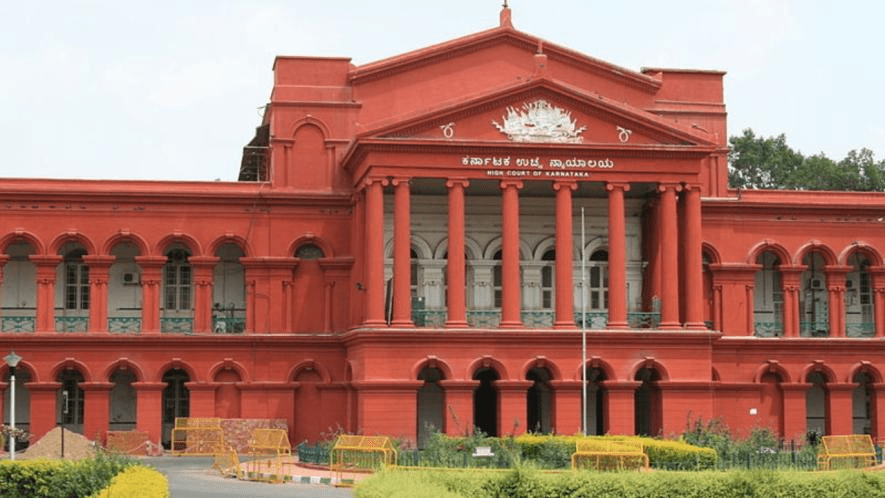
High Court of Karnataka. Image Courtesy: Wikimedia Commons
Justice Srishananda of the Karnataka High Court is in the news for wrong reasons.
What has caused tremendous unease is the way he openly referred to a Muslim-majority area in Bengaluru as “Pakistan” during a hearing and even made a misogynistic comment involving a woman lawyer.
The open display of prejudice toward a community and gender — by someone who is supposed to uphold the Constitution — infuriated a wide cross-section of people. A five-judge bench of the Supreme Court led by Chief Justice Chandrachud also lost no time in condemning these highly irresponsible remarks and asked the Karnataka HC to submit a report in this connection.
..The SC’s quick intervention in the Karnataka case is definitely a welcome development.
The question arises whether establishing such clear guidelines would really prove a dampener to such utterances in courts in future? Would it really put a stop on judges who have had no qualms in declaring that ”based on religion, India should have been declared Hindu nation after independence.’ or declaring‘Modi a model and a Hero’. ( Read the full article here : https://www.newsclick.in/your-honour-rot-runs-really-deep)
Truth, as they say, has an uncanny ability of bursting out into the open, unannounced. This seems to have happened with the controversial Agniveer Scheme – the introduction of contract based employment in the military for four years – which even cost the ruling dispensation a few seats in the recent parliamentary elections.
What Prafulla Ketkar, who has been editor of ‘Organiser’ for the last eleven years, underlined in an event merits close attention in this connection. To a pointed question where he was asked ‘[w]hether India should prepare civilians for situations similar to those faced by Israel’, he specifically mentioned that ‘[t]he Agniveer scheme was introduced for this purpose only. The scheme aims to train military-ready individuals who can be deployed during crises.’
It has been more than four days since Ketkar made this explosive statement, which obviously contradicts what the government wants us to believe. But there has been neither any denial of the statement from the highest level nor has he been reprimanded by top bosses of the Sangh Parivar for making such outrageous statements.
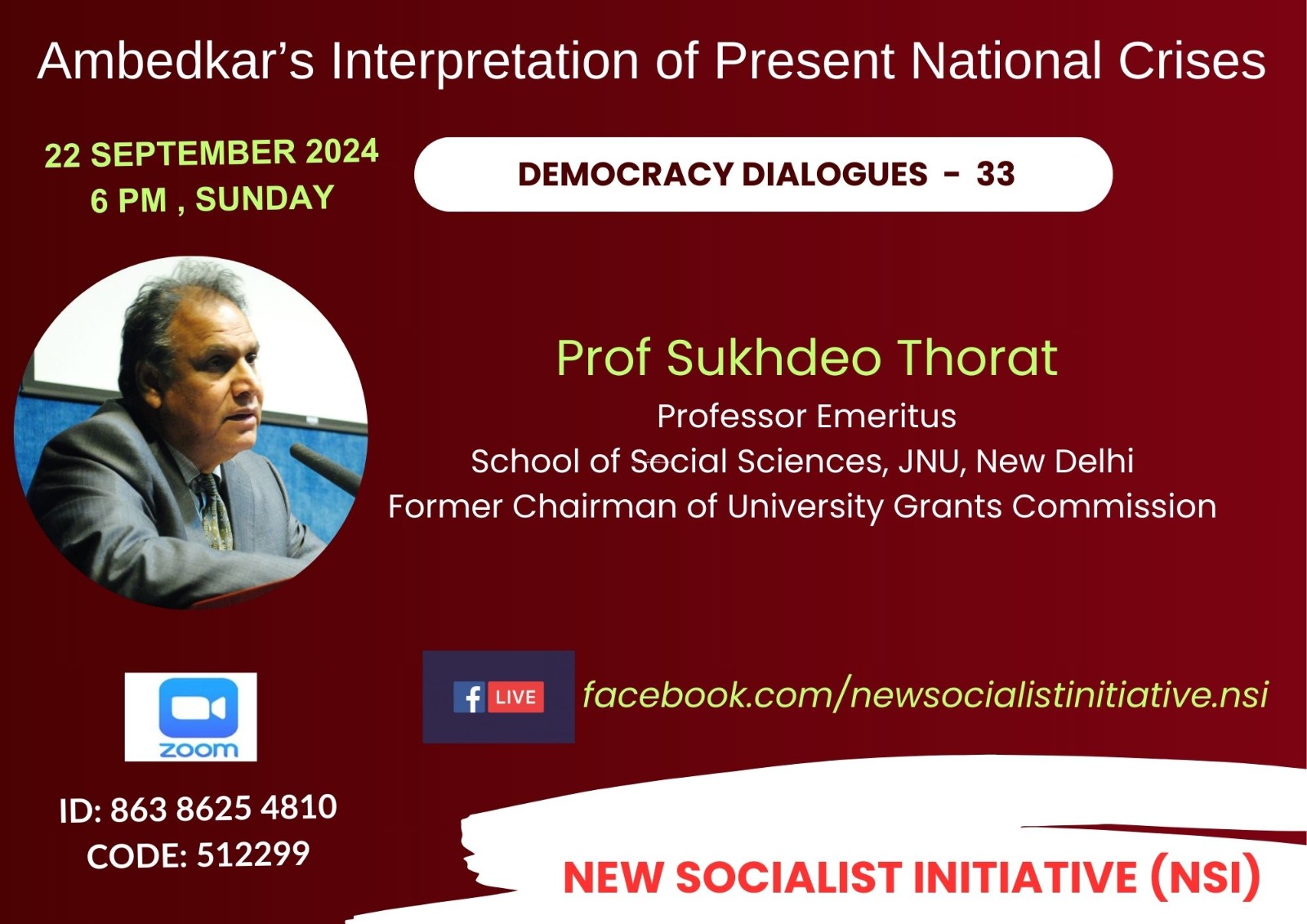
Professor Emeritus, School of Social Sciences, Jawaharlal Nehru University, New Delhi
Theme :Dr. Ambedkar’s Interpretation of Present National Crises
Number of scholars have tried to explain the present crisis by drawing insights from the experience of Fascism of Hitler in Germany 1930’s and/or similar viewpoints . Without undermining these attempts, I feel that Ambedkar’s theoretical perspective on Indian history presumably helps us more to grapple with the present crisis .In Ambedkar’s view it is continuation of the non-stop efforts from ancient times to bring back Brahmanism . Ambedkar observes that “that there was in ancient India, a great struggle between Buddhism and Brahmanism. It is not even a struggle but a quarrel over some creed ,The Buddhism was revolutionary and while Brahminsm was counter-revolutionary. It was a revolution and counter revolution in doctrine by a revolution in political and social philosophy”. The present attempt is an on-going legacy of the ancient Indian where it began , and carried through the medieval to British and to the present time with tenacity and stubbornness to maintain the privileges that the Brahmanical ideology bestowed on those who coined this ideology .The lecture will try to bring insights on Ambedkar’s perspective .
About the Speaker Prof Sukhdeo Thorat, Professor Emeritus, School of Social Sciences, Jawaharlal Nehru University, New Delhi ; former Chairman of University Grants Commission and former Chairman of ICSSR (Indian Council of Social Science Research) is a leading economist, educationist and writer. A renowned Ambedkar scholar Prof Thorat graduated with a B.A. from Milind College of Arts, Aurangabad, Maharashtra and has done PhD in Economics from Jawaharlal Nehru University. He was a Faculty Member at Jawaharlal Nehru University, New Delhi and visiting faculty at Department of Economics, Iowa State University, Ames, USA and has been associated with various national-international institutes and organisations. Recipient of many awards including Dr Ambedkar National Award (2011) and Padmashree ( 2008), he has authored and edited many books and monographs. Here is a list of his major publications : – Ambedkar on Social Exclusion and Inclusive Policy – Dalits in India? Social and Economic Profile (Sage) – Ambedkar in Retrospect: Essays in Economics, Society, and Politics (edited) with Aryama & Negi. (Rawat Publication) – Social Science Research in India : Status, Issue and Policies ( co-authored with Samar Varma) – Oxford University Press ( 2016) – Politics of Representation : Historically Disadvantaged Groups in India’s Democracy ( co edited with Prof Sudha Pai) Palgrave Macmillan ( 2012) – Untouchability in Rural India Sage, 2006 (with G. Shah, Harsh Mander, Satish Deshpande & Amrita) – Caste, Race, and Discrimination – Discourse in International Context (edited) (with Umakant), Rawat Publication, Jaipur (2004)
विख्यात अमेरिकी इतिहासकार, नाटककार, दार्शनिक और समाजवादी विचारक हॉवर्ड जिन- जिनकी लिखी किताब ‘ए पीपुल्स हिस्ट्री ऑफ युनाइटेड स्टेट्स’ की लाखों प्रतियां बिक चुकी हैं- के ये शब्द आज भी दुनिया के मुल्कों में दोहराए जाते हैं जब-जब वहां की जनता हुक्मरानों के हर फरमान को सिर आंखों पर लेती है।
बहुत कम लोग इस वक्तव्य के इतिहास से वाकिफ हैं, जिसे उन्होंने अमेरिका के युद्ध-विरोधी आंदोलन के दौरान बाल्टिमोर विश्वविद्यालय के परिसर में रैडिकल छात्रों और परिवर्तनकामी अध्यापकों के विशाल जनसमूह के सामने दिया था। यह वह दौर था जब अमेरिकी सरकार की वियतनाम युद्ध में संलिप्तता को लेकर- जिसमें तमाम अमेरिकी सैनिकों की महज लाशें ही अमेरिका लौट पाई थीं- जनाक्रोश बढ़ता गया था और अमेरिकी सरकार पर इस बात का जोर बढ़ने लगा था कि उसे अपनी सेनाओं को वहां से वापस बुलाना चाहिए।
याद किया जा सकता है कि इस ऐतिहासिक साबित हो चुके व्याख्यान के एक दिन पहले क्या हुआ था। एक युद्ध विरोधी प्रदर्शन में शामिल होने के चलते उन्हें संघीय पुलिस ने गिरफ्तार किया था और हॉवर्ड जिन को कहा गया था कि वह अगले दिन अदालत में हाजिर हों। सवाल यह था कि क्या वह दूसरे ही दिन अदालत के सामने हाजिर हों, जहां उन्हें चेतावनी मिलेगी और फिर घर जाने के लिए कहा जाएगा या वह बाल्टिमोर जाने के अपने निर्णय पर कायम रहें? यानी, रैडिकल छात्रों ने उनके लिए जो निमंत्रण भेजा था पहले उसका सम्मान करें और उसके अगले दिन अदालत के सामने हाजिर हों? जाहिर था कि इस हुक्मउदूली के लिए उन्हें कम से कम कुछ दिन या महीने तो सलाखों के पीछे जाना ही होता।
हावर्ड जिन ने बाल्टिमोर जाना ही तय किया। यहां उन्होंने अपना भाषण दिया। छात्रों एवं अध्यापकों में उसकी जबरदस्त प्रतिक्रिया हुई। वे लौट आए और अगले ही दिन अदालत के सामने हाजिर हुए। जैसा कि स्पष्ट था, उन्हें कुछ सप्ताह के लिए जेल भेज दिया गया। ( Read the full text here : https://junputh.com/open-space/remembering-howard-zinn-in-the-times-of-bulldozer-justice/)
Where are Indians, who like the conscience keepers of Israeli society or the legendary Rachel Corrie, are ready to swim against the tide?
‘Our Problem is Civil Obedience…’
These words of the legendary American historian, playwright, philosopher and socialist intellectual, Howard Zinn (1922-2010), are still repeated the world over whenever people living in a country have no qualms in gulping whatever the rulers do or say.
Not much is known about the brief history of this speech which was delivered in the Baltimore campus during the heyday of the anti-war movement in the US, (1971). That was the period when a mass movement had emerged opposing the US government’s participation in the Vietnam war, where Zinn was invited to address students in one of the universities. ……………..
Zinn left for Baltimore, where he delivered the said speech, which received a thunderous applause from students and teachers, and when he presented himself before the courts the next day, as expected, he was sent to jail for a few weeks.
Time and again, as the phenomenon of, what is popularly known as “bulldozer justice, raises its head in India, which is now called the ‘biggest country that regularly holds elections’, this poser by Zinn in his Baltimore speech sounds more and more appropriate.
[भारत में 1 जुलाई से लागू हुई नई न्याय संहिताओं के साथ-साथ महाराष्ट्र में एक नया जनसुरक्षा कानून भी आया है। यह कानून उस ‘शहरी नक्सल’ के खतरे पर अंकुश के लिए बनाया गया है, जिसके बारे में इस देश का गृह राज्यमंत्री संसद में कह चुका है कि गृह मंत्रालय और सरकार की आधिकारिक शब्दावली में यह शब्द है ही नहीं। ऐसे अनधिकारिक और अपरिभाषित शब्दों के नाम पर बनाए जा रहे कानून और की जा रही कार्रवाइयों के मकसद और मंशा पर नजर ..]
ऐसे अवसर बहुत कम आते हैं जब कोई साधारण सा ट्वीट सामने आ रही वास्तविकता को स्पष्ट शब्दों में रेखांकित कर दे। जानी-मानी वकील और मानवाधिकार कार्यकर्ता इंदिरा जयसिंह का 30 जून को किया ट्वीट ऐसा ही था, जिसमें उन्होंने अगली सुबह से लागू होने वाले तीन नए फौजदारी कानूनों पर चिंता जाहिर की थी।
इंदिरा जयसिंह के ट्वीट में ‘पुलिस राज’ का रूपक इस बात का संकेत था कि सत्ताधारी केवल ताकत की भाषा समझते हैं। वे न तो संवाद में विश्वास करते हैं और न ही किसी के साथ संवाद करने को तैयार हैं- सिवाय अपने मित्रों के एक चुनिंदा गिरोह के।
इस चिंता में वे अकेली नहीं थीं। अन्य प्रमुख वकील और मानवाधिकार कार्यकर्ता भी इस बारे में समान रूप से चिंतित हैं।
ऐसे खतरों को समझते हुए भी उस वक्त शायद किसी को इस बात का जरा सा भी अंदाजा नहीं था कि इसके आगे भी कुछ और होने वाला है, जिसके संकेत आम चुनाव के बाद महाराष्ट्र के मुख्यमंत्री एकनाथ शिंदे ने अपने एक भाषण में दे दिए थे। ..उस समय किसी को भी यह अनुमान नहीं था कि इस भाषण के एक महीने के भीतर ही राज्य सरकार अर्बन नक्सल के ‘खतरे’ को रोकने के लिए एकविधेयक लेकर आ जाएगी। [ Read the full article here :https://followupstories.com/politics/a-police-state-in-the-becoming-the-maharashtra-special-psa-2024/]
““I am reminded of Pandit Nehru ‘s speech “ At the stroke of midnight India will awake to freedom” . At the stroke of midnight night 1st July 2024 India will awake to police raj,” (1)
There are rare occasions when a simple tweet underlines the unfolding reality in stark terms.
Noted lawyer and human rights activist Indira Jaising’s tweet a fortnight back created similar ripples. Her concern was over the three new criminal laws coming into operation the next morning.
And she was not alone, other leading lawyers and human rights activists seemed equally concerned about it …
But perhaps nobody had a faint idea that more was in the offing.
Post elections, Eknath Shinde, Chief Minister of Maharashtra in one of speeches had talked of Urban Naxals ‘penetrating NGOs and help creating ‘..false narratives against the government’ A speech made during a rally for BJP Konkan Graduates Constituency in the MLC polls was considered out of tune with the ambiance.
Bhakti Era as the Plebeian Plateau in the Civilizational Landscape of India
Guest Post by Ravi Sinha on a possible framework for looking at the millennial trajectory of Indian civilization
We have by now devoted several sessions to mapping the millennial trajectory of the Bhakti Movement across the history and the cultural geography of the subcontinent. Starting with the Tamil lands in the 7th century we followed Bhakti performing the pradakshina of the cultural landmass of the subcontinent, crossing the Vindhyas in its northward journey sometime in the 13-14th century. Our endeavour has been to understand the role of Bhakti in shaping the cultural and the civilizational mind of India. This, in turn, has been motivated by task of making sense of the role this mind plays in contemporary politics and in the rise of fascistic Hindutva in recent decades.
As we stated in the proposal to a previous session, we seek to understand the impact of Bhakti at two different time-scales. On the shorter time-scale of contemporary politics one looks at the phenomenon of communalism. The mainstream of the anti-colonial national movement considered Bhakti Movement as the harbinger of religious tolerance and syncretism that would help evolve the Indian brand of secularism. The subsequent history, however, paints a mixed picture. A social fabric and a cultural mind weaved by the Bhakti ideologies do not offer the kind of resistance to communalism and sectarianism as was expected of them. In our previous sessions we mainly stayed with evaluating the impact of Bhakti at the political-historical time-scale characterized by the problem of communalism and the rise of Hindutva.
On a longer – millennial – time-scale, however, one can evaluate the Bhakti phenomenon in the civilizational context. One can ask something like the Needham Question – why did the Indian civilization, despite its glory and accomplishments in the ancient and the medieval periods, fail to realize its cultural and scientific potentials? Why was it defeated often and why was it eventually colonized? Why did the West forge ahead, why has India lagged behind? Did the cultural mind and social ethos prepared by the Bhakti Movement play a role in the civilizational decline of India? These are very large questions not amenable to easy answers. But one must prepare to wrestle with them as they are of crucial importance for imagining and fashioning a desirable future for India. In this session, we finally arrive at the task of outlining a framework for asking and answering these questions.
For this purpose, we propose to take help of two large concepts – one of Axiality and the other of Modernity. The idea of axial revolutions was proposed for the civilizational breakthroughs that happened in the middle centuries of the first millennium BC in several different and unconnected societies – Judea (land of the Old Testament in the era of prophets), Greece (of pre-Socratic philosophers as well as of Socrates, Plato and Aristotle), China (of Confucius, Mencius and others) and India (of Upanishads, six systems of philosophies, and of Buddha) being the prime examples. We will briefly go through the idea of Axiality and see how we can understand it in the sequence of human cultural and cognitive evolution progressively from the mimetic (pre-linguistic, primarily based on gestures, rituals and body-language) to the mythic (linguistic but largely oral and narrative-based) to the theoretic (rational, abstract, normative and self-reflective). We will try to locate the Indian antiquity in the sequence of cultural evolution.
We will then make a millennial jump and outline the idea of Modernity, which can, in this context, be seen as a new kind of axial transition. The first axial transition did take the civilizations concerned from the mythic era to the theoretic era, but it still depended on the idea of the transcendental to reorder life in the realm of the mundane. The transition to Modernity, for the first time in human history, brings human autonomy to the centre-stage of history and civilization. Elimination of human dependence on the super-natural and on the transcendental is brought explicitly on the agenda and an objective and scientific knowledge of the cosmos is deployed into the service of human emancipation and freedom.
While the Indian civilization was a key example of the axial breakthrough two and a half millennia ago, its transition to Modernity has been faltering and patchy. While this may be true for many civilizations, it is especially disconcerting in the case of India which has had such a glorious antiquity at least in the domains of the mythic and of the theoretic. Of course, entire history of the intervening two millennia culminating in the colonial subjugation at the hands of the modernist imperialists is implicated in the complex and faltering progress of Modernity on the subcontinent and it cannot be explained on the basis of one cause or developments in any single arena. But one can be reasonably certain that the developments in the cultural-religious-civilizational arena play an important role in the civilizational transitions and transformations. The role of the millennial march of Bhakti must be assessed and evaluated in this context.
We will also engage with the theoretical issues that arise in this context of the materialist explanation of historical progress. There is no doubt that the historicalbreakthroughs and the transitions from one stage of history to the next happen through the push of advancing forces of production and, in this respect, the cultural-civilizational transformations are correlated with the developments in the material conditions of life. But there is a significant difference between the respective dynamics of systems and civilizations. While history progresses through replacement of one system by the next, in case of civilizations the older ones never entirely go out of existence. The older ones merely become the subterranean layers on which new layers arise or get deposited. The mimetic-ritualistic and the mythic, for example, have not disappeared from human civilization even after the axial-theoretic and the modernist-scientific stages have become increasingly entrenched.
Once again, I am not sure whether all this can be covered in one session even at the level of very sketchy outline of the argument. But the idea is to start thinking about these issues which, abstract and theoretical as they may sound, are of critical importance in making sense of contemporary politics and history.
Select Bibliography
Johann P Arnason, “The Labyrinth of Modernity: Horizons, Pathways and Mutations”, Rowman and Littlefield, 2020
Robert N Bellah, “Religion in Human Evolution: From the Paleolithic to the Axial Age”, Harvard University Press, 2011
S N Eisenstadt, “The Great Revolutions and the Civilizations of Modernity”, Brill, 2006
Neville Morley, “Antiquity and Modernity”, Wiley-Blackwell, 2009
Sheldon Pollock, “The Language of the Gods in the World of Men: Sanskrit, Culture, and Power in Pre-modern India”, University of California Press, 2006
Israel’s unending war against Palestine – with due support from the Western World – is widely known.
Less known is the fact that representatives of extreme patriarchal Judaism have unleashed a war of a different kind against women. (1)
With their growing ascent in social life their emphasis has been increasingly on segregation of women in public domain….including their being bundled to the back side of public transport buses. (2)
Much has already been written about situation of women in Muslim majority countries.
Right from they being denied right to education, one can cite numerous examples about the laws and customs which prohibit or restrict their participation in education, job or other professions or they being prohibited from mixed gatherings. (3)
What does it portend for the unfolding struggle to save the Constitution and reinvigorate democracy?
Despotic kings or autocratic leaders share one thing in common. They have an uncanny ability to live in their bubbles or not learning from the immediate or past history at their own peril.
Narendra Damodardas Modi, the Rashtriya Swayamsevak Sangh (RSS) Pracharak (propagandist), who famously declared during elections held for the 18th Lok Sabha that he was ‘non-biological’, looks no different. He has returned as the Prime Minister of India – for the third time, albeit with a reduced majority and with support from mercurial allies. Yet, he still wants to believe that nothing has changed. The oath taking ceremony, where (barring Pakistan) leaders of other neighbouring countries were invited, looked like a coronation of sorts.
Much on the lines of a king from a literary fairy tale written by a legendary Danish author, he is going about his business with usual élan.
The trend of legitimising hierarchy and sanctifying caste oppression has been rising in the past decade.
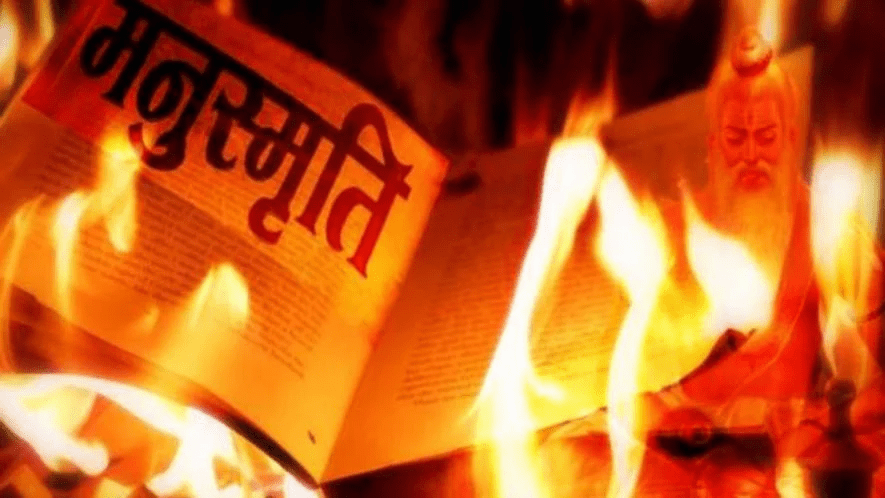
It is the firm opinion of this conference that Manusmruti, taking into consideration its verses (statements) which undermined the shudra caste, thwarted their progress, and made their social, political, and economic slavery permanent, and by comparing them with the principles enunciated in the above part of the manifesto of birthrights of the Hindus, is not worthy of becoming a religious or a sacred book. And in order to give expression to this opinion this conference is performing the cremation rites of such a religious book which has been divisive of people and destroyer of humanity…
(Resolution at Mahad Conference, December 25, 1927, Page 351, Mahad: The Making of the First Dalit Revolt’ – Anand Teltumbde, Aakar Books, 2015)
The debacle faced by BJP at Ayodhya-Faizabad is a big loss of face for the party and the broader Sangh Parivar.
“Those who cannot remember the past are condemned to repeat it.”
– George Santayana, The Life of Reason, 1905.
‘Zor ka Jhataka Dheere Se Lage‘ (roughly translated ‘powerful jolt felt lightly’)
The catch line of a song – or perhaps a famous ad campaign – very well describes the reverses faced by the Bharatiya Janata Party (BJP) in the recently held Lok Sabha elections.
Towards 75 years of adopting the Constitution, it is time for a new beginning.
‘Secularism is the religion of humanity …. It is a protest against theological oppression, against ecclesiastical tyranny, against being the serf, the subject or slave of any phantom, or of the priest of any phantom. “
– Robert Green Ingersoll
Simple ideas are perhaps the most difficult to implement.
For a country of around 1.4 billion, which has witnessed internecine violence on religious lines at the time of Independence, and which has turned a new leaf by adopting a Constitution based on secularism, which abhorred even mentioning the word God, why it is still difficult to avoid religious rituals in public domain, at least in the precincts of the courts?
The model of vigilante justice, i.e, bulldozer politics, by the State itself is a phenomenon that has gained fresh legitimacy during the past decade under Modi.
“Under what law can they demolish a house for an offence that hasn’t been proved?”
Former SC Justice Madan Lokur.
..police cannot, “under the guise of investigation”, bulldoze anyone’s house without permission, and if such practices continue then “nobody is safe in this country” ..: “Show me from any criminal jurisprudence that for investigating the crime, the police, without any order, can uproot a person, apply a bulldozer. .”
There are interventions of courts which are considered to be ‘breaking new grounds’.
The Gauhati High Court’s judgement in the ‘illegal demolitions’ at Salonabari (May 2022) was one such occasion.
The two-judge bench of the high court led by Chief Justice RM Chhaya and Justice Soumitra Saikia had come down heavily on the demolitions executed without following any procedure and declared such actions ‘illegal’ and compared the police actions akin to a ‘gang war’ and ordered compensation to the victims as well as actions against guilty officials.
Two years later, this issue was again before high courts recently, as the affected families had approached it for the government’s dilly dallying on compensation and actions against officials.
How Ten Years of Modi Regime Has Undermined Constitutional Rights to Dalits
Image courtesy: Wikimedia commons
“If the fundamental rights are opposed by the community, no Law, no Parliament, no Judiciary can guarantee them in the real sense of the word”,..“What is the use of fundamental rights to the Negro in America, to the Jews in Germany and to the untouchables in India. As Burke said there is no method found for punishing the multitude’
– Ambedkar
Introduction
Within less than a fortnight we will have a new government in power.
Indian people normally make a judicious choice while electing their representatives, their government and this year won’t be different.
One can recall their wisdom when their united resistance helped unseat Indira Gandhi regime after the emergency (1977) or their concerted action could overthrow the Vajpayi government ( 2004) despite the much hyped ‘India Shining’ rhetoric pushed by it.
Today also ground currents definitely suggest change is in the air.
People’s desire to defeat the Republic of Hate which is pushed before them and regain their Republic of Hope seems overwhelming.
As already expressed by scholars, political activists, concerned citizens, if the elections remain free and fair, if the various guardrails of democracy can remain true to their mandate , we will have real ‘Acche Din‘ waiting for us.
It is an opportune time to look back and see how this much trumpeted regime fared in the last decade in various aspects of India’s society and state.
It is opportune to see how the ‘New India’ – which we have supposedly ushered in – has fared via-v-vis Dalits. What follows is not an exhaustive picture of the last decade of Modi rule but a cursory glance at the issue at hand.
The Right-wing party has been justifying and legitimising Mir Jafar, Mir Sadiq and associates, while demonising Siraj-ud-Daulah and Tipu Sultan.
The tomb of Nawab Siraj-ud-Daulah. Image credit: Wikimedia Commons
Elections to the 18th Lok Sabha have broken records in many ways.
Right from the arrests of Opposition leaders on the eve of elections, the spinelessness shown by the Election Commission (EC) to the open mouthing of hateful speeches targeting a community by top members of the ruling dispensation, to complete metamorphosis of the mainstream media into a cheerleader of the government, all such signs are ominous for the future of democracy in the country.
May be one should add to it the open justification by ruling Bharatiya Janata Party (BJP) leaders of the betrayal by the likes of Mir Jafar and his associates like Raja Krishnachandra Roy, Jagat Seth, Omi Chand — which lead to defeat of the Siraj-ud-Daulah (1733-July 2,1757), the last independent Nawab of Bengal in the Battle of Plassey, which ultimately opened the gates of conquest of the rest of India by the Britishers.
If 2019 elections are still remembered because BJP had fielded candidates who were accused of involved in terrorist acts, the 2024 elections would also be remembered how they helped betrayals covered in glory. ( Read the full article here : https://www.newsclick.in/how-bjp-covers-betrayals-glory)