Category Archives: Centre watch

PadMan, Patriarchy and the Poor Man’s Innovation: Tannistha Samantha and Mukta Gundi

This is a guest post by TANNISTHA SAMAMTHA and MUKTA GUNDI


With the success of “PadMan”, Akshay Kumar has established himself to be a bleeding-heart ‘feminist’. News channels are pouring praises for a film that introduces a ‘bold’ topic while regurgitating the crucial link between safe menstrual practices and women’s health. While the message is old (and important), the euphoria around it is new. Continue reading PadMan, Patriarchy and the Poor Man’s Innovation: Tannistha Samantha and Mukta Gundi

Civil Disobedience under Democracy: The Case of Boycott of Centralised Compulsory Attendance in JNU: Tejal Khanna

Guest post by TEJAL KHANNA

It is often advised that civil disobedience in the form of breaking a law must not be practiced under a democracy. It is because democracy by giving the space for open discussion prevents a situation wherein people are compelled to think of civil disobedience. Moreover, if citizens develop faith in civil disobedience then that only undermines the rule of law. Such an act doesn’t strengthen democracy but rather helps in diminishing its ethos. People must be discouraged to break laws because in a democracy, it is they who elect their representatives through free and fair elections. These representatives then make laws to which open disobedience must not be practiced. Citizens can also vote for change of leadership in the subsequent election cycle, if they feel their representatives have been incompetent. However, while these provisions fulfil the conditions of a well functioning procedural democracy, what recourse do citizens have, when their representatives don’t act in the interest of the governed continuously but function in an autocratic manner? What if laws are made without following the spirit of democracy? Does that really result in making a substantive democracy?

Continue reading Civil Disobedience under Democracy: The Case of Boycott of Centralised Compulsory Attendance in JNU: Tejal Khanna

Jignesh Mevani, The Meltdown of Modi-Men and Dadhichi’s Bones

[ This post is based on updates posted by me on my Facebook wall ]

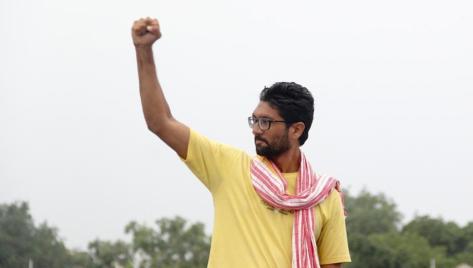
Jignesh Mevani. Photograph by Siddharaj Solanki, HT (Hindustan Times) File Photo, accessed from the HT website

A great kerfuffle has ensued ever since the recently elected independent MLA from Vadgam, Gujarat and Rashtriya Dalit Adhikar Manch activist Jignesh Mevani gave an interview in which he had some choice things to say about the Prime Minister and BJP leader Narendra Modi. Mr. Mevani made some positive and gentle suggestions, to the effect that because Mr. Modi has stopped being relevant, has not delivered on even one of the promises made by him, he should retire, proceed towards the Himalayas, and in the phrase that has caused the greatest commotion, ‘melt his bones’.

Predictably, Mr. Modi’s personal broadcasting service, known as Republic TV has kicked up the greatest fuss. Arnab Goswami has been especially indignant, and he was joined in his rage by BJP spokesperson, the orotund television commentator and historical photo-shop scam artist, Mr. Sambit Patra. Mr. Mevani offered a robust and dignified  refusal to apologize for what he said about Mr. Modi, when Republic TV demanded that he do so. Continue reading Jignesh Mevani, The Meltdown of Modi-Men and Dadhichi’s Bones

An open letter to Brinda Karat: why do female supporters of the Kerala CPIM spew such venom at Hadiya?

Dear Comrade

I can hardly describe the joy and relief I felt reading your piece on the Hadiya case in the Hindu yesterday. By now I am nearly deaf from the cacophony of misogyny, islamophobia, and sheer short-sighted rage that CPM supporters on Facebook are unleashing against this young woman.

Your voice of sanity, Comrade, is therefore a great restorative. If not for your writing, one could have well thought that the CPM was nothing more than a bunch of short sighted, power hungry, strategisers, whose total lack of ethics and values is covered up by a vapid, outdated rationalism and an equally problematic liberalism. You refuse to condemn Hadiya for choosing Islam. You acknowledge that she is brave. You unequivocally reject the father and other minions of patriarchy. You rightly criticise state patriarchy evident in the Supreme Court. Unlike many CPM supporters here, you have no illusions about the times we live in; you are clearly aware that the NIA is not something which will spare us if we stay good. Importantly, you put paid to the idea that the High Court judgement that sanctioned her illegal custody was justified — an idea assiduously nurtured by certain public figures allied with the CPM against religious Muslims. Comrade, thank you again for being so forthright and in the face of snarling islamophobes in your own ranks actually gunning for the voice you raised against her illegal custody long back.

Continue reading An open letter to Brinda Karat: why do female supporters of the Kerala CPIM spew such venom at Hadiya?

Modi says the economy isn’t so bad; He’s right – it’s worse

by Samarth Bansal and Aman Sethi

On October 4, Prime Minister Narendra Modi offered a robust defence of his government’s management of the economy, shortly after the Reserve Bank of India lowered its Gross Value Added (GVA) growth estimates for the current fiscal year from 7.3% to 6.7%.

Since then, the ruling party has been pains to push a positive narrative on the economy,  extent of emailing clips of the speech to journalists who write about the economy.

So, what is the current state of the economy? Here’s a reality check.

How many jobs has the economy created?

Modi said: “Upto March 2014, the subscriber base of the Employees Provident Fund Organization (EPFO) stood at 3.26 crore. Over the last three years, the numbers increased to 4.8 crore. Some people forget that this number can’t increased without a corresponding increase in employment.”

Reality Check: EPFO numbers have increased, but this doesn’t necessarily mean that total employment has increased. In July this year, this jump in EPFO subscribers was attributed to a government amnesty scheme which allowed firms to come clean on their actual staff strength without being penalized. In a detailed note, Mahesh Vyas, Managing Director and CEO of the Centre for Monitoring Indian Economy (CMIE), explained why using EPFO data as a proxy for job creation is “fraught with danger.”

Referring to the jump in the subscriber base, Vyas wrote: “This is not new employment. It is merely enrollment of employed persons into EPFO.”

Continue reading Modi says the economy isn’t so bad; He’s right – it’s worse

Preserve Kerala as the Shining Example of Democracy for India : Prof. Satish Deshpande writes to the Chief Minister of Kerala

(This is the text of the open letter from Prof. Satish Deshpande to the Chief Minister of Kerala on the Hadiya issue. Satish’s work Contemporary India, translated as Samakalika India, has been hugely influential in shaping the progressive understanding of Hindutva nationalism and communal hatred in Kerala.)

<!–more–>

The Honourable Chief Minister of Kerala

Shri Pinarayi Vijayan

6th October, 2017

Respected Sir,

Ever since I first came to Kerala in 1981 to study at the Centre for Development Studies (CDS) at Thiruvanathapuram, I have been a committed supporter of everything that the left tradition of your great state has achieved by way of democratic innovations in governance and social practice. Even today, I believe that Kerala continues to be a shining example in many spheres where the rest of India lags far behind.

I was therefore shocked to read about the Hadiya case and the tacit and explicit state support that underwrite her virtual house arrest today. I am told that the man that Hadiya has chosen to marry and the organisation with which he is associated may have a questionable past. Whatever be the truth of this matter, the fact is that an adult citizen’s personal choices in matters like marriage cannot be undone by the state no matter how ill-considered that choice may appear to others. Moreover, in the current climate, it is surely not irrelevant that the religion in question is Islam – it is highly unlikely that this case would have attracted any attention if Hadiya had chosen to convert to some other religion.

It is highly embarrassing – to the say the least – that a government led by a party that can claim to have played a major role in transforming Kerala society for the better is today seen to be siding with the reactionary forces.

I appeal to you to use the power vested in you by the people of Kerala to end this travesty of justice and ensure that Hadiya is left free to live her life as she chooses.

With best wishes,

Satish Deshpande

(Professor of Sociology, Delhi University)

The Gravity of Newton : Rituparna Sengupta

This is a guest post by RITUPARNA SENGUPTA


Amit V Masurkar’s recently-released film Newton explores facets of Indian democracy at its most vulnerable. For these times of ‘nationalist’ bravado, this is a courageous topic.  The film is so named because it adopts for the most part, the point of view of its protagonist, Newton (Nutan) Kumar (Rajkummar Rao, thank you once again!) who resists corruption and hypocrisy at home and work. Continue reading The Gravity of Newton : Rituparna Sengupta

Free Hadiya March on 3 Oct: Citizens for Hadiya

On October 3, students, human rights activists, muslim-dalit-adivasi-bahujan organisations from all over India are converging in Thiruvananthapuram to march for the freedom of the twenty-four-year-old Hadiya, who is under virtual house arrest in the home of her father, Mr Asokan after the shocking annulment of her marriage to her chosen partner by the Kerala HC. The march will begin from the Martyr’s Column, Palayam, at 11 AM and end at the Kerala State Government Secretariat junction. Through this we hope to draw the attention of the public to the grave dangers posed by these decisions of the judiciary and by the shameful silence and criminal inaction of the Kerala government , which claims leftist and secular credentials. We invite all to participate in this march and strengthen the hands of those who are fighting to undo this unspeakable violation of justice to an Indian citizen and the gross attack on the fundamentals of Indian democracy. We also request you to kindly change your Facebook profile pictures to Citizens for Hadiya and/or write supporting posts.

Continue reading Free Hadiya March on 3 Oct: Citizens for Hadiya

BJP, In Search Of An Icon: Is Deendayal Upadhyay Party’s Mahatma Gandhi?

Tomorrow, the capital will see the culmination of the year-long birth centenary celebrations of Bharatiya Jana Sangh leader Pandit Deendayal Upadhayay
BJP, In Search Of An Icon: Is Deendayal Upadhyay Party's Mahatma Gandhi?

‘Nirastapadapeshe Erandopi Drumayate !’ – Sanskrit Proverb

(In a treeless country even castor counts for a big tree)
( Quoted in EPW ”An Occasion for the RSS”, GPD)

Come September 25 and the capital would see the culmination of the year-long birth centenary celebrations of Bharatiya Jana Sangh leader Pandit Deendayal Upadhayay . The year gone by had witnessed flurry of activities around Deendayal Upadhyay supposedly to project him as one of the ‘makers of modern India’. Exactly a year ago Prime Minister Modi had shared a piece of his mind at a public meeting in Kozhikode wherein he had specifically put Deendayal Upadhyaya in the same category as Mahatma Gandhi and Lohia who had “[i]nfluenced and shaped Indian political thought in the last century”.

Read the full article here

Statement Against Genocide and Deportation of Rohingya Muslims

Violence is sweeping Myanmar and in a short span of two weeks lakhs of ethnic Rohingya refugees have fled to Bangladesh and thousands have lost their lives. Satellite data shows, large parts of the Rakhine state, home to most of the Burmese Rohingya population have been set on fire, and murders, rape, arson, loot and forced displacement of the Rohingya population is taking place on a scale, that should be alarming for all humanity. Even the UN secretary general has called out to Mayanmar to end violence against the Rohingya and Nobel laureate Desmond Tutu has urged Mayanmar state Councillor Aung San Suu Kyi to speak out against the persecution of the Rohingya. The tragedy facing the Rohingya is of an unprecedented scale and needs to be addressed with a sense of utmost urgency.

As Indian citizens, we need to break the silence on ethnic violence against the Rohingya and the unconstitutional proposed deportation of a wide and long-residing Rohingya community from India, to certain death that awaits them in Myanmar. The Rohingyas have been living as a peaceful refugee community in various parts of India since the 1970s, with no criminal records or history of crime. Let us not be a part of this genocide. Let us stand up for justice and humanity, and raise our voice against the killings, displacement and deportation of the Rohingya!

Continue reading Statement Against Genocide and Deportation of Rohingya Muslims

Politics of Convenience and the Anti-Defection Law: Anmolam and Farheen Ahmad

Guest post by ANMOLAM and FARHEEN AHMAD


The ghar-wapsi of Mr. Nitish Kumar and the rupture of the grand alliance in a ‘not-so-grand’ manner came as a major surprise to all. Political pundits have expressed much on it with views ranging from ‘credibility crisis and convenient conscience’ to ‘the anti corruption crusade’. Without getting into debate pertaining to the socio-political ramification of the step taken by Mr Kumar and the political perception generated in this regard, what interests us is the legal framework dealing with the issue. Although, there does not seem to exist definite legal provisions addressing the issue, the closest legislation in this regard is ‘Anti defection’ law. But for specific reasons, the anti-defection law does not seem to provide a remedy in such instances of ‘de facto defections’. Continue reading Politics of Convenience and the Anti-Defection Law: Anmolam and Farheen Ahmad

A letter to Kummanam-ji, but also to all Pujya/Poojya/Poo Hindutva fanatics from Kerala, in the wake of revolution in the prasad-giving practices in Haryana

Dear Kummanamji

This is to let you know how the events presently unfolding in Dharmakshetra- kurukshetra (or at least its vicinity) are making even me, a lapsed sudrathy from Kerala, more and more creative about convincing your masters in Delhi that Hindutva fanatics in Kerala are no less worthy of kind consideration than their own home-grown fanatics. Actually, is this not the time you should be making a splash? Alas, despite your earnest efforts, these days, the Kerala police (and even your arch-enemies in Kerala, though they seem to be a bit less enthusiastic  these days), take all the credit of minority-bashing and gender-criminalising. And the best you can do is go home to home telling Hindu women to cover up etc. and shout at Muslim groups doing the same, accusing them of nearly the same acts.

My ex-sudra blood boils perhaps when I notice how in the course of post-independence history, Kerala politicians in Delhi with the exception of a few of the likes of AK Gopalan, have performed mostly sudravritti especially after the 1980s even when they were in powerful posts (often clearing the shit your predecessors have made according to the instructions from above and to the extent to which they permit). Now is your chance, I think, to rise, or at least put your head above the ground. Continue reading A letter to Kummanam-ji, but also to all Pujya/Poojya/Poo Hindutva fanatics from Kerala, in the wake of revolution in the prasad-giving practices in Haryana

The True Bargain : How Dr. Ram Rahim Singh Insaan Defined His Time

[ Random notes made in the wake of the conviction of Dr. Baba Ram Rahim Singh Ji Insaan of Dera Saccha Sauda for the offense of rape in Panchkula, Haryana, with some attention paid to the testimonials of his close friends. ] Continue reading The True Bargain : How Dr. Ram Rahim Singh Insaan Defined His Time

The Heavy Footsteps of Brahmanical Dandaneethi : The Hadiya Case


It appears that for women in India, the modern judiciary is fading and in its place, the terrifying face of Brahmanical Dandaneethi is emerging. A ten year old rape victim is denied abortion, women fleeing dowry harassment are to submit to the rule of local elders and leaders of ‘family welfare committees’, and now, in the Hadiya case, the judges declared that unmarried daughters should be under their parents according to ‘Indian tradition’.

Read more:   https://thewire.in/169543/hadiya-islam-conversion-supreme-court/


An Anthem for Kerala: Mojitopaattu

In these days in which Indo-Gangetic barbarians seethe with rage against Kerala and unleash all sorts of false propaganda about the state of affairs here, I have been thinking about my own love for and quarrels with this place. My relation to it has been largely critical, as a Malayali woman born and raised here who has endured, and continue to endure, much second-rate treatment. More than anyone else, I realize, it is Malayalis who have criticized Kerala.  Not surprising, then, is the fact that one of the most ardently-discussed themes in public politics here in the past decades has been the critique of the entrenched imagination of Kerala, and its exclusions. Not for nothing, too, have the struggles of marginalized people here demanded not just material gains, but the reimagining of Kerala in more expansive terms. And newer and newer groups of excluded people keep renewing it – most recently, the LGBTIQ+ people.

Our love for Kerala is a cursing, stumbling love – but love above all.

That’s why I think Anitha Thampi’s poem  Mojitopaattu (The Mohito Song) ought to be our anthem. Anitha is undoubtedly one of Kerala’s most perceptive poets of the present, capable of delving into the depths of the present cultural moment and surfacing with inscrutable yet pervasive feelings and moods and weaving these into words. Our crazy love of Kerala which cannot be but critical is brilliantly caught in this poem In it, this love comes alive as moonlight falling on this place which illuminates erratically, sways madly, and disappears without notice; this loving looks as hard and risky as a drunk’s faltering steps along a rough bylane through treacherous yet playful moonlight; this love eddies through the blood of two and a half generations and comes awake even as the whole world sleeps. Long before the Indo-Gangetic barbarians even noticed us have we felt this mad love, and it will take more than vituperative slander to kill it.

Below is my translation of Mojitopaattu – and I take Anitha’s suggestion that it a song, and a drunken one, seriously. I hope someone sets it to music and it becomes the anthem of crazy-lovers of Kerala.


Four-five sprigs fresh mint

Two spoons sugar
Juice of three limes
Vodka, two measures and a half 
Soda
Ice

Hey you, swayin’-shakin’-rollin’
 on night-time alley that’s runnin’
all o’er earth that’s green and shinin’
Banana-leaf-like, straight and gleamin’*
Hey sweet moonlight, 
who you be,
you be man or you be woman?

Hey you, fallin’ easy-loose-y
You for real, or just a feelin’?
Hey you singin’ , spreadin’-creepin’
Who you be to sunshine beamin’?

Hey you lurchin’, fallin’, stumblin’
on each an’ ev’ry greenly leafling  
Hey bright moonshine,  distilled-dried blood, bluish, 
two and a half generations bleedin’
Who be you?

You be me, or you be you?

*Kerala, that lies at the foot of mountains like a bright green banana leaf beside the sea.

( Anitha Thampi , ‘Mojitopattu’)


And here is the original, much more terse and controlled in its use of language, but a paattu all the same:


മൊഹീതോപ്പാട്ട്

നാലഞ്ച് തളിർപ്പുതിന

രണ്ടു സ്പൂൺ പഞ്ചസാര

മൂന്നു നാരങ്ങാ നീര്

രണ്ടര വോഡ്ക

സോഡ

ഐസ്


നാക്കിലമണ്ണിൻ∗

രാവൂടുവഴിയൂടെ


ആടിയാടിപ്പോകുന്ന പൂനിലാവേ നീ

ആണാണോ പെണ്ണാണോ?

അഴിഞ്ഞഴിഞ്ഞു തൂവുന്ന പൂനിലാവേ നീ

നേരാണോ പൊളിയാണോ?

പാടിപ്പാടിപ്പരക്കുന്ന പൂനിലാവേ നീ

വെയിലിൻറെ ആരാണോ?


പച്ചിലകൾ തോറും തപ്പിത്തടഞ്ഞു വീഴും

രണ്ടരത്തലമുറ നീലിച്ച വാറ്റുചോരപ്പൂന്തെളിനിലാവേ നീ

ഞാനാണോ നീയാണോ?


∗കേരളം


“No research please, we are college teachers” – On the HRD Ministry’s latest bright idea.

A version of this piece appeared yesterday in The Wire

“I would like to thank Huddersfield University for enabling me to have a sabbatical semester to work on this revised edition and for providing such a supportive environment. Thanks to many of the students on my Women, Power and Society module for their hard work and enthusiasm.”

That is the dedication in a book by British scholar and teacher Valerie Bryson – a text I often use for teaching at a college in Delhi University. Evidently, Bryson found her teaching and research lives complementing each other beautifully, as have thousands of university and college teachers who have had the luck to have what she calls a “supportive” professional and academic environment. What are the elements of this support? A sabbatical semester or year every once in a while, ready research facilities within the college premises or nearby, and an opportunity to formulate teaching courses that ally with your research focus. With these elements in place, both teaching and research benefit dramatically.

Until recently, college teachers in this country had the first two conditions. They were given in their entire careers – say from the age of 26 or 27 when one normally began teaching at a college to the age of 65 – three years of paid study leave to pursue or finish their PhDs (with the usual conditions and caveats including a strict bond that they signed with college promising to return the three years’ pay if the PhD remained incomplete, or if they resigned upon return to the institution) and a further two years of (until recently, paid and now invariably unpaid or “extraordinary”) leave to take a break from teaching and pursue a postdoctoral or visiting fellowship at a research institute.

Continue reading “No research please, we are college teachers” – On the HRD Ministry’s latest bright idea.

Open Letter to the Board Members of the Sameeksha Trust


Following is the text of the open letter by members of the EPW Community addressed to Sameeksha Trust

As long-standing well-wishers and members of the intellectual community served by the EPW, we are appalled and dismayed by the recent events leading to the abrupt resignation of the Editor, Paranjoy Guha Thakurta.

We are distressed that the Board of the Sameeksha Trust has insisted that the Editor retract an article published in the journal, and is preparing to introduce new norms for the Board-Editor relationship and appoint a co-editor.  It is obvious that, taken together, these actions (mentioned by the Editor in interviews to the press and not denied in the statement issued by the Trust) would force any self-respecting editor to resign.  By failing to distinguish between internal issues of procedural propriety in Board-Editor relationship from the much larger question of the EPW’s public reputation for integrity, the Board of the Sameeksha Trust has dealt a strong blow to the journal’s credibility. Continue reading Open Letter to the Board Members of the Sameeksha Trust

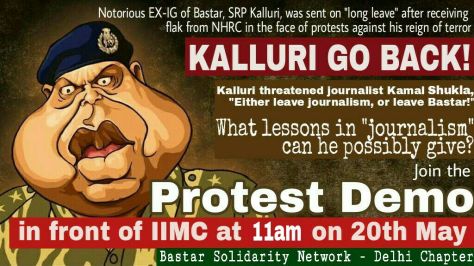
A Day Against Kalluri at IIMC, Delhi: Bastar Solidarity Network Delhi Chapter

Guest Post by Bastar Solidarity Network Delhi Chapter

The democratic forces, organizations and the thinking minds of IIMC took part in a spirited protest today against the invitation extended to notorious ex-IG Kalluri by the IIMC administration to take part in a seminar. To start with, since last two days, there were several attempts on the part of the organizers to confuse/conceal Kalluri’s invitation. Immediately after the declaration of the protest, Kalluri’s name was dropped from the poster. There were also threats of counter-mobilisation by the BJP goons. But undeterred, as we reached the gates of IIMC at 11am, the site echoed with slogans of “Killer Kalluri Go Back”!

Continue reading A Day Against Kalluri at IIMC, Delhi: Bastar Solidarity Network Delhi Chapter

फर्ज़ी प्रमाण पत्र के सहारे दलित और आदिवासियों के अधिकार पर डाका

सांसद समेत अन्य लोग फर्ज़ी कागज़ातों के ज़रिये दलित और आदिवासियों के अधिकार छीन रहे हैं.

Indian tribal people sit at a relief camp in Dharbaguda, in the central state of Chhattisgarh, March 8, 2006. Violence in Chhattisgarh, one of India's poorest states, has mounted since the state government set up and started funding an anti-Maoist movement. Picture taken March 8, 2006. REUTERS/Kamal Kishore

(फोटो: कमल किशोर/रॉयटर्स)

मध्य प्रदेश के बैतूल से अनुसूचित जनजाति के लिए आरक्षित सीट से दूसरी बार चुनी गईं सांसद ज्योति धुर्वे की सदस्यता फिलवक़्त ख़तरे में पड़ती नज़र आ रही है.

पिछले दिनों मध्य प्रदेश सरकार की उच्चस्तरीय जांच कमेटी ने सघन जांच के बाद उनके द्वारा प्रस्तुत किए जाति प्रमाण पत्र को खारिज़ कर दिया.

ख़बरों के मुताबिक अपने जाति प्रमाण पत्र की कथित संदिग्धता के चलते धुर्वे तभी से विवादों में रही हैं जब 2009 में वह पहली दफ़ा वहां से सांसद चुनी गई थीं. यह आरोप लगाया गया था कि वह गैर आदिवासी समुदाय से संबद्ध हैं और उन्होंने फर्ज़ी जाति प्रमाण पत्र जमा किया है.

इस मसले को लेकर मध्य प्रदेश उच्च न्यायालय के सामने एक केस दायर किया गया है और अदालत के आदेश पर ही उपरोक्त जांच पूरी की गई है.

गौरतलब था कि जांच के दौरान पाया गया कि उनका जाति प्रमाण पत्र वर्ष 1984 में रायपुर से जारी हुआ था, मगर जब कमेटी ने इस बारे में कुछ और प्रमाणों की मांग की तो सांसद महोदया उन्हें कमेटी के सामने प्रस्तुत नहीं कर सकी.

कमेटी ने यह फैसला एकमत से लिया है और इसके बाद सांसद महोदया के ख़िलाफ़ कार्रवाई की मांग उठी है. विपक्ष का कहना है कि यह मसला 2009 से सुर्ख़ियों में रहने के बावजूद राजनीतिक दबाव के चलते इस पर फैसला नहीं लिया गया था.

बहरहाल, ज्योति धुर्वे के बहाने फिर एक बार फर्ज़ी जाति प्रमाण पत्रों का मसला चर्चा में आया है.

(Read the complete text here : http://thewirehindi.com/8059/how-our-leaders-and-other-people-snatching-the-rights-of-dalit-and-adivasi-by-fake-certificates/)

Who will get the hot roti in the Delhi assembly elections?

My friend Guddi has a great story about a Gujjar wedding she attended recently in Ghaziabad. It was a typically chaotic event, marked accurately by the swirling crowds around the dinner stalls. If Gujjar weddings are chaotic and the dinner doubly so, the scene around the tandoor is triply compounded chaos. Barely concealed competition amongst overmuscled Gujjar men in overtight pants for that precious hot roti ensures that none but the most Hobbesian men remain, circling the tandoor like hungry wolves, periodically thrusting their plate forward like fencing champions and shouting obscenities at the harried servers. In such a heart-stopping scenario, a young server had as Guddi recounts, figured out the formula to keep everybody from killing each other (or him). As soon as the roti would be pulled out of the tandoor, seductively golden brown and sizzling, this man would hold it high up with his tongs so everybody could see, then in an elaborate dance-like ritual, touch each of the empty extended plates in front of him with the roti, and finally, in a mysterious but authoritative decision, place it respectfully on a randomly selected plate. Repeat with every single roti that emerged from the tandoor. A hushed silence followed by nervous laughter followed every such flourish.

Continue reading Who will get the hot roti in the Delhi assembly elections?

Beyond Defeatism – Political Parties and the Fight Against Hindutva

The following, necessarily brief, reflections have been sparked off by two recent posts on Kafila – one by Biju Mathew published on 16 April, and the other by CP Geevan, published today. These reflections should not be seen as a response to the positions taken by Biju and/ or Geevan; they are, in fact, more in the way of addressing the central question raised by Biju Mathew’s piece – that of despondency and pessimism that has followed the UP elections and more importantly, the stealthy manner in which Adityanath was installed as the chief minister in the state. Stealthy, because after all, it was amply clear even to the decision makers in BJP, from the very beginning that if they had entered the election campaign with Adityanath as the chief ministerial face, it might have yielded very different results. It was too  big a risk to be undertaken.The real stroke of Modi-fascist genius lay precisely in keeping not just the electorate but also the organizational machinery in the dark and turning it into an advantage.

As it happens, despite the sharpness of Geevan’s comments, my sense, on reading the two pieces, is that there isn’t really as great a divergence on most issues as might appear at first sight.

Continue reading Beyond Defeatism – Political Parties and the Fight Against Hindutva