Category Archives: Everyday Life

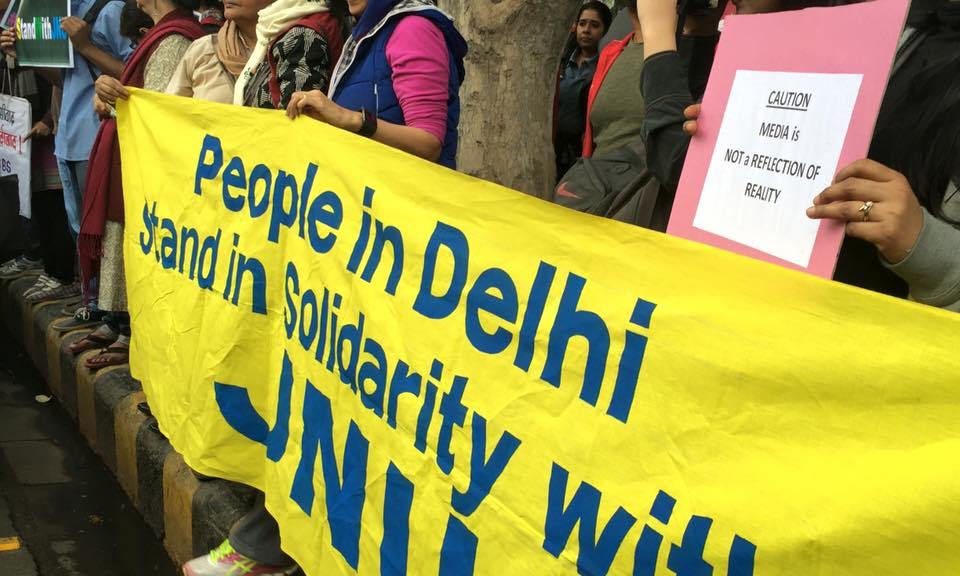
Delhi Stands With JNU Students and Against the Evil Modi Regime

Because things are the way they are, things will not stay the way they are...”-

Bertholt Brecht

This slideshow requires JavaScript.

This afternoon saw an amazing, uplifting show of peaceful, joyful strength by students, young people, teachers, friends in Delhi, in support of JNU, in memory of Rohith Vemula, in solidarity with Kanhaiya, Umar and all the students in JNU who are being so stellar in their principled opposition to this evil, venal Modi regime. Reports of massive protests are coming in from Kolkata, Russia to and elsewhere. Something is changing in the air.
It was a perfect spring afternoon, overcast like our times, but breezy like our morale. There must have been at least 15,000 people on the march today. We met old and long lost friends and made new ones.

The gathering was totally peaceful. Young  women and men, student profits from JNU in the eighties, grey haired, felt young again as their student held aloft flowers, flags, signs and homemade banners. Everyone looked their best, as if they had come to a massive street party.

It was so infectious, the mood this afternoon, such a contrast to the vile bad temper of the men who attacked Kanhaiya and his supporters two days in a row at the Patiala House Courts two days in a row that the difference between two entirely different visions of politics was palpable on your skin. The contrast sent a clear message to all our senses.

The RSS-ABVP-BJP brand of politics is diseased. It’s on its last legs and that is why it is so desperate. It cannot perform, it has no ideas, it is morally and culturally bankrupt.

Universities are in crisis and all that the bad TV actress who makes a joke of her ministry (HRS) every day can think of today while thousands March against her and her boss is about sticking giant flagpoles into the ground and stitching gigantic silk shrouds for her  government and her party.

Modi, Rajnath and Manusmriti Irani should quake in fear. Their time is up.

Very proud of JNU students and the people of Delhi today.

#StandwithJNU #StandwithKanhaiya

#StandwithUmar

#Standwithallstudents

#NowitchHuntofStudents

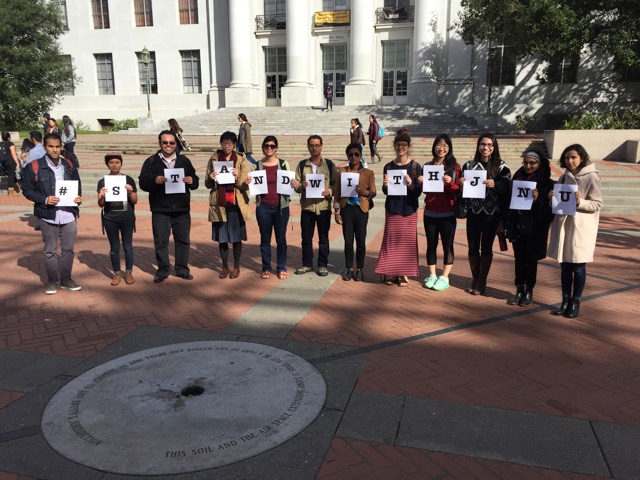
As The People’s Republic of New Delhi Marches in the Free Air Students of Berkeley #StandWithJNU

As the people of Delhi march, sing, run and dance to freedom’s call, as they cock a snook at the shackles of nationalism, casteism and authoritarian stupidity, a gift of love from afar. Look at them standing in the free air! Look at them standing around a piece of earth unbound from the myopia of nationalism!

BerkeleyStudents

“This soil and the air space extending above it shall not be a part of any nation and shall not be subject to any entity’s jurisdiction,”
 At the memorial to the 1964 Free Speech Movement on the campus of University of California, Berkeley, students and faculty stand in love and solidarity with JNU. #standwithJNU
 The memorial the 1964 Free Speech Movement at the University of California, Berkeley, like the thing it celebrates, is both invisible and embattled. The monument appears to be a circle of concrete six feet in diameter, in the middle of the famed Sproul Plaza where thousands of students gathered to demand the right to free speech and academic freedom on one of America’s most prominent and celebrated public university campuses. But that monument is so much more than what can be seen. The concrete circle, bearing the inscription “This soil and the air space extending above it shall not be a part of any nation and shall not be subject to any entity’s jurisdiction,” encompasses a 6-inch wide indentation into the ground that reaches into the soil below and 60,000 feet upwards into the sky, to the limits of American airspace. That is, in fact, the monument to free speech at Berkeley: 60,000 feet and 6-inches of invisible insistence that to speak freely is not and cannot be a right granted by any sovereign, mandated by any state. The width of the depression in the ground is as large as a person’s two feet. The ground on which they stand. From which they speak. This is the lasting monument to free speech at Berkeley. From a space as wide as our stance, reaching in an unseeable column of air to the limits of the stratosphere. A monument of air that can never, like free speech itself, be contained, torn down, or granted by another. It lies, unassuming, built as it is out of the immateriality of inalienable rights, in the middle of a campus that grapples daily with the legacy of that now 50 year old fight for the right to claim the space of the university as one of protest, of politics, of resistance.


But Berkeley, we mustn’t forget, exists on occupied territory. Its celebrated monument digs into soil that was taken, without recompense or acknowledgement, from the Ohlone people who were stripped of their lands, their language, their culture, and their lives in what America today celebrates as its great westward expansion. Thus, the monument to free speech at the University of California, Berkeley, roots itself into a soil it claims belongs to no nation and also reifies centuries of the genocide of indigenous people and of settler colonialism. This too is the legacy of the Free Speech Movement. Of the student-led activism that created Ethnic Studies programs across California and the rest of the United States. To stand in the 6-inch wide memorial is to stand in land that is occupied and to nonetheless believe that no occupation, no nation, no state, mandates our ability and our right to speak, to protest, to imagine otherwise the world in which we live.

From Berkeley to JNU. With love and solidarity.

Poulomi Saha

University of California, Berkeley

Solidarity with JNU and Conversations on Kashmir: JKCCS

Guest Post by Jammu Kashmir Coalition of Civil Society

Jammu Kashmir Coalition of Civil Society (JKCCS) expresses its solidarity with the striking students and teachers of Jawaharlal Nehru University, New Delhi. We have watched with a sense of horror and dismay, the violent criminalizing of student democracy and dissent, not just at Jawaharlal Nehru University but across Indian campuses in the recent past. Having long and intimate knowledge of violent repression and legalized impunity that Indian state is capable of, especially against those it considers ‘anti-national’ we are not surprised by these events, but have a special empathy with all who suffer its horrors. We demand the release of all student dissenters and political prisoners in the custody of the Indian state, and an end to acts of policing and surveillance on campuses, and targeting of students on the basis of political beliefs and speech.

The Kashmiri students in different colleges and universities in India, who have always faced discrimination and intimidation time to time, are now feeling the extreme regressive and oppressive means used by right wing groups and the government. After being hounded, Kashmiri students have begun leaving Delhi. There are several places where the landlords, in whose properties Kashmiri students were renting flats, have asked the students to vacate. These experiences of Kashmiri students are part of the larger reality faced by Kashmiri youth in Jammu and Kashmir and in India. The voices of dissent in Jammu and Kashmir have been dealt with administrative detentions under Public Safety Act, illegal detentions, torture, surveillance and killings by armed forces including the most recent one of Asif and Shaista at Pulwama on 14th of February.

We also view with alarm, the reports about the cynical use of Kashmiri students studying in Delhi as hostages in the politically illegitimate process of government formation in Srinagar.

We are dismayed that the public narrative about the recent events has often descended into disputes over Indian ‘patriotism’ and the shrill condemnation of a few ‘fringe’ ‘radical’ ‘traitors’ for ‘irresponsible’ slogans. These sentiments are neither mere slogans nor represent the ‘fringe’ in Kashmir, the very place they were made in reference to. As Kashmiris, we believe that the right to self-determination is inseparable from the right to political association, dissent and free expression, and these rights cannot be selectively asserted or upheld. In the competitive public proclamations of nationalistic credentials, what has been lost is that courageous act of defiant solidarity with the Kashmiri people’s struggle for justice and self-determination, that lies at the heart of these debates. Despite the disavowals and the state repression, the solidarity with the political rights of the Kashmiris is growing and spreading, as events in Jadavpur University demonstrate. We acknowledge the emerging spaces in Indian civil society to converse on the question of Kashmir, beyond nationalist framings. We hold out hope for future alliances with students, groups and individuals willing to engage in honest conversations, in which they alone do not determine the boundaries of what can or cannot be said, thought or felt.

Spokesperson
JKCCS

“A Glorious Thing Made Up Of Stardust:” What Pat Parker & Rohith Vemula Ask Us to Consider Lata Mani

This is a guest post by LATA MANI

The first thing you do is to forget that I’m black
Second, you must never forget that I’m black

Pat Parker (1978)

In these opening lines of her poem, For the White Person Who Wants to Know How to be My Friend, Pat Parker names a paradox at the heart of challenging socially produced difference. Parker is speaking not to diversity in nature, nor to the diversity of nature. Not to the variations of appearance – size, shade, height, foliage, texture; or mode of expression – hoot, howl, accent, gesture, cultural practices. Her lines address a uniquely human phenomenon: prejudice. They speak to the poignant difficulty of challenging a spurious and malevolent construction of racial difference in a society still in the grip of its miasma.

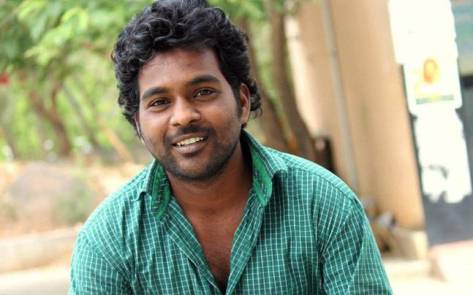
I have recalled Parker’s lines many times in the days of sorrow, tumult and righteous rage that have followed Rohith Vemula’s suicide. “Rohith Vemula’s suicide.” I am holding off from saying “Dalit scholar Rohith Vemula’s suicide.” Or, as is now being said with good reason, “Dalit scholar Rohith Vemula’s institutional murder.” I defer by a couple of sentences a description of him that refers to the caste into which he was born; to honour if only symbolically his anguish that the contingent facts of his birth had indelibly defined his life.

Continue reading “A Glorious Thing Made Up Of Stardust:” What Pat Parker & Rohith Vemula Ask Us to Consider Lata Mani

JNU Teachers Statement

After the arrest of JNUSU President Kanhaiya Kumar on 12 February and the entry of the police into JNU Campus, the situation has worsened for our students over the last few days. Sections of the mainstream and social media have carried unsubstantiated rumours targeting students, and organised groups have been making threats against them and indulging in hate speech in order to intimidate. The viciousness of this section of the media and amounts to a public trial and the frightening abuses being hurled at them make us feel deeply concerned for their personal safety and possibilities of their obtaining justice.

We strongly condemn these acts that create an environment of extreme prejudice and potential violence. We demand that the campus be allowed to return to normalcy at the soonest, so that students can return to their regular academic life in an atmosphere of trust and safety. The slander campaign against the University based on unsubstantiated claims not only tarnishes JNU’s image as one of best regarded institutions of higher education in the country, it also destroys JNU’s peaceful academic life. We are deeply concerned about the students’ future, which is being affected by this malicious campaign against JNU.

We the teachers of JNU wish that the Indian people should see through this orchestrated design to transform JNU into a space which will be unable to encourage or sustain critical thinking, so vital to the functioning of our democracy and our nation. It will also endanger the futures of thousands of students who are uncertain about the consequences that such a sustained campaign will have on their futures. We call upon the broadest possible sections of the Indian people to preserve the character of this much cherished national institution.

 C.P. Chandrasekhar

G. Arunima

Ayesha Kidwai

Udaya Kumar

Pratiksha Baxi

Chirashree Dasgupta

Saradindu Bhaduri

Rajat Datta

Vinay Kumar Ambedkar

Ranjani Mazumdar

Jayati Ghosh

Navaneetha Mokkil

Rohith Azad

Ameet Parameswaran

Joy Pachuau

Yashadatta Alone

Rajarshi Dasgupta

Mohan Rao

Vikas Bajpai

Sujatha V

Parul Mukherjee

Ramila Bisht

Surinder Jodhka

Happymon Jacob

Supriya Varma

Mallarika Sinha Roy

Parnal Chirmuley

Nivedita Menon

Hemant Adlakha

Lata Singh

Urmimala Sarkar

Rajib Dasgupta

Rama Baru

Prachin Ghodajkar

Vikas Rawal

Partho Datta

Papia Sengupta

Ira Bhaskar

Sandesha Rayipa-Garbiyal

Veena Hariharan

Pradipta Bandyopadhyay

Biswajit Dhar

Neera Kongari

Geetha Nambissan

Brahma Prakash

Brinda Bose

Maitrayee Chaudhuri

Rashmi Barua


Statements of Solidarity For JNU From Various Quarters

We at Kafila have been receiving amazing statements of solidarity with JNU and its elected students’ President Kanhaiya Kumar over the past three days. We are posting them below, along with affiliations: South Asia University (teachers and students); Grinnell College, USA, Ambedkar University Delhi Faculty Association, Democratic Teachers Network, Hyderabad, and over a hundred students from Department of English, Delhi University.


STUDENTS OF SOUTH ASIA UNIVERSITY

We, the students of South Asian University, New Delhi (comprising of students from eight SAARC nations – Afghanistan, Bangladesh, Bhutan, India, Maldives, Nepal, Pakistan and Sri Lanka) strongly oppose the idea that one’s nationalism be defined in terms of hatred towards another nation (for example, Indian nationalism be defined as hatred towards Pakistan, or vice versa). We cherish the common cultural and social heritage of the South Asian region, and shall not let any kind of jingoist nationalism being endorsed by any religious group, political party or state hinder our shared solidarity. However, in recent times, such groups and establishments have unleashed an attack on democratic and critical voices in our universities across the South Asian region, masked under religious conformity, state intervention or sometimes in the form of an act of terrorism.

Thus, we stand in complete solidarity with the student and faculty community of Jawaharlal Nehru University (JNU) in their collective struggle against the ongoing police intervention by slapping the baseless charges of sedition on many students, including the arrest of JNUSU President – Kanhaiya Kumar, and against the massive propaganda terming the JNU as ‘a den of anti-nationals’. We would like to reiterate that our collective nationalism stands responsible only to the interests of our people and our land, and not to the divisive forces which have had and are still trying to create boundaries between us.

STATEMENT OF SOLIDARITY WITH STUDENT PROTESTS IN INDIA, FROM STUDENTS, FACULTY, AND STAFF OF GRINNELL COLLEGE

Grinnell-JNU Solidarity

Continue reading Statements of Solidarity For JNU From Various Quarters

SOLIDARITY STATEMENT BY JNU ALUMNI AND INTERNATIONAL ACADEMIC COMMUNITY

The statement below represents the concerns of JNU’s international alumni, and a wider global academic community of friends and comrades. The support demonstrated by the names below testifies that JNU is far more than a besieged university campus in India. JNU stands for a vital imagination of the space of the university – an imagination that embraces critical thinking, democratic dissent, student activism, and the plurality of political beliefs. It is this critical imagination that the current establishment seeks to destroy. And we know that this is not a problem for India alone. Similar attacks on critical dissent and university spaces are being attempted and resisted across the world.

If you would like to stand in solidarity with the students and faculty of JNU, and the ethos of university spaces everywhere, please mention your name and current institutional affiliation in the ‘Comments’ section. Also, in case you are a JNU alumnus, please mention the year you graduated. This list will be regularly updated.

****SOLIDARITY STATEMENT****

We, the undersigned, stand in solidarity with the students, faculty and staff of Jawaharlal Nehru University, New Delhi against the illegal ongoing police action since February 9, 2016. With them, we affirm the autonomy of the university as a non-militarized space for freedom of thought and expression. Accordingly, we condemn police presence on campus and the harassment of students on the basis of their political beliefs.

The charge of sedition, under the guise of which the police have been given a carte blanche to enter the JNU campus, to raid student hostels, arrest and detain students, including Kanhaiya Kumar, the current president of the JNU Students Union, is an alibi for the incursion of an authoritarian regime onto the university campus. Under Indian law sedition applies only to words and actions that directly issue a call to violence. The peaceful demonstration and gathering of citizens does not constitute criminal conduct. The police action on JNU campus is illegal under the constitution of India.

An open, tolerant, and democratic society is inextricably linked to critical thought and expression cultivated by universities in India and abroad. As teachers, students, and scholars across the world, we are watching with extreme concern the situation unfolding at JNU and refuse to remain silent as our colleagues (students, staff, and faculty) resist the illegal detention and autocratic suspension of students. We urge the Vice Chancellor of Jawaharlal Nehru University to protect members of the university community and safeguard their rights.


Dated/- 15 February 2016


  1. Asma Abbas, Bard College at Simon’s Rock
  2. Syed Shahid Abbas, Institute of Development Studies, Brighton, U.K.
  3. Gilbert Achcar, SOAS, University of London
  4. Katie Addleman, University of Toronto
  5. Barun Adhikary, JNU
  6. Aniket Aga, Yale University Continue reading SOLIDARITY STATEMENT BY JNU ALUMNI AND INTERNATIONAL ACADEMIC COMMUNITY

The Tendency of the Price of Young Life to Fall and the Hope that it May Rise

The war on young people continues. In this post we will only consider it’s arithmetic. Not even its algebra, simply its arithmetic.

I am prompted to do this by a strange acoustic co-incidence. While standing as part of a cordon of faculty and friends protecting the students of JNU on the public meeting on the 13th of April from a handful of ABVP activists who liked invoking blood and bullets in their slogans, I head one that stayed with me, and made me revisit a question that often bothers me.

lance-naik-hanumanthappa

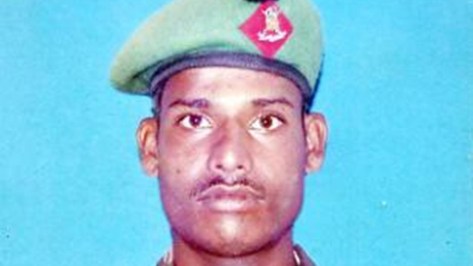
This was the slogan ‘Hanumanthappa hum sharminda hain, tere qatil zinda hain’. (‘Hanumanthappa we are ashamed, your murders are still alive’ ). Lance Naik Hanumanthappa, as we all know now, was a thirty two year old soldier of the Indian army who survived six days under an avalanche on the Siachen Glacier in Kashmir and then died of multiple organ failure in a Delhi military hospital. His young body must have had a tremendous and a passionate yearning for life. Sometimes I think of what a fine father or husband or lover or friend a man who loved life so must have been, could have continued to have been.

Continue reading The Tendency of the Price of Young Life to Fall and the Hope that it May Rise

Spring Comes to JNU : Love, Laughter and Rage

A Small Fragment of the Human Chain in JNU, 14th February, 2016

February is a beautiful time of the year in Delhi. It inaugurates Basant, spring, the season for love. And it is made more beautiful by an incandescent, insurgent spirit, that spreads in the air like a loving contagion, especially around what the Hindu Right rehearses for months on end to spoil – the new found festival of Valentine’s Day.

Traditionally (or at least since as long ago as the late twentieth century CE), on Valentine’s Day, the loony Hindu right goes looking for lovers in the parks of Delhi and tries to ply its own line in the extortion trade. This time, they have been joined by some big guns. The Delhi police descended on some young people belonging to a theatre group who had stepped out to have tea during a poetry reading at the IGNCA on the grounds that they ‘looked like they were JNU students’. Meanwhile, their boss, the Honorable Union Home Minister Rajnath Singh (who deserves a Bharat Ratna all by himself for skills as a performance artist) regaled a press conference with a poker faced comic act –  his revelation of the Lashkar e Taiba’s links to the JNU protests on the basis of the discovery of a fake twitter handle. The fact that Rajnath Singh still has his job is because his boss Narendra Modi, our ‘dear leader’, is the chief architect of  the ‘Fake in India’ campaign.

Holy Cow
Holy Cow (courtesy, ‘Guess Who’)

One needs love, and laughter, plenty of laughter, to survive these times, and the antics of these men. Over the last two days, it is love, laughter, sorrow and rage, in equal proportion that have been most evident in the JNU campus in Delhi. Their signs were evident again, appropriately,  yesterday, on Valentine’s Day. A student population of thousands has been able to transform its rage at the capitulation of the recently appointed vice-chancellor and his cronies to the diktats of an incompetent home minister and his minions in the Delhi Police apparatus into a deep and abiding sense of good humoured solidarity. This is demonstrated by the support that they have readily offered Kanhaiya Kumar, the president of their students union, who is currently detained, facing ridiculous charges of sedition, and several other students, including some JNUSU office bearers, who the police are still reportedly hunting for. The hashtag #StandwithJNU has gone viral, spreading, connecting, bringing people together like the sudden awakening of spring after a cruel winter. What better way can there be of celebrating Valentine’s Day than to declare, en masse, a love for liberty, and for learning?

Continue reading Spring Comes to JNU : Love, Laughter and Rage

Stop the attack on Rohith’s mother! Solidarity Committee for Rohith’s mother Radhika

STATEMENT BY SOLIDARITY COMMITTEE FOR ROHITH’S MOTHER RADHIKA

We believe there  is a concerted effort on the part of the powers-that-be to diffuse the nation-wide mass protests against Dalit research scholar Rohith Vemula’s death and caste discrimination in higher educational institutions. They are keen to demonstrate that Rohith did not face caste discrimination by claiming that his mother Radhika is not a Dalit. Rather than addressing the critical issues that his death and the protests have raised, these misdirected attempts seek to dissolve the issue in narrow legalese. And thereby somehow save the people named in the students’ complaint from the stringent penal provisions of the SC/ST Atrocities Act. This malicious campaign is unethical, illegal and undemocratic. Continue reading Stop the attack on Rohith’s mother! Solidarity Committee for Rohith’s mother Radhika

Paranoia and Procedure – Everyday Life within a University Labyrinth, Circa 2016: Prasanta Chakravarty

This is a guest post by PRASANTA CHAKRAVARTY

“The nature of peoples is first crude, then severe, then benign, then delicate, finally dissolute.”

–Giambattista Vico
The past congeals in savoir faire or habit, conserved as an ethos, in the corridors of the Arts Faculty at Delhi University. We all remember what is happening, while it is happening; watching ourselves as live spectators of our own actions. Wherefore such a sense of centripetal actuality? How this despotic pathology of inevitability in a place which was supposed to be the harbinger of a future? But the future arrives as a gyre, a loop. Continue reading Paranoia and Procedure – Everyday Life within a University Labyrinth, Circa 2016: Prasanta Chakravarty

Operation Ekalavya : Jhandewala, New Delhi, Rohith Vemula’s Birthday, 30th January 2016

Dear young friends who went to Jhandewala on Rohith Vemula’s birthday,

a1078-rohit-facebook-and-storysize_647_011816123527

And all those who were there in spirit, in Delhi, Hyderabad and elsewhere. I am writing to you because I think you might have all taken things much further than anyone can quite imagine or understand at present.

I am writing to you, for today and for tomorrow, so that every time in the future that young people gather to celebrate their friend Rohith’s birthday, we might all begin to have a different kind of conversation. So that the boundaries between mourning and celebration, between anger and joy may always remain blurred enough for us to know what to do next, each time.

Since you had a close encounter with the police and their colleagues in the RSS on Rohith’s birthday, I want to spend a little time thinking about them with you. Bear with me. I sincerely hope we will not have to bear with them for much longer.

Continue reading Operation Ekalavya : Jhandewala, New Delhi, Rohith Vemula’s Birthday, 30th January 2016

The Need for Black-South Asian Solidarity: Lavanya Nott

This is a guest post by LAVANYA NOTT

In February 2013, George Zimmerman, a 28-year old neighbourhood watch coordinator in Sanford, Florida, stalked and fatally shot 17-year old unarmed Trayvon Martin, an African-American high school student. In July of that year, Zimmerman was acquitted of his crime.

On August 9, 2014, unarmed Black teenager Michael Brown was shot several times by police officer Darren Wilson in Ferguson, Missouri after Brown stole several packs of cigarillos from a neighbourhood store. In late November of that same year, a grand jury did not indict Wilson of his crime.

The Black Lives Matter movement began after Zimmerman’s acquital, and the Ferguson non-indictment saw the movement surge forward, with thousands of citizens taking to the streets all over the United States in protest. In the months that followed, the movement gained rapid momentum, spurred on by yet another non-indictment—that of a White police officer in Staten Island who put 43-year-old Eric Garner in a fatal chokehold in broad daylight, without provocation. His death was ruled by a medical examiner as a homicide, but his killer Daniel Pantaleo escaped indictment.

In mid-September 2015, Mohammad Akhlaq’s house in Dadri was broken into, his family attacked, and his life taken by a rampaging mob of RSS workers who were responding to a rumor that Akhlaq killed a cow and subsequently consumed its meat on Eid.

Less than a month later, a gang of upper-caste Rajputs set fire to the house of a sleeping Dalit family, killing two-year-old Vaibhav and his nine-month-old sister Divya. This attack, in BJP-ruled Faridabad, was set against the backdrop of a long-standing caste-related dispute between the Dalit and Rajput communities in the city.

Continue reading The Need for Black-South Asian Solidarity: Lavanya Nott

Odd/even – A Baby Step, But a Step Nonetheless: Kaushik Chatterji

Guest post by KAUSHIK CHATTERJI

One January evening a couple of Delhi winters ago, I was at my doctor’s. During the routine examination, he discovered that my blood pressure was rather high: 160/100 to be precise. I asked him what I should do; he said, “walk regularly, reduce salt intake and come back next week”. So I did. The reading remained the same, so I asked him again what I should do; again he said, “walk regularly, reduce salt intake and come back next week”. This went on for a few more weeks. Finally, after five or six weeks of consistently high readings, my doctor prescribed a medicine and added, “walk regularly, reduce salt intake and come back next week”.

Popping pills after an isolated high blood pressure reading is something no doctor worth his/her, er, salt would recommend. Instantaneous readings can vary wildly depending on a wide range of reasons – cold weather, a full bladder or the white coat. It is true of blood pressure; it is also true of air pollution. Its sources are many – from power plants to industries, from open burning of dried leaves to dust from construction sites, from vehicular emissions to road dust.

Continue reading Odd/even – A Baby Step, But a Step Nonetheless: Kaushik Chatterji

More than 500 jhuggis demolished in Shakur Basti, slum dwellers left on their own to grapple with bone chilling winter.

Report by BIGUL MAZDOOR DASTA

IMG_20151214_095246

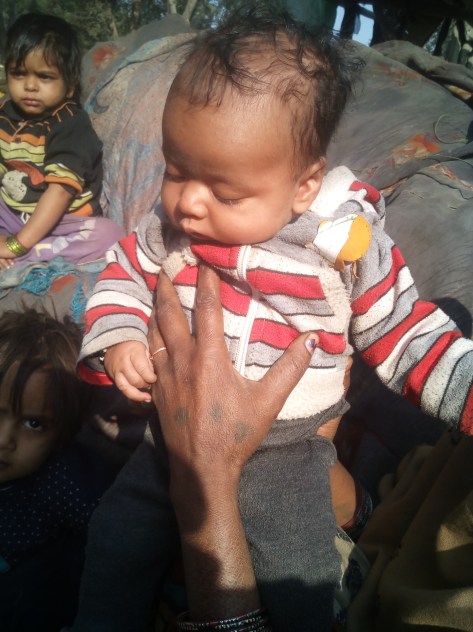
More than 500 jhuggis have been demolished by the Railways in Shakur Basti, Delhi. The demolition took place on last Saturday leading to the death of a six month old child, leaving many injured and an odd 10,000 people homeless in the chilling Delhi winters. The Railway minters Suresh Prabhu is allegedly shocked and unaware. Mr Kejriwal took to twitter to condemn the demolition. Ajay Maken of congress too condemned the demolition. On Monday Rahul Gandhi briefly visited the razed down site where once the shanties stood and thats that! All these electoral political parties have even made what is a tragedy and a very difficult time for the slum dwellers an opportunity of mud slinging onto each other which also doesn’t come as a surprise.

Continue reading More than 500 jhuggis demolished in Shakur Basti, slum dwellers left on their own to grapple with bone chilling winter.

Farewell to Vidrohi: Pallavi Paul

Guest Post by Pallavi Paul

[ Rama Shankar Yadav ‘Vidrohi’, was a familiar figure for students, especially in Jawaharlal Nehru University in Delhi. He was a friend, a companion, a comrade, a mentor. Though rusticated many years ago from JNU, where he had been a student, for his participation in a  protest, he had never left the campus of JNU, and had become, over the years, a beloved feature of campus life. His visceral poetry, often heard at protest gatherings, was passed from person to person by word of mouth. A few days ago, he died while marching with his beloved student friends in a protest against cuts in education in Delhi.  Pallavi Paul, a filmmaker and artists, who made short films featuring Vidrohi, remembers him in this tribute..]

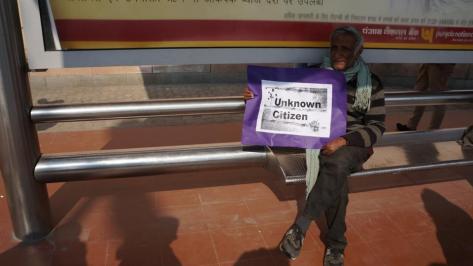
Unknown Citizen Vidrohi
Vidrohi as the ‘Unknown Citizen’ at a Protest to ‘Reclaim the Republic’ on 26 January 2013

Yesterday, as I was looking out a window of an old house in Ballygunge, Kolkata- my phone buzzed. I ignored it.  I was in the middle of telling a friend how happy I was to be away from Delhi for sometime. How the sights and smells of a different city were rejuvenating. The feeling of not having a ‘special connection’ with anyone or anything here felt liberating.

Much later, I opened the message from my friend Uday. ‘Vidrohiji passed away’, he wrote. Just three words.  In our conversations with him, Vidrohiji had often spoken about his death. We had revisited the scenario over and over again. Like a dream or a film – it had a grand setting. He had told us “Now that you are recording me, i know that i will say goodbye in the most glorious way possible. Very few people can say that about their death, while they are still alive.” On another day he had said to us, “As my fame has increased, so have the dangers. Now what i need is guarantee. Your records are guarantee against that largest threat of being killed. I say to my enemies, that if you want to kill me – then shoot me in the eyes. Because i will keep staring back at you till my last breath. Your records will help me stare back at them even after I am gone. “

Continue reading Farewell to Vidrohi: Pallavi Paul

The Pocso Act: A Quick Review: Srishti Agnihotri and Minakshi Das

Guest post by SRISHTI AGNIHOTRI and MINAKSHI DAS

On the 30th of November 2015, Shri Rajiv Chandrashekhar, a Member of Parliament, spoke at an Open House on ‘Why we need to start talking about Child Sexual Abuse and protect our children’. With the enactment of the Protection of Children from Sexual Offences Act in 2012, and rising awareness among civil society groups, there is an unprecedented momentum regarding protecting our children from sexual abuse. Issues that were earlier being brushed under the carpet, are now being openly addressed. We thought this was a good time to talk about the progress of the POCSO Act. Has it lived up to its promise? What more do we need to do to make this legislation effective in the fight against sexual violence?

The Protection of Children from Sexual Offences Act (‘POCSO Act’) was enacted in the year 2012 with the aim to protect children from sexual offences, such as, sexual assault, sexual harassment and pornography. This Act also provides for the establishment of special courts for trial of child sexual abuse matters. In the past decade, India has recorded an alarmingly high level of sexual assault cases on children. While, the Government of India has made a sincere attempt to address the issue of sexual exploitation of children through the POCSO Act, the impact of the legislation remains to be seen. Continue reading The Pocso Act: A Quick Review: Srishti Agnihotri and Minakshi Das

Moving With Darkness: Rekha Revathy

Guest Post by REKHA REVATHY

A so-called normal person may sometimes wonder how blind people like myself travel to work or move about in other public places like railway stations, bus stands, airports and roads. Large numbers of blind people also travel as commuters in metro trains in Mumbai as well as in buses and local trains, autorikshaws and other transport. They face many difficulties, big and small, in their travel. Some are comfortable with their daily commuting because they have adjusted to the conditions which they have endured for long. Some blind people always take the help of an escort during such travels. But finding an escort daily is not easy and also, what if a blind person depends on his/her colleague in office or a friend to travel to school or work daily, if on any day that colleague or friend is not able to come, then he/she becomes helpless. And in such situations they will be put to a new challenge of reaching their destination in time by themselves. And of course, moving to a different place or a new place is much more difficult for a blind person.

Moving about at the work place is less challenging than traveling in buses or trains for the blind, although there are still difficulties like climbing the stairs, locating their seats, keeping things in their place, going to the dining room, using the wash room and so on. But there are blind people who do all these things without any sighted help because they have adapted to their environment. But it also takes some time. Any changes made in the premises puts them in confusion – changes such as construction of a new counter, changing the positions of chairs tables etc, fitting of a new door or changing the positions of water jars. It is also a fact that blind people cannot always find a person to help them out in their work places. And sometimes they end up injuring themselves. Continue reading Moving With Darkness: Rekha Revathy

गयी भैंस पानी में…. : दाराब फ़ारूक़ी

Guest post by DARAB FAROOQUI

जी हाँ मैं भैंस हूँ और करीब 5000 साल से लगातार पानी में जा रही हूँ. जब भी किसी का कुछ भी बुरा हो रहा होता है तो हमेशा मुझे ही पानी में जाना पड़ता है. ना उस वक़्त मेरे नहाने की इच्छा होती और ना तैरने का मन. पर मुझे ना चाहते हुवे भी पानी में जाना पड़ता है.

तुम लोग कभी उस सफ़ेदमूही गाय को पानी में क्यों नहीं भेजते हो. और वैसे भी हम अल्पसंख्य हैं, हमसे कहीं ज्यादा गायें हैं भारत में. और शायद तुम्हे याद न हो, हमारे संविधान में सब बराबर हैं. पर इतना सब कुछ करने के बाद भी तुम लोगों ने हमें कभी अपना नहीं समझा. हमने क्या नहीं किया तुम्हारे लिये, तुम्हे अपने बच्चों का दूध दिया, तुम्हारे खेत जोते, तुम्हारे चूल्हे जलाये. कितने बलिदान दिए हमने पर तुम्हारे तो कान पर भैंस तक नहीं रेंगी.

सबसे पहला बटर पनीर किसके दूध का बना था? हमारे दूध का, पंजाब में हम ही हैं. और वो जो तुम हमेशा पंजाबी ढाबे पे खाने की रट लगाये रहते हो वहां जाके पूछना, उस खाने का स्वाद कहाँ से आता है? हमारे दूध के असली घी से. चले हैं बड़े गाय की पैरवी करने. कभी अच्छे वक़्त पर हमें याद मत करना. पर जब भी किसी का कुछ बुरा हो, चाहे हम सोती हों या जगती, चाहे हम खाती हों या पीती, हमें ही पानी में भेज देना. तुम्हारे बाप का राज है ना, सरकार तुम्हारी, तुम माई बाप हो, हम तो जानवर हैं. किसी ने सही कहा है जिसकी लाठी उसी की भैंस. Continue reading गयी भैंस पानी में…. : दाराब फ़ारूक़ी

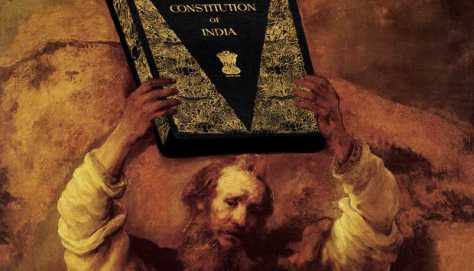
Happy Constitution Day. Yet, India is where some are forced to eat cow dung

(First published in http://www.catchnews.com)

pic

Mujadpur, a village in Haryana’s Hisar district,  which has been in the news recently for what the government  lexicon calls ‘dalit atrocities’, involving murders and ‘suicides’.

Recently, it was hit by another such incident, albeit of a less fatal nature: Members of the Jat community thrashed a dalit man called Ramdhari and his family members and stuffed cow dung in his mouth. Reportedly, Ramdhari installed a statue of BR Ambedkar in his house and that provoked the upper caste Jats.

The irony of this cannot be emphasised enough.

One does not know whether in an area dominated by the Jats, Ramdhari’s perpetrators have been arrested under provisions of the Scheduled Caste and Scheduled Tribe Prevention of Atrocities Act (1989) or not.

Or has the incident been explained away in the light of some vague personal animosity, which is what happened when two children in Sunped were recently killed by throwing of inflammable material in their house by dominant castes.

As the nation begins another series of grand celebrations, this time to celebrate the contributions of BR Ambedkar, the plight of a dalit family for merely installing his statue stares at us in our eyes. It is symptomatic of the gap between the principles and values on which the Constitution is based and the situation on the ground.

Read the full text of the article here. 

Of Flags and Fetishes – The Paris Attacks and A Misplaced Politics of Solidarity: Debaditya Bhattacharya

This is a guest post by DEBADITYA BHATTACHARYA

Megan Garber’s article ‘#PrayForParis: When Empathy Becomes a Meme’, published in The Atlantic (November 16, 2015) has claimed that Paris hashtags and French flag filters on Facebook make for an “act of mass compassion” – a “compassion that has been converted, via the Internet’s alchemy, into political messaging”.

flag filter2

I have absolutely no problems with flag filters on Facebook. Or for that matter, profile-picture revolutions that happen all too often. I’m not, in the least bit indignant about such a competitive exhibitionism of feeling – indexed through a currency of memes and emoticons. In an age of such mass-production of violence (‘terroristic’ or ‘humanitarian’), it is no surprise that the event of mourning must become a symptom of the incompatibility between ‘act’ and ‘response’.

A funereal Facebook must therefore bleed profile pictures, because that seems the only charter of our most intimate emotions. We naturally do not care if Facebook is using the Paris tragedy as a marketing platform, as long as it helps us reclaim a deeply ‘personal’ angst in the face of more-than-a-hundred ‘spectacular’ deaths.

Continue reading Of Flags and Fetishes – The Paris Attacks and A Misplaced Politics of Solidarity: Debaditya Bhattacharya