Category Archives: Politics

Nobody Killed the 58 People Who Died in Laxmanpur Bathe on 1 December 1997: Dipankar Bhattacharya

Guest Post by Dipankar Bhattacharya

Predictably enough, the Patna High Court has acquitted all the 26 persons convicted by the trial court in the Laxmanpur-Bathe massacre case. This is the fourth successive instance of wholesale acquittal of convicts by the Patna High Court in cases of massacre of the oppressed rural poor in Bihar. Once again eye witness accounts have been dismissed as being not fully credible and convicts granted acquittal on ‘benefit of doubt’. The judges could not however disprove the fact that 58 people had been killed and post-mortems done, and hence they asked the trial court to calculate the compensation payable to the nearest kin of the victims as per relevant provisions the Motor Vehicles Act on the basis of the minimum wage prevalent in the area at the time of the massacre. They of course did not forget to add that any ex gratia paid after the massacre should be deducted from the amount of compensation!

Continue reading Nobody Killed the 58 People Who Died in Laxmanpur Bathe on 1 December 1997: Dipankar Bhattacharya

A tale of two passports, the year 1979, and walking to India: Fawzia Naqvi

Guest Post by Fawzia Naqvi

For the first time Pakistan’s elected President has completed his full five-year term and has willingly stepped down to transfer power to another elected President, a herculean achievement for a country with chronic dictatoritus.  The people of Pakistan must be congratulated for ensuring that democracy becomes an enduring grace and not just a good idea in some unforeseeable future.  So while there is earsplitting cacophony of debate and disagreement on virtually all issues, there is near unanimous political consensus that the army should remain in the barracks and that there should be peace with India. The time is now. And Pakistanis have accomplished this in an era when Pakistan is suffering its worst hellish nightmare of daily bombings and killings by terrorists, and a loss of over 40,000 of its own citizens in the last decade or so.  Pakistan teeters on the precipice of a very dark abyss, and has been inching ever closer to this dangerous edge for the last 34 years if not more. The first disturbing sign which I can remember was when the state institutionalized bigotry by officially declaring the Ahmadi community non-Muslim in 1974, opening up a hornets nest of discrimination, violence and unequal citizenship.  A tragic disaster, and fatal capitulation to right wing elements, by Prime Minister Zulfikar Ali Bhutto. No one is really safe in today’s Pakistan but clearly those less safe, those hunted and killed are the Shias, the Christians, the Ahmadis and the Hindus. Those doing the killings have given insidiousness to the meaning of “the land of the pure.”

Continue reading A tale of two passports, the year 1979, and walking to India: Fawzia Naqvi

Courage is silent and Stoic – Tortured in Kashmir: Aditya Prakash

Guest post by ADITYA PRAKASH

The following is a narrative of a torture victim I gathered during my time in Kashmir as a researcher. The person interviewed was tortured by the 2nd Dogra regiment of the Indian Army.

Where is your gun?

On the night of 28th October 1991, the 2nd Dogra Regiment of the Indian Army was conducting interrogations in Palhallan. Palhallan is a large village in the Baramulla district of Jammu and Kashmir.

People suspected of having links with terrorists were interrogated. The women and men were asked to come out of their homes. The women were asked to gather at the local dargah (shrine) and the men were lined up in the village school.

A major from the 2nd Dogra handpicked Manzoor Ahmad Naikoo to step forward. Others were also short listed for interrogation. Manzoor was taken inside the school and forced to strip. He was made to sit on a chair. His hands were fastened to his back.

‘Taaki main kuch na kar sakoon’

He was completely immobilized. The army personnel then asked him for his gun. Manzoor Ahmad said he had no gun. He tried to convince them that he was a shopkeeper and never owned a gun. Continue reading Courage is silent and Stoic – Tortured in Kashmir: Aditya Prakash

India First and the BJP anti-conversion platform: Goldie Osuri

Guest Post by GOLDIE OSURI

We seem to live in an age where paradoxes become parodic simplifications in the seemingly global race to support all manner of fascist majoritarian nationalisms. I recently saw a youtube video, where P.P. Hegde of the NaMo Brigade linked the meaning of Namo Namaha—the letting go of ego in meditation—to the image of a giant saffron-vested image of Narendra Modi.

Namo Namaha. Literally, not-me, not my ego-self. Linked to a giant PR machine promoting an individual, the face of Hindutva fascism, nothing but ego. The lack of an ironic sensibility in such campaigns is perhaps sadly characteristic of our time.

Similarly anti-conversion campaigns targeting Christians seem paradoxical and parodic in their demand for Acts of Religious Freedom which literally entail religious unfreedom. Recently, the BJP leader of Andhra Pradesh, Venkaiah Naidu stated that the ‘BJP will bring an anti-conversion law to ban religious conversions in the country if it is voted to power in 2014 General Elections’. 

Continue reading India First and the BJP anti-conversion platform: Goldie Osuri

Onathallu Redux? Some thoughts on Onam

I remember, as a young child, going with my father one Onam in our ancestral home to watch the local Onam sports-and-games.My admittedly-fuzzy memory is of a large crowd of men gathered in an open paddy field or ground (I remember a lovely cloud of dragon-flies hovering above doing some sort of crazy-excited dance), getting ready for Onathallu — physical combat between
two men. Continue reading Onathallu Redux? Some thoughts on Onam

भगत सिंह और आज का नौजवान: अपूर्वानंद

कभी कभी हर समाज में ऐसे क्षण  आते हैं जब उसे अपने अस्तित्व के तर्क की पड़ताल करनी पड़ती है. उस समय वह अपने किन बौद्धिक संसाधनों का प्रयोग करता है और किन स्रोतों से तर्क की सामग्री जुटाता है, यह  काफी महत्वपूर्ण है.क्या एक समाज के रूप में भारत के लिए अभी ऐसा ही कोई क्षण उपस्थित हो गया है? एक ऐसा तबका है जो भारत नामक किसी एक सामाजिक इकाई के बौद्धिक औचित्य को ही नहीं मानता. उसकी बात जाने दें.भारत अभी भी अनेकानेक लोगों के लिए एक यथार्थ है जिसकी अपनी भावनात्मक और बौद्धिक वैधता है.वे उसे बार-बार समझने और अपने लिए आयत्त करने की कोशिश करते हैं.इस क्रम में वे किनकी ओर  देखते हैं? Continue reading भगत सिंह और आज का नौजवान: अपूर्वानंद

The Unknown Fate of Thousands in Sri Lanka: Leena Manimekalai

Guest post by LEENA MANIMEKALAI

‘By the wayside’

“This wreath/ with no name attached /is for you/who has no grave/ As the place of earth/ which embraced you/ could not be found/this wreath was placed by the wayside/Forgive me/ for placing a memorial for you/ by the roadside.”

…writes Basil Fernando about the memorial constructed by families of disappeared  at Radoluwa Junction in Seeduwa, a town near the city of Negombo, Srilanka.  When I visited the memorial with lingering faces of the disappeared, it signified an important attempt to keep the memories alive, a yearning to prevent recurrence of mass disappearances and seek justice on behalf of the victims of disappearances and their families. Srilanka which has a deep and complex history of political violence is struggling to redeem the past with a frozen present and a black hole future. Communal riots, political assassinations and ethnic conflict have been an element of the socio-political landscape of this tear nation for more than a century. Two heads of State, dozen national political leaders and numerous regional and local politicians, journalists, activists and artists have been assassinated by groups representing virtually every shade of political spectrum. The Srilankan state deploys disappearances and extra judicial killings as an instrument of public policy in the name of State Emergencies, Prevention of Terrorism Act, dubbing of persons as terrorists, unpatriotic, enemies of state. Brutal suppression of two armed insurrections in the Sinhala South in 1971-72, 1987-89 led by Peoples Liberation Front (JVP) and an armed Tamil Separatist Movement  since 1970s led by the Liberation Tigers of Tamil Eelam (LTTE) in the Tamil North and East of the island had spotted Srilankan state guilty of horrific human rights abuses. Now the nation is the world leader in number of disappeared crossing millions who have no date of death, no place of death, no body, and no grave or funeral rites. Obviously there is no shelling, no bombing in the island since 2009 and the State wants the world to believe that war is over but who will bring peace to the families who continue to lose their members to State Terror and also been denied their basic right to even open their mouth about the injustice. Continue reading The Unknown Fate of Thousands in Sri Lanka: Leena Manimekalai

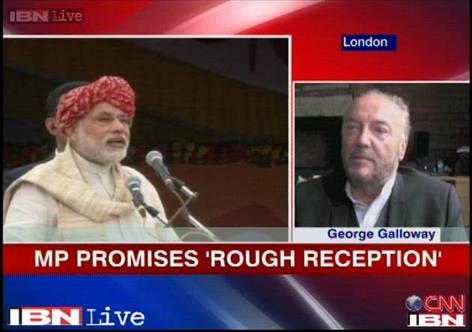
Modi Goes To London

Image

Good news is followed by a flood of bad news.

Narendra Modi, the ‘architect’ of today’s Gujarat, must be realising the truth of this dictum despite the fact that the corporate media – to quote an analyst – ‘loves’ him.

Whether it is the growing resistance of the peasantry inside the state to his vision of development, compelling him to withdraw a major chunk of villages from the much discussed Mandal-Becharaji Special Investment Region (SIR), or the crude manner in which his government’s anti Dalit stance is coming to the fore, the signals are definitely ominous. Continue reading Modi Goes To London

Joint statement on atrocities on cultural activists and Dalits

Please send endorsements to  asit1917@gmail.com

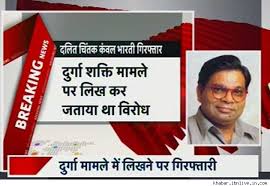
download (1)We, the undersigned, are appalled and outraged by the arrest of Kanwal Bharti eminent Dalit writer for his comments on Face book. If one looks seriously at the banner headlines in the corporate media, the Indian ruling classes are  the new economic power house of the world and India, the world’s largest democracy. Various clauses of the Indian constitution guarantee the fundamental rights of its citizens to to freedom of expression and to choose ones cultural and political views. The pretensions of the Indian state about it being a liberal democracy have proved to be a total mockery of the very meaning of the words like liberalism, democracy and rule of law. Since the past six decades, under draconian laws like AFPSA, UAPA, National Security Act, tens of thousands of people have died in ‘encounters’, thousands of youth have vanished from Kashmir and Punjab. There are genocides happening on the struggling people of oppressed Nationalities, thousands are tortured, there are thousand of unknown mass graves in Kashmir. Thousands of woman are raped, tortured and killed in police custody. Continue reading Joint statement on atrocities on cultural activists and Dalits

Why Do ‘They’ Love Narendra Modi ?: Shankar Gopalakrishnan

Guest Post by Shankar Gopalakrishnan

On August 14th, Narendra Modi declared that his Independence Day speech would attract as much attention as that of the Prime Minister. He appears to have been right. The fact that this is hardly unexpected should not obscure the deeper puzzle that it hides. It is a rare occurrence for a state level leader to suddenly get so much prominence in the media, and that too for such a long period. Why, then, have powerful forces in our society – including most of the media – chosen to endorse Modi? Why the sudden promotion of this particular leader at this particular time? What is it that he and his regime are offering?

Continue reading Why Do ‘They’ Love Narendra Modi ?: Shankar Gopalakrishnan

Decolonization of the Mind

Our modernity is incomplete, our secularism impure, our democracy immature, our development  arrested and our capitalism retarded: ask anyone trained in the social sciences, economics in particular, about what ails India today and you can be sure of getting one or all of these answers. And you can go on adding to the list of more and more things ‘we’ lack. We did not have ‘history’, we do not have social sciences – and of course, we do not have theory/ philosophy.

Everything, in other words, is about our ‘backwardness’ and our need to catch up with the West. And seen through the lens of social science, most of the world looks like this – living ‘inauthentic’ lives, always ever in the ‘waiting room of history’, to steal historian Dipesh Chakrabarty’s suggestive phrase.

In the world view of our state elites, this is actually a form of what one could call, paraphrasing Sigmund Freud, ‘Capital-Envy’. The ‘realization’ that ‘we do not have it’ can be a source of serious anxieties. That is what lies behind the current frenzied desire to ‘catch up’ with the West. And generations of feminist scholarship has challenged this unquestioned Freudian  assumption that the penis is the norm and not to have it, is Lack. Perhaps women do not want it? Freud never conceived of this as possible. Indeed in today’s world, there are many men who claim that they feel they are women trapped inside male bodies. Generations of scholarship has made us realize that the aura of that grand universal theory actually rested on the fact that it did not just describe the sexes; it produced the sexual norm itself.

The vision that propels our political elites and their parallel numbers who write in the media today, is something like that fantasy of Freud. The anxiety produced by this awareness of the ‘primordial Lack’, is what drives them today towards what has been the most violent phase of development in our entire history. Violent uprooting of populations from their land, often at gunpoint, coupled with the most ruthless plunder of our common resources by unscrupulous corporations – all this and more has been going on with the state elites looking on ‘benignly’. For they seem to know something ordinary mortals do not – that all this is but the necessary price to pay for becoming ‘modern’ like them. Continue reading Decolonization of the Mind

The Sunset of the Century: Rabindranath Tagore

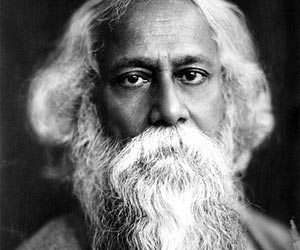
rabindranath-tagoreThe eve of India’s 66th Independence Day is a time as good as any to read this poem by RABINDRANATH TAGORE, even as India gets ready to sing to martial tune another Tagore poem, Jana Gana Mana. This English translation was published at the end of Tagore’s 1918 book, Nationalism.
THE SUNSET OF THE CENTURY

(Written in the Bengali on the last day of last century)

1

The last sun of the century sets amidst the blood-red clouds of the West and the whirlwind of hatred.
The naked passion of self-love of Nations, in its drunken delirium of greed, is dancing to the clash of steel and the howling verses of vengeance. Continue reading The Sunset of the Century: Rabindranath Tagore

Manmohan Singh must visit Pakistan

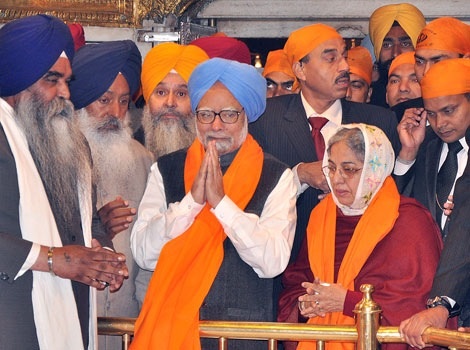
Dr Manmohan Singh with wife Gursharan Kaur at the Golden Temple in Amritsar on 1 January 2012

By SHIVAM VIJ: Which Indian or Pakistani premier has not desperately wanted to be the one to clinch peace between the two countries? Prime Minister Manmohan Singh has reportedly been keen, for years now, to go on a state visit to Pakistan.

Before the political climate could be conducive to Manmohan’s visit to Islamabad, 26/11 took place. Pakistan’s refusal to give Dr Singh even breathing space on the 26/11 investigations, followed by the LoC tensions in January and August this year, means that in his 10 years of prime ministership, Manmohan Singh will never have visited the country of his birth. Continue reading Manmohan Singh must visit Pakistan

Can Happiness and Resistance Go Together? Gowhar Fazili

Guest Post by Gowhar Fazili

Does resistance necessarily have a direct relationship with suffering and inverse relationship with pleasure and happiness? This is a question that is particularly significant for long drawn resistance movements facing a formidable enemy insensitive to and largely unruffled by the exertions of resistance.  The engagement with occupation often involves violent and non-violent struggle.  Both demand sacrifices that warrant shunning of such mundane pleasures and opportunities taken for granted by the populations reconciled with power.  If the struggle extends over multiple decades, it is bound to generate fatigue and disillusionment especially among those who have not voluntarily committed themselves to the life of endless self abnegation even while they may desire freedom from occupation.   While all people want to be free from the indignity of living under occupation and dominance, human nature puts limits on how far individuals and populations may be willing to stretch themselves in their denial of bodily desires and material pleasures that life has to offer.

Continue reading Can Happiness and Resistance Go Together? Gowhar Fazili

आत्ममुग्ध क्रांतिकारिता और वरवर राव : अपूर्वानंद

हर वर्ष इकतीस जुलाई को दिल्ली में ‘हंस’ पत्रिका की ओर से किसी एक विषय पर एक विचार-गोष्ठी का आयोजन किया जाता रहा है. बातचीत का स्तर जो हो, यह एक मौक़ा होता है तरह-तरह के लेखकों, पाठकों और साहित्यप्रेमियों के एक-दूसरे से मिलने का. कई लोग तो वहीं सालाना मुलाकातें करतें है. मेरी शिकायत हंस के इस कार्यक्रम से वही रही है जो दिल्ली में आमतौर पर होने वाले हिंदी साहित्य से जुड़े अन्य कार्यक्रमों से है: इंतजाम के हर स्तर पर लापरवाही और लद्धड़पन जो निमंत्रण पत्र में अशुद्धियों और असावधानी से लेकर कार्यक्रम स्थल पर  अव्यवस्था, मंच संचालन में अक्षम्य बेतकल्लुफी तक फैल जाता है.प्रायः वक्ता भी बिना तैयारी के आते हैं और जैसे नुक्कड़ भाषण देकर तालियाँ बटोरना चाहते हैं.ऐसे हर कार्यक्रम से एक कसैला स्वाद लेकर आप लौटते हैं. श्रोताओं के समय, उनकी बुद्धि के प्रति यह अनादर परिष्कार के विचार का मानो शत्रु है. मैं हमेशा अपने युवा  छात्र मित्रों को ऐसी जगहों पर देख कर निराशा से भर उठता हूँ : ये सब यहाँ से हमारे बारे में क्या ख्याल लेकर लौटेंगे?

यह भी हिंदी के कार्यक्रमों की विशेषता है कि जितना वे अपने विषय के कारण नहीं उतना आयोजन , आयोजक और प्रतिभागियों के चयन से सम्बद्ध इतर प्रसंगों के कारण चर्चा में बने रहते हैं. चटखारे लायक मसाला अगर उसमें नहीं है तो शायद ही मंच पर हुई ‘उबाऊ’ चर्चा को कोई याद रखे. अक्सर सुना जाता है कि फलां को तो बुलाया ही इसलिए गया था कि  विवाद पैदा हो सके. विवाद अपने आप में उतनी भी नकारात्मक चीज़ नहीं अगर उससे कुछ विचार पैदा हो. लेकिन प्रायः विवाद और कुत्सा में अंतर करना हम भूल जाते हैं. विवाद में फिर  भी मानसिक श्रम लगता है, कुत्सा में मस्तिष्क को  हरकत में आने की जहमत नहीं मोल लेनी पड़ती. Continue reading आत्ममुग्ध क्रांतिकारिता और वरवर राव : अपूर्वानंद

आतंकवादी कविता के विरुद्ध युद्ध: अपूर्वानंद

‘शिक्षा बचाओ आन्दोलन’ ने आतंकवाद के खिलाफ अंतर्राष्ट्रीय युद्ध में नई जीत हासिल की है. वह कालीकट विश्वविद्यालय के स्नातक स्तर की  अंग्रेज़ी की पाठ्यपुस्तक –‘लिटरेचर एंड कंटेम्पररी इश्यूज’ से ‘अल कायदा से जुड़े एक आतंकवादी’ इब्राहिम अल रुबाईश की कविता ‘ओड टू द सी’ को निकलवा देने में सफल रहा है.  आन्दोलन की केरल इकाई के सचिव ने इस कविता को पाठ्यपुस्तक में शामिल करने को ‘गंभीर मामला’ बताते हुए कहा था कि किताब को वापस लेने और विश्वविद्यालय द्वारा माफी माँगने के बाद इसकी जांच होनी चाहिए कि ‘बोर्ड ऑव स्ट्डीज़’ और अकेडमिक काउन्सिल’ में आतंकवादियों के समर्थक कौन हैं जिससे इस तरह की सामग्री के चुनाव के पीछे की साजिश का पर्दाफ़ाश हो सके.

कुलपति ने फौरन अपने डीन प्रोफ़ेसर एम.एम. बशीर को मामले की जांच करने को कहा. उन्होंने कहा कि ऊपर से निर्दोष लगने वाली इस  कविता में रुबाइश ने अत्यंत अर्थगर्भी प्रतीकों का इस्तेमाल किया है जो खतरनाक भी हो सकते हैं.मसलन, उसने ‘फेथलेस’ शब्द का प्रयोग किया है जो अरबी शब्द ‘काफिर’ का अंग्रेज़ी अनुवाद है. फिर जैसा आज का अकादमिक रिवाज है, वे इंटरनेट पर गए और पता किया कि इस कवि  ने अमरीका के खिलाफ जंग का आह्वान भी किया था. भला इसके बाद और सोचने की ज़रूरत ही क्या रह जाती है?पाठ्यपुस्तक के संपादकद्वय में से एक ने लगभग माफी माँगते हुए कहा कि डेढ़ साल पहले इसे संपादित करते वक्त रुबाइश के बारे में ज़्यादा सामग्री ‘ऑनलाइन’ मौजूद न थी. अगर उन्हें कवि के  राजनीतिक रुझान  का जरा भी अंदाज होता तो वे इसे कतई न चुनते. Continue reading आतंकवादी कविता के विरुद्ध युद्ध: अपूर्वानंद

Lok Sabha elections, software imperialism and the Urdu language: Anant Maringanti

Guest post by ANANT MARINGANTI. Kapil Sibal may have unwittingly erased a whole historical geography of pre-windows software development in India. If the Times of India report on the release of Urdu fonts developed by National Council for Promotion of Urdu Language ( NCPUL) last week is accurate,  Sibal said that India developed Urdu Software and fonts and thereby ended a longstanding dependency on Pakistan. This, according to him is beneficial to the 15 crore Urdu language users. There is a  ‘pre-election Muslim wooing’ feel to the story which nicely blends with the  ‘massaging of Indian (read Hindu) nationalist pride’ feel.  The sense of triumph and pride at this historic achievement by Indian programmers would have been justified even if it could be read as symptomatic of the postcolonial condition that Amitav Ghosh captures in his recounting of the breakdown of conversation between himself and the Imam of Lataifa and Nashawy.  Unfortunately however, Urdu language users in India were never dependent on Pakistan for software and fonts.  This can be said in two different senses: first that Indian Urdu language computing originated in Hyderabad almost 25 years ago and has contributed significantly to local cultural economy. Second, to the extent that there has been exchange between India and Pakistan in Urdu language computing, the participants in that exchange have seen it primarily in terms of exchange. Afterall, people cannot help making language tools even if nation states do not pay them much attention.    Continue reading Lok Sabha elections, software imperialism and the Urdu language: Anant Maringanti

Boyalagudem’s Search for Water: Rajendran Narayanan

Guest post by RAJENDRAN NARAYANAN. Boyalagudem – The name sounds like one of those nondescript railway stations in south India that an express train whizzes by in utter condescension of its portly status. Except that in this case it is much worse. There are no railway tracks in a 50 kilometre radius of this village, tucked away in a corner of Mahabubnagar district in Andhra Pradesh. The landscape here is various hues of brown with not even a pretension of greenery anywhere, barring a few adamant shrubs as if standing up for their fraternity.

A not so covetous claim to fame of this region is its proneness to drought. People here spend each year in the hope that weather cannot play a prank every year. Prayers are offered each year in the second week of June to please the rain gods so that the chosen gods can have mercy this time around. But, the gods in turn haven’t been too pleased with the prayers so offered for the past few years.

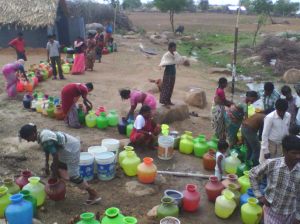
Boyalagudem's scramble for water
Boyalagudem’s scramble for water

To cut to the chase, water is scarce in this region and so is electricity. Most villages in this part of the district have a central water pump connected to a storage tank that gets water when the State takes pity and provides electricity. Thus, no electricity implies no water. Electricity comes and goes at random times of the day and consequently there is no fixed schedule regarding the availability of water. Some desperate villager wakes up at 4 AM and rushes to the water pump in the hope of getting water. Another sleepy villager  walking out to take a leak at that hour observes an active man with four colourful pots running to get water and rushes back to his house to join the early riser in the daily water fetching ritual. News of water availability spreads and within 30 minutes one can see majority of the villagers, from 6 year olds to70 year olds, wiping their sleep off their face, walking, running or cycling, each with four to six bright colourful plastic pots to the solitary water pump. Multicoloured fluorescent pots form a long and winding queue to usher in the day. The chaotic queue naturally lends itself to quarrels and verbal skirmishes about who came first and why somebody has come with eight pots to hoard water.

Continue reading Boyalagudem’s Search for Water: Rajendran Narayanan

What Indian school children learn about the Partition

I wrote recently about the surprising political maturity with which NCERT textbooks teach Indian students about the Partition. These textbooks were prepared under the National Curriculum Framework of 2005. This is of course not limited to the Partition chapter or indeed just the history textbooks. But I was particularly moved to see the Partition chapter. As you read it you realise what school textbooks can do in shaping how future generations see themselves, their own history and identity. I think a lot of people in both India and Pakistan would like to read it. Here it is:

Katiyabaaz – the grid thief of Kanpur

Katiyabaaz Loha Singh in a still from the film

By SHIVAM VIJ: A new documentary film, Katiyabaaz, presents a problem that I’ve been struggling with. Although the film is set in Kanpur, it’s a problem that faces many parts of South Asia. The film-makers, Fahad Mustafa and Deepti Kakkar, obstinately refuse to offer possible solutions. With catchy lyrics and music, the film celebrates Kanpur, its people, and this messed-up system. It’s a snapshot of who we are. It’s when you think about the film that it disturbs you.

The film’s anti-hero is a thief — Loha Singh helps a lot of people steal electricity in Kanpur. He connects the illegal wire that is known in north India as katiya. Katiya is the sort of simple solution to life’s problems that South Asians feel very smart about. It’s an example of jugaad, the shortcut to problem solving that’s now integral to pop management theories. Continue reading Katiyabaaz – the grid thief of Kanpur

आत्मा से मुठभेड़ की चुनौती: अपूर्वानंद

इशरत जहाँ एक उन्नीस साल की लड़की थी जब वह मारी गई.शायद उसके बारे में इसके अलावा इस निश्चितता के साथ हम कुछ और कभी नहीं जान पाएंगे. इसकी वजह सिर्फ यह है कि जिन्हें इस देश में सच का पता लगाने का काम दिया गया है वे एक लंबे अरसे से झूठ को सच की तरह पेश करने का आसान रास्ता चुनने के आदी हो गए हैं. उनके इस मिथ्याचार पर कभी सवाल न खड़ा किया जा सके इसका सबसे अच्छा तरीका है राष्ट्र रक्षक की अपनी छवि का दुरुपयोग निस्संकोच करना. जो राष्ट्र की रक्षा करता है उसे उसकी रक्षा के लिए किसी को मात्र संदेह के आधार पर मार डालने का हक है, यह हमारे देश का सहज बोध है. सिर्फ अशिक्षितों का नहीं, उसने कहीं ज़्यादा राजनीति शास्त्र की किताबों से नागरिक अधिकारों का ज्ञान प्राप्त किए हुए स्नातकों का. उन सबका जिन्हें देश की जनता के पैसे से संविधान की हिफ़ाजत के लिए अलग-अलग काम सौंपे जाते हैं. और भी साफ़ कर लें, इन स्नातकों में भी उनका जो प्रशासनिक और पुलिस अधिकारी हैं, जासूसी के अलग-अलग महकमों से जुड़े ऑफिसर हैं, जिनकी असली पहचान कभी उजागर नहीं हो पाती. अगर दूसरे मुल्क में वे पकड़े जाएं तो वही देश उनसे हाथ धो लेता है जिसकी सुरक्षा में वे अपनी असली पहचान छिपाए फिरते हैं.

क्या कोई यह कहने की हिमाकत कर सकता है कि राष्ट्र-राज्य के खिलाफ साजिशें नहीं होतीं, कि राष्ट्र-विरोधी शक्तियों का अस्तित्व ही नहीं! यह बिलकुल अलग बात है कि राष्ट्र विरोधी का बिल्ला किन पर आसानी चस्पां किया जा सकता है और किन पर वह बिलकुल चिपकता ही नहीं. मसलन, इस्लामी राष्ट्र का तस्सवुर धर्मनिरपेक्ष भारतीय राष्ट्र के बिलकुल खिलाफ है, क्या इसके लिए किसी अतिरिक्त व्याख्या की आवश्यकता है? लेकिन यह समझना और समझाना टेढ़ी खीर है कि हिन्दू राष्ट्र की कल्पना भी उतनी ही राष्ट्रविरोधी है! आज से बीस साल पहले और आज भी   खालिस्तान का ख़याल इस्लामी राष्ट्र जितना ही राष्ट्र विरोधी माना जाता था. Continue reading आत्मा से मुठभेड़ की चुनौती: अपूर्वानंद