Category Archives: Right watch

Who is afraid of anuradha bhasin ?

Attacks on the media have become more “sophisticated”, such as stopping advertisements, which adds to the threat of violence.

Anuradha bhasin

In the first week of October came news from Jammu that the government-allotted apartment where Anuradha Bhasin, the executive editor of Kashmir Times has lived for twenty years, had been ransacked. The act was allegedly perpetrated by the relative of a former member of the Legislative Council. The intruders tried not to be photographed in the act by Bhasin, but later she published them and wrote on social media about how her “jewellery, silverware and other valuables” were taken by them in “connivance with the [Jammu and Kashmir] Estates Deptt and some police personnel”. Bhasin had not been served a show-cause notice to vacate the flat.

Soon after the office of her newspaper, located in the Press Enclave area in Srinagar, was also sealed, again without giving its legal owner or editor any reason. “Today, Estates Deptt locked our office without any due process of cancellation & eviction, same way as I was evicted from a flat in Jammu, where my belongings including valuables were handed over to ‘new allottee’,” Bhasin wrote.

One is suddenly reminded of the various storms the oldest and most-circulated newspaper published from Jammu and Kashmir has faced all these years. In 1983, some 200 Hindu right-wing lumpen, armed with batons and sharp weapons, barged into the offices of Kashmir Times in Jammu and attacked the editor at the time, Ved Bhasin. This attack followed a news report published by the then forty-year-old newspaper, which had apparently “hurt” their sentiments. The grand old man of English journalism, as Ved Bhasin was known in Jammu and Kashmir, survived the attack and continued his work with renewed vigour.

(Read the full article here)

A history of conservative strike on books

Even in a future in which books are outlawed, ideas cannot be vanquished.

Nazi's Boook burning

“You may burn my books and the books of the best minds in Europe, but the ideas those books contain have passed through millions of channels and will go on,” wrote Helen Keller, in An Open Letter to German Students in 1933. Keller’s How I Became a Socialist was on the list of books to be burned. “History has taught you nothing if you think you can kill ideas. Tyrants have tried to do that often before, and the ideas have risen up in their might and destroyed them,” she wrote.

Today you cannot perhaps have campaigns like Nazi’s book burnings, nor can books disappear off the shelves as they did in the United States during the McCarthy era. Yet the powers that be have thought of ingenious ways to stop people from reading books.

A recent order by the department of education in Britain needs to be seen in this context. It has ordered schools in England to stop accepting funds from groups or organisations which have expressed the desire to end capitalism. Anti-capitalism is seen by the department as an “extreme political stance”, similar to opposing freedom of speech, anti-Semitism and endorsing illegal activities.

( Read the full text here)

Hathras and Beyond: the Upper Caste Counter-Revolution


If the post-Mandal Dalit Bahujan upsurge was an expression of the democratic revolution, the advent of Adityanath’s BJP government constituted the beginning of a counter-revolution that is on the way to consolidating itself in Uttar Pradesh.

Police at the Delhi-UP order, image courtesy The Print

The facts of the case are well known, even though the Yogi Adityanath government in Uttar Pradesh is trying, ever so hard, to produce a different narrative by resorting to the usual Hindutva tactic of assigning it to an international conspiracy. It is typical of the utterly farcical and shoddy nature of the Indian police (and maybe indicates the regime’s over-confidence) that it in the name  of collecting evidence of the conspiracy, it has done a cut-and-paste job from an American site, even forgetting to delete references to ‘NYPD’ and ‘white supremacism’! Incidents of gang-rape and murder have since also happened elsewhere in the state, notably in Balrampur and Bulandshahr. We are witnessing the heinous episode of the Hathras gang rape and murder when the memory of the Unnao rape case in which then BJP leader Kuldeep Sengar was accused, is still fresh in our minds. The victim’s father died in police custody, having already been very badly beaten by Sengar’s brother and their goons, a video of which was proudly circulated on social media. Some other members of the family were killed in an  accident when a truck with a blackened number plate hit their car. In a second rape case, in the very same Unnao, two years later, a 23-year old woman who had been raped and was on the way to a hearing of the rape case, was caught and set ablaze by five men and died soon after that. In the first case, the rape-accused was a ‘popular’ figure – a Rajput leader – in whose support demonstrations were organized after he was arrested. In the second case, the girl was a Lohar (a blacksmith jati) while those who brutalized and killed her were Brahmins.

Continue reading Hathras and Beyond: the Upper Caste Counter-Revolution

Over 10,000 Feminist groups and individuals condemn gangrape and murder of dalit woman in hathras

Received via SAHELI WOMEN’S RESOURCE CENTRE

We condemn the horrific rape and murder of a young Dalit woman from Hathras, UP.

We stand with the family in their sorrow. Extend support, solidarity and rage.

We demand immediate action against the state officials responsible for mishandling the case, destroying key evidence, and further traumatising the family and community.

SHAME ON THE STATE THAT STANDS WITH THE GUILTY.
SHAME ON THE STATE THAT INCREASES THE IMPUNITY WITH WHICH UPPER CASTE FORCES COMMIT VIOLENCE AND HATE CRIMES.

Today, over 10,000 people from all walks of life, cutting across caste, religion, gender, occupation and community came together from almost every state in India and more than a dozen countries across the world such US, UK, Canada, Australia, UAE, Hong Kong, Japan, Nepal, Netherlands, Sweden, Slovenia etc to demand justice for the heinous rape, brutalising attack and murder of a young Dalit woman from Hathras.

In a sharp statement condemning the incident, they got together to say thatdespite a continuing saga of countless other cases of brutal sexual assault and murders especially of young Dalit women the conscience of this nation does not seem to be shaken enough to do anything serious to stop the systematic targeting of women, Dalits and the poor.

While there is a historicity to these incidents, but under CM Yogi’s rule, Uttar Pradesh has only gone from bad to worse. Crimes against women and Dalits have increased, and police have been given unlimited powers without any accountability. Today UP tops the charts for atrocities against Dalits, it also tops the charts for crimes against women.

Continue reading Over 10,000 Feminist groups and individuals condemn gangrape and murder of dalit woman in hathras

बेटी बचाओ का नारा देने वाले बलात्कारियों को बचाने में लगे हैं – यौन हिंसा और राजकीय दमन के खिलाफ महिलाएँ

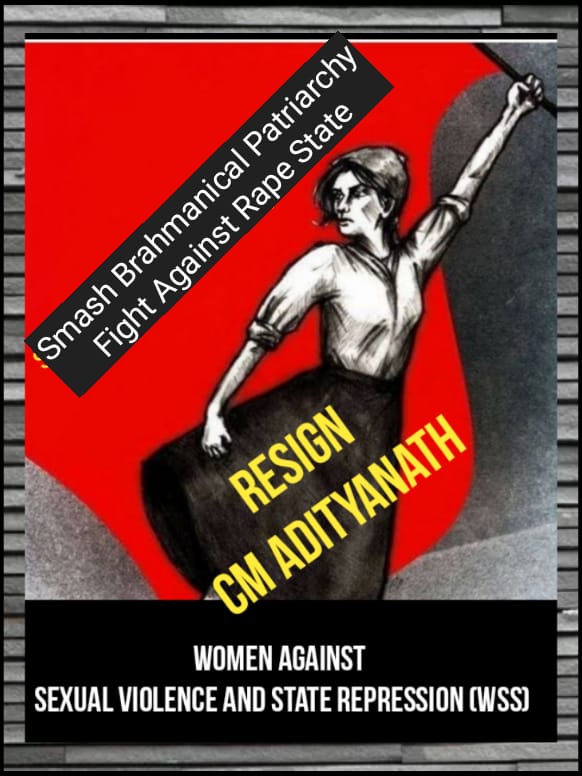
Statement by WOMEN AGAINST SEXUAL VIOLENCE AND STATE REPRESSION on Hathras and other cases in UP

यौन हिंसा और राजकीय दमन के खिलाफ महिलाएँ (WSS)  उत्तर प्रदेश में महिलाओं पर बढ़ रही यौन हिंसा पर चिंता व्यक्त करती है। पिछले दिनों हाथरस और बलरामपुर में दलित लड़कियों के साथ हुए बलात्कार और हाथरस के पूरे मामले में उत्तर प्रदेश पुलिस और प्रशासन की लापरवाही और बलात्कारियों को फायदा पहुंचाने वाली कार्यवाही, जिसमें रातों रात पीड़िता के शव को जलाना भी शामिल है, की कड़े शब्दों में निंदा करते करते हैं। 

हाथरस के जघन्य बलात्कार और हत्या की घटना पर रोष व्यक्त करते हुए WSS का कहना है कि उत्तर प्रदेश में महिलाओं और उसमे भी दलित समुदाय की महिला की कोई सुनवाई नहीं है।

Continue reading बेटी बचाओ का नारा देने वाले बलात्कारियों को बचाने में लगे हैं – यौन हिंसा और राजकीय दमन के खिलाफ महिलाएँ

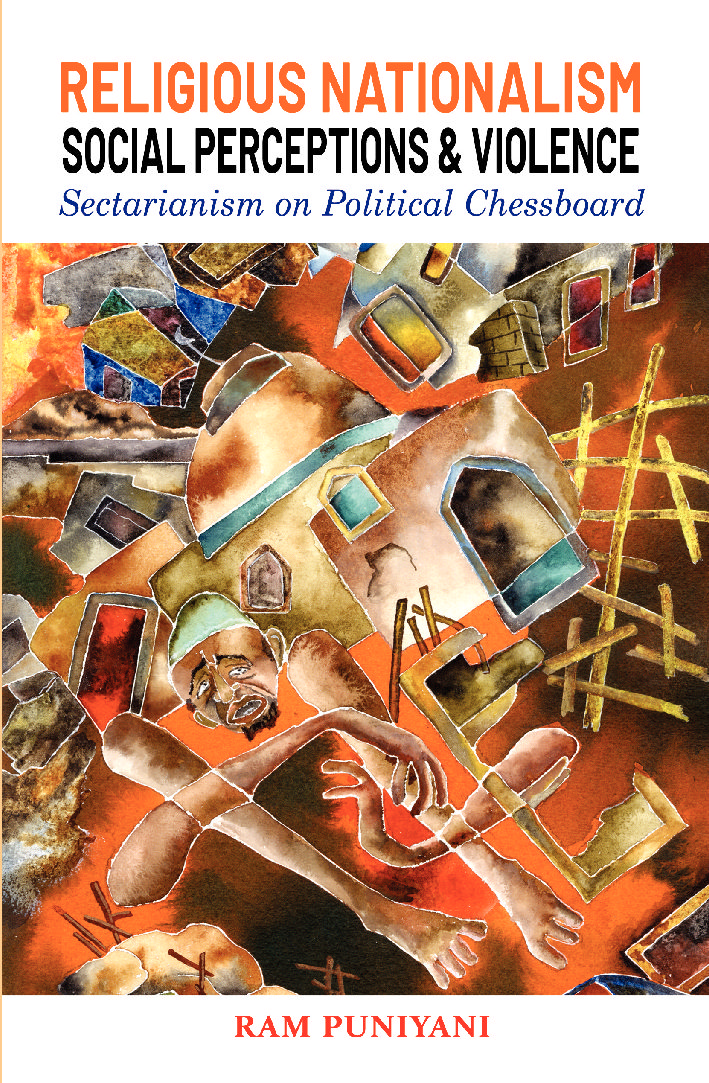
Unpacking Religious Nationalism

Review of ‘Religious Nationalism – Social Perceptions and Violence : Sectarianism on Political Chessboard‘- Ram Puniyani (Media House 2020)

“Blatant dictatorship – in the form of fascism, communism, or military rule – has disappeared across much of the world. Military coups and other violent seizures of power are rare. Most countries hold regular elections. Democracies still die, but by different means.

Since the end of the Cold War, most democratic breakdowns have been caused not by generals and soldiers but by elected governments themselves.”

(How Democracies Die, Steven Levitsky and Daniel Ziblatt)

The contrast had never been so sharper.

Continue reading Unpacking Religious Nationalism

AIDMAM & NDMJ Condemn Rising Atrocities Against Dalit Women and Minor Girls in UP

Joint Press Statement issued by All India Dalit Mahila Adhikar Manch (AIDMAM)  and National Dalit Movement for Justice (NDMJ)

On 29th September 2020 India has once again failed Dalit Women and Girls in upholding their rights and safety; we have lost another young life to the savage brutal gangrape and murder. This brutal incident occurred on 14th September in Hathras, Uttar Pradesh and once again exposes the harsh realities of caste based sexual assault faced by Dalit women and girls in this country. Victim was dragged with the dupatta around her neck into the field where she was gang raped; suffered severe spinal cord injury, severely beaten up and also got deep cut in her tongue as she fought back the rapist. She was not in a situation to give her statement till 23rd September 2020 due to the severe injuries that paralyzed her condition.
The level of brutality and inhumanity continues even after the demise of the victim, as the UP police forcibly cremated the body in the early morning around 3 AM on 30th September. Victim’s body was burnt by the police against the will of the family members and not letting them take her home one final time. Beside this, the police locked family members and locals inside the house as per the statement of family members of the deceased.

Rising Atrocities
Such ghastly incidents of violence are perpetrated everyday against women and minors and especially during the Pandemic and the Lockdown. The state of Uttar Pradesh has witnessed several cases of atrocities against Dalit women; with Lakhimpur Kheri leading in the graph of violence. In the past 60 days more than six atrocities were reported in the district against Dalit women and minor girls. Similarly in Saharanpur district, six cases of abduction and rape have been reported where NDMJ has intervened. These gruesome incidents of sexual violence reflect the real picture of Indian society constructed on violent casteist patriarchal structure.
It should be noted that the crime rate against Dalits in Uttar Pradesh has been rising exponentially in the last few years. As per the NCRB report of 2018, Uttar Pradesh tops the list of number of crimes committed against Dalits including Dalit women in 2018. Also, Uttar Pradesh has recorded the maximum number of cases of rape (526), attempt to rape (48), incidences of kidnap and abduction of Dalit women (381) and incidences of assault (711) in the year of 2018 under the SC/ST (PoA) Act. As per the compiled data of the NCRB reports of 2014-18, Uttar Pradesh has witnessed the maximum number of atrocities against Dalit women in India and an increase of 15% in the number or rape cases against Dalit women from 2015-18. 7,920 number of atrocities against Dalit women have been registered under the SC/ST (PoA) Amendment Act in Uttar Pradesh from 2014-18. A big majority of this figure has been for the cases of assault (3,421) and rape (2,410) of Dalit women. Attempt to rape (219) and kidnap and abduction (1,870) also form a major form of violence committed against Dalit women in Uttar Pradesh from 2014-18. Continue reading AIDMAM & NDMJ Condemn Rising Atrocities Against Dalit Women and Minor Girls in UP

Yogi Adityanath Must Immediately Resign for his Govt. has failed to protect SC/ST women in UP: Joint Statement

The following joint statement was issues 11 organizations including the Dalit Adivasi Shakti Adhikar Manch and the NAPM, in Delhi today.

In the past few years the number of new cases of rape of young women have increased fourfold in Uttar Pradesh. The Yogi Adityanath’s government should take the accountability of deteriorating law and order in Uttar Pradesh which has failed to protect young girls and has not been able to provide any security to them in Uttar Pradesh. Many media houses have been questioned for mentioning the caste of the girl but one cannot not mention that it is a result of a very brutal caste based violence. Dalit women are often subjected to the most brutal violence in this country so much so that the mainstream media also does not cover it because it is not relevant for them to cover these issues. When it comes to caste based violence in India Dalit women are the most vulnerable because the violence against them are culturally and politically motivated. It is a revenge against the entire spectrum of why a woman has raised her voice, these therefore are tools to suppress her voice all together. The upper caste men often wants to teach the Dalit woman a lesson which is deterrent in nature so that other Dalit women do not challenge their authority. This is why according to reports 4 Dalit women are raped every day. In Uttar Pradesh itself that data shows that the Scheduled Caste and Schedule Tribe (Prevention of atrocities), Act, 1989 has become a tool to appease the vote banks and it so far is remembered during the time of caste baste conflicts that is why the SC/ST Commission in Uttar Pradesh has been without any head for more than 8 moths while the pending application of atrocities have been piling up at the centre of a state which is home to 22 per cent of Dalits in India. In the wake of this case suddenly the Yogi government is now concerned for the SC/ST entrepreneurs, churning out new policies for them from their bag over last week. We demand that Yogi Adityanath, the CM of Uttar Pradesh should immediately resign as his government has failed to take strict actions to protect SC/ST women in his state severely.

On behalf of :  Dalit Adivasi Shakti Adhikar Manch (DASAM); National Alliance of People’s Movements (NAPM-Delhi); Institute for Democracy and Sustainability Delhi; Delhi Solidarity Group (DSG); People’s Resource Centre (PRC); Shaheri Mahila kamgaar Union; National Domestic Workers Union; Rehabilitation Research Initiative (RRI); Lok Theatre India (LTI); Community for Social Change & Development (CSCD); Sewerage or Sambandh Karmchari Manch (SSKM)

Contact: 7065721374; 9958797409; 7503189053


जेपी से अण्णा : आख़िर भ्रष्टाचार विरोधी आंदोलन किस तरह दक्षिणपंथ का रास्ता सुगम करता आया है

हम बारीकी से विश्लेषण करें तो हम पाते हैं कि वर्ष 2014 के बाद भारत में लिबरल जनतंत्र के बरअक्स हिन्दुत्व की जो बहुसंख्यकवादी सियासत हावी होती गयी, उसके कई तत्व इसी आंदोलन /सरगर्मी में मजबूती पाते गए हैं।

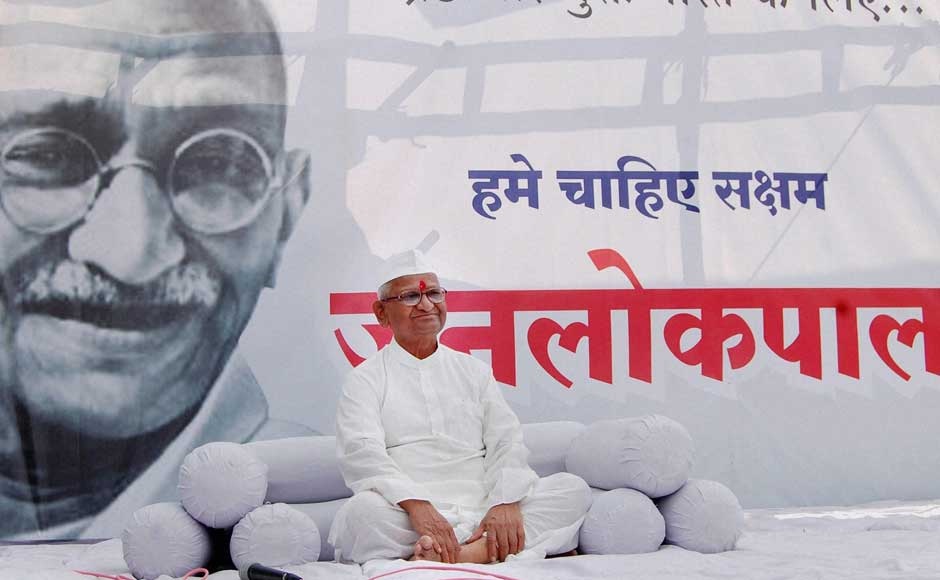
अण्णा
वर्ष 2011 के जनलोकपाल आंदोलन के दौरान अण्णा हजारे (फाइल फोटो)। साभार : गूगल

ग्रीक पुराणों में मिनर्वा को ज्ञान, विवेक या कला की देवी समझा जाता है, जिसका वाहन है उल्लू।

उन्नीसवीं सदी के महान आदर्शवादी दार्शनिक हेगेल का ‘फिलॉसाफी आफ राइट’ नामक किताब का चर्चित कथन है, ‘‘मिनर्वा का उल्लू तभी अपने पंख फैलाता है, जब शाम होने को होती है’’; (Only when the dusk starts to fall does the owl of Minerva spread its wings and fly.) – कहने का तात्पर्य दर्शन किसी ऐतिहासिक परिस्थिति को तभी समझ पाने के काबिल होता है, जब वह गुजर गयी होती है।]

अपनी अतीत की ग़लतियों की तहे दिल से आलोचना करना, साफ़गोई के साथ बात करना, यह ऐसा गुण है, जो सियासत में ही नहीं बल्कि सामाजिक जीवन में भी इन दिनों दुर्लभ होता जा रहा है। इसलिए अग्रणी वकील एवं नागरिक अधिकार कार्यकर्ता जनाब प्रशांत भूषण ने अपनी अतीत की ग़लतियों के लिए जब पश्चताप प्रगट किया तो लगा कुछ अपवाद भी मौजूद हैं।

दरअसल इंडिया टुडे से एक साक्षात्कार में उन्होंने ‘इंडिया अगेन्स्ट करप्शन’ आंदोलन जिसका चेहरा बन कर अण्णा हजारे उभरे थे – जिसकी नेतृत्वकारी टीम में खुद प्रशांत शामिल थे – को लेकर एक अनपेक्षित सा बयान दिया। उनका कहना था कि यह आंदोलन ‘संघ-भाजपा’ द्वारा संचालित था। ईमानदारी के साथ उन्होंने यह भी जोड़ा कि उन्हें अगर इस बात का एहसास होता तो वह तुरंत अण्णा आंदोलन से तौबा करते, दूर हट जाते।

विडम्बना ही है इतने बड़े खुलासे के बावजूद छिटपुट प्रतिक्रियाओं के अलावा इसके बारे में मौन ही तारी है या बहुत कमजोर सी सफाई पेश की गयी है।

( Read the full article here)

Sifting Evidence – A review of “Delhi Riots 2020: The Untold Story”: Karwan-e-Mohabbat, Anhad and Muslim Women’s Forum

This review has been prepared by a  voluntary  citizens’  collective of academics and activists, anchored by Karwan-e-Mohabbat, Anhad and Muslim Women’s Forum.

The review is based on a PDF of the  ‘book’,  Delhi Riots 2020: The Untold Story by Monika Arora, Sonali Chitalkar and Prerna Malhotra, which went viral after the original publishers (Bloomsbury India) withdrew.  The PDF was widely circulated on social media by the book’s supporters, who believed its message must be spread far and wide. At the virtual book launch, BJP leader and Chief Guest, Kapil Mishra, tweeted “The book is public now”.

The review, titled Sifting Evidence, given below, is largely in tabular form, which makes for a quick read.

The book Delhi Riots 2020 was originally a fact-finding report by a group called GIA (Group of Intellectuals and Academicians), which was submitted to the Home Ministry on March 11th, 2020.  A version of it was accepted for publication by Bloomsbury India.  BJP leader Kapil Mishra, whose hate speeches allegedly triggered the riots in February 2020, was a guest of honour at the book launch event held on August 22, 2020. On the day of the launch, Bloomsbury India decided to withdraw publication.

The authors claimed their freedom of expression was violated. But the facts are clear – there was no call to ban the Delhi Riots 2020 book. Established and reputable publishers get their reputation because they fact-check, and stay away from publishing material that may amount to libel. Other publishers may not care, and therefore do not achieve that reputation. Continue reading Sifting Evidence – A review of “Delhi Riots 2020: The Untold Story”: Karwan-e-Mohabbat, Anhad and Muslim Women’s Forum

State of the judiciary and reforms required : Prashant Bhushan

Democracy Dialogues Lecture Series Organised by New Socialist Initiative – 3 rd Lecture

Topic: State of the Judiciary and Reforms Required
Speaker: Prashant Bhushan, eminent Supreme Court lawyer and civil rights activist
Date and Time: Sunday, September 20, 2020 at 6 PM IST

Zoom and Facebook Live details in the poster below.

Image may contain: one or more people, text that says 'Democracy Dialogues 3rd Lecture State of the Judiciary and Reforms Required Time: 20 Sep 2020 06:00 PM India Join us on Zoom!! Meeting ID: 848 2963 1643 Passcode: 799603 f fb.com/newsocialistinitiative.nsi Live link: Prashant Bhushan Public Interest Lawyer and Civil Liberty Activist New Socialist Initiative A World for the Workers! A Future for the World'

[New Socialist Initiative Presents Democracy Dialogues – Lecture Series

The idea behind this series – which we call ‘Democracy Dialogues’ – is basically to initiate as well as join in the on-going conversation around this theme in academic as well as activist circles.

The inaugural lecture in the series was delivered by Prof Suhas Palshikar on 12 th July 2020. The theme of Prof Palshikar’s presentation was  TRAJECTORY OF INDIA’S DEMOCRACY AND CONTEMPORARY CHALLENGES, Professor Pratap Bhanu Mehta delivered the second lecture on THE STRUCTURAL CONTRADICTIONS OF INDIAN DEMOCRACY AND THE RISE OF THE BJP on 16 th August 2020 ]

Jadavpur alumni in solidarity with Dr. Maroona Murmu in face of casteist/racist violence in Indian academia

Statement of solidarity from JU alumni

As alumni of Jadavpur University (JU), we condemn the casteist abuses hurled against a renowned professor of History at Jadavpur University, Dr. Maroona Murmu, because of her identity as an Adivasi.

The remarks were made in response to Dr. Murmu’s comment that an academic year was not more important than a student’s life and that in-person examination during the ongoing deadly coronavirus pandemic was not a good idea. This was admittedly a reasonable stand in face of the government’s decision to hold exams during the Covid-19 outbreak. In response, she received casteist abuses from an undergraduate student who called her out on social media as a “worthless, undeserving idiot” (“jogyotaheen opodartho” in Bengali). It questioned both her scholarly credibility and her right to speak out on any aspect of academic life (the security and well-being of students during a contagious disease outbreak, for instance). The student then went on to “remind” Dr. Murmu of her identity as an Adivasi Santhal and her inferior position in the caste hierarchy that made her unworthy of any consideration. This was followed by over 1800 trolls and rebukes. It is continuing. Continue reading Jadavpur alumni in solidarity with Dr. Maroona Murmu in face of casteist/racist violence in Indian academia

JNU Teachers Association condemns the arrest of Umar Khalid

Statement issued by JNUTA, representing the voices of JNU faculty 

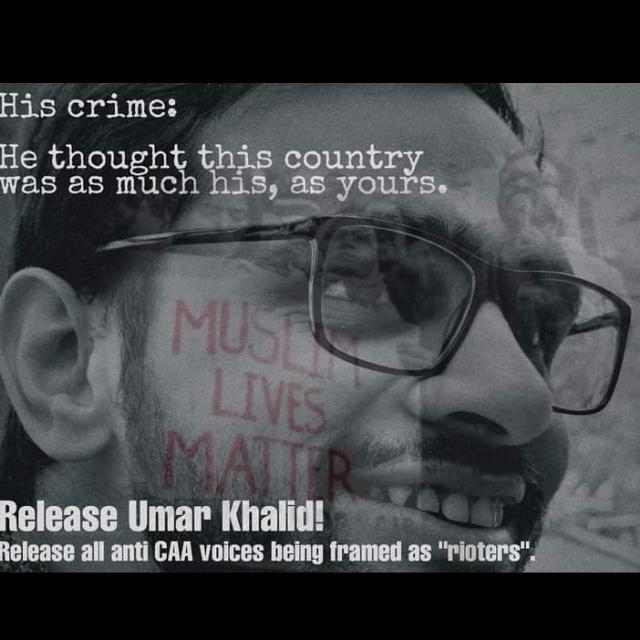
The JNUTA condemns the arrest by the Special Cell of the Delhi Police of former JNU student, Umar Khalid, under the draconian UAPA. This is yet another instance of the never ending witch hunt being conducted by the Delhi Police in the name of inquiring into the February 2020 riots in Delhi, an inquiry with which Umar Khalid had been voluntary cooperating. The JNUTA notes that Umar Khalid had also been one of those specially targeted during the vicious slander campaign unleashed against JNU in February 2016 and had then been charged with ‘sedition’. That smear campaign fuelled by sections of the media had put his life in danger and in 2018 he fortuitously survived a murderous attack against him. Since then he was supposed to be under the ‘protection’ of the Police and yet he is accused of having been part of a ‘conspiracy’ for instigating the violence in North-East Delhi. It is clear, therefore, that his safety is at risk even when he is in custody and not just because of the Covid-19 pandemic.

Continue reading JNU Teachers Association condemns the arrest of Umar Khalid

Ethics of Selective Outrage – On Converting Mosques and Museums: Aejaz Ahmad and Irshad Rashid

Guest post by AEJAZ AHMAD and IRSHAD RASHID

What does turning Hagia Sophia into a mosque mean for global political practice? 

In an unusally brazen move Turkey’s top court recently ruled in favour of transforming Hagia Sophia, a museum of global tourist attraction, into a mosque. Originally a cathedral built in pre-Islamic Turkey but converted into a mosque when Ottomans invaded Constantinople in 1453, with the liquidation of the Ottoman Empire, Attaturk transformed it into a museum in 1934 as a secular gesture to herald what is called modern secular Turkey. This was more recently followed by  transforming another historic Chora Church, that went exactly through the same iteration, into yet another mosque.

Continue reading Ethics of Selective Outrage – On Converting Mosques and Museums: Aejaz Ahmad and Irshad Rashid

Delhi Police inquiry into Delhi violence 2020: Statement by Prof Apoorvanand

Delhi Police continues its motivated “enquiry” into the systematic and planned violence  in NE Delhi in February 2020, framing through fake “disclosure statements” and “confessions”, students, teachers, film makers, activists and other citizens who peacefully protested the unconstitutional CAA.

In this context, reports in the media yesterday stated that Delhi Police have filed a supplementary chargesheet naming, among others, Apoorvanand, Professor of Hindi at Delhi University, well known academic, fellow Kafila collective member and a relentless defender of democracy, which is under severe threat from this regime. 

The following statement has been issued by him in response.

Statement by Prof Apoorvanand

It has been brought to my notice that a supplementary Chargesheet filed in connection with FIR 50/2020 has certain disclosure statements by accused in custody, that mention my name, together with that of Rahul Roy, Umar Khalid, Jayati Ghosh , Sita Ram Yechuri and Yogendra Yadav. These names are mentioned in uncorroborated statements attributed to accused who are in custody, where it is claimed that they provided support in organising the anti- CAA protests. Continue reading Delhi Police inquiry into Delhi violence 2020: Statement by Prof Apoorvanand

राष्ट्रीय शिक्षा नीति 2020 – पिछले तजुर्बों से बेख़बर एक दस्तावेज़ : राजेन्द्र चौधरी

Guest post by RAJINDER CHAUDHARY

राष्ट्रीय शिक्षा नीति 2020 के दो मुख्य भाग हैं, स्कूली शिक्षा और उच्च शिक्षा. हम इन दोनों क्षेत्रों का मूल्यांकन करेंगे. किसी भी नीति की तरह इस शिक्षा नीति में भी कुछ स्वागत योग्य कदम हैं, कुछ कमियाँ हैं, कुछ बातें छूट गई हैं और कुछ खतरनाक पहलू हैं. हम तीनों पक्षों को चिन्हित करने का प्रयास करेंगे. दुर्भाग्य से इस नीति के दो अलग अलग अंग्रेजी प्रारूप सरकारी वेब साइटों पर उपलब्ध हैं. एक 60 पृष्ठों का और एक 66 पृष्ठों का है. दोनों की अंतर्वस्तु में भी महत्वपूर्ण अंतर है पर इन प्रारूपों में तिथि नहीं दी गई, इस लिए यह तय करना संभव नहीं है कि कौन सा नया है और कौन सा पुराना है. इस विमर्श हेतू हमने 66 पन्नों वाले दस्तावेज़ का प्रयोग किया है. 

काफी समय से एकविषयक कालेज जैसे बीएड कालेज, इंजीनियरिंग कालेज या बिना विज्ञान संकाय या केवल विज्ञान संकाय के +2 स्कूल तो चल ही रहे थे पर हाल ही में एक विषयक विश्वविद्यालयों का चलन बढ़ा है. जैसे स्वास्थ्य, खेल, संस्कृत, बागवानी विश्विविद्यालय इत्यादि. ऐसे एकविषयक संस्थानों में छात्रों को समग्र विकास का मौका नहीं मिलता. उनका दृष्टिकोण बहुत सीमित हो जाता है. इस लिए बहुविषयक शिक्षा संस्थान विषयों एवं छात्रों दोनों के समग्र विकास के लिये आवश्यक हैं. इस कमी को नयी शिक्षा नीति में रेखांकित किया है और दूर करने का निर्णय लिया गया है. यह स्वागत योग्य कदम है. स्कूल को छात्रों तक सीमित न रख कर एक ‘सामाजिक चेतना केंद्र’ के तौर पर विकसित करना, कम्पार्टमेंट परीक्षा के साथ स्कूली छात्रों को अंक सुधार हेतु मौका देना, सार्वजानिक एवं स्कूल पुस्तकालयों का विस्तार एवं इन के लिए आवश्यक कर्मचारियों की व्यवस्था, मातृभाषा में शिक्षा को बढ़ावा देने का संकल्प, छात्रों को अपनी रूचि के अनुसार ज़्यादा विविध विषयों में से चुनाव चुनाव का मौका, जैसे कदम स्वागत योग्य हैं. 

Continue reading राष्ट्रीय शिक्षा नीति 2020 – पिछले तजुर्बों से बेख़बर एक दस्तावेज़ : राजेन्द्र चौधरी

People from across Professions and Continents Come out In Solidarity with K. Satyanarayana

UPDATE

Signatures kept coming in even as we closed the campaign in order to collate them. We are adding at the end of the statement, some names received between our closing and releasing the statement to the media. We are aware that there are many more who wanted to sign but we had to close it, in order to release the statement on time. 

We reproduce below a statement signed by over 720 signatories, in solidarity with Prof K. Satyanarayana, who has been summoned by the NIA today, along with senior journalist KV Kurmanath.

The signatories, from across different professions, include luminaries such as Professors Noam Chomsky, Barbara Harris-White, Jan Breman, Susie Tharu, Sumit Sarkar, Tanika Sarkar, Prabhat Patnaik, John Harris, Gyan Prakash, Rajeswari Sunder Rajan and Utsa Patnaik; leading writers and poets like K. Satchidanandan, Mridula Garg, Geeta Kapur and Gita Hariharan, artists like Sudhir Patwardhan and Vivan Sundaram.

It is an expression of the great respect that Prof K Satyanarayana commands among different sections of people, including a large number of students, that so many people added their names to this statement of solidarity in such  a short time.

We, the undersigned academics, journalists and concerned citizens strongly condemn the fresh round of harassment and arrests of academics and activists by the National Investigation Agency (NIA), which is trying to implicate them in the Bhima Koregaon case. After Partho Sarathi Ray, the NIA has now summoned Prof Satyanarayana and senior journalist KV Kurmanath to appear before it on 9 September. And even as these summons were being served, the NIA has also arrested Sagar Gorkhe and Ramesh Gaichor of the Kabir Kala Manch in connection with the same case.

Dr. K. Satyanarayana is Professor at the Department of Cultural Studies at the English and Foreign Languages University, Hyderabad. He has been instrumental in establishing Dalit Studies as an academic discipline and has a formidable reputation as a scholar and teacher.

Continue reading People from across Professions and Continents Come out In Solidarity with K. Satyanarayana

NEP 2020 – elitist and corporatized education under Hindu Rashtra

This study of the National Education Policy 2020, apart from my own  analysis, draws on extensive commentary on the final document and its earlier drafts, by education policy experts and teachers, including my own union,  JNU Teachers’ Association, which undertook a detailed critique of the Draft NEP 2019.  This needs to be said because neither educationists nor academics were consulted in the process of making the initial policy, nor were states, despite the fact that education is a concurrent subject. We begin therefore with the procedure of finalizing the NEP 2020.

Faulty procedures of formulating and finalizing the policy

No consultative process

All previous education policies have undergone massive consultation processes, as Niraja Gopal Jayal outlines, but not this one. At the press conference announcing the policy, Gopal Jayal points out, it was claimed that an “unprecedented collaborative, inclusive, and highly participatory consultation process” was conducted, but it is clear from the single slide that was shown, that states were not consulted at all.

Continue reading NEP 2020 – elitist and corporatized education under Hindu Rashtra

Statement by concerned citizens against Delhi Police’s conduct of the probe into Delhi riots 2020

DELHI POLICE – WE, THE CITIZENS OF INDIA, OBJECT TO THE MANNER OF THE DELHI RIOTS PROBE

RESTORE PUBLIC FAITH IN YOUR INVESTIGATION

 Stop coercing ‘confessional’ statements to manufacture evidence

Stop falsely implicating people, including Umar Khalid

Stop wrongly invoking UAPA to give the colour of conspiracy against the state

Over 1000 citizens from all walks of life including, filmmaker Aparna Sen; former Culture Secretary culture Jawahar Sircar; Historian Ramchandra Guha; former Chairperson, Delhi Minority Commission Dr. Zafarul-Islam Khan; Former Governor, Margaret Alva; Academics –  Zoya Hasan, Partha Chatterjee, Jayati Ghosh, Poonam Batra, Sucharita Sen; former senior civil servants – Wajahat Habibullah, Madhu Bhaduri, Deb Mukherjee, Amitabha Pande, Sundar Burra, Aditi Mehta; feminists and trans rights activists – Meera Sanghamitra, Vani Subramanian, Chayanika Shah, Hasina Khan;  Journalists – Vidya Subrahmaniam, Geeta Seshu, Manoj Mitta, Anjali Mody, Antara Dev Sen, Priyanka Borpujari; political leaders, Brinda Karat, Annie Raja, Kavita Krishnan; Artists Kiran Sehgal, Shuddabrata Sengupta & Writer Aruna Vasudev; Social activists – Magsasay Awardees Aruna Roy and Sandeep Pandey; Democratic rights activists Jagdeep Chhokar, Henri Tiphane, Teesta Setalvad, John Dayal, Lara Jesani; Former Chief of Naval Staff, Admiral Ramdas; Scientist, Amitabha Basu, along with scores of others – have issued an urgent statement, strongly objecting to the manner in which Delhi Police has been conducting the probe into the riots cases, and calling on them to restore the public’s faith in the investigation.

Citing strong evidence of coerced ‘confessional’ statements and manufactured evidence, the signatories have sought assurances from the Delhi Police Commissionerate that these practices will be stopped, and have urged them to conduct a fair and impartial investigation to book the real culprits of the riots.

We are alarmed by the news that on Sept 1, 2020, Umar Khalid sent a letter to the Delhi Police Commissioner, Shri SN Shrivastava, with shocking evidence of the Delhi Police manufacturing evidence against him, through extorted statements. The letter reveals that a young man was interrogated by the Delhi Police (Special Cell) and a false confession against Umar Khalid, related to Delhi riots, was extracted and videotaped. The young man was threatened that he would be arrested under UAPA if he refused. He submitted to the coercion for he was scared, and yet his conscience allowed him to speak up about what had transpired.

Continue reading Statement by concerned citizens against Delhi Police’s conduct of the probe into Delhi riots 2020

Why Bloomsbury withdrawing ‘Delhi Riots 2020’ is not about freedom of expression: Nivedita Menon and Aditya Nigam

This post is jointly written by NIVEDITA MENON & ADITYA NIGAM

Bloomsbury India has withdrawn the book Delhi Riots 2020 in the face of massive outrage at its publication. While we commend Bloomsbury’s decision to withdraw, we also note that its statement explaining this act ends with the the following sentence:

‘Bloomsbury India strongly supports freedom of speech but also has a deep sense of responsibility towards society.’

The implication here is clear for those who want to see it. The publication of the book was a matter of ‘freedom of speech’, while its withdrawal comes from a ‘deep sense of responsibility towards society’.

At the outset let us state that we do not question the publication of books with which we do not agree, because intellectual and political differences of opinion, and the freedom to express these are the life blood of a democracy. We have not at any point questioned other publications by Bloomsbury, or by other publishing houses, that express views that support the current regime (which has consistently throttled such freedom of expression, and by whom many of us personally are under serious attack). Nor have we raised objections to the flood of hastily turned out books by many publishers that produce intellectually unsustainable arguments that bolster the politics of the anti-constitutional, Brahminical Hindu Rashtra.

So let us spell out what is reprehensible about Delhi Riots 2020 and why it should not have been published in the first place.

Continue reading Why Bloomsbury withdrawing ‘Delhi Riots 2020’ is not about freedom of expression: Nivedita Menon and Aditya Nigam

Corporate Social Media in India: Sell Hate, Enjoy Profit

The bias that social media platforms such as Facebook display reflects their own world-view as much as it does the regimes they support.

Corporate Social Media in India

A few gave the appearance of being truly psychopathic individuals. The mass of others were ragged and illiterate peasants easily roused to hatred of the Tutsi. Perhaps the most sinister people I met were the educated political elite, men and women of charm and sophistication who spoke flawless French and who could engage in long philosophical debates about the nature of war and democracy. But they shared one thing in common with the soldiers and the peasants: they were drowning in the blood of their fellow countrymen.

Fergal Kane, a journalist with the BBC, wrote these chilling lines in his book, Season of Blood: A Rwandan Journey, winner of the Orwell prize in 1995. The organised and planned killing in Rwanda, one of the darkest episodes of the 20th century, resulted in the death of eight lakh Tutsi.

It is a strange coincidence that a year and a half before these unfortunate developments, the biggest democracy in the world went through its own cataclysmic moment, when Hindutva supremacist forces demolished a 500-year-old mosque after a long and bloody campaign. Even after the demolition large-scale communal riots broke out all over India, in which thousands died and whose scars are still difficult to heal.

There is at least one thing in common between what Rwanda went through and what India witnessed in 1992: both tragedies demonstrated how the media can prepare and provoke ordinary people into unleashing untold miseries on their neighbours. Continue reading Corporate Social Media in India: Sell Hate, Enjoy Profit