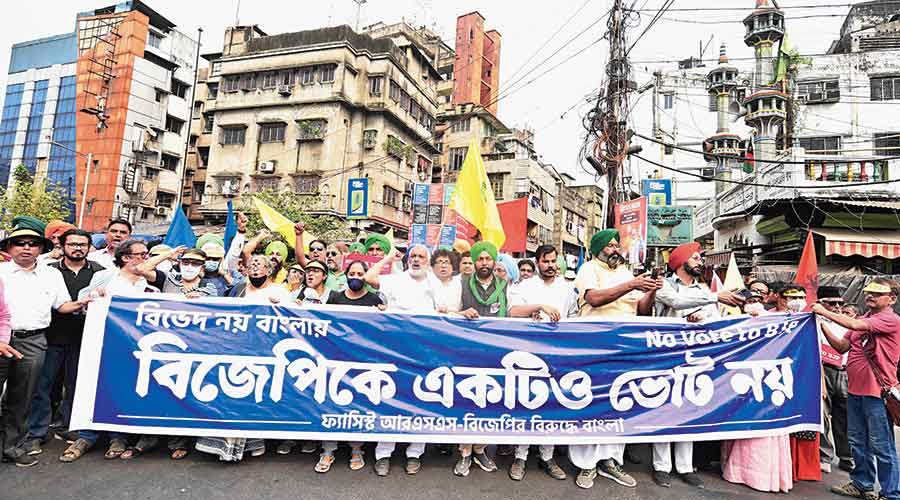
A demonstration by the ‘No Vote to BJP’ campaign in Kolkata, (older image) courtesy The Telegraph
As close to 8.5 lakh voters spread over 35 Assembly constituencies go to vote today in the last phase of Bengal’s elections, the line from the famous jatra Nabab Siraj-Ud-Doula from which the title of this post is extracted, haunts. The original ‘jatra pala’, written by Sachin Sengupta was staged in 1938 had a dialogue that announced the dark clouds collecting at Bengal’s horizons. The lines ‘Banglar akashe aaj durjoger ghanaghata/ Taar shyamal prantore rakter alpona’ have since resounded in the many iterations of the play, over the decades. The figures of Siraj-Ud-Daula and the traitor Mir Jafar have generally become part of Bengal’s political vocabulary but this time round the sense of Bengal being under attack from ‘outsiders’ has been pervasive. Along with that other episode of political folklore – repeated attacks by the borgis or the plunderous cavalrymen of the Maratha Empire, on Bengal has been recalled often. The attacks by the borgis were followed, only a few years later, by the Battle of Plassey (Palashi), in which Siraj-Ud-Daula was defeated after Robert Clive bribed Mir Jafar, his army commander, to betray the Nawab.
This time round too, it is widely believed, the aggression by ‘outsiders’ cannot and will not succeed but for the Mir Jafar’s who collaborate with the aggressors.
Nobel Laureate Paul Krugman spoke online at a recent Distinguished Public Lecture at the Ashoka University (March 12, 2021), hosted by Arvind Subramaniam, Director, Ashoka Centre for Economic Policy. He spoke on “Is Labor-Intensive Exporting Still a Feasible Development Strategy?”
Kugman said that in this globalized world, for India to get into the market space vacated by the Chinese manufacturers, particularly for labour-intensive goods, it will have to be ready to do two things: First, make policy choices that are realistic and not ‘precocious’ and second, be ready to accept that rights and freedoms of labour, in particular will be sacrificed. The wise counsel of Krugman was that India will have to be prepared to negotiate the space between rights/freedoms and share in the world market of course, up to the point where “labour is not getting killed”. Continue reading Freedom in the university and outside it: Atul Sood→
During the period of drafting this open letter, the publishers have withdrawn the book. We however feel that the concerns raised continue to hold good and are putting this open letter out in the larger interest of ethical medical practice.
To
Dr Apurba S Sastry, Associate Professor, Jawaharlal Institute of Postgraduate Medical Education and Research, Puducherry, India
Dr Sandhya Bhat, Professor of Microbiology, Pondicherry Institute of Medical Sciences (PIMS), Puducherry, India.
Dear Drs Sastry and Bhat,
Greetings! We are writing this open letter to you with reference to the 3rd edition of the Microbiology textbook “Essentials of Medical Microbiology” which both of you have authored, and about the unscientific and seemingly prejudiced choice of using as an epidemiological example, the Tablighi Jamaat (Society of Preachers) gathering organised in India between March 13-15, 2020 .
We are a group of doctors, researchers, academicians and social activists who would like to express our deep concerns about this example on the grounds of it being unscientific and also running the risk of inculcating discriminatory, in this case, Islamophobic ideation in public health teaching and more importantly in the minds of future generations of health professionals. Below we briefly present cause of these concerns and urge you to immediately withdraw copies of the said textbook from the market along with a statement from you clarifying that the Tablighi Jamaat congregation is not epidemiologically significant for the spread of the COVID-19 virus and therefore the book is being removed from sales and will also not include as an example in subsequent prints. Continue reading An open letter regarding unscientific epidemiological practice and Islamophobia in a textbook of Medical Microbiology→
This post is the English translation of an article in Punjabi by NADIA SINGH, published first in Punjabi Tribune.
In a February long ago, in 1978 to be precise, thousands of American farmers rode into Washington D.C. on their tractors, from all across America. Some travelled for days together, covering journeys of hundreds of miles. What was the mission behind their long and arduous expedition? They were demanding fair prices and an equitable model of agricultural development.
Image courtesy modernfarmer.com
In the 1970s US had initiated drastic changes in its agrarian policies under the “Get Big or Get Out” paradigm. This policy sought to replace small family run farms and consolidate them into large-scale factory farms. Policy makers in the US believed that industrial farming represented a more efficient and profitable economic model, compared to small and medium farms run independently by farmers. Continue reading When tractors marched in Washington DC: Nadia Singh→
WHATEVER HAPPENED TO THE BOMB-MAKING FACTORIES IN WEST BENGAL?
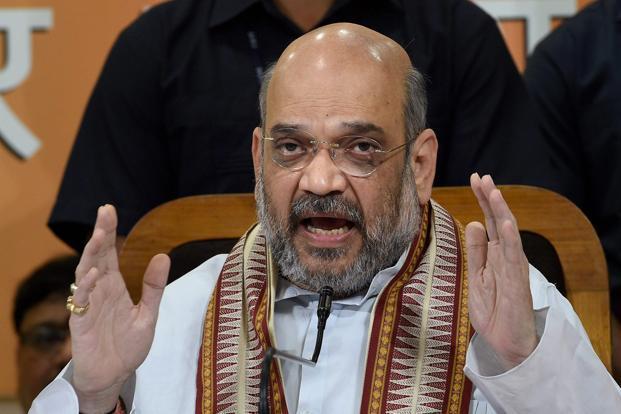
Image Courtesy: PTI
Are the Ministry of Home Affairs (MHA) and its in-charge, Home Minister Amit Shah, at variance with each other? This question has acquired a new meaning as, within a year, there have been at least two occasions when the MHA has not supported Shah’s public claims on matters with a direct bearing on the internal security of the country.
Take the interview of Shah done by a news channel last October. He claimed in it that the law and order situation had “gone for a toss” in West Bengal. The state, he went to the extent of claiming, had “bomb-making factories” in “every district”. This explosive claim of the number two in the Union Cabinet was lapped by mainstream media and soon there were calls to impose President’s Rule in the state.
मोटेरा स्टेडियम का नाम बदलना दुनिया के इतिहास में- ख़ासकर उपनिवेशवाद के ख़िलाफ़ संघर्ष कर आज़ाद हुए मुल्कों में, ऐसा पहला उदाहरण है, जहां किसी स्वाधीनता सेनानी का नाम मिटाकर एक ऐसे सियासतदां का नाम लगाया गया हो, जिसका उसमें कोई भी योगदान नहीं रहा हो.
Courtesy – नरेंद्र मोदी स्टेडियम. फोटो: रॉयटर्स
क्रिकेट का खेल भारत का सबसे लोकप्रिय खेल है. पिछले दिनों यह खेल नहीं बल्कि इस खेल के लिए फिलवक्त मौजूद दुनिया का ‘सबसे बड़ा क्रिकेट स्टेडियम’ एक अलग वजह से सुर्खियों में आया.
मौका था अहमदाबाद के मोटेरा स्टेडियम- जिसे सरदार वल्लभभाई पटेल स्टेडियम के तौर पर जाना जाता रहा है – के नए सिरे से उद्घाटन का, जो वर्ष 2015 में नवीनीकरण के लिए बंद किया गया था और अब नयी साजसज्जा एवं विस्तार के साथ खिलाड़ियों एवं दर्शकों के लिए तैयार था.
याद रहे कि पहले गुजरात स्टेडियम के तौर जाने जाते इस स्टेडियम का स्वाधीनता आंदोलन के महान नेता वल्लभभाई पटेल – जो आज़ादी के बाद देश के गृहमंत्री भी थे- के तौर पर नामकरण किया गया था, जब तत्कालीन गुजरात सरकार ने स्टेडियम के लिए सौ एकड़ जमीन आवंटित की, जिसका निर्माण महज नौ महीनों में पूरा किया गया था. (1982)
दरअसल हुआ यह कि जिस दिन उसका उद्घाटन होना था, उस दिन अचानक लोगों को पता चला कि अब यह सरदार वल्लभभाई पटेल स्टेडियम नहीं बल्कि ‘नरेंद्र मोदी स्टेडियम’ के तौर पर जाना जाएगा.
सबसे विचित्र बात यह थी कि इस नामकरण को बिल्कुल गोपनीय ढंग से किया गया. गोपनीयता इस कदर थी कि खुद समाचार एजेंसियों प्रेस ट्रस्ट आफ इंडिया या एएनआई आदि तक को पता नहीं था कि उसका नामकरण किया जाने वाला है.
जाहिर था कि पीटीआई या एएनआई जैसी संस्थाओं की सुबह की प्रेस विज्ञप्ति भी उसे सरदार वल्लभभाई पटेल स्टेडियम के तौर पर संबोधित करती दिख रही थी. यह अलग बात है कि अगली प्रेस विज्ञप्ति में अचानक नरेंद्र मोदी स्टेडियम का जिक्र होने लगा.
अब जैसी कि उम्मीद की जा सकती है कि इस नामकरण- जो दरअसल नामांतरण था- पर तीखी प्रतिक्रिया हुई. न केवल इसे सरदार वल्लभभाई पटेल के अपमान के तौर पर देखा गया बल्कि यह भी कहा गया कि एक पदेन प्रधानमंत्री का नाम देकर प्रस्तुत सरकार ने एक तरह से दुनिया में अपनी हंसी उड़ाने का ही काम किया है.
विपक्ष ने साफ कहा कि यह एक तरह से मोदी के पर्सनालिटी कल्ट को अधिक वैधता प्रदान करने का काम है. मिसालें पेश की गईं कि समूची दुनिया में भी ऐसी मिसालें बहुत गिनी-चुनी ही मिलती हैं, जो अधिनायकवादी मुल्कों में दिखती हैं.
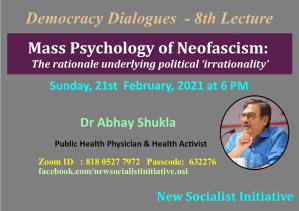
Dr Abhay Shukla, public health physician and health activist will be delivering the 8 th lecture in the ‘Democracy Dialogues Lecture Series’ on ‘Mass Psychology of Neofascism : The rationale underlying political ‘irrationality’ organised by New Socialist Initiative on Sunday, 21 st February, 2021 at 6 PM (IST)
If the ever-growing reality of Hindu Rashtra were one big Christmas, Kapil Mishra would be Santa Claus, and the members of his “Hindu Ecosystem” hardworking elves delivering the gift of religious hatred and bigotry, packaged in the seductive wrapping of Hindutva, to the masses, secretly but methodically.
On November 16 last year, Mishra, a former Aam Aadmi Party minister who is now with the BJP and has been accused of inciting the February 2020 Delhi carnage by the victims and activists, posted a tweet asking whoever was interested to fill in a form and join what he described as the “Hindu Ecosystem” team.
The form is straightforward – seeking such details as name, cellphone number, state and country of residence – but for one standout question. It asks the prospective footsoldier of the Hindu Ecosystem to state their “special area of interest” and, lest it wasn’t clear what that meant, gives a set of examples.
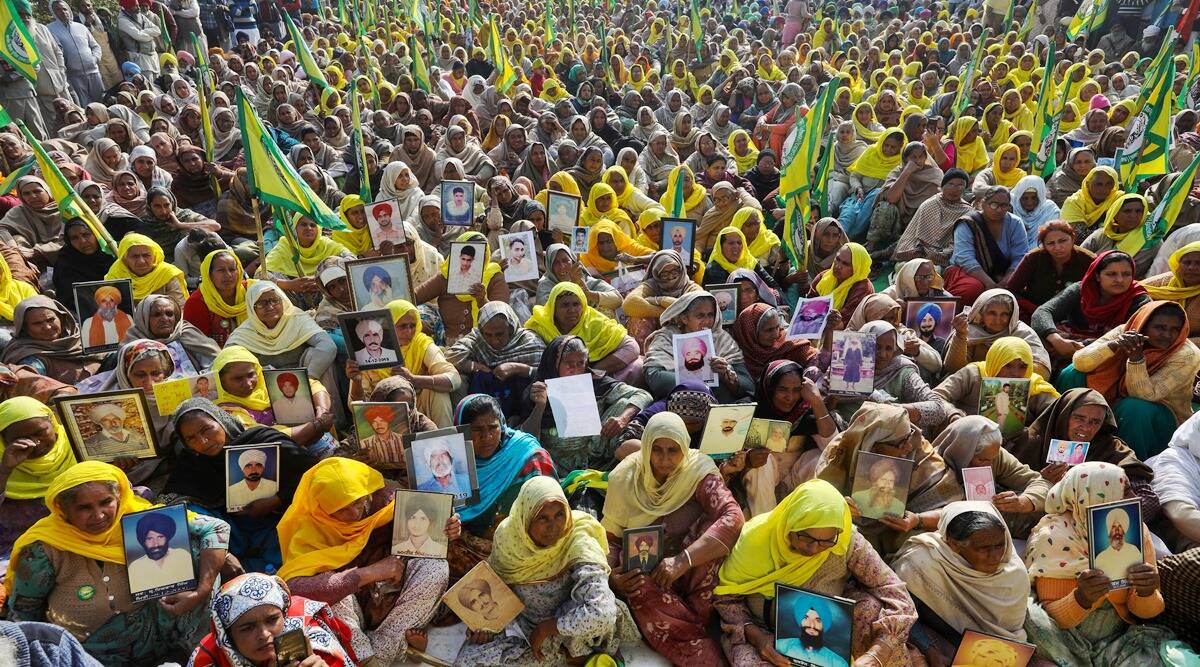
Widows and relatives of farmers who were believed to have killed themselves over debt, at Tikri border. Image courtesy Indian Express
Let me tell you what the Delhi Police knows. And I do not mean the abstract entity called Delhi Police. I mean every single IPS officer and every constable involved in carrying out the “toolkit investigation.”
They know that 22 year old Disha Ravi is not the Prime Mover along with the relatively recently formed Canada-based Poetic Justice Foundation (set up in March 2020) , in a plot to overthrow the Indian government. They know this because the IPS officers at least, can read English and a simple search would show them that the term “toolkit” in this context is basically used by organizers of street protests against autocracies the world over, for peacefully expressing mass dissent.
Here is one such article from 2013 called The Dissident’s Toolkit, in the context of the Arab Spring. The author Erica Chenoweth (soon to be honoured with an arrest warrant) explains:
Research shows, in fact, that demonstrations are just one of many tools that civil resistance movements can use to effect change. Successful movements are those that use a wide array of methods to pressure their state opponents while keeping their activists safe. The demonstration tactic we’re used to seeing is just one of many hundreds of tactics available to civilians seeking change — and successful campaigns for change must use more than just a single tactic.
When on January 26, 2016, Prof. M. Jagadesh Kumar, a professor of electrical engineering from IIT Delhi, assumed office as the new Vice-Chancellor of Jawaharlal Nehru University, no one really knew who he was. Although subsequent news coverage have unearthed a short-lived and rather unsavoury notoriety in the early 2000s, his administrative experience appeared to be scant, never even having served as a head of a department in any of the institutions he has served in), so news coverage of his appointment could make mention of only his prowess in the martial arts and his aspirations to nation-building in the university (which, as was eventually revealed, boiled down largely to a somewhat macabre fascination with large military hardware).
The five years of Kumar as Vice-Chancellor of JNU have done much to lift him from the obscurity he once enjoyed, but most of his new-found fame has been singularly unflattering. Met with a sustained opposition from the JNU Students Union and the JNU Teachers Association, Kumar has far from established himself as a capable, transparent, and non-partisan administrator committed to the highest standards of academic excellence. However, the poor press that has consistently dogged him throughout his tenure appears to have done nothing to weaken the extraordinary governmental support that he enjoys. So resolute is this backing, that it not only has it been able to claim the scalp of a senior bureaucrat in the MHRD back in 2019, it has now secured Jagadesh Kumar an unusual continuation in office until “his successor is appointed”, following the indefinite postponement of a meeting for the selection of his successor on January 7, 2020. Continue reading Exclusion Arithmetics in Higher Education -JNU as the NEP 2020 Pilot: Ayesha Kidwai→
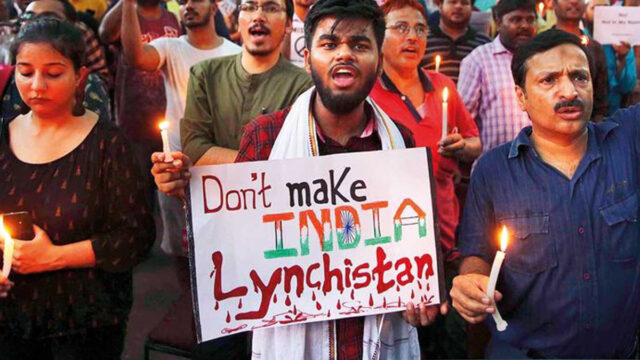
Generic image of demonstration against mob lynching, courtesy ED Times
[In this column this time, I am reproducing a piece that I recently wrote at the request of some friends – as a popular pamphlet, meant primarily for election purposes. Therefore, while it draws on the work of experts in the field, it does not really address the academic reader.]
“Hinduize all politics and militarize Hindudom – And the resurrection of our Hindu Nation is bound to follow it as certainly as the Dawn follows the darkest hour of the Night!” – Hindutva’s founding ideologue Vinayak D. Savarkar’s message to Hindudom on his 59th birthday, 25 May 1941.
“Our arms stretched as far as America on the one side – that was long before Columbus ‘discovered’ America – and on the other side to China, Japan, Cambodia, Malay, Siam, Indonesia and all the South-East Asian countries and right up to Mongolia and Siberia in the North. Our powerful political empire too spread over these South-East areas and continued for 1,400 years, the Shailendra empire alone flourishing for over 700 years – standing as a powerful bulwark against Chinese expansion.” M. S. Golwalkar, [Second Sarsanghchalak of the Rashtriya Swayamsevak Sangh (RSS)], Bunch of Thoughts, Vikrama Prakashan, Bangalore 1968, p. 9.
“Emotions have more connection with the senses than with the faculty of reason; and therefore when principles are entirely lost sight of and emotions prevail, religions degenerate into fanaticism…They are no better than party politics…The most horribly ignorant notions will be taken up, and for these ideas thousands will be ready to cut the throats of their brethren.” – Swami Vivekananda, “The Methods and Purpose of Religion”, The Definitive Vivekananda, Rupa, New Delhi, 2018, p. 211]
STATEMENT BY WOMEN AGAINST SEXUAL VIOLENCE AND STATE REPRESSION
Demand the immediate release of Nodeep Kaur and Shiv Kumar and cessation of targeting of workers and peasants by the Haryana Police!
On January 12th 2021, the Haryana Police began firing at a workers’ rally in the Kundli Industrial Area. Firing at workers demanding unpaid wages, the police claimed that their demand amounted to extortion. Following the gunfire, when the congregated workers dispersed in all directions, a 24-year-old dalit worker, Nodeep Kaur, was caught by the police and brutally beaten. She was beaten by male police officers who targeted her genitals and then dragged her to the Kundli Police Station. She was then arrested and had two FIRs filed against her, FIR 25/2021 and 26/2021; one under sections 148, 149, 186, 332, 352, 384, 379B and 307 of the Indian Penal Code and the other under sections 148, 149, 323, 452, 384 and 506 with a wide range of charges including inciting a riot, causing hurt to a public servant, assault and criminal force, extortion, trespass, criminal intimidation and attempt to murder. Most shockingly, even after being taken into custody, Nodeep Kaur was mercilessly beaten by the police. She has sustained severe injuries on her body including her genitals amounting to sexual violence and torture in custody. She has been lodged in Karnal Jail, without adequate medical care or support, barely able to speak to her sister, one of the only persons she is allowed to meet. She has spent over two weeks in judicial custody. On January 25th, she was produced in court via video conference. The court ordered a medical examination over two weeks after she was beaten in custody. The family has not been provided the medical examination report. Meanwhile, another worker and Majdoor Adhikar Sanghatan (MAS) activist Shiv Kumar has also been arrested by the Haryana Police. This comes alongside the arrest of Mandeep Punia, a freelance journalist who had been extensively covering the Kisan Andolan for over two months, who covered issues of worker-peasant unity in the Kundli area and, most recently, had exposed the BJP-police nexus during the attack against the peasants at the border on January 29th 2021.
दिल्ली पहुँचने के बाद और 26 जनवरी से पहले, ऊपरी तौर पर सरकार ने किसान आन्दोलन की राह में कोई रोड़े नहीं अटकाए और किसान आन्दोलन को दबाने की रणनीति दबी-ढकी थी। परन्तु अब सरकार खुल कर किसान आन्दोलन को दबाने का प्रयास कर रही है। न केवल आन्दोलनकारियों का बिजली पानी बंद किया जा रहा है और उन पर पथराव प्रायोजित किया जा रहा है बल्कि आन्दोलन स्थल तक पहुंचने के रास्ते भी बंद किये जा रहे हैं। इन्टरनेट जो आज झूठी ख़बरों के साथ साथ जानकारी का भी मुख्य स्रोत बन चुका है, बल्कि आज जीवन की बुनियादी ज़रूरत बन चुका है उस पर भी आन्दोलन स्थलों के आसपास के इलाकों में रोक लगा दी गई है। यहाँ तक की आन्दोलनकारियों द्वारा कोई रूकावट न डाले जाने के बावजूद, रेलगाड़ियों के मार्ग परिवर्तन किये जा रहे हैं या रेल सेवा बंद की जा रही है जिस से न केवल आन्दोलनकारी किसानों या उन के समर्थकों को परेशानी हो रही है अपितु आमजन भी परेशान हो रहा है। ऐसा प्रतीत होता है कि सरकार किसान आन्दोलन से बिलकुल बेपरवाह है।
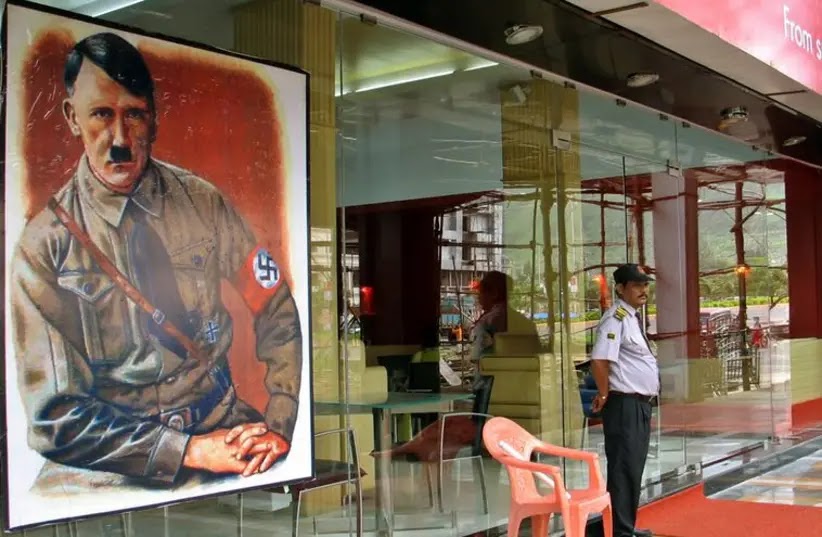
(अक्सर लोग बातचीत में यह कहते पाये जाते हैं कि इस देश में सैनिक शासन लागू कर देना चाहिए. ऐसा कहते समय वे यह भूल जाते हैं कि उनके पड़ोसी देशों में यह सब होता रहा है और इसने उन देशों का जहाँ पीछे किया है वहीं लोगों के जीवन को भी संकट में जब-तब डाल दिया है. जिस देश ने अपने इतिहास का सबसे महान और बड़ा संघर्ष अहिंसा, लोकतंत्र और धर्मनिरपेक्षता जैसे विराट मानवीय मूल्यों से जीता हो. वहां हिटलर की बढ़ती लोकप्रियता चिंतित करती है.
क्यों हम हिटलर को पसंद करने लग गयें हैं, क्यों हम किसी तानाशाह की प्रतीक्षा कर रहें हैं ? जबकि यह भारत और मानवजाति के लिए किसी विभीषिका से कम नहीं होगा.
प्रस्तुत आलेख इसी परिघटना की पड़ताल करता है .)
( मुंबई के एक रेस्तरां का दृश्य, फोटो आभार REUTERS)
“History teaches, but it has no pupils.”
Antonio Gramsci, (१)
एक भारतीय प्रकाशक को इस मसले पर वर्ष 2018 में आलोचना का शिकार होना पड़ा जब बच्चों के लिए तैयार की गयी एक किताब जिसका फोकस विश्व के नेताओं पर था ‘जिन्होंने अपने मुल्क और अपनी जनता की बेहतरी के लिए जिंदगी दी’ उसमें हिटलर को भी उसने शामिल किया.
जानकार लोग बता सकते हैं कि ऐसी घटनाएँ- कम-से-कम यहां अपवाद नहीं हैं. अपनी मौत के लगभग 75 साल बाद हिटलर भारत में बार-बार ‘नमूदार’ होता रहता है.
एक स्पैनिश फिल्म निर्माता अल्फ्रेडो डे ब्रागान्जा- जो एक स्वतंत्र फिल्म निर्माता रहे हैं- और जिन्होंने कुछ साल पहले भारत में रह कर काम किया था, उन्होंने भारत में हिटलर की अलग किस्म की ‘मौजूदगी’ को लेकर एक फोटो निबंध तैयार किया था जिसमें बहुत कम लिखित सामग्री थी. वह हिटलर की उपस्थिति को लेकर इस कदर विचलित थे कि अपने इस निबंध की शुरूआत में उन्होंने पूछ ही डाला:
‘भारत हिटलर-प्रेम के गिरफ्त में है. हालांकि आबादी का बड़ा हिस्सा यह नहीं जानता कि आखिर ऐसा क्यों हैं, वे अपने निजी एवं पेशागत चिन्ताओं से परे सोचना भी नहीं चाहते कि क्यों भारत हिटलर से प्रेम करता है? क्या किसी लॉबी का हित इसके पीछे है.’ (2)
आज भारत में आलम यह है कि यहूदी विरोधी हिटलर की चर्चित रचना ‘माईन काम्फ’ (मेरा संघर्ष) को आप किसी किताब की दुकान में ‘डायरी ऑफ़ एन फ्रांक- जो उस यहूदी लड़की की आत्मकथा है जो खुद हिटलर की यहूदी विरोध की नीतियों का शिकार हुई थी, के बगल में देख सकते हैं.
हिटलर ने भारतीयों के बारे में काफी अपमानजनक टिप्पणियां की थीं और उसने भारत की आज़ादी के संग्राम का कतई समर्थन नहीं किया था. ‘डिअर हिटलर’ इस फिल्म पर- जिसमें यह दावा किया गया था कि ‘हिटलर भारत का दोस्त रहा है’ अपनी प्रतिक्रिया देते हुए एक लेखक ने हिटलर के चित्रांकन पर आश्चर्य प्रकट करते हुए तथा निराशा जताते हुए लिखा था :
“हिटलर ने कभी भी भारतीय स्वशासन की हिमायत नहीं की. उसने ब्रिटिश राजनेताओं को सलाह दी कि गांधी और आज़ादी के आन्दोलन के सैकड़ों नेताओं को वह गोली से उड़ा दे. बार-बार उसने ब्रिटिश साम्राज्यवाद के प्रति अपना समर्थन दोहराया. वह यही सोचता था कि वह (ब्रिटिश शासन) उतना सख्त नहीं रहा है. ‘अगर हम भारत पर कब्जा जमा लेते हैं’ उसने कभी धमकाया था, तब भारतीय लोग ‘अंग्रेजी शासन के अच्छे दिनों को याद करते फिरेंगे.’ (3)
At last, the Trump Presidency has crash landed and he is out of the White House. Now, we can all start dealing with ‘Trump trauma’ and shock. What did we live through over the past four years ? This is a planetary question. It is a question we are all grappling with because the world is now capitalist on a global scale and America is the leading power making that world. Post the Cold War we were all conscripted to be Americans and the ‘American Dream’ was declared the global dream. Even China bought into it in its own self interested and authoritarian way. They became so good at it that even Trump baulked. He wanted it back and declared : “Make America Great Again”. While we do not physically live in America, through the global media we are front-row spectators gazing into it, watching the theatrics of its leaders while grappling with its presence in our everyday lives. It has set the standards of ‘civilization’ by asserting a set of universals – democracy, progress, competition, individualism and free enterprise. These universals are the props of a mythic America, standing tall at the vanguard of the ‘free world’, and which reveals itself through the iconic hamburger, unthinking patriotism, voting in elections, the veneration of a masculine gun culture, Hollywood movies and mass consumption.
Rakesh Tikait (Image courtesy Twitter/ @iHShaheen at National Herald)
I have read several posts on social media the last few days where people are expressing apprehensions and even anger over all the excitement around Rakesh Tikait. Most of that anger stems from Bhartiya Kisan Union’s (BKU) irresponsible role in the 2013 sectarian violence in Muzaffarnagar and Shamli districts.
It’s been over seven and a half years since that madness engulfed West UP. We saw BKU split and many new factions emerged. The noticeable split was the breaking away of Gulam Mohammad Jaula, the biggest Muslim leader of BKU and often considered the late, Baba Tikait’s right hand man.
Interestingly, once Ajit Singh and Jayant Chaudhry lost their elections in 2014, many older Jats in the region were crestfallen. Many of them sobbed ‘Humne Chaudhry sahab ko kaise hara diya’. Many Jats (particularly of the older generation) were always upset with their younger generation for indulging in the violence of 2013. Secretly, between sobs they’d often say, ‘I hope it’s not too late before our youngsters realize where they’ve gone wrong’.
The directive issued by the Ministry of Education on the evening of 22 January announcing an extension for Prof. Jagadesh Kumar as Vice Chancellor till the time that the new incumbent is appointed, serves as yet another reminder of how consistently over the last five years, despite several representations backed by relevant Court Orders, the powers that be at the Centre have chosen to shut their eyes to the misdemeanours committed by the man heading JNU. The University Statutes and Act do not allow a second term for any Vice Chancellor and define the term of the Vice-Chancellor as five years only. The MHRD order does not award him a second term, and merely continues him in office until his successor is appointed. Yet, the Vice Chancellor on the 27th of January, called an emergency meeting of the Executive Council, at one hour’s notice and ‘reappointed’ all three Rectors, despite the fact that the tenure of the Rectors was not over. The JNUTA finds this disregard for the University Statutes shocking, as the VC cannot claim any knowledge that the new VC will not be appointed before the Rectors’ terms will be over. It strongly objects to the scant regard that the incumbent VC has for the Statutes of University he heads. Continue reading JNUTA REPORT ON THE UNIVERSITY 2016-2021 PART III – On Academic Programmes→
Behavioural psychologists say hatred and fear are two sides of the same coin. That explains the Hindu Right obsession with Gandhi and Godse.
Image Courtesy: India TV News
For now, the invidious project of the Hindu Mahasabhato set up a Nathuram Godse Gyan Shala in Gwalior has been shelved. Perhaps what terminated the ill-conceived venture was the sheer anachronism: while the country would mark Gandhi’s73rd death anniversary on 30 January, one section would be found singing paens to his assassin, Nathuram Godse. It would only have served to remind people of how an unarmed man was shot down on his way to a prayer meeting.
This killing was Godse’s so-called contribution and, according to leaders of the Mahasabha, marked his patriotism. The same Hindu Mahasabha has already launched a “Godse workshop”, where the members exhort Indians to “strive to follow his path”. It was also instrumental in installing his statue in the city which had invited opprobrium.
The killing of Gandhi has been shown to be part of an elaborate conspiracy hatched by the higher-ups in the Hindutva supremacist forces. Remembrance of Godse would have been a reminder of the five attempts on Gandhi’s life since the mid-thirties that involvedHindutva forces. There was even a sixth attempt, according to Chunnibhai Vaidya, a Gandhian from Gujarat. Justice Jinvanlal Kapur, who was entrusted with examining the conspiracy to assassinate the Mahatma had concluded in 1969, “All these facts taken together were destructive of any theory other than the conspiracy to murder by Savarkar and his group.”
As media cacophony reached a delirous state, peddling the government narrative of violence and anarchy, an embedded journalist of Kargil fame even declared (on her public Faccebook page) that she was “furious and annoyed” – though she had till a few minutes ago “stood with the rights of the farmers to be heard”. She claimed that she had even “admired their protest for its generosity and dignity”. She recounted that she had spent the morning amidst a “Sea of Tirangas at #Singhu” where she had “met farmers who wore the Tricolor like a badge of joy.”
And then? “What has happened today [at Red Fort] is absolutely unacceptable”. What she saw in the morning has been seen by thousands, if not millions across the world, through the two months that the farmers have been camping at the borders of Delhi, stoically bearing the freezing cold weather and losing over 150 of their fellow farmers. So did it occur to the morally revolted journalist to ask, “what actually happened?” “How did this happen?” This incident that went contrary to how the movement had been until then – did not the journalist (any journalist) need to probe it? She did not even ask the simplest questions. So eager was she to put her support to the farmers’ agitation in the past, and jump back to her comfort zone that there was no question of doing any further investigation. It was as if the entire history of the past two months and the legitmacy of the farmers’ demands were demolished at one stroke!
So let us hear the farmers’ leaders themselves and what they have to say about how things developed, and how on that very day by 6.30 pm, the SKM had started appealing to the participants to halt the tractor march. But the real story that should have been the concern of any serious, conscientious journalist, lies behind how the same Delhi Police that was not willing to allow a tractor march on Outer Ring Road, gave virtually free passage to some selected sections. How, with Republic Day’s high security, did masses of people reach Red Fort and ITO? Let us listen to the farmers’ leaders themselves in the second video below.
But before that, let us hear Balbir Singh Rajewal here, where he explains the whole way in which things started developing, since 13 December, when a group by the name of Kisan Mazdoor Sangharsh Committee (KSMC) was brought in, with what looks, in retrospect, like a definite plan.
My independent conversations with people also confirm that the main group involved in this jugalbandi with the regime, the KMSC, had been allowed to put up its camps on the Delhi side of the border about two weeks ago, when all the others were simply not allowed to enter. This means that effectively, for that group, there were no barricades as Balbir Singh Rajewal underlines.
This statement, the second in the series brought out by JNUTA, focuses on the unprecedented deterioration of security issues on campus over the last five years. The word ‘unprecedented is consciously used because never have residents which includes faculty, students and non-teaching staff of the university felt so vulnerable and unsafe inside their 1000 acre campus. For a residential university like JNU, security on campus is a very important concern. However, as in other matters, in this area too, the responses of the university administration has been lax and has failed miserably in ensuring that residents feel secure and less vulnerable on campus.
Farmers break barricades to enter Delhi, peacefully, disciplined. Police have blocked off roads, but people gather along the roads, on rooftops, to greet our heroes.
At NH 24, Patparganj around 12.30 pm
For live, and unbiased coverage, stay tuned to this link.
By “unbiased” I mean coverage that does not allege chaos, Pakistani tweets, a few tukdas misleading innocent farmers, “Khalistani” infiltration etc.
These are farmers, they are here in their thousands, they know exactly what they are doing, and they may be our last line of defence against the devastation being wreaked by Hindutva politics and corporate capitalism on an India that we stood by and were also deeply critical of, too.
If we want to continue being critical, it’s the farmers who will ensure us our freedom to do so.