Wisdom of Ganesh Gaitonde: Satya Sagar

Guest Post by SATYA SAGAR

Note: Ganesh Gaitonde is a fictional character from the Netflix series Sacred Games, but that does not make him any less real than anyone else on the planet.

Warning: Profanity ahead. Get parental advice before proceeding.

Somewhere on a yacht in choppy waters off the western Indian coast I met Ganesh Gaitonde, noted[1]political analyst, role model for the youth and public intellectual for a free-wheeling interview.

We discussed a wide range of extremely important issues confronting Indian society today from the celebration of Ganesh Chaturthi at the Ambani household to what PC (not Chidambaram) said when NJ farted in her dreams. Some trivial themes like climate change, nuclear war and crisis of Indian spirituality were also touched upon – but you can skip those portions if they bore you to death.

Ganesh Gaitonde (GG): Stop calling me ‘Gaitondeji’, you #^^$%&&&. You guys kept chanting ‘Gandhiji’ for seven decades while screwing everything he stood for. So, cut this ‘ji’ crap. I am just Ganesh – nothing more, nothing less.

Me: Gaitondeji…

Me: Ok, I apologize Ganesh. Now, even before we get into important national and social issues, can you explain why every other word you utter is always an obscenity? Continue reading Wisdom of Ganesh Gaitonde: Satya Sagar

Wishful visions, dishonest tales and bitter fruit

Review of ‘Malevolent Republic : A Short History of New India’ by K. S. Komireddi

Image result for malevolent republic

‘The idea of a peace-loving, nonviolent India exists, persists, as part of a selectively constructed and assiduously cultivated national self-image in the midst of a society pervaded by social and political violence…’ argued Prof Upinder Singh, in her well-researched voluminous book ‘ Political Violence in Ancient India’ which had appeared around two years back. She had also added that pioneers of independence struggle were instrumental in creating this ‘[m]yth of non-violence in ancient India which obscures a troubled, complex heritage.’

‘Malevolent Republic’ – A Short Hisotry of New India’ by K. S. Komireddi – a commentator, critic and journalist who has written for leading western publications, reminds one of this debate. The book tries to chronicle the trajectory of post-independence India from Nehru to Modi – and does not shy away from raising uncomfortable questions which demand broader contemplation as well as deep soul searching.

( Read the full story here : https://epaper.telegraphindia.com/calcutta/2019-09-06/71/Page-11.html)

Kashmir: The Violence in Silence

Guest Post By Maknoon Wani

“I need a toy and a new dress for Eid.”

Requests and tantrums like these are heard around Eid in every Kashmiri household but not this time. It was the 8th day of the government imposed military siege. On 5 August, 2019 the central government unilaterally scrapped the special status(autonomy, imagine that being called special status) of the only Muslim majority state in the union. Thousands were arrested to muzzle any dissent coming out of the agitated population. But seven year old Aairah was worried about her Eid shopping, which was never going to happen. 

How does it happen in the 21st century? How are millions of people house arrested and excommunicated within a few hours? Why are people celebrating a siege? How does this sell as normalcy? I spent many sleepless nights contemplating or rather trying to absorb the sheer cruelty of this situation. A group of students from my college invited me to a cake cutting ceremony which was organized to celebrate this decision. Maybe, their intentions were not so bad but did social convention dictate that a person be invited for the celebration of his misery? The shameless chest-thumping is a spectacle but an indifferent people is a tragedy. 

While I was suffering from this sense of loss and fear, people were celebrating and opining about Kashmir like they knew everything. I was told how good this decision is and how I should be happy. Kashmir, which went incommunicado days ago, was said to be normal. Reports from the foreign press regarding protests in Kashmir were refuted and labelled as western propaganda. Saner voices went more anti-national and pro-government channels got busy in peddling more lies. I, for one, went silent for a few days. Everyone was high on something. Some were planning to buy a plot in Kashmir while others were fantasying about white-skinned Kashmiri girls. History was forgotten, conveniently twisted and occasionally ignored to justify this daylight betrayal. A radicalized population is dangerous but trying to reason with an intoxicated population is foolishness. After all these days, I thought this silence must not be interpreted as normalcy and more importantly-peace.

What is happening in Kashmir and to Kashmiris is violence. Why aren’t the children going to schools and why are their playgrounds surrounded with barbed wires? Why aren’t mobile phones working? What is forcing Kashmiris to be silent? Is the mere presence of half a million armed forces not a form of violence? I have to ask these questions because no one else is. As I try to imagine the green meadows of my hometown, I am not able to block that intruding fear of not seeing my family again. The meadows might turn red forever. I see people celebrating this decision like an act of revenge; humanity might be dead forever. The claims of ushering in development and peace have fallen flat but then who wants the truth? A country which cheers the suspension of civil liberties can not be expected to be empathetic towards anyone. The silent mourners will lose fear one day, and this gloom will spread. It is only a matter of time when the monster reaches every door. 

It has been more than 20 days of this extraordinary blackout. We have seen only a few Kashmiri voices in the Indian media. A population needs to be amnesic to forget traumas like this. How can they tire us so much to make us forget our identity. We have survived three mass uprisings. Seven million Kashmiris right now are silently shouldering the coffin of the Indian democracy. The rot has started to reek, but the masks of ignorance have kept people safe. A few hundred landlines have been made operational, and this has been projected as normalcy. Senior anchors are posting videos and pictures(of normalcy) which can put North Korean propaganda to shame. When no one is being allowed to visit Kashmir, not even the Indian opposition leaders, then how can the situation be called normal. 

Recently, JK Governor, Satyapal Malik said, “If there’s no phone for ten days, so be it.” Surprisingly, he could only count ten days on the 20th day of the communication blackout. This is symbolic of the systematic dehumanization of the Kashmiris by the Indian administration. I wish to tell every Indian politician that your collective failure and greed for votes has assured Kashmiris that nothing good can be expected of this country. Our land has once again been prioritized over our lives. This is naked oppression and it is out in the open. However, this silence is not peace. It is the harbinger of burning resentment. We aren’t so small to be devoured by anyone. Our silence is deafening but not to the dead ears.  

( Maknoon Wani is a student of journalism and is in Delhi presently)

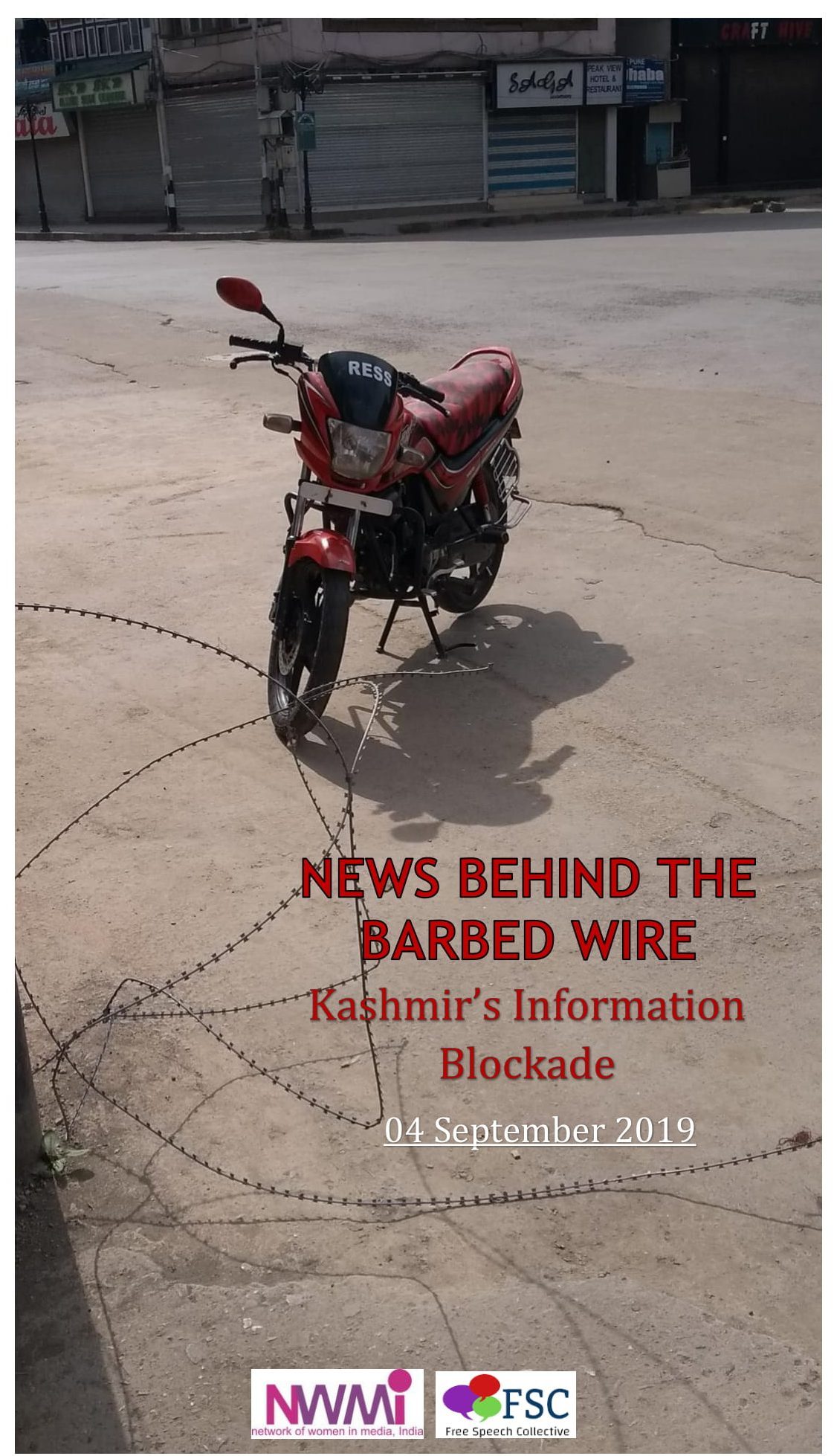
Kashmir’s information bloackade: The Network of Women in Media, India and The Free Speech Collective

Report from Kashmir by a team from the Network of Women in Media, India (NWMI) and the Free Speech Collective (FSC) .

A month after the 5 August abrogation of Article 370 of the Constitution of India, which granted special status to Jammu and Kashmir, the continuing shutdown of communication in the Kashmir valley has resulted in the throttling of independent media. As journalists continue to face severe restrictions in all the processes of news-gathering, verification and dissemination, the free flow of information has been blocked, leaving in its wake a troubled silence that bodes ill for freedom of expression and media freedom.

In this, the latest and most intense phase in the ongoing conflict on Kashmir, the government of India has pulled out all the stops – political, legislative, militaristic and punitive. It has detained and arrested scores of people, including leaders of mainstream political parties. No other democratic government has attempted a communication blockade of this scale in Kashmir.

In an effort to determine the impact of the severe crackdown on communication on the media in Kashmir, a two-member team from the Network of Women in Media, India (NWMI) and the Free Speech Collective (FSC) spent five days in the Valley between 30 August and 3 September. The team spoke* to more than 70 journalists, correspondents and editors of newspapers and news-sites in Srinagar and South Kashmir, members of the local administration and citizens.

Key findings : Curbs on the media and its implications

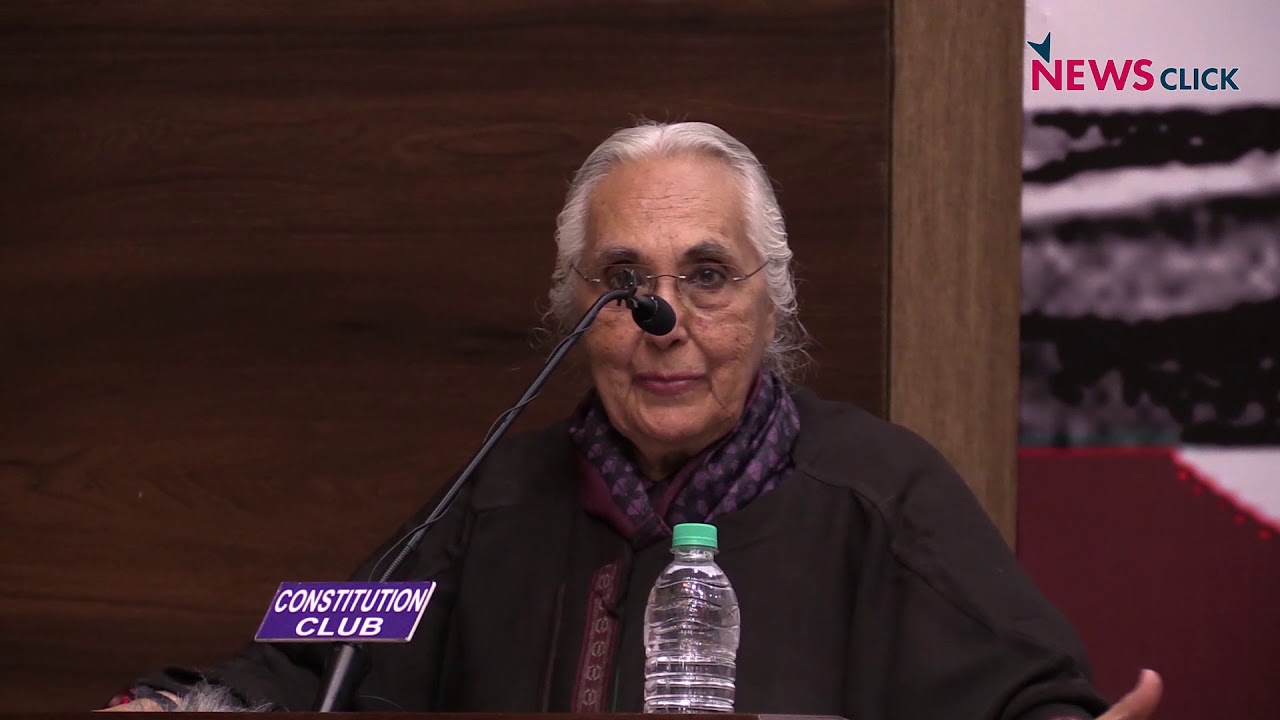
Who Needs Romila Thapar’s CV?

Thapar questioned imperialist versions of Indian history, which the Hindutva Brigade still goes by.

Romila Thapar

..an historian who is indefatigable in the pursuit of knowledge and prolific in its publication, and who is above all a devoted partisan of the truth. … The early history of the country has been illuminated by Professor Thapar, whom I now present, more than by almost any other scholar. An historian of that period who seriously wishes to refute accepted fictions and dispel the general darkness will need several high qualities. (From a citation presented by Oxford University to Romila Thapar while conferring on her an honorary Doctorate of Letters in 2002.)

It was 1960, when Romila Thapar, a young historian at the time, wrote a 400 plus-page monograph on Asoka and the Decline of the Mauryas. According to Oxford University Press, which published it in 2017, it tried to “trace virtually the entire span of Indian history.” The monograph is considered a classic today.

Thapar’s scholarly journey continues unabated at the age of 88. She is among the world’s foremost intellectuals, known for path-breaking work on Indian ancient history, as this interview acknowledges. Undoubtedly, her work has informed and inspired at least three generations of history students.

It hardly needs mention that Thapar has prestigious prizes to her credit for the scores of books and academic papers she has published. Twice, she declined the Padma Bhushan, the third highest civilian award granted by the government.

Now Thapar is in the news because of a strange query from the Jawaharlal Nehru University (JNU) administration, where she has held teaching and administrative positions for roughly three decades.

( Read the full article here : https://www.newsclick.in/Romila-Thapar-CV-JNU-Historian-Hindutva-Brigade-Indian-History)


Exclusion of 19 Lakh People Shows the Irrationality of #NRC Exercise: Joint Forum Against NRC

The Final NRC published today has excluded a whopping 19.06 lakh persons in Assam. The NRC process had shifted the burden of proof of citizenship on to the entire population of Assam, with people undergoing deep travails over the past four years to get their names included. In a poor country like ours and in a state which witnesses frequent floods, it is not unnatural that lakhs of people were unable to produce documents to prove that they or their ancestors were inhabitants of Assam before 24th March 1971. To rob people of their citizenship and rendering them stateless on the basis of this flawed process would be a gross violation of the fundamental rights guaranteed by the Indian Constitution.

Continue reading Exclusion of 19 Lakh People Shows the Irrationality of #NRC Exercise: Joint Forum Against NRC

Books About Wars in Your Country

A brief history of books, resistance, the police and politicians.

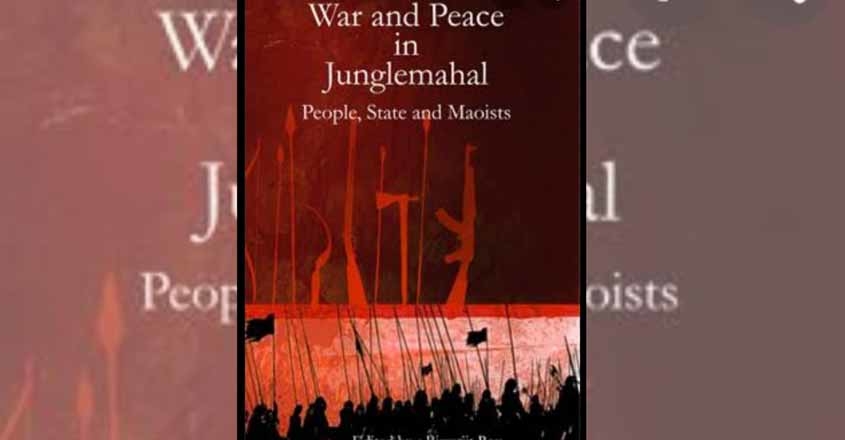
War and Peace

It is humanly impossible for even the most learned judge to have read every book referred to in their court. For a brief while this week, the judge conducting the trial of activist Vernon Gonsalves, an accused in the Bhima Koregaon incident of 2018, became an example of this. That was until the judge clarified that he is, in fact, aware of the Russian writer Leo Tolstoy and his epical novel War and Peace.

His response when the Bhima Koregaon charge sheet was placed before his court proves he knew of the provenance and contents of War and Peace. The confusion, it now appears, arose because the charge sheet had mentioned another book with a similar title. That is how the judge had ended up asking Gonsalves’ lawyers why their client possessed a book about wars in “other countries.”

It is not the judge’s knowledge of great literature but his belief that books about wars in other countries should not be owned (or read) by Indians that is a bigger surprise. Of course, since that remark, many commentators have pointed out that Tolstoy’s writings supported peace and not war. Accordingly, Mahatma Gandhi’s long correspondence with the literary legend is being highlighted afresh.

That said, this is not the first time that judges have expressed a curious indifference to the value of the written word, whether fictional or literary. The question arises, how can we tell if this incident is an aberration or the tip of an iceberg of flimsy excuses to keep people behind bars.

( Read the full article here : https://www.newsclick.in/books-about-wars-your-country)

Two Reports and Many Strategic Agents: Post-Disaster Thinking in Kerala

Two massive calamities, tremendous losses, continuing signs of serious ecological destruction impending — yet all we Malayalis seem to have produced in response: two reports, and even more frenzied strategic calculation. There is little doubt that the disasters happened in the first place at least partially because of the latter, but there seems to be no rethinking. Instead, we have strategic agents refurbishing their strategies to the new circumstances.

What else explains the Kerala government’s  Rebuilding Kerala Development Programme Report (RKDPR)? It popped up all of a sudden around the end of last year, after the UN-led Post-Disaster Needs Assessment Report (PDNAR), and even members of the Chief Minister’s Advisory Council were caught unawares.  The economist K P Kannan, whose life’s work has been focused on Kerala’s economy, a member of the Council, remarked in a recent interview in the Sastragathy that they did not know of it until the third meeting of the council. None knew who put it together, and there is no mention of this in the report itself. It draws heavily but selectively on the PDNAR, but also perhaps on the projects that were prepared for World Bank funding – and Kannan reaffirms this impression. The draft report was made available online for comments but there is no clear idea about these experts or the public consultations. Continue reading Two Reports and Many Strategic Agents: Post-Disaster Thinking in Kerala

Against Aachaaram: Lalitambika Antharjanam

This is the second in a series titled Against Aachaaram: A Dossier from Malayalam on Kafila. The note on Lalithambika Antharjanam is by J Devika. The excerpt from her story Vidhibalam (The Power of Fate) is translated by GEORVIN JOSEPH.

Lalitambika Antharjanam (1909-1987) was the first Malayali woman to achieve prominence in the field of modern Malayalam literature, and also among the first thinkers to reflect critically on modern gender as a framework for social existence in Malayali society. Born in the notoriously-aachaaram-bound Malayala brahmin community, she grew up to become one of its strongest and most vocal opponents. Her powerful short stories exposed the horrors that women suffered in conservative Malayala brahmin households. They indicted aachaaram again and again of dehumanising women, through heartbreaking accounts of their emotional and physical suffering, all sanctioned by the cold and ruthless workings of aachaaram.

Continue reading Against Aachaaram: Lalitambika Antharjanam

Kashmir, a phone call away? Ramnik Mohan

Guest post by RAMNIK MOHAN

“The number you are calling is currently switched off. Please try again later.” This has been the stock computerized response I have heard on calling a friend in Jammu and Kashmir over the last twenty odd days, and still counting. The chirpy, happily surprised voice I heard across our mobiles when I informed my young friend about my sudden arrival in Srinagar last January is too stark a contrast to register today. ‘Lockdown’ is the new buzzword for Kashmir these days.

All links of communication with the rest of the country having been snapped in one fell swoop, it doesn’t quite require much of an effort for any sensitive human being to imagine how life must be for all the folk out there. Nor should it take much of an imagination for such a human being to think of the plight of Kashmiris in the rest of the country dying to hear the voices of near and dear ones separated thus.

Continue reading Kashmir, a phone call away? Ramnik Mohan

Queerness as disease – a continuing narrative in 21st century India: Kaushal Bodwal

Guest post by KAUSHAL BODWAL

In August 2018, it came to my knowledge that a few of my pictures wearing sarees were circulating in my extended family’s WhatsApp group. Phone calls from home regarding my “obscene” behaviour were followed by a shift in the entire conversation towards my having some illness that needed to be cured. At some point my mother called me to tell that one of my aunts knew a doctor who can heal me. My first thought was that she was joking; unfortunately, she was only too serious. Once I registered the gravity of the situation, I panicked. Even though I was staying in a closed campus, I was not sure of my family’s potential to do what they claimed they wanted to.

The issue was with both my gender expression and my sexuality. I was a male assigned at birth walking in a saree and they thought that it was because of my interest in men. One of my aunts assured my mother that my love for sarees will end once my homosexuality is cured. The next time I went home, I was anxious and terrified. I knew I had to speak to them and explain what was going on. There were going to be a lot of questions. It’s not as I had ready-made answers for them, especially since the understanding of gender and sexuality that I had was not easy to articulate in my native language of Haryanvi. Through whatever words I could, I came out to my parents. My mom cried and my father stood numb. But mostly, confused. Despite their anger and other emotional expressions, the overall emphasis was on going to a doctor to get me fixed. After all, I was sick. Continue reading Queerness as disease – a continuing narrative in 21st century India: Kaushal Bodwal

The RSS coup d’etat in India, and a collage of solidarity actions for Kashmir

Protest in Philadephia on abrogation of Article 370

Since the 5th of August, the now abolished state of Kashmir has been under de facto military rule, as shown both by news reports of the numbers of troops stationed there currently, as well as by a fact-finding report released after a visit to Kashmir by Jean Dreze, Kavita  Krishnan, Maimoona Mollah and Vimal Bhai, which begins:

When we arrived in Srinagar on 9 August, we found the city silenced and desolated by curfew, and bristling with Indian military and paramilitary presence. The curfew was total, as it had been since 5th August.

The intention of this post was initially only to put together a quick collage of some news items and statements of solidarity and protests across India and the world, on the abolition of the state of Jammu & Kashmir, bringing the two newly formed Union Territories directly under the rule of the Hindutva formation currently in power at the centre.

However, this move can only be understood in the context of the fact that since May 23, 2019, India is barely any longer even the formal democracy it claimed to be.  Effectively, a coup d’etat was carried out on that date by the RSS (now under the complete control of Modi-Shah), through the extremely dubious “sweeping victory” of the BJP.  We begin therefore with a section on RSS and The Lie as Political Strategy.

The second section is the compilation and in the third, some reflections on democracy in India today. Continue reading The RSS coup d’etat in India, and a collage of solidarity actions for Kashmir

Arvind Kejriwal, Article 370 and a Blind Alley

(Photo Courtesy : http://www.newslaundry.com)

He came, he saw and he concurred

– Caption of a RK Laxman cartoon in early 90 s


AAP’s stand on article 370 has confused and disheartened many.

For its workers the party has opened itself to attacks by its adversaries because of its support to stripping of statehood for Jammu and Kashmir and thus weakening its own plank for full statehood for Delhi which was its key slogan during the 2019 Lok Sabha campaign.

A section of its fellow-travelers who had high hopes of the experiment, activists/scholars – who were rather enthused with its ‘participatory’ approach – also feel betrayed or disheartened now.

It is a different matter that not many have made their displeasure known.

May be it is a sign of their increasing fatigue or possible cynicism with politics in general, they have preferred to share their frustrations at private levels only. Continue reading Arvind Kejriwal, Article 370 and a Blind Alley

In Kashmir Health Professionals Speak Truth to Power

It’s an outrage to dismiss valid concerns that doctors and medical journals are raising.

Kashmir Article 370

Representational image. | Image Courtesy: Indian Express

These are strange times. A state can just get ‘obliterated’ from the map of the nation. Constitutional propriety is set aside to deprive millions of citizens of their basic human rights while a significant section of the rest of the country ‘rejoices’ over it all.

A large section of the media has abandoned its role as watchdog of democracy but health professionals are coming forward to speak truth to power.

Reports have appeared that eighteen doctors from across India, including Dr Ramani Atkuri, a public health professional, have written to the BMJ, a prominent medical journal, urging the central government to “ease restrictions on communication and travel at the earliest [in Kashmir] and undertake any other measures that are required to allow patients to access health care without hindrance.”

This group of doctors has thrown crucial light on the humanitarian crisis unfolding in the Valley. One consequence of the crisis is “violation of the right to life and to health care.”

( Read the full article here : https://www.newsclick.in/Kashmir%27s-Future-Mental-Health-Article-370-Lancet-Journal)

Nationalism and Politics – An Open Letter to Arvind Kejriwal

I write this open letter to you as a well wisher, and someone who has been seriously supportive of the Aam Aadmi Party (AAP) through all the ups and downs in the years since its formation.  Perhaps like many others, I too have high expectations of the experiment that AAP is and the new ground it has tried to break in terms of providing a government that has steadfastly kept the interests of the common person in mind while taking decisions.

But I also write this letter because I, like many others, have been perturbed by some developments which do not augur well for the future either of your party or of the country. The latter in any case, is set on a disastrous course, thanks to the current dispensation at the Centre. Let me also make it clear right away that I am not one of those who criticize AAP for ‘lacking a clear ideology’ and I in fact value the fact that on many critical issues, AAP has been able to resist the pressure to step into well trodden, familiar responses to specific situations and issues – especially well trodden among Leftists. But I do think that AAP needs to think a bit more seriously  about politics – which is not the same thing as ideology.

Continue reading Nationalism and Politics – An Open Letter to Arvind Kejriwal

Healing Kerala: Thoughts after the Second Warning


Everywhere the talk is still about rebuilding Kerala: I say, we need to talk about healing Kerala. The change in phrasing is not trivial. When we admit that we need to heal, rather than rebuild, we are admitting much that we did not care to own up till now. That is, we would be agreeing that the problem at hand is a human one and not just one that can be resolved through technical intervention; that, as a complex process, it will take its time and quick-fixes will not suffice.  Thankfully, there is a widespread discussion on the recommendations of the Gadgil Committee Report and the Post-disaster needs assessment report of last year; quarrying has been stopped all over the state. Maybe we will heal, indeed. What do we need to do to heal, and not just rebuild? Continue reading Healing Kerala: Thoughts after the Second Warning

A Crime of ‘Pure’Indifference

The ethic that dehumanises dalits continues 72 years after the country’s Independence.

A Crime of ‘Pure’

What, to the American slave, is your Fourth of July? I answer: a day that reveals to him, more than all other days in the year, the gross injustice and cruelty to which he is the constant victim. To him, your celebration is a sham; your boasted liberty, an unholy license; your national greatness, swelling vanity; your sounds of rejoicing are empty and heartless… There is not a nation on the earth guilty of practices more shocking and bloody than are the people of the United States, at this very hour.

These fiery lines from a speech delivered on July 4, 1852 in New York by Frederick Douglass, a former slave who had become a national leader of the abolitionists, rattled a predominantly White audience. The speech was delivered 10 years before slavery in the Southern states was abolished.

More than 80 years later, on August 14, 1931, Dr Bhimrao Ambedkar, a Columbia University and London School of Economics graduate, who was then leading a movement of the oppressed and exploited in India, met Mahatma Gandhi for the first time. “Gandhiji, I have no homeland,” Ambedkar told Gandhi, according to a transcript of that meeting. “No untouchable worth the name will be proud of this land.” As expected, the Varna (caste) mindset that dominated India then did not take kindly to Ambedkar’s charge.

( Read the full article here : https://www.newsclick.in/A-Crime-Pure-Indifference-Dehumanises-Dalits)

Kashmir Caged – A Report from the Ground

Economist Jean Dreze, Kavita Krishnan of the CPI(ML) and the All India Progressive Women’s Association, Maimoona Mollah of the All India Democratic Women’s Association and Vimal Bhai of the National Alliance of People’s Movements released the following report to the press today, 14 August 2019, after spending five days in Kashmir, meeting and talking to people.

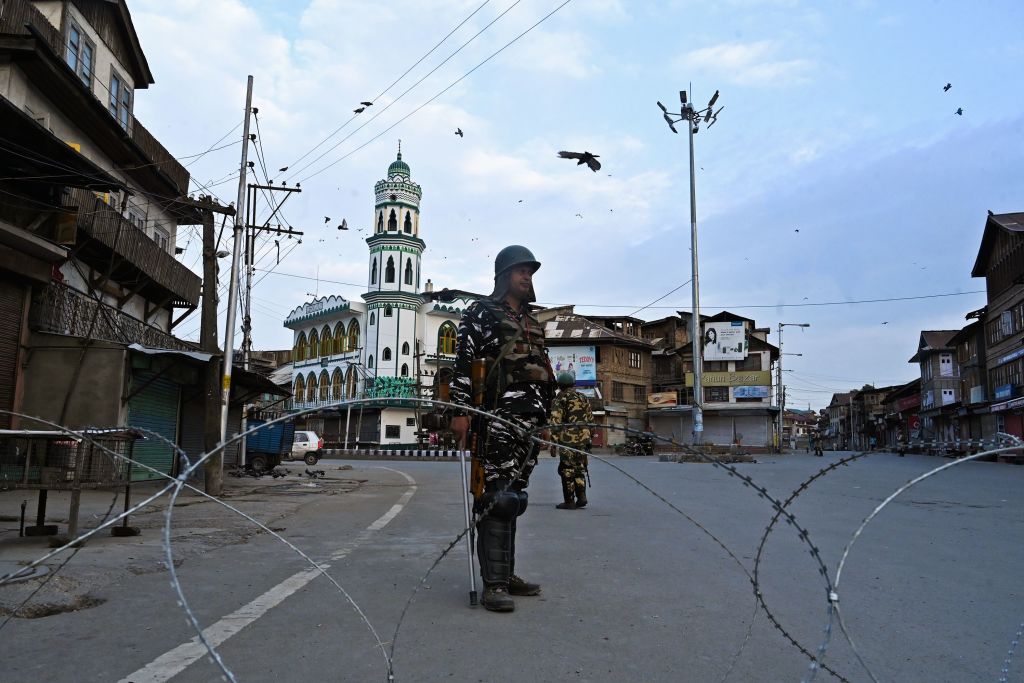
Security personnel stand guard on a street during a lockdown in Srinagar on August 12, 2019. (Photo credit: TAUSEEF MUSTAFA /AFP/Getty Images)

We spent five days (9-13 August 2019) traveling extensively in Kashmir. Our visit began on 9 August 2019 – four days after the Indian government abrogated Articles 370 and 35A, dissolved the state of Jammu and Kashmir, and bifurcated it into two Union Territories.

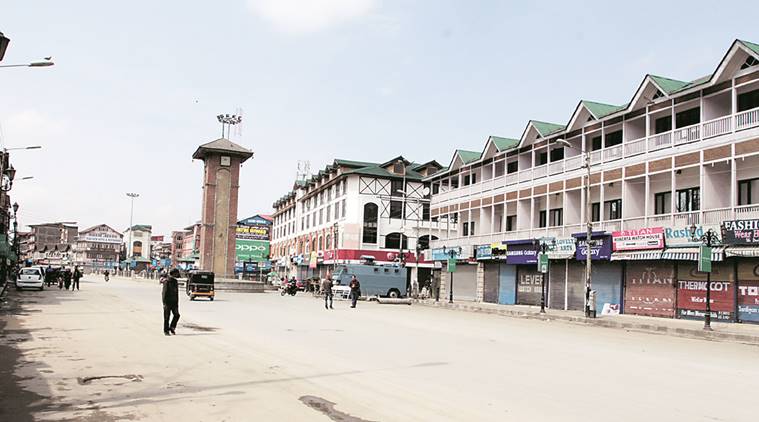
When we arrived in Srinagar on 9 August, we found the city silenced and desolated by curfew, and bristling with Indian military and paramilitary presence. The curfew was total, as it had been since 5th August. The streets of Srinagar were empty and all institutions and establishments were closed (shops, schools, libraries, petrol pumps, government offices, banks). Only some ATMs and chemists’ shops – and all police stations – were open. People were moving about in ones and twos here and there, but not in groups.

Continue reading Kashmir Caged – A Report from the Ground

Mujh se integration karogi? Sanghvaad and its war on women

Determined, defiant – not the Kashmiri women of Sanghi fantasies

Protest in Srinagar against the abrogation of Article 370 on August 11, 2019, despite the clampdown by the Indian government. Image courtesy The Wall Street Journal.

When trolls on social media started circulating photographs of young Kashmiri girls, gloating, “now we can marry them”, it was only the overt manifestation by Sanghis of the real spirit behind abrogating Article 370. While Prime Minister Narendra Modi held forth at length on development, rights to education, rights for women and for Dalits, all of which the people of J&K were deprived of because of Article 370, the truth of course, is that J&K stands in the top 10 to 15 states on  different indicators ranging from life expectancy, people served per government doctor, poverty rate and infant mortality rate, to human development index.

Or as Haseeb Drabu puts it:

The level of economic empowerment is evident from the fact that more than 25% of the household earnings in J&K are from own cultivation. In “prosperous” Punjab, it is only 18%, in “vibrant” Gujarat, it is less than 16% and in “terrific” Tamil Nadu, it is only 3%. And yet, J&K is being portrayed as a “sick” state.

Continue reading Mujh se integration karogi? Sanghvaad and its war on women

After Kavalappara: Is the Future that of Ecological Patriotism?

I guess bad habits in development take a very long time to unlearn. Even in the face of the direst of warnings.

I know that last year, when taken completely by surprise, Kerala rose to the occasion. It appeared that a new civil society had come to being around the flood rescue and relief work, and that promised a new lease of life for our flagging-if-still-working project of people’s planning and political decentralization. It appeared that there was a real chance to stop the bureaucratic-technocratic coterie from shoving this ecologically-fragile area down the path of utterly destructive infrastructure-obsessed growth. It seemed that we could now seriously expose the depredations of the predatory capitalists, especially in the construction sector. Continue reading After Kavalappara: Is the Future that of Ecological Patriotism?

On Eid, two stories in Times of India June 28, 1958: Ayesha Kidwai

Guest post by AYESHA KIDWAI


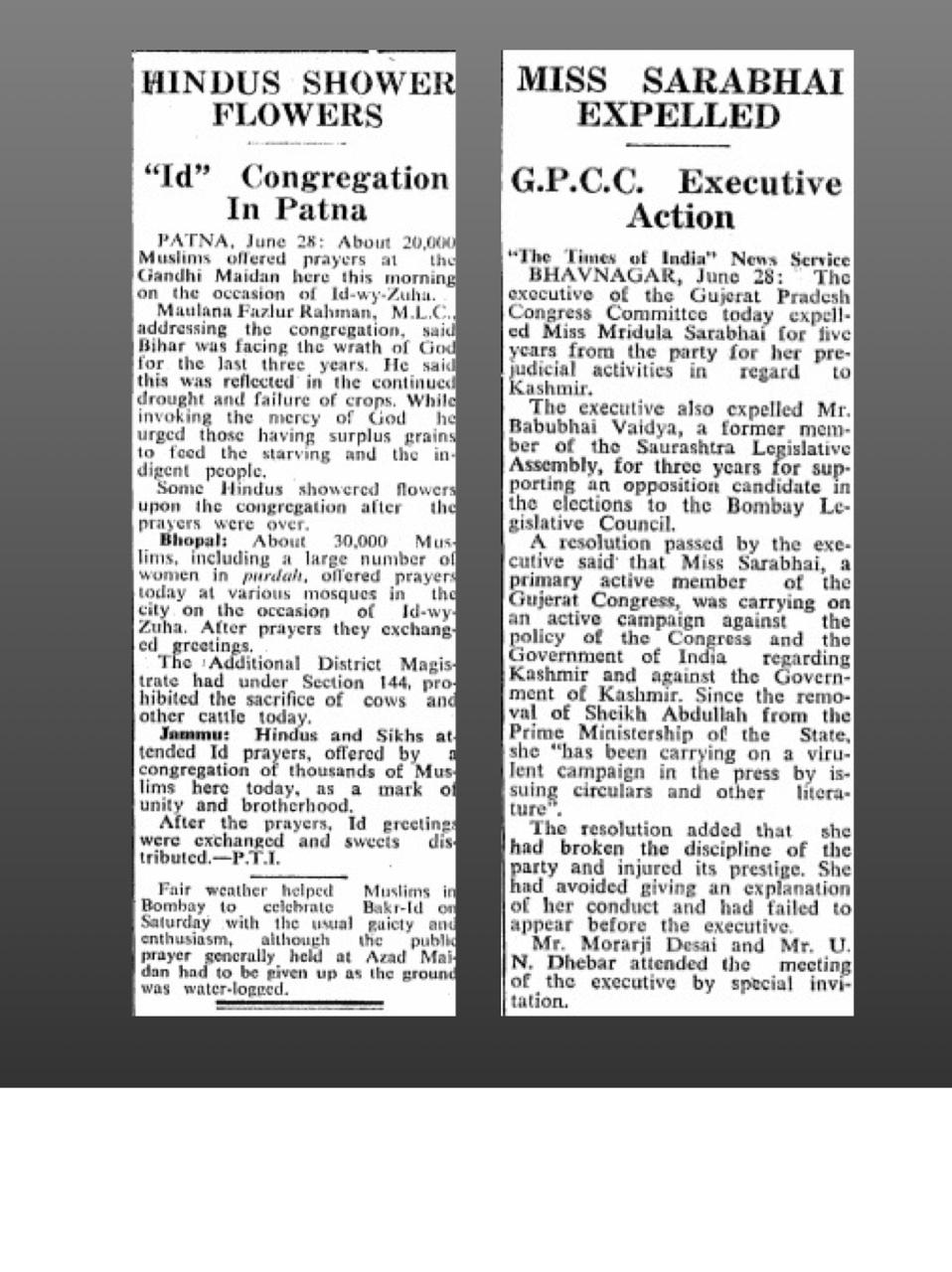
On the same page of the Times of India of June 28, 1958 are two news items. The one on the left is a report of how Bakrid was celebrated the day before in various cities, including Jammu, where Hindus and Sikhs offered namaz along with their Muslim brethren. On the right  is another story that reports the expulsion of Ms. Mridula Sarabhai from the Congress party for her ‘anti-party activities’ in opposing the arrest of Sheikh Abdullah in 1953 and the muzzling of democratic rights in Kashmir.

Continue reading On Eid, two stories in Times of India June 28, 1958: Ayesha Kidwai

DISSENT, DEBATE, CREATE