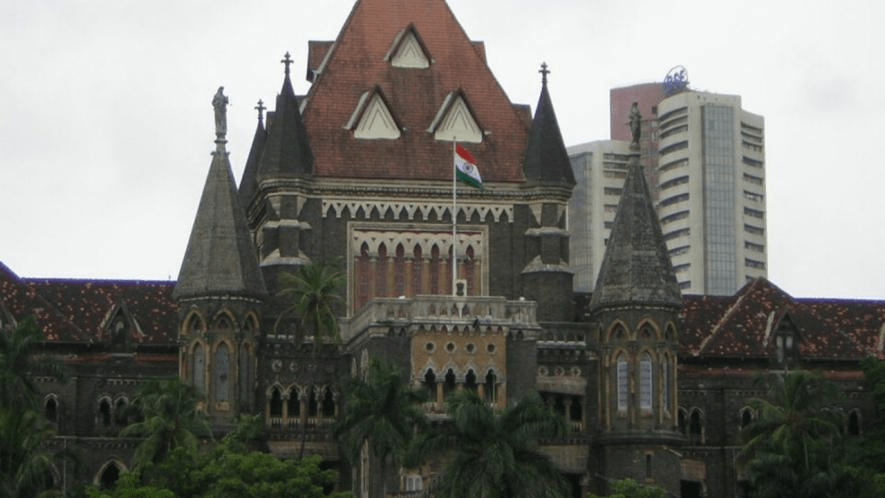
Could it be argued that Bombay HC’s highly debatable decision on a peaceful rally against Gaza genocide is an attempt not to inconvenience the ruling dispensation?
It was the year 1763, when Genevaís ecclesiastical assembly ordered one Robert Covelle to genuflect and listen to a reprimand for having fathered an illegitimate child. Covelle refused to kneel and turned to Voltaire for help.
Voltaire, a leading light of enlightenment, outraged at the very idea that religious authorities daring to make a citizen kneel, wrote a pamphlet against genuflection comparing the act with a tyrant punishing slaves or pedant correcting children. The rest of the philosophes rallied behind Voltaire and after six years of agitation, the Genevaís ecclesiastical assembly was forced to abolish genuflection from its code
Meera Nanda, writer and historian of science discusses, this episode in one of her monographs
Rereading this episode and seeing if around two-and-half centuries ago, the Church could be compelled to see incongruence, injustice and unreason in its own ruling, can a a similar thing be possible vis-à-vis the judiciary in the 21st century in the ‘biggest democracy in the world’?
This poser is related to a recent debatable decision of the Bombay High Court, which has rightly received enough opprobrium.
Theme: Class, Inequality, and the Current Political Moment in China and India
This talk is based on a recently published book by the Oxford University Press – Class and Inequality in China and India, 1950-2010. China and India have seen a significant revival over the last three decades in terms of their place in the world economy. Two and a half centuries ago, they contributed 50 percent of the world output; after suffering a decline thereafter, their share fell to a paltry 9 percent in 1950 but has since resurged to over 25 percent today. Their growth and inequality experiences diverged for three decades following India’s independence (1947) and the Chinese revolution (1949). Thereafter, there are remarkable underlying similarities in the experiences of both countries, especially in terms of their rising inequality patterns analyzed through a class lens. Vamsi demonstrates that the mutual interconnectedness between Chinese and Indian growth and inequality dynamics and the transformation and evolution of global capitalism is key to understanding the within-country inequality dynamics in both countries over the 1950-2010 period. Based on this analysis of class-based inequalities, Vamsi reflects on the current political moment in both countries, from a political economy perspective.
Speaker :Prof Vamsi Vakulabharanam Vamsi Vakulabharanam is Co-Director of the Asian Political Economy Program and Associate Professor of Economics at the University of Massachusetts, Amherst. He has previously taught at the University of Hyderabad (2008-14) and the City University of New York (2004-07). His recent research focuses on inequality in India and China and the political economy of Indian cities through the axes of gender, caste, class, and religion. In the past, he has also worked on agrarian change in developing economies, agrarian cooperatives, and the relationship between economic development and inequality. Vakulabharanam was awarded the Amartya Sen award in 2013 by the Indian Council of Social Science Research.
Indian federalism is on the verge of breakdown for multiple reasons. A crucial contributor is the collapse of the system of revenue sharing between the Centre and the States and the weaponization of vertical transfers as an instrument for political contestation.
The conflict over resources in India’s quasi-federal political structure is by no means new. Framers of the Constitution, who recognised that the division of taxation rights and spending responsibilities between the two principal tiers of government in India was asymmetrical, sought to partially resolve this problem by providing for a share for the States in a defined set of tax revenues garnered by the Centre, with the principles governing the share devolved and distributed to individual States recommended by successive Finance Commissions. But State governments have been increasingly disappointed with the actual experience with devolution, because of the concentration of resources mobilised in the hands of the Centre.
The issue, however, is not one of mere competition for resources between the Centre and the states. Having gained control over the Lok Sabha, the BJP has made it clear that it is keen on establishing an opposition-free political space. To realise this objective, it has not only sought to undermine the legitimacy of individual opposition politicians with charges of corruption or “anti-national” activity, but of opposition-ruled State governments by eroding their ability to adopt economic policy measures and initiatives that could win them political legitimacy. Expenditures on building State infrastructure or social expenditures on subsidised food provision, a modicum of social protection, and employment guarantee schemes, do contribute to winning a party in power in a State a degree of political legitimacy. The attack on the fiscal capacity of the State governments helps limit such expenditures, even while Central claims on expanding infrastructural investments and social sector spending are advanced, with an increase in ‘central’ schemes, especially those attributed to the patronage of the highest authority, the Prime Minister.
Speaker :
Prof C P Chandrasekhar
Prof C. P. Chandrasekhar is emeritus professor at the Centre for Economic Studies and Planning, Jawaharlal Nehru University (JNU), New Delhi. He has published widely in academic journals and is the coauthor of Crisis as Conquest: Learning from East Asia (2021, Orient Longman), When Governments Fail – A Pandemic and Its Aftermath (with Jayati Ghosh et al) , 2021 ; Interpreting the World to Change It – Essays for Prabhat Patnaik (with Jayati Ghosh), 2018 ; After Crisis : Adjustment, Recovery and Fragility in East Asia ( with Jayati Ghosh) 2009 ; The Market that Failed: Neo-Liberal Economic Reforms in India (2002, Leftword Books), and
He received his MA and Ph.D (economics) from Jawaharlal Nehru University, where he served as a professor from 1997 until his retirement. He is a member of the executive committee at International Development Economics Associates (IDEAs) and the World Economics Association, as well as a contributor to Frontline, Economic and Political Weekly, and Businessline.
Chandrasekhar received the Malcolm Adiseshaiah Award for 2009 for contributions to economics and development studies.
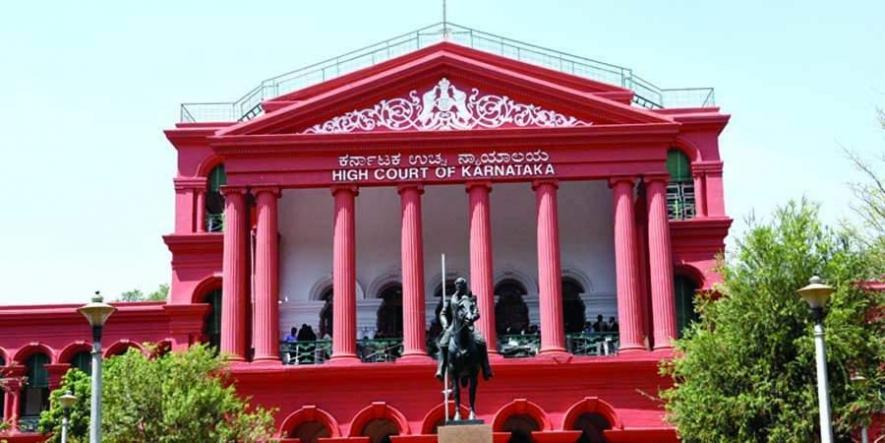
The judiciary in Karnataka is once again the focus of discussion in the national media.
The judiciary in Karnataka is once again in the news.
The latest case in a series of such cases is the Karnataka High Court’s recent judgment saying that shouting ‘Jai Shri Ram’ inside a mosque does not outrage religious feelings.
In an ambience where Right-Wing forces are hell bent upon creating more discord in the society, this judgement can easily be used by those who wish to further vitiate the atmosphere in the country. There are instances galore when such elements have tried to mount atop religious places of ‘other’ communities and deliberately create tension.
There is a feeling of sadness and surprise that despite the incident being caught live on CCTV, where the duo was seen entering a mosque late at night on their motorcycle, the courts did not look into the intention behind their act.
No doubt legal eagles in the country or civil liberty activists would be looking into the Karnataka HC judgement to formulate a suitable response and possibly challenge it at higher levels. For example, at the immediate level, it is being argued by analysts that the single-judge bench’s comparison of this issue with the highest court’s ruling in ‘Mahendra Singh Dhoni vs. Yerraguntla Shyamsundar’ case was notably different. ( Read the full article here : https://www.newsclick.in/who-entitled-hurt-religious-sentiments)
Representational image. Women voters in queue, image courtesy Hindustan Times
A Turning Point
We have all been justly euphoric since 4 June 2024 as results started pouring in, especially since the non-biological being himself was trailing behind the Congress candidate Ajay Rai for quite some time. If the claim made in a video of a hardcore BJP worker Ujjwal Kumar from Banaras is to be believed, they – the unsung workers – had to arrange for ‘extra votes’ to ensure that ‘he’ wins. Regardless of whether his claim is correct, we kept up our euphoria even as the ECI website stopped updating counting figures and reports kept coming in from different constituencies in UP and some other places that INDIA alliance candidates were being forcibly declared lost after having won.
It is an interesting coincidence that ‘Best Friends’ Netanyahu and Modi have been put on the defensive by the judiciary, which they so tried to control.
..[t]here is another way to break a democracy. It is less dramatic but equally destructive. Democracies may die at the hands not of generals but of elected leaders—presidents or prime ministers who subvert the very process that brought them to power. Some of these leaders dismantle democracy quickly, as Hitler did in the wake of the 1933 Reichstag fire in Germany. More often, though, democracies erode slowly, in barely visible steps.
How Democracies Die – Steven Levitsky and Daniel Ziblatt
The greatest danger the tyrant can inflict is to limit us to his range of options, not only “for how to live, but also for how to exercise our options.”
– Hisham Matar
(American born British-Libyan writer)
Every hurried and ill-thought attempt to browbeat the judiciary on the basis of legislative majority hides the possibility of a backfire.
Israel’s Prime Minister Benjamin Netanyahu, popularly known as ‘Bibi’, is learning this lesson the hard way, in the midst of a genocidal war he has unleashed against the Palestinians — a war which has already killed more than 30,000 people — mostly women and children.
Gone are the days when he was riding the popularity charts. Today, after the attacks on Gaza, there is increasing discontent among the Israeli people themselves against this ‘unending war’ which has manifested itself in the demand of Bibi’s quitting to ‘Save Israel’. Massive protest demonstrations have been held in different parts of Israel.
The recent judgements of the Supreme Court of Israel have further added to Netanyahu’s discomfort. ( Please read the complete article here)
New Socialist Initiative ( NSI) South, recently organised two lectures by one of its senior Comrades Dr Ravi Sinha in Hyderabad.
First lecture was on ‘Fascism and Democratic Polity : How Did India Land in This Crisis ?‘ and the second lecture was on ‘How Does Democracy Undermines Itself ?‘
Here is a YouTube Link of the first lecture.
Topic – Fascism and Democratic Polity : How Did India Land in This Crisis
Brazil’s Parliamentary Enquiry is probing the way the Bolsonaro-led government handled the pandemic leading to the deaths of 4,00,000 Brazilians.
Jail Bolsonaro, the far right President of Brazil, is a worried man these days. The next round of elections for the post of President is merely a year away and there is a strong possibility that his bete noire Lula – former President of Brazil between 2003 and 2011 – can be in the ring to challenge him. The Supreme Court of Brazil has annulled Lula’s two bribery convictions, and if he plans the 75 year old charismatic Lula can give him a tough challenge.
The worrisome aspect is the unfolding Parliamentary Enquiry, which seeks to focus on the way the Brazil government handled the pandemic, what his critics call ‘disastrous and potentially criminal response to Covid that has killed 4,00,000 Brazilians and the nightmare still continues.
An indication of the fact that this enquiry is not going to be a formality can be gauged from the way one of its key members, Sen Humberto Costa, who was a former health minister, put it; he said, “It is a true health, economic, and political tragedy, and the main responsibility lies with the president,” and he believes there is enough evidence to conclude that Bolsonaro committed “crimes against humanity”. Costa is not alone in his assessment of Bolsonaro, many other analysts have also used similar label for him.
Statement of New Socialist Initiative (NSI) on India’s ‘war against Covid 19’
#
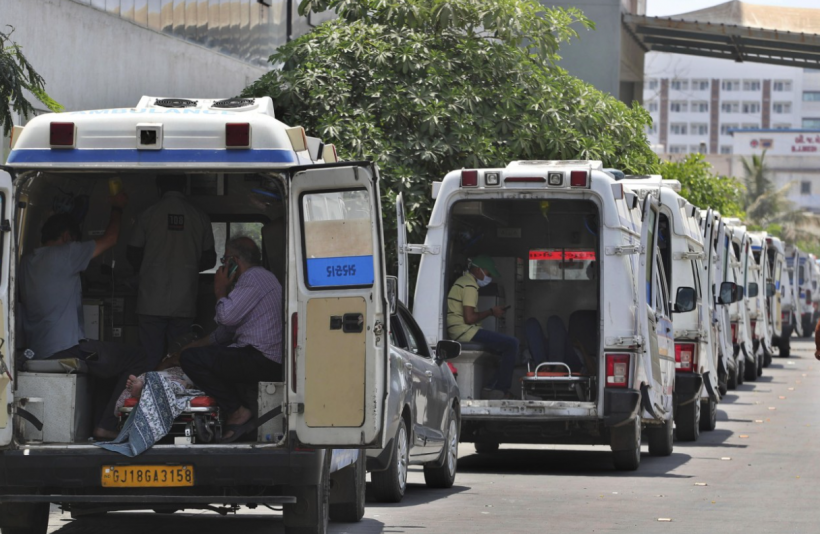
Today, India has emerged as a new epicentre for the novel corona virus in the Asia Pacific region.With 1,58,333 confirmed cases of Covid 19 and deaths of total of 4,531 people after contracting the virus, it has already crossed China’s Covid-19 numbers.
#
New Socialist Initiative (NSI) feels that the grim news of steadily rising infections and fatalities reveal before everyone a worrying pattern but the government either seems to be oblivious of the situation or has decided to shut its eyes. It is becoming increasingly clear that the Union government has used incomplete national-level data to justify arbitrary policy decisions, defend its record and underplay the extent of Covid-19 crisis.
#
Absence of transparency vis-a-vis data collection of Covid infection levels could be said to be the tip of the iceberg of what has gone wrong with India’s ‘war against Covid 19’.
The Prime Minister’s announcement of a 21-day countrywide lock down came with a mere four-hour notice. It was done without engaging in any collective decision-making process with states to honour and enhance the spirit of “cooperative federalism” between the Centre and the States. Continue reading Crisis for the People, Opportunity for the Corporate-Government Nexus : NSI→
The rediscovery of scientific collaboration across borders is a welcome development.
Nothing in life is to be feared, it is only to be understood. Now is the time to understand more, so that we may fear less.
– Marie Curie.
Does the 5G network have any link to the novel corona-virus outbreak?”
Well, any sane person on this part of Earth would readily laugh at this outrageous claim. But this claim has “gone mainstream” leading even to bomb attacks on phone masts. So one has to sit up and analyse.
No doubt, when “psychological states peak and people’s anxiety levels are high,” as one expert puts it, one can easily become prey to such conspiracy theories. And as right-wing or conservative ideas have growing legitimacy in society, things can get even worse. Remember how for a long time Iran’s theocracy was in denial about the Corona-virus threat?
India is no exception to such false claims. All sorts of home remedies are being offered as a definite cure to the disease. We saw Gomutra parties where cow urine was drunk, supposedly as protection from this highly-contagious disease which has taken more than 100,000 lives and infected more than 1.7 million. No doubt it is an arduous task for progressives to counter all the rubbish being peddled around the pandemic and prepare people to take proper care while pressurising the powers-that-be to make public health a priority.
Such struggles can be better fought if individual scientists or groups of scientists join hands to sensitise and educate people.
The recent launch of a pan-institutional CovidGyan website (https://covid-gyan.in/) which is a brainchild of the Tata Institute of Fundamental Research (TIFR), the Indian Institute of Science (IISc), and the Tata Memorial Centre (TMC) is a welcome step in this direction. Other key members of this initiative include Vigyan Prasar, IndiaBioscience, and the Bangalore Life Science Cluster (BLiSC, which comprises InStem and C-CAMP, in addition to NCBS-TIFR).
सांसद समेत अन्य लोग फर्ज़ी कागज़ातों के ज़रिये दलित और आदिवासियों के अधिकार छीन रहे हैं.
(फोटो: कमल किशोर/रॉयटर्स)
मध्य प्रदेश के बैतूल से अनुसूचित जनजाति के लिए आरक्षित सीट से दूसरी बार चुनी गईं सांसद ज्योति धुर्वे की सदस्यता फिलवक़्त ख़तरे में पड़ती नज़र आ रही है.
पिछले दिनों मध्य प्रदेश सरकार की उच्चस्तरीय जांच कमेटी ने सघन जांच के बाद उनके द्वारा प्रस्तुत किए जाति प्रमाण पत्र को खारिज़ कर दिया.
ख़बरों के मुताबिक अपने जाति प्रमाण पत्र की कथित संदिग्धता के चलते धुर्वे तभी से विवादों में रही हैं जब 2009 में वह पहली दफ़ा वहां से सांसद चुनी गई थीं. यह आरोप लगाया गया था कि वह गैर आदिवासी समुदाय से संबद्ध हैं और उन्होंने फर्ज़ी जाति प्रमाण पत्र जमा किया है.
इस मसले को लेकर मध्य प्रदेश उच्च न्यायालय के सामने एक केस दायर किया गया है और अदालत के आदेश पर ही उपरोक्त जांच पूरी की गई है.
गौरतलब था कि जांच के दौरान पाया गया कि उनका जाति प्रमाण पत्र वर्ष 1984 में रायपुर से जारी हुआ था, मगर जब कमेटी ने इस बारे में कुछ और प्रमाणों की मांग की तो सांसद महोदया उन्हें कमेटी के सामने प्रस्तुत नहीं कर सकी.
कमेटी ने यह फैसला एकमत से लिया है और इसके बाद सांसद महोदया के ख़िलाफ़ कार्रवाई की मांग उठी है. विपक्ष का कहना है कि यह मसला 2009 से सुर्ख़ियों में रहने के बावजूद राजनीतिक दबाव के चलते इस पर फैसला नहीं लिया गया था.
बहरहाल, ज्योति धुर्वे के बहाने फिर एक बार फर्ज़ी जाति प्रमाण पत्रों का मसला चर्चा में आया है.
(Read the complete text here : http://thewirehindi.com/8059/how-our-leaders-and-other-people-snatching-the-rights-of-dalit-and-adivasi-by-fake-certificates/)
Violent thoughts and deeds are increasingly getting justified in the name of Indian nation. A mob of lawyers has attacked students, teachers and journalists, right in the middle of a court complex in the national capital. Leaders of these patriotic lawyers were later caught bragging on camera about how they will next time throw bombs on anti-nationals. A young woman in Delhi has received emails and face book posts threatening her with acid attack and sexual assault, because she happens to be a sister of Umar Khalid, one of the organisers of the JNU programme, during which according to police anti-India slogans were raised. The mere being of this woman, and her defence of her brother, is enough of a provocation for many men and women of the country to justify the threat of ultimate male violence against women. Another man, Mr Adarsh Sharma put posters in the central district of the capital announcing an award of Rs 11 lakh for anyone who kills Mr Kanhaiya Kumar, the president of the JNUSU, charged with sedition. Mr Sharma claims that his ‘blood boiled’ when he saw Mr Kumar’s much publicised speech after his release on bail. The popular movie Pyasa (1957) of Gurudutt had a song ‘Jinhen Naz hai Hind par vo kahaan hain’, which used the reality of social degradation to question celebrations of the nation. Sahir’s poem worked because it asked Indians to look at themselves in the mirror of public morality of the recently independent India. That mirror has been cracked for long. With the brazenly violent now claiming that their violence and threat to violence should really be the pride of the nation, we are now witnessing the final shattering of that mirror. Continue reading Nation and its Violences: Sanjay Kumar→
It’s the kind of moment that makes you reach for poetry, for words that convey what can scarcely be written. It’s the kind of moment where you must write for it is writing that is itself at stake.
The debates on Charlie Hebdo are wide and varied. There is, as Joe Sacco so beautifully drew, before anything else, a deep yet horrifically dull sadness. Few and fewer in the world have the privilege to still be “shocked” by violence, to not have its banality be its true horror. There is solidarity, some of the most meaningful of which comes from cartoonists in the Arab world. There is a wide agreement that no justification is possible for returning any measure of offence with death yet there is an insistence on the ability to critique even that which one defends. As Teju Cole eloquently argues: “moments of grief neither rob us of our complexity nor absolve us of the responsibility of making distinctions.” There are important, vital debates about what it means to “insult everyone equally” when everyone is not equal, reminding us that we must begin and ask our questions in place, in history; that we must remember that the power to criticise is a freedom but also a privilege. There are the universal debates on the limits to absolute speech, pointed to by Sandip Roy who reminds us that the French Government itself banned the earlier incarnation of Charlie Hebdo for printing a mock death notice of the then French PM De Gaulle. There are fears of the Islamophobia this violence will re-incarnate as, that Hari Kunzru argues is one intent of the attackers.
I write with a different intent today. I write not to enter these debates about Charlie Hebdo but to insist on what these deaths must provoke us to do: to translate our solidarity, our empathy, our fear, and our resolve into the real work of protecting the freedoms of speech, satire, offence, and expression in India. That is the tribute to Charlie Hebdo that matters, that transcends all our debates.
Though ‘No’ finally trumped ‘Yes’ and the United Kingdom stayed ‘united’ the recent referendum for Scottish independence holds several important lessons for both votaries of separatism as well as national unity everywhere.
It also raises many questions, chief among them being, on a planet run by corporations and shaped by tsunami-like capital flows, do terms like national ‘independence’, ‘unity’ or ‘sovereignty’ have real meaning anymore? An even more fundamental question would be whether the nation-state, in its current form, has any future at all or not?
Coming to the lessons first, among the most obvious is the fact that it is possible to hold a referendum on independence peacefully, without a single shot being fired or spilling a single drop of blood.This has been hailed as a triumph of democracy and rightly so too. How many countries around the world, which call themselves democracies, can muster the guts to allow a section of their citizens to exercise their right to self-determination through a simple vote? Continue reading Lessons from Scotland for South Asia: Satya Sagar→
क्या भगत सिंह और गांधी पर एक साथ बात की जा सकती है? परस्पर विरोधी विचारों और व्यक्तित्वों का ऐसा युग्म शायद ही मिले.एक को हिंसा का पक्षधर और दूसरे को हिंसा का घोर विरोधी माना जाता है.एक की छवि चिरयुवा की है,दूसरे की एक स्थिर वार्धक्य की. एक अधैर्य का प्रतीक माना जाता है,दूसरा धीरज की प्रतिमूर्ति.एक समाजवादी क्रान्ति का पैरोकार है तो दूसरा सह्य पूंजीवाद का वकील ठहराया गया है जिसके लिए उसने ट्रस्टीशिप की खूबसूरत आड़ ली.
असमानताएं यहीं खत्म नहीं होतीं.भगत सिंह ने औपचारिक शिक्षा न के बराबर ली, हालाँकि वे भयंकर अध्ययनशील थे,गांधी ने एक भले इंसान की तरह पूरी पढ़ाई की और फिर एक पेशेवर वकील की ज़िन्दगी बसर करने की कोशिश की. भगत सिंह अपनी पारिवारिक पृष्ठभूमि के कारण बचपन से ही ब्रिटिश साम्राज्य के घोर विरोधी थे.गांधी के जीवन के आरंभिक वर्ष ब्रिटिश साम्राज्य के वफादार के थे और वे उसकी बुनियादी अच्छाइयों में यकीन करते थे.भगत सिंह का ब्रिटिश हुकूमत के खिलाफ होना ही स्वाभाविक और तर्कसंगत था, गांधी कई संयोगों और दुर्घटनाओं के रास्ते इस नतीजे पर पहुंचे. Continue reading भगत सिंह और गांधी→
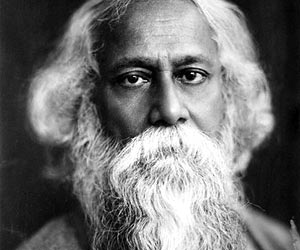
The eve of India’s 66th Independence Day is a time as good as any to read this poem by RABINDRANATH TAGORE, even as India gets ready to sing to martial tune another Tagore poem, Jana Gana Mana. This English translation was published at the end of Tagore’s 1918 book, Nationalism.
THE SUNSET OF THE CENTURY
(Written in the Bengali on the last day of last century)
1
The last sun of the century sets amidst the blood-red clouds of the West and the whirlwind of hatred.
The naked passion of self-love of Nations, in its drunken delirium of greed, is dancing to the clash of steel and the howling verses of vengeance. Continue reading The Sunset of the Century: Rabindranath Tagore→
Guest Post by M AKHIL: Listen to the flourish. The stage is set, the side-kicks are in place and the sycophants are scampering tirelessly to welcome their emperor. Narendra Modi has started his journey to the high seat of Indraprastha.
Curiously enough, his current ride is being celebrated as a victory lap by his ardent supporters. A bit too quick, don’t you think? Especially for a man who was only a few years ago, in terrible danger of being convicted for one of the most gruesome state-sponsored genocides in the history of independent India. Of course, he hasn’t been convicted yet, but many of his ministers and close aides have been. Babu Bajrangi’s confessions on record must be more than enough proof for Modi’s culpability. 1 Alas! Facts get twisted in the most unimaginable ways as they threaten to blow away an edifice carefully built by a dominant plutocracy with immense help from the ‘State-Temple-Corporate Complex’. 2 Here, I shall attempt to bust the Modi bubble which is being ridiculously pumped up by the holy nexus, even as you are reading this. After all, the BJP is possibly the party with the highest following among Indian netizens and the online publicity team of the current supremo is meticulous. An alternative view will be stark, but hopefully it will serve as food for thought for those among us getting nauseated by the dominant narrative. Continue reading Lies, Damn Lies and NaMo – Why I do not support Modi and why you shouldn’t either: M Akhil→
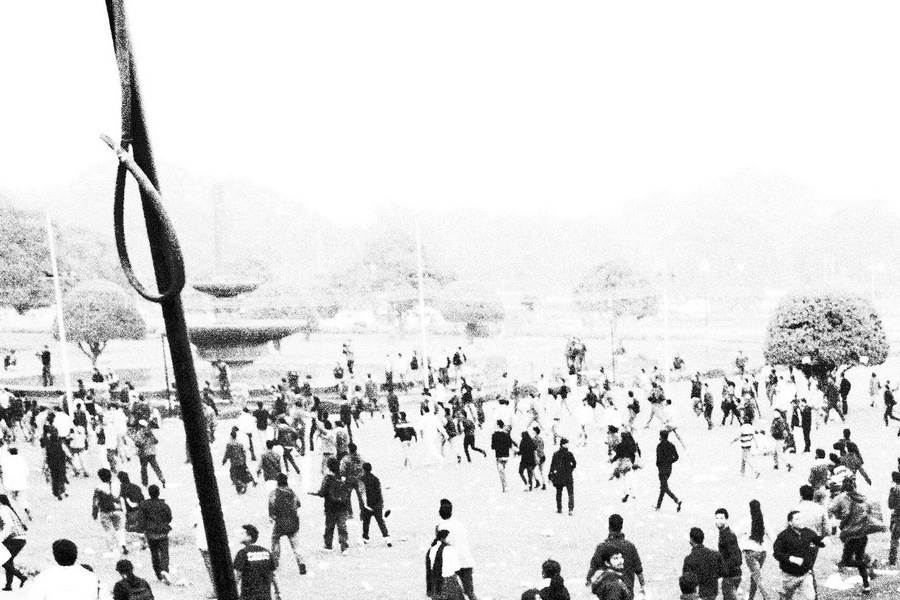
In the early hours of Saturday morning, a secret execution was carried out by the Indian government. Afzal Guru, a Kashmiri, was put to death for his alleged involvement in the 2001 attack on the Indian Parliament. Afzal’s family in Kashmir were cruelly denied a last visitation. They were informed that the Indian President had rejected his mercy petition, and of his imminent execution, by mail—the letter reached Afzal’s wife Tabassum two days after he was executed and buried in an unmarked grave inside Tihar Jail.
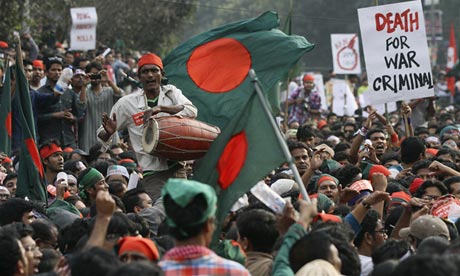
Meanwhile, across the border in Bangladesh, hundreds of thousands of Bangladeshis from all walks of life have occupied Shahbag Square near Dhaka University, outraged that a notorious war criminal might walk free after having been spared the death penalty by the Bangladeshi International War Crimes Tribunal. Abdul Quader Mollah, leader of the right-wing Islamist party Jamaat-i-Islami, and convicted of multiple counts of rape, torture and murder, was photographed flashing a victory sign as he left the court. Continue reading Lessons from Delhi and Dhaka: Nagesh Rao and Navine Murshid→
Ever since the news of Afzal Guru’s execution broke out on the 9th, I have witnessed my personal space descend into a state of chaos. I woke up that morning to a number of emails/facebook messages by friends requesting me to join them at Jantar Mantar to protest against Guru’s execution. Many called that particular protest farcical, some even going to the extent of labelling these young men and women as traitors. Battle lines were drawn and a country stood divided. The more I thought about the execution, the more it saddened me. I could see myself and people like me (the ordinary citizens of this great nation) as pawns in a game of ugly power play, waiting to be sacrificed at the altar of ‘opportune moment’. Continue reading What Afzal Deserves: Chandan Gomes→
As I sit writing this, on the 26th of January, 2013, in various parts of the territory of the Republic of India, soldiers either already have, or are about to begin marching in formation. In New Delhi, the capital of India, their parade is accompanied by tanks, heavy artillery and replicas of nuclear warheads. In the part of the province of Jammu & Kashmir administered by the Indian Union, in several provinces of the north-east, and other areas where the writ of the state runs entirely on the basis of its armed might, Republic Day, as this date is called, is an occasion for search and cordon operations, ‘crackdowns’ and the creation of a Potemkin village like ambience in the zones (usually heavily guarded stadia) where the republic insulates itself from the public. In New Delhi, the naked, obscene exhibitionism on the axial avenue of Rajpath of a nuclear weapons power that maintains the second largest armed forces in the world, even as millions of its subjects subsist at sub-Saharan levels, is an annual ritual. Apparently, this ritual is conducted to commemorate the founding of the Indian republic through the coming into force of its constitution in 1950.





 The eve of India’s 66th Independence Day is a time as good as any to read this poem by RABINDRANATH TAGORE, even as India gets ready to sing to martial tune another Tagore poem, Jana Gana Mana. This English translation was published at the end of Tagore’s 1918 book,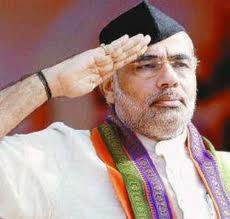
 KAFILA - COLLECTIVE EXPLORATIONS SINCE 2006