Category Archives: Everyday Life

Appeal for Contributions – A Citizens’ Initiative to Provide Humanitarian Relief to the City’s Working Classes

In the wake of the health and subsistence crisis triggered by the rapid spread of Covid-19 in India, the Citizen Collective for Humanitarian Relief, in association with the Centre for Education & Communication, is organizing emergency distribution of food among the working-class families of Delhi NCR. As part of this initiative we have set up a Mazdoor Dhaba (workers’ kitchen) in Delhi University.

Our aim is to provide two cooked meals a day to those families who have lost all source of livelihood following the complete nation-wide lockdown ordered on 25th March. The cost for one family’s meal (5 persons) is about Rs. 250, and as of today we are able to reach 500 people every day. We need your help and financial support to sustain and expand this effort.

On behalf of the Citizen Collective for Humanitarian Relief

Apoorvanand, Aruna Roy, Avinash Kumar, Lokesh, Najma Rehmani, Naveen Chander,  Rahul Roy, Richa Jairaj, Satish Deshpande, Usman Jawed

If you wish to assist us, please transfer money to the following accounts. If you are an Indian citizen (even if you live abroad), then please make sure to transfer money only to the Corporation bank account. If you are a foreign national, please transfer money to the SBI account.

Bank details for INDIAN CITIZENS:

Centre for Education & Communication

Corporation Bank

SB Account No: 520101261257941

IFSC Code: CORP0000286

Branch: Greater Kailash, New Delhi


Bank details for FOREIGN NATIONALS:

Centre for Education & Communication  

State Bank of India

Current Account No: 10786724071

Swift Code: SBININBB710

Branch: Green Park Extension, New Delhi

If you are sending money to these accounts, please inform us of the same by sending an email to the following ID along with your name and address. If you want to send more than Rs 5,000/-, please send us your PAN number. We request the foreign nationals to send a copy of their passport.

Donor Information required for Foreign Citizens

Name:

Address:

Amount donated in foreign currency:

*Please attach copy of valid passport.

Please inform us when you make contribution to following email ids:

accounts@cec-india.org/ finance@cec-india.org

workersdhaba@gmail.com

For queries regarding the relief work, and how you can support it, please contact

workersdhaba@gmail.com

Avinash – +918010833325

Naveen – +919013074978

Praveen-  +919911078111

Richa-     + 919820027364

Usman –  +919953947739


For queries the money transfer, please contact the Center for Education and Communication (CEC) by email or on phone

accounts@cec-india.org/ finance@cec-india.org

Ruchika – +919899230545

Covid-19, the Climate Crisis and Lockdown – an opportunity to end the war with nature: Vishwas Satgar

This post written by VISHWAS SATGAR was first published in Daily Maverick

With the coronavirus, we are really trying to mitigate the revenge blow from nature. It’s a moment to be humble and realise our finitude in a wondrous and infinite natural order.

Covid-19 has pushed an already weak and crisis-ridden global economy over the edge. Massive value has been erased from crashing stock market prices. Many commentators are talking about the return of economic conditions similar to the great financial crash of 2007-2009. The most powerful countries in the world from China to the US have ground to a halt.

This pathogen, possibly from delicate creatures like a pangolin or a bat, has engendered the worst global pandemic since the Spanish flu (1918-1920), which killed 100-million people. Death rates are going up globally. Right-wing nationalists in Europe and the USA have been confused as this virus has jumped racist border regimes, and infected all populations. Citizens are no longer concerned about their racist messages, but rather about how to survive.

Continue reading Covid-19, the Climate Crisis and Lockdown – an opportunity to end the war with nature: Vishwas Satgar

A Memorandum to Delhi Govt on Relief, Rehabilitation and Reconciliation in North East Delhi

Date: 20/03/2020

To,

Mr. Arvind Kejriwal

Chief Minister,

Government of National Capital Territory of Delhi

 To,

Mr. Manish Sisodia,

Deputy Chief Minister,

Government of National Capital Territory of Delhi


Subject: Relief, Rehabilitation and Reconciliation in North East Delhi

Memorandum of Demands to the Delhi Government

The communal violence in north east Delhi that took place in the last week of February is the most disgraceful event in the recent history of the city. Scores of people have lost their lives and thousands are displaced. The observations and evidence from the last three weeks suggest that the violence was not sporadic, but was organized and targeted particularly at Muslim residents in various colonies of the area. There are serious question marks on the role of the Delhi Police during the whole affair. An unbiased and thorough investigation in the matter is necessary to bring the guilty to book.

Based on observations and initial attempts at data collection from the last three weeks, the scale of devastation (material and human costs) is understood to be huge and merits a detailed assessment. While community members have been generous in opening their homes to fleeing families and civil society efforts have tried to fill in for immediate relief, the state government needs to step in to address the concerns of the affected people. There are two reasons for this. One, the crisis is the result of a state failure and has resulted in grave deprivation among the citizenry. The state thus has a moral and administrative duty to compensate and rehabilitate those affected in a compassionate and humane way. Two, the scale of the crisis is such that only the state can address it. Civil society and community effort should not be seen as a substitute for what is the state’s responsibility. While the state government had been conspicuous by its absence in the first three days of the violence, it has been trying to coordinate relief efforts since. A comprehensive plan needs to be put in place with short, medium and long term targets for which the state must take responsibility and invite non-state actors from community organisations to individual citizens that are willing to lend support to such a state led process.

Continue reading A Memorandum to Delhi Govt on Relief, Rehabilitation and Reconciliation in North East Delhi

An Inquiry in to the Anti-Muslim Violence in Northeast Delhi: Progressive Medicos and Scientists Forum

Progressive Medicos and Scientists Forum is a team of doctors that visited the area.

Members of the medical team [1] 

  1. Dr Vikas Bajpai – Assistant Professor, Centre for Social Medicine and Community Health, Jawaharlal Nehru University, New Delhi (Ph: 9717820427).
  2. Dr Harjit Bhatti – Former President, Resident Doctors Association, All India Institute of Medical Scientists (AIIMS) (Ph: 8586848479).
  3. Dr Sumitran – A consultant radiologist with a government hospital in Delhi.
  4. Five doctors from the All India Institute of Medical Sciences

It took a 25 to 30 km drive from AIIMS (All India Institute of Medical Sciences), to the violence affected areas of Northeast Delhi. We were visiting the area in the context of the massive communal violence, primarily directed against Muslims living in the area, in the wake of their resistance to the CAA Act passed recently by the parliament along with NRC-NPR which threaten to rob millions of Muslims of their Indian citizenship and render them illegal in their own country.

The effort to send this medical team was initiated in the context of massive scale of medical emergency that arose as a result of this violence. In this report, apart from reflecting on the medical suffering of the people, we shall also try to provide a snapshot of the violence that was unleashed and the role of the political-administrative machinery to address the same and its consequences, as were narrated to us by the people we met.

Continue reading An Inquiry in to the Anti-Muslim Violence in Northeast Delhi: Progressive Medicos and Scientists Forum

The Violence in Delhi, Politics and ‘Heroism of the Ordinary’


What is there to say? What can one say that has not already been said umpteen times before – during earlier rounds of communal violence elsewhere – and in Delhi this time?

The political class, true to its character, has revealed as it has so many times in the past, that when it comes to matters like communal violence, it is simply paralyzed – perhaps with the exception of the Left in states where it was strong enough to impact things.  For all its failures in other respects, this was one where the Bengal Left, for instance, too had in the past shown great promptness in nipping such possibilities in the bud. Most often this was done, not by relying only on the administrative power of the state, but with  the entire party machinery moving into action. Kerala too has had a similar record. But those instances apart, especially in states of the Northern or Western India, there hasn’t been much to write home about. What entering the political domain does to you is illustrated so starkly by the fate of the Aam Aadmi Party (AAP) and its utter capitulation to what it imagines to be the ‘Hindu sentiment’.

Continue reading The Violence in Delhi, Politics and ‘Heroism of the Ordinary’

Winning Delhi Elections – AAP, Gandhi and the Ideology Wars

What has Gandhi got to do with the recently concluded elections in Delhi? On the face of it nothing. But at another level, the election process, its campaign and its results – all invite us to revisit Gandhi’s stupendous moral-political project of cementing the Hindu-Muslim division with his own blood and his heroic failure. He could not prevent the Partition and ultimately fell to the bullets of a fanatic Hindu nationalist of the kind who are in power today.

I remember Gandhi today because gung-ho secularists (the political community that I inhabit, if very uncomfortably) are once again at their favourite occupation of daring Arvind Kejriwal and AAP to ‘prove’ their ‘anti-communal stance’ and all that it can mean today – as though they alone have the talisman to fight communalism. I am reminded of Gandhi because his was by far the most audacious  attempt to fight the communal menace but he too failed. He had no ready-made answers to it but had perhaps the best sense of what moved the masses of this country.

Secular warriors have been basically daring Kejriwal and AAP to do and say things that he had been avoiding doing or saying all these days. Just two instances – of the quotes below from two dear friends – should suffice to indicate what I mean.  The first is from Apoorvanand, writing in the Business Standard,

‘Voters in Delhi were confident that the AAP victory in the assembly elections wouldn’t so much as serve as an irritant to the BJP, let alone rock its boat, as the saffron outfit was firmly and safely ensconced in power. An efficient delivery boy is all the electorate wanted. In the Delhi voters mindset, an ideology-agnostic party that does not impede the BJP’s nationalist drive is tolerable.’

Continue reading Winning Delhi Elections – AAP, Gandhi and the Ideology Wars

A Moment of Unprecedented Possibilities


Beginning this week, we are starting a column which will appear every Thursday. The name of this column, ‘Parapolitics’, is meant to indicate something that happens all the time, outside the formally designated sphere of politics, or what is sometimes called ‘the political’ by political theorists. As a matter of fact, most of such politics – parapolitics – takes place everyday and is deeply tied to our everyday lives. It is also what we may call ‘existential politics’:  the dalit boys flogged by upper caste men inside a police station in Una, the woman of Unnao, whose family is decimated by the rapist’s henchmen, the mob-lynching to which Muslims are subjected on a daily basis, the farmer or the unemployed who commits suicide, the displaced adivasis or the workers who fight back – all these are instances of things deeply political but occurring away from or beneath the ‘proper’ domain of politics. The ‘proper domain of politics’ – that of state/government, parties, elections, alliances and so on – has repeatedly historically revealed its fundamental disconnect with such existential politics. Indeed, whenever faced by mass protests, the first response by the political class is to reduce it to the purported machinations of ‘opposition parties’. It cannot think of people, ordinary people, coming out in autonomous action. We might recall the response of the UPA government, at the height of the anti-corruption movement, challenging the locus standi of the protesters with the questions: ‘who are you?’ or ‘who has authorized you?’ etc Parapolitics is that unauthorized politics of everyday life, which often bursts out into the open but may also simply go on under the surface without any necessary public manifestation.

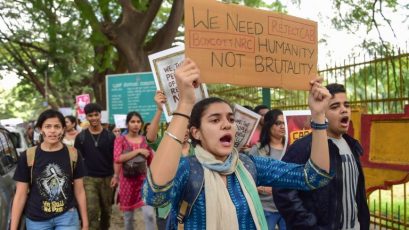
Students protest in Bengaluru, photo courtesy PTI

The most striking aspect of the present upsurge of popular anger around the Citizenship Amendment Act (CAA), as has been widely noticed, is the way defiant young women have become the face of the struggle. I am not referring here only to the women whose iconic images are circulating everywhere today, but also to the sheer number in which they have come out and the power with which they have been speaking their mind before the media. And they belong to all communities.

Continue reading A Moment of Unprecedented Possibilities

It’s We the People, not we the Citizens, of India!

Image courtesy News 18

People, Persons, Citizens

When the idea of citizenship is wielded like a deadly weapon to deprive people of basic rights rather than to empower them, it’s time to think about the basis of rights differently.  While in the Preamble to the Constitution, ‘we the people’ resolve to secure to all its ‘citizens’ justice, liberty, equality and fraternity; Article 14 of the Fundamental Rights ensures equality before the law to all “persons”, not only to citizens.

The people of a land precede the creation of “citizens”, and we the people of India must think seriously at this moment in our history, about how justice is to be secured to all persons, and whether citizenship is an emancipatory idea any longer.

Consider the revealing and tragic irony of one of the accused arrested for his alleged role in violence during protests against the Citizenship Amendment Act 2019 (CAA) , in East Delhi’s Seemapuri. Through his counsel, in a Delhi court, he claimed to be a juvenile, and to prove this, produced certificates from the madarsa at which he studies.

Delhi Police, however, claimed that these documents were insufficient to establish his age, and requested permission for a bone ossification test. The counsel of the accused argued that according to central government notifications, madarsa certificates are sufficient to prove age, but the Delhi court permitted police to carry out the ossification test.

Imagine the claim of such a person to  citizenship and to inclusion in the National Register of Citizens (NRC)! Continue reading It’s We the People, not we the Citizens, of India!

शौचालय: एक हत्यारी कथा 

Guest Post : Fact finding team of Communist Party of India ( CPI)

[पिछले सितम्बर की 25 तारीख़ को मध्य प्रदेश के शिवपुरी ज़िले के एक गाँव भावखेड़ी में दो बच्चों की नृशंस हत्या कर दी गयी थी।  मीडिया में कारण यह आया था कि उन्हें खुले में शौच करते देख उसी गाँव  व्यक्ति को गुस्सा आ गया और उसने बच्चों को मार डाला। 

सीपीआई का एक छः सदस्यीय जाँच दल मामले की तहक़ीक़ात के लिए 1 अक्टूबर 2019 को शिवपुरी और भावखेड़ी गया था।  ग्रामीणों और पीड़ित परिवार से तथा अन्य कर्मचारियों, शिक्षकों व बच्चों से बात करने पर हमारे सामने जो तस्वीर उभरी, उसके आधार पर तैयार यह रिपोर्ट]

The Open is No Place for India's Children to Go

मृतक बच्चे (फाइल फोटो दि वायर से साभार) Continue reading शौचालय: एक हत्यारी कथा 

एन आर सी और उससे जुड़े चंद सवाल : सबीहा फ़रहत

Guest post by SABIHA FARHAT

[भारतीय-हिन्दू मिथकों और परम्परा पर लंबे समय से लिखते आ रहे  बुद्धिजीवी श्री देवदत्त  पट्टनायक  अपनी एक ट्वीट में  एक लाजवाब  बात  कही . उनहोंने कहा कि जहाँ हिन्दू धर्मं  का मतलब  वसुधैव  कुटुम्बकम है , उसके  लिए  अगर  समूची वसुधा , सारी एक कुनबा  है , वहीँ  हिंदुत्व  का मतलब  सिर्फ़  एन आर सी  (यानी नागरिकों की राष्हैट्रीय फेहरिश्त ) है. बिलकुल दो शब्दों में  , बड़ी खूबसूरती  से पट्टनायक साहब ने इन दोनों  फलसफों के बीच का फर्क़ खोल कर सामने रख दिया  है. इस  संक्षिप्त लेख में   डाक्यूमेंट्री  फ़िल्मकार  और पत्रकार  सबीहा फ़रहत  उसी एन आर सी  से पैदा हुए  चंद सवाल उठा रही हैं.]

आजकल अमित शाह केवल एनआरसी पर स्टेटमेंट दे रहे हैं। “घुसपैठियों ” को बाहर फेंक देंगे और हिन्दू, सिख, बौद्ध, जैन, ईसाई, पारसी को नागरिकता दे देंगें। फिर चाहे उसके लिये संविधान को तक पर रख  कर सिटीज़नशिप ऐक्ट ही क्यों ना बदलना पड़े!

उनकी इस बात से साफ़ ज़ाहिर है कि देश के 16 करोड़ मुसलमान ही “घुसपैठिये” हैं। “दीमक” हैं और उन्हें देश से बाहर खदेड़ने की ज़रूरत है। लेकिन सिर्फ़ मुसलमान से इतनी नफ़रत क्यों? मुसलमान ने इस देश का क्या बिगाड़ा है? क्या उसने किसी की रोटी छीनी, किसी की नौकरी छीनी, किसी का बिज़नेस हड़प लिया। नहीं! क्योंकि अगर वो ऐसा करता तो आर्थिक तौर पर सबसे ज़्यादा कमज़ोर नहीं होता।

Continue reading एन आर सी और उससे जुड़े चंद सवाल : सबीहा फ़रहत

Everyday Tips for Surviving Tyranny: Anonymous

Guest Post by ANONYMOUS

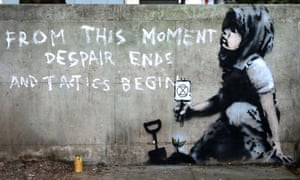
Suspected Banksy mural in London in support of environmentalist protest. 

As authoritarian right-wing populist leaders across the world unleash a reign of tyranny and hate, there is a need to think together about everyday strategies of survival. As an individual, it can get a bit overwhelming. Everything could look pointless. Many friends talk about how they find it impossible to write or work in an atmosphere of hate and violence. However, it is important to remember that what might look invincible today may not last for even half a decade. But while it lasts, how does one live under tyranny and what are the ways of building non-violent resistance? Continue reading Everyday Tips for Surviving Tyranny: Anonymous

Queerness as disease – a continuing narrative in 21st century India: Kaushal Bodwal

Guest post by KAUSHAL BODWAL

In August 2018, it came to my knowledge that a few of my pictures wearing sarees were circulating in my extended family’s WhatsApp group. Phone calls from home regarding my “obscene” behaviour were followed by a shift in the entire conversation towards my having some illness that needed to be cured. At some point my mother called me to tell that one of my aunts knew a doctor who can heal me. My first thought was that she was joking; unfortunately, she was only too serious. Once I registered the gravity of the situation, I panicked. Even though I was staying in a closed campus, I was not sure of my family’s potential to do what they claimed they wanted to.

The issue was with both my gender expression and my sexuality. I was a male assigned at birth walking in a saree and they thought that it was because of my interest in men. One of my aunts assured my mother that my love for sarees will end once my homosexuality is cured. The next time I went home, I was anxious and terrified. I knew I had to speak to them and explain what was going on. There were going to be a lot of questions. It’s not as I had ready-made answers for them, especially since the understanding of gender and sexuality that I had was not easy to articulate in my native language of Haryanvi. Through whatever words I could, I came out to my parents. My mom cried and my father stood numb. But mostly, confused. Despite their anger and other emotional expressions, the overall emphasis was on going to a doctor to get me fixed. After all, I was sick. Continue reading Queerness as disease – a continuing narrative in 21st century India: Kaushal Bodwal

Kashmir Caged – A Report from the Ground

Economist Jean Dreze, Kavita Krishnan of the CPI(ML) and the All India Progressive Women’s Association, Maimoona Mollah of the All India Democratic Women’s Association and Vimal Bhai of the National Alliance of People’s Movements released the following report to the press today, 14 August 2019, after spending five days in Kashmir, meeting and talking to people.

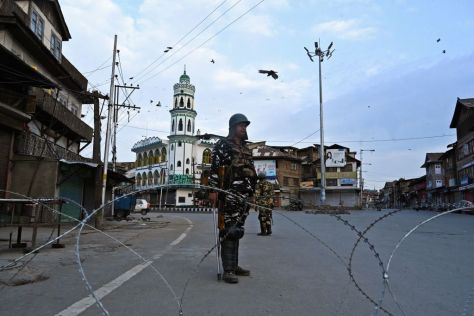
Security personnel stand guard on a street during a lockdown in Srinagar on August 12, 2019. (Photo credit: TAUSEEF MUSTAFA /AFP/Getty Images)

We spent five days (9-13 August 2019) traveling extensively in Kashmir. Our visit began on 9 August 2019 – four days after the Indian government abrogated Articles 370 and 35A, dissolved the state of Jammu and Kashmir, and bifurcated it into two Union Territories.

When we arrived in Srinagar on 9 August, we found the city silenced and desolated by curfew, and bristling with Indian military and paramilitary presence. The curfew was total, as it had been since 5th August. The streets of Srinagar were empty and all institutions and establishments were closed (shops, schools, libraries, petrol pumps, government offices, banks). Only some ATMs and chemists’ shops – and all police stations – were open. People were moving about in ones and twos here and there, but not in groups.

Continue reading Kashmir Caged – A Report from the Ground

Effects of Climate Change are not Contained within Nations – The Impact on India: Nagraj Adve

Guest post by NAGRAJ ADVE

This post is the second part, excerpted and slightly adapted, from the booklet by Nagraj Adve, Global Warming in the Indian Context: An Introductory Overview (Ecologise Hyderabad 2019). The first part appeared in Kafila on 1 July 2019

While the earlier post covered the basic science of global warming, the roots of the problem, and how inequality relates to climate change, this part focuses on key impacts of climate change in India, on humans and other species, and the reasons for urgency in tackling the problem. 

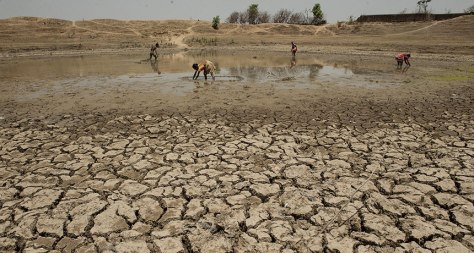
Villagers try to catch fish in drying pond in West Bengal, image courtesy Science News

Before we consider impacts in India and elsewhere, a few things are useful to keep in mind:

– Unlike most other forms of pollution, the source of carbon dioxide and where its effects are felt can be very far apart. Carbon dioxide generated in the United States affects people on the Orissa coast.

– A significant portion of carbon dioxide emitted today will remain in the atmosphere for centuries, influencing future climates.

– Even after the world ceases to emit carbon, higher average temperatures are “largely irreversible for a thousand years” because the gains of lesser radiation being trapped gets offset by the reduced loss of heat to the oceans. Hence, climate change is the new ‘normal’.

– Impacts will worsen because of the time lag between emissions and warming. Some of it is unavoidable. Our urgent intervention is needed to make sure they do not get much worse, and that the situation does not spiral out of our control. Continue reading Effects of Climate Change are not Contained within Nations – The Impact on India: Nagraj Adve

Global Warming – The Disaster that has Long Been Brewing: Nagraj Adve

Guest post by NAGRAJ ADVE

This essay is the first of a two-part excerpt from the booklet by Nagraj Adve, Global Warming in the Indian Context: An Introductory Overview (Ecologise Hyderabad, 2019). This covers the basic science of global warming, the roots of the problem, and how inequality relates to climate change. The  second piece, to appear soon, will focus on impacts in India, both on humans and other species, and the reasons for urgency in tackling the problem. You can read the second part here.

 What they told us in Gujarat

A few years ago, a group of us went to northern and eastern Gujarat to find out how climate change was affecting small farmers there. In villages in eastern Gujarat, they told us that the wheat and maize crops had been getting hit for some years during winter. Wheat and maize are important sources of nutrition for poor households in these and nearby regions. But because winters have been getting warmer, the dew (os) had lessened, or stopped entirely for the last few years. For those without wells—most of them poor households—dew is the only source of moisture for their crop. With less or no dew falling, either their crop dried up, or they were being forced to leave their lands fallow.

When we asked them why the winters had been getting milder, the people’s response there was interesting: “Prakruti ki baat hai (it has to do with Nature).” They did not consider it imaginable that human beings had the power to alter Nature on this scale. We do.


Sick Earth
Sick Earth, image courtesy Epispastic clipart (UI-Ex.com)

Continue reading Global Warming – The Disaster that has Long Been Brewing: Nagraj Adve

How Many More ‘Halal’ Ponzi Schemes?

It is important to note that the very idea of Islamic banking and promoting it as a parallel to conventional banking – which is being portrayed as un-Islamic – and which has caught the imagination of a section of god-fearing Muslims, is a clear manifestation of shifts in Muslim politics over the world.

'Halal' Ponzi Schemes

Image for representational use only.Image Courtesy : Business Today

Afzal Pasha, a 55-year-old labourer, is dead. He died of a heart attack a few days back.

The news that the attractive scheme in which he had invested his life’s savings worth Rs 8 lakh went bust proved unbearable for him.

While Afzal’s tragic death could catch headlines, we will never know the plight of the thousands of investors – all of them belonging to the Muslim community – who had similarly invested their hard-earned savings in the said investment scheme launched by Mohammed Mansoor Khan in 2006 through his firm I Monetary Advisory (IMA).

The scheme was declared ‘Shariah-compliant’ and worked on ‘“no interest” policy of Islamic banking. A section of the clergy had even certified this scheme as “halal”, which means “lawful” or “permitted” in Arabic, which helped it easily earn the trust of the Muslim community. Small investors from across the state of Karnataka had flocked to it with their investments ranging from a few thousand rupees to a few lakhs.

A few days back, the promoter of IMA just disappeared from Bengaluru and is supposed to have fled to Dubai.

Continue reading How Many More ‘Halal’ Ponzi Schemes?

A Case of Harassment of Dalit Student in Jadavpur University: Srijan Dutta

Guest post by SRIJAN DUTTA

The value of a man was reduced to his immediate identity and nearest possibility.

The line quoted above is from Dalit PhD scholar Rohith Vemula’s ‘last’ letter, discovered after he was found hanging in his hostel room in January 2016. The letter had exposed how caste-based discrimination is used as a medium of oppression against Dalits and other minorities. Casteism serves both as an ideology and as a means for exploitation by the upper castes and upper classes of the Indian society.

Recently, a complaint has been made by a second year Masters student of the Department of Library and Information Science in one of the hotbeds of Bengal student politics, Jadavpur University. Jadavpur Uiversity is also a premier institution of higher learning, with a well deserved reputation.  Raja Manna, a student belonging to the ‘Scheduled Caste’ category, has revealed that he has been facing a lot of harassment and discrimination at the hands of his dissertation guide, Prof. Udayan Bhattacharya, an upper caste Brahmin.

Continue reading A Case of Harassment of Dalit Student in Jadavpur University: Srijan Dutta

Sexual Harassment ‘in-house’ for the Supreme Court – is sunlight the best disinfectant? Pratiksha Baxi

Guest Post by PRATIKSHA BAXI

The publication of a sworn affidavit by a former Supreme Court staffer testifying to sexual harassment by the Chief Justice of India has been treated as a scandal, whether the complainant was believed or not. And the subsequent events – an extraordinary suo moto hearing, allegations of a conspiracy against the independence of the judiciary, the in-house committee’s decision to exonerate the CJI – have evoked the normative question whether such forms of judicial exceptionalism are the necessary condition for judging in our courts.

Yet asking such questions ran the risk of being labelled as an ‘institution de-stabiliser’. The intent was to invent social consensus by deploying labelling as a technique of censoring and delegitimising feminist critique. Not so long ago women who challenged male authority were described as witches, today they are labelled anti-national, institution destabilisers, presstitutes or simply, left-liberal/JNU type.

However, whether one walks right, left, centre or zigzag, it cannot be denied that jurisprudential questions need answers beyond the specifics of this case. One would have thought that it is also in the interest of all judges to devise a procedure that is constitutionally sound and invested in gender justice, while recognising the specific problems that judges may have because of the nature of their work. And that the Supreme Court would recognise that it is in the interest of every survivor of sexual harassment, irrespective of ideology or status, to be provided normative answers.

Continue reading Sexual Harassment ‘in-house’ for the Supreme Court – is sunlight the best disinfectant? Pratiksha Baxi

And Somewhere There are Engineers …

Related image

A conversation with youngsters – who are by nature bubbling with energy , fired with idealism and suffused with innumerable questions – is a thing which everyone with grey hair looks forward to.

For someone like me it is an added gift this morning that after exactly a gap of forty years this writer is with students of engineering helping him rekindle memories of his own days of engineering in the city of Varanasi. A really exciting period when few of us had come together to do something for society as well. A period worth remembering when we were engaged in running evening classes for deprived sections in neighbouring villages, learning from their life experiences and in spare time reading good literature, tracking trajectories of different revolutions, debating, discussing, brainstorming what else can be done to awaken the society around. Continue reading And Somewhere There are Engineers …

Seasons of Violence: Vikas Bajpai


Guest post by VIKAS BAJPAI

Sometimes, memories stacked away for long, come tumbling out. If these are not just about personal nostalgia, dwelling upon them could serve some public good.

It was 31 October, 1984. The time may have been around 11 am. I was taking my second term exams for class XI in a room on the ground floor of the science block of the Delhi Public School, R K Puram, New Delhi. Unfortunately, mine was the first seat very close by to the only entrance and the exit for the room. ‘Unfortunately’ because  this made seeking the help and guidance of fellow examinees in this ordeal a rather adventurous proposition. Nevertheless, I focussed on the question paper intently, trying to make sense of what was expected of me.

A while after the examination had taken off, the teacher invigilating in our room and other teachers in the adjacent rooms flocked together at the door of our room for a conference of sorts, each having a cup of tea in their hands which had been duly served by that time. Barely a minute or so into their hushed conference, I over heard one of the teachers remark – ‘madam ko to goliyan lag rahin hain’ (madam is being riddled with bullets). I was a bit startled as to what that could mean; but then, I had a task at hand and got immersed in it before long. Continue reading Seasons of Violence: Vikas Bajpai

The Impossible Gandhian Project and its Limits – Remembering the Mahatma Today

Gandhi, Nehru and Azad, Wardha 1935, image courtesy Governance Now

Majboori ka naam Mahatma Gandhi (Roughly: Compulsion thy name is Mahatma Gandhi)

I have grown up hearing this expression and have often wondered about its meaning and at the almost proverbial status acquired by it. Whose majboori or compulsion was Gandhi really? Well, at one level, everybody’s, for practically every current within the anti-colonial struggle was uncomfortable with his presence and his leadership. Jawaharlal Nehru had even remarked once that after independence, his fads would have to be kept in check. All nationalists who fought for independence from colonial rule (as opposed to the pseudo-nationalists who tried to convert it into a cow-protection movement) had their gaze fixed on the state. They wanted control of that coveted instrument – that was the crux of their anticolonial struggle. There were others like BR Ambedkar, who too invested a lot in the state but realized that the state in the hands of the nationalists would be a disaster for his people. But no one among them (poet-thinkers like Tagore apart) was prepared to look beyond the state. And Gandhi’s disavowal of the state – and of politics as such – was something that no one could digest. More than anything else, that was what made him a majboori for this set of people who could only lay their hands on their object of desire as long as Gandhi was in the leadership – for he alone could move millions like no one among his contemporaries could.

But my hunch is that these were not the people who coined this expression. Gandhi was a bigger majboori for another set of people who were, ironically, equally disinterested in the state and its ‘capture’ – at least till recently. Yes, these were the different currents of the Hindutva Brigade (VD Savarkar of the Hindu Mahasabha and his followers and the Rashtriya Swayamsevak Sangh). They had to tolerate Gandhi – that is exactly what their majboori meant – till they could finally eliminate him. And it was one Nathuram Godse, with connections to both Savarkar and the RSS, who eventually killed him. There were earlier attempts too on Gandhi’s life – all from upper caste Hindus (one lot being Chitpavan Brahmins). Continue reading The Impossible Gandhian Project and its Limits – Remembering the Mahatma Today