Category Archives: Government

Government should not Fail Children to Cover up Education System’s ailure: A Statement

A statement by concerned organizations, teachers’ unions and academics against government proposal to amend RTE Act to scrap no detention policy and to fail children in class V and VIII. The statement was issued in New Delhi on 25 July 2018

The civil society organisations, teacher unions, and academicians working in the education sector across 20 states of India strongly oppose the Lok Sabha’s decision to pass‘ The Right of Children to Free and Compulsory Education (Second Amendment) Bill, 2017’. This bill paves the way for the scrapping of the provision for ‘No Detention’ by allowing states to detain children in class V and VIII. Over 20,000 Indians had already urged the government to withdraw the bill scrapping the ‘No Detention Policy’.

Continue reading Government should not Fail Children to Cover up Education System’s ailure: A Statement

Fascinating Manu

It is easy to see the linkages between Manu, Nietzsche, Hitler and the worldview of Hindutva supremacism

RSS and Fascism

Manu and his ‘magnum opus’ Manusmriti keeps hogging headlines in the 21st century as well.

Thanks to the fascination it still holds among the Hindutva supremacists of various kinds even around seventy years after the promulgation of Constitution, which in the words of Dr Ambedkar, had “ended the rule by Manu”.

The latest to join the ‘mission glorification’ of Manusmritihappens to be another stalwart from the Hindutva brigade, called Sambhaji Bhide, the leader of Shivpratishthan Sangathan, who also happens to be an accused in the Bhima Koregaon case. Addressing his followers known as dharkaris (believers of violence) – as opposed to varkaris(who go to Pandharpur from Pune on foot), he exhorted them to disseminate Hindu religion and form Hindu Nation. He also added how ‘Manusmriti was superior to the teachings of saints Dnyaneshwar and Tukaram’. 

( Read the full article here : https://newsclick.in/fascinating-manu)

Who feeds whom? Reflections on the Left responses to the Abhimanyu murder case

The recent murder of an SFI activist, Abhimanyu, at the Maharajah’s College, Ernakulam, allegedly by activists of another student organization, the Campus Front, has once again triggered a series of intense campaigns against the Popular Front of India (PFI), which is accused of having terror links, even with the ISIS. This last claim has become commonsense almost impossible to contest.

Continue reading Who feeds whom? Reflections on the Left responses to the Abhimanyu murder case

അഭിമന്യുവധം ഉയർത്തുന്ന കാതലായ പ്രശ്നം

സത്യം പറഞ്ഞാൽ അഭിമന്യു എന്ന വിദ്യാർത്ഥിയുടെ ഞെട്ടിക്കുന്ന കൊലപാതകത്തിനു ശേഷം ആ ചെറുപ്പക്കാരൻറെ മാതാവിൻറെ വിലാപം മാത്രമാണ് ഇപ്പോഴും മുഴങ്ങിക്കേൾക്കുന്നത്. ആ ശബ്ദം മനസ്സിൽ നിന്ന് മായുന്നതേയില്ല.

Continue reading അഭിമന്യുവധം ഉയർത്തുന്ന കാതലായ പ്രശ്നം

“Selfless Patriot” – In Search of the Real Shyama Prasad Mukherjee

Shyama Prasad

It has been said with good reason that the Jana Sangh resulted from a combination of a partyless leader, Syama Prasad Mookerjee, and a leaderless party, the RSS”.

(The Jana Sangh: A Biography of an Indian Political Party, by Craig Baxter p. 54) 

1.

In Search of the “Selfless Patriot”

An untimely death of a political leader — whose career is just blossoming — is always a loss to the party they belong to, the ideology they espouse, or the cause(s) they pursue. It also leaves the field open for political pundits of different shades to make all sorts of speculations, or to involve themselves in endless deliberations about what would have been the future of the formation if the said person hadn’t died.

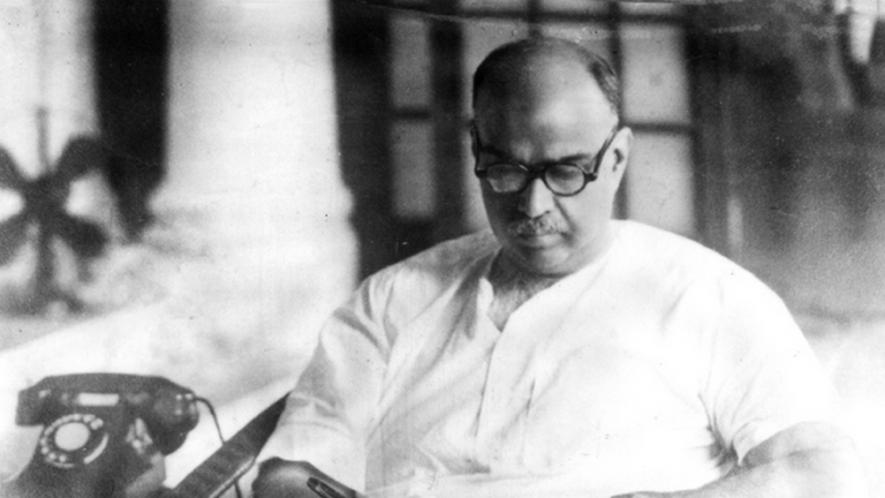
The death of Shyama Prasad Mukherjee (06 July 1901 – 23 June 1953), founder of Bharatiya Jana Sangh (precursor to the BJP), at the relatively young age of 52 years, can be considered one such loss for the project he had undertaken. One cannot stop thinking about how the party he helped found after resigning from Hindu Mahasabha would have developed had he remained alive. His differences with the Hindu Mahasabha, which he even led in 1944, were political in nature, and stemmed from the considered opinion that it abandoned its exclusivist character.

However, to his legatees, who are always bothered very little by the nuances and niceties, he is a leader who provides them a fig leaf to counter the criticism that they had played no role in freedom struggle, or had no place in the comprehensive list of ‘makers of modern India’. Their ascension to the citadel of power has provided them with ample opportunity to project him as a key figure in the ‘Making of India’. (https://thewire.in/politics/search-syama-prasad-mookerjee-true-patriot)

In addition to that, by repeatedly claiming that ‘history failed to serve justice to Mukherjee,’ they are able to easily target Jawaharlal Nehru, the first Prime Minister of India, who played the key role in institutionalising democracy after the assassination of Mahatma Gandhi and early demise of Sardar Patel, and was aware that any leeway to Hindu Supremacist ideology would lead India into becoming a mirror image of Pakistan — a Hindu Pakistan.

( Read the full article here : https://newsclick.in/selfless-patriot)

Citizens’ Solidarity with Voices of Democracy – Against the Arrest of Five HR Activists

[This is a statement of solidarity endorsed and signed by over 200 intellectuals, artists, academicians, lawyers, journalists, and students in support of the five arrested in connection with Bhima-Koregaon case. In the 43rd year after Emergency was declared in this country, this statement was issued on June 25th 2018 condemning the arrest of such voices of democracy and demanding their immediate and unconditional release.]

We condemn the arrest of five human rights activists, professors and lawyers in connection with the Bhima-Koregaon clashes early this year. The alarming arrest of Advocate and General Secretary of Indian Association of Peoples’ Lawyers (IAPL) Surendra Gadling, Committee for the Release of Political Prisoners (CRPP) Public Relations Secretary Rona Wilson, Head of English Department Professor Shoma Sen of Nagpur University and member of Women against Sexual Violence and State Repression (WSS), cultural activist and founder of Republican Panthers Jaatiya Antachi Chalwal Sudhir Dhawale and anti-displacement activist and Prime Ministers Rural Development Fellow (PMRDF) Mahesh Raut is a clear manifestation of state terror to crush the voices of dissent in this country.

The intemperate use of sections of the IPC and Unlawful Activities (Prevention) Act (UAPA) on all five reveals legal over-reach and exposes the desperation to foist extraordinary and excessive charges on all five to ensure they remain in the clutches of the Fadnavis-Maharashtra government. All the arrested have consistently worked for the assertion of oppressed and marginalised communities against majoritarian forces, spoken out against Brahmanical patriarchy, upheld peoples’ rights to land, life and dignity, and have strived for the release of political prisoners.

Continue reading Citizens’ Solidarity with Voices of Democracy – Against the Arrest of Five HR Activists

India’s Panicky Response to UN Report on Kashmir: Kavita Krishnan

Guest Post by KAVITA KRISHNAN

The Office of the United Nations High Commissioner for Human Rights (OHCHR) released its first-ever ‘Report on the Situation of Human Rights in Kashmir’ on 14 June, 2018. It is unfortunate though predictable, that India rejected the report and its recommendations out of hand, after having already refused the OHCHR access to Kashmir.

Dismissed Without Reading?

The UN report is, however, a historic opportunity for India’s people to reorient and reassess the conversation around Kashmir. India’s media and columnists could have played an important role in creating a hospitable and educative space for this conversation. Instead, what we have seen is the almost panicky attempt, on part of prominent opinion-makers, to shut down the conversation and dismiss the report as too silly even to merit close scrutiny and debate.      Continue reading India’s Panicky Response to UN Report on Kashmir: Kavita Krishnan

Thoothukudi Massacre – When State becomes Predator: Bobby Kunhu

Guest post by BOBBY KUNHU

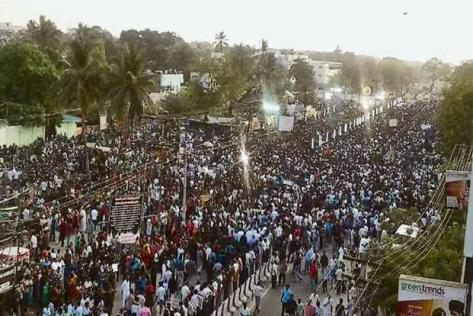
Thoothukudi protests – Image courtesy LiveMint

On 22nd May 2018, in what cannot be imagined even in a dictatorial regime, the police in Thoothukudi, Tamil Nadu – a South Indian state opened fire to kill, on a group of peaceful protesters marching towards the district administration office demanding denial of permission for expansion and closure of the existing copper smelting plant of Sterlite. Sterlite is a subsidiary of the London based corporation Vedanta, which has been dumping toxic waste all over this town since 1998 resulting in widespread health hazards including increase in reports of cancer. This massacre is unimaginable even in the worst dictatorial regimes, because not only were known national and international legal norms and protocols in crowd/riot control violated, but also because the video clippings that have surfaced after the massacre seem to indicate sufficient premeditation – with a plainclothes sniper on the top of a van being ordered to kill at least one person. Continue reading Thoothukudi Massacre – When State becomes Predator: Bobby Kunhu

How the Supreme Court gave up on Democracy in Karnataka: Bobby Kunhu

Guest post by BOBBY KUNHU

There is all around jubilation in the anti-BJP, particularly the Congress camp that the Supreme Court has cut short the time given to Yediyurappa by the Governor to prove his majority from 15 days to 24 hours. This jubilation is extremely myopic and self serving and is in no way rooted in the tall claims that the Congress has been making about trying to save the Constitution. All the Supreme Court order does is reduce the window of opportunity for the BJP to indulge in horse trading and increase the chances of the Congress-JDS combine to keep their flock together and win the assembly – and also substantially reduce the resort costs.

Continue reading How the Supreme Court gave up on Democracy in Karnataka: Bobby Kunhu

Open letter to the Prime Minister of India on the Kathua and Unnao Rape Cases – The Full Text

To,

The Prime Minister of India,

Prime Minister’s Office, South Block,

Raisina Hill, New Delhi 110 001.

21 April 2018

Mr Prime Minister,

We are academics and independent scholars from India and abroad, writing to express solidarity with, and to endorse the sentiments expressed by, forty-nine retired civil servants in their open letter to you of April 16th 2018 (https://thewire.in/politics/narendra-modi-open-letter-kathua-unnao).

Along with these civil servants and countless other citizens of India and the world at large, we wish to express our deep anger and anguish over the events in Kathua and Unnao and the aftermath of these events; over the efforts, in both cases, of those administering the relevant States to protect the alleged perpetrators of these monstrous crimes; over the subsequent profoundly distasteful efforts of rationalisation, deflection and diversion that have been so much in evidence in the reactions of your party’s spokespersons in the media; and finally over your own prolonged (and by now familiar) silence that was broken only recently with wholly inadequate, platitudinous, and  non-specific assurances of justice for the victims. Continue reading Open letter to the Prime Minister of India on the Kathua and Unnao Rape Cases – The Full Text

Petition to Supreme Court Urging Verdict in Judge Loya Case

The following petition initiated by Prasenjit Bose appeals to the Supreme Court to reconsider the verdict in the case regarding Judge Loya’s death. Since the launch of the petition, over 527 persons have already signed it. A list of 40 prominent signatories is provided below. A hard copy of the petition along with the total list of signatories will be sent to the Supreme Court judges once we collect thousand plus signatures.  The petition can be signed here.

To
The Hon’ble Chief Justice

& His Companion Justices,

The Supreme Court of India

Most Respectfully Sheweth:

We the undersigned citizens of India are deeply anguished by the order passed by a three judge bench of the Supreme Court that there is no merit in the writ petitions seeking an Inquiry into the death of Justice Brijgopal Harkishan Loya on December 1, 2014 at Nagpur.

The three judge bench has concluded that the documentary material on the record indicates that the death of Judge Loya was due to natural causes and that there is no ground for reasonable suspicion about the cause or circumstances of death which would merit a further inquiry. Continue reading Petition to Supreme Court Urging Verdict in Judge Loya Case

Impeachment of Chief Justice of India – what is the real danger to democracy? Bobby Kunhu

Guest post by BOBBY KUNHU

Yesterday, on 23rd April 2018, the Vice President of India and the Chairperson of Rajya Sabha declined to admit an impeachment motion against the Chief Justice of India, thereby setting a dangerous precedent that scuttles a constitutionally mandated provision to ensure judicial accountability. There are two things that this action signifies. First, the rumors of the executive subverting judicial independence gains credence as the executive has refused to endorse a Parliamentary enquiry into the same. Second, it provides the needed impunity for any judge to act in any manner she deems fit as long as she curries favor with the executive.

It is the hegemonic notion of maintaining patriarchal, feudal and caste status quo that wants to protect powerful institutions and people from being accountable – and imagines it a scandal if an alleged  wrongdoing is investigated. The archaic common law maxim; rex non potest peccare (the King can do no wrong) is rooted in this. The illogical reprimands and criticisms against the attempted impeachment motion against the Chief Justice of India need to be examined in this light. Continue reading Impeachment of Chief Justice of India – what is the real danger to democracy? Bobby Kunhu

ज़ुबां पर आंबेडकर, दिल में मनु

PTI4_2_2018_000239B

एससी/एसटी एक्ट को कमज़ोर करने के ख़िलाफ़ बुलाए गए भारत बंद का दृश्य. (फोटो: पीटीआई)


2 अप्रैल का ऐतिहासिक भारत बंद लंबे समय तक याद किया जाएगा. जब बिना किसी बड़ी पार्टी के आह्वान के लाखों लाख दलित एवं वंचित भारत की सड़कों पर उतरें और उन्होंने अपने संघर्ष एवं अपने जज्बे से एक नई नजीर कायम की.

आजादी के सत्तर सालों में यह पहला मौका था कि किसी अदालती आदेश ने ऐसी व्यापक प्रतिक्रिया को जन्म दिया था. ध्यान रहे कि इस आंदोलन के दौरान हिंसा हुई और चंद निरपराधों की जानें गईं, उसे कहीं से भी उचित नहीं कहा जा सकता!

मगर क्या इसी वजह से व्यापक जनाक्रोश की इस अभिव्यक्ति ने उजागर किए सवालों की अहमियत कम हो जाती है? निश्चित ही नहीं!

वैसे इन तथ्यों की पड़ताल करना भी समीचीन होगा कि (जैसा कि कई स्वतंत्र विश्लेषणों में स्पष्ट किया गया है) कई स्थानों पर इस हिंसा के पीछे दक्षिणपंथी संगठनों एवं उनके कारिंदों का हाथ था, जो दलित उभार को कुचलना चाहते थे तथा साथ ही साथ उसे बदनाम करना चाहते थे. ( Click here for the full article :http://thewirehindi.com/39182/sc-st-act-dalit-agitation-narendra-modi-government/)


नवोदय और भारत की साझी हानि: यश पाल रोहिल्ला व संतोष शर्मा

Guest post by YASH PAL ROHILLA and SANTOSH SHARMA

हाल के वर्षों में हुई दो घटनायें उल्लेख के लायक हैं। पहली एक कॉलेज में पढ़ने वाली छात्रा ने मुखौटा लगाकर भीड़ के सामने अपनी कहानी बयान की, जिसमें उसने बताया कि किस तरह से उसे कॉलेज की पढ़ाई के लिए, लिए गए कर्ज को उतारने में देह फरोख्ती का सहारा लेना पड़ा। दूसरी घटना मे लगभग एक लाख विद्यार्थी सड़कों पर उतर आए क्योंकि उन्हें मंजूर नहीं था कि उनके देश की सरकार परा-स्नातक की पढ़ाई के लिए भी ट्यूशन फीस ले। पहली घटना अमेरिका में हुई और दूसरी जर्मनी में। दोनों घटनाएं विचारधारा सम्मत हैं: पहली पूंजीवाद का फल है और दूसरी लुप्त होते सामाजिक लोकतंत्र की निशानी।

भारत की वर्तमान सरकार ने अमेरिका वाला रास्ता अपना लिया है। इसका एक पुख्ता उदाहरण है जवाहर नवोदय विद्यालय में फीस वृद्धि। जवाहर नवोदय विद्यालय की स्थापना करना एक विशिष्ट व आदर्शोन्मुख कदम था। यह कदम, तब जब राजीव गांधी प्रधान मन्त्री थे और पी.वी नरसिम्हा राव मानव संसाधन विकास मन्त्री, 1986 की राष्ट्रीय शिक्षा नीति के तहत लिया गया। इस नीति के तहत, अन्य कदमों के अतिरिक्त, देश के हर जिले में नवोदय विद्यालय होगा जिसमें छठी कक्षा में 80 सीटों पर दाखिला होगा; दाखिले के लिए पांचवीं स्तर से कठिन व मेधा मापने वाली प्रतियोगी परीक्षा होगी जिसमें कम से कम 75 प्रतिशत सीटें ग्रामीण क्षेत्र के विद्यार्थियों और बाकी शहरी क्षेत्र के विद्यार्थियों के लिए आरक्षित होगीं। एक तिहाई लड़कियों के लिए और अनुसूचित जाति व जनजाति के लिए सरकारी प्रावधान के अनुसार। अन्य पिछड़ा वर्ग का आरक्षण अभी भी लागू नहीं है। हालांकि यह कहना आवश्यक है कि उस वक्त जब नवोदय विद्यालय की शुरूआत हुई थी तब कहीं पर भी यह आरक्षण नहीं था। विद्यालय आवासीय सुविधाएं देगा और सारा खर्च केन्द्र सरकार वहन करेगी।

Continue reading नवोदय और भारत की साझी हानि: यश पाल रोहिल्ला व संतोष शर्मा

ECR Devoid of Orange is Still a Deterring Passport: V J Varghese

This is a guest post by V J VARGHESE

The aborted move of giving the Emigration Check Required (ECR) passports a distinct look by orange-jacketing them was arguably driven by reasons of administrative expediency. Though unexplained officially, the aim was to ensure discreet and dedicated handling of the large number of ECR passport-holders emigrating from India for overseas work. Had the colour code been carried through, the orange passport holders would have been relegated practically to an inferior citizenship not just at overseas but also through the multiple stages of emigration at home and in transit. The ill-thought colour-bracketing would also have nearly stigmatized the most vulnerable section of Indian passport-holders through contravening ‘special’ treatment at multifarious levels. Continue reading ECR Devoid of Orange is Still a Deterring Passport: V J Varghese

Civil Disobedience under Democracy: The Case of Boycott of Centralised Compulsory Attendance in JNU: Tejal Khanna

Guest post by TEJAL KHANNA

It is often advised that civil disobedience in the form of breaking a law must not be practiced under a democracy. It is because democracy by giving the space for open discussion prevents a situation wherein people are compelled to think of civil disobedience. Moreover, if citizens develop faith in civil disobedience then that only undermines the rule of law. Such an act doesn’t strengthen democracy but rather helps in diminishing its ethos. People must be discouraged to break laws because in a democracy, it is they who elect their representatives through free and fair elections. These representatives then make laws to which open disobedience must not be practiced. Citizens can also vote for change of leadership in the subsequent election cycle, if they feel their representatives have been incompetent. However, while these provisions fulfil the conditions of a well functioning procedural democracy, what recourse do citizens have, when their representatives don’t act in the interest of the governed continuously but function in an autocratic manner? What if laws are made without following the spirit of democracy? Does that really result in making a substantive democracy?

Continue reading Civil Disobedience under Democracy: The Case of Boycott of Centralised Compulsory Attendance in JNU: Tejal Khanna

The Crisis in JNU – Calling out the Administration : Parnal Chirmuley

Guest Post by Parnal Chirmuley

This is the complete version of the edited text published as “Learning Without Regimentation: On Compulsory Attendance” published in The Hindu on February 19, 2018

It may, at first glance, seem odd that students of the Jawaharlal Nehru University, New Delhi, are pouring out in the thousands in angry protest against the administration’s move to enforce compuslory attendance. A leading national daily even misrepresents the boycott of this move by students and faculty as a struggle for the ‘right to not attend classes’, suggesting that they are angry over a triviality, which it is not. It is yet another assault by the present University admnistration against proven academic practices that choose not to infantilise students, and rely more on active learning and participation than on mere physical presence. It has been one among other important practices that has set this university apart. The nuances, therefore, of the anger among the students and faculty of JNU need to be fleshed out.

Continue reading The Crisis in JNU – Calling out the Administration : Parnal Chirmuley

A Theatre Olympics that Isn’t: Arundhati Ghosh

Guest post by ARUNDHATI GHOSH

Image courtesy Deccan Herald

I have been working for the past 16 years with a small organisation called India Foundation for the Arts (IFA) that attempts to support arts and culture projects across the country. In these years I have been fortunate enough to travel across the country to big cities and small ones, towns and villages where arts practitioners and scholars work intensely, passionately, with almost no economic resources or social acknowledgements. The percentage of our total national budget outlay to the arts and culture is negligible as is the amount that finally gets spent on it. The state of our national arts and culture institutions is abysmal and much has been written by eminent experts critiquing the vision, mandates, policies and mechanisms of funding or the lack of any of these prerequisites to support the sector with an imagination that attempts to build a robust, vibrant ecology for the arts.

Continue reading A Theatre Olympics that Isn’t: Arundhati Ghosh

No your lordship, everybody opposing Aadhar is not following an“NGO line”: Baidik Bhattacharya

Guest post by BAIDIK BHATTACHARYA

We live in strange times. A judge in the country’s Supreme Court believes anyone challenging the government’s decision to impose Aadhar-based surveillance regime is following an “NGO line.” Another judge wonders in the court whether “one nation one identity” is not the necessary path forward. Soon, one wonders, if any opposition to surveillance, and any resistance to being spied upon by the state, will be deemed anti-national not only by the government but also by our top judiciary.

Since the hearings on the various anti-Aadhar pleas are being heard in the Supreme Court, and since such inconsiderate observations are being made regularly, let us look at a few problematic aspects of the biometry-based Aadhar idea itself—not only the technical glitches and possible misuses (of which there are many), but the central philosophy that underlines the state’s eagerness to bring every citizen under one biometric identity.

Continue reading No your lordship, everybody opposing Aadhar is not following an“NGO line”: Baidik Bhattacharya

The Festering Sore of the Caste-Wall at Vadayambady: T T Sreekumar

T T Sreekumar, an important commentator on contemporary politics in Kerala — a public intellectual who now qualifies to be an irritant in the eyes of the Kerala police, now that he has openly declared his allegiance to the dalit people fighting injustice and Vadayambady and inaugurated a protest-event there — writes about the issue and its historical origins:

When I visited Vadayambady the other day to express my solidarity with the cause of the agitation, what I witnessed there was an atmosphere of utmost fear and police terror. A big task force of police was stationed at the location. The team that included the special branch officers, had created a situation of terror at the peaceful site. Activists mentioned that a particular police officer continuously hurled abuses, including caste abuses, at the protesters that included Dalit women and children. When the protest began to draw national attention, the ruling dispensation of CPIM that had hitherto remained unconcerned has started to take up some damage control measures. However, when they finally arrived at the site of the agitation almost after a year since the agitation began, the CPIM leaders allegedly refused to address the caste question involved. Dalit activists, including women activists, surrounded them and raised several objections to this attitude pointing to their sheer hypocrisy and lack of integrity.

Read more at:

https://countercurrents.org/2018/02/02/fighting-peripheralization-dalit-movement-hindu-caste-wall-kerala/


Malayali Feminism 2018: In the Light of Vadayambady and Hadiya’s Struggle

The almost insoluble task is to let neither the power of others, not our own powerlessness, stupefy us.

Adorno.

As frightening spectres of untouchability and unseeability hover around the festering sore of the ‘caste-wall’ at Vadayambady in Kerala, as the so-called mainstream left-led government here continues to pour its energy and resources into aiding and abetting caste devils there, as most mainstream media turns a blind eye, as the Kerala police continues its mad-dog-left-loose act, many friends ask me: why have you not yet written about the struggle there of dalit people fighting of the demon of caste now completely, shamelessly ,in the public once more? Continue reading Malayali Feminism 2018: In the Light of Vadayambady and Hadiya’s Struggle