
Patrick Barigbalo Naagbanton is a well-known human rights activist. Born in Rivers State, Nigeria, he trained as a journalist before working as a trade unionist at the Port Harcourt factory of the Union Dicon Salt PLC, where he was elected chairman of the workers union, Maritime Workers Union of Nigeria (MWUN). He was eventually fired for campaigning for improvement in working conditions. Naagbanton recruited many workers to join human rights/pro-democracy groups like the Civil Liberties Organisation (CLO), Campaign for Democracy (CD), and Committee for the Defence of Human Rights (CDHR). Naagbanton served as a board member of Civil Liberties Organisation (CLO), representing the Niger Delta region of Nigeria. He also worked with the Environmental Rights Action (ERA) and Friends of the Earth Nigeria (FOEN), documenting, researching and campaigning against human rights and environmental degradation in Nigeria. In recognition of his role in promoting and defending victims of rights abuse in Nigeria, Naagbanton received the Indianapolis University Human Rights Award in 2001; and in 2002, the Rivers State branch of the CLO conferred on him the Saro-Wiwa Award for human and environmental rights defender.
Continue reading Naagbanton, Binayak Sen and Kampala Declaration
Category Archives: Government
What next in Nepal?
Prime Minister Pushpa Kamal Dahal ‘Prachanda’s resignation on Monday afternoon once again reveals how the Unified Communist Party of Nepal (Maoist) is different from any other ‘mainstream’ party that inhabits the Nepali political landscape. Most observers, including this writer, fail in assessing the Maoists correctly because we end up using the same categories, attribute the same motivations, and expect similar tactics from them as from other political actors.
The PM’s resignation came after a two week long political thriller leading up to the executive’s decision to dismiss Army chief General Katawal and appoint General Kul Bahadur Khadka in his place. Continue reading What next in Nepal?
Accidental Labour
In my second year of college we had a paper called Comparative Government and Politics. The syllabus of this paper was faithful to the Cold War – two massive units were dedicated to the United States and the former USSR respectively. The information imbalance between these two heavyweights was such however that ‘good’ books on the Soviet Union were very few in number – they were carefully prescribed in class, jealously guarded in the reference section of the college library, and issued only to the quick and the deserving. When we reached the U.S unit however, the teacher gave up and we were left like a pack of wild dogs to run through the entire general section, and issue what caught our fancy. Continue reading Accidental Labour
Lalgarh, Media and the Maoists: Monobina Gupta
Guest Post by MONOBINA GUPTA
[As this report is filed, reports have come in that the CPI-M has finally managed to enter Lalgarh and hold its first public meeting since 2 November 2008, when the police first arrested seven young students from Lalgarh, sparking off a revolt. No machine guns were fired, no mines were blasted – even though we are supposed to believe that the area is a ‘liberated area’ of the Maoists. See our earlier report, written soon after the revolt began. Even as we post this, more reports – mostly from West Bengal government and police sources, are being suddenly being published of ‘unrest’ spreading to ‘more Maoist areas’, and an atmosphere is sought to be created for an eventual justification of government and party sponsored violence.]
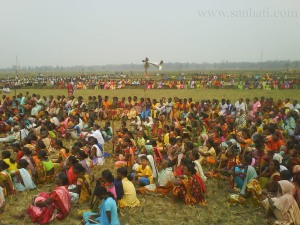
- Assembly in Lalgarh – Armed Maoists? Photo: courtesy sanhati.com
For five months now Lalgarh has been practicing a unique form of democratic politics. To the ruling CPI-M in West Bengal and the big media however, it has been nothing but a Maoist-sponsored agitation with portents of Maoist style violence. Except Bengal media, national print and television, have by and large kept Lalgarh out of their ambit of coverage. If at all news has trickled in, it has come tagged with ‘Maoists’ and ‘violence’; as if tribals in this forgotten part of Medinipur, the past five months, have been stocking up arms and laying ambushes to wage a war against the state.
A front-page article in the Times of India (TOI) today (April 22, 2009) sticks to this format describing Lalgarh as “Nandigram II, a liberated zone” where an explosive situation is building up with elections scheduled for April 30 and the Pulishi Santrash Birodhi Janashadharaner Committee (People’s Committee against Police Atrocities) refusing to allow the police to enter Lalgarh. “The police can’t enter here. Nor are other government officials welcome. This has been the situation for the last six months.”
Continue reading Lalgarh, Media and the Maoists: Monobina Gupta
The Art of Not Writing: Shubhranshu Choudhary
Shubhranshu Choudhary from Chhattisgarh:
How does the media in Chhattisgarh report the conflict between the Naxalites and the Salwa Judum, or the conflict between local communities and corporations? Quite simply, it doesn’t. The pressures on journalists in Chhattisgarh are unique. They are paid not to report stories that are critical of the powers-that-be, whether they are industrial lobbies or state authorities.
Posted on Free Binayak Sen Campaign
51% = legitimacy
With the elections around the corner, the First-Past-The-Post (FPTP) election system used in India is being blamed for most of the ills in the Indian political system. This post is the outcome of some of the discussions and conversations that Barun Mitra of the Liberty Institute and I have been having regarding the FPTP system.
Briefly, the FPTP system is based on the principle of “winner-takes-it-all” i.e., the candidate who gets majority of the votes is declared victorious. One of the most common criticisms made against the FPTP system is that candidates win by very narrow margins. It has been suggested that candidates must get at least 51% of the votes in order for their victory to be deemed as legitimate. It is interesting to note that so far in the history of elections in India, not a single candidate has been dismantled or at least challenged on the grounds that s/he won by 20% of the votes in the constituency. Therefore, is the criticism misplaced?
Both Barun and I want to suggest that narrow victory margins are in fact the strength of the Indian electoral system. This is because:
Typically, only 50% of the population in the constituency votes in any election. If the victorious candidate has won by 20% of the votes, he has actually received 40% of the votes (given that only 50% of the people are voting).
- The narrow victory margins keep the threshold of entry naturally low. This encourages aspirants to enter the electoral fray. If candidates won by 51% of the total votes, it would mean that political parties would have to field heavyweights and stalwarts and it would also discourage novices and independents from contesting the elections.
- The narrow victory margins intensifies political competition and keeps candidates and parties on their toes. New aspirants can cut into the vote bases of popular candidates and parties. Moreover, the narrow margins makes it imperative for candidates and parties to attract voters from various backgrounds and widen their appeal instead of confining themselves to gathering votes on the basis of identity and particularistic appeals.
A sham called election reporting
A ‘Kashmiri’ ‘Gurjar’ ‘Muslim’ is contesting the Dausa Lok Sabha seat. As an independent. For the simple reason that after delimitation, Dausa became a reserved constituency. Rerseved for the Scheduled Tribes. Meenas are ST’s. Gurjars wanted to be ST’s. Not only didn’t they not get that, they were deprived of Dausa, where the feudal PIlots had been Gurjar kings.
So someone thought of this simple idea: get a Kashmiri Gurjar. Kashmiri Gurjars are ST’s.
That candidate is campaigning around Dausa, and I gather that even the Brahmins of the area are supporting him! Him! A Kashmiri Muslim Gurjar! Continue reading A sham called election reporting
April 13 a Day of Ignominious Capitulation in Pakistan: HRCP
[The following is the text of a press release issued by Asma Jahangir, Chairperson of the Human Rights Commission of Pakistan on April 14, 2009. The formal adoption of the Nizam-e-Adl is widely perceived in Pakistan as a surrender to the Taliban and a way of imposing the Shariat Laws in the region. And for good reason. As it went up for approval to the National Assembly, the Taliban and the Tanzim Nifaz Shariat-e-Muhammadi (TNSM) warned parliamentarians against opposing the Nizam-e-Adl Regulation. Meanwhile, Jamaat-e-Islami Naib Amir Senator Prof. Khurshid Ahmad has criticized the liberal secular lobby for debunking the introduction of Nizam-e-Adl in Malakand Area.]
Lahore: The way the National Assembly resolved to back the Nizam-e-Adl Regulation for Malakand Division on Monday does no credit to the House, and the day will be remembered for the state’s humiliating submission to blind force, a statement by HRCP said on Tuesday.
Continue reading April 13 a Day of Ignominious Capitulation in Pakistan: HRCP
Unfair Wealth and Fair Elections
Poverty talk is common; wealth is taboo — even when crorepati candidates (millionaires, billionaires) are on the rise in elections today. There is no doubt whatsoever that our elections are conditioned by wealth, and the rich are thriving on the benefits drawn from their money power. Ironically however, in our people’s democracy, no calls for fair elections are considered credible unless they are accompanied by cries for reforms in the role of wealth and wealthy candidates in the elections. Chances are that the Indian elections of 2009 might get caught up in this credibility trap.
In the first phase of elections, data (affidavits) available of 1440 candidates out of a total of 1715, compiled and analysed by the National Election Watch, is revealing: There are 193 crorepatis contesting elections in this phase; they have increased from 9 percent in 2004 to 14 percent in 2009. Congress has 45, followed by BJP and BSP, with 30 and 22 respectively. All parties, including independents, share this burden. Andhra Pradesh, Uttar Pradesh, Maharashtra, Bihar, Jharkhand and Chhatisgarh have a majority of them. Their total assets go as high as 173, 125, 89, 72, 56, 45, 30 crores. Neither the earth, nor the sky is the limit. And the declared assets may just reveal a partial picture, considering the fact that most of them (979 candidates) do not even bother to have a permanent account number (PAN), which is necessary for filing annual income tax returns.
Swat Flogging and Public Outrage: Beena Sarwar
[This article was first published in Dawn 12 April 2009. It is reproduced here courtesy South Asia Citizens Web. The recent reports of the most spine-chilling instance of flogging of a young woman by Taliban goons unleashed a wave of indignation across Pakistan. This comment by Pakistani journalist Beena Sarwar is self-explanatory. For all the political illiterates and those given to anti-Muslim hate-speech in this country, this report and the innumerable discussions and posts on sites like Chowk, should indicate how much the Taliban and terrorism are hated and resisted by ordinary ‘secular’ people and women’s and human rights groups in Pakistan. They should indicate that ‘Islam’ and ‘being Muslim’ are themselves intensely contested ideas. But of course, we know that nothing can teach these hate-mongers anything, for they are the mirror-image of the Taliban. And as for us, as the old song goes: hum korea mein hum hain hindustan mein/ hum roos mein hain, cheen mein japan mein…And one might add: Pakistan mein bhi hain aur sare jahaan mein…
(There we are in korea and in hindustan/in russia we are, in china and in japan/and in pakistan too we are, we’re in the whole wide world…)
It is people like us there who must fight the Taliban, and people like them here who must fight the Hindutva fascists – always, relentlessly…Even when in the minority and especially when the political parties and leaders desert en masse. – AN]

In the “flogging video’s” undated footage shot with a cellphone in Swat (judging by the language and clothes) a man whips a woman in red, her pinned face down on the ground and encircled by men. The leather strap strikes her back as she cries out in pain.
The video, circulated on the Internet before local television channels broadcast it, caused a furore both in Pakistan and internationally. What caused the outrage? The public punishment meted out to a woman — or the fact that it was broadcast?
Continue reading Swat Flogging and Public Outrage: Beena Sarwar
Obama and the End of Other Dreams?
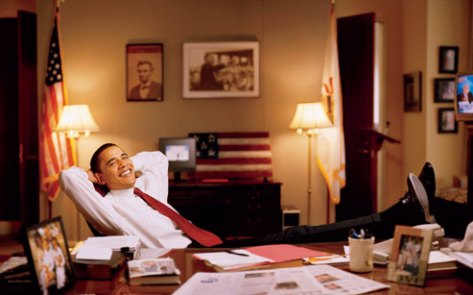
This guest post comes to us from NISSIM MANNATHUKKAREN
And I have seen the promised land. I may not get there with you. But I want you to know tonight, that we, as a people, will get to the promised land.
Martin Luther King, Jr.
Who Is Responsible For The Slaughter Of Civilians In The Vanni?: Rohini Hensman
guest post by ROHINI HENSMAN
With the military defeat of the LTTE imminent, the terrible plight of civilians in the Vanni has attracted worldwide concern and sympathy, and rightly so. While the circumstances are completely different, the civilian death toll in the Vanni over the past few months (over 2700) is already triple the number of civilians killed in the Gaza massacre of December-January, and is still mounting. The thousands who suffer serious injuries are further victimised by the delay or lack of medical attention, which means, for example, that injuries to limbs which could have been saved with prompt treatment, instead result in gangrene and amputations. Even those who have not lost lives, limbs or loved ones, have lost their homes and livelihoods, and live in appalling conditions which could well claim more lives through disease or even starvation.
Meanwhile, the LTTE and Government of Sri Lanka (GOSL) trade charges, each accusing the other of being responsible for the slaughter. What truth is there in their respective allegations? Continue reading Who Is Responsible For The Slaughter Of Civilians In The Vanni?: Rohini Hensman
Fighter for a Great Yesterday
Brand Advani: Perils of Rebranding
[It is for the first time in his nearly five year old tenure as PM that Prime Minister Manmohan Singh made a stinging attack on L. K. Advani – PM in waiting as far as the Sangh Parivar is concerned. Prime Minister was candid enough to remind about the “prominent role” played by Mr Advani in the Babri Masjid demolition, or how he presided over Gujarat riots and failed to prevent terror attacks on Parliament and Red Fort as Home Minister.]
1.
L.K. Advani, the ‘Swayamsevak’ from across the border, the hawk of the nineties or the rediscoverer of Jinnah wants to do a makeover. Not a day passes when we are presented with a new look of the old man who has already crossed eighties. Sudheendra Kulkarni, his speechwriter shared the understanding behind LKA’s rebranding mission. ‘Man of Eighties, Vision of Twenties’. If one day he is presented as an emotional patriarch who has no qualms in shading tears after seeing a movie the next day he is packaged as the man in his energetic twenties and shown raising dumbells at a gymnasium or the next day he is with a family in hospital which tried to committ suicide because of financial problems. Continue reading Fighter for a Great Yesterday
How to know if (when) your bank is insolvent
Analysing a bank’s financial statements is a bit like suing your family lawyer for malpractice; the jury may be on your side but the evidence is invariably circumstantial. However, in times such as these when even charities are screwed by their bankers – it is best not to trust anyone. Worry not, we at Kafila are not just concerned with playing theory-theory and pseudo-secular Hindu-bashing, we are also deeply concerned about the financial crisis – it has a direct impact on the bonuses taken home by our CEO and board-members. Accordingly, I offer you a simple step by step way to figure out when your bank will go under.Written in an easy conversational style, this post is an invaluable tool pedagogic for Kafila readers both young and old. Stay with me guys, this is going to be fun.
First a bit of background: In May 2008, Vikram Pandit finally stamped his authority on the behemoth company that he had been chosen to lead. Signalling a bold break from the past, he replaced Citigroup’s 2007 slogan “Let’s get it done” by reviving Citigroup’s 1970s slogan “The Citi Never Sleeps”. While the new/old ad campaign is sure to bring back memories of more profitable times, the firm’s precarious financial situation suggests that The Citi apart, Pandit won’t be getting much rest either. Mystery Question: What will it take to wipe Citi out?
Continue reading How to know if (when) your bank is insolvent
Silencing Social Activists
An escalating wave of attacks on social activists has been sweeping the country. Several recent incidents indicate an increase in the number of cases alleging grave human rights abuses against social activists, and a shift from low-level targeting, such as intimidation and harassment, to more serious violations, such as detention, prosecution, imprisonment and threats to their physical integrity. The authorities are also trying to silence them through unfair trial, denial of bail and long prison terms. There is excessive use of force, torture and other ill-treatment by the police. Women social activists are facing further violations, as women and as human rights defenders, including sexist verbal abuse and derogatory accusations. Continue reading Silencing Social Activists
The Arrest of Shamim Modi at Industrialists’ Behest
Activist Working for Rights of Tribal People Arrested
Ms Shamim (nee Meghani) Modi, a law graduate working among the tribals in Betul district, Madhya Pradesh, has had to pay a heavy price for taking up the cause of tribal people and other industrial workers. Shamim, who works with the Samajwadi Jan Parishad (an organization of socialist-Gandhian orientation) has been put behind bars in Hoshangabad jail for exposing the corrupt nexus between politicians and the mining mafia. She was arrested in gross violation of democratic rights on 10th February 2009 from her residence at Harda, M.P. The process of attempting to secure bail from M.P High Court is now on.
The arrest was made on false charges, one of instigating tribals to ‘attack forest officials’ and another of ‘kidnapping with the intention to kill’ these officials! These charges were brought against her (and her husband) two years ago in 2007. Subsequently no enquiries were conducted, and no follow-up was done but the fact that these charges hung over their heads was presumably meant to cow them down. These charges have suddenly been resurrected because the administration has been under pressure from industrialist lobbies. Earlier, the trial court had rejected her bail plea despite the fact that the person supposed to have been ‘kidnapped’ was said to be present in court and denied any such thing. Another evidence, if any was still required, of the deep nexuses of power that operate at these levels. Continue reading The Arrest of Shamim Modi at Industrialists’ Behest
Bailout or Bankruptcy?
With the economy in the doldrums, Barack Obama in the White House, and Elton John releasing a line of crystal encrusted Ipods for charity, it’s suddenly fashionable to talk about “Sacrifice” once more; a trend that senior management at General Motors seems to have picked up on. Their December 2, 2008 proposal to the Senate Banking Committee calls for sacrifices no less than nine times in twenty four pages from everyone including stake holders, share holders, bond holders, management, senior executives and in one instance, even the GM balance sheet (it has been asked to sacrifice leverage). That the Company wrangled out $13.4 billion from the TARP suggests an era in which nothing succeeds like sacrifice, but the accompanying term sheet suggests that the time for martyrdom has just begun.
A Fragile Peace in Nepal
In the six months that Maoist chairman Pushpa Kamal Dahal ‘Prachanda’ has been Prime Minister, he has realised that running a state is more complex than waging a war.
Since mid-August when he took charge, the PM has had to deal with multiple challenges – an intense ideological debate within his party; a deadlock in the peace process; breakdown of consensus with the G P Koirala led Nepali Congress (NC); acrimony between the defence ministry and Nepal Army (NA); opposition from sections of civil society suspicious of Maoist commitment to democratic norms; rampant lawlessness in the eastern Tarai and ethnic assertion in eastern hills; the collapse of basic services with 16 hour power cuts; and the impact of the global meltdown with remittances dipping. Continue reading A Fragile Peace in Nepal
Interview with Ragavan on Tamil Militancy (Early Years)
As the Tamil community in Lanka is at the crossroads with twenty five years of war nearing an end with the increasing marginalization of the LTTE, I would like to do a series of interviews on the social, economic and political conditions that led to the emergence of armed politics and militarization of the Tamil community. Returning to those years in the seventies and early eighties then is an attempt to also think about ways forward out of the militarized and armed politics of the last few decades. I intend to do a series of interviews to capture that important political period for Lankan Tamils. This important shift in Lankan politics and the decades of war that followed it did irreparable damage to the Lankan Tamil community and all the peoples of Lanka.
I begin with an interview of Ragavan, a founding member of the LTTE, who left the movement in 1984 and has since moved to London where he lives in exile. In this first interview, Ragavan speaks about his background and early years of militancy.
This is an interview by Ahilan Kadirgamar of Ragavan at his London home on 25 January 2009. Continue reading Interview with Ragavan on Tamil Militancy (Early Years)
Why Mulally can af-Ford to dilly dally
Vodpod videos no longer available.
more about “Una-ford-able Risk?“, posted with vodpod
You know it’s been a bad season for auto sales when the Chief Executive of Ford personally calls you up when you buy a car. Michael Snapper, a lawyer from Grand Rapids Michigan, received such a call from Ford Chief Exec Alan Mulally to thank him for choosing a 2010 Ford Fusion hybrid over rival Toyota Motor Corp.’s wildly popular Prius. Snapper was quoted as saying that Mulally’s actions “reflect a new attitude and a real commitment” to improving the company. Given that US auto sales plunged 38 % in January and Ford’s sales fell 39 %, Mulally is going to have to make a lot more calls if he hopes to save the company.
India’s Terror Dossier. Further Evidence of a Conspiracy: Raveena Hansa
This guest post has been sent to us by RAVEENA HANSA
On 5 January 2009, the Indian government handed a 69-page dossier of material stemming from the ongoing investigation into the Mumbai terrorist attacks of 26-29 November 2008 to the Pakistani government. This was subsequently made accessible to the public, so it is possible for us to examine it.
The most striking point about the dossier is its vague and unprofessional character. Enormous reliance is placed on the interrogation of the captured terrorist, Mohammed Amir Kasab, despite the fact that there is an abundance of other evidence – eyewitness accounts, CCTV and TV footage, forensic evidence, etc. – which could have been called upon to establish when, where, and what exactly happened during the attacks. This gives rise to the suspicion that the interrogation is being used as a substitute for real investigation because it can be influenced by intimidation or torture, whereas other sources of evidence cannot be influenced in the same way.
Continue reading India’s Terror Dossier. Further Evidence of a Conspiracy: Raveena Hansa

