Tag Archives: Jawaharlal Nehru

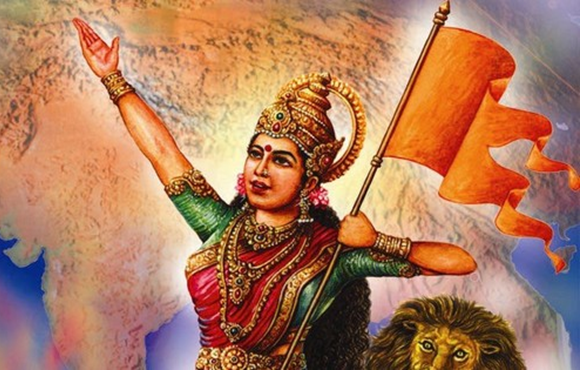
हिन्दुत्व के कल्पना-लोक में स्त्री और RSS के लिए उसके अतीत से कुछ सवाल

[मध्ययुग में पश्चिमी जगत में आधुनिकता के आगमन ने धर्म के वर्चस्व को जो चुनौती दी थी, भारत में अंग्रेजों के आगमन के बाद पैदा हुई परिस्थितियों और राजनीतिक आजादी ने यहां धर्म के प्रभाव को और अधिक सीमित कर दिया। रूढ़िवादी, प्रतिक्रियावादी ताकतों ने समय-समय पर इस बदलाव को बाधित करने की कोशिश की। संविधान निर्माण से लेकर स्त्रियों को अधिकार-संपन्न करने के लिए ‘हिन्‍दू कोड बिल’ को सूत्रबद्ध एवं लागू किए जाने का हिन्दुत्ववादी ताकतों ने जिस तरह से विरोध किया, ऐसी ही बाधाओं का ही परिणाम रहा कि डॉ. आंबेडकर को नेहरू के मंत्रिमंडल से इस्तीफा देना पड़ा। यह आलेख संविधान-निर्माण के दौरान स्पष्ट तौर पर उजागर हुए राष्ट्रीय स्वयंसेवक संघ के स्त्री-विरोधी विचारों एवं सक्रियताओं की पड़ताल करता है]

वह 1936 का साल था, जब राष्ट्रीय स्वयंसेवक संघ (RSS) के विचारों एवं कार्यों से प्रभावित होकर नागपुर निवासी लक्ष्मीबाई केलकर (1905-1978) ने संघ के संस्थापक सदस्य डॉ. केशव बलिराम हेडगेवार से मुलाकात की और संघ से जुड़ने की इच्छा जाहिर की थी। सुश्री केलकर- जिन्हें बाद में लोग मौसीजी नाम से पुकारने लगे थे- को यह कतई उम्मीद नहीं रही होगी कि संघ सुप्रीमो इस प्रस्ताव को ठुकरा देंगे और उन्हें सिर्फ स्त्रियों का संगठन बनाने की सलाह देंगे। ‘’राष्ट्र सेविका समिति’’ की स्थापना की यही कहानी बताई जाती है, जिसे आरएसएस का पहला आनुषंगिक संगठन भी कहा जा सकता है।

राष्ट्र सेविका समिति की जब स्थापना हुई, तब RSS का निर्माण हुए 11 साल का वक्फा गुजर चुका था। वह दौर औपनिवेशिक शासन के खिलाफ तथा सामाजिक उत्पीड़न से मुक्ति के लिए उठी हलचलों का था, जिसमें स्त्रियों ने बढ़-चढ़ कर हिस्सा लिया था। भारतीय राजनीतिक-सामाजिक जीवन में जबरदस्त सरगर्मियों के इस दौर में संघ संस्थापक महानुभावों में से किसी को भी यह खयाल तक नहीं आया था कि आबादी का आधा हिस्सा स्त्रियां उनके नक्शे से गायब हैं। वैसे, उन्हें इस बात का एहसास होता भी कैसे क्योंकि इन दोनों किस्म की हलचलों से उन्होंने दूरी बना कर रखी थी और अपने बेहद संकीर्ण व असमावेशी नजरिये के तहत संगठन बनाने में जुटे थे। धर्म आदि के आधार पर जिन्हें वह ‘अन्य’ समझते थे, उनको लेकर अपनी एकांगी सोच के प्रचार-प्रसार में सक्रिय थे। ( Read the full article here : :https://followupstories.com/politics/women-in-hindutva-ideological-realm-and-historical-blunder-of-rss/)

Towards a ‘Suitable’ Ambedkar and a ‘New’ Dalit ! 

How Ten Years of Modi Regime Has Undermined Constitutional Rights to Dalits

Image courtesy: Wikimedia commons

If the fundamental rights are opposed by the community, no Law, no Parliament, no Judiciary can guarantee them in the real sense of the word”,..“What is the use of fundamental rights to the Negro in America, to the Jews in Germany and to the untouchables in India. As Burke said there is no method found for punishing the multitude’

– Ambedkar

Introduction

Within less than a fortnight we will have a new government in power.

Indian people normally make a judicious choice while electing their representatives, their government and this year won’t be different.

One can recall their wisdom when their united resistance helped unseat Indira Gandhi regime after the emergency (1977) or their concerted action could overthrow the Vajpayi government ( 2004) despite the much hyped ‘India Shining’ rhetoric pushed by it.

Today also ground currents definitely suggest change is in the air.

People’s desire to defeat the Republic of Hate which is pushed before them and regain their Republic of Hope seems overwhelming. 

As already expressed by scholars, political activists, concerned citizens, if the elections remain free and fair, if the various guardrails of democracy can remain true to their mandate , we will have real ‘Acche Din‘ waiting for us.

It is an opportune time to look back and see how this much trumpeted regime fared in the last decade in various aspects of India’s society and state.

It is opportune to see how the ‘New India’ – which we have supposedly ushered in – has fared via-v-vis Dalits. What follows is not an exhaustive picture of the last decade of Modi rule but a cursory glance at the issue at hand.

Perhaps it would be opportune to begin with RSS Supremo Mohan Bhagwat’s interview in the wee hours of Modi’s reign as PM. ( Read the full article here : https://countercurrents.org/2024/05/towards-a-suitable-ambedkar-and-a-new-dalit-how-ten-years-of-modi-regime-has-undermined-constitutional-rights-to-dalits/

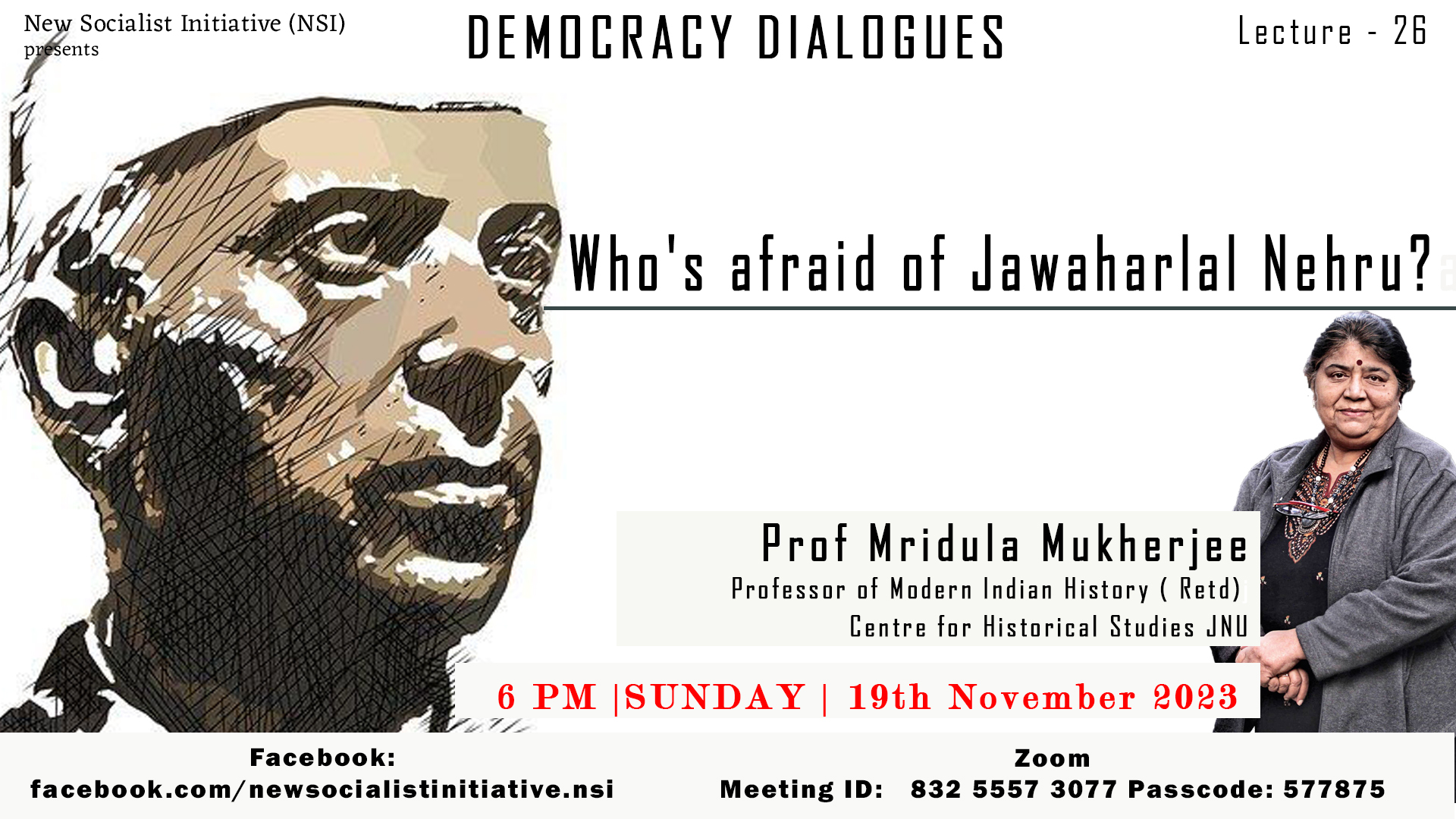
‘Who’s Afraid of Jawaharlal Nehru?’ Mridula Mukherjee – Lecture notice

Professor Mridula Mukherjee, Professor of Modern Indian History ( Retd), Centre for Historical Studies, JNU, will be delivering the 26 th Democracy Dialogues Series lecture on Sunday, 19 th November 2023 at 6 PM (IST).

Theme :
Who’s Afraid of Jawaharlal Nehru?
Time: Nov 19, 2023 06:00 PM India

Join Zoom Meeting
https://us02web.zoom.us/j/83255573077?pwd=RXdiblVjcWZaeDdqVmJaSjI3aW9Qdz09

Meeting ID: 832 5557 3077
Passcode: 577875

Also live streamed at: facebook.com/newsocialistinitiative.com
——————
Theme : 
‘Who’s Afraid of Jawaharlal Nehru?’

Summary :
In his lifetime, Jawaharlal Nehru was recognized the world over as a statesman and an Indian leader second only to Gandhiji. A foremost leader of the freedom struggle, who gave it a decided socialist orientation, he remained unrivaled as Prime Minister after independence and built the solid foundations of a sovereign, secular, democratic, and egalitarian republic. He evolved the concept of non-alignment which enabled many ex-colonial countries to avoid becoming a part of the two power blocs engaged in the Cold War.

However, he is today the favourite whipping boy of the establishment.  We are told he was responsible for the partition, for the mess in Kashmir, for the death of Subhash Bose, for delaying the integration of Hyderabad, and of Goa, for the defeat at the hands of China in 1962, for neglecting agriculture, and primary education, and much else. The reason for the defamation is of course that he stood for the exact opposite of what is valued today. His life and work present a continuous question mark to the regressive trends in fashion.

This will become evident as we focus in the talk especially on two areas of great relevance today in which we are facing a grave crisis: Democracy and Civil liberties, and Communalism/Secularism. We will also focus attention on Nehru’s evolving understanding of  Mahatma Gandhi’s vision and method of non-violent struggle, of which he became the most ardent advocate after his death.

Speaker :

Author of many books, Prof Mukherjee has been a visiting Scholar at Duke University, USA, and at the Institute of Oriental Culture, University of Tokyo and was also Director of Nehru Memorial Museum and Library, ( NMML), New Delhi.
She has published widely in the areas of agrarian history, peasant movements, social movements and the Indian national movement.

Here is a list of a few of her publications :
Colonializing Agriculture, The Myth of Punjab Exceptionalism Sage (2005) ;  Peasants in India’s Non Violent Revolution : Practice and Theory (Sage 2004).

This list also includes India’s Struggle for Independence (1999) and India After Independence 1947–2000 (2000), RSS, School Texts and the Murder of Mahatma Gandhi The Hindu Communal Project (2008) co-authored with Prof Bipan Chandra and others.

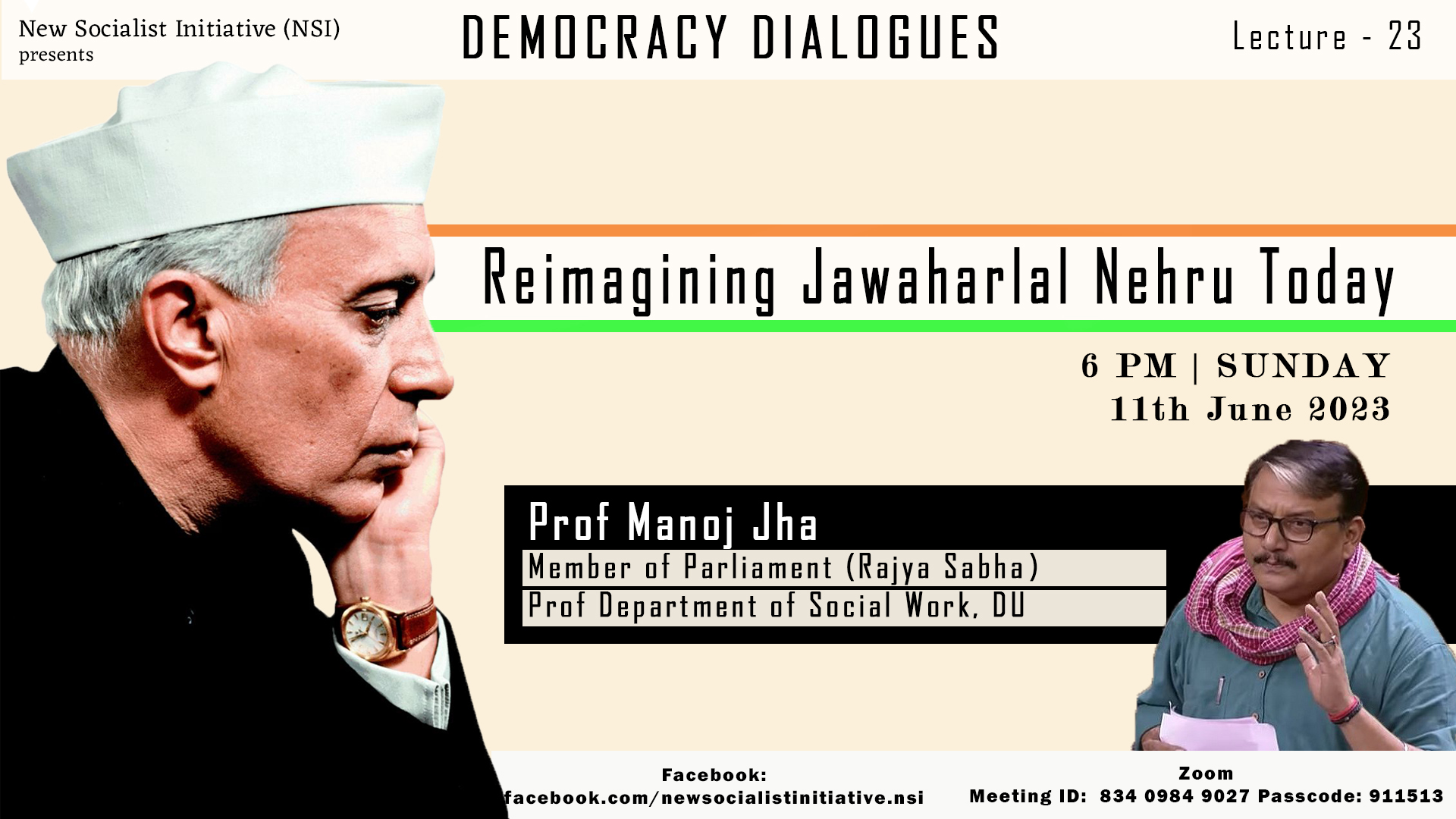
Reimagining Jawaharlal Nehru Today

 https://youtu.be/041eWWvhC1c

Prof Manoj Kumar Jha, who is a National Spokesperson of the Rashtriya Janata Dal, (RJD), and a Member of Parliament in Rajya Sabha ( upper house of the Parliament) who works as a Professor at the Department of Social Work, Delhi University, Delhi has kindly agreed to deliver the 23 nd lecture in the Democracy Dialogues Series , organised by New Socialist Initiative.

He will be speaking on ‘Reimagining Jawaharlal Nehru Today’ on Sunday, 11 th June, 2023 at 6 PM.

The lecture will also be live streamed at facebook.com/newsocialistinitiative.nsi

Topic :

Reimagining Jawaharlal Nehru today would involve examining his legacy and contributions in the context of the present day. Nehru, the first Prime Minister of India, played a crucial role in shaping the country’s political, economic, and social landscape after its independence in 1947. While we reimagine today presuming he was here we shall have to look at our parliamentary democracy and the core policy issues which have undergone so much of change that he would disown. The idea is to speak about some of the critical concerns we face as a nation through the Nehruvian lens. 

Speaker:

Prof Manoj K Jha, who is a National Spokesperson of the Rashtriya Janata Dal, (RJD), and a Member of Parliament in Rajya Sabha is a leading voice of the opposition.

A consistent votary of the idea of social justice and a strong opponent of the politics of majoritarian authoritarianism, his debates and interventions in the Upper House of the Parliament are appreciated across the political spectrum and are widely watched.

Prof Jha, is a very popular teacher in the Delhi University, was also head of the Department of Social Work, Delhi University , for a few years.

Jawaharlal Nehru and the Current Challenge to the Idea of India : Prof aditya mukherjee


The fourth lecture in the Democracy Dialogues series organised by New Socialist Initiative was  delivered by eminent scholar Prof Aditya Mukherjee, Centre for Historical Studies, JNU who is also editor of the ‘Sage Series in Modern Indian History’

Theme :
Jawaharlal Nehru and the Current Challenge to the Idea of India
Sunday, November 15, 2020
Facebook.Com / newsocialistinitiative.nsi
Abstract :

In this talk I will look at how Jawaharlal Nehru tried to implement the vision of our national liberation struggle, which was reflected in our Constitution.  Critical elements of this vision were the creation  of a sovereign, secular, inclusive, democratic and pro-poor state. There was a consensus among the entire  Nationalist spectrum, from the Left to the Right on all these elements. While there was a consensus on the “pro-poor” aspect, from the early nationalists to Gandhiji to socialists and communists, there was no consensus on the idea of socialism, though a large and growing section was moving towards that objective. (The communalists and other loyalists who claimed to represent sectional interests, naturally did not share any aspect of this vision).

I will seek to outline how Nehru undertook the stupendous and in many respects historically unique task of creating a modern democratic nation state in a plural society, left deeply divided through the active collusion of the colonial state; of promoting modern industrialization within the parameters of democracy and sovereignty in a backward and colonially structured economy; of finding the balance between growth and equity in an impoverished, famine-ridden country; of empowering the people and yet expecting them to tighten their belt for the sake of the nation as a whole; of promoting the highest level of scientific education, a field left barren by colonialism; in short, of un-structuring colonialism and bringing in rapid economic development but doing it consensually, without the use of force, keeping what has been called the “Nehruvian consensus” intact in the critical formative years of the nation. I will also briefly discuss Nehru, who was deeply influenced by Marxism, tried to creatively move towards the socialist objective without compromising on the non-negotiable principle of democracy; though with limited success because of  a variety of reasons.

I shall end with reminding ourselves that, in these days of trying to erase Nehru’s memory altogether or to remember him in an unrecognisable demonised image created though false propaganda, much can be learnt from the legacy left behind by Nehru’s ideas and practice by those who wish to struggle to meet the current challenges to all the pillars of the Idea of India.
Sun, 15 Nov at 06:00 GMT+05:30
[https://www.youtube.com/playlist?list=PLtXBfoS5KZ78UFI_aYzROjUss8ZzhUKxy
This is the link of the playlist where you can find all the democracy dialogues video.]


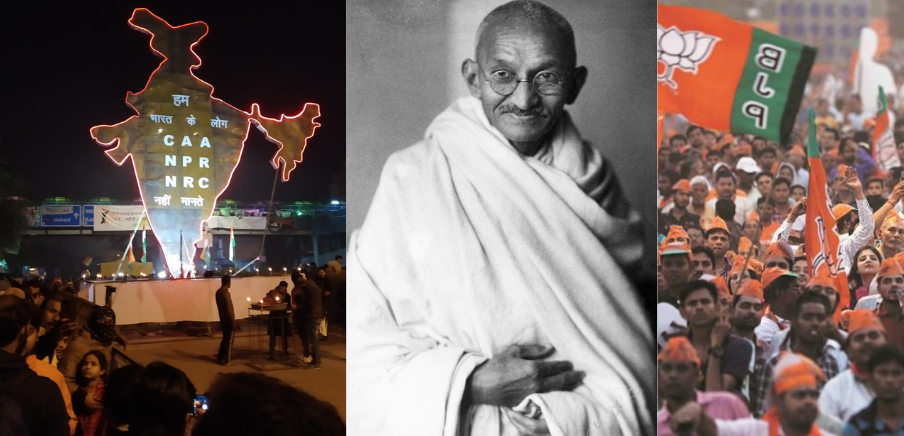
Gandhi and the Hindutva Right

From Nehru to Patel and Ambedkar, the saffron party has appropriated freedom-fighters or tarnished legacies. Gandhi, however, poses a different problem.

Why BJP’s Subjugation of Gandhi

Death ends all enmity’ (Marnanti Vairani) goes a maxim in Hinduism.

The story also goes that when Ravana was on death bed, Ram had even asked Laxman to go to him and learn something which no other person except a great scholar like him could teach him, declaring that though he has been forced to punish him for his terrible crime, ‘you are no more my enemy’.

It is a different matter that Hindutva supremacists — who are keen ‘to transform Hinduism from a variety of religious practices into a consolidated ethnic identity’ — are believers in the exact opposite.

For them, once the enemy is dead, the enmity flares up without any limits. They have no qualms that their adversary is no more to defend himself/ herself.

It has been more than five and half years that they are in power at the Centre and we have been witness to complete vilification, demonisation and obfuscation of many of their adversaries, all great leaders of the anti-colonial struggle. Of course, few were found to be ‘lucky’ enough that were promptly co-opted/appropriated by them, of course, in a sanitised form.

( Read the full article here : https://www.newsclick.in/BJP-Subjugation-Gandhi-Legacy-Roadblock-Shaheen-Bagh

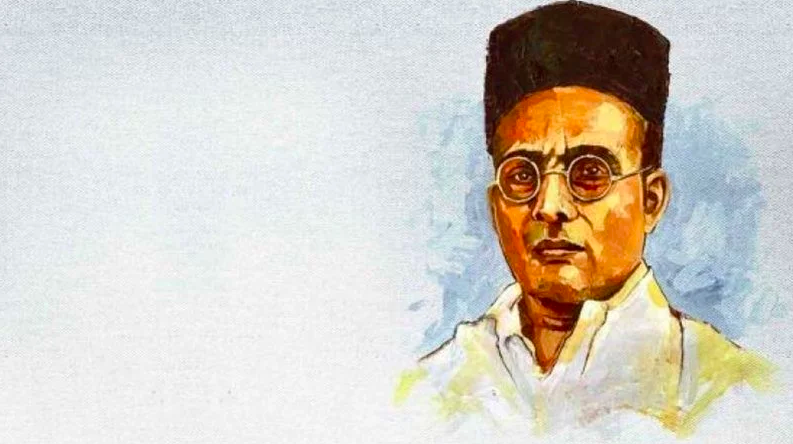
Humko Savarkarich Mangta

Jinnah propounded his two-nation theory in 1939—exactly two years after Savarkar presented it.

Savarkar

Who could have been the best prime minister of independent India? 

Nehru or (Vallabhbhai) Patel?

For more than last five years, we have been a witness to this manufactured debate—courtesy Bharatiya Janata Party (BJP), which has tried all the tricks in its kitty to create a false binary between these leading stalwarts of independence movement, who called themselves ‘Gandhi’s sipahis’.

Anyway, thanks to the differences of perception within the saffron fraternity, a new competitor to Sardar Patel seems to have emerged from within the Hindutva Brigade who is being projected as someone who would have been a “better PM”.

Uddhav Thackreay, chief of Shiv Sena and at present, a junior ally of the BJP in Maharashtra, recently made his choice clear by stating that if Veer Savarkar would have become the prime minister, “Pakistan would not have come into existence”. At a book release event, he even refused to call Nehru a Veer (courageous), making a rather provocative statement: ‘I would have called Nehru brave if he would have survived jail for 14 minutes against Savarkar who stayed in the prison for 14 long years.’

Definitely, the fact that Nehru spent more than nine years in different jails of the colonialists without ever compromising his basic principles—whereas, the 14 years spent by Savarkar were interspersed with mercy petitions sent by him to the British, wherein he had even expressed his readiness to ‘serve the government in any capacity they like’—did not bother him at all.

( Read the full article here : https://www.newsclick.in/humko-savarkarich-mangta

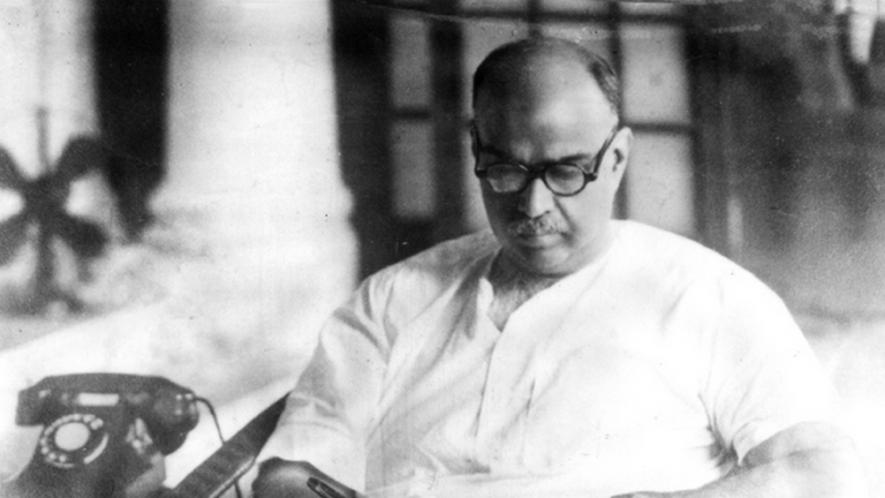
“Selfless Patriot” – In Search of the Real Shyama Prasad Mukherjee

Shyama Prasad

It has been said with good reason that the Jana Sangh resulted from a combination of a partyless leader, Syama Prasad Mookerjee, and a leaderless party, the RSS”.

(The Jana Sangh: A Biography of an Indian Political Party, by Craig Baxter p. 54) 

1.

In Search of the “Selfless Patriot”

An untimely death of a political leader — whose career is just blossoming — is always a loss to the party they belong to, the ideology they espouse, or the cause(s) they pursue. It also leaves the field open for political pundits of different shades to make all sorts of speculations, or to involve themselves in endless deliberations about what would have been the future of the formation if the said person hadn’t died.

The death of Shyama Prasad Mukherjee (06 July 1901 – 23 June 1953), founder of Bharatiya Jana Sangh (precursor to the BJP), at the relatively young age of 52 years, can be considered one such loss for the project he had undertaken. One cannot stop thinking about how the party he helped found after resigning from Hindu Mahasabha would have developed had he remained alive. His differences with the Hindu Mahasabha, which he even led in 1944, were political in nature, and stemmed from the considered opinion that it abandoned its exclusivist character.

However, to his legatees, who are always bothered very little by the nuances and niceties, he is a leader who provides them a fig leaf to counter the criticism that they had played no role in freedom struggle, or had no place in the comprehensive list of ‘makers of modern India’. Their ascension to the citadel of power has provided them with ample opportunity to project him as a key figure in the ‘Making of India’. (https://thewire.in/politics/search-syama-prasad-mookerjee-true-patriot)

In addition to that, by repeatedly claiming that ‘history failed to serve justice to Mukherjee,’ they are able to easily target Jawaharlal Nehru, the first Prime Minister of India, who played the key role in institutionalising democracy after the assassination of Mahatma Gandhi and early demise of Sardar Patel, and was aware that any leeway to Hindu Supremacist ideology would lead India into becoming a mirror image of Pakistan — a Hindu Pakistan.

( Read the full article here : https://newsclick.in/selfless-patriot)

Confronting Gandhi’s Ghost

” I imagine you believe that he was for the most part adored; in fact he was hated and he is still hated today. Hatred is still alive in India and he died of it. Those who were for mostly from those what is called the scheduled castes, those who belonged to the gutters with whom he had sided. Yet he did not ask anything of anyone; he simply went his own way….But the simple fact that he lived according to his own law—which was ascetic and demanding of himself was something people could not tolerate.”  French writer Helene Cixous turns to Gandhi to compare his life with the ways of writing that “may hurt, may dissatisfy and give the feeling that something is taken away.”

Continue reading Confronting Gandhi’s Ghost

नेहरू कौन?

“नेहरू के बाद कौन ?” आज से पचास साल पहले यह सवाल रह-रह कर पूछा जाता था. भारत के राजनीतिक पटल पर ही नहीं, उसके दिल-दिमाग पर नेहरू कुछ इस कदर छाए थे कि अनेक लोगों के उनकी अनुपस्थिति की कल्पना करना कठिन था. लेकिन किसी भी मरणशील प्राणी की तरह नेहरू की भी मृत्यु हुई और लालबहादुर शास्त्री ने उनकी जगह प्रधान मंत्री का पद संभाला. यह बात बहुत कम लोग जानते हैं कि खुद नेहरू ने शास्त्रीजी का नाम अपने उत्तराधिकारी के रूप में सुझाया था और उनके गुण गिनाते हुए कहा था कि उनकी कद काठी और विनम्र व्यक्तित्व से इस भ्रम में न पड़ना चाहिए कि उनके अपने विचार नहीं हैं, वे स्वतंत्र मत के मालिक हैं और अत्यंत ही दृढ़ स्वभाव के व्यक्ति हैं. दूसरे, उनमें भिन्न प्रकार के लोगों को साथ लेकर चलने का गुण है, जो नेहरू के मुताबिक भारत का नेतृत्व करने के लिए अनिवार्य शर्त थी.

नेहरू के बाद कौन के साथ ही बार-बार यह सवाल भी उठता था कि उनके बाद क्या होगा. कवि मुक्तिबोध, जो मार्क्सवादी थे, इस आशंका से इस कदर पीड़ित थे कि स्वयं अपनी मृत्यु शय्या पर भी नेहरू के स्वास्थ्य के समाचार के लिए व्याकुल रहते थे. ‘अंधेरे में’ कविता में वे सैन्य शासन की आशंका व्यक्त करते हैं. Continue reading नेहरू कौन?

Elections, Propaganda and Education

The Aam Aadmi Party was reluctant to include the issue of the rights of the LGBT people in its Delhi manifesto due to strategic reasons. Explaining the absence, the party officials said that conservative voters might turn away from the party if they find it supporting the LGBT cause. The LGBTs also seem to ‘understand’ the constraints of the poor party. The election meetings could have served as a wonderful platform had the party decided to talk to the people about this issue, telling them why it is important for us to ensure liberty to individuals to decide about their bodies. It would have been an educational exercise. Given the fact that people are ready to listen to this new party and its ideas, this reluctance on its part to take up this role says a lot not only about it, but also about the health of our polity.

The AAP candidate challenging Rahul Gandhi is harping on the bad condition of the roads of Amethi and lack of electricity there. One wonders whether Rahul Gandhi, in his response, would have the courage of a now-forgotten former Congressman. Abdul Ghafoor, once Chief Minister of Bihar, was campaigning in Siwan in a Parliamentary election. At a meeting, voters started complaining about the bad condition of roads and sanitation. He told them bluntly that he was there to seek their approval for his candidature for the membership of the Parliament and they should not waste their votes on him if they expected him to fix these problems. The problems they cited were something a municipal councilor was supposed to look after. It is a different story that he lost the election. Continue reading Elections, Propaganda and Education

भगत सिंह और गांधी

क्या भगत सिंह और गांधी पर एक साथ बात की जा सकती है? परस्पर विरोधी विचारों और व्यक्तित्वों का ऐसा युग्म शायद ही मिले.एक को हिंसा का पक्षधर और दूसरे को हिंसा का घोर विरोधी माना जाता है.एक की छवि चिरयुवा की है,दूसरे की एक स्थिर वार्धक्य की. एक अधैर्य का प्रतीक माना जाता है,दूसरा धीरज की प्रतिमूर्ति.एक समाजवादी क्रान्ति का पैरोकार है तो दूसरा सह्य पूंजीवाद का वकील ठहराया गया है जिसके लिए उसने ट्रस्टीशिप की खूबसूरत आड़ ली.

असमानताएं यहीं खत्म नहीं होतीं.भगत सिंह ने औपचारिक शिक्षा न के बराबर ली, हालाँकि वे भयंकर अध्ययनशील थे,गांधी ने एक भले इंसान की तरह पूरी पढ़ाई की और फिर एक पेशेवर वकील की ज़िन्दगी बसर करने की कोशिश की. भगत सिंह अपनी पारिवारिक पृष्ठभूमि के कारण बचपन से ही ब्रिटिश साम्राज्य के घोर विरोधी थे.गांधी के जीवन के आरंभिक वर्ष ब्रिटिश साम्राज्य के वफादार के थे और वे उसकी बुनियादी अच्छाइयों में यकीन करते थे.भगत सिंह का ब्रिटिश हुकूमत के खिलाफ होना ही स्वाभाविक और तर्कसंगत था, गांधी कई संयोगों और दुर्घटनाओं के रास्ते इस नतीजे पर पहुंचे. Continue reading भगत सिंह और गांधी

भगत सिंह और आज का नौजवान: अपूर्वानंद

कभी कभी हर समाज में ऐसे क्षण  आते हैं जब उसे अपने अस्तित्व के तर्क की पड़ताल करनी पड़ती है. उस समय वह अपने किन बौद्धिक संसाधनों का प्रयोग करता है और किन स्रोतों से तर्क की सामग्री जुटाता है, यह  काफी महत्वपूर्ण है.क्या एक समाज के रूप में भारत के लिए अभी ऐसा ही कोई क्षण उपस्थित हो गया है? एक ऐसा तबका है जो भारत नामक किसी एक सामाजिक इकाई के बौद्धिक औचित्य को ही नहीं मानता. उसकी बात जाने दें.भारत अभी भी अनेकानेक लोगों के लिए एक यथार्थ है जिसकी अपनी भावनात्मक और बौद्धिक वैधता है.वे उसे बार-बार समझने और अपने लिए आयत्त करने की कोशिश करते हैं.इस क्रम में वे किनकी ओर  देखते हैं? Continue reading भगत सिंह और आज का नौजवान: अपूर्वानंद

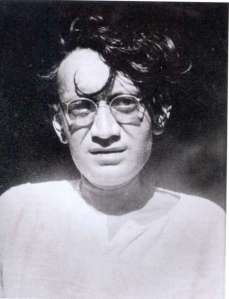
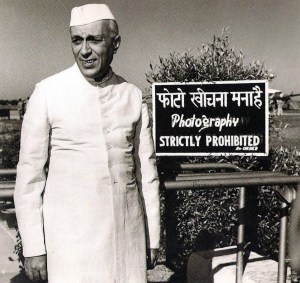
Pundit Manto’s First Letter to Pundit Nehru

This is M. ASADUDDIN‘s translation of a letter written by SA’ADAT HASAN MANTO to Jawaharlal Nehru in 1954. This translation first appeared in The Annual of Urdu Studies (volume 11, 1996).

Pundit-ji, assalamu alaikum!

This is the first letter I’m sending you. By the grace of God you’re considered very handsome by the Americans. Well, my features are not exactly bad either. If I go to America, perhaps I’ll be accorded the same status. But you’re the Prime Minister of India, and I’m the famed story writer of Pakistan. Quite a deep gulf separating us! However, what is common between us is that we are both Kashmiris. You’re a Nehru, I’m a Manto. To be a Kashmiri is to be handsome, and to be handsome … I don’t know. Continue reading Pundit Manto’s First Letter to Pundit Nehru