Category Archives: Debates

India is Hungry: Who is Listening?

Hunger is a matter of structural anomalies. It cannot just be explained away by who holds the reins of power.

Starvation Deaths Continue to Occur in UP

Image Courtesy: Sabrang India

The “good news” is that India now stands at the 94th position on the Global Hunger Report 2020’s ranking of 107 countries. India has improved several notches over its 102nd rank last year, but is still firmly in the category of countries with a “serious” hunger problem. Only a handful of countries are doing worse than India, such as Rwanda (ranked 97), Afghanistan (99), Mozambique (103) and Chad (107).

The “good news” cannot hide the fact that that with an overall score of 27.2 India has performed worse than its neighbours, Pakistan (ranked 88), Bangladesh (75), Nepal (73) and Indonesia (70).

Seen any way, India has spent yet another year failing to tackle its massive chronic hunger problem. According to official figures, more than 14% of the population is undernourished and the child stunting rate is over 37.4%. One supposes this fits in with the strong belief in some quarters that India is a Vishwa Guru—teacher to the world—and can boldly claim to be a superpower in future.

The situation is such that news of starvation deaths is not uncommon despite excess of food grains stored in the godowns of the Food Corporation of India. Thousands of tonnes of these food grains go waste every year for a number of equally unjustifiable reasons.

(Read the full article here)

Postcolonial Critiques of Modernity : Dr Ravi sinha

( New Socialist Initiative presents the 2nd Lecture* in the Series on Modernity, 18 th October 6 pm IST)

*Youtube Link to the first lecture : https://youtu.be/J5m7Z-I8jPg


Continue reading Postcolonial Critiques of Modernity : Dr Ravi sinha

Petition to Ban Toxic News Channels

The following petition initiated by Prof Apoorvanand ; Bhasha Singh, Journalist/Activist ; Jitendra Kumar, Senior Journalist ;  Mahendra Mishra, Editor, Janchowk and Subhash Gatade appeals to the Associated Chambers of Commerce and Industry of India (ASSOCHAM), The Confederation of Indian Industry (CII), The Dalit Indian Chamber of Commerce & Industry (DICCI) and The Federation of Indian Chambers of Commerce & Industry (FICCI) to boycott toxic new channels.  The petition can be signed here :

It is a welcome sign that two prominent business houses, namely Bajaj Auto and Parle have taken the WELCOME DECISION to not advertise on TV channels spreading hatred. We urge all the advertisers to BOYCOTT HATE MONGERS, because the history is witness that the hate ruins the whole society and does not spare anyone, however rich and high and mighty a person may be. Let us remind ourselves the unforgettable words of Pastor Martin Niemoller that he spoke on emerging from the Nazi prison: “… When they came for me, there was none left to protest”. Don’t ask for whom the bell tolls, it tolls for thee.

These corporates need to recall that not long ago when Black Lives Matter movement was at its peak in the West, more than 1,000 companies had decided to boycott a section of social media platforms for their dubious stand on race.

We are aware of the background: The qualitative changes – for the worse – that have taken place in the Indian media, especially the electronic variant during last few years. The ownership of the large media houses has become limited to a few big players. And these big corporates are not concerned with the concerns of the common people, and use the media for their own and their political masters’ vested interests by focusing on non-issues and indulgence in sensationalism, false propaganda and hatred – thereby actively participating in the destruction of social unity in diversity among Indians that has existed despite any and every difference of class, caste, gender, region, religion, language, ideology or any other.

Without going back to the times when the lynching became the new political weapon – with the accused being welcomed by the ruling party leaders and even minister – during the last few months, we saw that in order to deflect attention from the catastrophe that had befallen on the people in general but migrant labour in particular because of the COVID-19 pandemic and to advance the agenda of demonizing Muslims – a la Jews in Nazi Germany – how ‘Tablighi Jamat’ was willfully portrayed falsely as the ‘corona jehadi’ and what not. Then, we witnessed the suicide of Sushant Singh Rajput being transformed into an endless ‘issue’, and the less said about the latest Hathras gang-rape, the better – the bizarre brazenness of hate-speech and hate-driven crime is unmistakably on the rise!

HIGH TIME THAT BOYCOTT OF HATE MONGERS BECOMES A COLLECTIVE PRACTICE!

A history of conservative strike on books

Even in a future in which books are outlawed, ideas cannot be vanquished.

Nazi's Boook burning

“You may burn my books and the books of the best minds in Europe, but the ideas those books contain have passed through millions of channels and will go on,” wrote Helen Keller, in An Open Letter to German Students in 1933. Keller’s How I Became a Socialist was on the list of books to be burned. “History has taught you nothing if you think you can kill ideas. Tyrants have tried to do that often before, and the ideas have risen up in their might and destroyed them,” she wrote.

Today you cannot perhaps have campaigns like Nazi’s book burnings, nor can books disappear off the shelves as they did in the United States during the McCarthy era. Yet the powers that be have thought of ingenious ways to stop people from reading books.

A recent order by the department of education in Britain needs to be seen in this context. It has ordered schools in England to stop accepting funds from groups or organisations which have expressed the desire to end capitalism. Anti-capitalism is seen by the department as an “extreme political stance”, similar to opposing freedom of speech, anti-Semitism and endorsing illegal activities.

( Read the full text here)

Hathras and Beyond: the Upper Caste Counter-Revolution


If the post-Mandal Dalit Bahujan upsurge was an expression of the democratic revolution, the advent of Adityanath’s BJP government constituted the beginning of a counter-revolution that is on the way to consolidating itself in Uttar Pradesh.

Police at the Delhi-UP order, image courtesy The Print

The facts of the case are well known, even though the Yogi Adityanath government in Uttar Pradesh is trying, ever so hard, to produce a different narrative by resorting to the usual Hindutva tactic of assigning it to an international conspiracy. It is typical of the utterly farcical and shoddy nature of the Indian police (and maybe indicates the regime’s over-confidence) that it in the name  of collecting evidence of the conspiracy, it has done a cut-and-paste job from an American site, even forgetting to delete references to ‘NYPD’ and ‘white supremacism’! Incidents of gang-rape and murder have since also happened elsewhere in the state, notably in Balrampur and Bulandshahr. We are witnessing the heinous episode of the Hathras gang rape and murder when the memory of the Unnao rape case in which then BJP leader Kuldeep Sengar was accused, is still fresh in our minds. The victim’s father died in police custody, having already been very badly beaten by Sengar’s brother and their goons, a video of which was proudly circulated on social media. Some other members of the family were killed in an  accident when a truck with a blackened number plate hit their car. In a second rape case, in the very same Unnao, two years later, a 23-year old woman who had been raped and was on the way to a hearing of the rape case, was caught and set ablaze by five men and died soon after that. In the first case, the rape-accused was a ‘popular’ figure – a Rajput leader – in whose support demonstrations were organized after he was arrested. In the second case, the girl was a Lohar (a blacksmith jati) while those who brutalized and killed her were Brahmins.

Continue reading Hathras and Beyond: the Upper Caste Counter-Revolution

Unpacking Religious Nationalism

Review of ‘Religious Nationalism – Social Perceptions and Violence : Sectarianism on Political Chessboard‘- Ram Puniyani (Media House 2020)

“Blatant dictatorship – in the form of fascism, communism, or military rule – has disappeared across much of the world. Military coups and other violent seizures of power are rare. Most countries hold regular elections. Democracies still die, but by different means.

Since the end of the Cold War, most democratic breakdowns have been caused not by generals and soldiers but by elected governments themselves.”

(How Democracies Die, Steven Levitsky and Daniel Ziblatt)

The contrast had never been so sharper.

Continue reading Unpacking Religious Nationalism

How to see in the dark? An open letter to the women in cinema collective

Dear friends in the WCC

I am writing to you at a time so dark that unless we hold hands and feel the warmth of each others’ palms, we may even lose our sense of reality. This is my way of holding your hand and gaining strength from your presence.

Continue reading How to see in the dark? An open letter to the women in cinema collective

And Now, Pathetic patriarchy

Finally. Decades have passed in which we slumbered on eased by the magic mantra that women’s empowerment will emerge like a butterfly from the cocoon of women’s self-help groups, whispered in our ears by the state in Kerala. In the meantime, what we saw was often the opposite. Indeed, the more women became central to family sustenance and public care-giving in society, the deeper the misogyny penetrated, the wider it spread.

Continue reading And Now, Pathetic patriarchy

Capitalism, Development and Western Hegemony – Looking Beyond to the Pluriverse


Many words are walked in the world. Many worlds are made. Many worlds make us. There are words and worlds that are lies and injustices. There are words and worlds that are truthful and true. In the world of the powerful there is room only for the big and their helpers. In the world we want, everybody fits. The world we want is a world in which many worlds fit…Our words, our song and our cry is so that the dead will no longer die. We fight so that they may live. We sing so that they may love. – Fourth Declaration of the Lacandon Jungle (1996), Zapatista National Liberation Army. Cited as epigraph in Pluriverse: A Post-Development Dictionary.

The New Grave-Diggers of Capital?

‘The world we want is a world in which many worlds fit’. This neatly sums up the idea of the ‘pluriverse’. Reading it, I was reminded of an interview of ‘Subcommandante Marcos’, ‘leader’ of the Zapatistas, some years ago. In that interview, Subcommandante Marcos (then anonymous) recounted that he and his colleagues at the Autonomous Metropolitan University in Mexico, who joined him in the Chiapas mountains in 1984, were Marxists and had basically gone there to organize the indigenous people. And for Marxists that bascially meant to ‘raise their awareness’ about capitalism and exploitation.

Editors: Ashish Kothari, Ariel Salleh, Arturo Escobar, Federico Demaria, Alberto Acosta

Continue reading Capitalism, Development and Western Hegemony – Looking Beyond to the Pluriverse

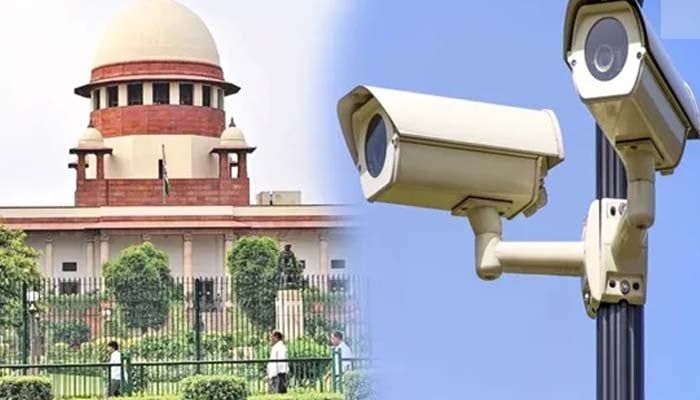
State of the judiciary and reforms required : Prashant Bhushan

Democracy Dialogues Lecture Series Organised by New Socialist Initiative – 3 rd Lecture

Topic: State of the Judiciary and Reforms Required
Speaker: Prashant Bhushan, eminent Supreme Court lawyer and civil rights activist
Date and Time: Sunday, September 20, 2020 at 6 PM IST

Zoom and Facebook Live details in the poster below.

Image may contain: one or more people, text that says 'Democracy Dialogues 3rd Lecture State of the Judiciary and Reforms Required Time: 20 Sep 2020 06:00 PM India Join us on Zoom!! Meeting ID: 848 2963 1643 Passcode: 799603 f fb.com/newsocialistinitiative.nsi Live link: Prashant Bhushan Public Interest Lawyer and Civil Liberty Activist New Socialist Initiative A World for the Workers! A Future for the World'

[New Socialist Initiative Presents Democracy Dialogues – Lecture Series

The idea behind this series – which we call ‘Democracy Dialogues’ – is basically to initiate as well as join in the on-going conversation around this theme in academic as well as activist circles.

The inaugural lecture in the series was delivered by Prof Suhas Palshikar on 12 th July 2020. The theme of Prof Palshikar’s presentation was  TRAJECTORY OF INDIA’S DEMOCRACY AND CONTEMPORARY CHALLENGES, Professor Pratap Bhanu Mehta delivered the second lecture on THE STRUCTURAL CONTRADICTIONS OF INDIAN DEMOCRACY AND THE RISE OF THE BJP on 16 th August 2020 ]

Ethics of Selective Outrage – On Converting Mosques and Museums: Aejaz Ahmad and Irshad Rashid

Guest post by AEJAZ AHMAD and IRSHAD RASHID

What does turning Hagia Sophia into a mosque mean for global political practice? 

In an unusally brazen move Turkey’s top court recently ruled in favour of transforming Hagia Sophia, a museum of global tourist attraction, into a mosque. Originally a cathedral built in pre-Islamic Turkey but converted into a mosque when Ottomans invaded Constantinople in 1453, with the liquidation of the Ottoman Empire, Attaturk transformed it into a museum in 1934 as a secular gesture to herald what is called modern secular Turkey. This was more recently followed by  transforming another historic Chora Church, that went exactly through the same iteration, into yet another mosque.

Continue reading Ethics of Selective Outrage – On Converting Mosques and Museums: Aejaz Ahmad and Irshad Rashid

How to really compensate for injustice committed

It is disheartening when the Constitution is not followed in letter and spirit, but the balm of monetary compensation will not fix the problem.

Dr Kafeel Khan Speech allahabad hc

Someone must have been telling lies about Joseph K, he knew he had done nothing wrong but one morning, he was arrested.

These opening lines of Franz Kafka’s classic novel, The Trial, published just over a century ago, in 1925, still ring true. 

Joseph K, the novel’s protagonist, is cashier at a bank. On his 30th birthday, two unidentified agents arrest him for an unspecified crime. The plot of the novel revolves around his efforts to deduce what the charges against him are, and which never become explicit. Joseph K’s feverish hopes to redeem himself of these unknown charges fail and he is executed at a small quarry outside the city—“like a dog”—two days before his 31st birthday.

Kafka, a major figure of 20th century-literature died of tuberculosis in 1924, when he was barely 40 years old. He had wanted all his manuscripts, including of the unfinished The Trial, destroyed after his death, but close friend and executor of his will, Max Brod, ignored the instruction and the world gained a strong literary indictment of an apathetic and inhuman bureaucracy and how completely it can lack respect for civil rights. 

Kafka’s novel resonates with us today for it is not difficult to spot people who have been wronged by our system. Their endless wait for justice, especially those charged with petty crimes, or those who spend the prime of their lives behind bars on concocted charges, is on open public display. 

( Read the full article here )

राष्ट्रीय शिक्षा नीति 2020 – पिछले तजुर्बों से बेख़बर एक दस्तावेज़ : राजेन्द्र चौधरी

Guest post by RAJINDER CHAUDHARY

राष्ट्रीय शिक्षा नीति 2020 के दो मुख्य भाग हैं, स्कूली शिक्षा और उच्च शिक्षा. हम इन दोनों क्षेत्रों का मूल्यांकन करेंगे. किसी भी नीति की तरह इस शिक्षा नीति में भी कुछ स्वागत योग्य कदम हैं, कुछ कमियाँ हैं, कुछ बातें छूट गई हैं और कुछ खतरनाक पहलू हैं. हम तीनों पक्षों को चिन्हित करने का प्रयास करेंगे. दुर्भाग्य से इस नीति के दो अलग अलग अंग्रेजी प्रारूप सरकारी वेब साइटों पर उपलब्ध हैं. एक 60 पृष्ठों का और एक 66 पृष्ठों का है. दोनों की अंतर्वस्तु में भी महत्वपूर्ण अंतर है पर इन प्रारूपों में तिथि नहीं दी गई, इस लिए यह तय करना संभव नहीं है कि कौन सा नया है और कौन सा पुराना है. इस विमर्श हेतू हमने 66 पन्नों वाले दस्तावेज़ का प्रयोग किया है. 

काफी समय से एकविषयक कालेज जैसे बीएड कालेज, इंजीनियरिंग कालेज या बिना विज्ञान संकाय या केवल विज्ञान संकाय के +2 स्कूल तो चल ही रहे थे पर हाल ही में एक विषयक विश्वविद्यालयों का चलन बढ़ा है. जैसे स्वास्थ्य, खेल, संस्कृत, बागवानी विश्विविद्यालय इत्यादि. ऐसे एकविषयक संस्थानों में छात्रों को समग्र विकास का मौका नहीं मिलता. उनका दृष्टिकोण बहुत सीमित हो जाता है. इस लिए बहुविषयक शिक्षा संस्थान विषयों एवं छात्रों दोनों के समग्र विकास के लिये आवश्यक हैं. इस कमी को नयी शिक्षा नीति में रेखांकित किया है और दूर करने का निर्णय लिया गया है. यह स्वागत योग्य कदम है. स्कूल को छात्रों तक सीमित न रख कर एक ‘सामाजिक चेतना केंद्र’ के तौर पर विकसित करना, कम्पार्टमेंट परीक्षा के साथ स्कूली छात्रों को अंक सुधार हेतु मौका देना, सार्वजानिक एवं स्कूल पुस्तकालयों का विस्तार एवं इन के लिए आवश्यक कर्मचारियों की व्यवस्था, मातृभाषा में शिक्षा को बढ़ावा देने का संकल्प, छात्रों को अपनी रूचि के अनुसार ज़्यादा विविध विषयों में से चुनाव चुनाव का मौका, जैसे कदम स्वागत योग्य हैं. 

Continue reading राष्ट्रीय शिक्षा नीति 2020 – पिछले तजुर्बों से बेख़बर एक दस्तावेज़ : राजेन्द्र चौधरी

Secularism and the Myth of ‘Hindu’ Tolerance

‘Secularism’ has now become a bad word and it is quite fashionable to attack, criticize and ridicule it. Just about anyone, regardless of whether s/he has spent even a minute thinking about it, can attack it. A television channel  recently even decided to have a vote on whether we should ‘have’ secularism or not, I understand, after an utterly ill-informed debate. It is almost as if the blame for everything that is wrong with Indian society can be laid at the door of this monster called ‘Secularism’. Modern Hindu ideologues have of course, mastered this art of blaming every evil practice of Hindu society on to some ‘Other’: From untouchability and sati to child marriage, purdah and the everyday violence of caste oppression –  everything apparently happened because of ‘Islam’ and Christianity’. Later, Marxism and secularism were added to the list. And while we are at it, let us remember that the great Bal Gangadhar Tilak led what was perhaps the first mass nationalist anticolonial mobilization, against raising the  Age of Consent of girls for sexual intercourse from 10 to 12 years! Much of that righteous indignation continues to be the hallmark of the new defensiveness that the 21st century ‘raging Hindu’  exhibits.

For everything wrong in the behaviour of these adult men with walrus moustaches, an explanation exists in some founding childhood trauma for which their adulthood can never be held responsible! ‘Secularism’ now is the name of the insistence that wants to hold the modern Hindu responsible for his acts today, rather than let it remain suspended in a permanent state of childhood. I suspect, the term ‘secularism’ today, in Hindu Right discourse, is no longer about the ‘separation of religion and politics’ or ‘sarva dharma samabhava‘ (equal respect for all religions) and ‘dharma-nirpekshata‘ (neutrality between religions) at all, but the ghost-house where all the pathologies of this traumatized child(hood) are played out.

Continue reading Secularism and the Myth of ‘Hindu’ Tolerance

NEP 2020 – elitist and corporatized education under Hindu Rashtra

This study of the National Education Policy 2020, apart from my own  analysis, draws on extensive commentary on the final document and its earlier drafts, by education policy experts and teachers, including my own union,  JNU Teachers’ Association, which undertook a detailed critique of the Draft NEP 2019.  This needs to be said because neither educationists nor academics were consulted in the process of making the initial policy, nor were states, despite the fact that education is a concurrent subject. We begin therefore with the procedure of finalizing the NEP 2020.

Faulty procedures of formulating and finalizing the policy

No consultative process

All previous education policies have undergone massive consultation processes, as Niraja Gopal Jayal outlines, but not this one. At the press conference announcing the policy, Gopal Jayal points out, it was claimed that an “unprecedented collaborative, inclusive, and highly participatory consultation process” was conducted, but it is clear from the single slide that was shown, that states were not consulted at all.

Continue reading NEP 2020 – elitist and corporatized education under Hindu Rashtra

The ‘Ecopolitical’ Imperative and the Janta Parliament


Janta Parliament, Environment session – courtesy Let India Breathe

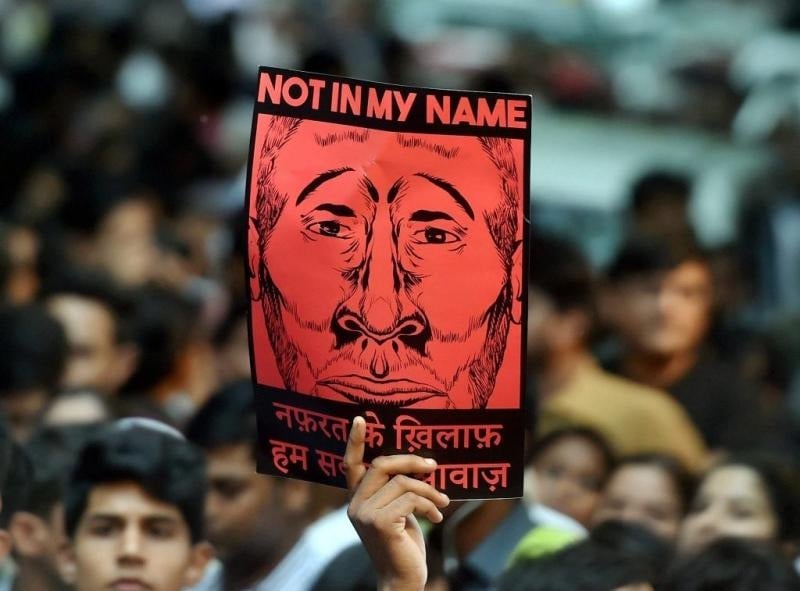
A journey of a thousand miles begins with a single step, goes an old Chinese saying.  In the present context, that single step – and an absolutely essential step – for reclaiming the soul of India, is the coimng together of the social movements, non-party groups and the political parties – and this was accomplished in the six-day Janta Parliament held from 16-21 August as an online event. Organized by Jan Sarokar – a forum of 31 organizations and loose platforms ranging from Left aligned women’s organizations, National Alliance of People’s Movements (NAPM), National Campaign for Dalit Human Rights (NCDHR) and National Campaign for People’s Right to Information, to loose networks like Not In My Name – the people’s parliament managed to bring together many political parties together as well in the event. As a kind of base paper, Jan Sarokar had prepared a comprehensive 75-page document entitled ‘People’s Policy for Post-COVID 19 Times‘ covering important and urgent policy initiatives on practically every aspect of economic and social life. Attended by representatives of the Congress, the Left parties, the RJD and AAP among others, the people’s parliament session ended with the representatives of the parties present affirming support to the perspectives emerging out the resolutions adopted, which they felt could form the basis for a Common Minimum Programme not only for the political parties but also between parties and social / people’s movements. Continue reading The ‘Ecopolitical’ Imperative and the Janta Parliament

Why Bloomsbury withdrawing ‘Delhi Riots 2020’ is not about freedom of expression: Nivedita Menon and Aditya Nigam

This post is jointly written by NIVEDITA MENON & ADITYA NIGAM

Bloomsbury India has withdrawn the book Delhi Riots 2020 in the face of massive outrage at its publication. While we commend Bloomsbury’s decision to withdraw, we also note that its statement explaining this act ends with the the following sentence:

‘Bloomsbury India strongly supports freedom of speech but also has a deep sense of responsibility towards society.’

The implication here is clear for those who want to see it. The publication of the book was a matter of ‘freedom of speech’, while its withdrawal comes from a ‘deep sense of responsibility towards society’.

At the outset let us state that we do not question the publication of books with which we do not agree, because intellectual and political differences of opinion, and the freedom to express these are the life blood of a democracy. We have not at any point questioned other publications by Bloomsbury, or by other publishing houses, that express views that support the current regime (which has consistently throttled such freedom of expression, and by whom many of us personally are under serious attack). Nor have we raised objections to the flood of hastily turned out books by many publishers that produce intellectually unsustainable arguments that bolster the politics of the anti-constitutional, Brahminical Hindu Rashtra.

So let us spell out what is reprehensible about Delhi Riots 2020 and why it should not have been published in the first place.

Continue reading Why Bloomsbury withdrawing ‘Delhi Riots 2020’ is not about freedom of expression: Nivedita Menon and Aditya Nigam

Corporate Social Media in India: Sell Hate, Enjoy Profit

The bias that social media platforms such as Facebook display reflects their own world-view as much as it does the regimes they support.

Corporate Social Media in India

A few gave the appearance of being truly psychopathic individuals. The mass of others were ragged and illiterate peasants easily roused to hatred of the Tutsi. Perhaps the most sinister people I met were the educated political elite, men and women of charm and sophistication who spoke flawless French and who could engage in long philosophical debates about the nature of war and democracy. But they shared one thing in common with the soldiers and the peasants: they were drowning in the blood of their fellow countrymen.

Fergal Kane, a journalist with the BBC, wrote these chilling lines in his book, Season of Blood: A Rwandan Journey, winner of the Orwell prize in 1995. The organised and planned killing in Rwanda, one of the darkest episodes of the 20th century, resulted in the death of eight lakh Tutsi.

It is a strange coincidence that a year and a half before these unfortunate developments, the biggest democracy in the world went through its own cataclysmic moment, when Hindutva supremacist forces demolished a 500-year-old mosque after a long and bloody campaign. Even after the demolition large-scale communal riots broke out all over India, in which thousands died and whose scars are still difficult to heal.

There is at least one thing in common between what Rwanda went through and what India witnessed in 1992: both tragedies demonstrated how the media can prepare and provoke ordinary people into unleashing untold miseries on their neighbours. Continue reading Corporate Social Media in India: Sell Hate, Enjoy Profit

Muscular Law Reform in Times of a Pandemic: Pratiksha Baxi

Guest Post by PRATIKSHA BAXI

In May 2020, the Ministry of Home Affairs constituted a Committee to recommend reforms in criminal laws in India with NLU Delhi.  The National Level Committee for Reforms in Criminal Laws (henceforth, the NLUD Committee) is to review and recommend changes to the Indian Penal Code, Criminal Procedure Code and the Indian Evidence Act in 90 odd days. On 26 June 2020, responses were solicited from experts on ‘questionnaires highlighting issues in the Indian Penal Code, Code of Criminal Procedure and Indian Evidence Act’ for which experts were invited to register. The Committee has uploaded a questionnaire, extended time for experts to reply and announced concessional consultation with non-experts. 68 Bare Acts, and 89 Law Commission Reports, along with some links and some op-eds by committee members are uploaded on the website, as resources for experts. The Open Consultation can be accessed for a period of two months starting from 17 July 2020  to 16 September 2020. This process is virtual since the process of reviewing and revising criminal law is being performed during a pandemic.

Continue reading Muscular Law Reform in Times of a Pandemic: Pratiksha Baxi

Intimations of a Bahujan Counter-Tradition and the Hindu Right

This post should be read as a sequel to my earlier post of 16 July, which had discussed the discourse of “Hindu Unity” and questions  before the struggle against the Right. That post had ended with the claim that the struggle against the Hindu Right is not so much about what we understand as “secularism” as it is about the reconstruction of a larger  Bahujan counter-tradition, the search for which was  already on.

Cover of book Mahishasur – Mithak va Paramaprayen [Myths and Traditions],ed. Pramod Ranjan
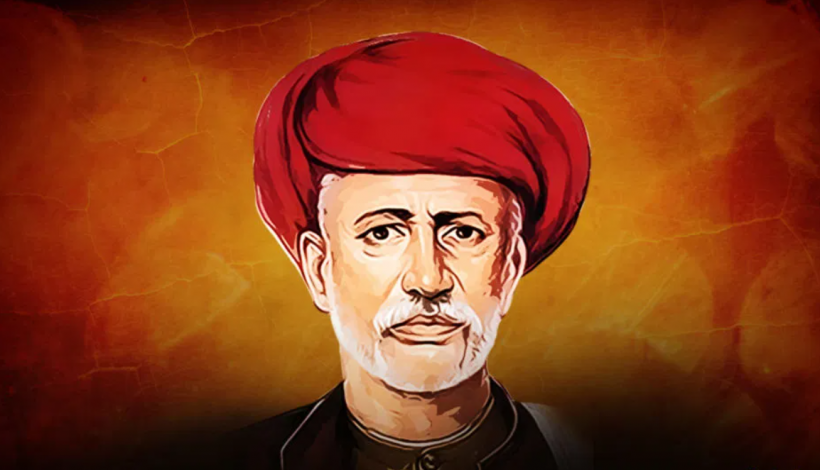
I should begin with a caveat, or more correctly, an amendment to a position I adopted in the earlier post. In that piece, I had used the terms “anti-majoritarian” discourse and “anti-majoritarianism” to refer to the the larger discursive formation against the Hindu Right. I used that expression largely because I went along part of the way with Abhay Dubey who uses it in his book, to which that piece was a response. However, that expression assumes that there is only one “majority”  or only one way of imagining majority in this country. More importantly, it concedes a certain “natural pre-givenness” to the project of Hindu unity as though that were a self-evident fact. The only thing that makes the project of Hindu unity appear so “natural”, it needs to be underlined, is that it is backed by “tradition” and “religion” in a way that say a class notion of majority is not. If we assume that the dominant tradition is the sole tradition, then this term could make sense but as the  stirrings of a renewed search for a Bahujan counter-tradition, especially in North India, come into view, it gives us a sense of another possible way of imagining “majority”.  It should be underlined here that this renewed search today does not emerge out of the blue from nowhere but draws on the work of earlier medieval thinkers and social/ religious reformers not just in the North (for instance Kabir, Ravi Das and Nanak) but also from Phule, Ayyankali, Sri Narayana Guru, Periyar, Iyothee Thass and many others in the South in more recent times. There is one difference however: rather than use the negative descriptor “Non-Brahmin”, the present search is more explicitly about the production of a Bahujan identity. Ambedkar of course, remains a continuous reference point in this discourse.

Continue reading Intimations of a Bahujan Counter-Tradition and the Hindu Right

The Structural Contradictions of Indian Democracy and the Rise of the BJP : Prof Pratap Bhanu Mehta

[Democracy Dialogues Lecture Series ( Webinar)
Organised by New Socialist Initiative]

Date and Time: Sunday, August 16, 2020, at 6 PM IST (8.30 AM EST in the US)


Topic: The Structural Contradictions of Indian Democracy and the rise of the BJP

Abstract:

This talk explores the deep social transformations that have made the dominance of the BJP possible. It will take a longer view of the trajectory of Indian democracy and explore the profound changes in social and economic identities underway that have prepared a propitious ground for the rise of the BJP.

The Speaker: Prof Pratap Bhanu Mehta

Internationally renowned scholar and political scientist Prof Pratap Bhanu Mehta taught at Harvard, at New York University and at JNU. He was the Vice Chancellor of the Ashoka University till recently and served as the President of the premier think tank, Centre for Policy Research. Educated at Oxford and a Ph.D. from Princeton University, Prof Mehta is a columnist at Indian Express, a leading public intellectual and a bold and thoughtful voice for reason and justice. Among many honours and prizes to his credit, he is recipient of the Infosys Prize, the Adisheshiah Prize and the Amartya Sen Prize.

[New Socialist Initiative Presents
Democracy Dialogues – Lecture Series

The idea behind this series – which we call ‘Democracy Dialogues’ – is basically to initiate as well as join in the on-going conversation around this theme in academic as well as activist circles.

We feel that the very idea of democracy which has taken deep roots across the world, has come under scanner for various reasons. At the same time we have been witness to the ascendance of right-wing forces and fascistic demagogues via the same democratic route. There is this apparently anomalous situation in which the spread and deepening of democracy have often led to generating mass support for these reactionary and fascistic forces.

Coming to India, there have been valid concerns about the rise of authoritarian streak among Indians and how it has helped strengthen BJP’s hard right turn. The strong support for democracy here is accompanied by increasing fascination towards majoritarian-authoritarian politics. In fact, we would like to state that a vigorous electoral democracy here has become a vehicle for hindutva-ite counterrevolution.

The inaugural lecture in the series was delivered by Prof Suhas Palshikar on 12 th July 2020. The theme of Prof Palshikar’s presentation was  TRAJECTORY OF INDIA’S DEMOCRACY AND CONTEMPORARY CHALLENGES]