Category Archives: Debates

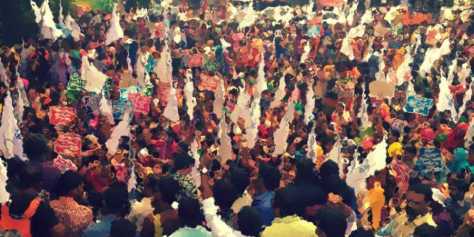
SAB YAAD RAKHA JAEGA: Nationwide Protest against repression on anti-CAA activists and democratic voices of dissent

WhatsApp Image 2020-06-01 at 15.33.28

Guest Post by PEOPLE UNITED AGAINST REPRESSION ON ANTI CAA PROTESTERS

Over the past two months the Delhi Police has arrested Jamia students Safoora Zargar, Meeran Haider, Asif Iqbal Tanha, JNU students Natasha Narwal and Devangana Kalita along with activists Ishrat Jahan, Khalid Saifi, Gulfisha Fatima, Sharjeel Imam and hundreds of other Muslim youth. Some among them have been booked under the amended UAPA as a means of punishing the widespread protests against the CAA-NRC that emerged across the country in December last year. Most recently AMU students Farhan Zuberi and Ravish Ali Khan have been arrested by the UP police for participating in the anti-CAA protests. It is clear that the spate of arrests are far from over and new names of democratic activists are likely to be added to this already long list. Meanwhile those openly advocating violence against peaceful protesters such as Kapil Mishra, Parvesh Verma and Anurag Thakur have gone scot-free. Continue reading SAB YAAD RAKHA JAEGA: Nationwide Protest against repression on anti-CAA activists and democratic voices of dissent

Crisis for the People, Opportunity for the Corporate-Government Nexus : NSI

Statement of New Socialist Initiative (NSI) on India’s ‘war against Covid 19’

#
Today, India has emerged as a new epicentre for the novel corona virus in the Asia Pacific region.With 1,58,333 confirmed cases of Covid 19 and deaths of total of 4,531 people after contracting the virus, it has already crossed China’s Covid-19 numbers.

#
New Socialist Initiative (NSI) feels that the grim news of steadily rising infections and fatalities reveal before everyone a worrying pattern but the government either seems to be oblivious of the situation or has decided to shut its eyes. It is becoming increasingly clear that the Union government has used incomplete national-level data to justify arbitrary policy decisions, defend its record and underplay the extent of Covid-19 crisis.

#
Absence of transparency vis-a-vis data collection of Covid infection levels could be said to be the tip of the iceberg of what has gone wrong with India’s ‘war against Covid 19’.
The Prime Minister’s announcement of a 21-day countrywide lock down came with a mere four-hour notice. It was done without engaging in any collective decision-making process with states to honour and enhance the spirit of “cooperative federalism” between the Centre and the States. Continue reading Crisis for the People, Opportunity for the Corporate-Government Nexus : NSI

असहमति के दमन के लिए मानवाधिकार-कर्मियों और लेखकों-पत्रकारों की गिरफ्तारियों का सिलसिला बंद करो! 

राजनीतिक उत्पीड़न और साम्प्रदायिक ध्रुवीकरण के लिए तालाबंदी के इस्तेमाल के ख़िलाफ़ सांस्कृतिक-सामाजिक संगठनों का संयुक्त आह्वान

महामारी से मुक्ति के लिए जनएकजुटता का निर्माण करो!

तालाबंदी के दौरान जेलबंदी

महामारी और तालाबंदी के इस दौर में समूचे देश का ध्यान एकजुट होकर बीमारी का मुक़ाबला करने पर केन्द्रित है.

लेकिन इसी समय देश के जाने माने बुद्धिजीवियों, स्वतंत्र पत्रकारों, हाल ही के सीएए-विरोधी आन्दोलन में सक्रिय रहे राजनीतिक कार्यकर्ताओं और अल्पसंख्यक समुदाय के युवाओं की ताबड़तोड़ गिरफ़्तारियों ने नागरिक समाज की चिंताएं बढ़ा दी हैं.

बुद्धिजीवियों और राजनैतिक कार्यकर्ताओं की गिरफ़्तारियां सरकारी काम में बाधा डालने (धरने पर बैठने) जैसे गोलमोल आरोपों में और  अधिकतर विवादास्पद यूएपीए क़ानून के तहत की जा रही हैं. यूएपीए कानून आतंकवाद से निपटने के लिए लाया गया था. यह विशेष क़ानून ‘विशेष परिस्थिति में’ संविधान  द्वारा नागरिकों को दिए गए मौलिक अधिकारों को परिसीमित करता है. जाहिर है, इस क़ानून का इस्तेमाल केवल उन्हीं मामलों में किया जाना चाहिए जिनका सम्बन्ध आतंकवाद की किसी वास्तविक परिस्थिति से हो. दूसरी तरह के मामलों में इसे लागू करना संविधान के साथ छल करना है. संविधान लोकतंत्र में राज्य की सत्ता के समक्ष नागरिक के जिस अधिकार की गारंटी करता है, उसे समाप्त कर लोकतंत्र को सर्वसत्तावाद में बदल देना है.

गिरफ्तारियों के लगातार जारी सिलसिले में सबसे ताज़ा नाम जेएनयू की दो छात्राओं, देवांगना  कलिता और नताशा नरवाल के हैं. दोनों शोध-छात्राएं प्रतिष्ठित नारीवादी आन्दोलन ‘पिंजरा तोड़’ की संस्थापक सदस्य भी हैं.  इन्हें पहले ज़ाफ़राबाद धरने में अहम भूमिका अदा करने के नाम पर 23 मई को गिरफ्तार किया गया. अगले ही दिन अदालत से जमानत मिल जाने पर तुरंत अपराध शाखा की स्पेशल ब्रांच द्वारा क़त्ल और दंगे जैसे आरोपों के तहत गिरफ़्तार कर लिया गया ताकि अदालत उन्हें पूछ-ताछ के लिए पुलिस कस्टडी में भेज दे. आख़िरकार उन्हें दो दिन की पुलिस कस्टडी में भेज दिया गया है. Continue reading असहमति के दमन के लिए मानवाधिकार-कर्मियों और लेखकों-पत्रकारों की गिरफ्तारियों का सिलसिला बंद करो! 

प्रार्थना स्थलों पर लाउडस्पीकर पर प्रतिबंध

news on judiciary

कांकर पाथर जोरि कै मस्जिद लई बनाय.
ता चढि मुल्ला बांग दे क्या बहरा हुआ खुदाय

क्या अपने ‘खुदा’ को आवाज़ देने के लिए बांग देने की जरूरत पड़ती है ?

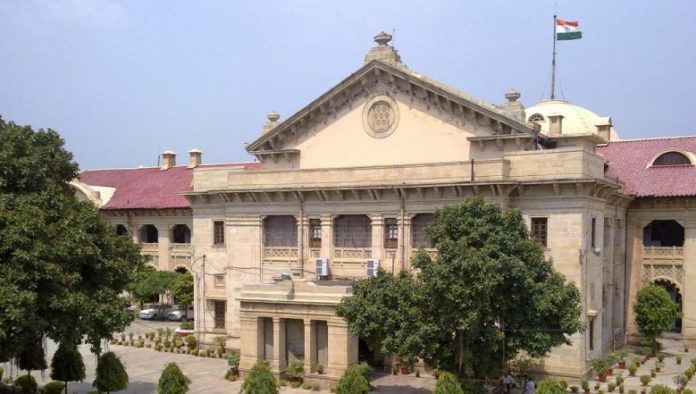
आज से छह सदी पहले ही कबीर ने यह सवाल पूछ कर अपने वक्त़ में धर्म के नाम पर जारी पाखंड को बेपर्दा किया था. पिछले दिनों यह मसला नए सिरे से उछला जब इलाहाबाद उच्च न्यायालय ने इस बारे में एक अहम फैसला सुनाया. अदालत ने कहा कि अज़ान अर्थात प्रार्थना के लिए आवाज़ देने की बात इस्लाम का हिस्सा है लेकिन वही बात लाउडस्पीकर के इस्तेमाल के बारे में नहीं कही जा सकती, लिहाजा रात 10 बजे से सुबह 6 बजे तक किसी भी ध्वनिवर्द्धक यंत्र का इस्तेमाल के इजाजत नहीं दी जा सकती.

अदालत के मुताबिक मुअज्जिन मस्जिद की मीनार से अपनी मानवीय आवाज़ में अज़ान दे सकता है और उसे महामारी रोकने के लिए राज्य द्वारा लगायी गयी पाबंदियों के तहत रोका नहीं जा सकता, अलबत्ता उसके लिए लाउडस्पीकर का इस्तेमाल वर्जित रहेगा.

ध्यान रहे कि अदालत यूपी पुलिस द्वारा जगह-जगह मनमाने ढंग से अज़ान पर लगायी गयी पाबंदी के खिलाफ दायर याचिका पर विचार कर रही थी. हाथरस, अलीगढ़ आदि स्थानों पर महामारी के कानूनों का हवाला देते हुए पुलिस वालों ने अज़ान देने पर ही पाबंदी लगायी थी, जिसके खिलाफ याचिकाकर्ताओं ने अदालत का दरवाज़ा खटखटाया था.

उम्मीद है कि अदालत के फैसले के मद्देनज़र यूपी पुलिस मनमाने तरीके से अज़ान पर नहीं रोक लगाएगी, निश्चित ही यह सुनिश्चित करेगी कि इसके लिए किसी ध्वनिवर्द्धक यंत्र का इस्तेमाल तो नहीं हो रहा है.

गौरतलब है कि अदालत ने संविधान के तहत प्रदत्त बुनियादी अधिकारों में शामिल आर्टिकल 19/1/ए का हवाला देते हुए जो इस बात को सुनिश्चित करता है कि‘किसी को भी यह अधिकार नहीं है कि वह अन्य लोगों को बन्दी श्रोता (captive listeners) बना दें’ यह निर्देश दिया.

निश्चित ही मस्जिदों में जहां बिना अनुमति के लाउडस्पीकरों के इस्तेमाल पर पाबंदी रहेगी, वही बात मंदिरों, गुरुद्धारों या अन्य धार्मिक स्थलों पर भी लागू रहेगी ताकि आरती के बहाने या गुरुबाणी सुनाने के बहाने इसी तरह लोगों को ‘बन्दी श्रोता’ मजबूरन न बनाया जाए. ( Read the full article here :https://hindi.theprint.in/opinion/allahabad-high-court-ban-loudspeakers-at-prayer-places-exposes-hypocrisy-in-the-name-of-faith/140765/)

The Ferocious Face of Class War – Rekindling the Revolutionary Imagination


Pyramid of Capitalist System, 1911 image from Industrial Worker (paperof Industrial Workers of the World)

Face of Class War in Contemporary India

It is time again to state one thing absolutely clearly. ‘Class struggle’ or ‘class warfare’ were not invented by Karl Marx, for he and his predecessors merely identified and named the beast. It is something that the rich and the powerful always did and continue to do as we speak. Look at the way the Indian lumpenbourgeoisie has bared its fangs, even as the country is reeling under the deadly impact of COVID 19; look at the way it is sharpening its knives, waiting for its opportunity to make a kill – and you will know what class war is all about. Look at them and it will be crystal clear that it is not the hapless migrant worker and the poor – or the peasant who silently commits suicide – who  indulge in this thing called class war, but they who prey on the weak and the dispossessed. They are once again preparing to make good their losses by yoking in workers as slaves, not allowing them to travel safely back to their homes, keeping them hostage to lumpencapital and ready with  their plans to make them work for 12 hours a day. There isn’t even a pretense – barring an Azim Premji here or an Asian Paints there – of recognizing workers as partners or stakeholders in business.

In a sense, ‘lumpencapitalism’ and the ‘lumpenbourgeoisie’ are the general form of Indian capital, pioneered by Dhirubhai Ambani and his Reliance Industries (interested readers can  read The Polyester Prince by Hamish McDonald) and its arrival with Gautam Adani whose recent rise to front ranks is generally understood to be linked to his closeness to the present regime. And in between, we have conglomerates like Sahara India, whose ‘primitive accumulation’ is alleged to have come almost entirely through chit fund theft.

Continue reading The Ferocious Face of Class War – Rekindling the Revolutionary Imagination

Covid-19 and the Idea of India: Manish Thakur and Nabanipa Bhattacharjee

Guest post by MANISH THAKUR and NABANIPA BHATTACHARJEE

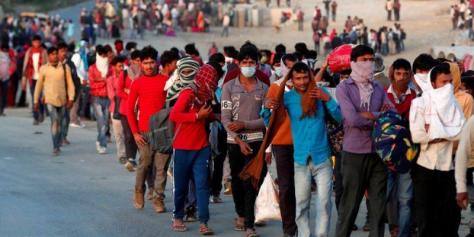
Much has already been said and written about the plight of the migrants during the lockdown necessitated by the current Covid-19 outbreak in India. The visual images of their endless walk – which reminds us of the flight of Partition refugees – in their desperate bid to reach home in the scorching summer heat on almost empty stomachs with throats parched (women in tow with the children on men’s shoulders and their meagre belongings on the heads) is heart-wrenching to say the least. Whatever be the cause, it is a living testimony to the entrenched structures of poor governance that define our polity. It is also revealing of the class character of the Indian state, a term that has for long left the public discourse of our republic. One need not invoke Marx or be a communist to see the glaring contrast in the ways say, for instance, state functionaries conduct themselves at airports in Delhi or Kochi and railway stations at Barkakana in Jharkhand or Bapu Dham, Motihari in Bihar.

Continue reading Covid-19 and the Idea of India: Manish Thakur and Nabanipa Bhattacharjee

भारत की कोरोना नीति के चंद नुक्सानदेह पहलू: राजेन्द्र चौधरी

Guest post by RAJINDER CHAUDHARY

कोरोना से हमारा वास्ता अभी लम्बे समय तक चलने वाला है. काफिला पर छपे पिछले आलेखों में (यहाँ एवं यहाँ) में हम ने इस के सही और गलत, दोनों तरह के सबकों की चर्चा की थी पर भारत की करोना नीति की समीक्षा नहीं की थी.  आपदा और युद्ध काल में एक कहा-अनकहा दबाव रहता है कि सरकार को पूरा समर्थन दिया जाए और उस की आलोचना न की जाय पर कोरोना के मुकाबले के लिए भारत में अपनाई गई रणनीति की समीक्षा ज़रूरी है; यह समीक्षा लम्बे समय तक चलने वाली इस आपदा में रणनीति में सुधार का मौका दे सकती है. कोरोना से कैसे निपटना चाहिए इस में निश्चित तौर पर सब से बड़ी भूमिका तो कोरोना वायरस की प्रकृति की है- ये गर्मी में मरेगा या सर्दी में या नहीं ही मरेगा; बूढों को ज्यादा मारेगा या बच्चों को, इन तथ्यों का इस से निपटने की रणनीति तय करने में सब से बड़ी भूमिका है. इस लिए भारत में कोरोना की लड़ाई के मूल्यांकन से पहले हमें वायरस की प्रकृति के बारे में उपलब्ध जानकारी को रेखांकित करना होगा.

कोरोना वायरस के नए स्वरूप की बुनियादी प्रकृति

कोरोना किस्म के वायरस वैज्ञानिकों के लिए नए नहीं हैं. ये पहले भी उभरते रहे हैं और वैज्ञानिक इन का लगातार अध्ययन करते रहे हैं. परन्तु हाल में कोरोना किस्म के वायरस का एक नया स्वरूप सामने आया है, जिस से उत्पन्न होने वाली नयी बीमारी को कोविड नाम दिया गया है.  इस लिए कोरोना के इस नए वायरस के बारे में अभी सब कुछ पक्के तौर पर नहीं कहा जा सकता. अभी इस की पड़ताल चल रही है.  फिर भी दुनिया भर के वैज्ञानिकों के मिले जुले काम से और कोरोना के पहले से उपलब्ध वायरसों के जीवन चक्र को ध्यान में रखते हुए कुछ बाते काफी हद तक स्पष्ट हैं.  इन के बारे में आम तौर पर वैज्ञानिकों में सर्वानुमति है. हालाँकि विश्व स्वास्थ्य संगठन को सर्वज्ञानी तो नहीं माना जा सकता परन्तु काफी हद तक इस द्वारा प्रदत जानकारी पर भरोसा किया जा सकता है.

Continue reading भारत की कोरोना नीति के चंद नुक्सानदेह पहलू: राजेन्द्र चौधरी

Community-Based Mapping of Covid: Nothing Official About it

No doubt the clarification that India will not map Covid-19 infections on the basis of religion has many heaving sighs of relief. But will the peace last?

Community-Based Mapping of Covid: Nothing Official About it

Image Courtesy: AP

Move for community-based mapping of coronavirus?” a recent news item in a prestigious daily asked, getting tongues wagging about “closed-door meetings at the highest level”, though no “official” decision had been taken in themThe Ministry of Health declared that any such news is “baseless, incorrect and irresponsible”. Lav Agarwal, the top bureaucrat in the ministry—who interacts with the media on Covid-related developments—called such news reports “…very irresponsible”. “The virus does not see people’s caste, creed or religion,” he said, quoting the Supreme Court’s directions on controlling non-factual or fake news.

No doubt the official clarification has many heaving sighs of relief.

The relief is understandable, because it was only last month—when the Novel Coronavirus pandemic had started taking a toll—that Muslims were being stigmatised as “super-spreaders” of the disease.

Taking a grim view of the situation, in its press conference o6 April, the World Health Organisation had given the Indian government some simple advice. The WHO said, in response to an India-specific question, that countries should not profile Covid-19 infections in religious, racial or ethnic terms. The WHO Emergency Programme Director Mike Ryan also underlined that every positive case should be considered a victim.

( Read the full article here)

निरंकुशता के स्रोत, प्रतिरोध के संसाधन : रवि सिन्हा

Guest Post by Ravi Sinha

राजनीति का आम सहजबोध यह है कि सत्ता की निरंकुशता लोकतंत्र का निषेध है। लोकतंत्र राजनीतिक सत्ता का गठन तो करता है, लेकिन उसे निरंकुश नहीं होने देता। यदि किसी लोकतांत्रिक व्यवस्था के अंतर्गत निरंकुश सत्ता का उद्भव होता है तो उसे लोकतंत्रा की दुर्बलता, उसके विकार या उसमें किसी बाहरी अलोकतांत्रिक शक्ति के हस्तक्षेप के रूप में देखा जाता है। यदि लोकतंत्र का अर्थ यह है कि सत्ता के स्रोत लोक में स्थित हैं तो यह स्वयंसिद्ध है कि लोकतांत्रिक सत्ता निरंकुश नहीं हो सकती।

इसी तरह राजनीति का सहजबोध यह भी है कि सत्ता की निरंकुशता प्रतिरोध को जन्म देती है और प्रतिरोध की जड़ें लोक में स्थित होती हैं। निरंकुशता यदि लोकतंत्र का निषेध है तो यह भी स्वयंसिद्ध है कि लोक या जन ही प्रतिरोध के मूल आधार और उसके प्रमुख संसाधन हैं। यह दूसरी मान्यता पहली के साथ जुड़ी हुई है। यदि पहली मान्यता टिकती है तो दूसरी की सत्यता भी साबित होती है। यदि पहली संदेह के घेरे में आती है तो दूसरी के स्वयंसिद्ध होने पर भी प्रश्न खड़े होते हैं।

और, प्रश्न तो खड़े होते हैं। वास्तविकता की प्रकृति ही ऐसी होती है कि वह मान्यताओं की परवाह नहीं करती – बहुप्रचलित और स्वयंसिद्ध प्रतीत होने वाली मान्यताओं की भी नहीं। दूसरी तरफ़, मान्यताओं की – ख़ास तौर पर बहुप्रचलित मान्यताओं की – बनावट और उनकी ज़मीन ऐसी होती है कि वास्तविकताओं के उलट होने के बावजूद वे चलन में बनी रहती हैं। ऐसी स्थिति में पहले तो यह देखना होता है कि वास्तविकता क्या है और संबंधित मान्यताओं से उसकी संगति बैठती है या नहीं। फिर यह अलग से देखना होता है कि मान्यताएं जब ग़लत होती हैं, तब भी उनके चलते रहने के कारण कहां पर स्थित हैं। एक तरह से यह सहजबोध की जांच-पड़ताल का समय होता है। और कभी-कभी नये सहजबोध के निर्माण का समय भी होता है।

भारत की आज की हक़ीक़त यह तो है ही कि मौजूदा सरकार के अधीन राज्य और राजनीतिक सत्ता निरंकुश हो चले हैं। संवैधानिक, संस्थागत तथा लोकतांत्रिक नियमों, नियंत्रणों और परंपराओं को रौंदा जा रहा है और व्यवस्था तथा समाज, दोनों क्षेत्रों में मनमानी की जा रही है। कश्मीर से कन्याकुमारी तक, असम से गुजरात तक, संसद से और भीमा कोरेगांव से तीस हज़ारी तक और तिहाड़ तक नंगी निरंकुशता के उदाहरण सभी के सामने हैं। लेकिन क्या सभी को यह सब दिखायी दे रहा है? Continue reading निरंकुशता के स्रोत, प्रतिरोध के संसाधन : रवि सिन्हा

Colours of Trolls and Harassment :Vatya Raina

Guest Post by Vatya Raina

The fight for half the Earth and half the sky is never at rest around the globe. Women of the world are constantly fighting their oppressors in different colours. The debate around #BoisLockerRoom stories on Instagram and the trolls concerned about the marital status of a pregnant woman in jail, for practising her right to protest are of similar nature.

In 2017, The Jawaharlal Nehru University’s administration under the command of Vice-Chancellor M Jagadesh Kumar arbitarily dismantled the GSCASH (Gender Sensitization Committee Against Sexual Harassment). At the same time, women of Banaras Hindu University (BHU) were leading the movement against sexual harassment.

Today, when a pregnant student activist is fighting for her rights inside the jail, some women are continuing to resist and expose a group of young boys, by revealing the screenshots of an Instagram chat screen, where the participants of the group named ‘Bois Locker Room’ shared some non-consensual pictures of women as well as underage girls. After the screenshots went viral, these boys expressed their anger by suggesting gang-rape of all the women who shared it. On the other hand, Safoora Zargar, a research scholar of Jamia Millia Islamia, who was associated with the Jamia Coordination Committee (JCC), and was part of the anti-Citizenship Amendment Act protests organised by university students in December and January has been charged under Unlawful Activities (Prevention) Act (UAPA) and is send behind the bars. She has been arrested for allegedly leading the anti-CAA protest at Jaffrabad metro station in February.  Turning a blind eye to the medical condition of the student, the trolls are busy assassinating her character. Continue reading Colours of Trolls and Harassment :Vatya Raina

Operation Eklavya in Action at Premier Institutes

India is neglecting caste-based discrimination in higher educational institutions at its own peril.

AIIMS Caste Discrimination

It was exactly 13 years back that the Thorat Committee, constituted in September 2006 to enquire into allegations of differential treatment of Scheduled Caste and Scheduled Tribe students at the premier medical institute, AIIMS—was released.

The first of its kind in independent India, this three-member committee led by then chairman of the University Grants Commission, Sukhdeo Thorat, had looked deeply into the many shades of discrimination faced by students of non-elite castes in the institute.

What it discovered after talking to students and faculty was, to say the least, shocking. Some 72% of SC/ST students mentioned facing some discrimination during the teaching sessions. Second, caste-based discrimination was prevalent in the hostels, for instance around 88% students reported experiencing of social isolation in various forms. The committee’s report also outlined the discrimination faced by SC/ST professors.

This context frames the alleged suicide attempt of a female doctor a fortnight ago in the same institute. The doctor, who worked at the Dental Research Centre of AIIMS, was allegedly facing sexual harassment and caste discrimination. This is another reminder that there has not been a qualitative change in the institute in the long years since the Thorat Committee report.

( )Read the full article here)

Beyond the ‘Employment’ Paradigm and Life After Capitalism – Manifesto of Hope IV


[This is the final instalment of the series on ‘Life After Capitalism – Manifesto of Hope’. Earlier parts can be accessed Part I here, Part II here and Part III here.]

Democratizing access to resources, Image courtesy AWID, created by Ana Abelenda

The Employment Paradigm

In this final instalment of the series, I want to discuss the vexed question of employment and what can be called the ’employment mindset’.  The mindset has dominated politics and the discipline of economics for the last century and a half for sure.  Before that youthful capitalism simply put people uprooted from their habitats and traditional occupations (the artisans and peasants) into ‘poor houses’ and enacted the most vicious laws to force the dispossessed poor work for it. Marxists give this violent pillage the scientific- sounding name of ‘primitive accumulation’ (or primary accumulation). ‘Scientific’ because it was seen by Marx as the ‘historical process of the separation of producer from “his” means of production’ – as if it was an objective process that was in some sense inevitable. Marx’s chapter on ‘primitive accumulation’ in Capital Vol I, certainly shows that he was revolted by the plunder and robbery that this phenomenon entailed but in a manner of speaking, by giving it an aura of historical inevitability, he could displace the solution to some future. There is also no doubt that the sections of Capital where Marx deals with the enactment of Poor Laws in Britain are full of passion and anger at what capitalism was doing – but then, what can you do with a process that is historically inevitable? Remember too that it was the same logic of ‘objectivity’ of ‘historical inevitability’ that was used to justify colonialism as the ‘unconscious tool of history’. The British Marxist historian, E.P. Thompson wrote of precisely these populations that perished in ‘the storm of industrialization’. He was so moved by their predicament that he wanted to ‘rescue them from the enormous condescension of posterity’. Yet, Thompson believed, like a good Marxist, that the artisan or the handloom weaver that he was writing about were ‘obsolete’ (Thompson’s term). Thus, he wrote, Continue reading Beyond the ‘Employment’ Paradigm and Life After Capitalism – Manifesto of Hope IV

Public Statement on Alternate Cures

Since the beginning of the COVID-19 epidemic, several statements have been propagated about “immunity boosting” substances such as mustard oil, hydroxychloroquine and tea; alternative remedies claiming to provide either immunity or cure; and remedial effects of cow urine or even taweez. Some of these assertions were also supported by a few government functionaries at the centre and in various states. We, the undersigned, wish to put the following scientific facts in the public domain.

–> As of now, no scientific studies show that any substance boosts the immune system specifically against COVID-19, be it modern medicines like hydroxychloroquine or homeopathic solutions like Arsenicum Album D30 or Ayurvedic preparations.

–> Scientific evidence for the efficacy of any of these substances can only be obtained by rigorous testing through randomized clinical trials with COVID-19 patients, and additional laboratory analyses. Anecdotes of cure or temporary relief from symptoms or usefulness against similar diseases are not scientific proof of efficacy against COVID-19.

–> Specific immunity against a bacterium or a virus can only arise in two ways. Either we were infected and recovered from the illness, or we are vaccinated; in either case we develop antibodies that can target the specific virus or bacterium.

Continue reading Public Statement on Alternate Cures

Exploring Possibilities for Critical Alliances Between Animal Rights and Bahujan Politics: Krishnanunni Hari

Guest post by KRISHNANUNNI HARI

This essay emerged as a response to the following question that was raised during a Q&A session that I had run on social media:

“How does one tackle people who amalgamate veganism with upper caste vegetarianism?”

The immediate answer to this is that veganism avoids all animal products and all forms of animal ab/use, and hence cannot be amalgamated with vegetarianism and its caste baggage.

Such an answer, however, ignores crucial cultural issues that determine how Animal Rights (AR) and veganism are perceived, co-opted or taken forward in Indian society.

Vegetarians, contrary to what Right wing Hindutva will have us believe, comprise less than 40% of the country’s population.  Jains, most Sikhs and Brahmins and some rich urban forward castes make up the vegetarians in India1. Vegetarianism in India is connected to social power and caste hegemony, unlike its counterpart in the West, where it is an ethical lifestyle and a social justice movement.

Continue reading Exploring Possibilities for Critical Alliances Between Animal Rights and Bahujan Politics: Krishnanunni Hari

Remembering Marx in Lockdown Times – Beyond the “Corona” Paradigm: Maya John

Guest post by MAYA JOHN

On the occasion of the birth anniversary of Karl Marx, the greatest intellectual of the millennium, it is best to steer clear of hero-worshipping. Instead, let us commemorate Marx’s ideas by re-enacting his way of knowing things. Much can be drawn from his writings wherein we can see Marx reinvigorating the revolutionary agenda at a time of deep despair and defeat. Reflecting and writing after the failed revolutions of 1848, Marx provided an introspective critique of unfolding conditions in his essay The Eighteenth Brumaire of Louis Bonaparte (1852). Closely examining the events of the successful coup and assumption of dictatorial powers by Louis-Napoléon Bonaparte in republican France in 1851, Marx was the only contemporaneous political thinker to liken the ascendancy of Louis-Bonaparte to that of his uncle, Napoleon Bonaparte, who seized power in revolutionary France through the coup of 18 Brumaire (7 November 1799).

Continue reading Remembering Marx in Lockdown Times – Beyond the “Corona” Paradigm: Maya John

Why Activists Want Prisons Decongested

The Supreme Court also wants to reduce the Covid-19 risks posed by overcrowded jails, but there is little progress so far.

Navlakha and Teltumbde

Late in March, Sirous Asgari, a materials science and engineering professor from Iran, who is at present detained by the United States Immigration and Customs Enforcement (ICE), had warned about the “inhumane” conditions at the ICE facility that could turn it into a hot spot of Covid-19 fatalities.

April has made his worst nightmares come true. Asgari, who has a history of respiratory problems, has been infected by the Novel Coronavirus, which causes the Covid-19 disease. The news created international outrage last month. Not only the Iranian foreign ministry, many United States lawmakers and human rights groups also demanded his release, but it was not to be.

At the facility in which Asgari is still lodged (though he has been exonerated of all the charges he faced in the United States), people are usually detained for no more than 72 hours, but the Coronavirus outbreak has delayed deportations. People like him are simply caught up in the system. Asgari can leave the United States and resume work in Iran—where the viral epidemic has already claimed more than 60,000 lives—because he simply isn’t being taken before a judge.

Asgari’s plight reminds of another incarceration, this one in an Indian jail; that of Anand Teltumbde, who has been arrested in the Bhima-Koregaon case. On 26 April, noted activist-filmmaker Anand Patwardhan had, in a Facebook post, expressed deep concern about the health of 70-year-old Teltumbde, who also suffers from respiratory problems.

( Read the full text here : https://www.newsclick.in/Prisons-during-lockdown-needs-to-be-decongested)

The Many Debts We Owe to Lenin

‘The workers’ and peasants’ government… calls upon all the belligerent peoples and their government to start immediate negotiations for a just, democratic peace.

By a just or democratic peace, for which the overwhelming majority of the working class and other working people of all the belligerent countries, exhausted, tormented and racked by the war are craving [we mean] an immediate peace without annexations – that is, without the seizure of foreign lands, without the forcible incorporation of foreign nations and without indemnities.’

The ‘just and democratic peace’ sought by the workers and peasants government never arrived.

It was on 26 th October 1917 when Lenin, the 47 year old leader of this nascent Government, read out the Bolshevik Decree on Peace. This appeal fell on deaf ears.

The many players and participants in the first World War,  the imperial powers fighting for a re-division of the world, which had already claimed millions of lives, refused to put a halt to their killing machines and the war continued for more than a year, adding menacing figures to the tally of the dead as well as the wounded. Students of history tell us that this ‘War to End Wars’ as it was termed then culminated in the deaths of more than nine million combatants and seven million civilians as a direct result of the War and the resulting genocides and related 1918 influenza pandemic causing another 20-50 million deaths worldwide.

Otis Historical Archives, modified, https://commons.wikimedia.org/wiki/File:Emergency_hospital_during_Influenza_epidemic,_Camp_Funston,_Kansas_-_NCP_1603.jpg, CC 2.0, modified

Looking back one knows that if this decree on peace had been positively responded, few more million deaths in the ongoing war could have been avoided and deaths due to the pandemic of Spanish Flu ( 1918) could have been contained more effectively. Experts can tell you how the trenches of the western front proved ideal for spread of the virus as “[t]renches were flooded much of the time. Blood and bodily remains from people and animals that had been blown to pieces, along with faeces and rotting food, formed the pathways and shelters for troops going to and returning from, the front.”

The World War I which eclipsed all previous wars by its scale of destruction finally came to an end in 1918. Continue reading The Many Debts We Owe to Lenin

Part II – The Virus, the Muslim and the Migrant: Forced labour and data capitalism

THIS IS THE SECOND PART OF A THREE PART POST, THE FIRST PART OF WHICH CAN BE READ HERE.

Forced labour and data capitalism are the low end and high end of Coronacapitalism. Let us examine each of these.

Forced labour

The gut-wrenching picture of migrant workers who managed to reach Bareilly, being sprayed with disinfectant by people protected by hazmat suits themselves, provoked such widespread outrage in India and negative publicity in the foreign media, that the Health Ministry issued a hasty statement that this should not be done.

Spraying of chlorine on individuals can lead to irritation of eyes and skin and potentially gastrointestinal effects such as nausea and vomiting. Inhalation of sodium hypochlorite can lead to irritation of mucous membranes to the nose, throat, respiratory tract and may also cause bronchospasm, the advisory said.

Workers at Bareilly bus terminus being sprayed with chemicals

But this brutality and callousness towards workers and the poor emanates from the very top of this regime – the signal is sent from there, as to who matters and who doesn’t. The difference in treatment is stark and unapologetic.  For example, during the lock-down, on April 18th,  even as thousands of workers walked long distances home because no transport was arranged for them, precisely in order to prevent them from leaving the states in which they were stranded, the Uttar Pradesh government organized 250 buses to bring back students from the state studying in Kota, Rajasthan.  As of April 24th, special flights and hospital beds are being prepared by the government to bring back Indians stranded abroad. Continue reading Part II – The Virus, the Muslim and the Migrant: Forced labour and data capitalism

The Limits of Public Health Management: Time to Rethink Development in Kerala

One of the effects of the pandemic in Kerala, like in most other parts of the world, is that the government’s narrative muffles all other narratives, and this is not just about the containment of the pandemic. Here the government’s narrative about the pandemic enjoys far greater legitimacy than elsewhere, and with good reason. It is true that Kerala’s greater successes in dealing with the pandemic are unique and commendable; however, to think that therefore, the government is right on everything else is probably a huge mistake. Continue reading The Limits of Public Health Management: Time to Rethink Development in Kerala

‘The Man Who Knew Infinity’ : Team Umang Library

Guest Post by Team Umang Library

Remembering Great Mathematician Srinivasa Ramanujan
on his hundredth death anniversary                                                                                                                                                                                                                                                                     (Watch the video on Youtube uploaded by Umang Library:
First Part: https://www.youtube.com/watch?v=Rehg3WtiBKc
Second Part: https://www.youtube.com/watch?v=y1I1NaWoajY

Srinivasa Ramanujan Facts: 40 Facts on Self-Taught Mathematical Genius

Photo Courtesy : https://factslegend.org/

It was the year 1913 when Srinivasa Ramanujan, then an ordinary clerk in Madras Port Trust, drafted letters to Prof G H Hardy, then a leading mathematician at Cambridge University, containing his mathematical theorems.

The rest as we know is history.

Continue reading ‘The Man Who Knew Infinity’ : Team Umang Library

Fascism, the Revolt of the ‘Little Man’ and Life After Capitalism – Manifesto of Hope III

A representational image of a Hindutva demonstration, courtesy Sabrang.

[This the third instalment of a series on ‘Life After Capitalism – A Manifesto of Hope’. Earlier parts can be accessed Part I here and Part II here. Part IV can be accessed here.]

Yesterday was V. I. Lenin’s 150th birth anniversary and just the other day I read a report of a survey that claimed that 75 percent of Russians think the Soviet era was the best time in the country’s history. A great tribute to Lenin on this occasion, one would imagine, whatever may have been the reasons for socialism’s collapse. If you could put this response in Russia to nostalgia for a time gone by, it comes as an even bigger surprise that a recent poll in the United States of America, conducted by an outfit called YouGov and funded by the Victims of Communism Memorial Foundation (a clearly anti-communist outfit) found that 70 percent of the millennials (between the age of 23 and 38 years in 2019) favoured socialism. Earlier in February 2019, Jochen Bittner, political editor of the German weekly Die Zeit wrote in the New York Times on ‘Why Socialism is Coming Back in Germany?’

Continue reading Fascism, the Revolt of the ‘Little Man’ and Life After Capitalism – Manifesto of Hope III